 01
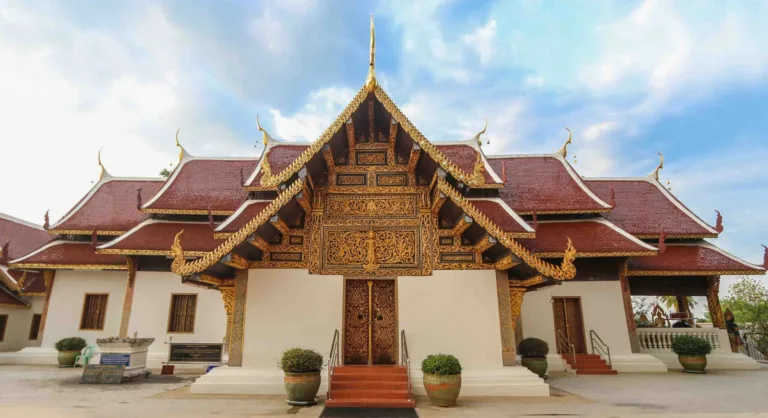
Cruciform main viharnAn east-facing, four-porched hall said to have been built under King Mueang Kaeo around 1517
Rat-year birth relic · Chom Thong, Chiang Mai
A royal temple in the heart of Chom Thong that keeps a revered Buddha relic, the birth-year relic for people born in the Year of the Rat, inside a gilded shrine at the centre of its cruciform viharn.
Holiday / event — crowded
Dress modestly, covering shoulders and knees · Remove shoes before entering the viharn · Keep quiet, as meditators stay at the temple · Women should not enter the ordination hall, per temple custom
Daily, about 08:00–17:00 (some sources say 06:00–18:00)
Before 09:00, when it is cooler and quieter
Mai Kham Pho Bodhi-tree prop procession at Songkran, 12–15 April · Relic-bathing on major holy days such as Makha Bucha, Songkran and Visakha Bucha
01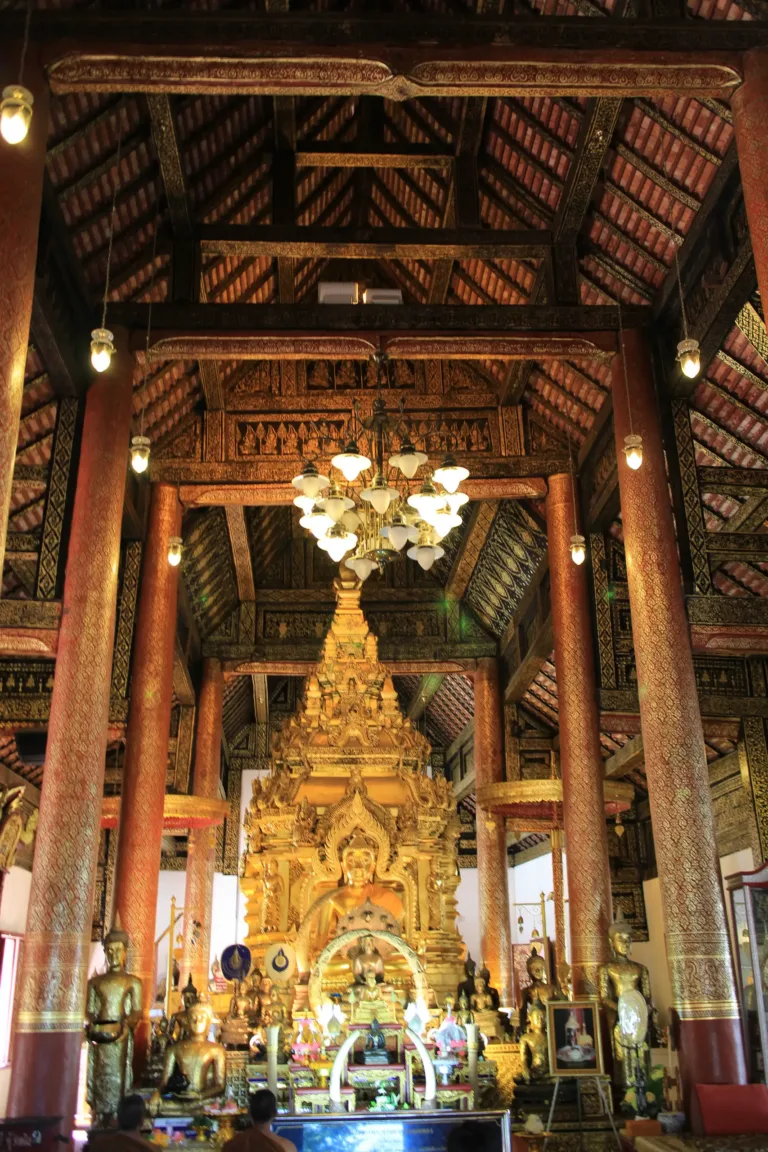 02
 03
Tap a day card to see that day’s weather, rain, haze and hourly forecast
Best time to go Fine all day little rain through the day
Holiday — traffic on the way up and parking fills fast; leave early
Green band = hours used for the score
Best time to go Fine all day little rain through the day
No warnings today — normal road and weather conditions
Green band = hours used for the score
Best time to go Fine all day little rain through the day
No warnings today — normal road and weather conditions
Green band = hours used for the score
Best time to go Fine all day little rain through the day
No warnings today — normal road and weather conditions
Green band = hours used for the score
Best time to go Fine all day little rain through the day
No warnings today — normal road and weather conditions
Green band = hours used for the score
Best time to go Fine all day little rain through the day
No warnings today — normal road and weather conditions
Green band = hours used for the score
Best time to go Fine all day little rain through the day
Holiday — traffic on the way up and parking fills fast; leave early
Green band = hours used for the score
Wat Phra That Si Chom Thong Worawihan stands on a low mound in the middle of Chom Thong town, right on the Chiang Mai–Hot road and about 58 km south of Chiang Mai. This royal temple keeps the Phra Thakkhinamoli relic, which tradition holds is a piece of the right side of the Buddha's head. In northern Thai belief it is the birth-year relic for anyone born in the Year of the Rat.What sets it apart from other relic temples is that the relic is not sealed inside a chedi. It rests in an urn within a gilded shrine (ku) at the centre of the cruciform main viharn, which temple chronicles say King Mueang Kaeo had built around 1517. On major Buddhist holy days the relic is brought out so people can pour water over it; on other days you pay respects in front of the shrine.Around the viharn you'll find a golden Lanna-style chedi, an ordination hall with a gilded gable, a two-storey scripture library and a large Bodhi tree. Every Songkran, Chom Thong residents parade wooden props to the tree, a custom said to date back to about 1772. The temple is also a well-known vipassana meditation centre, set up under the late abbot Ajahn Tong Sirimangalo.Since it sits on the main road with parking inside the grounds, it is an easy stop on the way to Doi Inthanon. Allow about an hour, dress modestly, and note that by temple custom women do not enter the ordination hall.
Arrive Before 09:00, when it is cooler and quieter
It stays in its urn inside the shrine and is brought out only on major holy days
Temple custom, as sacred objects are buried beneath its entrance
The temple is a vipassana centre with meditators in white staying on site, so keep noise down
Free · Time needed About 1 hour
Songkran (12–15 April), Makha Bucha, Visakha Bucha and long holidays
Mai Kham Pho Bodhi-tree prop procession at Songkran, 12–15 April · Relic-bathing on major holy days such as Makha Bucha, Songkran and Visakha Bucha
Wat Phra That Si Chom Thong Worawihan stands in the centre of Chom Thong district, Chiang Mai, on a mound about 10 m high that has long been called Doi Chom Thong, some 58 km south of the city. It enshrines the Phra Thakkhinamoli relic, which tradition says is a piece of the right side of the Buddha's head. Unlike most relics in the Lanna region, which are sealed inside chedis, this one is kept in an urn inside a gilded shrine at the centre of a cruciform viharn and is brought out for bathing on major holy days. Northern Thai belief makes it the birth-year relic for the Year of the Rat. The temple was once closely tied to the rulers of Chiang Mai, and in recent decades it has become a well-known vipassana meditation centre.
The name Chom Thong comes from the mound itself. Local legend says it looked like a termite mound (chom pluak) and was covered in flame-of-the-forest and coral trees, both called thong in Thai. When the district was created in 1900, it was named after this story. The temple originally faced east; the west gate most visitors use today came later, following the line of the road.
According to the chronicle of the Thakkhinamoli relic, a ruler named Phraya Angkharat invited the Buddha to the area during his lifetime, and the Buddha foretold that the right side of his head would one day be enshrined on this hill, so the king built a stupa in readiness. When the relics were divided after the Buddha's passing, the Mallas of Kusinara received this one, and the monk Mahakassapa prayed for it to travel to Doi Chom Thong. Later, in King Ashoka's time, it was placed in a tunnel beneath the hill and sealed with stone. The temple history dates this to BE 218, which does not match Ashoka's actual reign, so this part of the story is legend.
The dated history begins around 1452 (BE 1995), when a married couple remembered as Pho Soi and Mae Meng began building a temple on the summit, naming it Wat Si Chom Thong, but died before it was finished. In 1466 two men, Sip Ngoen and Sip Thua (spellings vary), completed it with a thatched viharn and invited Phra Sariputta Thera to be the first abbot; villagers called it the "royal temple", Wat Luang. The temple counts its age from this year and celebrated its 550th anniversary in 2016.
In 1499, under Abbot Thammapanyo, a white-robed ascetic dreamed that the relic lay beneath the viharn floor. The abbot prayed, and the next day the relic was found in the topknot of a Buddha image in the viharn; it was then kept quietly. The Ministry of Culture's cultural map records a different version, in which an abbot moved the relic from underground into the head of a large Buddha image in 1481.
In 1515 the monk Maha Phutthayano brought the chronicle of the Thakkhinamoli relic from Bagan, and word reached King Mueang Kaeo, a king of the Mangrai dynasty who reigned in Chiang Mai from 1495 to 1525. Around 1517 the king ordered a viharn "with four porches, like the viharn of Wat Chai Si Phum" and a shrine inside it modelled on Wat Chet Yot. He had a golden urn made for the relic and granted servants and rice fields to look after the temple.
A 2022 study by Thiti Peungphut and Pymporn Chaiyaporn of Chulalongkorn University found that the viharn faces east and measures roughly 23 by 41 m. Unusually for a Lanna viharn, its north and south porches are enclosed; the researchers link this to the relic procession out of the east door and to keeping the valuables inside secure. Chronicles record a major restoration in 1819 under Chao Luang Thammalangka and the gilding of the pillars in 1821, and the Fine Arts Department's regional office concluded in 2008 that the viharn's present form dates from the 19th century onward. The relic shrine is gilded brick and stucco, about 4 m wide and 8 m tall, holding a five-tiered urn; the relic is described as the size of a jujube seed and creamy white.
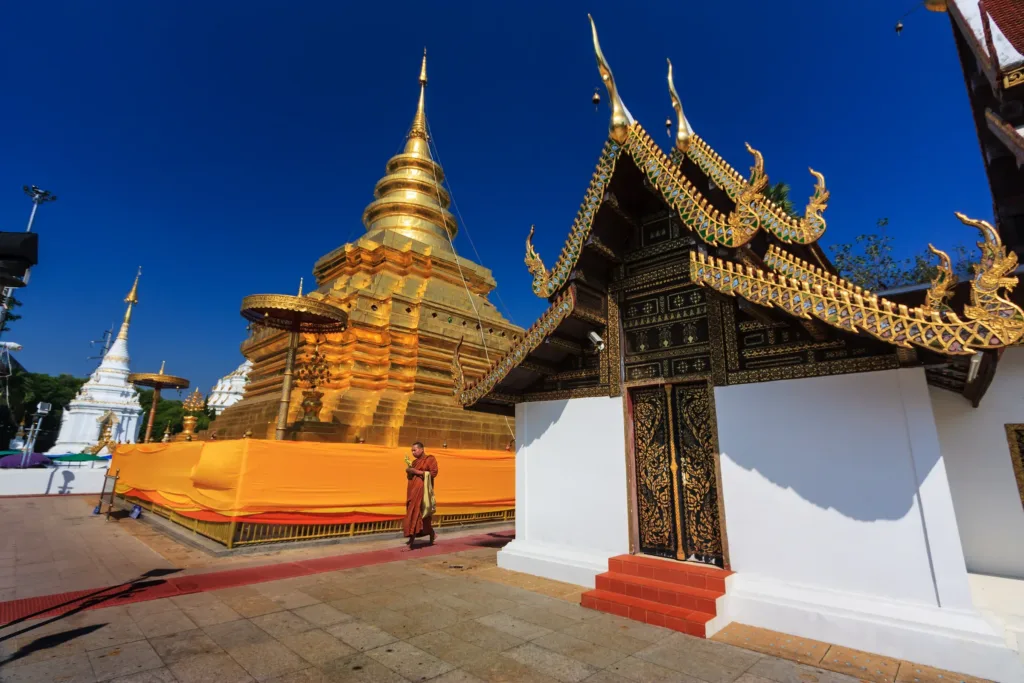
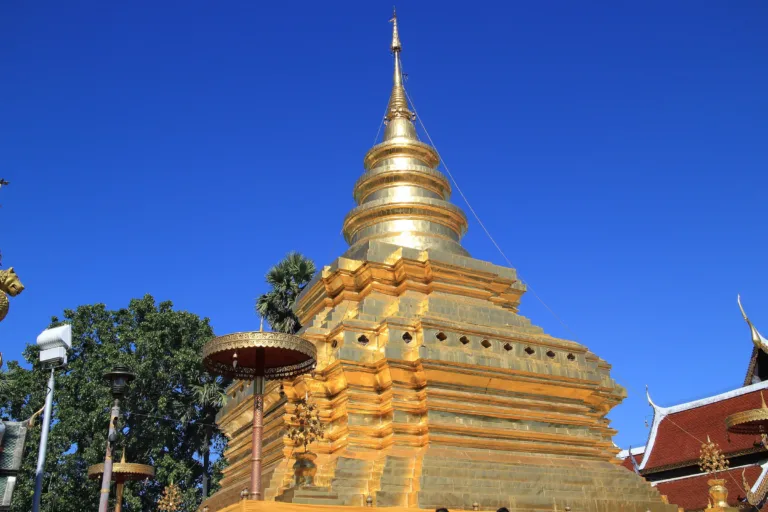
The golden Phra Chedi Si Chom Thong is Lanna in style, with an indented square base and a bell on round lotus mouldings, a form shared with Phra That Chae Haeng, Doi Suthep and Haripunchai. A smaller chedi, thought to be about 300 years old, shows Mon-Burmese influence. The ordination hall has murals of the temple legend and, by custom, women do not enter it. The two-storey scripture library was restored between 1991 and 1993.
The relic has long been linked with Chiang Mai's rulers. Phra Mekuti and Chao Luang Suphatra (Kham Fan) both brought it into the city, and Chao Inthawichayanon (r. 1873–1896) built a new scripture hall and brought it to Chiang Mai, the procession resting at Wat Ton Kwen in Hang Dong. Chao Kaew Nawarat, the last ruler, restored the temple and held a great celebration in 1922. The custom lapsed when the system of hereditary rulers came to an end, until June 2016, when the relic procession into Chiang Mai was revived for the first time in about 20 years.
The Mai Kham Pho procession has its own story. In May 1771 a storm broke a branch of the temple's Bodhi tree, and the abbot, Khruba Phutthimawongso (Khruba Pud), had a vision saying his practice had not been strict enough. The following year villagers brought sturdy poles to prop up the tree, and they have paraded wooden props to it every Songkran, 12–15 April, ever since. The research calls him the 14th abbot, while the temple's own list numbers him slightly differently.
The temple received a royal ordination boundary in 1927, was listed as a historic site in the Royal Gazette on 8 March 1936 (BE 2478), and became a third-class royal temple of the Worawihan type in 1963. In 1991 the renowned meditation master Ajahn Tong Sirimangalo became abbot and set up a vipassana centre with more than 100 meditation huts, open to monks, lay people and foreigners. He died on 13 December 2019, and people born in the Year of the Rat still come from all over Thailand to pay respects at their birth-year relic.
Arrived? Check in, collect a stamp and tell others what it is like right now
Check your location first, so you do not fill in the form for nothing
Location must be on and within 1 km · One check-in per place per day · come back on other days to check in again
Post photos from anywhere — no need to be here · Up to 20 photos at a time · JPG / PNG / WebP · GPS location data is removed automatically
The temple is in the centre of Chom Thong town on the Chiang Mai–Hot road (Highway 108), about 58 km from central Chiang Mai.
About 58 km south of town on Highway 108; the temple is beside the road · Fuel
Chiang Mai–Chom Thong services stop in town, a short ride from the temple; check where to board first
Handy if you are continuing to Doi Inthanon; agree the fare first
Highway 108 (Chiang Mai–Hot), flat paved road; the temple is right beside it
Parking inside the temple grounds; can fill up during festivals
Daily, about 08:00–17:00 (some sources say 06:00–18:00)
about 58 km from Central Chiang Mai
Wat Phra That Si Chom Thong Worawihan
Answers travellers want before they go — a one-minute read
In the centre of Chom Thong, on the Chiang Mai–Hot road, about 58 km south of Chiang Mai
Northern Thai tradition makes it the birth-year relic for the Rat, and visiting at least once is considered auspicious
It is kept in an urn inside the shrine in the viharn and brought out only on major holy days; otherwise you pay respects in front of the shrine
Most relics are sealed inside a chedi, but this one is kept in a shrine and can be brought out and bathed directly
By temple custom women do not enter the ordination hall, but they can pay respects in the viharn
Mae Klang Waterfall and Doi Inthanon are on the same road
Best day this week: Monday 30 Nov · Check in when you arrive to collect a stamp
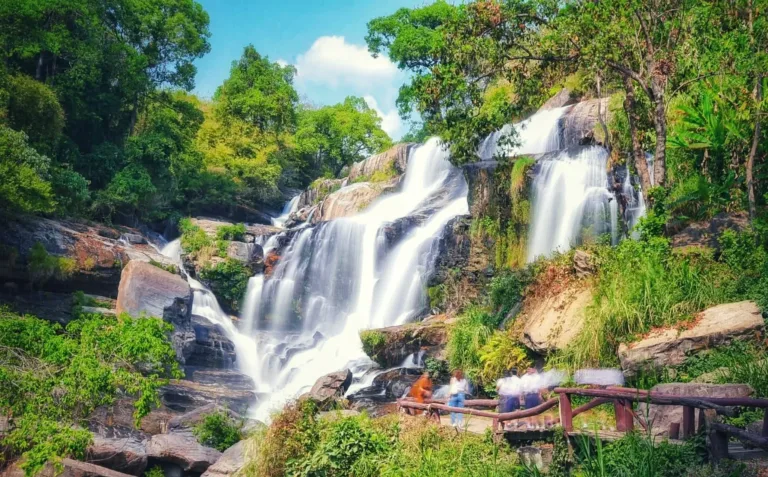 Mae Klang Waterfall
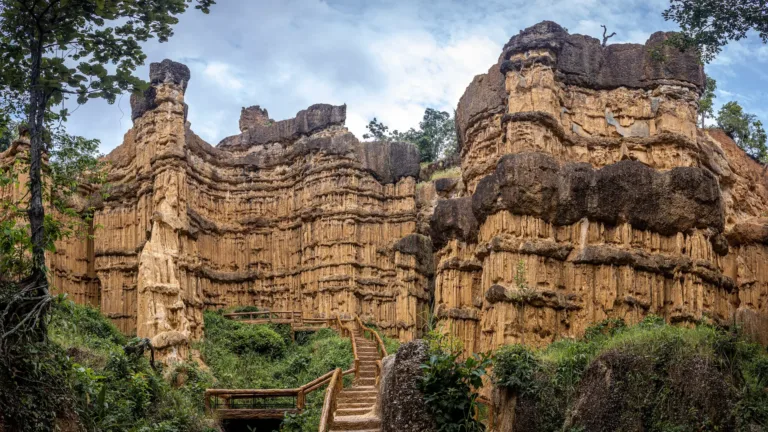 Pha Chor
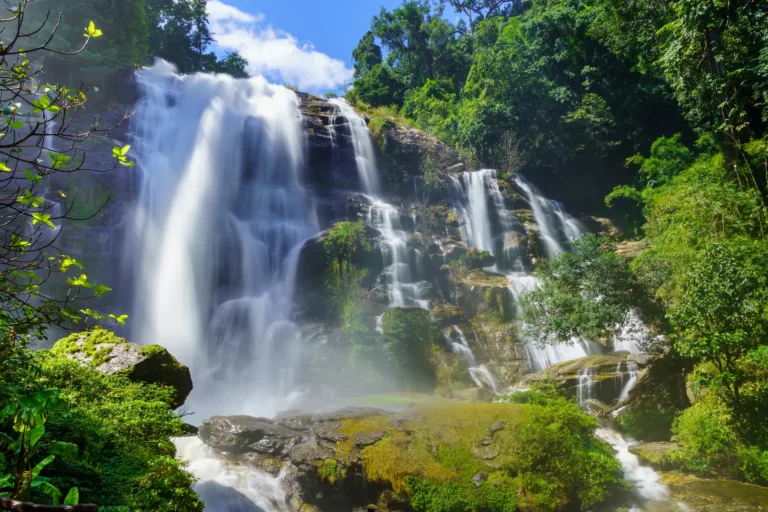 Wachirathan Waterfall
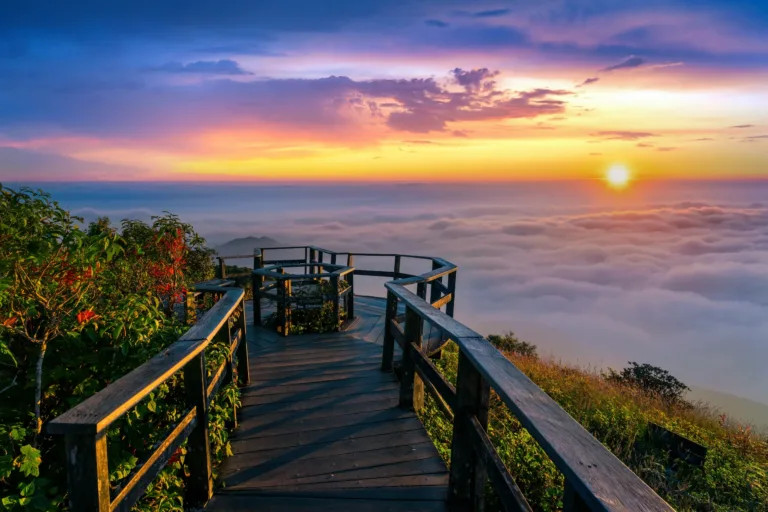 Kew Mae Pan Nature Trail