 01
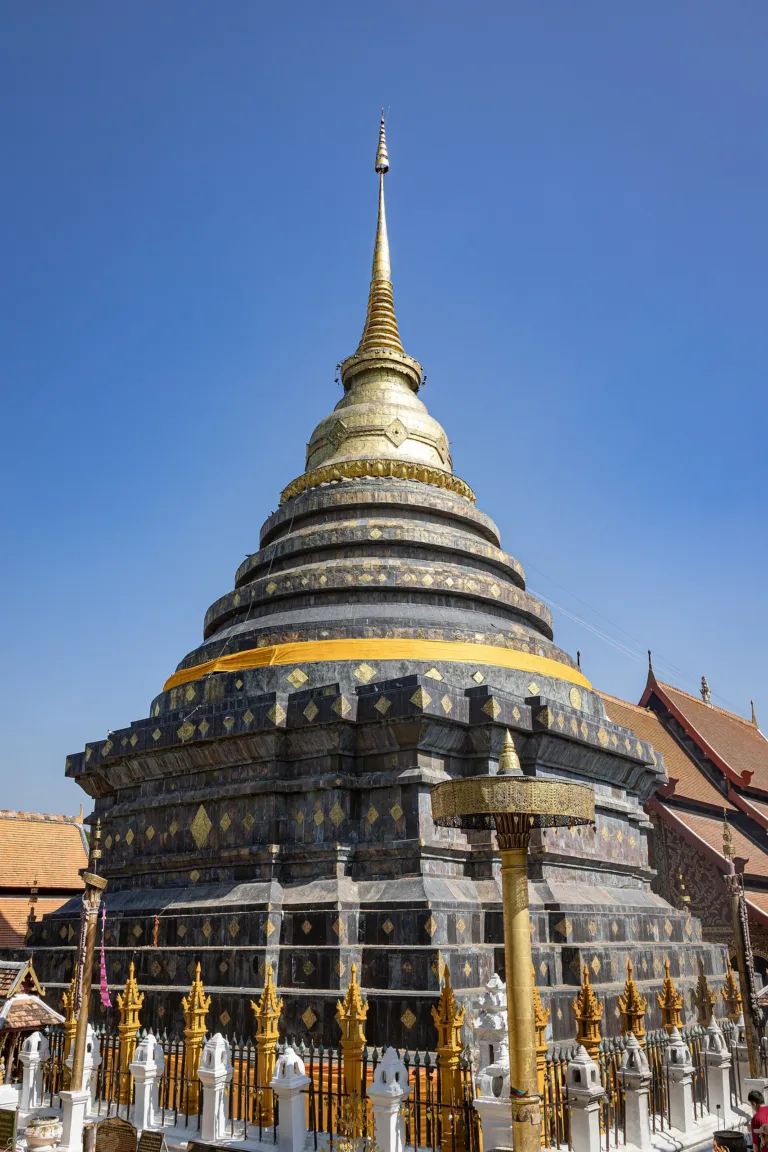
The relic chediA Lanna chedi clad in gilded copper, about 45 m tall
LAMPANG · LANNA HERITAGE
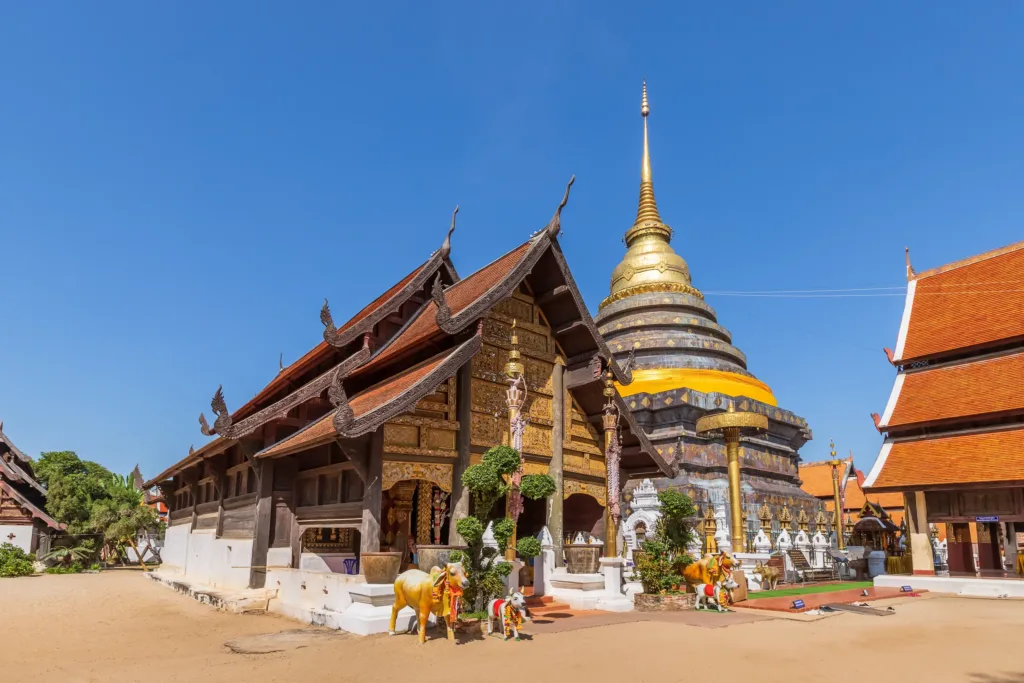
A royal Lanna temple inside an ancient walled town, with a 45 m golden chedi, the open-sided Viharn Luang and an inverted image of the chedi
Holiday / event — crowded
Open daily, about 07:00–17:00 (some sources say from 06:00)
Before 10:00 for soft light on the chedi and cooler air, or after 15:30
Phra Kaeo Don Tao worship festival on the full moon of the 12th month (check dates with the temple)
01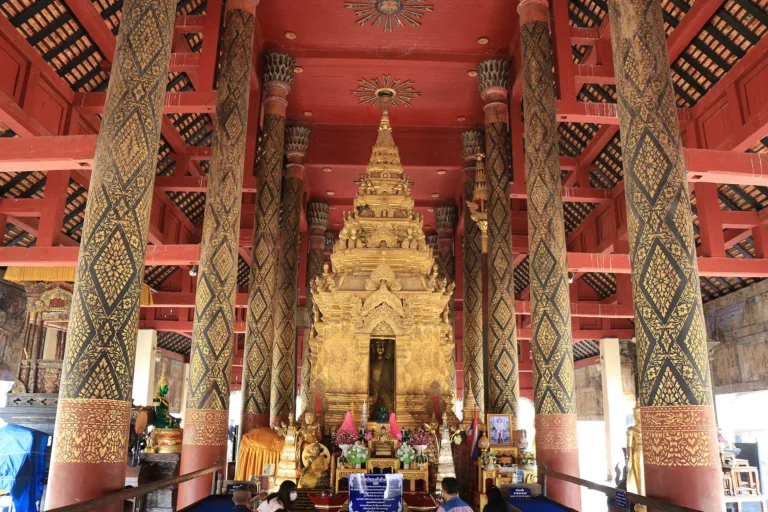 02
 03
 04
 05
Tap a day card to see that day’s weather, rain, haze and hourly forecast
Best time to go Daytime is over · see tomorrow
Holiday — traffic on the way up and parking fills fast; leave early
Green band = hours used for the score
Best time to go Fine all day little rain through the day
Holiday — traffic on the way up and parking fills fast; leave early
Green band = hours used for the score
Best time to go Fine all day little rain through the day
No warnings today — normal road and weather conditions
Green band = hours used for the score
Best time to go Fine all day little rain through the day
No warnings today — normal road and weather conditions
Green band = hours used for the score
Best time to go Fine all day little rain through the day
No warnings today — normal road and weather conditions
Green band = hours used for the score
Best time to go Fine all day little rain through the day
No warnings today — normal road and weather conditions
Green band = hours used for the score
Best time to go Fine all day little rain through the day
No warnings today — normal road and weather conditions
Green band = hours used for the score
Wat Phra That Lampang Luang is a Lanna temple about 16 km southwest of Lampang town, set inside an ancient walled settlement. It holds the relic chedi of the Year of the Ox, the open-sided Viharn Luang with the Phra Chao Lan Thong Buddha, and the jade Phra Kaeo Don Tao.
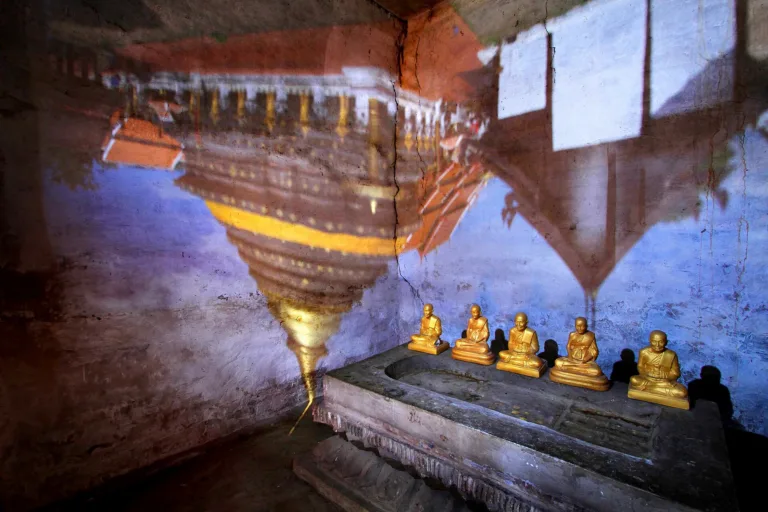
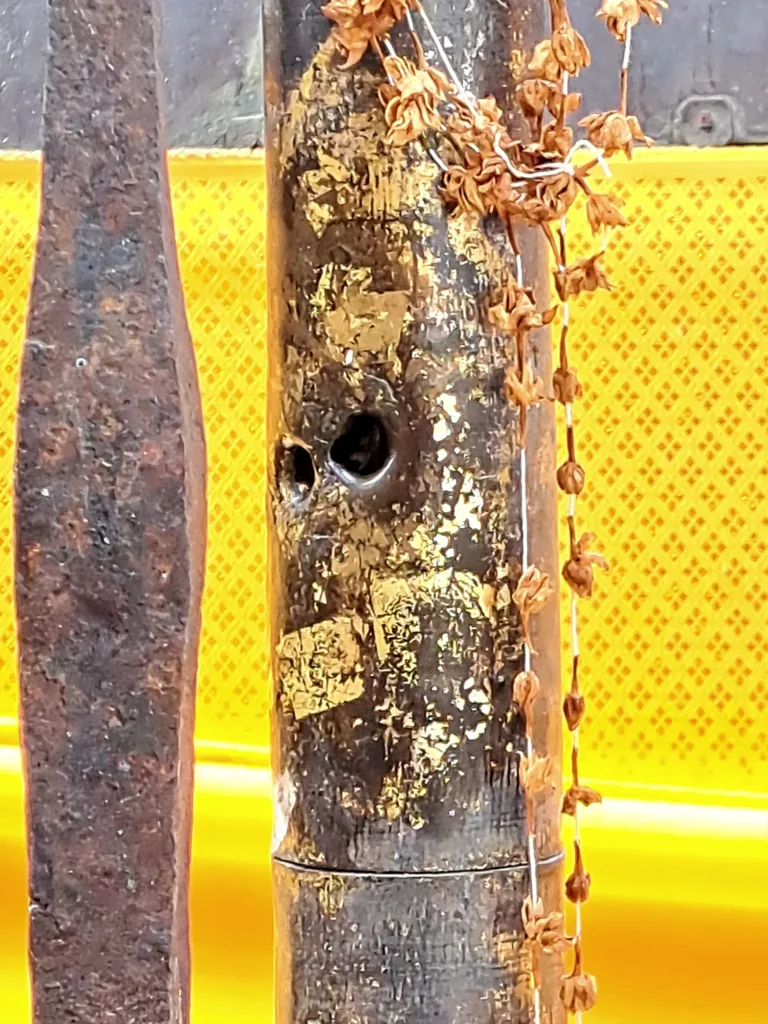
Visitors come for the golden chedi, the old wooden viharns, the inverted image of the chedi projected inside the Footprint Hall, and the bullet holes linked to the hero Nan Thip Chang. In May 2026 it was raised to royal-monastery status.
Photos from Wikimedia Commons and contributors · tap a photo to see its credit
By Lanna custom, women may not enter the Footprint Hall
Cover shoulders and legs; sarongs can be borrowed at the entrance
Remove shoes before entering the viharns and climbing the naga stairs
Do not poke the pinhole used for the chedi image; it has already been widened and the image has faded
Thais free · foreigners 40 THB · Time needed 1 – 2 hours
Weekends, long holidays and Buddhist holy days, especially in the cool season
| Flowers, incense and candles (optional donation) optional | 20–50 ฿/set |
| Horse-cart ride around the temple, about 10 min (2021 price) optional | 200 ฿/cart |
| Horse-cart ride around the temple and village, about 20 min (2021 price) optional | 300 ฿/cart |
Mostly cash · Prices may change by season — check with the venue
Phra Kaeo Don Tao worship festival on the full moon of the 12th month (check dates with the temple)
Tap a month on the wheel to see weather, rain, haze and crowds from 10 years of records
Best time · November to February is cool and clear. The golden chedi stands out against the sky, and mornings are comfortable for walking through the open wooden viharns.
Watch out · March and April are very hot and Lampang's haze is heavy; the sand courtyard is scorching at midday. The rainy season brings afternoon showers.
Nov by the records 21–30°C · avg rain 72 mm (9 rainy days) · clear 15 days · avg PM2.5 12
Wat Phra That Lampang Luang stands in Ban Lampang Luang, Lampang Luang subdistrict, Ko Kha district, about 16 km southwest of Lampang town, on the plain of the Wang River near the Mae Tan and Mae Kae streams. Covering about 37 rai, it is one of the most important temples of Lampang and has long been tied to the ruling houses of the north. In Lanna belief it is the relic chedi for people born in the Year of the Ox, and it houses the Phra Kaeo Don Tao, a revered jade Buddha.
The temple chronicle, written down around the 16th century, says that in the Buddha's lifetime he passed through this land, and a Lua man named Ai Khon offered him honey in a wooden tube. The Buddha foretold that a city called "Lampakappa Nakhon" would arise here and gave a single hair relic, which the Lua buried in a golden casket with other treasures; a chedi was later built over it. Devotees also believe it holds relics of the Buddha's right forehead and neck. Some versions give the year BE 218, and some sources say the chedi was built or restored in Queen Chamadevi's time.
Another version says the Buddha reached "Doi Mon Noi", where a Lua man named Ai Kon (also written Ai Khon) offered honey. The Buddha gave him one hair, which Ai Kon placed in a golden casket, buried in a tunnel and covered with a chedi seven sok (cubits) tall. That small chedi was the start of a monument enlarged many times since.
The temple sits at the centre of "Wiang Phra That Lampang Luang", an ancient rectangular settlement about 700 m long and 300 m wide, with triple earth ramparts on the south and east. Its gates still carry names: Nong Ngu to the west, Lap Lae at the southwest corner, and Dok Mai to the south, the temple's main entrance. A central well, Bo Nam Liang, has a wooden frame worn by ropes. Pottery found here resembles Haripunchai wares, but the settlement's origin is unresolved. Villagers believe a spirit, Chao Pho Khomlek ("Iron Wrist"), has guarded the town since before Buddhism, and the spirit mediums are said to be of Lua descent.
Historical evidence becomes clearer in the Lanna period, around the 15th century. According to the Sirindhorn Anthropology Centre, in BE 1992 (1449) the town's lord, Hanthaetong, asked King Tilokaraj for land and built a chedi over the relic, 9 wa wide and 15 wa tall; some sources date the Footprint Hall to the same period. In BE 2019 (1476) the lord of Lampang restored the temple, built a viharn wall, cast a large Buddha image and made a road and pond, and many sources say the Viharn Luang was built that year by Chao Han Srithattha Maha Suramontri, ruler of Lampang.
Some sources, such as Lampang Post, give a different sequence: Muen Han Taethong, son of Muen Lok Nakhon, received King Tilokaraj's permission to restore the relic chedi from 1442, and when the work ended in 1479 the king came to a seven-day celebration. The chedi of this period is linked to the Sinhalese (Wat Pa Daeng) school of Theravada Buddhism that Tilokaraj sponsored. It is said that work began and ended in a Year of the Ox, which is why it is the relic chedi of the Ox year.
In BE 2039 (1496) Chao Han Srithattha Maha Suramontri enlarged the chedi to 12 wa wide and 21 wa tall (later recorded as 22 wa 1 sok); travel sources give its present height as about 45 m. It is a round, bell-shaped Lanna chedi on a triple lotus base that scholars see as Sukhothai-influenced, clad in gilded copper alloy sheets and surrounded by an iron railing. A golden spire was added in 1720 and the umbrellas were replaced in 1832.
The 17th and 18th centuries brought repeated war. In 1602 the fence had to be rebuilt after enemy damage, and in 1651 twenty-nine Buddha images were made. The most famous episode came around 1732, when Lanna had split into rival towns. An army under Thao Maha Yot of Lamphun (some sources say a Burmese army) attacked Lampang; the abbot of Wat Na Yang was killed, the townspeople fled, and Thao Maha Yot made camp inside Wat Phra That Lampang Luang.
Before the famous episode, in the late Ayutthaya period, Lanna was under Burmese influence and Lampang had no clear ruler; its four town lords fought among themselves. Thao Maha Yot, ruler of Lamphun, marched in and killed nearly all of them; only Chare Noi escaped, pursued as far as Doi Pratu Pha. Nan Thip Chang, originally named "Thippachak", was born around 1674 as a commoner of Ban Pong Yang Khok, now in Hang Chat district. He studied as a monk at Wat Pong Yang Khok, then left the monkhood to become a hunter skilled with weapons. Villagers called him "Thip Chang" ("divine elephant") from stories that he drove off wild elephants raiding crops and cut off their tails.
His uncle, a senior monk and abbot of Wat Phra Kaeo Chomphu (today Wat Phra Kaeo Don Tao), urged him to free the town and gathered about 300 men for him. Nan Thip Chang surrounded the temple and slipped in at night through a drainage channel with about three companions, disguised in some versions as Lamphun men and in others as Burmese soldiers. As Thao Maha Yot played chess, Thip Chang asked for the commander by name and shot him dead, then opened the gates to his men, and the enemy fled in defeat. The story says the bullet passed through the commander and lodged in the iron railing around the chedi, so villagers believe the holes in the railing are bullet marks from that night, though some sources say the railing was installed about seventy years later. Parts of his story, such as his magic spells, are oral tradition without supporting evidence.
After the battle Nan Thip Chang was acclaimed ruler of Lampang as Phraya Sulawa Luechai Songkhram. He ruled for 27 years from 1732 until his death in 1759, aged about 85. With Chao Mae Phimpa he had six children and founded the Thippachak dynasty. His grandsons, the "Chet Ton" (Seven Princes) led by Kawila, joined Phraya Chaban and the army of King Taksin to drive the Burmese from Lanna in 1774. Chet Ton descendants ruled Lampang until 1922 and founded the na Lampang, na Lamphun and na Chiang Mai families. In 1732 he built a reclining Buddha at the temple. His monument stands outside the east wall, where people offer rooster figurines, and in July 2020 the temple held a festival to honour his legend.
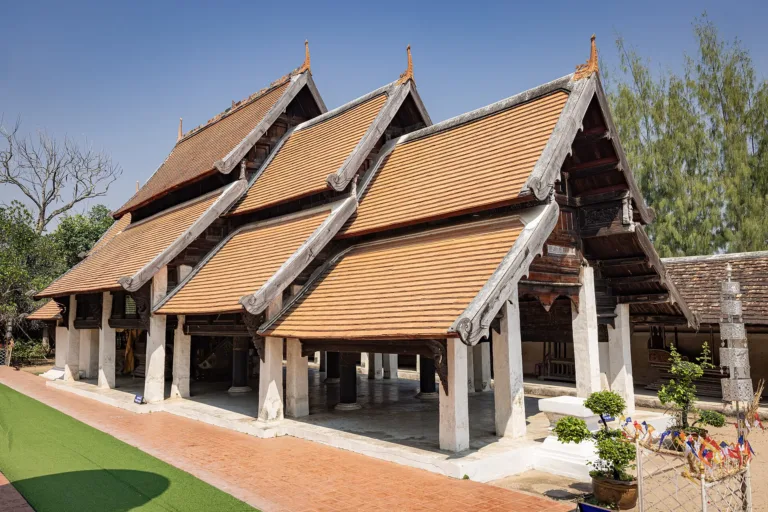
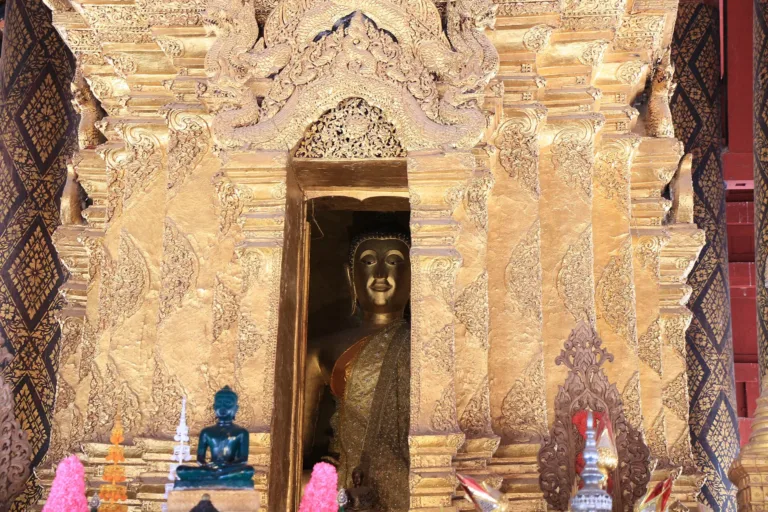
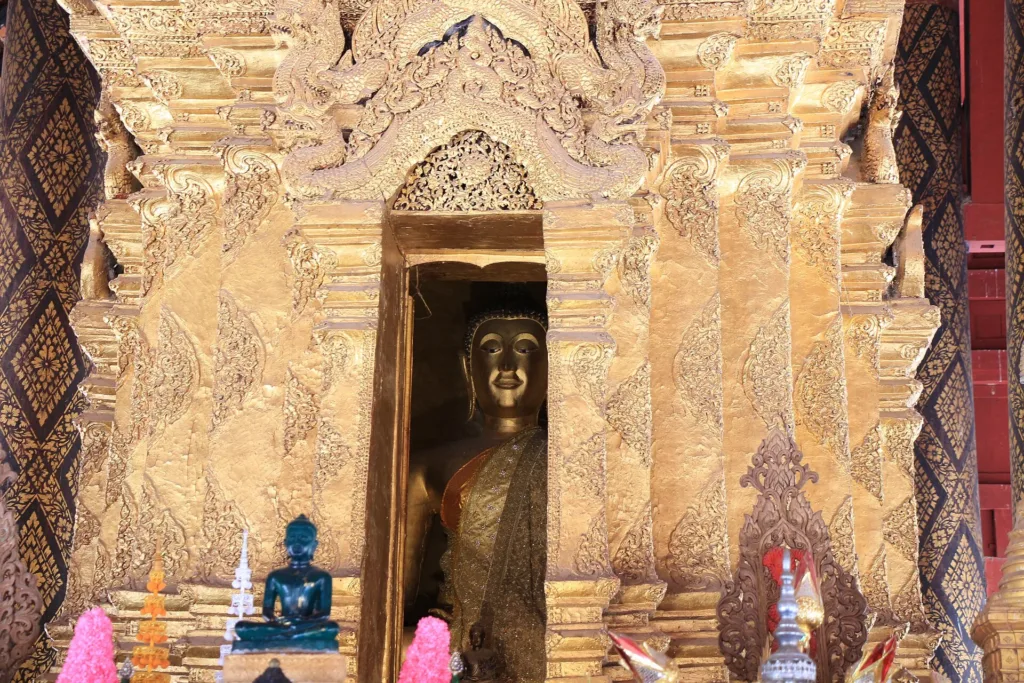
The Viharn Luang is an open-sided Lanna hall with a three-tiered roof of wooden shingles and tall gilded lacquer pillars. Inside are 19th-century paintings on wooden panels and carved wooden pulpits from around the 18th century. At the back stands a gilded prasat shrine holding "Phra Chao Lan Thong", a bronze Buddha in the subduing-Mara posture of the Lampang school of Lanna art. The Sirindhorn Anthropology Centre's art database says a Lanna inscription dates its casting to 1503 (BE 2046), while some sources give 1563 (BE 2106). Its oval face and robe ends split like centipede fangs give it a more folk character than Sukhothai-style images.
In 1923 Phra Thammachindanayok restored the Viharn Luang, replacing its octagonal pillars with round ones and adding a wooden ceiling with zodiac glass inlay, so the original open roof structure was lost. A new roof was put on the Viharn Luang in 2020.
The Viharn Nam Taem on the north side is an open wooden hall from the late 16th century, and several sources suggest it may be the oldest wooden building in Thailand. "Nam taem" means painting; inside are faint 16th–17th-century murals and later paintings on wooden panels. The Viharn Phra Phut on the south is believed to have a very old timber core, enclosed by brick walls around 1832. To the west is the Viharn Lawo or Viharn Phra Chao Sila; to the northeast the Viharn Ton Kaeo, which received a new glass altar in 1964; to the southwest the ordination hall and the Footprint Hall; and to the southeast a khachao tree and the bell tower. A cloister separates the sacred zone from the monks' quarters to the south, following cosmological planning, and the sand courtyard represents the cosmic ocean.
The Viharn Nam Taem is one of only eight viharns in Lampang province built before 1857, and three of those eight stand at this temple. Scholars date both the building and its paintings to the late 16th century, while some sources give 1501. Its principal image, "Phra Chao Sam Muen Thong", is a gilded bronze Buddha in the subduing-Mara posture whose lap width and height are both about 2 sok 1 khuep. Behind it is a gold-leaf design of three Bodhi trees with a moon bearing a rabbit on the left and a sun bearing a swan on the right, with parrots, swans and praying deities holding flowers. According to Woralun Boonyasurat in "Lanna Viharns", artisans pricked paper stencils, laid them on the wall, applied lacquer through the holes and then gold leaf over a red cinnabar ground, the same technique as Lanna lacquerware. The pillars bear swans painted with ground turquoise, the roof has figures of mom (a mythical lion-dog), swans, owls and the hatsadiling bird, and the altar base has stucco lions carrying vases of plenty, parrots and tigers.
These gold-leaf designs are at least 300 years old, made by scratching patterns into gold leaf with a pointed tool, a technique found only in northern Thailand. The gold-leaf deity near the door of the Viharn Phra Phut is considered one of the largest and finest in Lanna art. In March 2012, while a Fine Arts Department contractor was repairing roofs and structures, villagers and academics complained that the deity panel and the gold designs on the Viharn Nam Taem pillars had been regilded and redrawn, losing their original character. Lampang art expert Sak-soen Rattanachai said the work amounted to new creation rather than restoration, while officials said the original lines remained and only flaking areas had been repaired. The department promised to investigate, and the case fuelled wide debate about conservation standards for Lanna art.
Other notable structures include the Viharn Phra Chao Sila, whose stone Buddha local legend says was a gift from Queen Chamadevi's father; a raised scripture library with a two-tiered roof, dated by some sources to 1524 and possibly the oldest in Lanna; and the Kuti Phra Kaeo, at least 400 years old. The east kong gateway, dated by some sources to 1476, has tiered spires decorated with stucco flowers and Himavanta creatures and appears on Lampang's provincial seal. The temple museums hold funerary offerings, pulpits, carrying poles, scripture cabinets and old weapons such as swords and iron helmets.
The Footprint Hall is a small raised building behind the Viharn Phra Phut that, by Lanna custom, women may not enter. With the doors closed, light through a small hole above the door projects an inverted image of the chedi onto a screen inside, like a pinhole camera. A similar image once appeared inside the viharn through a hole in the wall, but it has faded because visitors widened the hole with their fingers. The main entrance on the east is a naga staircase leading to an ornate brick-and-stucco kong gateway from around the 16th century, and two kumphan guardian figures at the corners are believed to protect the temple.
Phra Kaeo Don Tao is a green jade Buddha in Chiang Saen style. Legend says a naga in the Wang River placed an emerald inside a watermelon that Mae Chao Suchada offered to a senior monk. The monk could not carve it until an old man, believed to be Indra, helped him. Suchada was later falsely accused of an affair with the monk and executed, and the monk brought the image to Wat Phra That Lampang Luang; her former home became Wat Phra Kaeo Don Tao Suchadaram in Lampang town. The image is now kept in a museum building near the south gate.
Phra Kaeo Don Tao is a green jade Buddha in the meditation posture, often called Lampang's "Emerald Buddha", with an annual worship festival on the full moon of the twelfth month. It should not be confused with the Emerald Buddha now in Bangkok, which historically stayed at Wat Phra Kaeo Don Tao in Lampang town for 32 years from 1436, after the elephant carrying it from Chiang Rai under King Sam Fang Kaen headed for Lampang instead of Chiang Mai, until King Tilokaraj moved it to Chiang Mai in 1468.
In the modern era, Chao Boonwatwongmanit restored the chedi in 1906, a Burmese-style mondop was built in 1909, and Kruba Sriwichai donated stone umbrellas in 1926. The Fine Arts Department registered the temple as an ancient monument in the Royal Gazette on 8 March 1936 and defined its boundaries on 21 October 1980. From 1946 the abbot Phra Tha Thawaro carried out major works; in 1957 Field Marshal Plaek Phibunsongkhram donated 90,000 baht for repairs; between 1962 and 1969 a fence, market and the Viharn Pluak Phrao were built; and in 1966 Thammasat University students helped build a museum. Today three museums stand on the south side, including one of old woodcarving.
On 26 December 1971 King Bhumibol and Queen Sirikit, with their children, came to bathe the relic. In 1988 the Fine Arts Department restored the east kong gateway; in 2002 the temple received an architectural conservation award; in 2007 the cloister and its roof were restored; in 2009–2010 the chedi base was stabilised and the chedi regilded; and from 24 to 28 February 2010 a ceremony raised a new golden umbrella.
On 20 May 2026 the Royal Gazette announced Wat Phra That Lampang Luang's elevation to a third-class royal monastery (ordinary grade), to honour Queen Suthida on her fourth-cycle birthday (3 June 2026). It was one of five temples nationwide raised at the same time, effective 17 May 2026.
Visitors should dress modestly, remove shoes before entering the viharns, and walk clockwise around the chedi quietly. Women should not enter the Footprint Hall, in keeping with local custom, and no one should touch or poke the pinhole used to view the chedi image, so that this Lanna heritage can endure.
Arrived? Check in, collect a stamp and tell others what it is like right now
Check your location first, so you do not fill in the form for nothing
Location must be on and within 1 km · One check-in per place per day · come back on other days to check in again
Post photos from anywhere — no need to be here · Up to 20 photos at a time · JPG / PNG / WebP · GPS location data is removed automatically
From Lampang town take Phahonyothin Road (Highway 1) towards Ko Kha, then Routes 1034 and 5006, about 16 km and 20–25 minutes in all.
Highway 1 → 1034 → 5006, about 16 km · Fuel
From Lampang town · Negotiable
Highway 11 via Lamphun and Lampang · Fuel
From Lampang take Phahonyothin Road (Highway 1), then Routes 1034 and 5006; paved all the way
Large car park opposite the temple, with food and souvenir stalls
Petrol stations on Highway 1 and in Ko Kha
Good mobile signal
Open daily, about 07:00–17:00 (some sources say from 06:00)
about 16 km from Lampang town
Wat Phra That Lampang Luang, Ko Kha, Lampang
40 THB
Approx. nightly price for 2 adults (next week) · final price depends on your dates
Best day this week: Monday 30 Nov · Check in when you arrive to collect a stamp
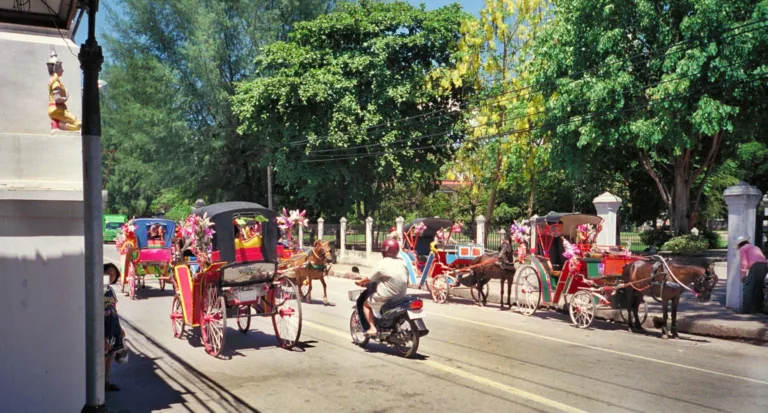 Lampang Horse Carriage Ride
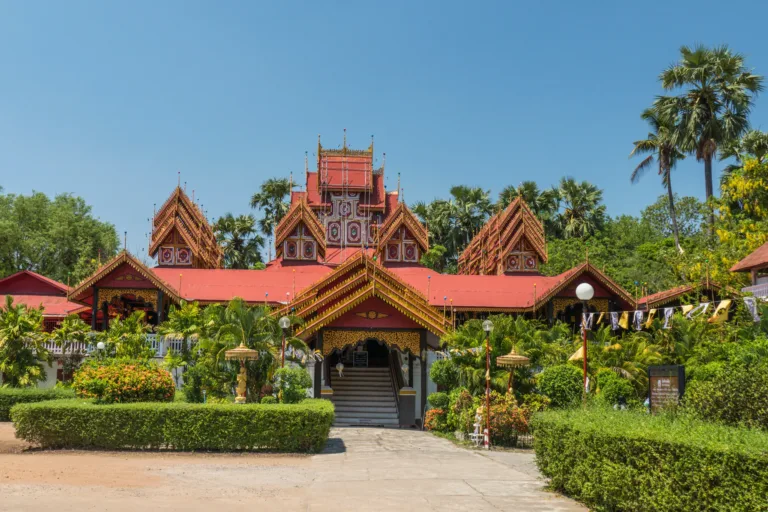 Wat Si Rong Mueang
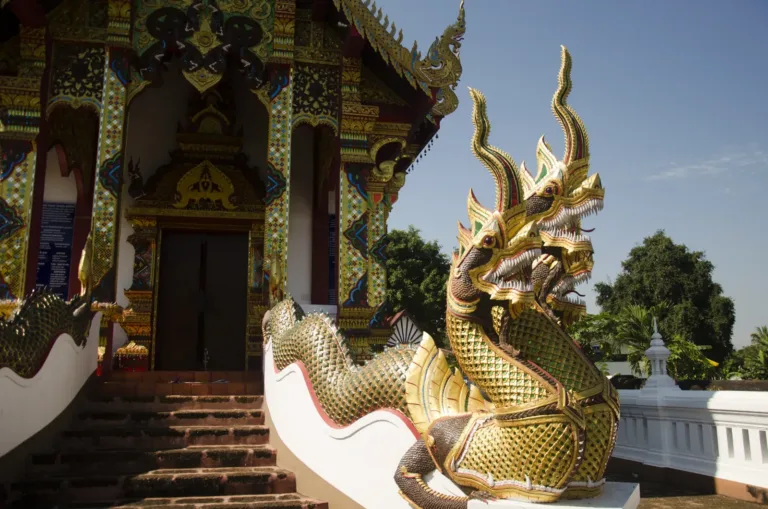 Wat Phra That Chom Ping
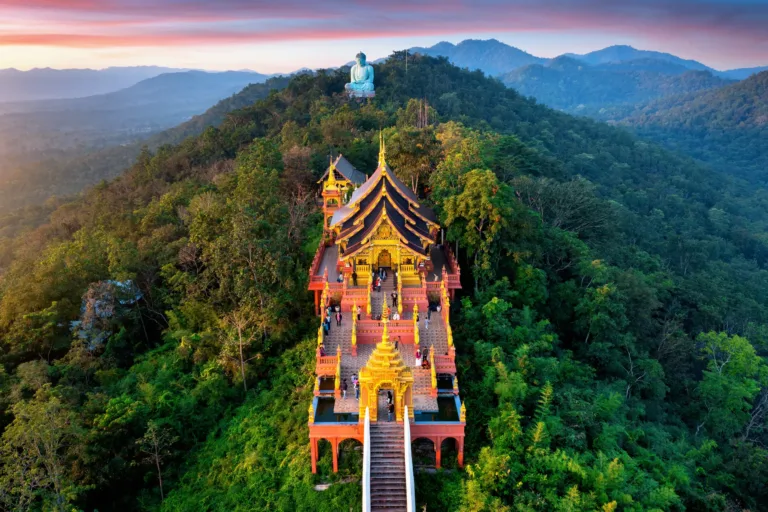 Wat Phra That Doi Phra Chan