 01
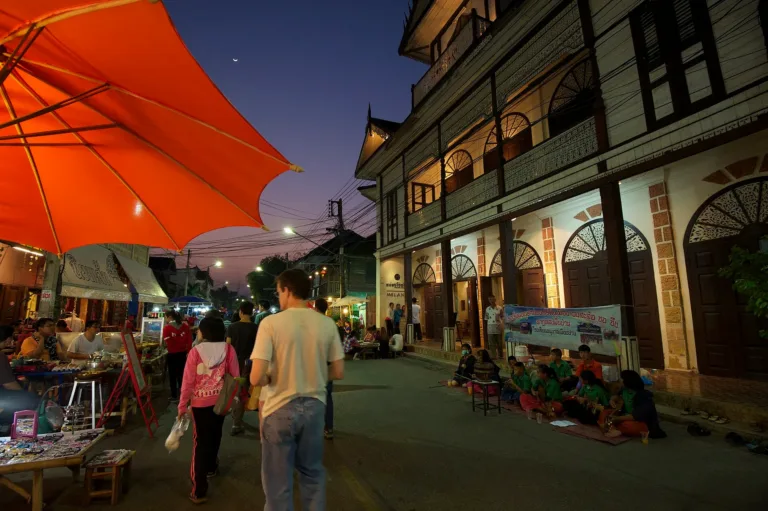
Kad Kong TaOld trading street and riverside walking street
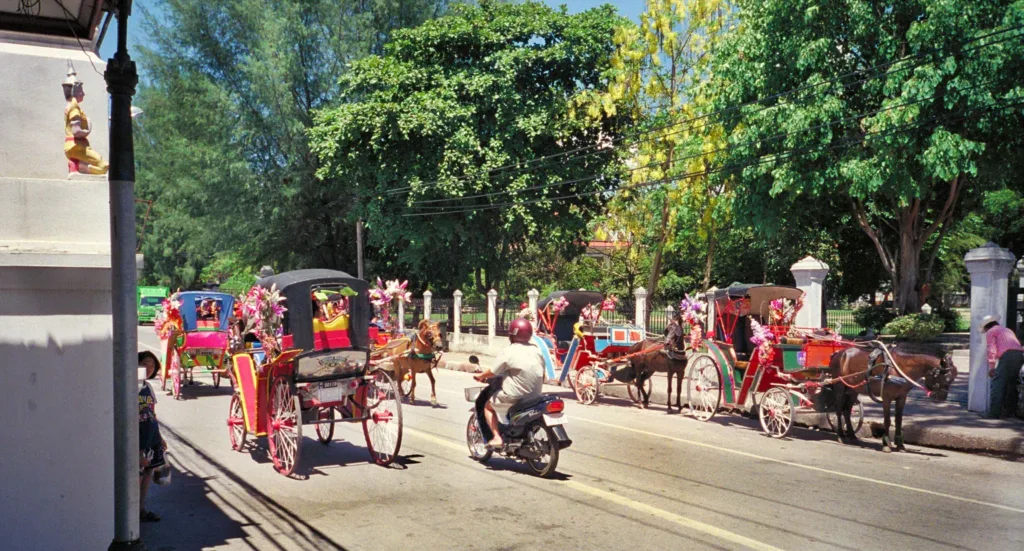
City of horse carriages · Lampang
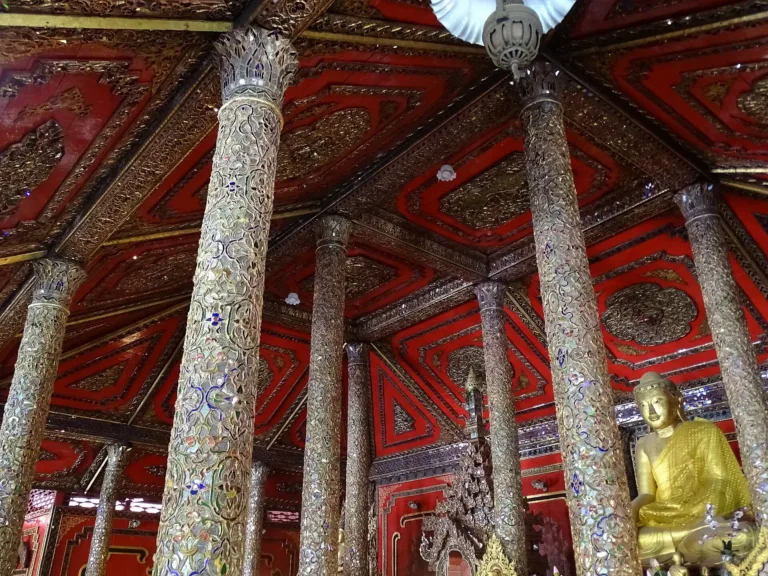
The classic Lampang activity: an open horse-carriage ride around the old town, past Ratsadaphisek Bridge, Kad Kong Ta, Wat Phra Kaew Don Tao and Wat Si Rong Mueang, from town-centre hotels.
Good weather, little rain
Wiang Thong and Thip Chang hotel stands 06:00–23:00 · Old City Hall stand 06:00–16:00
30 minutes–1 hour
Weekend evenings (Kad Kong Ta nights)
01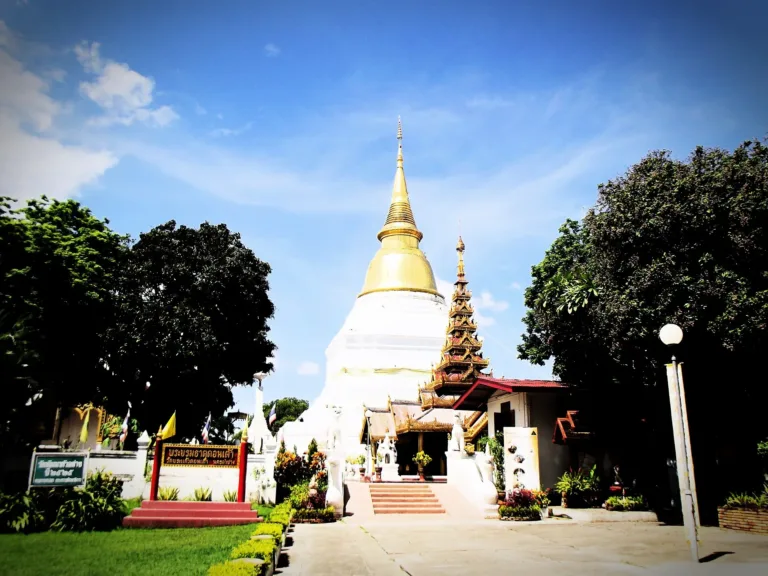 02
 03
 04
Tap a day card to see that day’s weather, rain, haze and hourly forecast
Best time to go Daytime is over · see tomorrow
No warnings today — normal road and weather conditions
Green band = hours used for the score
Best time to go Fine all day little rain through the day
No warnings today — normal road and weather conditions
Green band = hours used for the score
Best time to go Fine all day little rain through the day
No warnings today — normal road and weather conditions
Green band = hours used for the score
Best time to go Fine all day little rain through the day
No warnings today — normal road and weather conditions
Green band = hours used for the score
Best time to go Fine all day little rain through the day
No warnings today — normal road and weather conditions
Green band = hours used for the score
Best time to go Fine all day little rain through the day
No warnings today — normal road and weather conditions
Green band = hours used for the score
Best time to go Fine all day little rain through the day
No warnings today — normal road and weather conditions
Green band = hours used for the score
Lampang is known as the city of horse carriages because it's the only province still using them. Thai Post reported in 2024 that more than 90 carriages serve visitors, so a ride around town is something not to miss.Popular routes pass Ratsadaphisek Bridge, Kad Kong Ta walking street, Wat Phra Kaew Don Tao Suchadaram, Wat Si Rong Mueang and the old trading quarter along the Wang River. Choose a short loop or hire a longer route. Fares depend on route and time, so agree with the driver before you set off.The main boarding points are outside Wiang Thong Hotel, Thip Chang Hotel and around the old City Hall. Mornings and evenings are coolest and most beautiful.
Prices depend on route and time; confirm with the driver before boarding
Avoid the midday heat and don't rush the driver
No data yet check before you go · Time needed 30 minutes–1 hour
Weekend evenings (Kad Kong Ta nights)
Lampang's horse carriages are a living piece of travel history in this old town on the Wang River. They have lived through the era of the ruling princes, the teak-trading boom and the arrival of the northern railway in 1916, and were once the town's main form of hired transport. As cars replaced them across Thailand, Lampang became the only province where horse carriages still run on the streets, and the carriage even appears in the provincial motto. A carriage ride around town is a ride through more than a century of Lampang's past.
No record says exactly when carriages first appeared in Siam. Silpa Wattanatham magazine believes they were in use by the reign of King Rama IV, after roads were built, while Thai Post says they were at first used only inside the Grand Palace. Under King Rama V the court bought carriages from England and the United States and set up a department within the Ministry of the Palace to oversee them.
There are several theories about how carriages reached Lampang. Writer Chaiwat Suphadilokluk gathered four of them in a 2008 work, as summarised by Silpa Wattanatham. The first goes back to the time of Chao Noranan Chaichawalit: in 1881 the European explorer Carl Bock recorded riding a two-horse carriage in Lampang, driven by the city's deputy ruler.
The second links the carriages to Chao Bunwat Wongmanit, the last ruling prince of Lampang, who brought in his first carriage for personal use in 1907 and hired a Pakistani coachman. That coachman later persuaded friends to buy carriages for hire, and the business eventually passed to local people he trained. The third theory credits Western staff of the timber companies, who used carriages for comfort and status, a fashion that spread to local nobles and wealthy families. The fourth ties the carriages to the coming of the railway.
Other sources give slightly different pictures. Thai Post says that around 1907 King Rama V granted Victoria-style carriages for use in the provinces, and that in 1916 Chao Bunwat received a carriage, which it treats as the official start of carriages in Lampang. Love Thailand notes that in the late Rama V era Lampang was the North's forestry hub, so carriages served officials, merchants and foreigners. A Chulalongkorn University thesis cites figures showing that in 1910 the whole of Monthon Phayap had 153 carriages.
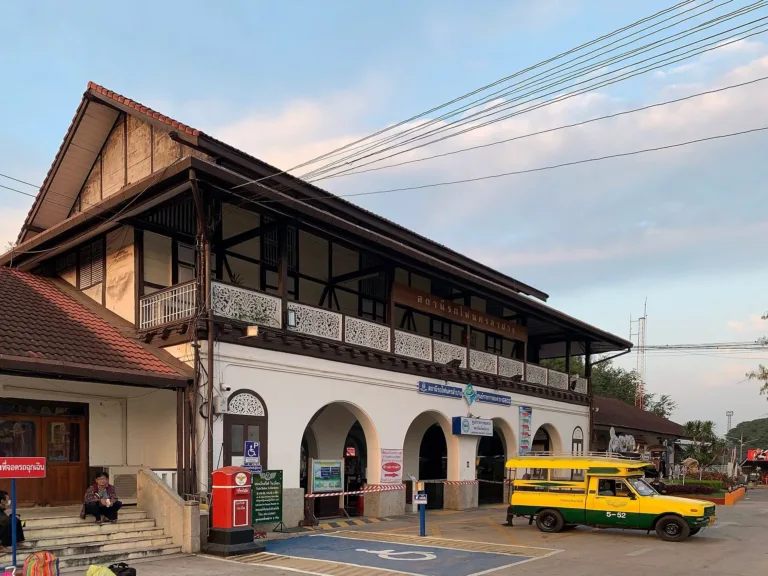
On 1 April 1916 the northern railway opened to Nakhon Lampang station, on the same day as the highway towards Chiang Rai and Chiang Saen. Silpa Wattanatham says the railway department sold carriages from Bangkok to carry passengers, while research cited in the thesis above says South Asian workers brought carriages by train to take people from the station to their homes. Hired carriages soon ran along the main roads. The station building of 1916, designed by a German engineer, is still a stop on carriage rides today.
The railway made Lampang the largest economic centre of the upper North for a while, until prosperity gradually shifted to Chiang Mai after the line reached it in 1921. The Kad Kong Ta quarter, once a riverside trading area on the Wang, changed too: as land transport grew, the river lost its role and business moved towards the station.
Ratsadaphisek Bridge, which carriages cross today, is another relic of that age. It began as a wooden bridge built to celebrate King Rama V's silver jubilee and collapsed when floods swept logs downstream, before being rebuilt in reinforced concrete in 1917. During the Second World War it was painted in camouflage against bombing and repainted white afterwards, which is why locals call it the "White Bridge".
According to Thai Post, the first carriage drivers were Indians living in Lampang, and the number of carriages later grew to more than a hundred, owned by wealthy families and hired drivers alike. Wooden cart wheels were replaced with steel-spoked wheels like those of a bicycle so the carriages could cope with rough roads. The early centre of carriage life was Ban Chiang Rai (Ban Sing Chai); the largest today is Ban Wang Mo in Ton Thong Chai, with stables, training grounds and carriage workshops.
Khaosod English reports that the Lampang Horse Carriage Association was formally established in 1952. Banding together helped Lampang keep its carriages while other provinces gave them up. After the Second World War and the First National Economic and Social Development Plan (1961–1966), new roads brought cars, tricycles and motorcycles that took away passengers, and rising costs pushed fares up. Carriages gradually turned to serving visitors and became a symbol of the town.
The city has long put carriages at the heart of its tourism. In 2012 it held the 13th Lampang Railway and Horse Carriage History event; over the 2016 New Year the city municipality and TAT gave away free carriage rides; in 2022 the inaugural Lanna heritage train took visitors on carriage rides to Wat Si Rong Mueang, Wat Pong Sanuk and old communities; and in 2023 the province held its first Lampang Carriage Carnival.
Today, Thai Post reported in 2024 that more than 90 carriages are in service with about 70–80 drivers, who must be able to repair their carriages and train their horses, while the Bangkok Post put the fleet at about 100 for several years. The main worry is finding young drivers, as most are 40 to 50 years old. Baan Ma Tha Nam in the Tha Mao community now teaches visitors about horse-keeping life. In September 2025 carriages could be booked through a ride-hailing app for the first time, and at Songkran 2026 Lampang police patrolled the town by carriage, trained by the association. The carriages remain part of everyday Lampang, not just a museum piece.
Arrived? Check in, collect a stamp and tell others what it is like right now
Check your location first, so you do not fill in the form for nothing
Location must be on and within 0.6 km · One check-in per place per day · come back on other days to check in again
Post photos from anywhere — no need to be here · Up to 20 photos at a time · JPG / PNG / WebP · GPS location data is removed automatically
The main carriage stands are outside Wiang Thong Hotel, Thip Chang Hotel and around the old City Hall in Lampang town.
From your town-centre hotel to a carriage stand · Free
Lampang town streets
Wiang Thong and Thip Chang hotel stands 06:00–23:00 · Old City Hall stand 06:00–16:00
Lampang horse carriage
Answers travellers want before they go — a one-minute read
Outside Wiang Thong Hotel, Thip Chang Hotel and around the old City Hall
It depends on route and time; agree with the driver first
Ratsadaphisek Bridge, Kad Kong Ta, Wat Phra Kaew Don Tao, Wat Si Rong Mueang
They've been used since 1916, and it's the only province that kept them
Morning or evening, when it's cool and easier on the horses
Best day this week: Sunday 29 Nov · Check in when you arrive to collect a stamp
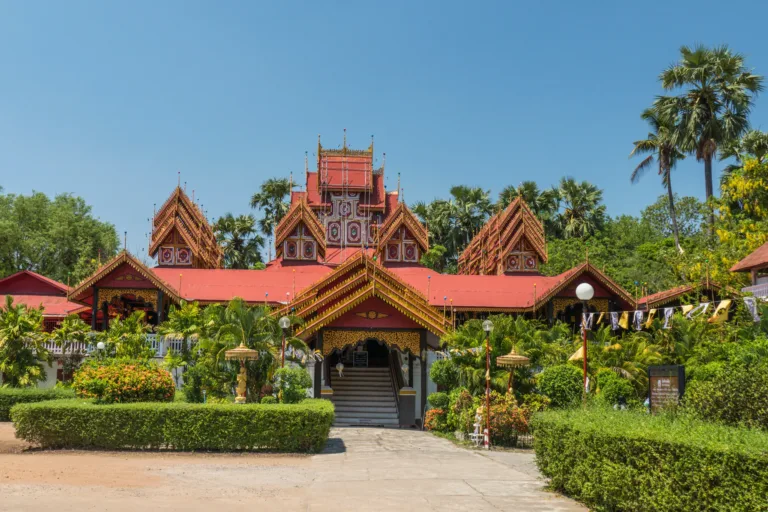 Wat Si Rong Mueang
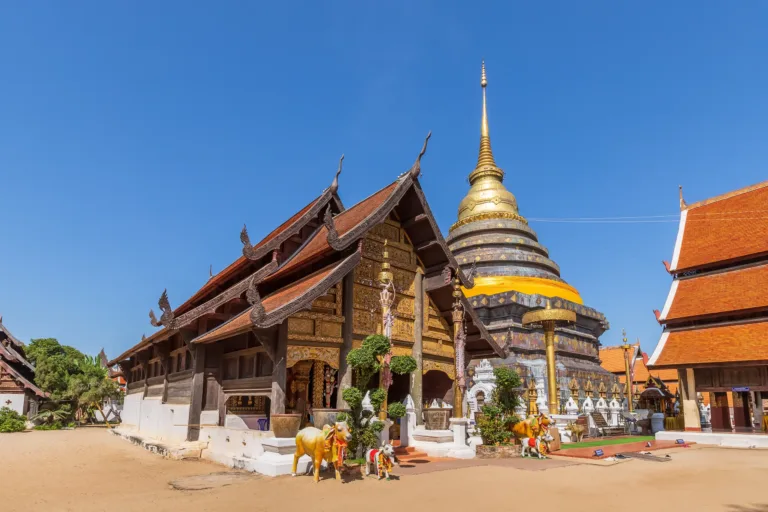 Wat Phra That Lampang Luang
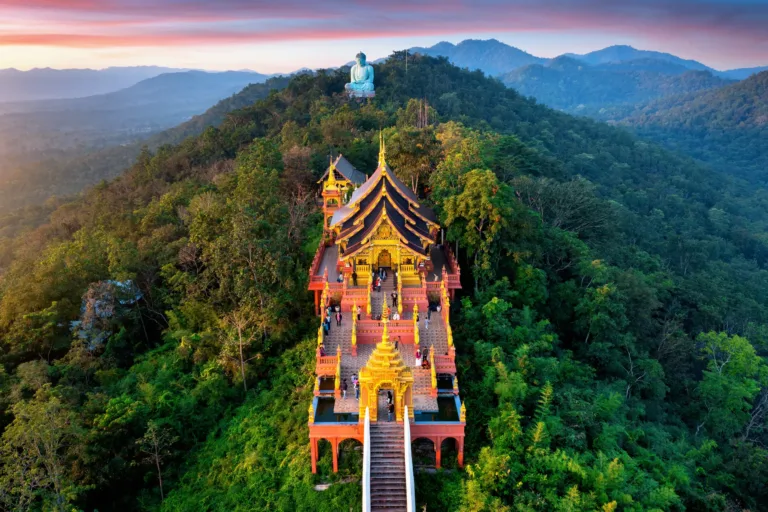 Wat Phra That Doi Phra Chan
 Wat Phra That Chom Ping