 01
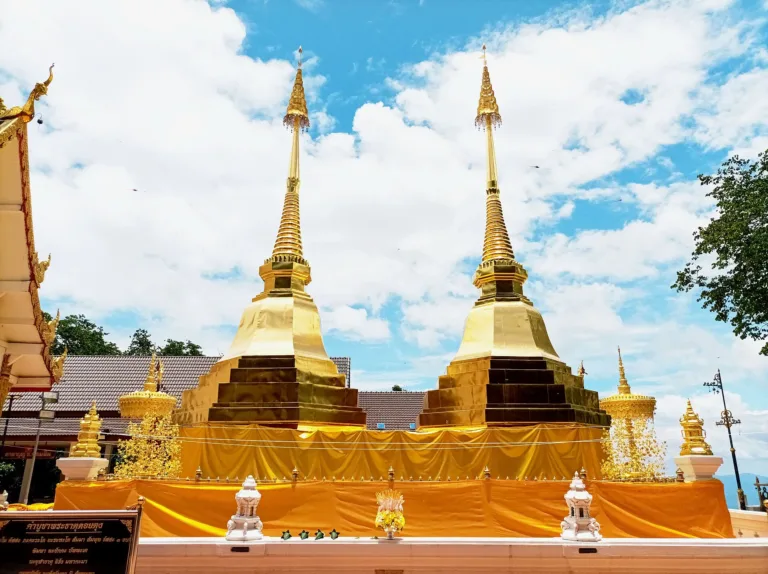
Twin golden chedisOctagonal Lanna bell-shaped chedis said to hold the Buddha's left collarbone
CHIANG RAI · DOI TUNG
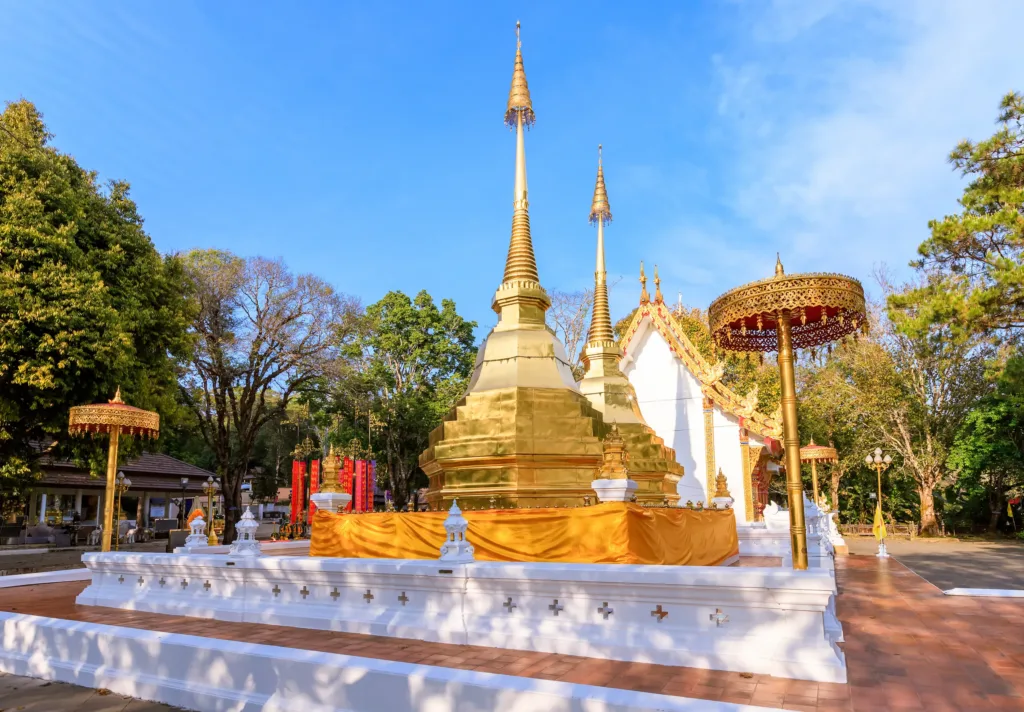
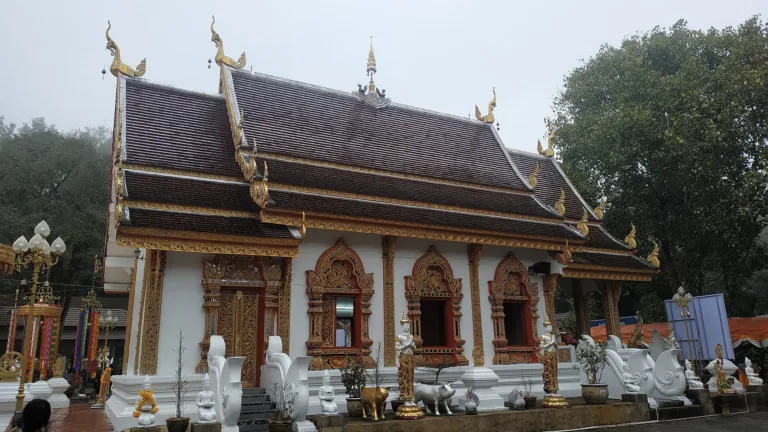
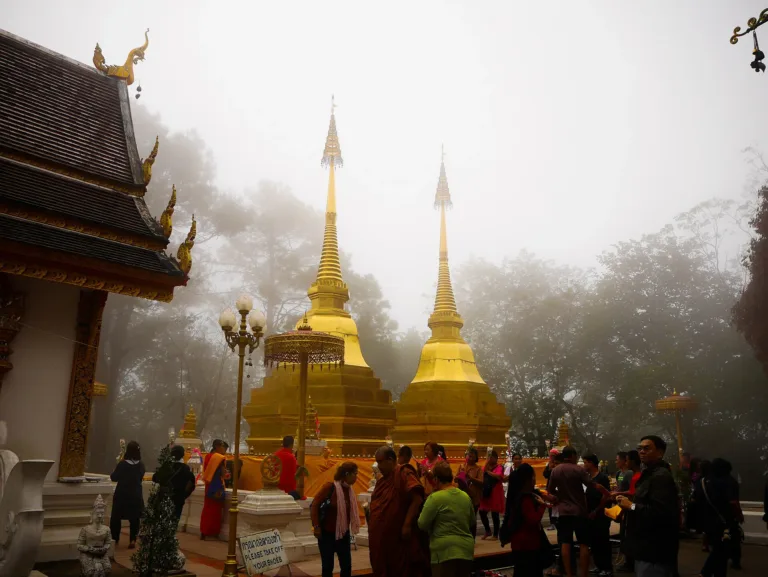
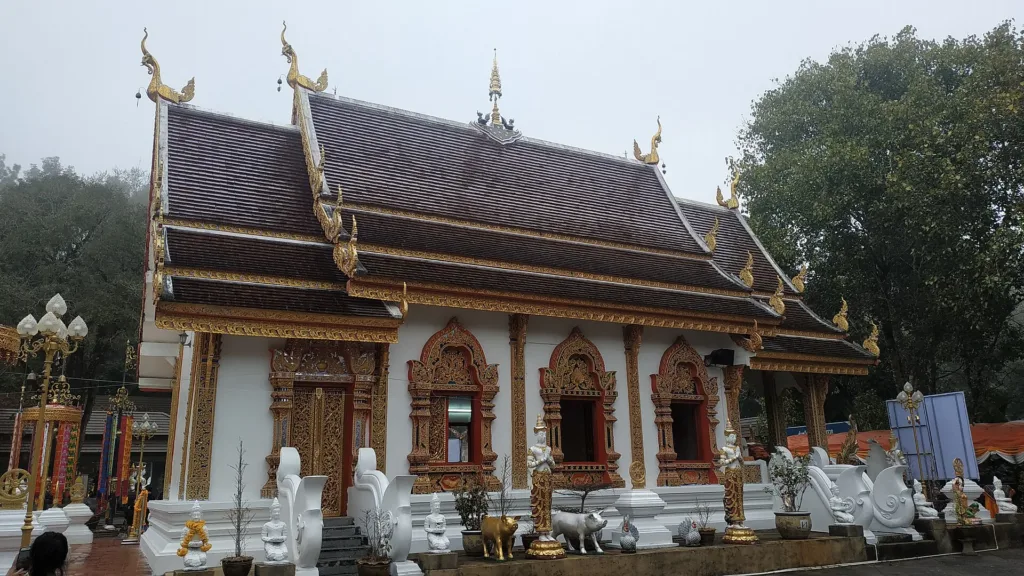
Twin golden chedis on Doi Tung, Chiang Rai, said in legend to be Lanna's first relic shrine, holding the Buddha's left collarbone — the Year of the Pig shrine, amid forest and mist.
Holiday / event — crowded · Dense morning fog, low visibility · Chance of a sea of mist 5/10
sea-of-mist places: morning matters most
Daily, about 8:00–16:30
Before 9:00 for mist and fewer people
The Doi Tung walking pilgrimage ("Tiao khuen doi tam hoi Khruba") and relic-bathing ceremony, on the 14th–15th waxing days of the 4th lunar month (6th northern month), usually in March
01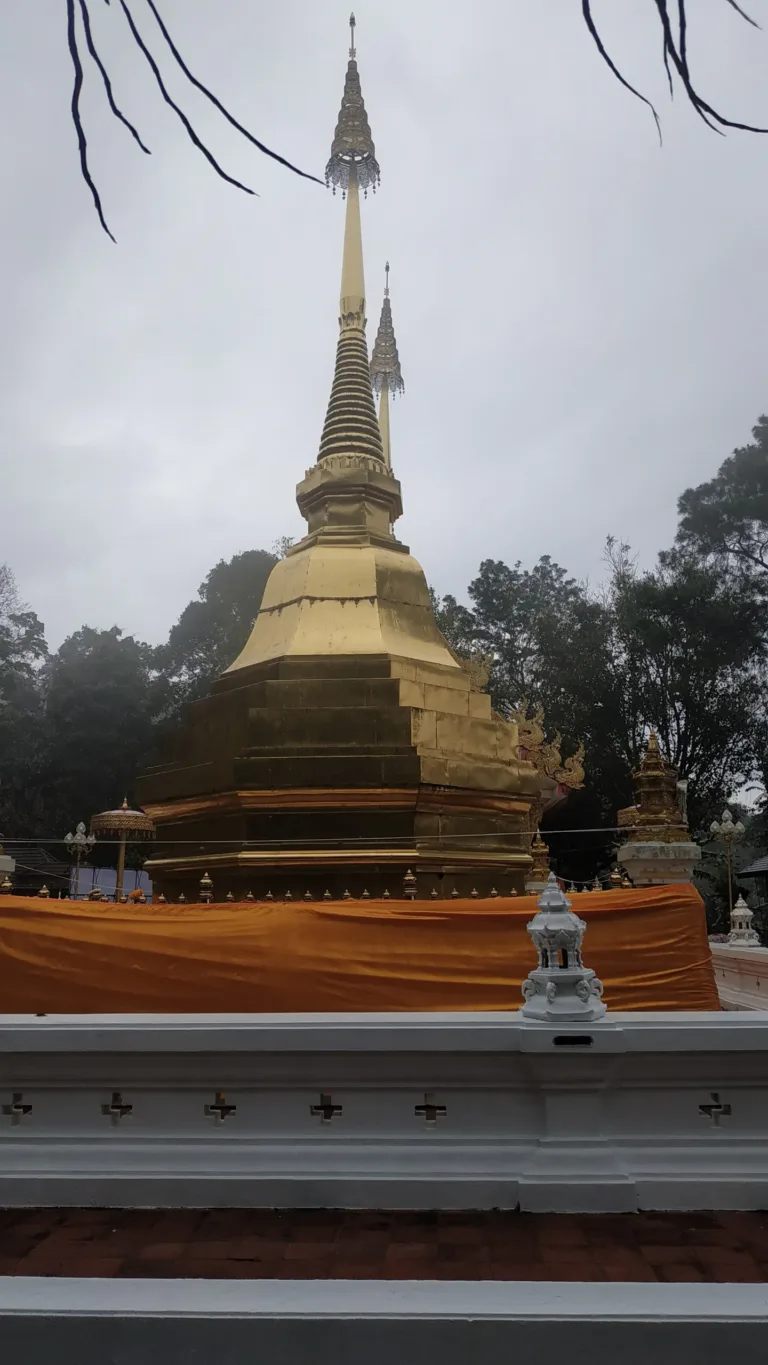 02
 03
 04
 05
Tap a day card to see that day’s weather, rain, haze and hourly forecast
Best time to go Daytime is over · see tomorrow
Thick morning fog with visibility under 1 km — use headlights and drive slowly
Holiday — traffic on the way up and parking fills fast; leave early
Green band = hours used for the score
Best time to go Fine all day little rain through the day
Holiday — traffic on the way up and parking fills fast; leave early
Green band = hours used for the score
Best time to go Fine all day little rain through the day
No warnings today — normal road and weather conditions
Green band = hours used for the score
Best time to go Fine all day little rain through the day
Thick morning fog with visibility under 1 km — use headlights and drive slowly
Green band = hours used for the score
Best time to go Fine all day little rain through the day
No warnings today — normal road and weather conditions
Green band = hours used for the score
Best time to go Fine all day little rain through the day
No warnings today — normal road and weather conditions
Green band = hours used for the score
Best time to go Fine all day little rain through the day
No warnings today — normal road and weather conditions
Green band = hours used for the score
Scored from cloud cover at every level and tonight’s moonlight — the darker the sky, the clearer the Milky Way · tap another night below for the next 7 nights
Wat Phra That Doi Tung — inscribed as "Wat Phra Maha Chinathat Chao (Doi Tung)" — stands on Doi Tung in the Doi Nang Non range, Huai Khrai subdistrict, Mae Sai district, Chiang Rai. Legend calls it the first relic chedi of Lanna, enshrining the Buddha's left collarbone.
Its highlights are the twin golden chedis with octagonal Lanna bells, the legendary hole for the flagpole that gave "Doi Tung" (Flag Mountain) its name, the naga stairway lined with bells, and cool, misty air at around 1,280 m.
The temple is open daily and free. It is the birth-year shrine for people born in the Year of the Pig (the elephant year in Lanna tradition). The road up is narrow, steep and winding — use a low gear.
From the rainy season into the cool season (Jun – Jan), morning mist often drifts across the chedi terrace and the pine forest around the temple, clearest around 7:00–9:00 after a rainy night and on still mornings.
Photos from Wikimedia Commons and contributors · tap a photo to see its credit
The final stretch is narrow, steep and full of tight bends — drive slowly in a low gear and watch for oncoming traffic
The top car park is small; on holidays you may have to park below and climb the naga stairway
There are no toilets at the top car park — walk about 250 m down the bell-lined path
This is a sacred area — dress modestly, covering shoulders and knees
Free · Time needed 1–2 hours
Late mornings at weekends, the cool season (Dec – Jan) and the pilgrimage period around March
| Flowers, incense and candles (donation) optional | 20–50 ฿/set |
| Bell-ringing / donation box (optional) optional | 20–100 ฿/time |
Mostly cash · Prices may change by season — check with the venue
The Doi Tung walking pilgrimage ("Tiao khuen doi tam hoi Khruba") and relic-bathing ceremony, on the 14th–15th waxing days of the 4th lunar month (6th northern month), usually in March
Tap a month on the wheel to see weather, rain, haze and crowds from 10 years of records
Best time · November–January is cool to cold with clear skies, and morning mist often drifts across the chedi terrace — the twin golden chedis photograph beautifully. Arrive before 9:00.
Watch out · Late February–April brings heavy forest-fire smoke to Chiang Rai: hazy views and high dust (even though the walking pilgrimage falls in March). August–September is very wet, and the narrow, steep road gets slippery.
Nov by the records 14–22°C · avg rain 95 mm (11 rainy days) · clear 15 days · avg PM2.5 9
Wat Phra That Doi Tung is inscribed on the marble door frame of its ordination hall as "Wat Phra Maha Chinathat Chao (Doi Tung)". It sits on what locals call the "chest" of Doi Nang Non, the Sleeping Lady mountain, in Huai Khrai subdistrict, Mae Sai district, Chiang Rai, next to the Doi Tung Development Project area in Mae Fa Luang district. Many signs and articles put the chedis "about 2,000 m" up, but Doi Tung's actual summit is about 1,389 m, and elevation models put the chedi terrace at around 1,280 m.
Doi Tung is one of the "three hearthstone peaks" — Doi Chong, Doi Ya Thao and Doi Tung — that later generations called Doi Nang Non, the Sleeping Lady, for its shape. Folk legend says Doi Chong is a son waiting for his father, Doi Ya Thao his mother, and Doi Tung, once called "Doi Din Daeng", the mountain of Pu Chao Lao Chok, a Lawa chief. The chronicle of Hiran Nakhon Ngoen Yang tells how Phaya Lawachakkarat, of Pu Chao Lao Chok's line, led people down from the Doi Tung highlands to found settlements by the rivers below; historian Somrit Luechai sees him as the ancestor of Lanna's Mangrai dynasty, and Srisakra Vallibhotama suggests Hiran Nakhon Ngoen Yang may be Wiang Phang Kham at the foot of Doi Chong on the Mae Sai river. Doi Tung is thus bound up with Lanna's founding myths from the very start.
The story comes from the Singhanavati-Yonok chronicle and the chronicle of Phra That Doi Thung of Chiang Saen. The Buddha is said to have come to "Doi Din Daeng" (Red Earth Mountain), sat on a rock shaped like half a lime, and foretold that his left collarbone relic would be enshrined there, telling Ananda that after his passing Maha Kassapa should bring it. Some sources say the mountain was earlier called "Suan Theparak", the guardian spirits' garden.
In the legend, during the reign of King Achutarat, third king of Yonok Nakhon, Maha Kassapa brought the collarbone relic in a crystal urn. The king had silver and gold urns nested around it and carried it up the mountain, where the relic sank about 8 sok (4 m) into the rock. He bought the land from the spirit couple Pu Chao Lao Chok and Ya Chao for 1,000 kham of gold, 3,000 wa on each side, and gave 500 households to tend the relic. Maha Kassapa had a giant tung (Lanna flag) raised in worship — a pole of 8,000 wa and a banner of 7,000 wa, the story says — so the peak became "Doi Thung", or Doi Tung. Another version says the banner was 1,000 wa long and the stupa was built where its tail came to rest. Many sources give the founding year as 911 CE (1454 BE), but no archaeological evidence as old as the Yonok period described in the legend has been found. Even the date varies: some versions of the Singhanavati chronicle say the chedi was built in 561 BE (18 CE).
The chronicle also weaves in folk tales. The hermit Kammalo came to guard the relic; a doe drank his urine and bore a baby girl, Pathummawati. When she turned 16, King Achutarat asked for her hand with 400,000 kham of gold, and the hermit had the gold cast into a deer so she could bow to her mother every day.
The two chedis also come from legend. The Singhanavati chronicle says that under King Mangrai Narat, fourth of the line, the monk Maha Wachira Phothi brought 150 more relics (another chronicle says 50), and a 7-sok chedi was built over the relic rock. Later, under King Phoeng, the eighth king, more relics came but could not go into the original rock, so a second chedi was built to the east. Most travel guides simply say the second chedi was built under King Mangrai.
In the Lanna kingdom, the chronicles record many kings coming to worship and granting 500 households and land 3,000 wa on each side — Phaya Mangrai, Phaya Chai Songkhram, Phaya Kuena and King Tilokarat, who had the relic's "founding chronicle" written and issued silver plates granting its attendants. Under Phaya Yot Chiang Rai, Chiang Mai suffered a drought; Chiang Saen people said their rains came because they bathed Phra That Doi Tung, so the queen mother sent scented water in Chinese jars to bathe the relic in the 8th lunar month — and rain fell across Chiang Mai. Phaya Kaeo later offered a golden urn weighing a thousand units. As for the fabric itself, restorations are recorded under Phaya Kuena around 1377, then Phaya Saen Mueang Ma, Phra Mueang Kaeo and Phra Mueang Ket Klao, the last credited by the chronicles with reshaping the chedis — though art historians date the octagonal bell form they kept until the 1970s later (see below).
Patronage continued under Burmese rule. In 1579 (2122 BE) Narathamangsor, ruler of Chiang Mai, issued a silver plate granting 500 attendant households, and in 1604 the ruler of Chiang Saen and senior monks cast a statue of the hermit Kammalo with an inscribed prayer and short history of the relic — now kept at the Chiang Saen National Museum. Art historian Phiset Jiajanphong compared Doi Tung's octagonal bell chedi to Doi Suthep's twelve-sided one and suggested it was built around 1586, in line with the vogue for octagonal Lanna bell chedis in the 16th–17th centuries.
Over time the chedis fell into ruin. In 1927 the revered Lanna monk Khruba Srivichai led Chiang Rai people up to restore them, rebuilding over the originals in their old form to about 5 m, with tiger statues at the four corners and a vihara with a stucco Buddha. The work took four years (1927–1931) and cost 3,205 rupees. His route became the pilgrims' footpath: before there was a road, pilgrims set off from Ban Pang Dok (now Ban Sala Choeng Doi) on the afternoon of the 13th waxing day, forded streams 32 times and reached the chedis at dawn on the 14th.
The vihara and its Buddha were later damaged by the elements, and the chedis grew dull. In 1956 Thongkham Hantrakul sponsored the lacquering and gilding of both chedis, and in 1957 Ong Sorphan Mathurot (Bao Oeng), abbot of Wat Samananam Borihan, and she built the ordination hall, its principal Buddha and a statue of Jivaka Komarabhacca, the Buddha's physician.
In 1973 the Ministry of Interior built new chedis over the old pair, designed by Prakit (Chit) Buabut: prasat-style towers with twelve indented corners, standing Buddhas in niches on four sides, gold mosaic all over and royal umbrellas at the corners of the low wall. The designer cast them in concrete sections to encase the old chedis and keep them intact inside. Some writers see the change as driven by the politics of the time rather than local wishes. This took place under Field Marshal Thanom Kittikachorn's government. The base drew on Chiang Saen-style niches while the spire was Rattanakosin in style, built from precast reinforced-concrete pieces clad in mosaic, making the new chedis nearly twice the height of the old ones.
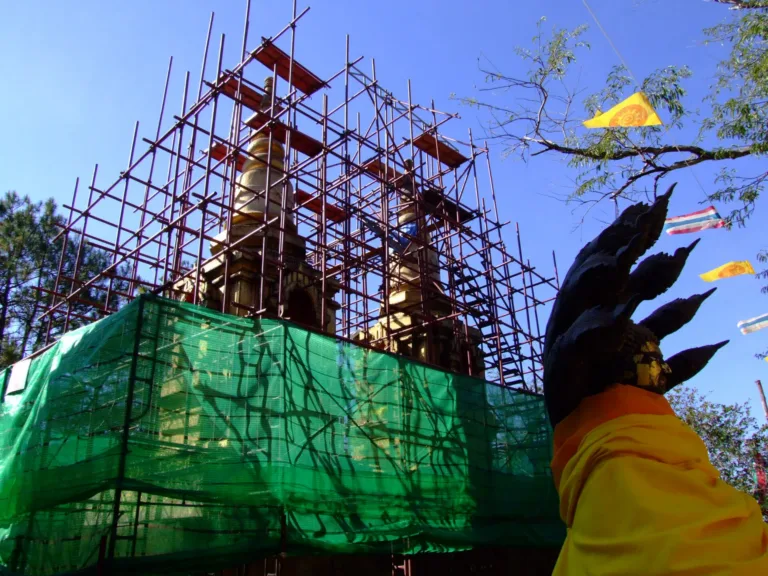
More than 30 years later, Chiang Rai people asked for the old form back. In 2006 the Fine Arts Department's Chiang Mai archaeology office began removing the casing, after consulting the Mae Sai district abbot and Chit Buabut, who did not object and shared his 1973 records. The removed casing was set up at Wat Noi Phra That Doi Tung below. Digging about 2 m down revealed an original rectangular base and signs of at least three restorations. The chedis were then rebuilt in their Khruba Srivichai form from old photographs hanging in the vihara, finished before December 2007 at a cost of about 21–22 million baht including landscaping, a wider terrace and a rebuilt naga stairway; the Wat Tha Sung Foundation paid for the gold leaf. The project won the Association of Siamese Architects' conservation award in 2009. A Matichon Weekly column says that before the work Chiang Rai residents chose between the 1973 design and the old Lanna form, and picked the Lanna form. Craftsmen cut the concrete-and-mosaic shell away piece by piece without harming the core, reinforced the structure from base to tip and covered it in traditional Lanna gold leaf, so today's chedis stand only about half as tall as the 1973 towers. The project also sparked debate between seeing a chedi as a sacred object that may be rebuilt over, and the conservation view that original fabric must be kept.
The mountain around the temple changed just as much. This border area was once poppy country and a route for armed groups, until the Princess Mother, Srinagarindra, chose Doi Tung for her residence and the Doi Tung Development Project began in 1988. Akha, Lahu, Tai Lue and Lawa villagers turned to reforestation, coffee and macadamia instead of opium, and per-capita income rose about sixfold between 1988 and 2016. The Doi Tung Royal Villa and Mae Fah Luang Garden are only a few kilometres from the temple.
Phra That Doi Tung is the birth-year shrine for people born in the Year of the Pig — which in Lanna tradition is the year of the elephant (kunchon), not the pig. Pilgrims come every year from Thailand, from Shan State (Tachileik to Kengtung) and from Luang Prabang and Vientiane in Laos. The big event is the walking pilgrimage on the 14th–15th waxing days of the 4th lunar month (6th northern month), usually in March: processions walk up from Wat Sala Choeng Doi along Khruba Srivichai's route, and the relics are bathed on the full-moon day — as in the "Tiao khuen doi tam hoi Khruba" pilgrimage of 5 March 2023. At the 3 March 2026 ceremony, hosted by Chiang Rai province, there were alms offerings, a Brahmin rite to the relics, a procession led by royally granted bathing water and robes, followed by peacock-tail dancers and ethnic groups from all 18 districts, then a Lanna life-extension rite, the bathing and wrapping of the chedis in cloth, and nine strikes of the victory gong to close.
In 2018 the temple made world news after the Wild Boars football team was rescued from Tham Luang cave. On 25 July 2018 a procession climbed about 1 km from Wat Noi Doi Tung, and 11 boys were ordained as novices and their coach as a monk at Wat Phra That Doi Tung, before staying at Wat Phra That Doi Wao until they disrobed on 4 August, dedicating merit to their rescuers, including Lt Cdr Saman Kunan, the former navy SEAL who died during the operation.
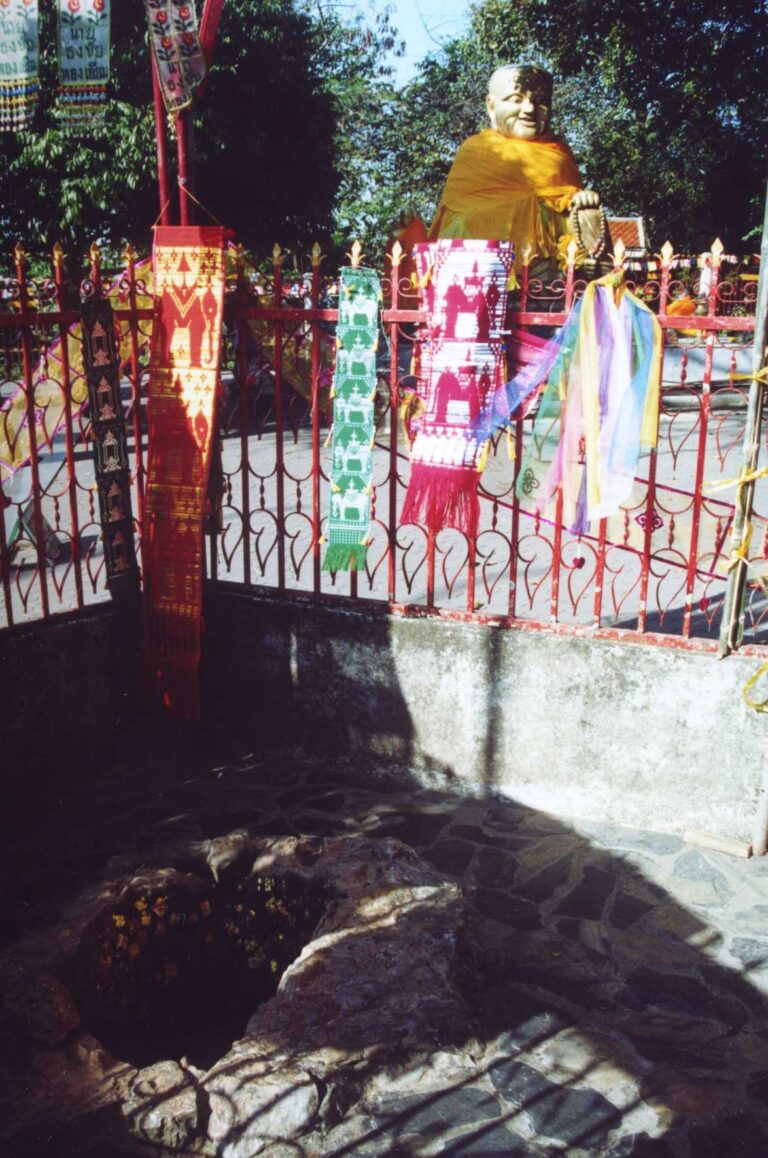
Today visitors find the twin golden chedis on a walled terrace. In front is the "flagpole hole", a crack about a foot long in the ground, believed to have held the base of the tung for a thousand years. From below, a naga stairway leads to a path lined with bells, and a Lanna-style ordination hall and vihara stand beside the terrace. Visitors can help by dressing modestly, not climbing the chedi base and driving the mountain road with care.
Arrived? Check in, collect a stamp and tell others what it is like right now
Check your location first, so you do not fill in the form for nothing
Location must be on and within 1 km · One check-in per place per day · come back on other days to check in again
Post photos from anywhere — no need to be here · Up to 20 photos at a time · JPG / PNG / WebP · GPS location data is removed automatically
From Chiang Rai town, take Highway 1 towards Mae Sai for about 48 km to Ban Huai Khrai, turn left onto Highway 1149 up Doi Tung, pass the turn-off to the Doi Tung Royal Villa and follow signs to Wat Phra That Doi Tung. The last stretch is…
Highway 1 to Ban Huai Khrai, then about 17–18 km up Highway 1149; about 60–65 km in all · Fuel
Highway 1 to Ban Huai Khrai, then Highway 1149 · Fuel
From Mae Sai or Ban Huai Khrai · As agreed
Highway 1 to Ban Huai Khrai, then Highway 1149 up Doi Tung; paved throughout, with a narrow, steep, tightly winding final stretch
Limited parking at the top near the chedis; on holidays you may need to park at Wat Noi below and walk up the naga stairway
Petrol stations in Mae Chan, Mae Sai and Ban Huai Khrai on Highway 1
Mobile signal works (near the border some phones may pick up Myanmar networks)
Daily, about 8:00–16:30
about 60 km from Chiang Rai town
Wat Phra That Doi Tung, Mae Sai, Chiang Rai
Approx. nightly price for 2 adults (next week) · final price depends on your dates
Best day this week: Monday 30 Nov · Check in when you arrive to collect a stamp
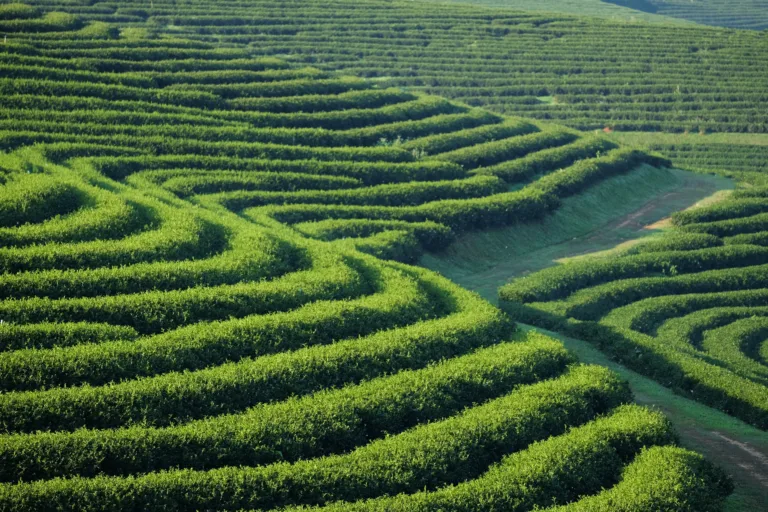 Choui Fong Tea Plantation
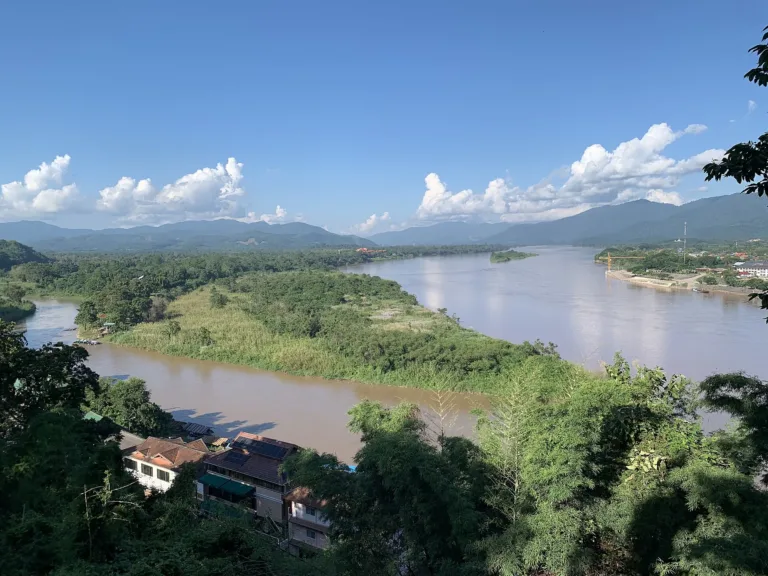 Golden Triangle
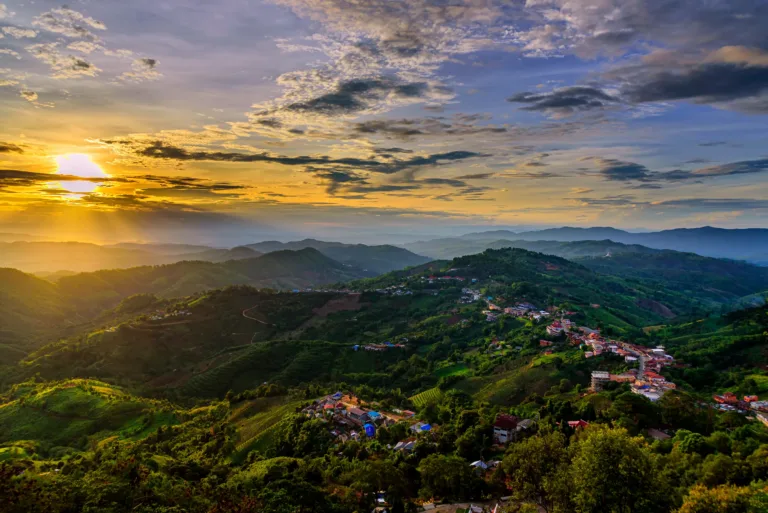 Doi Mae Salong