 01
Three-country confluenceThe Ruak flows into the Mekong
Where three lands meet · Chiang Saen
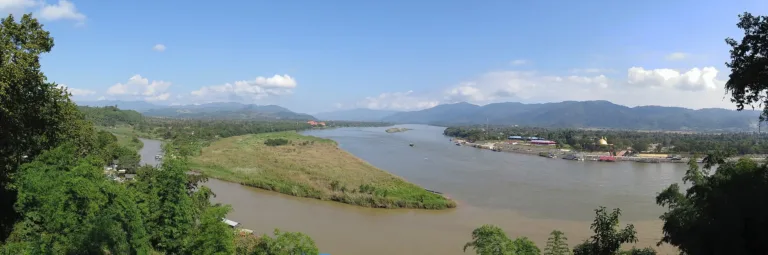
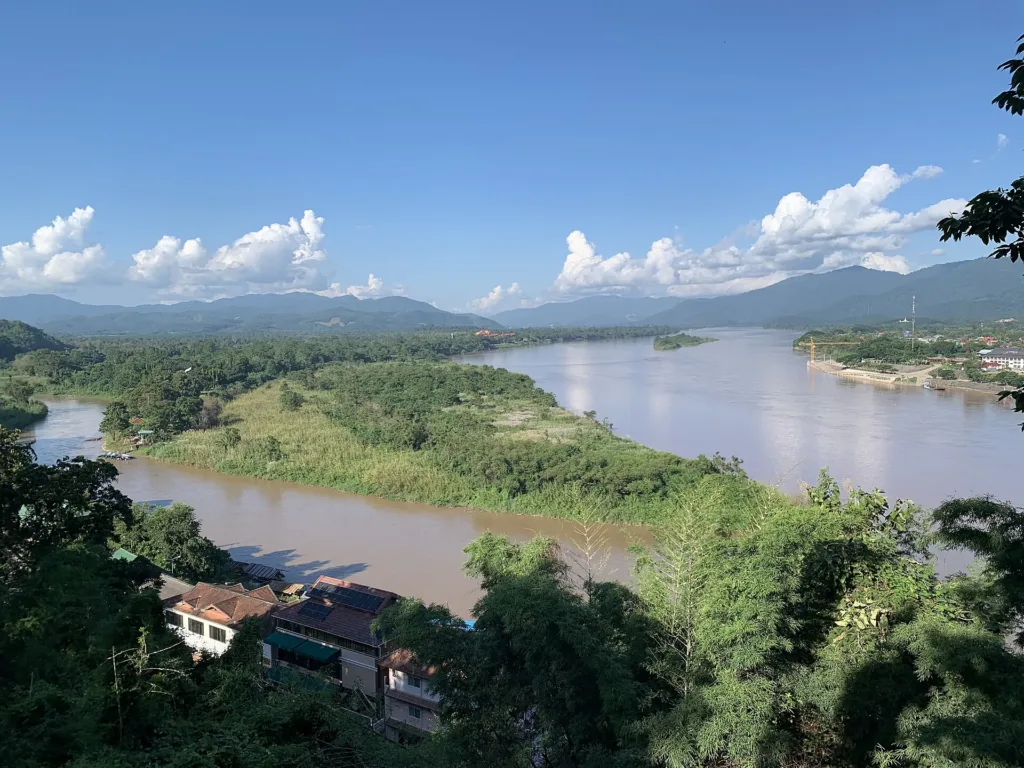
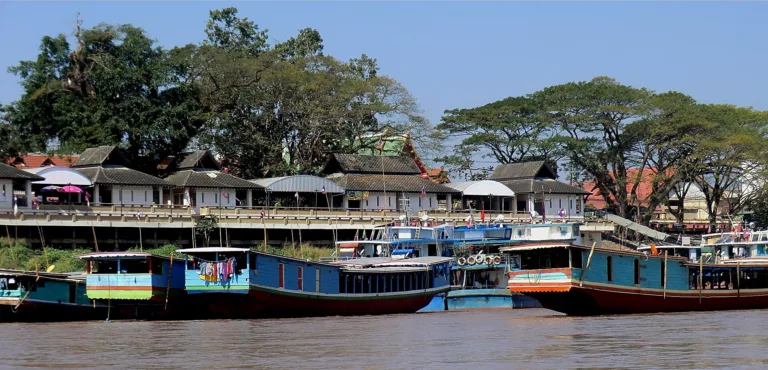
Where the Ruak River meets the Mekong and Thailand, Laos and Myanmar meet, at Ban Sop Ruak, Chiang Saen. The name dates from 1971 and the opium trade, when opium was traded for gold. Hall of Opium, the giant Buddha and boats to Don Sao.
Holiday / event — crowded · Chance of a sea of mist 4/10
sea-of-mist places: morning matters most
Jun – Sep
Border — No drones or photos of checkpoints
Half a day
Good (watch for roaming onto Lao or Myanmar networks)
01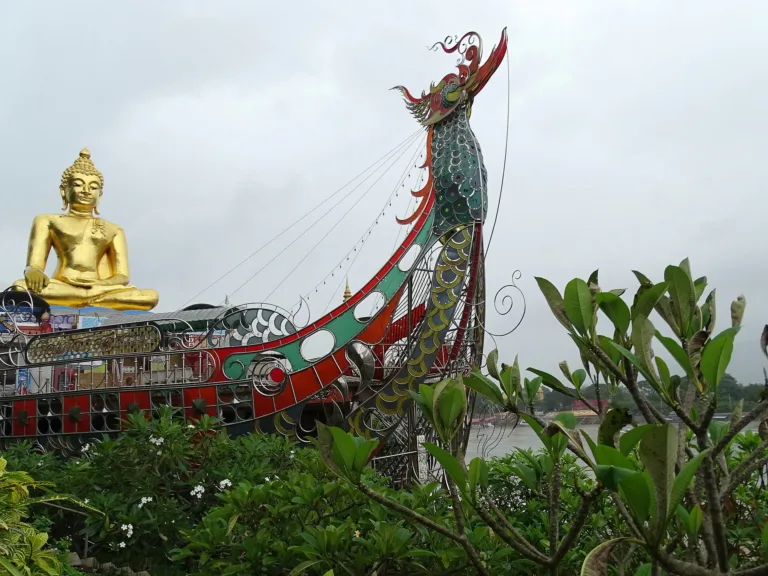 02
 03
 04
Tap a day card to see that day’s weather, rain, haze and hourly forecast
Best time to go Daytime is over · see tomorrow
Holiday — traffic on the way up and parking fills fast; leave early
Green band = hours used for the score
Best time to go Fine all day little rain through the day
Holiday — traffic on the way up and parking fills fast; leave early
Green band = hours used for the score
Best time to go Fine all day little rain through the day
No warnings today — normal road and weather conditions
Green band = hours used for the score
Best time to go Fine all day little rain through the day
No warnings today — normal road and weather conditions
Green band = hours used for the score
Best time to go Fine all day little rain through the day
No warnings today — normal road and weather conditions
Green band = hours used for the score
Best time to go Fine all day little rain through the day
No warnings today — normal road and weather conditions
Green band = hours used for the score
Best time to go Fine all day little rain through the day
No warnings today — normal road and weather conditions
Green band = hours used for the score
Scored from cloud cover at every level and tonight’s moonlight — the darker the sky, the clearer the Milky Way · tap another night below for the next 7 nights
Golden Triangle, Ban Sop Ruak, Wiang, Chiang Saen, Chiang Rai.
Some cool-season mornings bring mist on the Mekong
Photos from Wikimedia Commons and contributors · tap a photo to see its credit
No drones or photos of checkpoints
Wear a life jacket, especially at high water
Don't buy wildlife products
High PM2.5 Feb–Apr
Free · Time needed Half a day
Midday tour-bus rush and long weekends, Nov–Jan
| Hall of Opium, Thai adult optional | 150 ฿/person |
| Hall of Opium, foreign adult optional | 200 ฿/person |
| House of Opium optional | 50 ฿/person |
| Long-tail boat to Don Sao optional | 400–500 ฿/person |
| Songthaew Chiang Saen–Sop Ruak optional | 20 ฿/person |
Cash; some shops take transfers · Prices may change by season — check with the venue
Tap a month on the wheel to see weather, rain, haze and crowds from 10 years of records
Best time · Nov–Jan is cool and clear, with all three countries in view
Watch out · Feb–Apr heavy haze · Jul–Sep high, fast Mekong
Nov by the records 19–28°C · avg rain 94 mm (9 rainy days) · clear 15 days · avg PM2.5 9
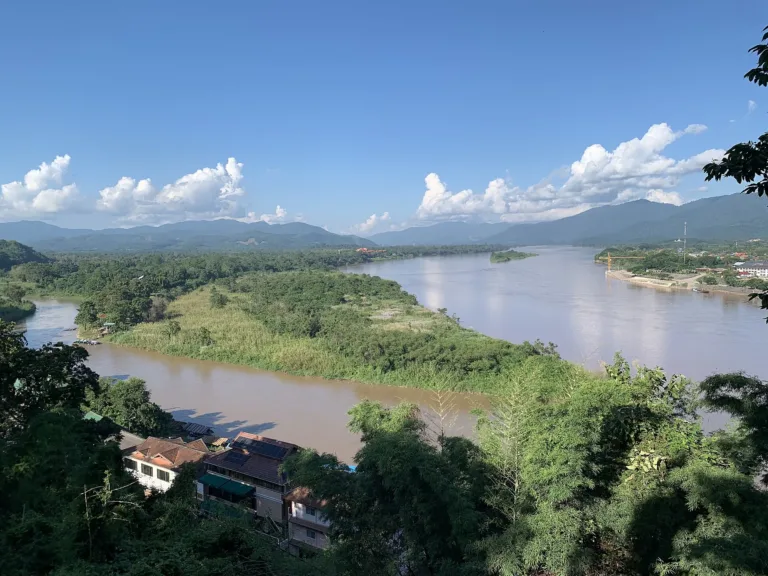
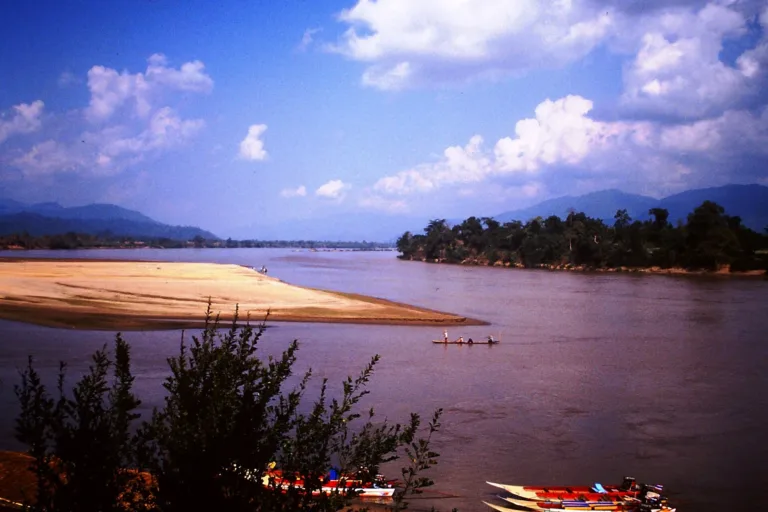
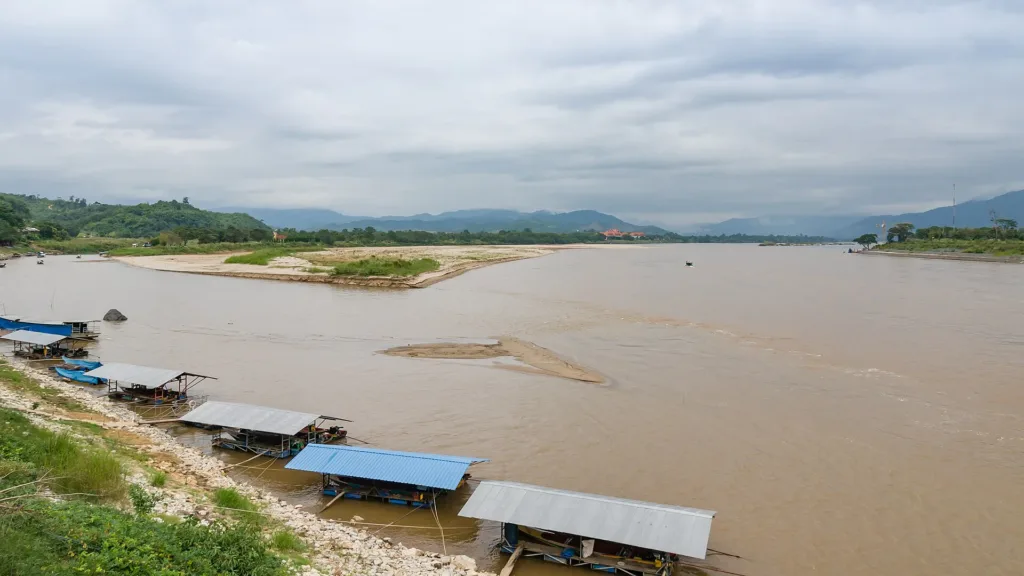
The Golden Triangle is at Ban Sop Ruak, Moo 1, Wiang subdistrict, Chiang Saen district, Chiang Rai, about 9–10 km north of Chiang Saen town and 60–70 km from Chiang Rai city. "Sop" means a river mouth: here the Ruak, the Thai–Myanmar border, flows into the Mekong, the Thai–Lao border, so from the bank you see three countries at once — Chiang Saen in Thailand, Ton Pheung in Laos' Bokeo province, and Myanmar's Shan State.
The Chiang Saen plain is the land of the Yonok Nakaphan and Hiranyanakhon Ngoen Yang legends. Phra That Doi Pu Khao on the hill above the confluence is said in legend to date from the Ngoen Yang era, though the surviving chedi remains are around 14th century. On the Lao bank lies the legendary city of Suvannakhomkham, which Thailand proposed in 2009 for joint World Heritage listing with ancient Chiang Saen.
Phaya Saen Phu, third king of the Mangrai dynasty, founded Chiang Saen on an older town site in 1328. In 1804 the town was taken and its people deported, leaving it deserted — Tai Yuan descendants now live in 16 Thai provinces and three Lao provinces — until Chiang Saen was refounded in 1880.
Locals also tell of Phra Chao Lan Tue, a giant Buddha believed to lie sunk in the Mekong. Fishermen reported sightings in 1936, 1945 and 1946–50; in 1966 the governor sent divers who found nothing, apart from a 55×70 cm bronze halo now in the Chiang Saen National Museum. The legend inspired the giant Buddha on the riverbank today.
Opium has a long history in Siam: Rama III farmed an opium tax, and Rama IV barred Thais from smoking while still allowing Chinese residents. Field Marshal Sarit's Revolutionary Council Announcement No. 37 made opium illegal from 1 January 1959, and on 1 July 1959 about 43,445 opium pipes were burned at Sanam Luang.
Yet opium in the borderlands grew. After Kuomintang troops retreated from Yunnan into Burma in 1949 they taxed the crop and sent almost all of it through Thailand; Burmese output rose from about 30 tonnes to 600 tonnes by the mid-1950s. The KMT Fifth Army set up headquarters at Doi Mae Salong in 1963, and in 1967 the "Opium War" broke out at Ban Khwan in Laos, when Khun Sa's caravan of about 16 tonnes was chased by KMT units and a Lao general bombed both sides and seized the opium.
The name "Golden Triangle" first appeared in July 1971 in a Far Eastern Economic Review story quoting US Assistant Secretary of State Marshall Green, who said the opium came from a "golden triangle" of Burma, Thailand and Laos, not China. "Golden" reflects how raw opium was traded for gold bars. Some sources date the name to the 1960s or credit the CIA, but the strongest evidence points to 1971.
Khun Sa once commanded more than 25,000 men. His base was Ban Hin Taek, a village founded by the Akha around 1903, where he set up in 1976. On 21 January 1982 Thai forces with air support attacked it — several thousand troops over about two weeks according to the Bangkok Post, about 1,000 over four days according to Wikipedia — when he was thought to produce about 70% of the region's heroin. On 5 January 1996 his Mong Tai Army surrendered to the Burmese government, and Khun Sa died in Yangon on 26 October 2007, aged 73.
In 1988 the Princess Mother began the Doi Tung Development Project to replace opium with new livelihoods, and that year she visited the Golden Triangle, leading the Mae Fah Luang Foundation to conceive the Hall of Opium to educate people and reduce demand. It cost about 400 million baht, largely from Japan, and took four years to build. It began admitting visitors in late 2003, ahead of its official opening (MGR Online dates its public service from 2005). It opens with a tunnel of about 137 m and covers a replica clipper ship, the Opium Wars, an old opium den and a closing Hall of Reflection.
On 21 March 2022 the Hall of Opium and its roughly 156-rai site were handed to Thailand's Office of the Narcotics Control Board, which holds a 30-year forest-land permit, to develop an International Narcotics Control College with UNODC, launched inside the Hall of Opium compound in September 2023. Visitors should check current opening days, hours and fees before going.
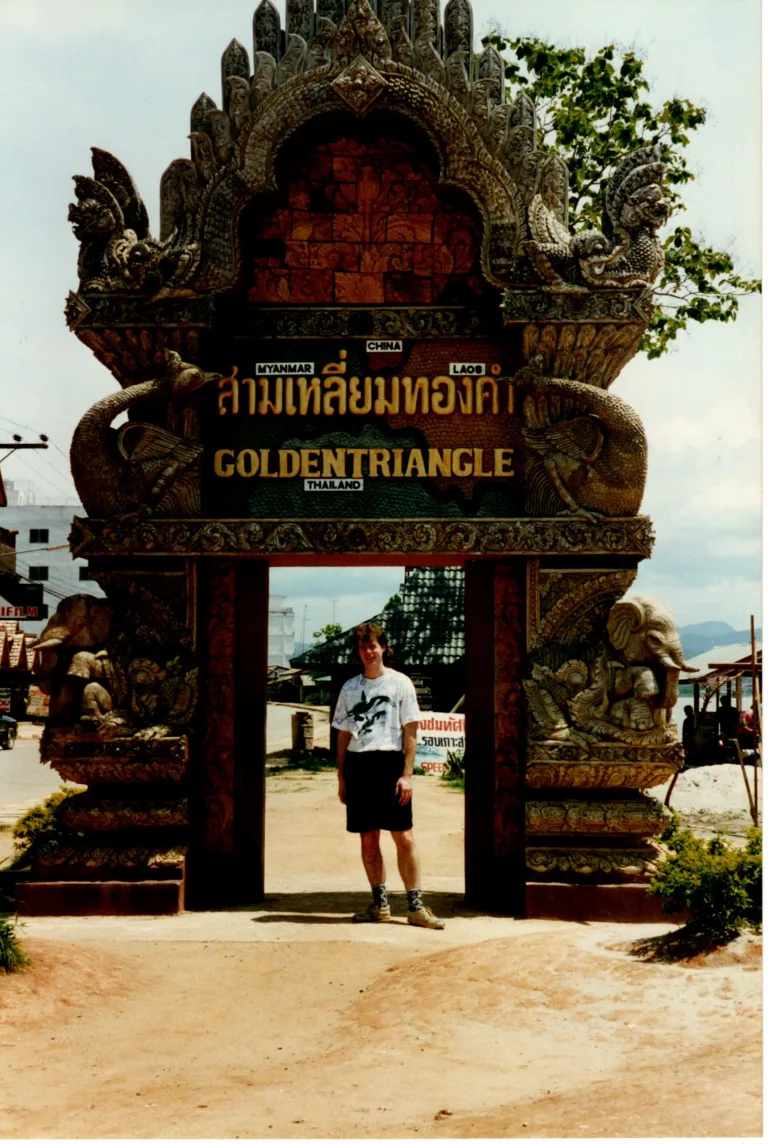
As for tourism, a paved highway to Chiang Saen was begun in 1986 and "Golden Triangle" tours soon followed; the old opium route turned Ban Sop Ruak into the photo stop with the Golden Triangle sign that almost every visitor makes.
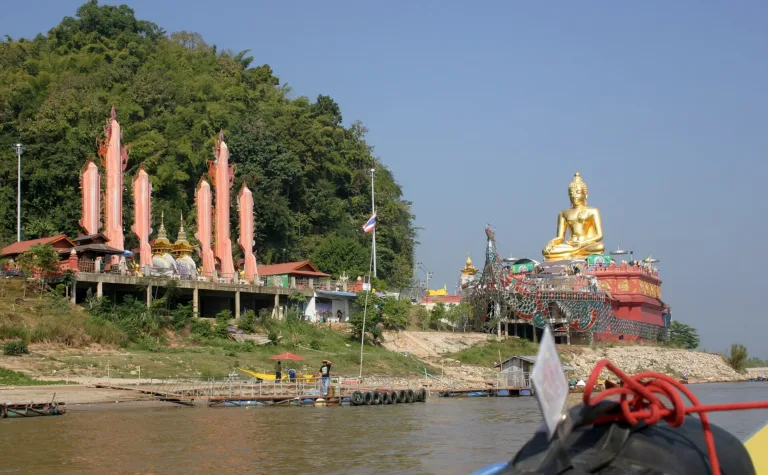
Near the Golden Triangle arch is the House of Opium, the private museum of Patcharee Srimatayakul, who opened an antique shop in 1987 and the museum in 1989, displaying pipes, scales and animal-shaped opium weights. The giant golden Buddha on the riverbank is Phra Chiang Saen Si Phaendin, also called Phra Phuttha Nawa Lan Tue, seated on a boat called the Kusoltham, 9.99 m wide at the lap, 15.99 m tall and over 69 tonnes, funded by a Thai–Chinese foundation. One source says it honoured Queen Sirikit's 72nd birthday, pointing to about 2004–05, and photographs confirm it stood by 2011.
PM Chatichai Choonhavan's policy of "turning battlefields into marketplaces" led to the 1993 Quadrangle Economic Cooperation, the R3A road and Mekong cargo shipping from Yunnan. Chiang Saen Commercial Port 1 opened in 2003, and the Golden Triangle shifted from an opium route to a tourist and border-trade hub.
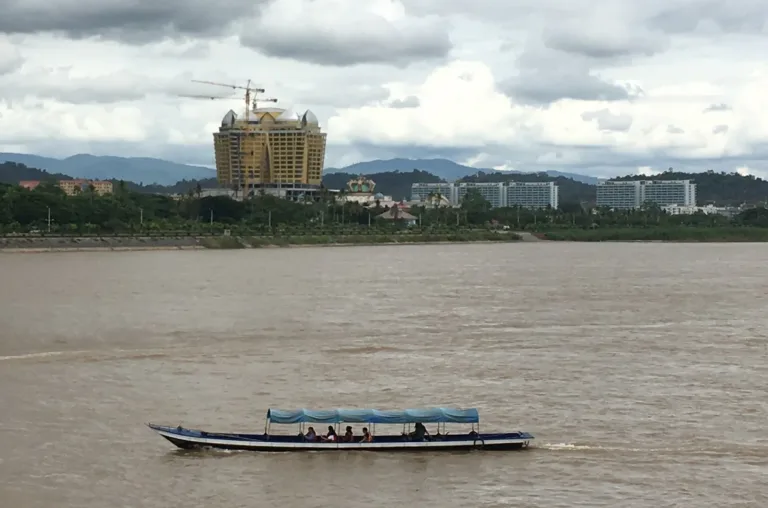
Across the river, in 2007 Laos gave Kings Romans (Dok Ngiew Kham) a 99-year concession for the Golden Triangle Special Economic Zone, officially launched on 9 September 2009, whose casino and towers are visible from the Thai bank. On 30 January 2018 the US Treasury sanctioned its owner and company for drug trafficking, money laundering and human and wildlife trafficking, and in August 2024 Lao and Chinese authorities raided scam centres in the zone.
The Mekong itself has changed. In October 2011, 13 Chinese crew were killed on cargo boats on the river, leading to multinational patrols; Naw Kham, blamed for the attack, was executed in Kunming on 1 March 2013. In February 2021 the river at Chiang Saen dropped to about 1.84 m, exposing sandbars at the Ruak mouth and cutting the number of Sop Ruak fishermen from over 50 to about 30, which many linked to upstream dams.
At the other extreme, the Mekong burst its banks at Chiang Saen in July 2018; Typhoon Yagi brought major floods to Chiang Rai in September 2024 — Wiang subdistrict, Chiang Saen, was declared a disaster area on 13 September, and the high Mekong slowed drainage from the Ruak and Sai rivers; and in August 2026 the river at Chiang Saen rose from 4.95 m to 7.37 m in under ten days. In 2025 arsenic from mines in Shan State was found in the Kok, Sai and Mekong rivers.
Though the opium era has passed, drugs have not left the area. The UN reported that Myanmar became the world's top opium producer in 2023, and the region may be the world's largest source of methamphetamine. On 18 February 2026 the navy's Mekong unit and the Pha Mueang task force found about 9 million yaba pills in a pickup on the riverbank in Sai subdistrict, Chiang Saen.
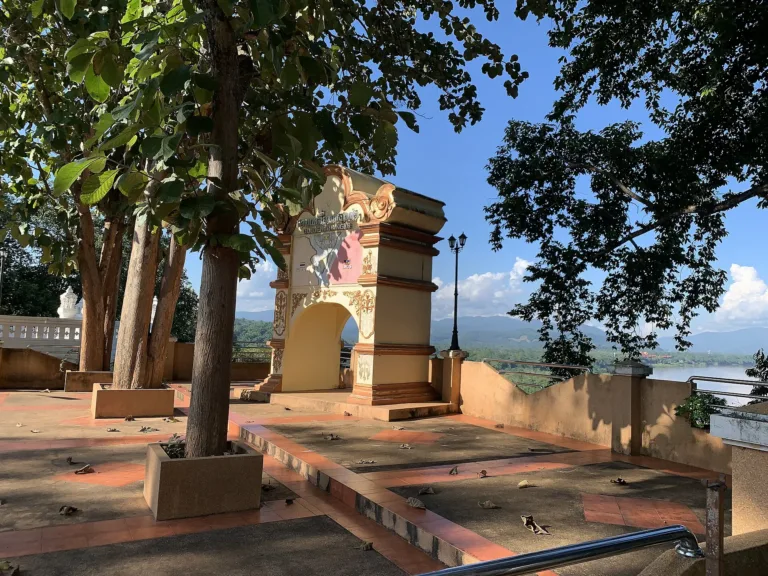
Visitors today usually start at the riverside plaza with the Golden Triangle arch, the border marker and the giant Buddha, climb to Phra That Doi Pu Khao for the high view, perhaps take a long-tail boat to Don Sao market on the Lao side, and finish at the Hall of Opium, still one of the region's most thorough museums on the subject.
Arrived? Check in, collect a stamp and tell others what it is like right now
Check your location first, so you do not fill in the form for nothing
Location must be on and within 3 km · One check-in per place per day · come back on other days to check in again
Post photos from anywhere — no need to be here · Up to 20 photos at a time · JPG / PNG / WebP · GPS location data is removed automatically
Highway 1290 runs along the Mekong; good road
From Chiang Rai via Mae Chan and Chiang Saen · Fuel
From Chiang Rai Bus Terminal 1 to Chiang Saen, then songthaew · About 50+20 baht
To Sop Ruak · About 40 baht
From Chiang Rai go to Mae Chan, take Highway 1016 to Chiang Saen, then Highway 1290 north along the Mekong for about 9 km
Free roadside parking; busy with tour buses at midday
Chiang Saen town
Good (watch for roaming onto Lao or Myanmar networks)
Riverside plaza always open · Hall of Opium Tue–Sun 08:30–16:00 (closed Mon) · House of Opium 07:00–19:00
about 10 km from Chiang Saen town
Golden Triangle (Sop Ruak)
Approx. nightly price for 2 adults (next week) · final price depends on your dates
Answers travellers want before they go — a one-minute read
Ban Sop Ruak, Wiang, Chiang Saen, 9–10 km from Chiang Saen town
The name appeared in print in 1971, from the era when opium was traded for gold
The plaza is free; Hall of Opium Thai 150, foreign 200 baht; House of Opium 50 baht
Tue–Sun 08:30–16:00, closed Mondays (now run by the Narcotics Control Board, which took it over in 2022)
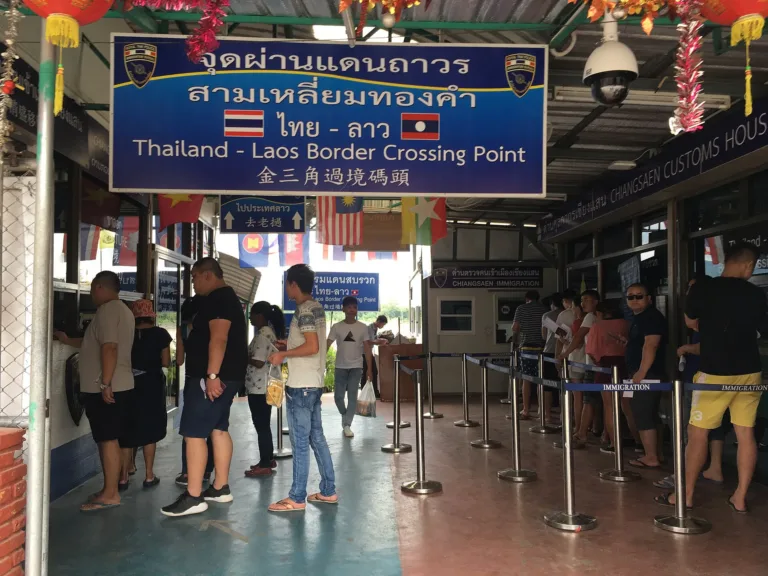
Not for the island only, but bring ID or a passport; rules can change
Bus to Chiang Saen then a 20-baht songthaew, or drive about 1–1.5 hours
About 1 hour for the plaza and 1.5–2 hours for the Hall of Opium — half a day in all
Best day this week: Monday 30 Nov · Check in when you arrive to collect a stamp
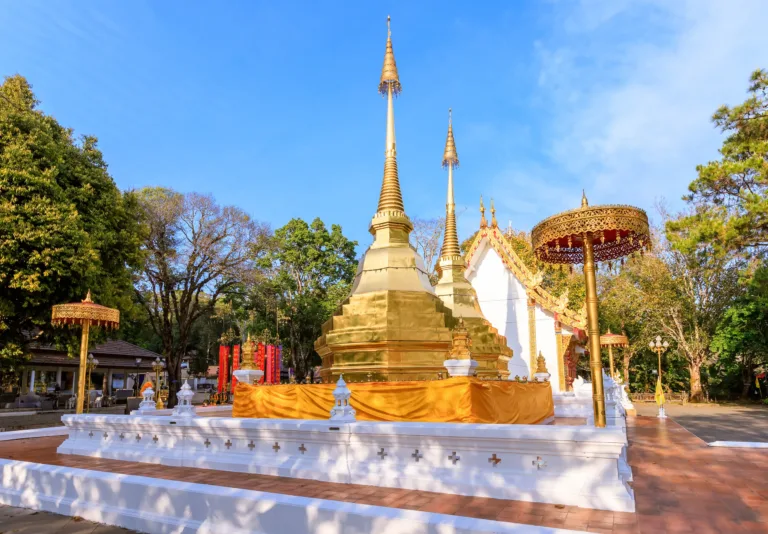 Wat Phra That Doi Tung
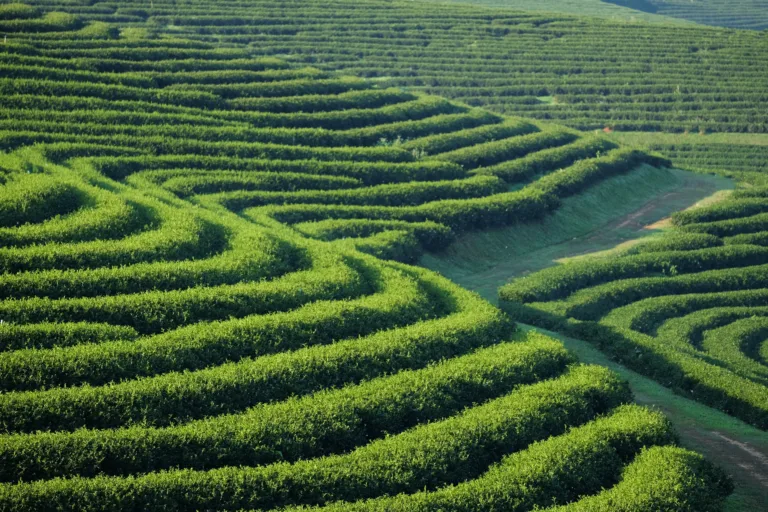 Choui Fong Tea Plantation
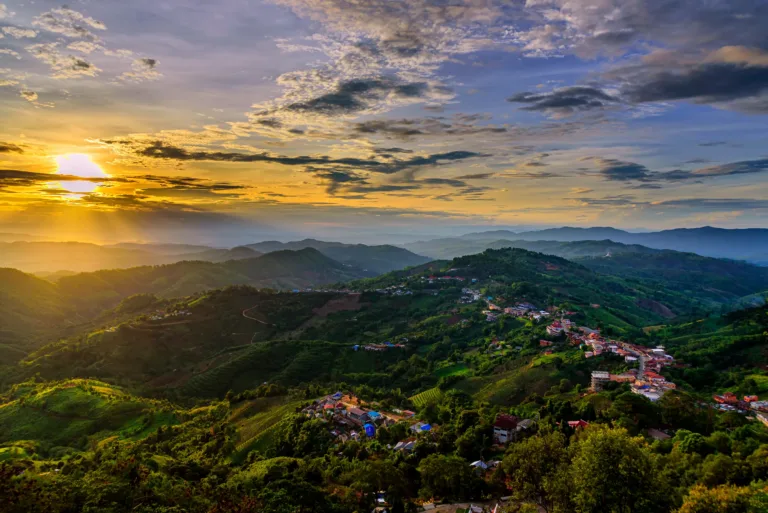 Doi Mae Salong