What to know before visiting the temple
Dress modestly · Take shoes off before entering the hall · Don't climb the chedi base
Daily, around 06:00–19:00
Morning or evening, when it's cooler
7 days ahead
When to go
this week
Tap a day card to see that day’s weather, rain, haze and hourly forecast
Best time to go Daytime is over · see tomorrow
Holiday — traffic on the way up and parking fills fast; leave early
Hour by hour
Green band = hours used for the score
Best time to go Fine all day little rain through the day
Holiday — traffic on the way up and parking fills fast; leave early
Hour by hour
Green band = hours used for the score
Best time to go Fine all day little rain through the day
No warnings today — normal road and weather conditions
Hour by hour
Green band = hours used for the score
Best time to go Fine all day little rain through the day
No warnings today — normal road and weather conditions
Hour by hour
Green band = hours used for the score
Best time to go Fine all day little rain through the day
No warnings today — normal road and weather conditions
Hour by hour
Green band = hours used for the score
Best time to go Fine all day little rain through the day
No warnings today — normal road and weather conditions
Hour by hour
Green band = hours used for the score
Best time to go Fine all day little rain through the day
No warnings today — normal road and weather conditions
Hour by hour
Green band = hours used for the score
Wat Phra That Choeng Chum
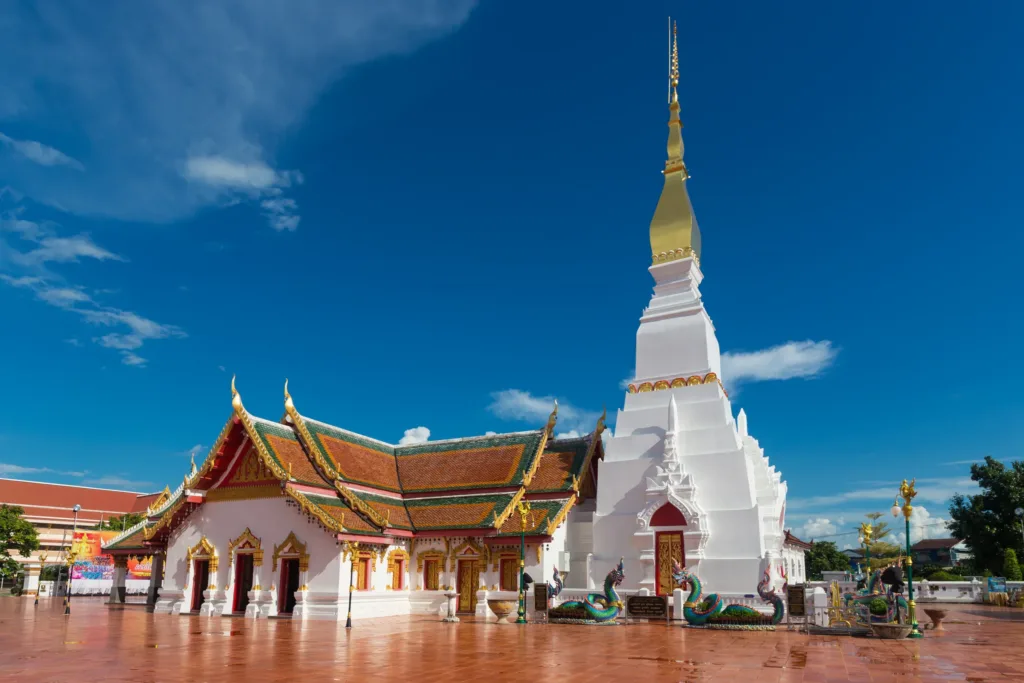
Wat Phra That Choeng Chum Worawihan stands on Charoen Mueang Road in central Sakon Nakhon and has long been the city's most revered temple. Sakon Nakhon was an important town when Khmer influence reached the Nong Han basin, roughly the 12th to 16th centuries.Phra That Choeng Chum is a square brick-and-mortar chedi about 24 m tall, believed to cover the footprints of four Buddhas; it once appeared on the 10-satang coin. A hall beside it houses Luang Pho Phra Ong Saen, the city's sacred Buddha image.Nong Han lake is a short walk away. Go in the morning or evening, when it's cooler.
- Cool and quiet
- Hot courtyard
- Evening light on the chedi
Arrive Morning or evening, when it's cooler
- Chedi courtyardThe full chedievening
Good to know here
Modest clothing, shoulders covered, nothing too short
The paving gets hot at midday; go early or bring socks
- Dress modestly before entering the hall
- Go in the morning or evening to avoid the hot courtyard
- Walk on to the Nong Han lakeside
- If you like indigo cloth, shops in town are close by
No data yet check before you go · Time needed 30 minutes–1 hour
Weekends and Buddhist holy days
- Kids Fine; keep kids respectful
- Seniors In town on flat ground, easy walking
- Wheelchair No information on ramps
- Pets A temple; best to leave pets at home
- Dress modestly
- Take shoes off before entering the hall
- Don't climb the chedi base
- The courtyard gets very hot at midday
The story of this place
Wat Phra That Choeng Chum Worawihan is Sakon Nakhon's guardian temple, set on the western shore of Nong Han lake in the heart of town. Its centrepiece, Phra That Choeng Chum, is a square Lan Xang-style chedi built over a laterite Khmer sanctuary that is close to a thousand years old and still stands inside it. "Choeng Chum" means the gathering of footprints, because the chedi is believed to cover the footprints of four Buddhas. The site's history comes in layers: a Khmer Hindu shrine, a Lao Buddhist stupa, and today the ritual heart of the city.
Read more 10 more paragraphs
According to the Urangkhathat chronicle, the four Buddhas Kakusandha, Konagamana, Kassapa and Gotama each came here and left a footprint. Legend goes on to say that Phraya Suwannaphingkhan, ruler of Nong Han Luang, wished to cut off his own head as an offering to the Buddha, but his queen, Phra Nang Narai Cheng Weng, stopped him. Instead the couple built a shrine over the footprints and named it "Appachoti Chedi", long before it became known as Phra That Choeng Chum.
Other folk tales are bound up with the chedi. The tale of the White Crow Mother, the main thread of the chedi's legend, says the fifth footprint will belong to Maitreya, the Buddha still to come. A naga legend tells that the serpent king Suwannanak guards Phu Nam Lot, the low hill on which the chedi stands, and the footprints beneath it.
The sunken-city legend says the old town of Nong Han Luang collapsed after a quarrel involving the nagas and a white barking deer, and the land sank to form Nong Han lake. Phraya Suwannaphingkhan then led his people to build a new town on Phu Nam Lot. The tale ties the chedi, the lake and the birth of the city together.
Archaeologically, people lived here as early as the Dvaravati period, as boundary stones (sema) found at the temple show. When Khmer power reached the Sakon Nakhon basin, the lakeside town became an important centre north of the Phu Phan range, and a laterite sanctuary was raised for Hindu worship. North-east of the chedi lies Sa Phang Thong, believed to be a baray, the kind of reservoir the Khmer dug beside their temples.
Scholars differ on the age of the Khmer sanctuary. Some place it in the Buddhist 16th–17th centuries and in the Baphuon style; others suggest the 11th–12th centuries CE. The key evidence is a 12-line Old Khmer inscription on the east doorframe, the only real entrance; the other three sides are false doors. The text records a grant of land, divided among village headmen who were to look after it.
When Lan Xang people crossed the Mekong and settled around Nong Han, the Hindu sanctuary was turned into a Buddhist monument by encasing it whole in a square brick-and-stucco chedi. Some sources link this work to the reign of King Setthathirath (1550–1571), while many others date the Lao chedi to around the 17th century. The chedi rises about 24 metres within a low wall decorated with eight nagas whose heads turn toward the four entrances. By tradition, the footprints lie inside and relics of the Buddha are enshrined at the top.
In the early Rattanakosin period, King Rama I sent the deputy ruler (upahat) of Kalasin and his people to settle at Ban That Choeng Chum and care for the chedi. Phraya Ban Woe later became Phra Thani, ruler of Sakon Thawapi, but after the Chao Anouvong war he was executed and the town was abandoned, leaving only an official named Phia Si Khrachum to tend the chedi. On 17 August 1838 King Rama III re-founded the town as Sakon Nakhon, with Phraya Prachantaprathet Thani (Ngon Kham) as its first governor.
Under Phraya Prachantaprathet Thani the chedi reached its greatest prominence. It became the city's official shrine, where officials drank the water of allegiance and where both royal and popular ceremonies were held. Able-bodied men from nearby villages were assigned as "servants of the relic", caring for the chedi in exchange for exemption from tribute to Siam. The Sakon Nakhon chronicles disagree on the number of villages, some saying ten and others six. Their descendants still call themselves "children of the relic".
Sources also differ on when the temple was founded: tourism records give 1757, while some sources give 1697. The old ordination hall (sim) is dated by one source to about 1827, under Phra Thani, while another places it in the Rattanakosin period, noting that Vietnamese craftsmen added arches and Western-style stucco under King Rama V. The sim was heavily restored in 1920 and again by the Fine Arts Department in 1996, and in 1997 it won an Outstanding Conservation Award from the Association of Siamese Architects. Beside the chedi, a hall houses Luang Pho Phra Ong Saen, a Buddha image subduing Mara that local people have revered for generations.
In modern times, Phra That Choeng Chum was registered as a national historic site on 8 March 1936. The temple, formerly called Wat That Satsadaram, took its present name in 1953, became a second-class royal temple in 1963 and received its royal consecrated boundary in 1972. The chedi appears on the provincial seal and once featured on the 10-satang coin. On 20 March 2014 a summer storm broke the top of the chedi; the Fine Arts Department, the province and local people moved quickly to repair it, and the structural work was done within months. Today the temple is still the centre of the annual chedi worship festival, the end-of-Lent wax castle procession and the yearly ceremony marking the founding of the city.
- 11th–12th centuriesKhmer builders raise a laterite sanctuary with an Old Khmer inscription on its east doorframe (scholars' estimate)
- 1550–1571Reign of King Setthathirath of Lan Xang, to which some sources link the Lao chedi built over the Khmer sanctuary
- 1697Founding year of the temple given by some sources
- 1757Founding year of the temple given by tourism records
- 1827Some sources date the old ordination hall (sim) to this year, under Phra Thani, ruler of Sakon Thawapi
- 183817 Aug — King Rama III founds Sakon Nakhon, with Phraya Prachantaprathet Thani as first governor
- 1868–1910Reign of King Rama V; Vietnamese craftsmen add arches and Western-style stucco to the sim
See 10 events
- 1920Major restoration of the sim
- 19368 Mar — Phra That Choeng Chum is registered as a national historic site
- 1953The temple is renamed from Wat That Satsadaram to Wat Phra That Choeng Chum Worawihan
- 1963Raised to a second-class royal temple
- 196511–17 Jan — a festival celebrating Phra That Choeng Chum is held
- 1972Granted royal consecrated boundary (wisungkhamsima)
- 1996The Fine Arts Department restores the sim
- 1997The sim wins an Outstanding Conservation Award from the Association of Siamese Architects
- 201420 Mar — a storm breaks the top of the chedi; the Fine Arts Department and the province repair it
- 202517 Aug — the 187th anniversary of Sakon Nakhon is marked at the temple
Check-ins & visitor photos
Arrived? Check in, collect a stamp and tell others what it is like right now
Check your location first, so you do not fill in the form for nothing
Location must be on and within 0.2 km · One check-in per place per day · come back on other days to check in again
Post photos from anywhere — no need to be here · Up to 20 photos at a time · JPG / PNG / WebP · GPS location data is removed automatically
How to get there
The temple is on Charoen Mueang Road in central Sakon Nakhon.
From central Sakon Nakhon · Negotiable
Town streets
Around the temple and on the street
Daily, around 06:00–19:00
Wat Phra That Choeng Chum
FAQ
Before you go: Wat Phra That Choeng Chum
Answers travellers want before they go — a one-minute read
Where is Wat Phra That Choeng Chum?
Charoen Mueang Road, central Sakon Nakhon
How tall is the chedi?
About 24 metres
What does the chedi cover?
It is believed to cover the footprints of four Buddhas
Where is Luang Pho Phra Ong Saen?
In the hall beside the chedi
What should I wear?
Modest clothes, shoulders covered
What's nearby?
Nong Han lake in town
Nearby places
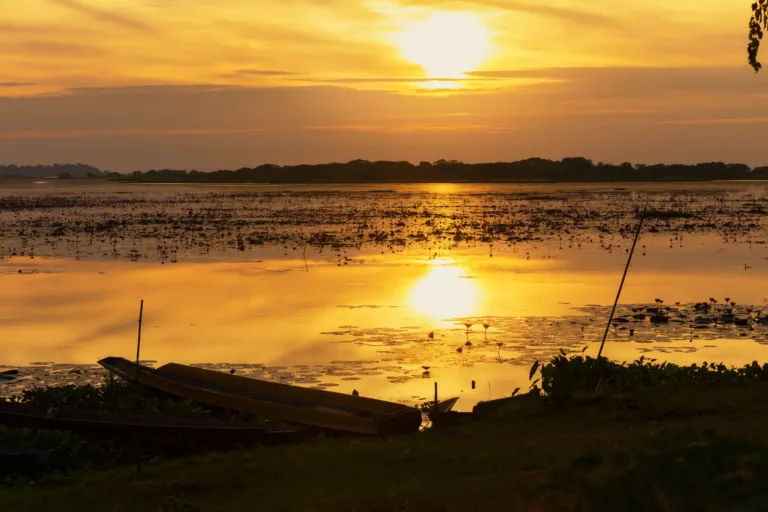 Nong Han Lake (Sakon Nakhon)
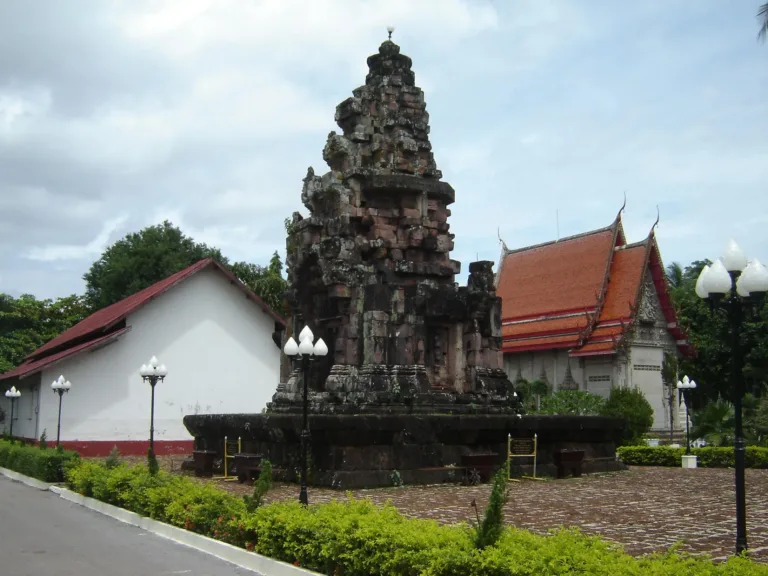 Phra That Narai Cheng Weng
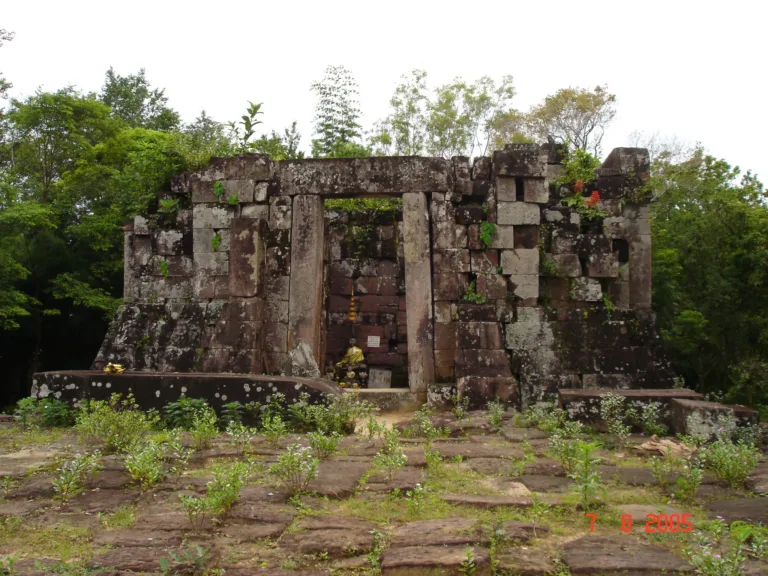 Phra That Phu Phek
Ready to go to Wat Phra That Choeng Chum?
Best day this week: Monday 30 Nov · Check in when you arrive to collect a stamp