 01
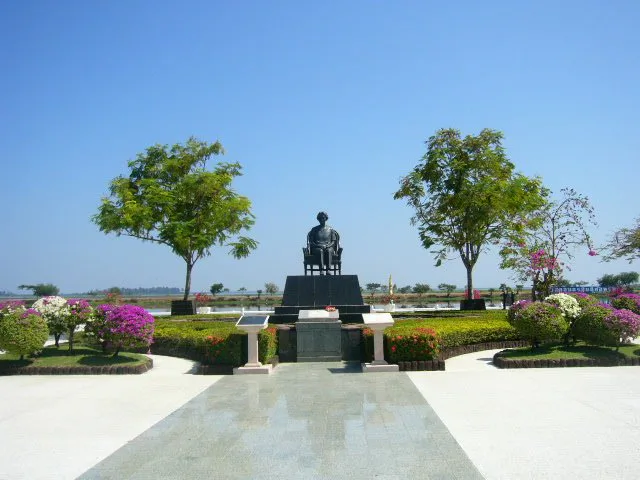
Suan Somdet Phra SrinagarindraLakeside viewpoint and statue
Isan's largest lake · Sakon Nakhon
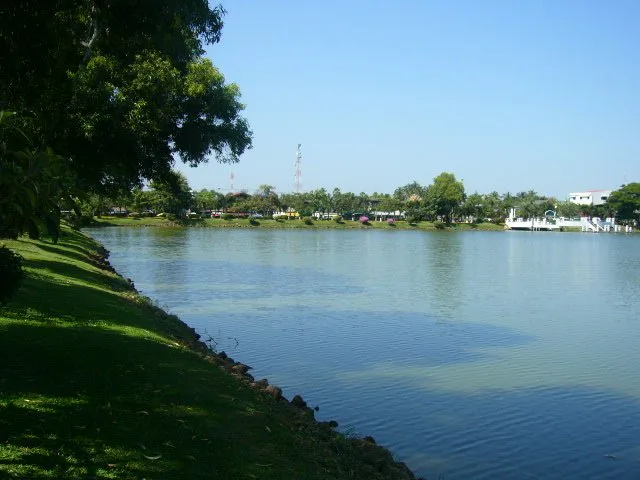
Isan's largest freshwater lake, beside Sakon Nakhon town, with over 30 islands, ancient legends and boat trips to Don Sawan island.
Holiday / event — crowded · Hot (Afternoon) feels like 38°C · Just outside the best season
May – Sep
Avoid raw fish dishes (liver fluke risk); wear a life jacket on boats
Half a day
Good 4G/5G
0102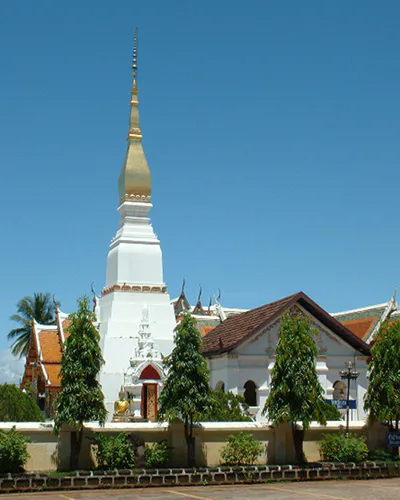 03
 04
Tap a day card to see that day’s weather, rain, haze and hourly forecast
Best time to go Fine all day little rain through the day
Holiday — traffic on the way up and parking fills fast; leave early
Green band = hours used for the score
Best time to go Fine all day little rain through the day
Holiday — traffic on the way up and parking fills fast; leave early
Green band = hours used for the score
Best time to go Fine all day little rain through the day · light drizzle possible at times
Holiday — traffic on the way up and parking fills fast; leave early
Green band = hours used for the score
Best time to go Best window 08:00–19:00 Little rain · light drizzle possible at times
No warnings today — normal road and weather conditions
Green band = hours used for the score
Best time to go Best window 06:00–14:00 Little rain
No warnings today — normal road and weather conditions
Green band = hours used for the score
Best time to go Fine all day little rain through the day
No warnings today — normal road and weather conditions
Green band = hours used for the score
Best time to go Fine all day little rain through the day
No warnings today — normal road and weather conditions
Green band = hours used for the score
Scored from cloud cover at every level and tonight’s moonlight — the darker the sky, the clearer the Milky Way · tap another night below for the next 7 nights
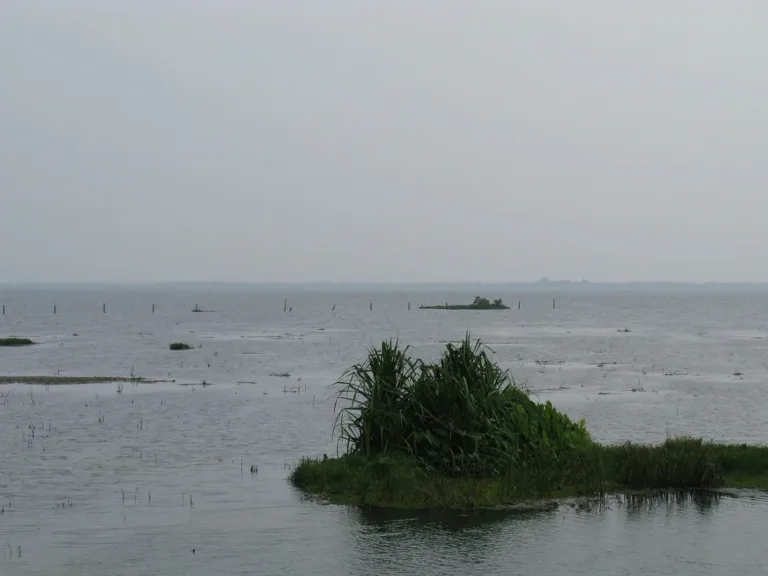
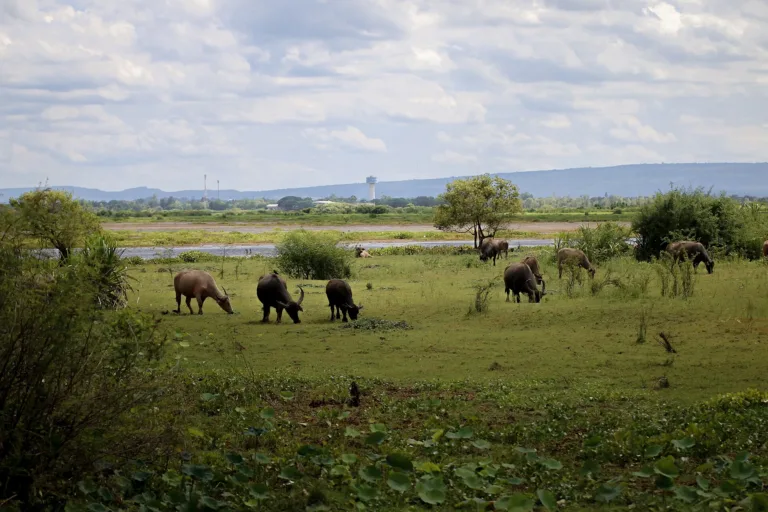
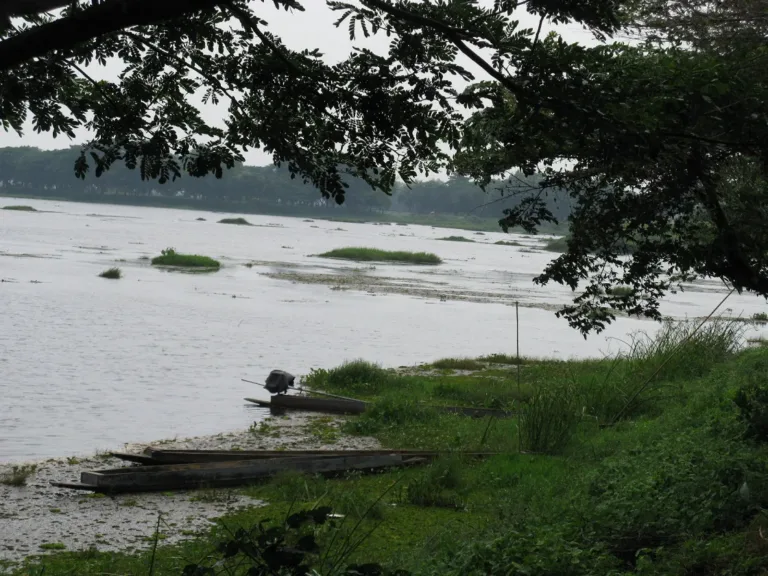
Nong Han in Sakon Nakhon is the largest freshwater lake in northeastern Thailand, with over 30 islands, legends of the ancient city of Nong Han Luang, and boat trips to Don Sawan island.
Arrive Before 06:30 for sunrise, or before 16:00 for the island boat
Light mist on the water on cool-season mornings
Photos from Wikimedia Commons and contributors · full credits inClassic page
Adults 0 THB · Car 0 THB · Time needed Half a day
Holiday evenings and the wax castle festival (end of Buddhist Lent)
| Boat to Don Sawan (return) optional | 100 ฿/person |
| Lakeside bicycle rental (estimate) optional | 20 ฿/hour |
Cash and QR transfer · Prices may change by season — check with the venue
Sakon Nakhon Hospital · Tourist Police 1155 · Emergency 1669
Tap a month on the wheel to see weather, rain, haze and crowds from 10 years of records
Best time · Nov–Feb: cool, clear skies, migratory birds and lakeside sunrises
Watch out · Aug–Sep: heavy rain, shore flooding in some years
Oct by the records 22–30°C · avg rain 111 mm (13 rainy days) · clear 7 days · avg PM2.5 9
Nong Han, or Nong Han Luang, in Sakon Nakhon is Isan's largest freshwater lake and Thailand's second largest after Bueng Boraphet. Thai Wikipedia gives about 77,016 rai (about 123 km²) across 12 subdistricts in Mueang Sakon Nakhon and Phon Na Kaeo districts, at about 158 m above sea level, with more than 30 islands, the largest being Don Sawan. Depth figures differ within Wikipedia: an average of 1.9 m in the infobox versus about 2–10 m in the text.
Wikipedia suggests Nong Han formed when underground rock salt was dissolved by water, creating large cavities into which the surface collapsed to form a basin. It became a breeding ground for freshwater fish and waterbirds and an important national wetland.
The name is spelled both "Nong Han" with ร and with Wikipedia cites Sujit Wongthes in Matichon (October 2012), "Nong Han with น, not ร", and in a piece published by Silpa Watthanatham he explains it is short for "Nong La Han", a low-lying area that holds much water.
In the Urangkhathat origin myth of Isan's rivers, as Sujit Wongthes retells it in Silpa Watthanatham, two nagas, Phinthayonkawatinak and Thanamunnak, fell out over sharing food and fought in Nong Sae, each fleeing by digging a river; their grandson Chiwayanak dug a winding river from the Mun that flooded the cities of Nong Han Luang and Nong Han Noi, becoming the Chi. Sujit sees the nagas as symbols of the earliest local peoples, with the story echoing real landforms and beliefs.
Nong Han was a site of ancient settlement. Wikipedia says it was once "Mueang Nong Han Luang", thought to be a principal northern city of the Khmer empire like Phimai or Lopburi (the article is flagged as needing more citations). The Urangkhathat chronicle tells that when Maha Kassapa brought the Buddha's breastbone relic, he stopped for alms at Nong Han Luang to inform King Suwan Phingkhara.
The same chronicle relates that five kings, Nanthasen of Si Khotabun, Chulani Phrommathat, Inthapatthanakhon, Kham Daeng of Nong Han Noi and Suwan Phingkhara of Nong Han Luang, moulded and fired a chamber for three days and nights to enshrine the relic at Phu Kamphra, later Phra That Phanom; this episode matches the legends of Phra That Choeng Chum and Phra That Narai Cheng Weng in Sakon Nakhon. Wikipedia speculates the city was later abandoned through war or natural disaster.
Archaeology sharpens the picture of the ancient lakeside city. Tim's Thailand says the Khmer town preceding today's Sakon Nakhon likely flourished from the late 10th to 13th centuries as a fairly autonomous tributary, drawing water from Nong Han and shipping salt as far as Angkor. After Jayavarman VII's death the Khmer left, and Lan Xang Lao settlers founded "Chiang Mai Nong Han", adapting the Khmer prang for Buddhism. Phra That Choeng Chum began as a laterite prang probably built in the 11th century and encased by the Lao in the 17th; an Old Khmer inscription in its doorway records gifts of land, workers, six cows and rice. Sa Phang Thong, about 230 m away, is a baray of about 210 by 400 m, and Kumuang Road follows the old moat.
Phra That Narai Cheng Weng, 5–6 km from town, is another Khmer trace. Love Thailand describes a single sandstone prasat on a laterite base in late Baphuon to early Angkor Wat style, around the 11th–12th centuries, first a Hindu shrine and later an Isan-style Buddhist stupa. Legend says Nang Nawaeng of Nong Han Luang led the women in a building race against the men raising Phra That Phu Phek; the women hung a lantern in a tree so the men thought the morning star had risen and stopped work, letting the women finish first.
Phra That Choeng Chum by the lake is Sakon Nakhon's symbol. Surachai Chinnabutr (Sakon Nakhon Rajabhat University, 2024) groups its legends as Mae Ka Phueak, the Sakon Nakhon legend, the Urangkhathat, the ruined-city legend and the naga legend, noting that Sakon Nakhon's history took clearer shape in the Nong Han basin in the early Rattanakosin period.
Modern Sakon Nakhon grew on the lakeshore. Dailynews (2025) reports King Nangklao (Rama III) established Sakon Nakhon as a town directly under Bangkok on 17 August 1838, with Phraya Prachantaprathet Thani as its first governor, so 2025 marked 187 years.
On the north shore is the Catholic community of Ban Tha Rae. Silpa Watthanatham relates that in November 1884 Father Xavier Gueco of the Paris Foreign Missions and the Vietnamese catechist Kru Tan led believers across Nong Han at night on bamboo rafts and small boats to settle at Tha Rae. The cause was conflict with Sakon Nakhon officials, as officials' serfs and slaves had converted to escape taxes and forced labour, making land hard to find. During the crossing they prayed to Saint Michael, who has been the village's patron ever since.
Nong Han sustains many lives. Wikipedia, citing the Civil Society Development Institute, says its influence covers 32 subdistricts, 12 in Sakon Nakhon and 20 in Nakhon Phanom, about 1,671 km², used by 240,327 people in 80,750 households, mostly farmers, with urban communities on its shores.
Don Sawan island has religious history and a dispute. MGR Online (September 2012) reports Wat Don Sawan was registered as a temple in 1929, announced in the Royal Gazette that August, later listed as abandoned when no monks lived there, then restored when monks returned. In 2012 the Sakon Nakhon mayor opposed issuing a title deed to the temple, arguing it was public land, while the temple side insisted it was monastic land.
Today Don Sawan is a visitor site. Dailynews (September 2025) reports the island covers about 500 rai, with about 120 rai for tourism; its forest of old trees is in a royal plant genetic conservation project, with revered twin takhian trees, an old ordination hall, a sacred well and a naga statue. Boats from the Suan Somdet Phra Srinagarindra (Sa Phang Thong) pier take 15–20 minutes, running 08:00–17:00 for 100 baht per person, with no overnight stays.
Nong Han's water also sustains farmland downstream. MGR Online (February 2012) reports that the royal Nam Kam basin development project in That Phanom, Nakhon Phanom, which draws on Nong Han, was begun by the Royal Irrigation Department in 1992 at a total cost of about 6,900 million baht, supplying over 51,000 rai in the dry season against a target of 160,000 rai, though many canals and pumping stations handed to local authorities had fallen into disrepair for lack of repair budgets.
On 20 March 2014 a summer storm snapped the top of Phra That Choeng Chum, leaving it hanging on gilding scaffolding. MGR Online (June 2014) reports the Fine Arts Department designed and supervised the restoration, reinforcing it with stainless steel and taking down the gold spire umbrella for safekeeping, funded by donations, with completion expected in July 2014; the department's director-general praised Sakon Nakhon people as a model of caring for heritage.
Nong Han faces floods, drought, weeds and wastewater. InfoQuest (24 October 2020) reports Deputy PM Prawit Wongsuwan and Natural Resources Minister Varawut Silpa-archa inspected rehabilitation work on the lake, fed by 21 streams, whose ecosystem had degraded, storage shrunk and which received wastewater from the municipality and communities. The government approved a 10-year master plan of 62 projects worth about 7,455 million baht, including diverting water from the Phung River to link with the royal Nam Kam basin project and adding over 25,000 rai of irrigated land.
A favourite viewpoint is Suan Somdet Phra Srinagarindra park, with a statue of the Princess Mother by the water; mornings bring sunrise over the lake, and in the cool season migratory birds such as storks and ducks, Dailynews reports.
Arrived? Check in, collect a stamp and tell others what it is like right now
Check your location first, so you do not fill in the form for nothing
Location must be on and within 3 km · One check-in per place per day · come back on other days to check in again
Post photos from anywhere — no need to be here · Up to 20 photos at a time · JPG / PNG / WebP · GPS location data is removed automatically
East of Sakon Nakhon town via the lakeside road or Suan Somd…
Bangkok–Sakon Nakhon Airport, then by road · Per airline
Bangkok–Sakon Nakhon · Per operator
Suan Somdet Phra Srinagarindra pier–Don Sawan · 100 baht
Paved lakeside roads
Parking at Suan Somdet Phra Srinagarindra park
Petrol stations in Sakon Nakhon town
Good 4G/5G
Lakeside always open · boats 08:00–17:00
around 1 km fromSakon Nakhon town
Nong Han Lake
0 THB
Approx. nightly price for 2 adults (next week) · final price depends on your dates
Answers travellers want before they go — a one-minute read
No, the Red Lotus Sea is Nong Han Kumphawapi in Udon Thani
Both are used; Sujit Wongthes argues for น
Boat from Suan Somdet Phra Srinagarindra pier, 15–20 minutes, 100 baht per person
No, day trips only
Best day this week: Thursday 29 Oct · Check in when you arrive to collect a stamp