Opening hours, time needed and photo spots
Daily 06:00–18:00
30 minutes–1 hour
East lintel — Indra on Airavata
Free
7 days ahead
When to go
this week
Tap a day card to see that day’s weather, rain, haze and hourly forecast
Best time to go Daytime is over · see tomorrow
No warnings today — normal road and weather conditions
Hour by hour
Green band = hours used for the score
Best time to go Fine all day little rain through the day
No warnings today — normal road and weather conditions
Hour by hour
Green band = hours used for the score
Best time to go Fine all day little rain through the day
No warnings today — normal road and weather conditions
Hour by hour
Green band = hours used for the score
Best time to go Fine all day little rain through the day
No warnings today — normal road and weather conditions
Hour by hour
Green band = hours used for the score
Best time to go Fine all day little rain through the day
No warnings today — normal road and weather conditions
Hour by hour
Green band = hours used for the score
Best time to go Fine all day little rain through the day
No warnings today — normal road and weather conditions
Hour by hour
Green band = hours used for the score
Best time to go Fine all day little rain through the day
No warnings today — normal road and weather conditions
Hour by hour
Green band = hours used for the score
Phra That Narai Cheng Weng
Phra That Narai Cheng Weng stands in the grounds of Wat Phra That Narai Cheng Weng at Ban That, That Na Weng subdistrict, about 5–6 km from Sakon Nakhon town. It is a single sandstone prang on a laterite base in late Baphuon to early Angkor Wat style, dated to the 16th–17th Buddhist centuries (roughly the 11th–12th centuries AD).Built as a Hindu shrine and later used as a Buddhist relic monument, it has carved lintels and pediments showing Indra on the elephant Airavata, Krishna slaying a lion, a dancing Shiva and Vishnu reclining on the serpent.Legend says the women of Queen Na Weng raced the men building Phra That Phu Phek to finish it first. Open daily; free entry.
- Low light, sharp carvings
- Strong sun
- Lovely evening light
Arrive Morning or late afternoon for the best light on the carvings
- East lintelIndra on Airavatamorning
- Full prangThe prang on its laterite baseevening
Good to know here
Don't climb the prang or touch the carvings
It's in a temple; dress modestly
- Walk all the way round; each side has different carvings
- Go early or late in the day when low light picks out the stone
- Combine it with Wat Phra That Choeng Chum in town
- Dress modestly; it's within a temple
Free · Time needed 30 minutes–1 hour
Weekend late mornings
- Kids Fine, especially for kids who like history
- Seniors Flat ground, easy to walk round
- Wheelchair No information on ramps
- Pets Within a temple; best to leave pets at home
- Dress modestly
- Don't climb the prang
- Don't touch or scratch the carvings
- Strong midday sun; bring a hat or umbrella
The story of this place
Phra That Narai Cheng Weng is a single sandstone Khmer prang on a laterite base, standing in the grounds of Wat Phra That Narai Cheng Weng at Ban That on the edge of Sakon Nakhon town. Most scholars date it to around the 11th–12th centuries, in the late Baphuon to early Angkor Wat style. It was built as a Hindu shrine; later the Buddhists of the Nong Han basin came to revere it as a relic stupa and wove it into the Urangkhathat legend of Phra That Phanom. Today it is both one of upper Isan's key Khmer monuments and a living shrine where Sakon Nakhon people still come to pray.
Read more 10 more paragraphs
When Khmer civilisation reached the Sakon basin, roughly from the late 10th to the early 13th century, the plain beside Nong Han held a square moated city about 1,350 by 1,500 metres. Its main shrine was the prasat now enclosed within Phra That Choeng Chum, while Narai Cheng Weng stood outside the city to the south-west; some writers think it was the city's second most important sanctuary. Studies of the cultural landscape note that it was raised on high ground as a temple-mountain, and that together with Prasat Phu Phek and Phra That Choeng Chum it formed a kind of cosmic plan over the old city.
The nearest written evidence is the inscription on the doorframe of the prasat inside Phra That Choeng Chum, whose script is dated to around the 12th century. It records the division of land and the gift of people, animals and fields to the shrine, naming two villages; scholars suggest that one of them, Phanurphinao, probably lay where Phra That Narai Cheng Weng stands today. The prasat's original Khmer name is unknown.
Its exact date is still debated. Most sources give the 11th–12th centuries, and the Sirindhorn Anthropology Centre's database says the 12th. Some suggest it was built under King Udayadityavarman II, while others think the carvings may be a little older, from the first half of the 11th century and close to the Khleang style; one source also suggests an earlier shrine may have stood on the site.
The tower, about 12 metres tall, is built entirely of sandstone, which is unusual in upper Isan, where other prasats tend to mix materials. Its plan is an inner sanctum with a porch projecting to the east, the only real entrance; the other three sides have false doors. On the north side a somasutra spout still drained the water used to bathe the sacred image, and five-headed nagas decorate the four corners.
The carvings are the heart of the place. The lintel of the east porch shows Indra on his elephant Airavata, guardian of the east; the inner lintel shows Krishna gripping a lion in each hand. The pediment over the sanctum shows a twelve-armed dancing Shiva, flanked by Ganesha and the saint Karaikkal Ammaiyar. Although most scenes are Vaishnava, this central Shiva has led scholars to suggest the shrine may first have been dedicated to Shiva.
Each side tells a different story. The south lintel shows a procession with a rider on an elephant, which some think is a later addition. The west shows Krishna subduing the naga Kaliya. The north lintel, the best preserved, has Krishna fighting a lion, and above it the pediment shows Vishnu reclining on the cosmic ocean, with Brahma rising from his navel and two water birds flying among the flowers.
The name has several explanations. The Urangkhathat chronicle calls the site "Oradi Maya Narai Cheng Weng" after the group of women who built it. Another view traces it to the Khmer "Narai Choeng Waeng", "long-legged Narai", referring to the reclining Vishnu on the north side. Some local elders say "Cheng Weng" describes a tall, slender, fair-skinned woman.
According to the Urangkhathat legend, the monk Maha Kassapa passed Nong Han carrying the Buddha's breastbone relic. The townspeople asked for a share, but he refused, as the relic was destined for Phu Kamphra, today's Phra That Phanom, and instead sent an arahant to bring ashes from the Buddha's cremation. The women of Nong Han Luang, led by Queen Na Weng, then raced the men of Nong Han Noi, who were building on Phu Phek, agreeing to stop when the morning star rose. The women hoisted a lantern high; the men took it for the star and stopped, so Phu Phek was never finished. Some versions make the queen the consort of King Suwannaphingkhan. Scholars see the legend as reflecting the time when Lan Xang culture and Theravada Buddhism reinterpreted the Khmer prasat as a relic stupa.
On 15 January 1907, Prince Damrong Rajanubhab, then Minister of the Interior, on a 56-day tour of the Nakhon Ratchasima and Udon–Isan circles, rode from town to Ban Na Weng along an old Khmer road. He recorded the road, a laterite bridge and the Hindu shrine on a wooded mound in his book "Thiao Thi Tang Tang, Part 4". The bridge on that road is the Khmer Bridge that the Fine Arts Department later registered as a historic site.
Over time the prang collapsed and lost its spire. Between 1978 and 1982 it was extensively restored by anastylosis, taking the stones down and refitting the originals, which is why it still looks incomplete, with concrete standing in for missing parts. Leftover carved blocks are kept in the temple, among them a scene of the monkey kings Vali and Sugriva fighting, and three naga finials sit in the vihara in front of the prang. In 1986 the prasat was the subject of a detailed Silpakorn University thesis, and the Ancient City (Muang Boran) in Samut Prakan has also built a full-size reconstruction. It is now a registered historic monument. Each year, from the 11th to the 15th day of the waxing moon of the fourth lunar month, a festival honours the stupa, and the worship rituals are still accompanied by Isan folk music and dancing by local people.
- 11th–12th centurySandstone prang built as a Hindu shrine in late Baphuon to early Angkor Wat style
- 12th centuryAn inscription at Phra That Choeng Chum names a village that probably stood on this site
- 190715 Jan — Prince Damrong Rajanubhab visits Ban Na Weng and records the shrine
- 1978–1982Major restoration of the prang by anastylosis
- 1986A Silpakorn University thesis makes a detailed study of the prasat
Check-ins & visitor photos
Arrived? Check in, collect a stamp and tell others what it is like right now
Check your location first, so you do not fill in the form for nothing
Location must be on and within 1.5 km · One check-in per place per day · come back on other days to check in again
Post photos from anywhere — no need to be here · Up to 20 photos at a time · JPG / PNG / WebP · GPS location data is removed automatically
How to get there
The prang is at Ban That, That Na Weng, Mueang Sakon Nakhon, about 5–6 km from town.
Highway 22 Sakon Nakhon–Udon Thani, turn in at Ban That for 400 m · Fuel
Highway 22, then about 400 m in
Parking in the temple grounds
Daily 06:00–18:00
about 5–6 km from Sakon Nakhon town
Phra That Narai Cheng Weng
FAQ
Before you go: Phra That Narai Cheng Weng
Answers travellers want before they go — a one-minute read
Where is Phra That Narai Cheng Weng?
Ban That, That Na Weng, Mueang Sakon Nakhon, about 5–6 km from town
Is there an entry fee?
No, it's free
What are the opening hours?
Daily 06:00–18:00
How old is it?
16th–17th Buddhist century, late Baphuon to early Angkor Wat style
What do the lintels show?
Indra on Airavata, Krishna slaying a lion and more
Where does the name come from?
The legend of Queen Na Weng of Nong Han Luang
Nearby places
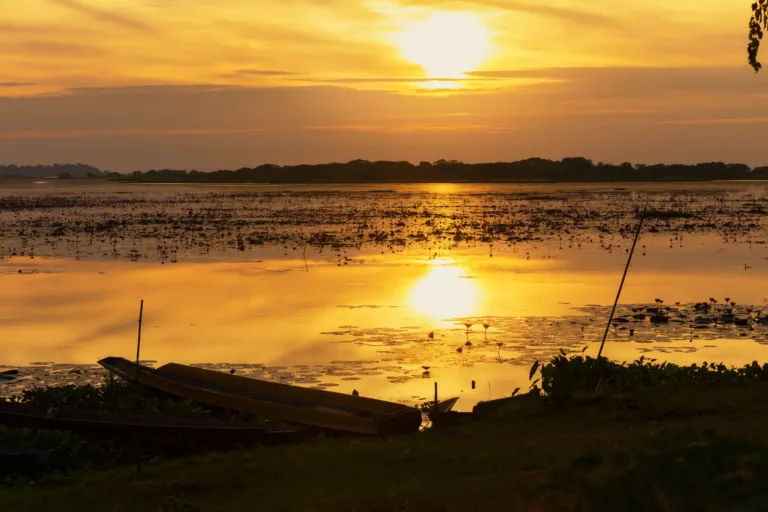 Nong Han Lake (Sakon Nakhon)
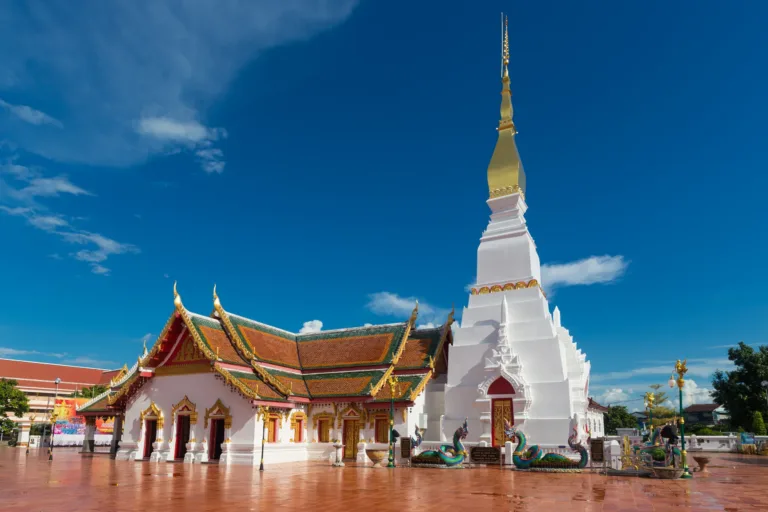 Wat Phra That Choeng Chum
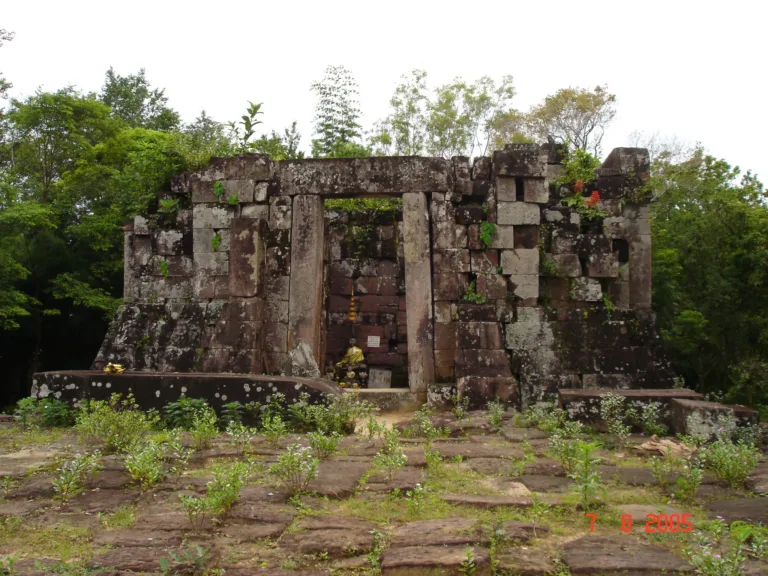 Phra That Phu Phek
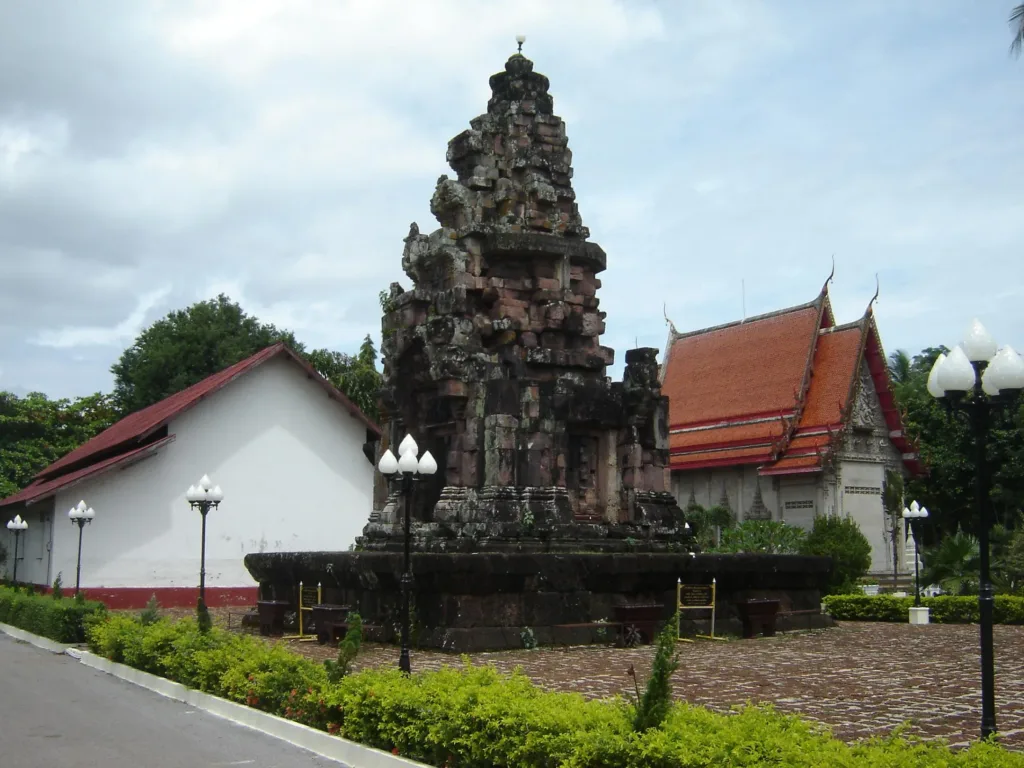
Ready to go to Phra That Narai Cheng Weng?
Best day this week: Saturday 28 Nov · Check in when you arrive to collect a stamp