 01
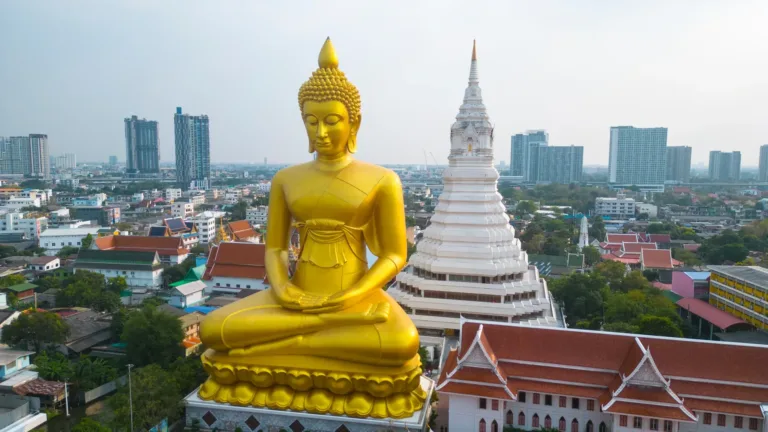
Phra Buddha Dhammakaya Thep MongkhonA 69 m bronze Buddha visible from the train
Royal temple · Phasi Charoen
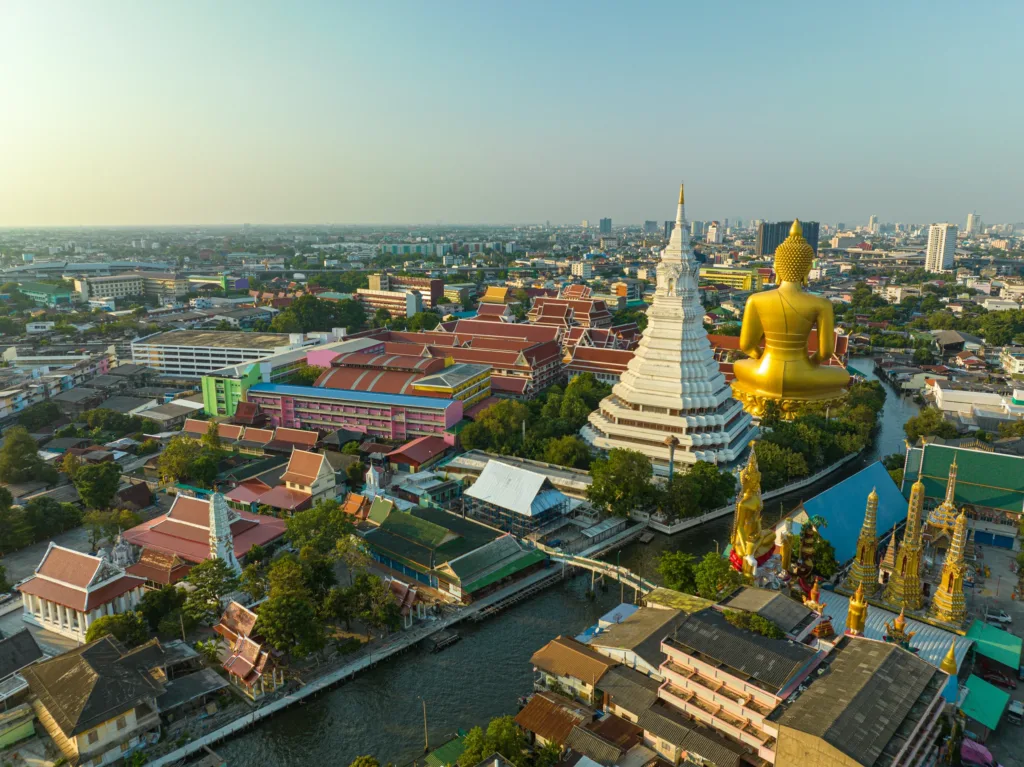
An Ayutthaya-era royal temple in Thonburi, home to a 69 m bronze Buddha and the 80 m Maha Ratchamongkol Chedi with a glass stupa inside.
Holiday / event — crowded
Dress modestly · Keep quiet in the meditation halls and glass stupa room · Don't be noisy inside the chedi
Daily 08:00–18:00
Morning, for soft light and cooler air
01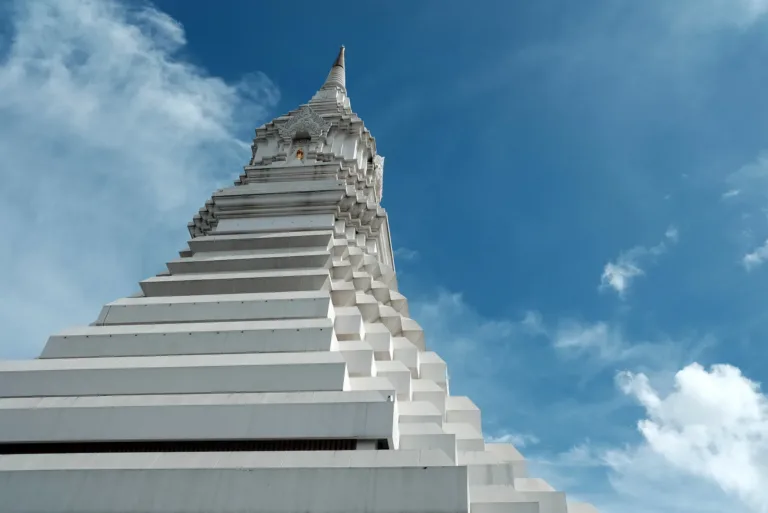 02
 03
 04
 05
Tap a day card to see that day’s weather, rain, haze and hourly forecast
Best time to go Daytime is over · see tomorrow
Holiday — traffic on the way up and parking fills fast; leave early
Green band = hours used for the score
Best time to go Fine all day little rain through the day
No warnings today — normal road and weather conditions
Green band = hours used for the score
Best time to go Fine all day little rain through the day · light drizzle possible at times
No official warnings, but watch for: Hot (Afternoon) feels like 38°C
Green band = hours used for the score
Best time to go Fine all day little rain through the day
No official warnings, but watch for: PM2.5 dust 26 · Hot (Afternoon) feels like 39°C
Green band = hours used for the score
Best time to go Fine all day little rain through the day
No official warnings, but watch for: Hot (Afternoon) feels like 39°C
Green band = hours used for the score
Best time to go Fine all day little rain through the day · light drizzle possible at times
No official warnings, but watch for: Hot (Afternoon) feels like 38°C
Green band = hours used for the score
Best time to go Fine all day little rain through the day
Holiday — traffic on the way up and parking fills fast; leave early
Green band = hours used for the score
Wat Paknam Bhasicharoen is in Phasi Charoen District on the Thonburi side of Bangkok. It's a royal temple dating back to the Ayutthaya period, around 1610, and its grounds are ringed by canals like an island.You can see its landmarks from far off: Phra Buddha Dhammakaya Thep Mongkhon, a 69-metre bronze Buddha, and the white Maha Ratchamongkol Chedi, about 80 metres tall, which houses a glass stupa with relics, a museum and meditation halls.The temple is also known for Luang Pu Sodh Candasaro, the abbot who taught the Dhammakaya meditation method. It's open daily 08:00–18:00 and reachable from MRT Bang Phai or BTS Wutthakat.
Arrive Morning, for soft light and cooler air
There's no shade in front of the giant Buddha; bring a hat and water
No data yet check before you go · Time needed 1–2 hours
Weekends and Buddhist holy days
Wat Paknam Bhasicharoen is an old temple on Khlong Bangkok Yai in Thonburi that dates back to the Ayutthaya period. It was restored in several eras, then fell into such decline in the early reign of King Rama VI that it barely had resident monks. Under Luang Pho Sodh Candasaro it revived into one of the country's best-known centres for meditation and Pali study. Today it has branches abroad, and the Maha Ratchamongkol Chedi and the giant Phra Buddha Dhammakaya Thep Mongkhon have become new landmarks of the Thonburi side.
Most sources say the temple was founded in the middle Ayutthaya period, but there is no clear record of who built it. Some give a date of around 1610, while others say only that it is several hundred years old. It stands on the low Bangkok plain beside Khlong Bangkok Yai, which was the old course of the Chao Phraya before a shortcut canal was dug, right where Khlong Dan branches off. The name "Paknam", meaning "water mouth", comes from this spot at the canal mouth.
Archaeologists believe nearly all the Buddha images in the ordination hall are Ayutthaya-period work, and the temple's own chronicle says it has been a royal temple since ancient times. Some sources say that in the reign of King Suriyenthrathibodi (1703–1709) it was called "Wat Prasat Suan Sawan", and that official documents only began using the name Wat Paknam around 1780.
After the fall of Ayutthaya the temple continued to receive royal care. King Taksin gave funds to repair the ordination hall roof, King Rama I came by royal barge to present the Kathina robes, and under King Rama III the temple underwent a major restoration that kept its Ayutthaya-style architecture.
Around 1867 Phra Phasi Sombat Boriboon (Yim) began digging Khlong Phasi Charoen westward from beside Wat Paknam. It was finished in 1872 and King Rama V travelled to open it. In the same reign the abbot, Phra Khru Samanatham Samathan (Saeng), received royal permission to restore almost the entire temple with the help of lay followers, and members of the royal family regularly came to present Kathina robes.
By the early reign of King Rama VI the temple had fallen into serious disrepair and had no abbot. A disciple's account says only about 13 monks lived there and discipline was lax. A monk from Wat Apsonsawan looked after it for a time, until the senior Sangha administrator sent Phra Samu Sodh Candasaro from Wat Pho to serve as acting abbot. Most sources give the year as 1916, though others vary slightly between 1915 and 1918.
Luang Pho Sodh was born on 10 October 1884 in Song Phi Nong, Suphanburi, and was ordained at about 22 at Wat Song Phi Nong. Before coming to Wat Paknam he meditated at Wat Bot Bon in Bang Khu Wiang, Nonthaburi, which his followers regard as the birthplace of Dhammakaya meditation. At Wat Paknam he enforced monastic discipline, taught meditation to monks and laypeople, and set up schools for Dhamma and Pali studies; a three-storey scripture school building was completed around 1950. He rose through monastic ranks to become Phra Mongkol Thepmuni in 1957, but most people simply called him "Luang Pho Wat Paknam".
The temple's reputation reached abroad. In 1954 an Englishman, William Purfurst, was ordained here as Kapilavaddho, described as the first European to be ordained in Thailand, and he returned to found a Buddhist organisation in England. In January 1956 three more English disciples were ordained at the temple. Wat Paknam was also home to one of the largest communities of mae chi (Buddhist nuns) in Bangkok. Among them was Mae Chi Chandra Khonnokyoong, who came to study with Luang Pho Sodh around 1935 and taught at Ban Dhammaprasit inside the temple, before her group of students went on to found Wat Phra Dhammakaya in 1970.
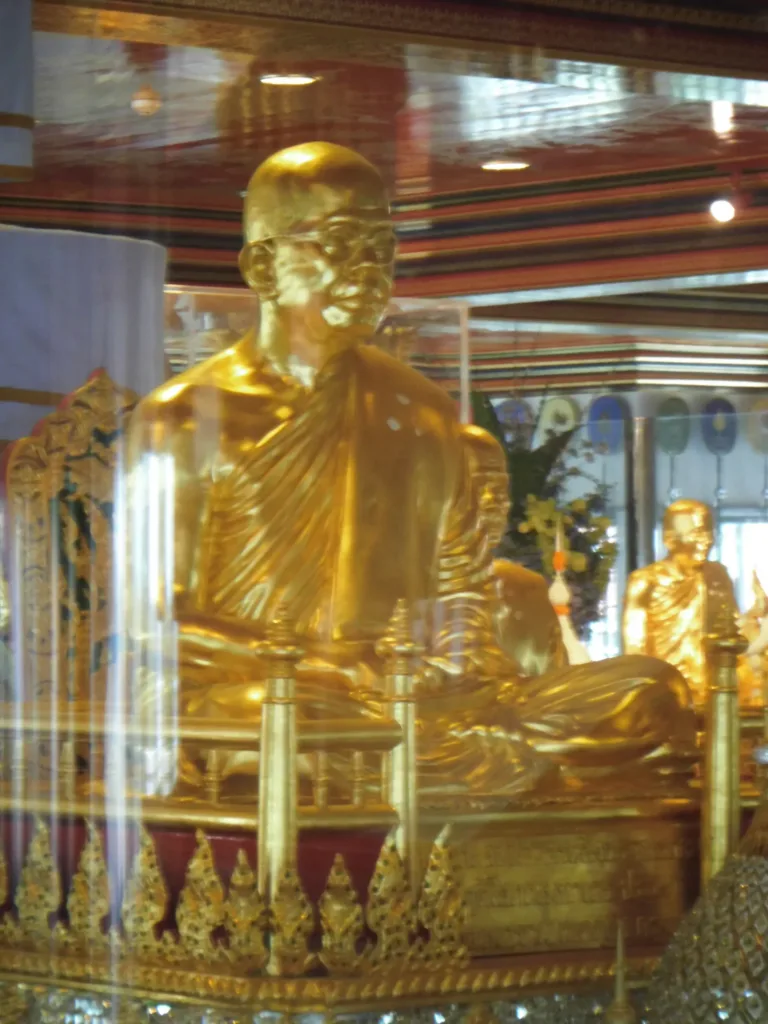
Luang Pho Sodh died on 3 February 1959. His body was not cremated and is still kept at the temple for people to pay respects. A senior monk served as caretaker for about seven years, until in 1965 Phra Chuang Varapunno, who had been ordained at the temple in 1945, became abbot. He built the Pali school into a renowned institution and later held the title Somdet Phra Maha Ratchamangkhalachan. The temple opened branches in the United States from around 1984 and built Wat Paknam Japan in Chiba, dated 1996 by some sources and 1997 by others.
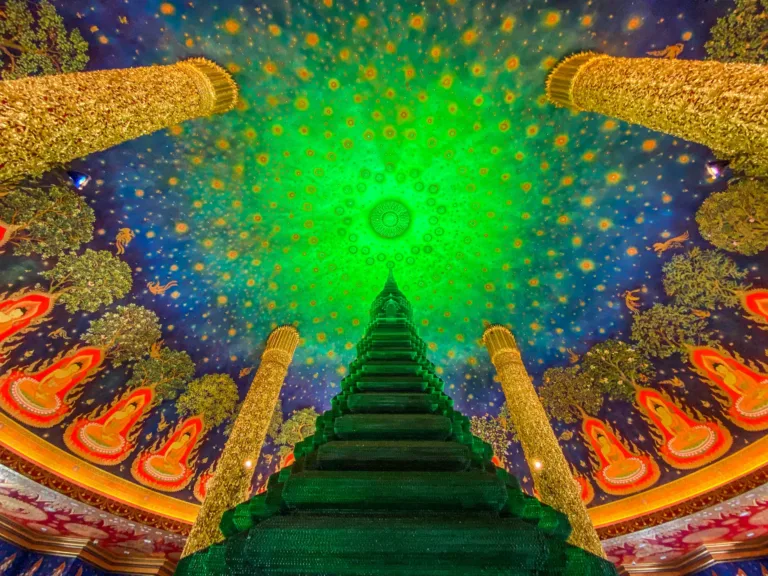
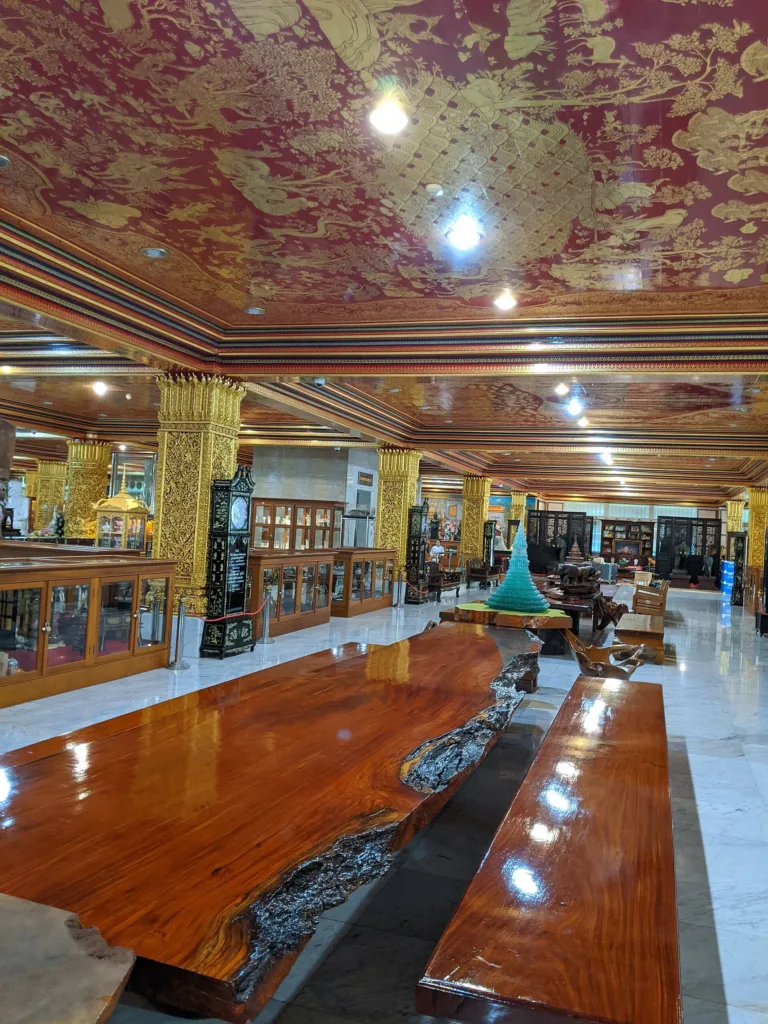
In 2004 the temple laid the foundation stone of the Maha Ratchamongkol Chedi, about 80 metres tall, built as a Buddhist offering and a memorial to Somdet Phra Maha Ratchamangkhalachan. Its base and middle follow Rattanakosin style, while the upper part is Lanna. Inside are museums on several floors, a green glass chedi about 8 metres tall on the fifth floor, and a dome ceiling painting by National Artist Chakrabhand Posayakrit. The chedi opened to visitors around mid-2011 and was completed in 2012.
Work on Phra Buddha Dhammakaya Thep Mongkhon began on 4 March 2017 at the initiative of Somdet Phra Maha Ratchamangkhalachan, with a name drawn from Luang Pho Sodh's teachings. The seated meditating Buddha is 69 metres tall and 40 metres across the lap, and faces north. Its metal sections were made by Thai and Chinese craftsmen and shipped by sea to be assembled at the temple. In late 2019 relics of the Buddha were enshrined in a golden lotus in the topknot. Delayed by COVID-19, the statue was completed on 19 June 2021. Somdet Phra Maha Ratchamangkhalachan died soon after, on 9 December 2021, aged 96, and on 5 February 2023 the King and Queen presided over the statue's consecration ceremony. Today the temple remains a busy centre for meditation and Pali study as well as a new destination for visitors.
Arrived? Check in, collect a stamp and tell others what it is like right now
Check your location first, so you do not fill in the form for nothing
Location must be on and within 1 km · One check-in per place per day · come back on other days to check in again
Post photos from anywhere — no need to be here · Up to 20 photos at a time · JPG / PNG / WebP · GPS location data is removed automatically
The temple is in Phasi Charoen District, Thonburi, surrounded by canals.
Blue Line, Bang Phai station exit 1, then motorbike taxi · By distance
Silom Line, Wutthakat station exit 2, then motorbike taxi · By distance
City streets, then a side road to the temple
Daily 08:00–18:00
Wat Paknam Bhasicharoen
Answers travellers want before they go — a one-minute read
Daily 08:00–18:00
Phra Buddha Dhammakaya Thep Mongkhon is 69 metres tall
Inside the Maha Ratchamongkol Chedi
MRT Bang Phai exit 1 or BTS Wutthakat exit 2, then a motorbike taxi
It dates from the Ayutthaya period, around 1610
A former abbot who taught Dhammakaya meditation
Best day this week: Monday 30 Nov · Check in when you arrive to collect a stamp
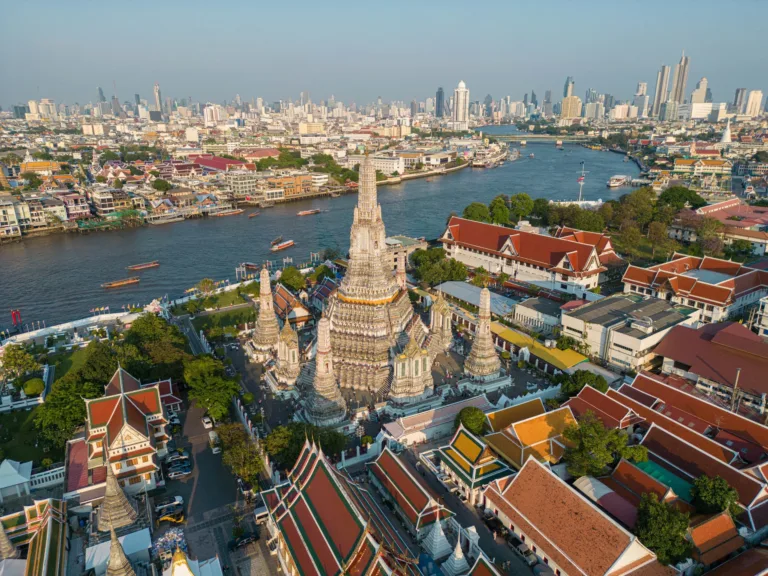 Wat Arun (Temple of Dawn)
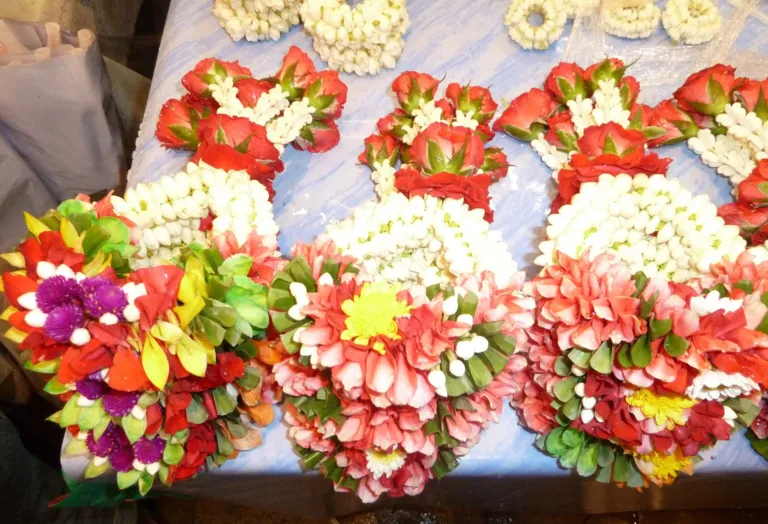 Pak Khlong Talat (Bangkok Flower Market)
 Wat Pho (Wat Phra Chetuphon)
 Asiatique The Riverfront