What to know before visiting the temple
Dress modestly · Remove shoes before entering the ordination hall
Daily, around 06:00–18:00
7 days ahead
When to go
this week
Tap a day card to see that day’s weather, rain, haze and hourly forecast
Best time to go Daytime is over · see tomorrow
No warnings today — normal road and weather conditions
Hour by hour
Green band = hours used for the score
Best time to go Fine all day little rain through the day
No warnings today — normal road and weather conditions
Hour by hour
Green band = hours used for the score
Best time to go Fine all day little rain through the day · light drizzle possible at times
No warnings today — normal road and weather conditions
Hour by hour
Green band = hours used for the score
Best time to go Fine all day little rain through the day
No official warnings, but watch for: Hot (Afternoon) feels like 38°C
Hour by hour
Green band = hours used for the score
Best time to go Fine all day little rain through the day · light drizzle possible at times
No official warnings, but watch for: Hot (Afternoon) feels like 39°C
Hour by hour
Green band = hours used for the score
Best time to go Fine all day little rain through the day · light drizzle possible at times
No official warnings, but watch for: Hot (Afternoon) feels like 39°C
Hour by hour
Green band = hours used for the score
Best time to go Fine all day little rain through the day · light drizzle possible at times
No warnings today — normal road and weather conditions
Hour by hour
Green band = hours used for the score
Wat Chaloem Phra Kiat Worawihan
Wat Chaloem Phra Kiat Worawihan sits on the west bank of the Chao Phraya, just south of Talat Khwan in Bang Si Mueang, Mueang Nonthaburi. This second-class royal temple was founded by King Rama III on the land where his grandparents lived and where his mother, Queen Sri Sulalai, was born.The large ordination hall blends Thai and Chinese styles, with unglazed tiles, Chinese-style stucco ridges and glazed Chinese ceramics. To the south, the royal viharn houses the Phra Sila image, and behind it rises a white Sri Lankan-style chedi about 45 m tall.Unusually, the temple walls are built like a fortress, since the site was once the Pom Thapthim fort. A monument to King Rama III stands by the river behind the temple.
- Cool air, nice light
- Strong sun
- Sri Lankan-style chediFrom the courtyard to fit the whole white chedimorning
- Fortified wallsA long shot along the wall linemorning or evening
Good to know here
Watch small children near the pier behind the temple
This is a royal temple; dress modestly
- Walk along the fortified walls, a rare sight at a Thai temple
- Stop by the King Rama III monument by the river
- Dress modestly; it's a royal temple
- Kids Fine for kids; keep an eye on them by the river
- Seniors Flat grounds, easy to explore
- Wheelchair No ramp information found
- Pets A royal temple; not recommended
- Dress modestly
- Remove shoes before entering the ordination hall
- Watch small children near the pier
The story of this place
Wat Chaloem Phra Kiat Worawihan was the last temple King Rama III (King Nangklao) began. It stands on the west bank of the Chao Phraya, just south of Talat Khwan, on land that was once the Ayutthaya-era Pom Thapthim fort and later the home of the king's grandparents — the birthplace of his mother, Queen Sri Sulalai. Work began in 1847, but the king died before it was finished, and King Mongkut (Rama IV) completed it in 1858. That layered past of fort, family home and royal devotion is still visible in the fortress-style walls, the Thai–Chinese ordination hall and the white chedi you can see from far along the river.
Read more 10 more paragraphs
Long before the temple, Ban Talat Khwan was a busy settlement known for its fruit orchards. In 1549 King Maha Chakkraphat raised it to the town of Nonthaburi, or "Nonthaburi Si Maha Samut", a frontier port guarding the river route to the capital. In 1636 King Prasat Thong had a canal dug to cut off a bend of the river; the old channel slowly silted up into the waterways now known as Khlong Om, Khlong Bangkok Noi and Khlong Bang Kruai.
The shorter river made it easier for enemies to reach Ayutthaya. So in 1665 King Narai moved Nonthaburi from Ban Talat Khwan to the mouth of Khlong Om at Ban Bang Si Mueang and built town walls with two forts: Pom Kaeo at Ban Talat Kaeo, and Pom Thapthim, on the spot where Wat Chaloem Phra Kiat stands today, to watch for enemies coming by water.
During the wars with Burma, Burmese troops under Maha Nawrahta took Thonburi and Nonthaburi in 1764 and set up camp near Wat Khema. After Ayutthaya fell in 1767 the town and its temples were left in ruins. In the early Rattanakosin period Nonthaburi became a coastal town under the Krom Tha (Ministry of Ports).
The house beside the old fort belonged to Phraya Nonthaburi Si Maha Utthayan (Chan), governor of Nonthaburi from the Bang Chueak Nang family, and his wife Than Pheng, daughter of Phraya Ratchawangsan (Wang), whose line descended from the Muslim noble Chao Phraya Chakri (Mut). Their only daughter, Riam, was born here around 1770. She became Chao Chom Manda Riam, mother of the future Rama III. When her son took the throne in 1824 he raised her to Krom Somdet Phra Sri Sulalai; she died around 1837, a decade before the temple was begun.
In 1847 King Rama III, remembering his mother's birthplace, ordered a royal temple built here to honour his grandfather, grandmother and mother, and gave it the name "Wat Chaloem Phra Kiat" — the temple that glorifies their honour. Phraya Phra Khlang (Dit Bunnag), later Somdet Chao Phraya Borom Maha Prayurawongse, oversaw the work. The king had brick-and-mortar walls built in the style of a fortress, with crenellations like those of the Grand Palace, as a memorial to the old fort. Some sources give the start date as 1849. Two Mon-style chedis at the corners of the inner wall are believed by some to hold the ashes of Phraya Nonthaburi (Chan) and Than Pheng.
The principal image in the ordination hall is Phra Phuttha Maha Lokaphinantapatima, a Buddha subduing Mara with a lap width of six sok. Around 1846 Rama III had copper ore mined at Chanthuek in Nakhon Ratchasima and cast at the foundry inside the Grand Palace, then gilded. Two of these large images were made — the other went to Wat Ratchanatdaram — along with 34 smaller images in various postures.
King Rama III died in 1851 while the temple was still unfinished. Sources say that late in his reign he worried about the temples he had left incomplete and asked his successor to finish them. The boundary stones were consecrated that same year. King Mongkut took on the work, with Chao Phraya Thiphakorawong (Kham Bunnag), son of Somdet Chao Phraya Borom Maha Prayurawongse, in charge, and the temple was completed in 1858. Mongkut had the white stone Buddha, Phra Sila Khao, and two stone disciples enshrined in the viharn, which is why it is known as the Viharn Phra Sila Khao.
The temple's art reflects both reigns. The ordination hall, viharn and preaching hall are in the Thai–Chinese style favoured by Rama III: unglazed tile roofs with Chinese-style plastered ridges, gables set with Chinese glazed floral ceramics, and ordination-hall doors and windows in gold-leaf lacquer showing Rama III's emblem and a rabbit in the moon. The viharn and preaching hall walls are painted with soft falling-flower patterns. The white Sri Lankan-style chedi on a two-tier octagonal base was completed under Rama IV, its bell shape matching his taste, and it holds relics of the Buddha. Most sources put its height at about 45 m; one says 48 m.
Nonthaburi moved its centre again under King Chulalongkorn (Rama V), to the mouth of Khlong Bang Sue, and became Nonthaburi Province in 1916. The temple, a second-class royal temple of the Worawihan type, was selected as a model development temple in 1988; its fortress walls were restored in 1992; in 1993 it received an award for outstanding architectural conservation from the Association of Siamese Architects; and in 1995 it was named an education park temple by the Religious Affairs Department.
By the river in front of the temple stands a statue of King Rama III facing the water. The inscription behind it calls Nonthaburi a town bound to his royal merit and notes that his mother was the daughter of Nonthaburi's governor. Beside the temple is the Chaloem Kanchanaphisek Park, built to honour King Rama IX's 50 years on the throne. Around 2010 the ordination hall was under repair, and flood marks at the pier are a reminder that this riverside temple has lived with the Chao Phraya for more than 170 years.
- 1549King Maha Chakkraphat raises Ban Talat Khwan to the town of Nonthaburi
- 1636King Prasat Thong has a canal dug to cut a bend of the Chao Phraya
- 1665King Narai moves the town to the mouth of Khlong Om and builds the Pom Kaeo and Pom Thapthim forts
- 1764Burmese troops seize Nonthaburi and camp near Wat Khema
- c. 1770Riam, daughter of Phraya Nonthaburi Si Maha Utthayan (Chan), is born in the house by the old fort
- 1824King Rama III takes the throne and raises his mother to Krom Somdet Phra Sri Sulalai
- c. 1837Queen Sri Sulalai dies
See 10 events
- c. 1846The king commissions Phra Phuttha Maha Lokaphinantapatima from Nakhon Ratchasima copper
- 1847Temple founded under Phraya Phra Khlang (Dit Bunnag) (some sources say 1849)
- 1851King Rama III dies with the temple unfinished; boundary stones consecrated
- 1858King Mongkut completes the temple and enshrines the Phra Sila Khao image in the viharn
- 1916The town of Nonthaburi becomes Nonthaburi Province
- 1988Selected as a model development temple
- 1992The fort-style walls are restored
- 1993ASA award for outstanding architectural conservation
- 1995Named an education park temple by the Religious Affairs Department
- c. 2010The ordination hall undergoes repairs
Check-ins & visitor photos
Arrived? Check in, collect a stamp and tell others what it is like right now
Check your location first, so you do not fill in the form for nothing
Location must be on and within 0.5 km · One check-in per place per day · come back on other days to check in again
Post photos from anywhere — no need to be here · Up to 20 photos at a time · JPG / PNG / WebP · GPS location data is removed automatically
How to get there
The temple is on the west bank of the Chao Phraya, just south of Talat Khwan, in Bang Si Mueang, Mueang Nonthaburi.
Good
Daily, around 06:00–18:00
Wat Chaloem Phra Kiat Worawihan
FAQ
Before you go: Wat Chaloem Phra Kiat Worawihan
Answers travellers want before they go — a one-minute read
Where is the temple?
On the west bank of the Chao Phraya, south of Talat Khwan, Bang Si Mueang, Mueang Nonthaburi
Who built it?
King Rama III began it, and it was completed under King Mongkut
Why do the walls look like a fort?
The site was once the Pom Thapthim fort, so the walls were built like ramparts
What's special about the ordination hall?
It mixes Thai and Chinese styles, with unglazed tiles and Chinese glazed ceramics
Nearby places
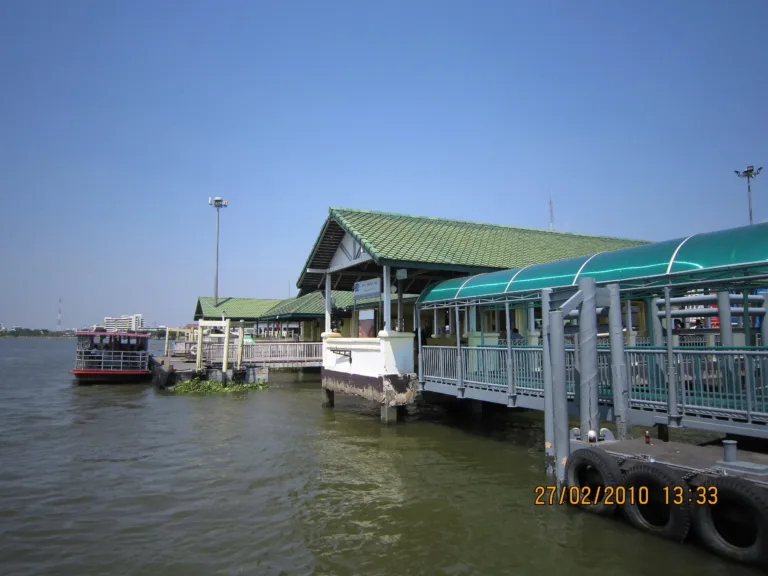 Tha Nam Non (Nonthaburi Pier)
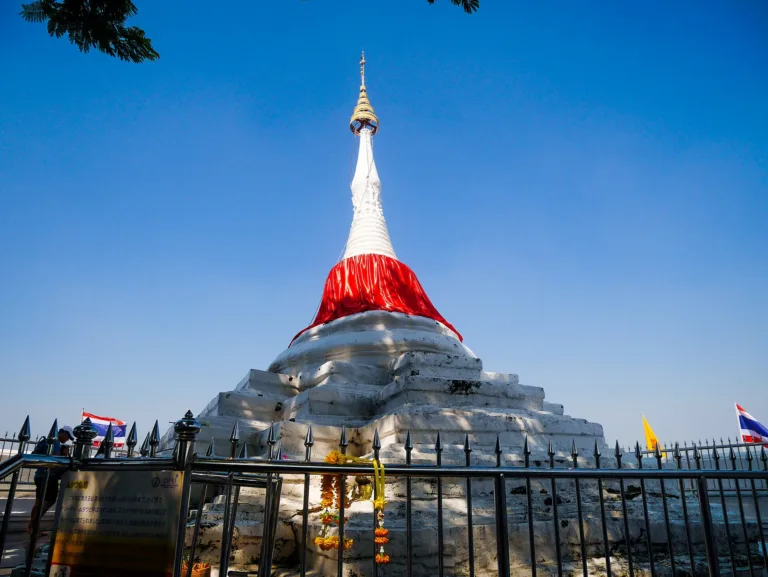 Ko Kret
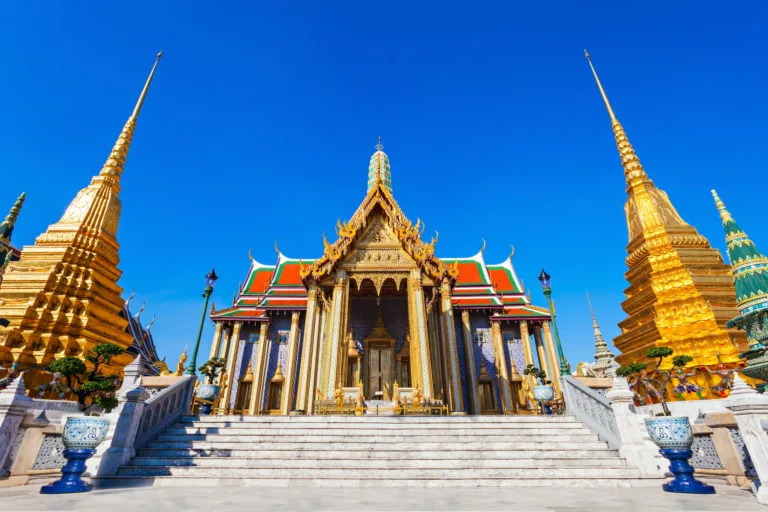 Wat Phra Kaew (Temple of the Emerald Buddha)
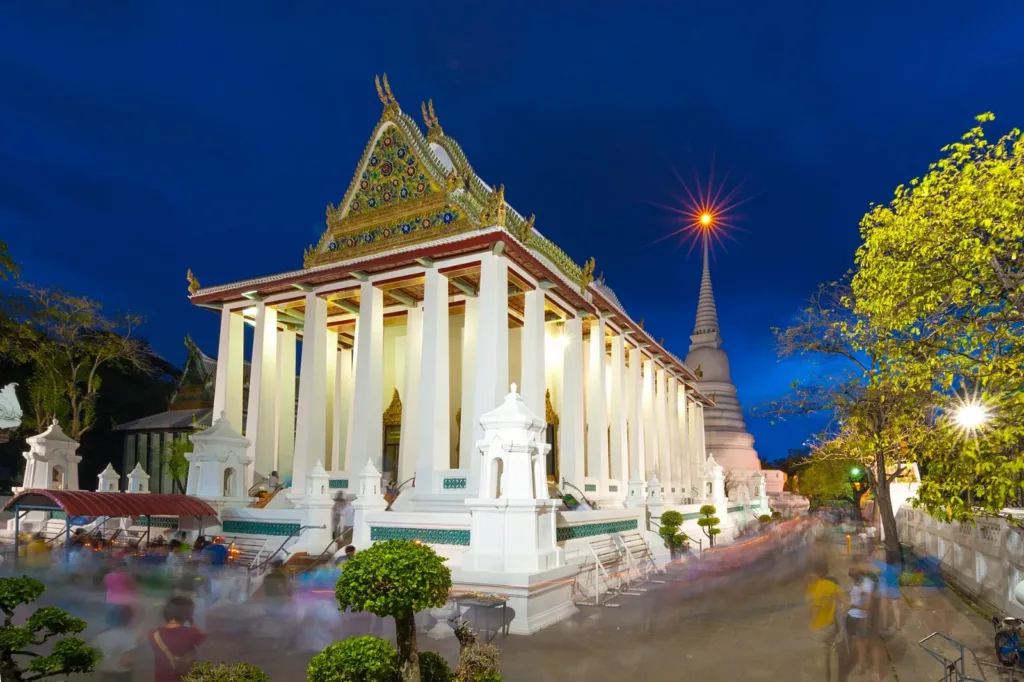
Ready to go to Wat Chaloem Phra Kiat Worawihan?
Best day this week: Sunday 29 Nov · Check in when you arrive to collect a stamp