 01
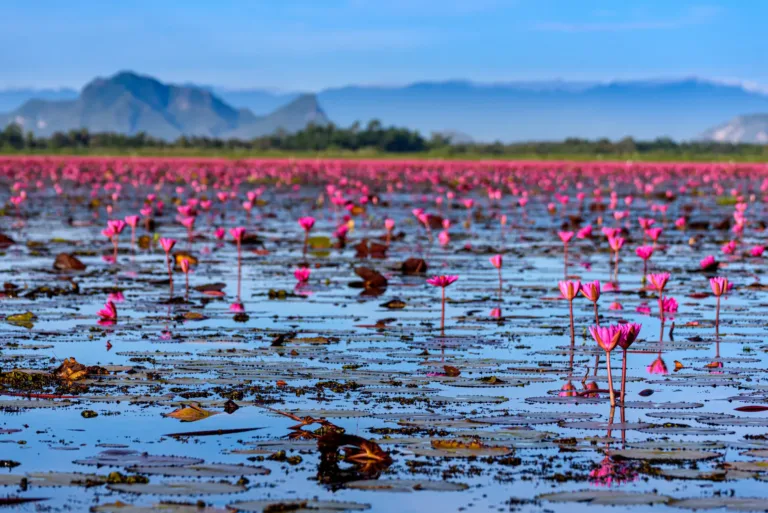
Red lotus fieldsPink-red lotus covering the water in the hot season
Ramsar wetland · Phatthalung
A freshwater lake at the top of the Songkhla lagoon in Khuan Khanun, Phatthalung: Thailand's first Ramsar site, with 223 bird species, summer fields of red lotus and FAO-listed swimming buffalo.
Holiday / event — crowded · Evening (16:00–19:00): rain ~25% · Outside this place's best season
Oct – Dec
Non-hunting area — Don't catch or disturb birds or wildlife; don't pick the lotus
Half a day
01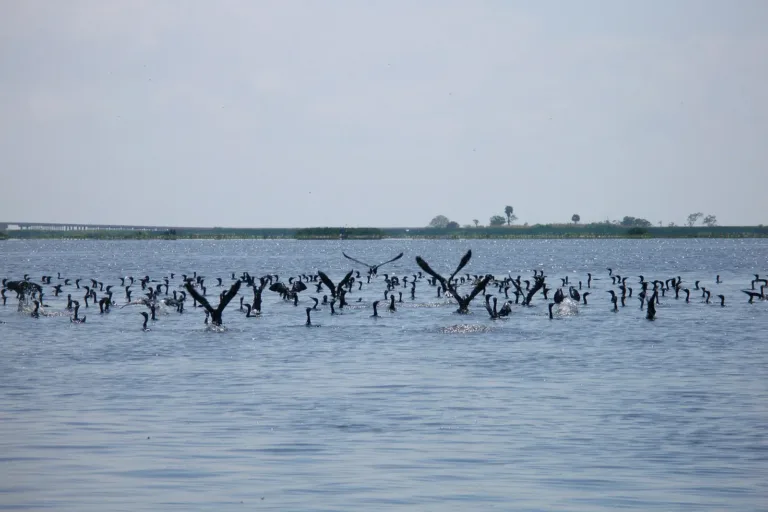 02
 03
 04
Tap a day card to see that day’s weather, rain, haze and hourly forecast
Best time to go Daytime is over · see tomorrow
Holiday — traffic on the way up and parking fills fast; leave early
Green band = hours used for the score
Best time to go Best window 16:00–18:00 Little rain · light drizzle possible at times
Thick morning fog with visibility under 1 km — use headlights and drive slowly
Holiday — traffic on the way up and parking fills fast; leave early
Green band = hours used for the score
Best time to go Best window 14:00–16:00 Little rain · light drizzle possible at times
Rain at times — slippery roads, allow extra travel time
Green band = hours used for the score
Best time to go Best window 14:00–19:00 Little rain · light drizzle possible at times
No official warnings, but watch for: Evening (16:00–19:00): rain ~22% · Outside this place's best season · Heavy rain in the past 2 days: muddy trails
Green band = hours used for the score
Best time to go Best window 06:00–09:00 Little rain · light drizzle possible at times
No official warnings, but watch for: Evening (16:00–19:00): rain ~43% · Possible thunder 09:00–17:00 · Outside this place's best season · Heavy rain in the past 2 days: muddy trails
Green band = hours used for the score
Best time to go Rain most of the day lightest around 08:00–11:00
Rain at times — slippery roads, allow extra travel time
Thick morning fog with visibility under 1 km — use headlights and drive slowly
Green band = hours used for the score
Best time to go Rain most of the day lightest around 06:00–09:00
No official warnings, but watch for: Late morning (09:00–12:00): rain ~90% · Outside this place's best season · Heavy rain in the past 2 days: muddy trails
Green band = hours used for the score
Scored from cloud cover at every level and tonight’s moonlight — the darker the sky, the clearer the Milky Way · tap another night below for the next 7 nights
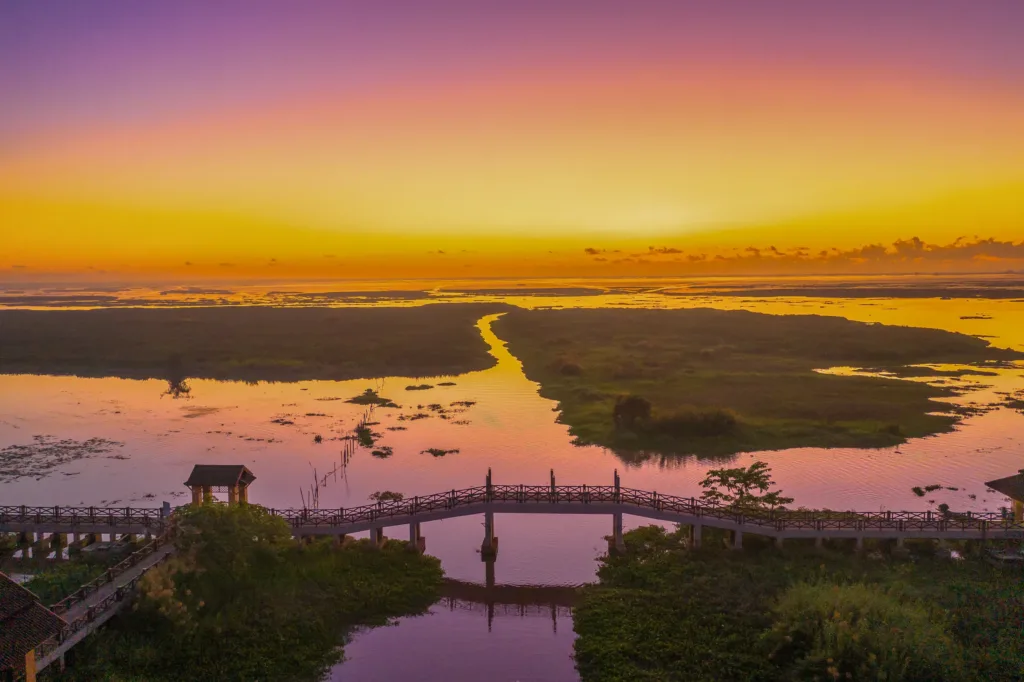
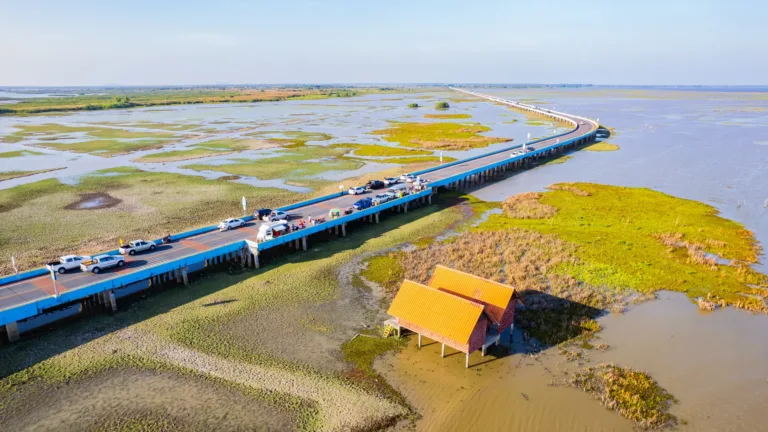
Thale Noi is a freshwater lake at the northern tip of the Songkhla lagoon in Khuan Khanun, Phatthalung, linked to the lagoon by Khlong Nang Riam. It holds water year-round and has been a non-hunting area since 1975.On 13 September 1998 the wetland became Thailand's first Ramsar site. It's home to 223 bird species, both resident and migratory. In the hot season, red lotus carpets the water, and visitors take early boats out for first light and waterbirds.Thale Noi is also known for water buffalo that swim out to graze; in 2022 the FAO listed the local buffalo-raising system as a Globally Important Agricultural Heritage System. The 5.5 km Chaloem Phra Kiat 80th Anniversary Bridge crosses the water to Ranot in Songkhla.
Arrive 06:00 for a first-light boat and open lotus
Don't catch or disturb birds or wildlife; don't pick the lotus
Wear a life jacket and sit still
No data yet check before you go · Time needed Half a day
Weekend mornings in lotus season
Thale Noi is a shallow freshwater lake at the very top of the Songkhla Lake system, in Khuan Khanun district, Phatthalung. About 28–30 square kilometres of open water are ringed by marsh, grassland, Melaleuca swamp forest and rice fields, forming a wetland of more than 450 square kilometres. It holds three national "firsts": Thailand's first non-hunting wildlife area (1975), its first Ramsar Site (1998) and its first Globally Important Agricultural Heritage System (2022). Its story is one of water, waterbirds, water buffalo and the people who have lived alongside them for generations.
Geologically, Songkhla Lake began as a saltwater lagoon on the coast. Research on the Sathing Phra peninsula shows that the sea peaked around 6,500 years ago, and that sand ridges formed roughly 3,000–1,500 years ago gradually sealed the lagoon off from the sea. A waterfowl researcher working here in the mid-1970s described Thale Noi as part of this lagoon basin: once cut off from the sea, rain and river runoff slowly replaced the salt water until the lake turned fresh.
Today Thale Noi is only about 1–2 metres deep and is fed mainly by runoff from the Banthat mountains to the west. To the north, six limestone knolls rise from the plain, the highest about 142 metres. Water levels swing by up to a metre with the seasons, and when the floods arrive late in the year the surrounding grasslands stay underwater for months. This flood cycle has shaped the plants, the birds and the local way of raising buffalo.
Villagers say their community dates back to the Sukhothai era, when the area was thick with huge takhian trees. The trees were felled to build warships and the original settlement faded away; later, people returned to farm, fish and make handicrafts. This is community oral history with no written record to confirm it. At the mouth of Khlong Nang Riam stands the Sala Nang Riam pavilion where, legend says, crocodiles were once common; today only the stories remain.
Ban Thale Noi is also one of the South's strongest Nora communities, with more than 170 family lineages descended from or devoted to Nora and over 142 household shrines to Nora teachers in the lakeside village. Legend says a man called Chai Noi brought Nora to the village; before leaving he promised that if a white cloth with betel nut and leaves were tied to a high beam, he would return to dance again. Villagers honour him with a shrine ritual every year and hold Nora Rong Khru ceremonies in the third, sixth and ninth lunar months.
Life around the lake is tied to krajood, a sedge that grows in the swamps. Families have long woven krajood mats for household use, and the village still has a communal pressing house where heavy stone rollers flatten the stems. The information prepared for the Ramsar nomination in 1997 counted 37 villages and more than 5,000 families around the wetland, almost all relying on fishing, grazing, rice farming and krajood mat-making, then a major local industry.
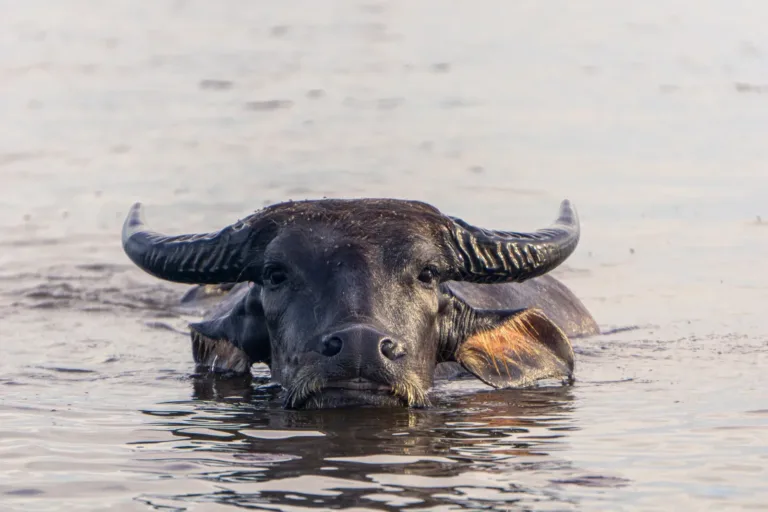
The other icon is the water buffalo. According to government sources, local people have raised swamp buffalo in this wetland for more than 250 years. During the floods, which cover the land for almost five months a year, the buffalo swim out to graze on aquatic plants and return to pens raised about 1.5 metres off the ground. In 2022 farmers in Thale Noi and Phanang Tung subdistricts and in Ban Khao subdistrict of Ranot, Songkhla, kept more than 3,500 head.
Under King Rama VI, around 1912–1922, the Don Sai area of the Thale Noi lowlands was notorious as a bandit stronghold; Khuan Khanun then still belonged to Nakhon Si Thammarat. The authorities spent several years suppressing the gangs with police and local volunteers, and the main group was broken up around 1920.
Hunting was once a major threat to the birds. On 29 April 1975 Thale Noi was declared Thailand's first non-hunting wildlife area. A researcher who surveyed the lake from late 1975 to early 1976 noted that Greater Adjutants and Painted Storks, common only a decade earlier, had become very rare, and that birds and eggs were still sold in local markets. Five ranger sub-stations were in place by 1983, a fish preservation zone followed in 1990, and the main nesting site was given a protection zone around 1992.
When Thailand joined the Ramsar Convention, it nominated the Khuan Khi Sian peat knoll, about 494 hectares inside Thale Noi, as the country's first Wetland of International Importance, No. 948 worldwide. Thai agencies use 13 September 1998, the date Thailand became a party, while the Ramsar database records the designation as 13 May 1998. A 1998–1999 survey of the Khuan Khi Sian colony found five breeding species and a peak count of 20,430 birds in May.
Key Biodiversity Area data note that more than 20,000 waterbirds gather here regularly, including over one percent of Asia's Purple Herons and Little Cormorants. Species totals vary by source: the 1997 Ramsar sheet lists 157 species, while more recent sources cite over 150 waterbird species. By around 1997 the lake already drew more than 200,000 visitors a year.
In the modern era, Thailand began working with FAO in 2017, applied in October 2021, and on 3 November 2022 FAO recognised the Thale Noi wetland buffalo system as Thailand's first Globally Important Agricultural Heritage System. The roughly 5.5-kilometre Chaloem Phra Kiat 80 Phansa Bridge crosses the upper lake, linking Khuan Khanun with Ranot. In fiscal year 2024 the Ministry of Culture chose Ban Thale Noi as one of ten model cultural tourism communities, with an opening ceremony at Ao Chao on 5 March 2025.
Arrived? Check in, collect a stamp and tell others what it is like right now
Check your location first, so you do not fill in the form for nothing
Location must be on and within 3 km · One check-in per place per day · come back on other days to check in again
Post photos from anywhere — no need to be here · Up to 20 photos at a time · JPG / PNG / WebP · GPS location data is removed automatically
Thale Noi is in Khuan Khanun, Phatthalung, at the far north of the Songkhla lagoon.
To Khuan Khanun, then Thale Noi · Fuel
Charter from a pier · Varies by operator
Paved road to the piers and viewpoint
Car parks at the piers and viewpoint
Khuan Khanun town
Daily 08:30–17:30
Thale Noi
Answers travellers want before they go — a one-minute read
Khuan Khanun, Phatthalung, at the northern tip of the Songkhla lagoon
In the hot season, best in the early morning
Yes, Thailand's first, listed on 13 Sep 1998
They swim out to graze; the FAO lists the herding system as agricultural heritage
The Chaloem Phra Kiat 80th Anniversary Bridge is about 5.5 km
Best day this week: Saturday 28 Nov · Check in when you arrive to collect a stamp
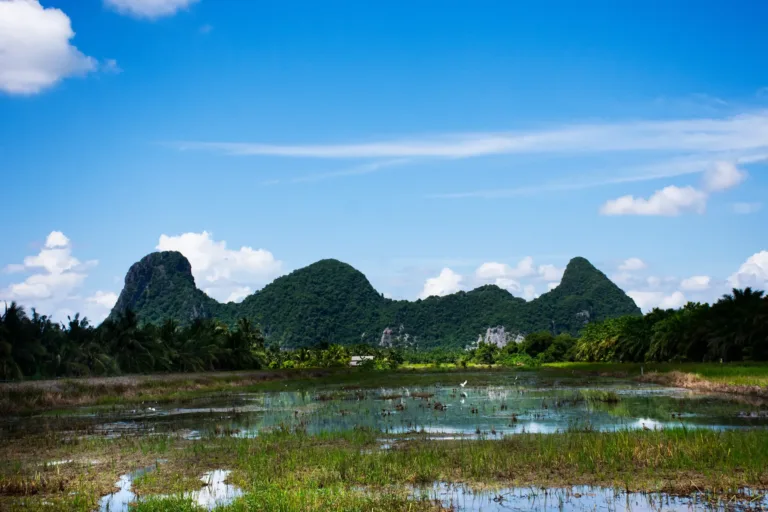 Khao Ok Thalu
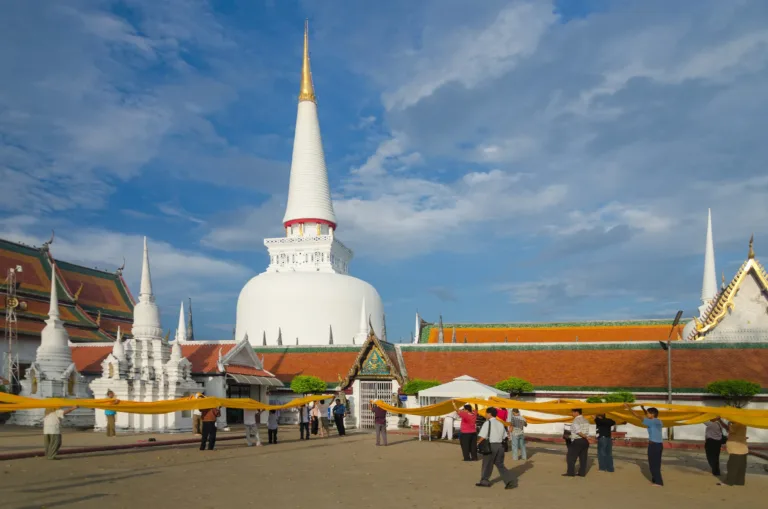 Wat Phra Mahathat Woramahawihan