Opening hours, entry fee and time needed
Daily, roughly 08:00–16:30 (sources vary); check before you go
Thais 150 THB · Foreigners 300 THB
2–3 hours
Late mornings at weekends and in high season
7 days ahead
When to go
this week
Tap a day card to see that day’s weather, rain, haze and hourly forecast
Best time to go Daytime is over · see tomorrow
Holiday — traffic on the way up and parking fills fast; leave early
Hour by hour
Green band = hours used for the score
Best time to go Fine all day little rain through the day
Holiday — traffic on the way up and parking fills fast; leave early
Hour by hour
Green band = hours used for the score
Best time to go Fine all day little rain through the day
No warnings today — normal road and weather conditions
Hour by hour
Green band = hours used for the score
Best time to go Fine all day little rain through the day
No warnings today — normal road and weather conditions
Hour by hour
Green band = hours used for the score
Best time to go Fine all day little rain through the day
No warnings today — normal road and weather conditions
Hour by hour
Green band = hours used for the score
Best time to go Fine all day little rain through the day
No warnings today — normal road and weather conditions
Hour by hour
Green band = hours used for the score
Best time to go Fine all day little rain through the day
No warnings today — normal road and weather conditions
Hour by hour
Green band = hours used for the score
Maesa Elephant Camp
Maesa Elephant Camp is at 101 Moo 9, Mae Raem, Mae Rim, Chiang Mai, in the Mae Sa valley. Choochart Kalmapijit founded it on 8 April 1976 with six elephants; today it cares for about 78.In 2020 the camp stopped elephant rides and shows and removed every riding chair, moving towards a more natural life for the herd. Part of it lives in The Chang, an area where elephants roam unchained, feeding, bathing and resting.Entry is 150 baht for Thais and 300 baht for foreigners, including a basket of fruit for the elephants. For closer contact, book The Chang half-day or full-day programme in advance.
- Cool and lively elephants
- Strong sun, more people
- Nearing closing, fewer activities
- Feeding areaTrunks reaching for fruitmorning
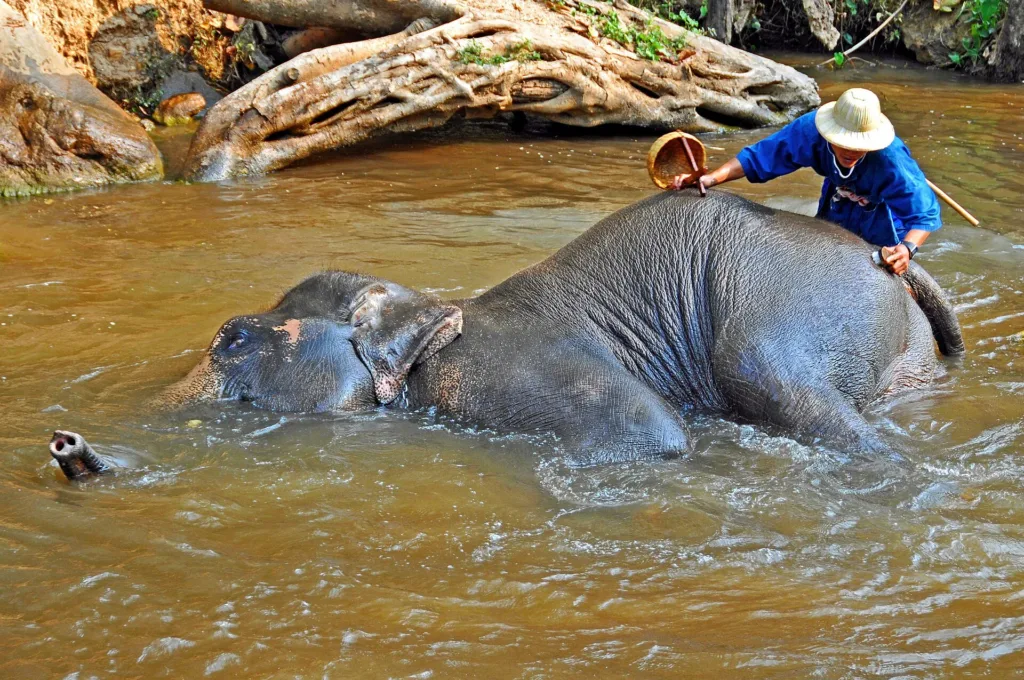
- Bathing streamElephants playing in the waterlate morning
Good to know here
Follow the mahouts; never stand behind an elephant
Must be booked in advance
- Book The Chang in advance if you want to get closer
- Go in the morning when it's cool and the elephants are lively
- Wear closed shoes you don't mind getting dirty
- Combine it with the orchid farm and Mae Sa Waterfall in the same valley
Thais 150 THB · Foreigners 300 THB · Time needed 2–3 hours
Late mornings at weekends and in high season
| Entry, Thai visitor (includes fruit basket) | 150 ฿/person |
| Entry, foreign visitor (includes fruit basket) | 300 ฿/person |
Prices may change by season — check with the venue
- Kids Great; kids love feeding the elephants, with close supervision
- Seniors Fine; mostly flat with short walks
- Wheelchair No ramp information found; some ground is uneven
- Pets Leave pets at home; they may stress the elephants
- In the campRestaurant and drinks
- Always follow the mahouts' instructions
- Feed only the food the camp provides
- Don't pull tails or shout at the elephants
- Elephants are huge; keep the distance the mahouts set
- The ground gets slippery after rain
The story of this place
Maesa Elephant Camp is one of the oldest and largest private elephant camps in northern Thailand, set in the Mae Sa valley in Mae Raem, Mae Rim district, Chiang Mai. It was founded on 8 April 1976 by Choochart Kalmapijit, starting on 30 rai of leased land with just six elephants rented from Karen villagers. Over almost five decades it grew from a small show ground into a home for nearly 80 elephants, through the heyday of rides and shows and a Guinness-recorded elephant painting, until it ended rides and shows in 2020 and turned towards letting its elephants live a more natural life.
Read more 10 more paragraphs
According to the camp's own history, it opened at a time when the Thai government was keen to develop Chiang Mai for tourism, so Choochart leased land in the Mae Sa valley and rented elephants from local Karen people. The start was hard: a 1991 foreign newspaper report quoted a co-founder as saying they lost money for the first three years and almost gave up. The same report said the show ring had opened about 20 years earlier, which differs somewhat from the 1976 founding date the camp uses.
The camp grew once it introduced elephant rides and a show of elephant tricks, and later added the Maesa Elephant Nursery and the Thai Elephant Care Center. By 1991 it had 34 elephants, and a co-founder described it as the largest private elephant camp in the country, with around 200 visitors a day in peak season.
Some sources call Mae Sa Chiang Mai's first elephant tourism business, while the owner of another camp recalls that elephant tourism in Chiang Mai began in Karen villages along the Samoeng road, with Mae Sa and Chiang Dao adding rides later. What is clear is that after Thailand banned logging nationwide in January 1989, many working elephants lost their jobs and tourist camps spread across the north.
In a paper by Prasob Tipprasert published by the Food and Agriculture Organization of the United Nations, Maesa was recorded with 85 elephants, all owned by the camp, and 90 mahouts given food and lodging, about half of them Karen. It had a resident vet, shows, elephant painting and a nursery, with riding as the main activity, and the author called it the biggest and probably best-organised camp in Thailand.
Elephant painting brought the camp worldwide fame in February 2005, when news agencies reported that eight of its elephants, four males and four females, had painted a landscape on a canvas six by 2.4 metres. A US-based art lover bought it for 1.5 million baht, and it entered the Guinness Book of World Records as the highest price ever paid for elephant art. As recently as 2025, a painting by Suree, one of the camp's elephants who loves to paint, was built into an artwork shown on Thai Elephant Day, 13 March.
Around 2017, Chiang Mai media reported that the camp's owner had about 80 elephants and had recently begun mahout training and certification courses. Maesa is also one of the camps where a Chiang Mai University veterinary team collects elephant blood to make frozen plasma for critically ill elephants at the National Elephant Institute's elephant hospital.
The year 2019 brought a change of generation. Choochart Kalmapijit died on 27 January 2019, aged 79, and the camp passed to his eldest daughter, Anchalee Kalmapijit, who took over management in mid-October. She announced an end to riding, painting and similar activities so that the elephants could live free of chains, and consulted Lek Chailert of Elephant Nature Park, whose team helped with the transition. The nursery and the Thai Elephant Care Center were merged into The Chang, and the 19 oldest elephants retired there straight away.
In November of the same year, footage of elephant training at the camp released by a foreign animal-welfare group drew criticism. The management acknowledged the incidents and said activities would shift towards feeding, bathing and conservation, though it said at the time that ending shows and rides would take time.
Covid-19 brought that change sooner than expected. When the government ordered non-essential businesses to close, the camp ended rides and shows for good on 23 March 2020 and removed the riding chairs that day; reports said visitor numbers had fallen from hundreds a day to fewer than 20 (some sources give the date as 20 March). The camp closed for renovation and reopened on 15 June 2020. A 2021 report said it had 73 elephants and 120 mahouts, its savings had run out within a year and it had borrowed more than 45 million baht. About a third of the elephants had moved to free-roaming areas, while the rest took regular forest walks with their mahouts.
Today the camp cares for about 78 elephants spanning several generations. Phlai Kham Muen, its oldest elephant at about 90, was bought soon after the camp opened and once performed log-moving demonstrations with his tusks, which slowly curved into their distinctive shape; he died on the morning of 19 April 2025 after a storm hit the camp the night before. Among the youngest is Chuchai, a calf born to Wan Phen on 6 December 2023, the founder's birthday, so on 6 December 2025 the camp held a merit-making ceremony for its founder alongside her second-birthday celebration.
- 19768 Apr: Choochart Kalmapijit founds Maesa Elephant Camp on 30 rai of leased land with six elephants rented from Karen villagers
- 1991Foreign press reports 34 elephants, calling it Thailand's largest private elephant camp, with about 200 visitors a day
- 2005A painting by eight of the camp's elephants sells for 1.5 million baht, a Guinness record for elephant art
- 2017Local media report around 80 elephants and new mahout training and certification courses
- 201927 Jan: Choochart Kalmapijit dies; the camp passes to his eldest daughter, Anchalee
- 2019Oct: Anchalee Kalmapijit takes over management and announces plans to end rides and shows
- 2019Nov: Criticised over footage from an animal-welfare group; the camp responds and pledges changes
See 7 events
- 2019The nursery and Thai Elephant Care Center merge into The Chang; the 19 oldest elephants retire
- 202023 Mar: Rides and shows end for good and all riding chairs are removed during the Covid-19 closure
- 202015 Jun: The camp reopens to visitors
- 2021About a third of the herd has moved to free-roaming areas; the camp has borrowed over 45 million baht to feed its elephants
- 20236 Dec: Calf Chuchai is born to Wan Phen, on the founder's birthday
- 202513 Mar: A painting by the elephant Suree features in a Thai Elephant Day exhibition
- 202519 Apr: Phlai Kham Muen, the camp's oldest elephant at about 90, dies
Check-ins & visitor photos
Arrived? Check in, collect a stamp and tell others what it is like right now
Check your location first, so you do not fill in the form for nothing
Location must be on and within 1 km · One check-in per place per day · come back on other days to check in again
Post photos from anywhere — no need to be here · Up to 20 photos at a time · JPG / PNG / WebP · GPS location data is removed automatically
How to get there
The camp is at 101 Moo 9, Mae Raem, Mae Rim, in the Mae Sa valley.
From town to Mae Rim, then into the Mae Sa valley · Fuel
Most Mae Sa valley tours stop here · Per package
Paved valley road, the same route as the orchid and butterfly farms
Car park on site
Mae Rim
Daily, roughly 08:00–16:30 (sources vary); check before you go
Maesa Elephant Camp
300 THB
FAQ
Before you go: Maesa Elephant Camp
Answers travellers want before they go — a one-minute read
Where is Maesa Elephant Camp?
101 Moo 9, Mae Raem, Mae Rim, Chiang Mai, in the Mae Sa valley
How much is entry?
150 baht for Thais, 300 baht for foreigners, including a fruit basket
Can I still ride an elephant?
No, rides and shows ended on 23 March 2020
Is there a closer-contact programme?
Yes, The Chang half day or full day, booked in advance
How many elephants are there?
About 78
How far is it from town?
About 30 minutes by car
Nearby places
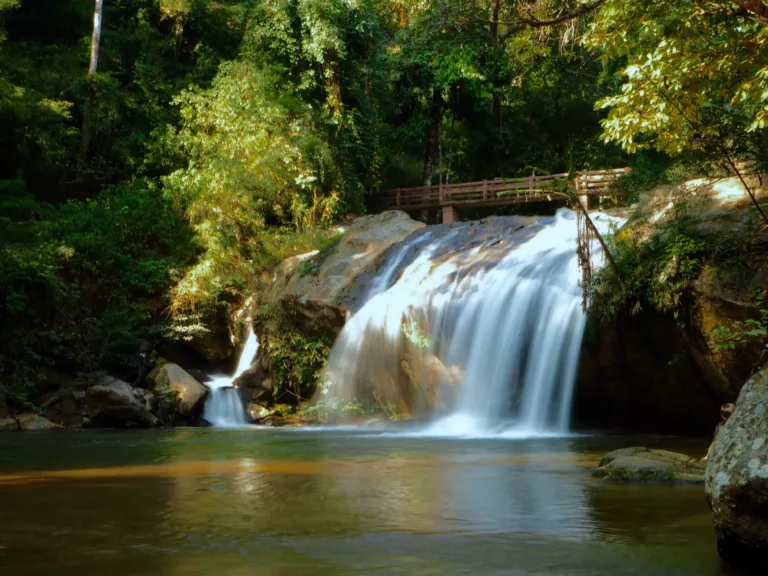 Mae Sa Waterfall
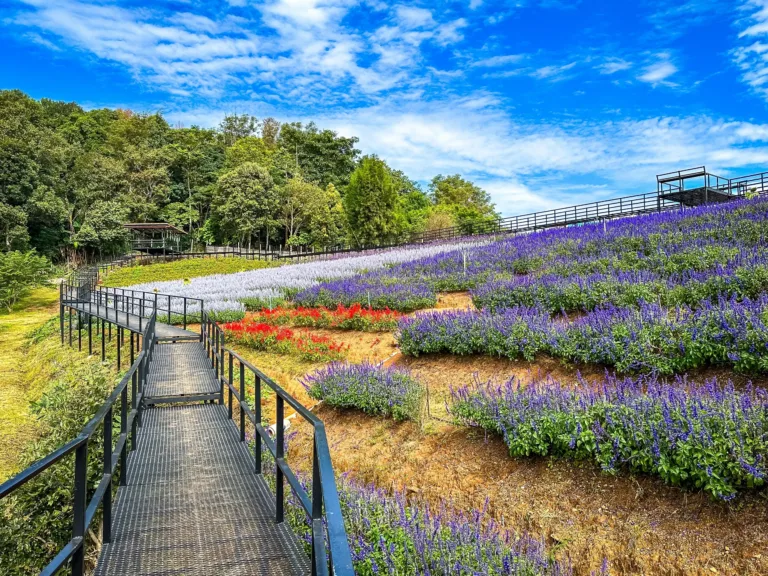 Mon Jam
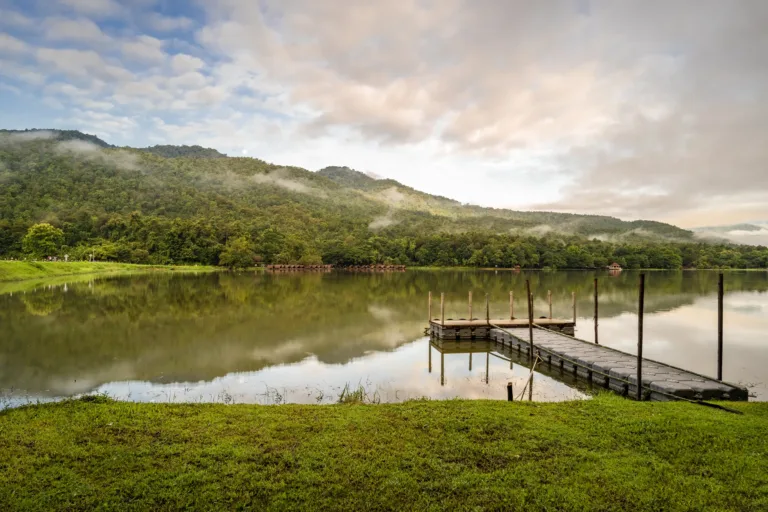 Huay Tung Tao Reservoir
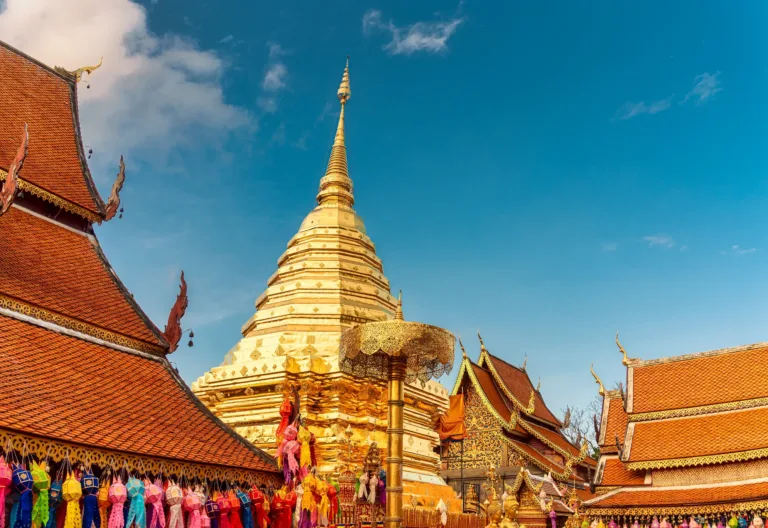 Wat Phra That Doi Suthep
Ready to go to Maesa Elephant Camp?
Best day this week: Monday 30 Nov · Check in when you arrive to collect a stamp