 01
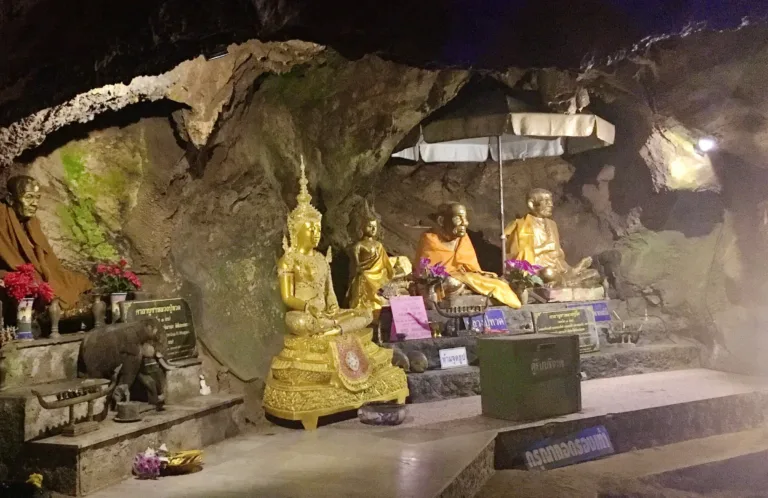
Reclining Buddha CaveLit chamber full of Buddha images; explore on your own
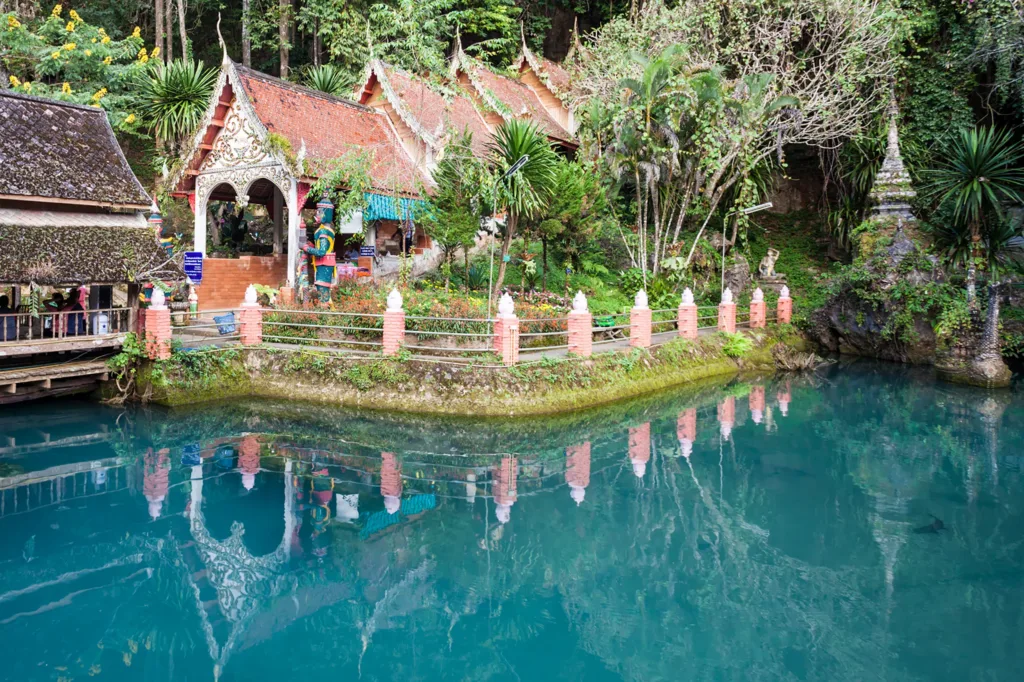
Sacred temple cave · Chiang Dao
A sacred limestone cave inside Wat Tham Chiang Dao at the foot of Doi Luang Chiang Dao, about 72 km north of Chiang Mai. The lit chambers are self-guided; the dark ones need a local guide with a lantern.
Holiday / event — crowded
01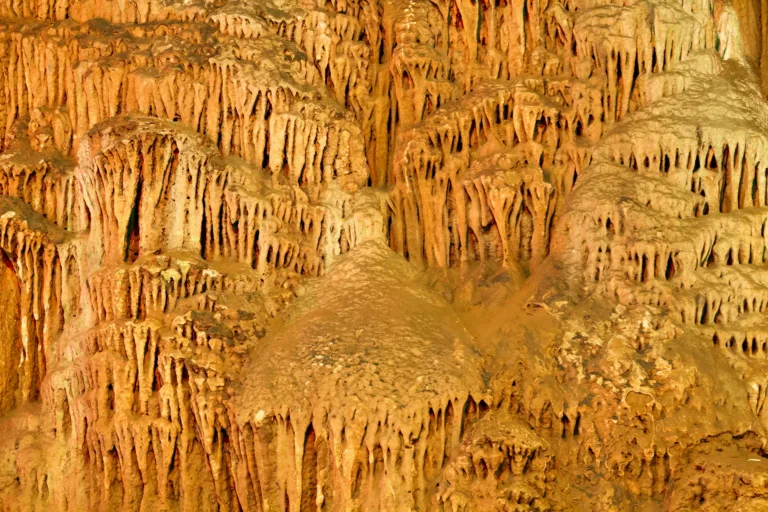 02
 03
 04
Tap a day card to see that day’s weather, rain, haze and hourly forecast
Best time to go Daytime is over · see tomorrow
Holiday — traffic on the way up and parking fills fast; leave early
Green band = hours used for the score
Best time to go Fine all day little rain through the day
Holiday — traffic on the way up and parking fills fast; leave early
Green band = hours used for the score
Best time to go Fine all day little rain through the day
No warnings today — normal road and weather conditions
Green band = hours used for the score
Best time to go Fine all day little rain through the day
No warnings today — normal road and weather conditions
Green band = hours used for the score
Best time to go Fine all day little rain through the day
No warnings today — normal road and weather conditions
Green band = hours used for the score
Best time to go Fine all day little rain through the day
No warnings today — normal road and weather conditions
Green band = hours used for the score
Best time to go Fine all day little rain through the day
No warnings today — normal road and weather conditions
Green band = hours used for the score
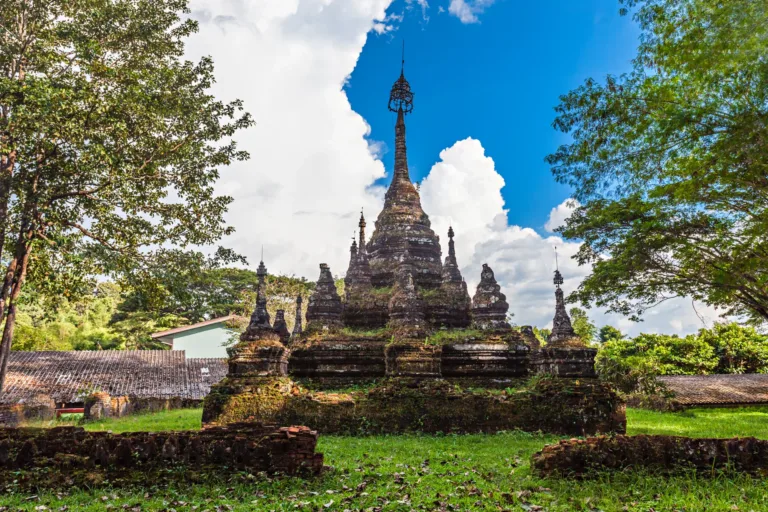
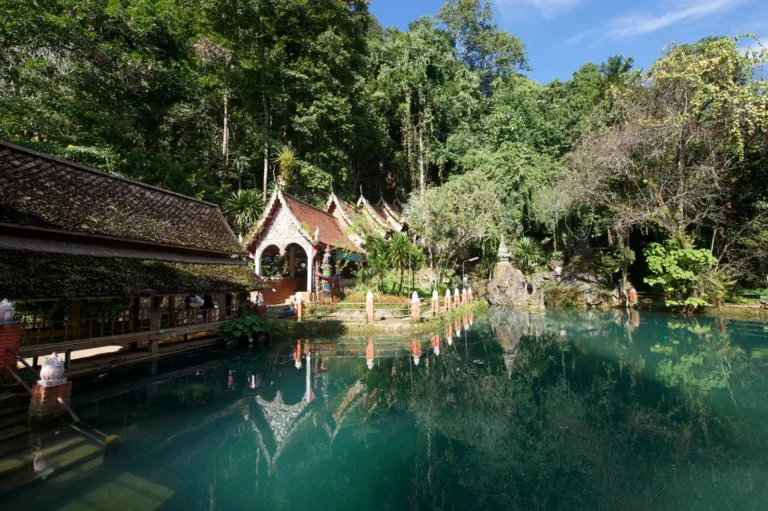
Chiang Dao Cave, also called Tham Luang Chiang Dao, sits inside Wat Tham Chiang Dao in Ban Tham village at the foot of Doi Luang Chiang Dao, about 72 km north of Chiang Mai. Northern Thais have revered it for centuries, and a spring flows out of it all year into a fish-filled pond by the entrance.The cave is split into several sections. The Reclining Buddha and Leopard caves are electrically lit, so you can wander past Buddha images and formations on your own. The Horse, Crystal and Water caves are unlit and you go in with a villager carrying a pressure lantern, squeezing past odd-shaped rocks to a flowstone that sparkles in the lamplight.Legend says a hermit sage hid magical treasures deep inside, guarded by the spirit Chao Luang Kham Daeng. The temple grounds hold his shrine, the wish-granting Than Jai Buddha and a Shan-style chedi with 25 spires built in 1913.
Arrive 15:00, to leave time for a guided dark-cave walk
Never go in without a guide; there are many side passages and unmarked drops
Some stretches need stooping or crawling over slippery, sharp rock
Rising water can close some sections; ask at the entrance
Thais 20 THB · Foreigners 40 THB · Time needed About 1.5–2 hours
Long weekends and the cool season, 10:00–14:00
| Cave entry, Thai visitors | 20 ฿/person |
| Cave entry, foreign visitors | 40 ฿/person |
| Lantern guide for the dark caves (about 200 baht per group of up to 5, shared) optional | 40–200 ฿/person |
Cash · Prices may change by season — check with the venue
Chiang Dao Cave, or Tham Luang Chiang Dao, is a limestone cave at the foot of Doi Luang Chiang Dao, about 72 km north of Chiang Mai. Its mouth lies inside Wat Tham Chiang Dao in Ban Tham village, around 460 m above sea level. The cave plays three roles at once: a place where monks and hermits meditate, the home of the spirit Chao Luang Kham Daeng in Lanna belief, and a cave system that Thai and foreign cavers have mapped and studied for more than fifty years. Water flows out of it all year into the fish-filled pond by the temple, and cavers regard it as the main outlet for groundwater from the mountain.
Thairath puts the age of the limestone at around 250–300 million years. The part the temple shows visitors is divided into five main chambers: the Reclining Buddha Cave (about 351 m), the Water Cave (about 298 m), the Horse Cave (about 86 m), the Hidden Cave (about 273 m) and the Crystal Cave (about 100 m). The Reclining Buddha Cave connects with the Water Cave, and the Horse Cave leads into the Hidden Cave. These are the lengths of the visitor chambers, not of the whole system.
One legend tells of a hermit sage, Phrom Ruesi in Thai and Phra Rama Rishi in English retellings, who meditated in the cave for a thousand years and grew so powerful that he summoned gods, giants and nagas to create magical treasures inside, such as a solid-gold Buddha, a golden bodhi tree, the elephant Erawan, a magic sword and a magic horse. Versions told by foreign writers add a city of nagas and the hermit's own tomb. All of these are said to lie too deep for anyone to reach.
The legend most closely tied to the cave is that of Chao Luang Kham Daeng, or Suwanna Kham Daeng, a prince from Phu Kam Yao, today's Phayao, who chased a golden deer into the cave and never came out. The deer was the shape-shifted Nang In Lao, whom some writers call the daughter of the crystal cave. He became the guardian of the cave's treasures, villagers built him a shrine in the temple, and people say that on some nights a ball of light drifts east from behind the mountain, which they take to be him visiting his birthplace. His role as guardian spirit of the whole mountain is told on our Doi Luang Chiang Dao page.
Writers who have traced his name cite the Tamnan Chiang Mai Pang Doem chronicle and a palm-leaf text copied in 1947 from an original at Wat Phra Singh. A 2011 thesis by Nitaya Wannakit, based on fieldwork in five northern provinces from 2008 to 2010, found that the cult of Chao Luang Kham Daeng grew out of the great spirit of Doi Luang Chiang Dao.
Other stories say three arahants attained nirvana here, and tell of two villagers who went in after the treasure and got lost; when someone came across them by chance, one was dead and the other died within a week of getting home. Locals still say you must not take even a pebble out of the cave. None of this can be proven, but it has kept people respectful of the cave to this day.
How the temple began is unclear. English Wikipedia says it probably dates from the Lanna period, while Thairath says Phra Khruba Prathammapanya and Pho Saen Pi began building it in 1767. Almost a century later Phraya Intaphiban added stairs up to the cave mouth and monks' quarters.
In 1913 a Shan hermit, named U Kantha or Kantha in different sources, made the Buddha image known as Luang Pho Than Jai and, with villagers, built the 25-spire chedi. Many Buddha images inside are thought to be Burmese work, possibly from the period of Burmese rule over Lanna. Later, in the era of the revered monk Khruba Siwichai, the temple was built up and restored into what stands today; English Wikipedia says his followers built a viharn near the entrance in 1934, and the raised walkway to the mouth also dates from the 1930s. More recently the Fine Arts Department's Chiang Mai office restored the 25-spire chedi with traditional lime plaster.
The cave is also a field laboratory. In January 1913 T. H. Lyle collected bats here, and the roundleaf bat Hipposideros lylei, described the same year, has the cave as its type locality. Biospeleologist Fred Stone collected here in 1967, and from December 1972 to February 1973 a Thai and North American team from Chiang Mai University, with Richard Windecker as lead author, mapped about 2.15 km with compass and tape, the first recorded cave mapping in Thailand, published by the Siam Society in 1975.
Others followed. French cavers Louis Deharveng and Alain Gouze explored it from December 1980 to January 1981, the Association Pyrénéenne de Spéléologie made the most thorough survey in 1981–85, an Idaho-based American karst hydrology team worked around Chiang Dao in 1983–84, and in 1987 a Polish expedition camped on Doi Luang to look for a high entrance. Cave databases list more than 40 cave-dwelling species, some first described from here. In June 2021 Chiang Mai Rock Climbing Adventures began a new resurvey.
So the cave's length depends on what is counted. 2.15 km is the first map of 1972–73; about 5.17 km (43 m deep) is the surveyed length in Martin Ellis's cave database; about 9.4 km is the sum of sections given by showcaves.com; and 10–14 km is local lore not backed by any survey. For visitors, the Reclining Buddha and Leopard caves are lit and self-guided, while the Horse, Crystal and Water caves are visited behind a villager with a pressure lantern.
Arrived? Check in, collect a stamp and tell others what it is like right now
Check your location first, so you do not fill in the form for nothing
Location must be on and within 1 km · One check-in per place per day · come back on other days to check in again
Post photos from anywhere — no need to be here · Up to 20 photos at a time · JPG / PNG / WebP · GPS location data is removed automatically
From Chiang Mai head north on Route 107 (Chiang Mai–Fang) for about 72 km to Chiang Dao.
Route 107 to Chiang Dao, then about 5 km to Ban Tham · Fuel
From Chang Phueak bus station to Chiang Dao, then a songthaew or hired local car to the temple · Ask at the station
Route 107, then about 5 km of paved road
Car park in front of the temple
Chiang Dao town on Route 107
Signal on the temple grounds, none inside the cave
Daily, roughly 07:00–17:00 (some sources say until 18:00)
about 72 km from Chiang Mai city
Chiang Dao Cave
40 THB
Answers travellers want before they go — a one-minute read
Inside Wat Tham Chiang Dao, Ban Tham, about 72 km north of Chiang Mai
The Reclining Buddha cave is lit and self-guided; the Horse and Crystal caves are dark and need a lantern guide
A 2024 article says about 200 baht per group of up to 5, but some visitors were charged per person and prices change, so ask at the entrance
It depends what is counted: the first map (1972–73) covered about 2.15 km, a cavers' database records about 5.17 km, showcaves.com sums sections to about 9.4 km, and local lore says 10–14 km; the visitor route is much shorter
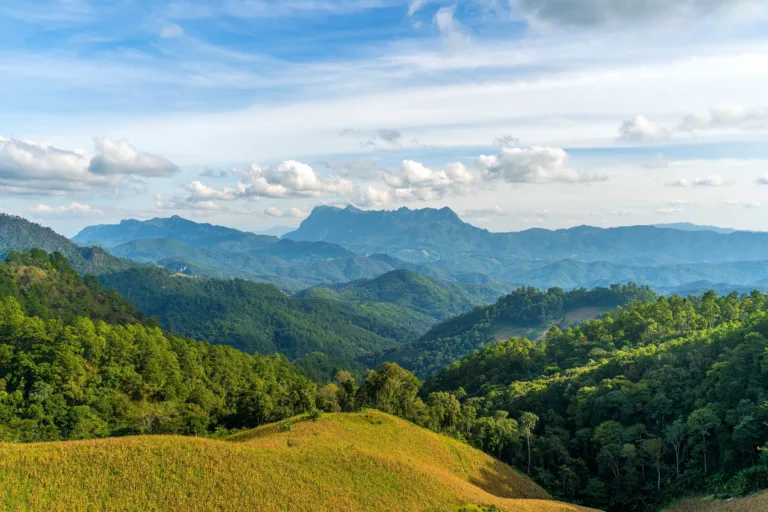
In legend, the great guardian spirit of Lanna, believed to live in the cave and on Doi Luang Chiang Dao
The lit section stays open, but some areas may close when the water rises
Best day this week: Monday 30 Nov · Check in when you arrive to collect a stamp
 Doi Luang Chiang Dao
 Wat Ban Den (Wat Den Sali Si Mueang Kaen)
 Mok Fa Waterfall
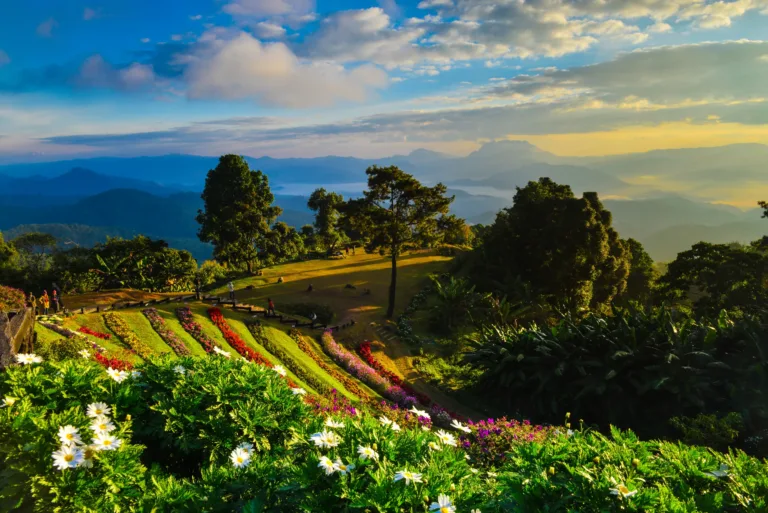 Huai Nam Dang National Park