 01
Lakeside pathWalk, run or cycle by the water
City lake · Khon Kaen
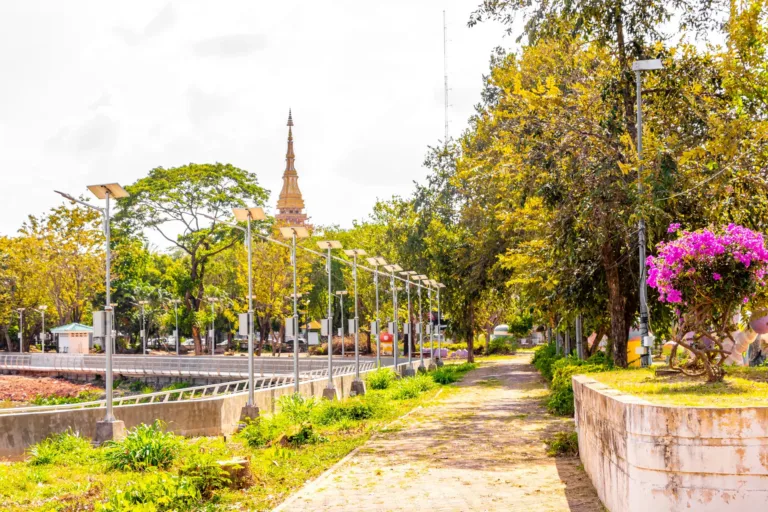
A natural lake of about 603 rai in central Khon Kaen, turned into a park with paths for walking, running and cycling, and views of the nine-tiered Phra Mahathat Kaen Nakhon. Free, open 06:00–21:00.
Holiday / event — crowded
May, Jul – Oct
Park only where allowed — Roadside parking is restricted to marked spots
1–2 hours
Good; it's in the city
01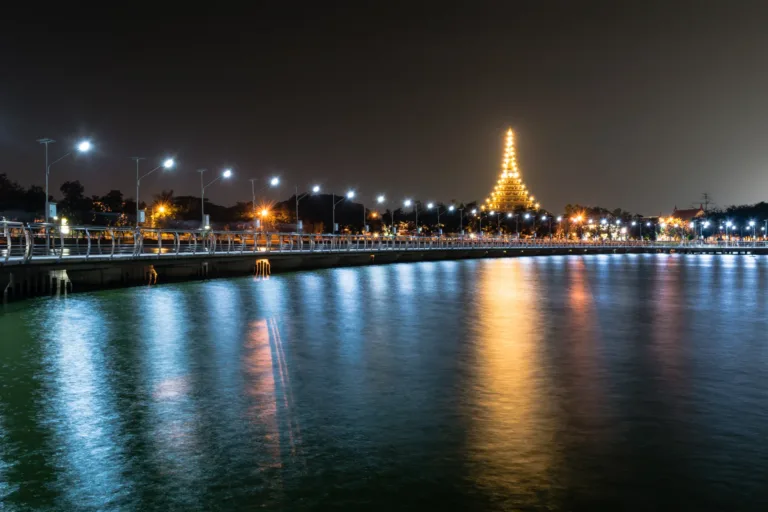 02
 03
Tap a day card to see that day’s weather, rain, haze and hourly forecast
Best time to go Daytime is over · see tomorrow
Holiday — traffic on the way up and parking fills fast; leave early
Green band = hours used for the score
Best time to go Fine all day little rain through the day
Holiday — traffic on the way up and parking fills fast; leave early
Green band = hours used for the score
Best time to go Fine all day little rain through the day
No warnings today — normal road and weather conditions
Green band = hours used for the score
Best time to go Fine all day little rain through the day
No warnings today — normal road and weather conditions
Green band = hours used for the score
Best time to go Fine all day little rain through the day
No warnings today — normal road and weather conditions
Green band = hours used for the score
Best time to go Fine all day little rain through the day
No warnings today — normal road and weather conditions
Green band = hours used for the score
Best time to go Fine all day little rain through the day
No warnings today — normal road and weather conditions
Green band = hours used for the score
Scored from cloud cover at every level and tonight’s moonlight — the darker the sky, the clearer the Milky Way · tap another night below for the next 7 nights
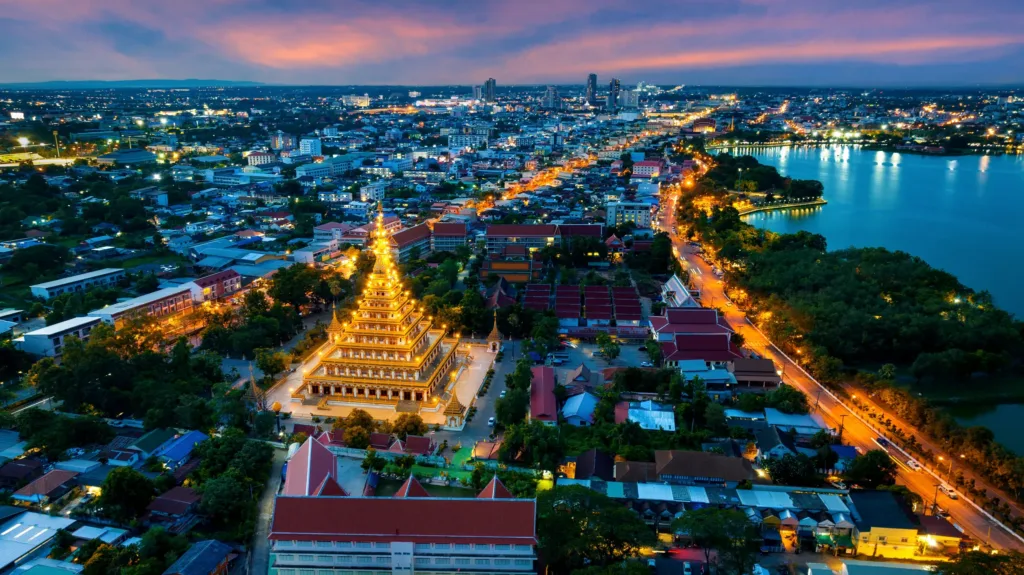
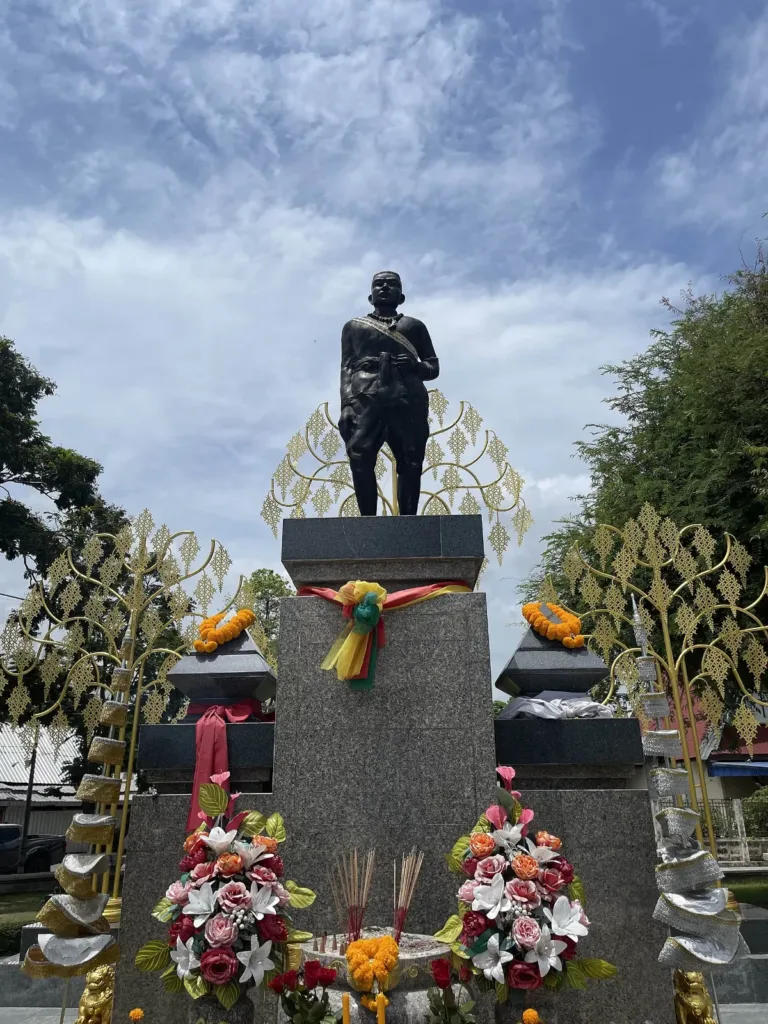
Bueng Kaen Nakhon is a natural lake of about 603 rai (some 96 hectares) on Rop Bueng Road, Nai Mueang, central Khon Kaen, cared for by Khon Kaen City Municipality. It's the city's favourite place to unwind and exercise, and it's tied to the story of the city's founding.Around the lake are paths, exercise areas, shaded pavilions, playgrounds and sculptures. Across the water rises Phra Mahathat Kaen Nakhon, the nine-tiered stupa of Wat Nong Waeng, and Hong Mun Mang city museum and the Chao Phia Mueang Phan monument are close by.It's free and open daily 06:00–21:00. The best hours are 06:00–09:00 and 16:00–19:00, when it's cooler and you might catch sunrise or sunset.
Arrive 06:00 for sunrise, or after 16:00
Roadside parking is restricted to marked spots
The lake path is shared by walkers, runners and cyclists
Free · Time needed 1–2 hours
Holiday mornings and evenings
Bueng Kaen Nakhon is a natural lake of about 603 rai in the middle of Khon Kaen, and it is where the city was actually born. Its old name was Bueng Bon. Around 1789 Phia Mueang Phaen brought settlers to its west shore, and in 1797 the community was raised to the town of Khon Kaen. For more than a century afterwards the town centre moved away from the lake and back again several times. Today the shore is a Khon Kaen City Municipality park, with temples as old as the city, the nine-tiered Phra Mahathat Kaen Nakhon and a city museum that tells this story.
The city history compiled by local scholars from the chronicles of the Isan towns says Phia Mueang Phaen led about 330 households from Ban Chi Lon in the Suwannaphum area, now in Roi Et province, to Ban Bueng Bon, which then came under Nakhon Ratchasima. He chose the west shore for its forest, good soil, plentiful water and abundant fish, ideal for rice farming and homes. Some sources say his group's roots lay on the Vientiane side of the Mekong.
Temples grew up with the settlement. Wat Nong Waeng, first called Wat Nuea, is said to have been founded by Phia Mueang Phaen in 1789, and Wat That across the lake is also dated to about that year, built in Lan Chang style with mostly wooden early buildings. Wat Nong Waeng, Wat That and Wat Klang are counted among Khon Kaen's first temples.
In 1797 King Rama I raised Ban Bueng Bon to the town of Khon Kaen and appointed Phia Mueang Phaen its first ruler, with the title Phra Nakhon Si Borirak, a title later held by several successors. An article by a local historian adds that his daughter became a consort of Rama I.
The origin of the name Khon Kaen is still debated. One legend links it to a dead tamarind stump of which only the heartwood remained, at Ban Kham in Nam Phong district, in a story tied to the building of Phra That Phanom. Another legend tells of a hardwood log beside this very lake. Some scholars argue that the name does not come from "Kham Kaen", since old documents only show archaic spellings of Khon Kaen itself, and note that the claim the lake was once called "Bueng Bon Khon Kaen" has no supporting evidence.
The town did not always stay by the lake. The second ruler moved it to Ban Don Phan Chat, in today's Maha Sarakham province; one source dates this to 1809 and another to 1811. Bueng Bon became the "old town". In 1838 the second ruler's son brought the town back to the lake, this time at Ban Non Than on the north-east shore.
The later 19th century was restless. In 1868 the people split into two groups, one moving about 5 km south to Ban Don Bom on the Chi River, recognised by the authorities in 1877. In 1881 officials ordered the Ban Non Than community to move to Ban Thum, about 15 km west of the lake, which became a centre with a telegraph line. About ten years later the two groups reunited at Ban Thum.
In 1899 drought drove the town back to the lake's water, this time on the west shore, where a town hall and governor's residence were built. The lake then had many small islands, and coconut and betel palms lined its banks. After 1908, however, frequent floods moved government offices and many residents to Ban Phra Lap, which became the core of modern Khon Kaen.
The lakeside temples were rebuilt on a larger scale in later years. At Wat That a new chedi enclosing the old one was designed from 1970, and its finial was raised on 3 April 1981. At Wat Nong Waeng, Phra Mahathat Kaen Nakhon was built to mark King Rama IX's Golden Jubilee and Khon Kaen's 200th anniversary in 1996. It is 80 m tall on a 50 x 50 m base, with nine tiers. One source says it follows Phra That Kham Kaen, while others describe it as modelled on Phra That Phanom. Murals on the ground floor tell Khon Kaen's history from the migration to Bueng Bon onwards.
The shore also holds the 200-Year Park building on Rop Bueng Road, home of Hong Mun Mang, the municipality's city museum. Development began in 1997 with support from the Tourism Authority of Thailand and was completed in 2003. Its five zones run from geography and the Phu Wiang dinosaurs to the founding of the town, the city pillar rites and daily life over the past century.
As a city-centre water body, the lake has long attracted researchers. A Khon Kaen University study published in 2013 measured its surface at about 1.05 km² and placed its water in quality class 3. A study published in 2020 trialled adding microbes to reduce blue-green algae and raise oxygen levels.
In late 2016 Khon Kaen City Municipality held a ceremony for the guardian spirit Chao Mae Song Nang on the shore before starting a landmark makeover worth about 41 million baht, with embankments, a running track and a walkway across the water. In early 2017 a citizens' group asked the province to review the project. Today the lake remains the stage for the city's merit-making festivals, such as the end-of-Lent celebrations and the Loi Pratip lantern tradition held around the lake in October 2026.
Arrived? Check in, collect a stamp and tell others what it is like right now
Check your location first, so you do not fill in the form for nothing
Location must be on and within 0.4 km · One check-in per place per day · come back on other days to check in again
Post photos from anywhere — no need to be here · Up to 20 photos at a time · JPG / PNG / WebP · GPS location data is removed automatically
Bueng Kaen Nakhon is on Rop Bueng Road, Nai Mueang, Mueang Khon Kaen.
Drive to Rop Bueng Road and park in marked spots · Fuel
Ask for Bueng Kaen Nakhon · As agreed
Paved Rop Bueng Road
Roadside parking only in permitted spots
Good; it's in the city
Daily 06:00–21:00
Bueng Kaen Nakhon
Answers travellers want before they go — a one-minute read
Yes
Daily 06:00–21:00
About 603 rai
06:00–09:00 and 16:00–19:00
Phra Mahathat Kaen Nakhon, Wat Nong Waeng and Hong Mun Mang, about 1 km away
Best day this week: Monday 30 Nov · Check in when you arrive to collect a stamp
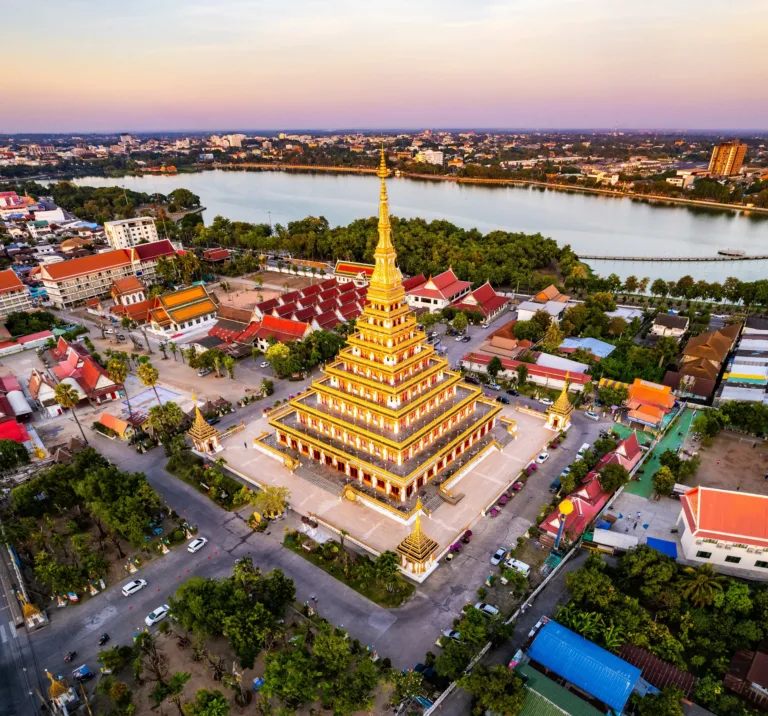 Phra Mahathat Kaen Nakhon (Wat Nong Waeng)
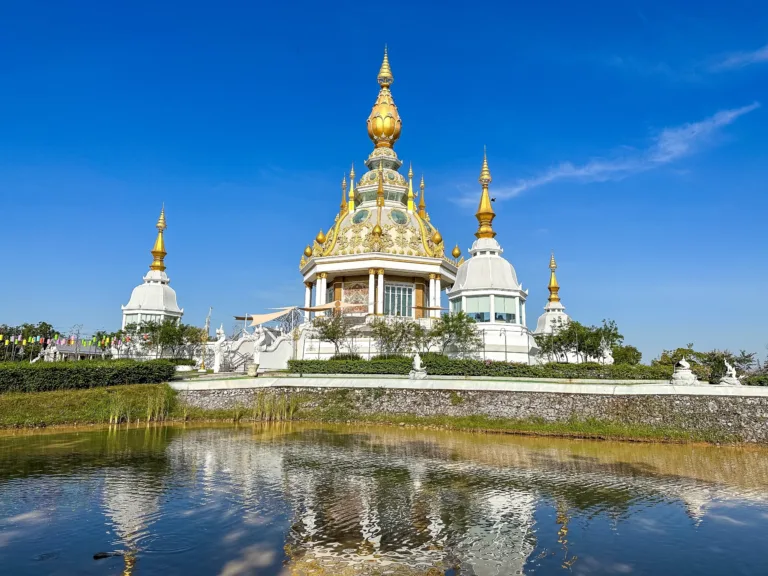 Wat Thung Setthi