 01
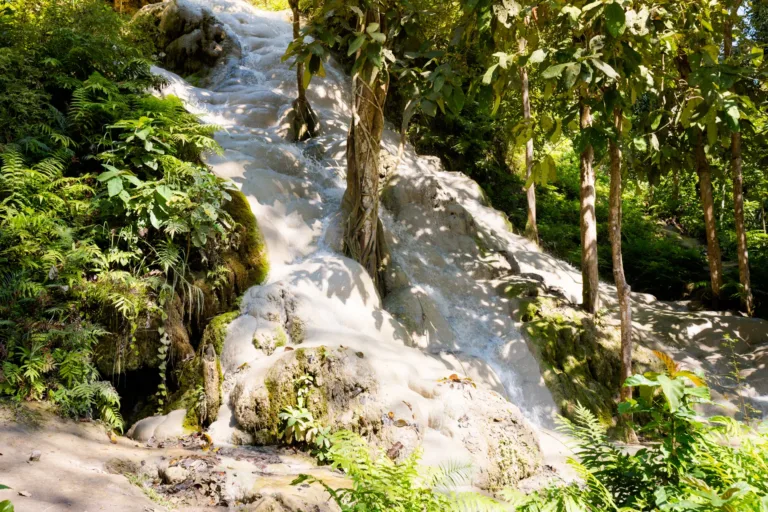
The limestone cascadeRock coated in rough calcium carbonate that you can climb barefoot
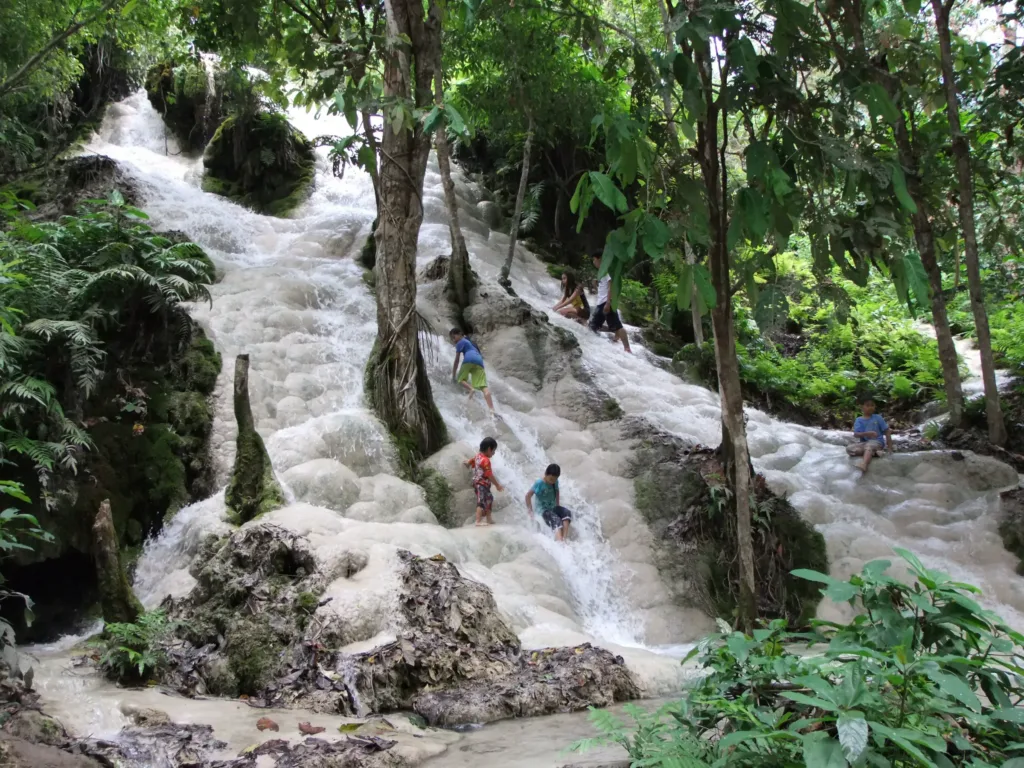
Limestone waterfall · Mae Taeng, Chiang Mai
A limestone waterfall in Mae Taeng that you can climb barefoot: calcium carbonate from the Chet Si spring coats the rock in a rough, grippy crust. Free entry, open daily 08:00–17:00.
Holiday / event — crowded
This site closes at 17:00 — leave the falls before closing time
Jun – Sep (wettest)
Steep upper section — Tiers 1–2 are the steepest, with ropes to hold; climb only where signs allow it
Daily 08:00–17:00
1.5–3 hours
01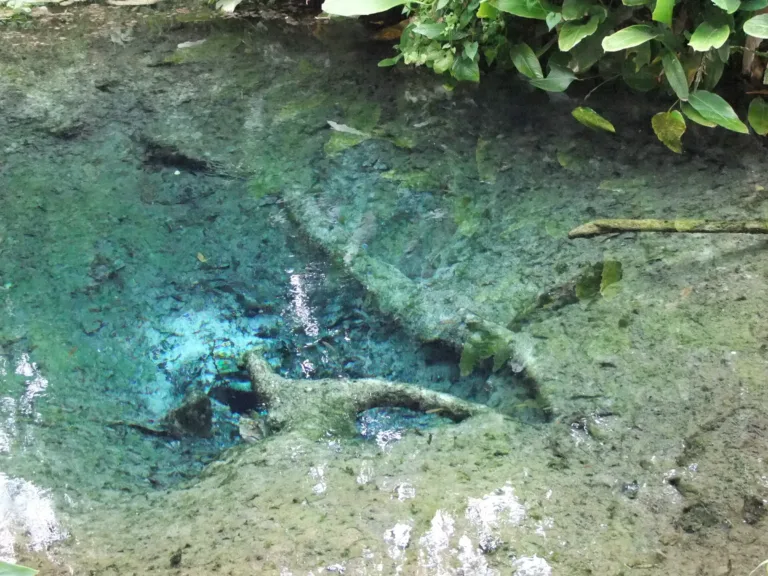 02
Tap a day card to see that day’s weather, rain, haze and hourly forecast
Best time to go Daytime is over · see tomorrow
Holiday — traffic on the way up and parking fills fast; leave early
Green band = hours used for the score
Best time to go Fine all day little rain through the day
Holiday — traffic on the way up and parking fills fast; leave early
Green band = hours used for the score
Best time to go Fine all day little rain through the day
No warnings today — normal road and weather conditions
Green band = hours used for the score
Best time to go Fine all day little rain through the day
No warnings today — normal road and weather conditions
Green band = hours used for the score
Best time to go Fine all day little rain through the day
No warnings today — normal road and weather conditions
Green band = hours used for the score
Best time to go Fine all day little rain through the day
No warnings today — normal road and weather conditions
Green band = hours used for the score
Best time to go Fine all day little rain through the day
No warnings today — normal road and weather conditions
Green band = hours used for the score
Bua Tong Waterfall and Chet Si Spring are at Ban Suan Pa, Mae Ho Phra, Mae Taeng District, Chiang Mai, inside Namtok Bua Tong–Nam Phu Chet Si National Park, which is still a park in preparation rather than a formally declared one. It lies about 53–60 km from Chiang Mai city along the Chiang Mai–Mae Jo–Phrao road.The draw is a limestone stream that runs down a slope of about 50 degrees; most sources put its height at about 100 m. The spring water is rich in calcium carbonate, which settles on the rock as a rough, creamy-white crust, so you can walk and climb up the falls without slipping. That is why foreign visitors call it the Sticky Waterfall.The source is Chet Si ("seven colours") Spring, a cold pool of about 6 × 8 m fed from underground all year. The water is clear enough to sparkle in several colours when the sun hits it, and locals regard it as sacred; small wooden shrines beside it carry offerings.As of April 2026 entry is still free (fees may start once the park is formally declared), and the site is open daily 08:00–17:00, with a car park, toilets and shady picnic spots. Some visitors report a small kiosk near the entrance, but the parks department says there are no shops, so bring your own food and water. November to February is the best time, cool with a gentle flow; the hot season brings big crowds, and in the rainy season the stronger flow makes climbing harder.
Arrive Before 10:00, ahead of tour groups and weekend crowds
Tiers 1–2 are the steepest, with ropes to hold; climb only where signs allow it
Grey or algae-covered rock grips far less than the white crust
Jul–Oct the water runs harder; skip the upper tiers after heavy rain
Upper pools are deeper and faster than the lower ones; keep children close
Free · Time needed 1.5–3 hours
Weekends and the hot season, 11:00–15:00
| Red songthaew charter, return from Chiang Mai (whole vehicle) optional | 800–1,500 ฿/car |
Prices may change by season — check with the venue
Bua Tong Waterfall and Chet Si Spring are at Ban Suan Pa (Moo 8), Mae Ho Phra subdistrict, Mae Taeng district, Chiang Mai, about 53 km from the city along Highway 1001, the Chiang Mai–Mae Jo–Phrao road. The water runs over a limestone streambed so rough that people can walk up and down it barefoot, which is why foreign visitors call it the Sticky Waterfall. Its source is Chet Si Spring, a cold spring that wells up from underground all year. The area is managed by the Department of National Parks, Wildlife and Plant Conservation as Namtok Bua Tong–Nam Phu Chet Si National Park, which as of April 2026 was still a national park in preparation.
The stickiness comes from the water. English Wikipedia and the Sirindhorn Anthropology Centre's community wiki say the spring lies along the Mae Pon fault, where fractured rock lets groundwater reach the surface. Water seeping through the rock picks up dissolved calcium and silica; as it flows down the stream, calcium carbonate settles out and slowly coats the rock in a porous, rough limestone crust, which some travel sites call travertine. It grips feet even when wet, but Atlas Obscura warns that a few greyer patches grip less and can be slippery.
Descriptions of the falls vary. DASTA's database and the tourism ministry's attractions directory give about 100 m high on a slope of about 50 degrees, in two tiers. Kapook and Atlas Obscura say three tiers, while the community wiki records both three tiers and four tiers totalling about 280 m long. The differences probably come from counting sub-tiers and measuring in different ways. Below the falls the water joins the Huai Mae Pon, the main stream of a valley that DASTA describes as pan-shaped.
Chet Si Spring is the heart of the system. DASTA describes a cold spring pool of about 6 × 8 m whose water flows about 100 m along the stream to become the falls, and the community wiki notes a recharge forest of about 5 rai around it. The name "seven colours" refers to the clear water throwing rainbow-like glints in sunlight, though some rainy-season visitors saw mostly a single colour.
Villagers regard the spring as sacred; both a Wongnai reviewer and Atlas Obscura mention this belief. Beside it, small wooden shrines in the forest carry offerings. No source says whom the shrines honour or when they were built. Nearby is Wat Tham Bua Tong, a cave temple in a limestone cliff reached by a naga staircase.
The name Bua Tong is tied to local legend. The community wiki tells how two princesses, Bua Kaew and Bua Tong, fled a war with Khun Pha Dam, a close aide of the ruler, and lived in what is now called Tham Bua Tong cave; the legend also says the spring that feeds the falls came from a prayer for water. Travelfish gives another version in which Princess Bua Tong died in the cave, so the pool and cave temple took her name. All of this is legend, and the community wiki itself says the origin of the village's name is unclear.
The village alongside the falls is Ban Suan Pa, which had 336 residents in January 2023 and lies within Mae Ho Phra subdistrict municipality. The community wiki notes that the spring and falls carry less water than they used to because of deforestation. Nearby are Phra That Chao Sunantha at Ban Mae Ho Phra and Mon That, a ruin of unknown age.
The area was formerly known as Bua Tong Waterfall and Chet Si Spring Forest Park, inside Mae Taeng National Forest Reserve, a name DASTA and the tourism ministry's directory still use; no document giving the year the forest park was set up has been found. Some travel sites place the falls in Si Lanna National Park, but the parks department lists the area separately. Its web page gives about 53,425.91 rai, an office at Moo 8 Mae Ho Phra, elevations of 380–947 m with Doi Phi Tak Pha the highest point, and lower evergreen, mixed deciduous and dry dipterocarp forest with two-needle pines from about 700 m.
English Wikipedia, citing the parks department, says that in September 2022 the department surveyed the area and sought public comment on a national park of about 85.33 sq km in the Mae Taeng and San Sai national forest reserves. On 28 April 2026 Chiang Mai News reported that the procedures were done and approval from the new government was awaited; until then no entry fee is charged, and once the park is declared it will charge fees like other national parks.
According to the latest reports, the falls are open daily 08:00–17:00 and still free, with ropes on the steep sections, picnic areas and toilets. The park has closed temporarily before and reopened on 20 October 2023, asking visitors not to bring single-use plastic or styrofoam boxes. Wikipedia, citing the parks department, says more than 2,500 foreign visitors came after the Yi Peng festival in November 2025, and in March–April 2026, with temperatures above 40°C, about 2,800–3,000 people a day came to cool off.
Arrived? Check in, collect a stamp and tell others what it is like right now
Check your location first, so you do not fill in the form for nothing
Location must be on and within 3 km · One check-in per place per day · come back on other days to check in again
Post photos from anywhere — no need to be here · Up to 20 photos at a time · JPG / PNG / WebP · GPS location data is removed automatically
From Chiang Mai take Highway 1001 (Chiang Mai–Mae Jo–Phrao) past Maejo University to about km 48–49, then turn right at the sign
Highway 1001 to about km 48–49, then right for about 3 km · Fuel
Agree a return price and have the driver wait at the falls · 800–1,500 baht per vehicle
Ride from the city; the last stretch is on country roads · 200–300 baht a day plus fuel
Many operators pick up from hotels, some combine other Mae Taeng sights · Package price
Highway 1001 (Chiang Mai–Mae Jo–Phrao) to about km 48–49 near Ban Pa Mai, then right onto a paved road for about 2.6–3 km to the park office
Large car park with a separate motorbike area; visitors report no parking charge
Daily 08:00–17:00
about 53–60 km from Chiang Mai city
Bua Tong Sticky Waterfall
Answers travellers want before they go — a one-minute read
Yes. The rock is coated in calcium carbonate deposits that make it rough, so bare feet grip well, though some grey or algae-covered patches are more slippery
Above the falls; it is the source that flows about 100 m down to the cascade, about 200 m on foot from the park office
Not at present, because the area is still a national park in preparation. An April 2026 report says standard park fees will apply once it is formally declared
Some sources say so, but the national parks department lists it as a separate area, Namtok Bua Tong–Nam Phu Chet Si National Park
Sources give anywhere from 2 to 4 tiers; most put the height at about 100 m
The bottom tier is gentle enough for children to play on; the upper tiers are steeper with deeper pools, so keep them close
Best day this week: Monday 30 Nov · Check in when you arrive to collect a stamp
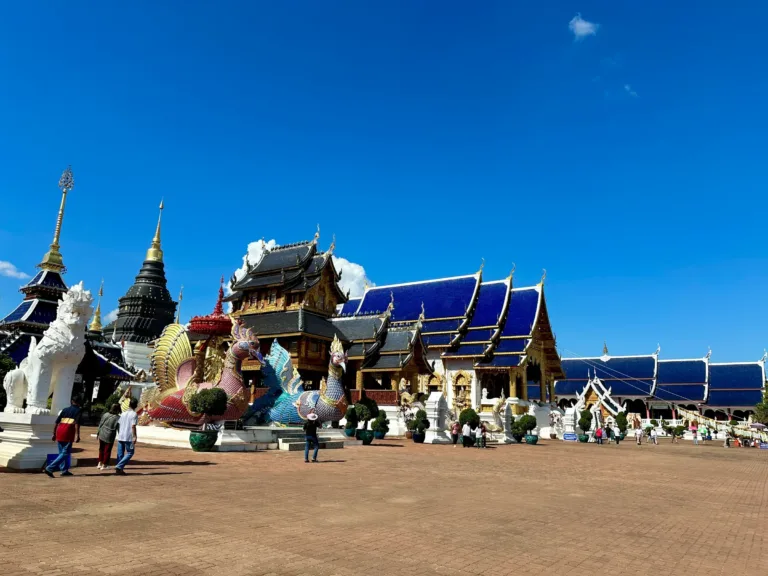 Wat Ban Den (Wat Den Sali Si Mueang Kaen)
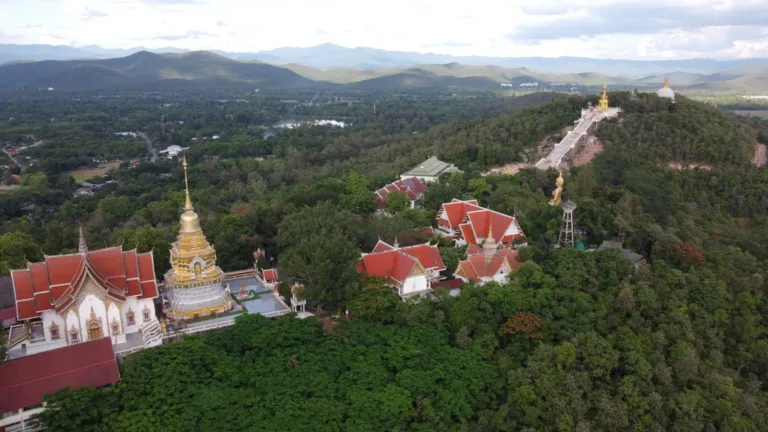 Wat Phra That Doi Saket
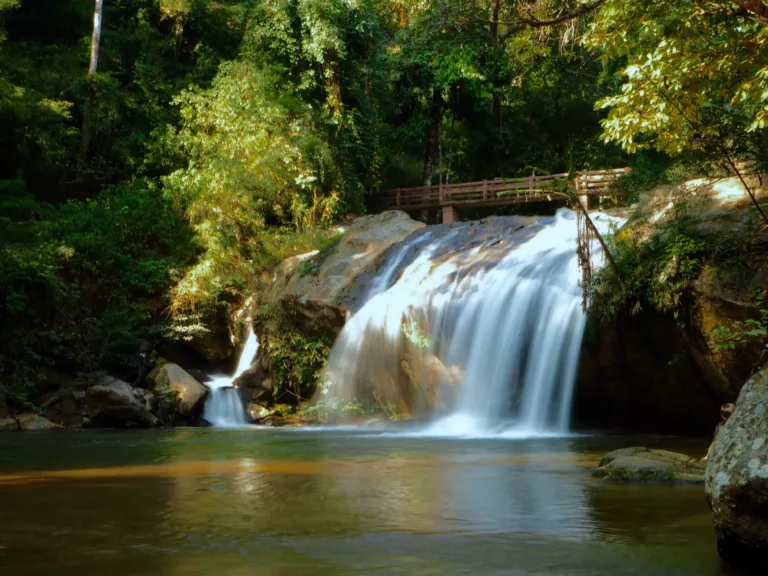 Mae Sa Waterfall
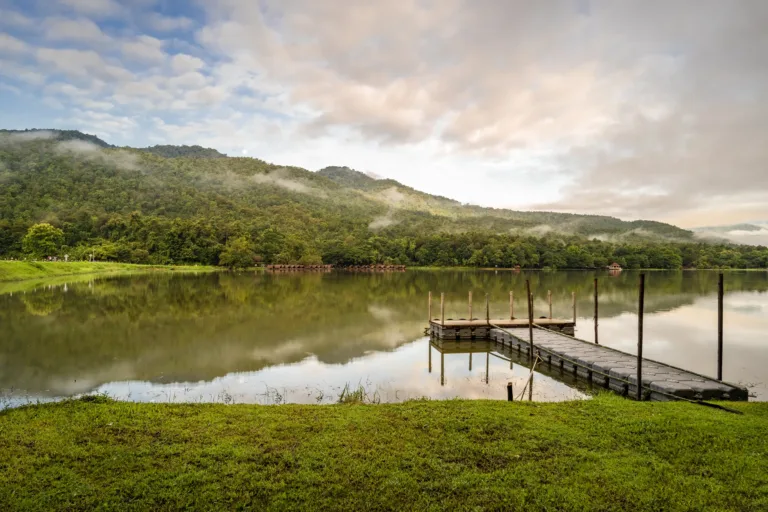 Huay Tung Tao Reservoir