Opening hours, entry fee and time needed
Open 24 hours
Free
15–30 minutes
Weekend evenings
7 days ahead
When to go
this week
Tap a day card to see that day’s weather, rain, haze and hourly forecast
Best time to go Daytime is over · see tomorrow
Thick morning fog with visibility under 1 km — use headlights and drive slowly
Holiday — traffic on the way up and parking fills fast; leave early
Hour by hour
Green band = hours used for the score
Best time to go Best window 06:00–13:00 Little rain
Thunderstorms — heavy bursts, lightning and gusts possible
Rain at times — slippery roads, allow extra travel time
Thick morning fog with visibility under 1 km — use headlights and drive slowly
Holiday — traffic on the way up and parking fills fast; leave early
Hour by hour
Green band = hours used for the score
Best time to go Best window 06:00–14:00 Little rain
Rain at times — slippery roads, allow extra travel time
Hour by hour
Green band = hours used for the score
Best time to go Best window 06:00–13:00 Little rain
Thick morning fog with visibility under 1 km — use headlights and drive slowly
Hour by hour
Green band = hours used for the score
Best time to go Best window 06:00–14:00 Little rain · light drizzle possible at times
Thick morning fog with visibility under 1 km — use headlights and drive slowly
Hour by hour
Green band = hours used for the score
Best time to go Best window 06:00–12:00 Little rain
Rain at times — slippery roads, allow extra travel time
Hour by hour
Green band = hours used for the score
Best time to go Best window 06:00–17:00 Little rain · light drizzle possible at times
Thick morning fog with visibility under 1 km — use headlights and drive slowly
Hour by hour
Green band = hours used for the score
Thailand's Largest Postbox, Betong
Thailand's largest postbox stands at the Clock Tower junction on Sukyang Road in the centre of Betong, Yala. It was built in 1924 by Sanguan Chirachinda, Betong's former postmaster and mayor, and is about 320 cm tall including its base, with a circumference of about 140 cm.Before World War II a loudspeaker on top relayed radio news to townspeople. The postbox still accepts mail today and is a favourite photo spot alongside the clock tower next to it.Betong municipality later built a new postbox about 9 m tall at the community hall on Sukyang Road, another photo stop for visitors. Both are free to see at any hour.
- Cool air, few people
- Clock tower lit, lively streets
- Clock Tower junctionRed postbox with the clock towerevening
Good to know here
Watch the traffic when crossing for photos
Don't climb or sit on it
- Post a postcard as a souvenir
- Come in the evening for the town atmosphere and clock-tower lights
- Walk on for dim sum and Betong food nearby
- Watch the traffic when crossing
Free · Time needed 15–30 minutes
Weekend evenings
- Kids Great; mind the traffic
- Seniors Great; it's right on a town street
- Wheelchair On the pavement in town, easy to reach
- Pets Roadside spot; fine on a leash
- Central BetongDim sum, Betong chicken, Chinese food
- Queue for photos when it's busy
- Don't climb or write on the postbox
- Watch the traffic at the junction
The story of this place
Thailand's largest postbox is a red cylindrical box on the corner of Sukyang Road at the Clock Tower junction in central Betong, and one of the oldest symbols of the country's southernmost town. Most sources say it was built in 1924 on the initiative of Sanguan Chirachinda, a former Betong postal and telegraph master, as a symbol of communication for a town that was then very hard to travel to and from. A loudspeaker once mounted on top relayed news to residents. Around a century later the box still takes letters, and in 2024 visitors came to photograph it for its 100th anniversary.
Read more 10 more paragraphs
The name Betong comes from the Malay "buluh betong", a kind of bamboo, because the area was once thick with bamboo groves that gradually disappeared as the town grew. The town sits in a basin ringed by mountains, about 140 km from Yala city. Several sources say Betong became a district in 1898 under its former name, Amphoe Yarom, and took the name Betong later, though some give a different year.
The first people living in these forests are said to have been the Sakai (Orang Asli). From around the early 20th century, overseas Chinese of several groups, including Hokkien, Hakka, Cantonese and Teochew, arrived to trade, mine, log and plant rubber, and Betong grew into an important border community. Its border was fixed after Siam signed a treaty with Britain over the northern Malay states, which left some subdistricts of the original district on the Malayan side.
Remoteness shaped the town. Travelling from Betong to the provincial capital was so difficult that from 1926/27 Betong vehicles carried their own district licence plates instead of Yala plates. In an age before telephones or the internet, letters were the most practical way to reach the outside world.
It was in this setting that Sanguan Chirachinda, who had served as Betong's postal and telegraph master, started building a large postbox in the town centre. Information from the National Archives in Yala, published by the Fine Arts Department, describes it as round, made of reinforced concrete, about 2.9 m tall or about 3.2 m including its base. Most sources give a circumference of about 140 cm, although one gives about 2.4 m for the body and 2.65 m for the base.
The box was not only for letters. A radio loudspeaker on top broadcast official announcements so that residents could hear them, and some travel guides say it relayed radio news in the years before World War II. A ring of small holes around the upper part, where the speakers were fitted, can still be seen today.
Sources do not fully agree on the date. The Fine Arts Department and most media give 1924 and describe Sanguan as Betong's mayor at the time, but Prince of Songkla University's southern local database says the Betong municipality was only declared in 1939/40, and one source says the box was built in that year and that Sanguan was elected the municipality's first mayor. His surname is also spelled differently from source to source.
The "largest" title is a long-standing local label. The municipality's website calls it the tallest and largest postbox in the world, and the head of Betong post office said the same at the centenary, but some travel writers note it is not an officially certified world record, and one source says it once held that title before larger boxes appeared abroad.
Betong municipality later built a replica about 3.5 times larger, around 9 m tall, by the Civic Hall (Sala Prachakhom) on Sukyang Road. It is both a working postbox and a photo backdrop for visitors, but no source found gives the year it was built, and many still find the original on the junction corner the more charming of the two.
The original box stands beside the Betong Clock Tower, a marble landmark on the roundabout where Sukyang Road meets Rattanakit Road. From about September to March, tens of thousands of migrating swallows line the power cables around the junction in the evening, and local belief says anyone hit by their droppings will return to Betong.
In recent decades Betong has drawn more and more visitors, helped by the Betong Mongkollit Tunnel opened in 2001 and the inaugural Don Mueang–Betong flight on 14 March 2022. When the postbox turned 100 in 2024, Thai, Malaysian and Singaporean tourists stopped to photograph it, and like the newer replica it still collects mail every day.
- 1898Amphoe Yarom, Betong's former name, is established (per most sources)
- 1924Sanguan Chirachinda initiates the concrete postbox at Betong's Clock Tower junction
- 1926/27Betong vehicles begin using their own district plates, as travel to Yala is difficult
- 1939/40Betong municipality is declared (some sources give this as the postbox's build year)
- 2001The Betong Mongkollit Tunnel opens, Thailand's first road tunnel through a mountain
- 2022Inaugural Don Mueang–Betong flight on 14 March
- 2024The postbox turns 100 and visitors flock to photograph it
Check-ins & visitor photos
Arrived? Check in, collect a stamp and tell others what it is like right now
Check your location first, so you do not fill in the form for nothing
Location must be on and within 1 km · One check-in per place per day · come back on other days to check in again
Post photos from anywhere — no need to be here · Up to 20 photos at a time · JPG / PNG / WebP · GPS location data is removed automatically
How to get there
The postbox is at the Clock Tower junction, on the corner of Sukyang Road in central Betong.
Around Betong town · Free
Street parking in town
Betong town streets
Street parking in town
In Betong town
Good
Open 24 hours
In Betong town
Largest Mailbox in Thailand
FAQ
Before you go: Thailand's Largest Postbox, Betong
Answers travellers want before they go — a one-minute read
Where is Thailand's largest postbox?
At the Clock Tower junction on Sukyang Road in central Betong, Yala
When was it built?
In 1924, by Sanguan Chirachinda
Can I still post letters?
Yes, the original box still accepts mail
How tall is it?
The original is about 3.2 m with its base; the new one at the community hall is about 9 m
Is there a fee?
No, it's free and open 24 hours
Nearby places
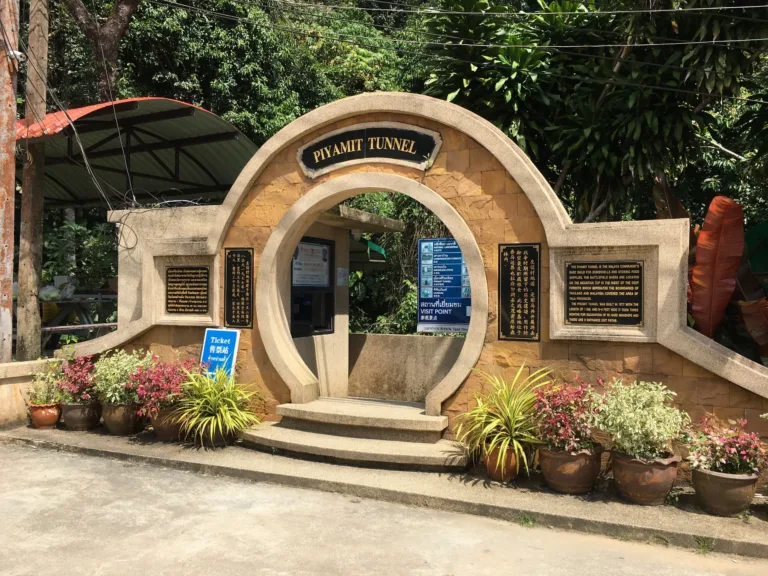 Piyamit Tunnel
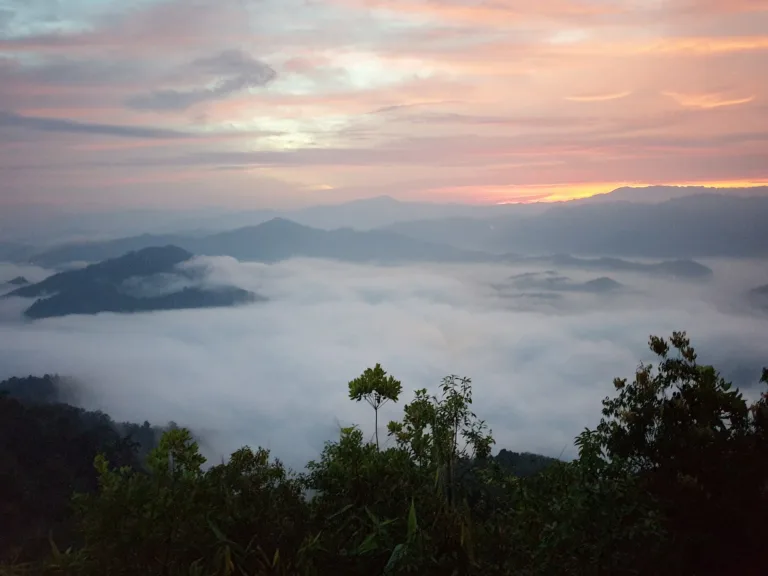 Aiyoeweng Sea of Mist
Ready to go to Thailand's Largest Postbox, Betong?
Best day this week: Friday 4 Dec · Check in when you arrive to collect a stamp