Quiet times, time needed and photo spots
Cool-season long weekends
1–2 days
Sapan stream bridge — Village, hills and mist behind
Open access, no set hours (public area)
7 days ahead
When to go
this week
Tap a day card to see that day’s weather, rain, haze and hourly forecast
Best time to go Daytime is over · see tomorrow
Thick morning fog with visibility under 1 km — use headlights and drive slowly
Holiday — traffic on the way up and parking fills fast; leave early
Hour by hour
Green band = hours used for the score
Best time to go Fine all day little rain through the day
Holiday — traffic on the way up and parking fills fast; leave early
Hour by hour
Green band = hours used for the score
Best time to go Fine all day little rain through the day
No warnings today — normal road and weather conditions
Hour by hour
Green band = hours used for the score
Best time to go Best window 06:00–15:00 Little rain · light drizzle possible at times
No warnings today — normal road and weather conditions
Hour by hour
Green band = hours used for the score
Best time to go Fine all day little rain through the day
Thick morning fog with visibility under 1 km — use headlights and drive slowly
Hour by hour
Green band = hours used for the score
Best time to go Fine all day little rain through the day · light drizzle possible at times
No warnings today — normal road and weather conditions
Hour by hour
Green band = hours used for the score
Best time to go Fine all day little rain through the day
No warnings today — normal road and weather conditions
Hour by hour
Green band = hours used for the score
Starry sky
How likely
Scored from cloud cover at every level and tonight’s moonlight — the darker the sky, the clearer the Milky Way · tap another night below for the next 7 nights
Ban Sapan
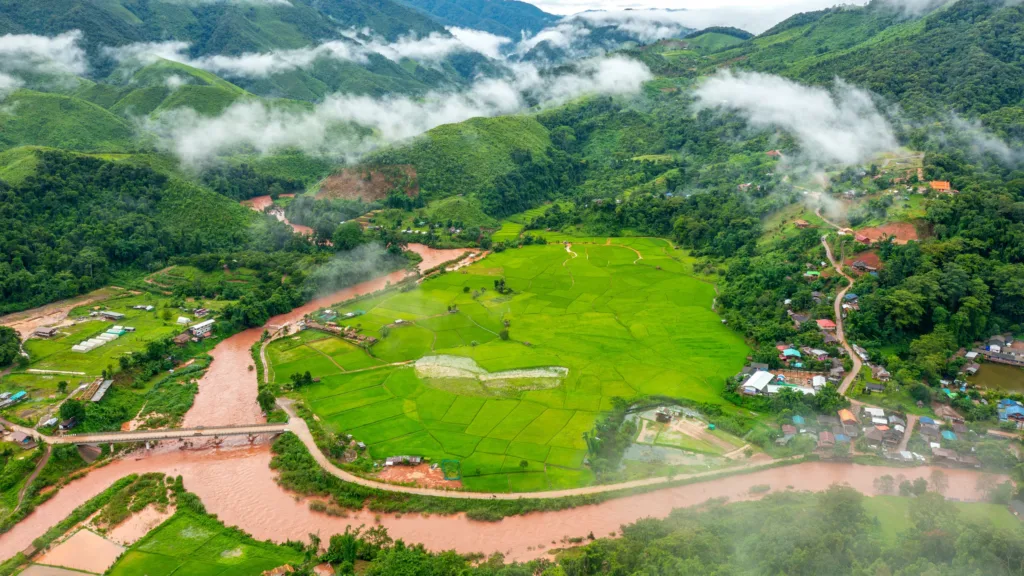
Sapan is a small village (Moo 1, Dong Phaya, Bo Kluea District) set in a valley where the Sapan stream meets the Wa River, about 100 km from Nan town on the Santi Suk–Bo Kluea road.Terraced paddies and hills ring the village, and homestays and cafés line the stream. The concrete bridge over the water is the classic photo spot, and Sapan Waterfall in Khun Nan National Park is about 200 m away.On cool-season mornings mist fills the valley; in the rains the whole valley turns green. Stay at least a night to catch the morning mist.
- Valley mist in the cool season
- Mist gone; stroll the village, visit the falls
- Evening light on the terraces
Arrive 07:00 for valley mist
In the cool season mist settles in the valley before dawn and usually clears within 1–2 hours of sunrise. Be up before 07:00.
- Sapan stream bridgeVillage, hills and mist behindmorning
- Riverside caféRice terraces and the streamlate morning
- Sapan WaterfallThe tiers framed by green forestlate morning
Good to know here
Narrow with lots of bends; allow more time than the map suggests
You need your own car or motorbike
- Stay at least a night to see the morning mist
- Fill up in Bo Kluea town
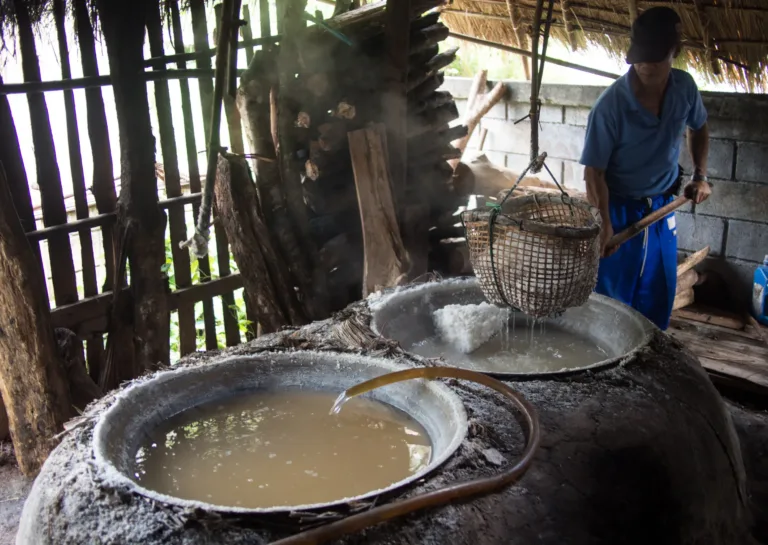
- Stop at the old salt wells on the way
- Pack a warm layer; cool-season mornings get cold
No data yet check before you go · Time needed 1–2 days
Cool-season long weekends
- Kids Good for families happy with a long mountain drive
- Seniors Easy walking in the village, but a long winding drive in
- Wheelchair Some village lanes are steep; the waterfall isn't suitable
- Pets Depends on the homestay; the waterfall is national park land
- Riverside cafés and eateriesCoffee and simple Thai dishes
- Keep noise down at night and early morning
- Ask before photographing villagers
- Stay out of the rice paddies
- Don't leave rubbish in the stream
- Narrow, winding mountain roads; drive slowly and avoid driving at night
- Mossy rocks at the waterfall are slippery
- Patchy mobile signal
The story of this place
Sapan is a small village in a mountain valley in Bo Kluea District, Nan, sitting where a small stream flows into the Wa River. Villagers say the community goes back many generations. It once belonged to Pua District, moved under the new Bo Kluea minor district created in 1988, and today is Moo 1 of Dong Phaya subdistrict. Its traditional life was terraced rice farming, fishing in the streams and rattan work, until roughly the past decade turned it into one of Nan's most popular stops for morning mist, clear streams and riverside stays.
Read more 10 more paragraphs
There are two local explanations of the name "Sapan". One says it comes from the Pan stream that runs through the village. The other says it comes from the spot where the Wa and Sapan streams meet, once called "Sop Pan" (in northern Thai, "sop" means the mouth where two rivers join), which gradually softened into "Sapan". Both tie the village's name to the water at the heart of the valley.
Local legend says Sapan began as a tiny settlement. A leader the villagers call Chao Pho Phaya Tin led them in clearing the forest at the confluence, opening rice fields and founding the village. His name is spelled differently in different sources, and none gives a founding year, only that the village is several hundred years old or many generations deep. Villagers still keep a shrine to Chao Pho Phaya Tin.
People have lived around Sapan for a long time. Public broadcaster Thai PBS notes that the Lua have lived in these highlands since ancient times. Bo Kluea itself is named after its mountain rock-salt wells. Historians point out that Nan was once a key source of rock salt reaching as far as Ayutthaya, until King Tilokarat of Lan Na took Nan in the 15th century and cut that supply. Bo Kluea villagers boiled brine into salt and carried it to trade at the mouth of the Wa River, a market where the Wa, which flows past Sapan, joins the Nan River.
Administratively, Sapan was part of Pua District. Around 1977, as the population grew, several satellite villages split off. When Bo Kluea minor district was created out of Pua in February 1988, Sapan became Moo 8 of Bo Kluea Nuea subdistrict. Around 1989 Dong Phaya subdistrict was separated from Bo Kluea Nuea, and when the minor district became full Bo Kluea District in 1995, Sapan was listed as Moo 1 of Dong Phaya. Some sources simply say the village came under Dong Phaya in 1995.
Rattan is part of the village story. Villagers used to send forest rattan to Nan town for processing until a forest closure order stopped it. In 1986 a police officer brought skilled craftsmen to set up a rattan furniture workshop in the village, where locals trained. The workshop closed when the craftsmen left to start their own businesses, and several small groups gave up under low buyer prices, but in 2002 villagers formed a rattan furniture group with 30 members. It still runs, and rattan furniture became the village's best-known OTOP product.
Daily life is still tied to highland farming: rice and vegetables, livestock, orchards and rainy-season fishing in the streams. Sapan is also a hub for the surrounding hill villages, with a school and a health station that people come down from the mountains to use.
Before 2010, natural forest across Nan was rapidly turned into feed-corn fields; a local leader recalls the planted area reaching about 900,000 rai. The result was soil erosion, sediment in the streams, and forest fires and haze in the dry season. Sapan is where about 27 streams converge, and damaging floods became a turning point. Villagers began community meetings and local research on forest restoration, funded by the Thailand Research Fund, and set up the Ban Sapan Community Forest project.
The forest above the village gained more protection when Khun Nan National Park was declared in 2009, covering Khun Nan subdistrict of Chaloem Phra Kiat District and part of Bo Kluea. The Wa River rises in the park's mountains, and Sapan Waterfall, the park's most important fall, drops in three tiers of about 3, 5 and 6 metres and flows all year. On the village's highest hill stands Wat Sapan, whose Phra Chai Mongkhon Buddha image faces down over the houses. Some sources say the temple is several hundred years old, but no clear founding date has been found.
Sapan's popularity grew fast over roughly the past decade. In 2019 the Thai PBS programme "Thua Thin Daen Thai" featured village life, and in 2020, as COVID-19 restrictions eased, Sapan was promoted as a place for city people to unwind. In early 2022 Nan province held a meeting at the Ban Sapan community hall to hear concerns about land, roads, power, water and waste and to plan sustainable tourism. Late that year forestry officials seized a resort built on reserved forest land, and the district reminded investors to check land status before building.
In August 2023 days of heavy rain sent flash floods into Sapan's riverside areas, flooding some guesthouses almost to the roof, and landslides cut the road. By the end of that year the village had more than 100 places to stay, from resorts to homestays, spreading toward a village about 3 km uphill. Villagers stress that tourism is only a side income, and that protecting the forest and streams is what keeps the village alive.
- c. 1977As the population grows, several satellite villages split off from Ban Sapan
- 1986A rattan furniture workshop is set up in the village and villagers learn the craft
- 1988Bo Kluea minor district is split from Pua; Sapan becomes Moo 8 of Bo Kluea Nuea
- c. 1989Dong Phaya subdistrict is separated from Bo Kluea Nuea
- 1995Bo Kluea becomes a full district; Sapan becomes Moo 1 of Dong Phaya
- 2002Villagers form a rattan furniture group with 30 founding members
- 2009Khun Nan National Park is declared, with Sapan Waterfall as its key waterfall
See 6 events
- 2019Thai PBS programme "Thua Thin Daen Thai" features life in Ban Sapan
- 2020Sapan is promoted as a place to unwind after COVID-19 restrictions ease
- 2022Nan province holds a meeting at the Ban Sapan community hall on sustainable tourism
- 2022Forestry officials seize a resort built on reserved forest land
- 2023In August flash floods hit riverside areas and landslides cut the road
- 2023The village now has more than 100 places to stay
Check-ins & visitor photos
Arrived? Check in, collect a stamp and tell others what it is like right now
Check your location first, so you do not fill in the form for nothing
Location must be on and within 2 km · One check-in per place per day · come back on other days to check in again
Post photos from anywhere — no need to be here · Up to 20 photos at a time · JPG / PNG / WebP · GPS location data is removed automatically
How to get there
From Nan town follow the Santi Suk–Bo Kluea route, about 100 km.
From Nan town via Santi Suk–Bo Kluea · Fuel
Same route, lots of bends · Rental
Paved but narrow, winding mountain road
Roadside and at homestays
Bo Kluea town
Patchy mobile signal in the valley
Open access, no set hours (public area)
about 100 km from Nan town
Sapan Village
FAQ
Before you go: Ban Sapan
Answers travellers want before they go — a one-minute read
Where is Ban Sapan?
Moo 1, Dong Phaya, Bo Kluea District, Nan
How far is it from Nan town?
About 100 km via Santi Suk and Bo Kluea
Is there public transport?
No, you'll need your own car or motorbike
When can I see the mist?
Cool-season mornings, Nov–Feb, before 07:00
How far is Sapan Waterfall?
About 200 m, inside Khun Nan National Park
Should I stay overnight?
Yes, at least one night to catch the morning mist
Nearby places
 Bo Kluea Salt Wells
 Doi Phu Kha National Park
 Wat Nong Bua
Ready to go to Ban Sapan?
Best day this week: Monday 30 Nov · Check in when you arrive to collect a stamp