 01
Luang Pho Chin Prathan Phon18 m
Twin pagodas and a giant Buddha · Tha Muang
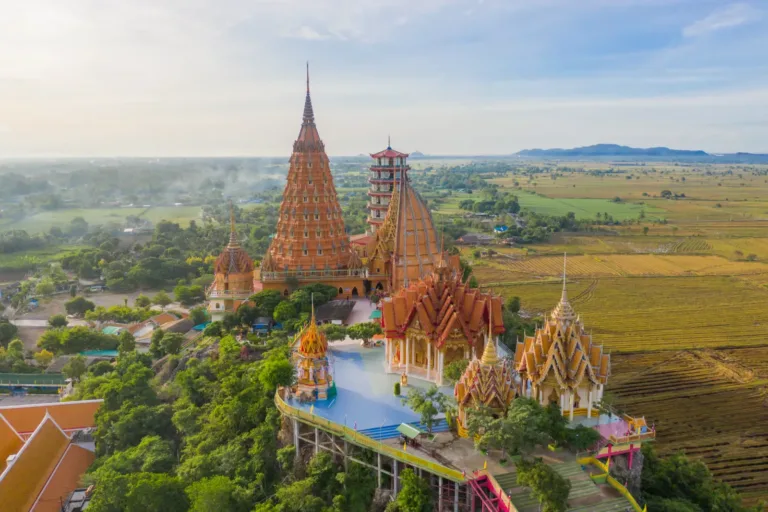
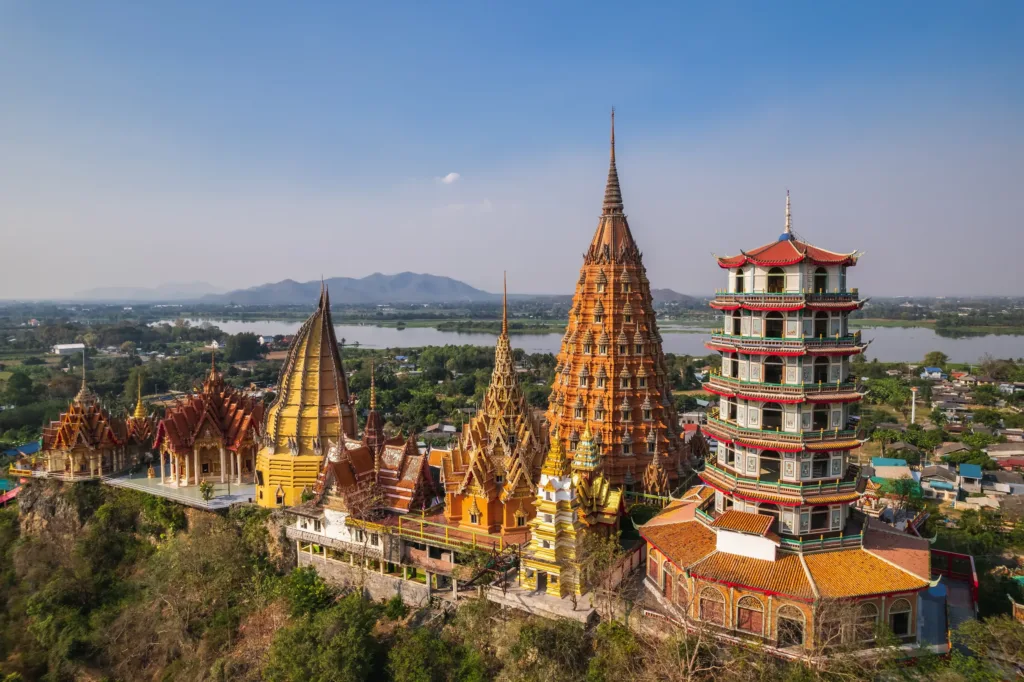
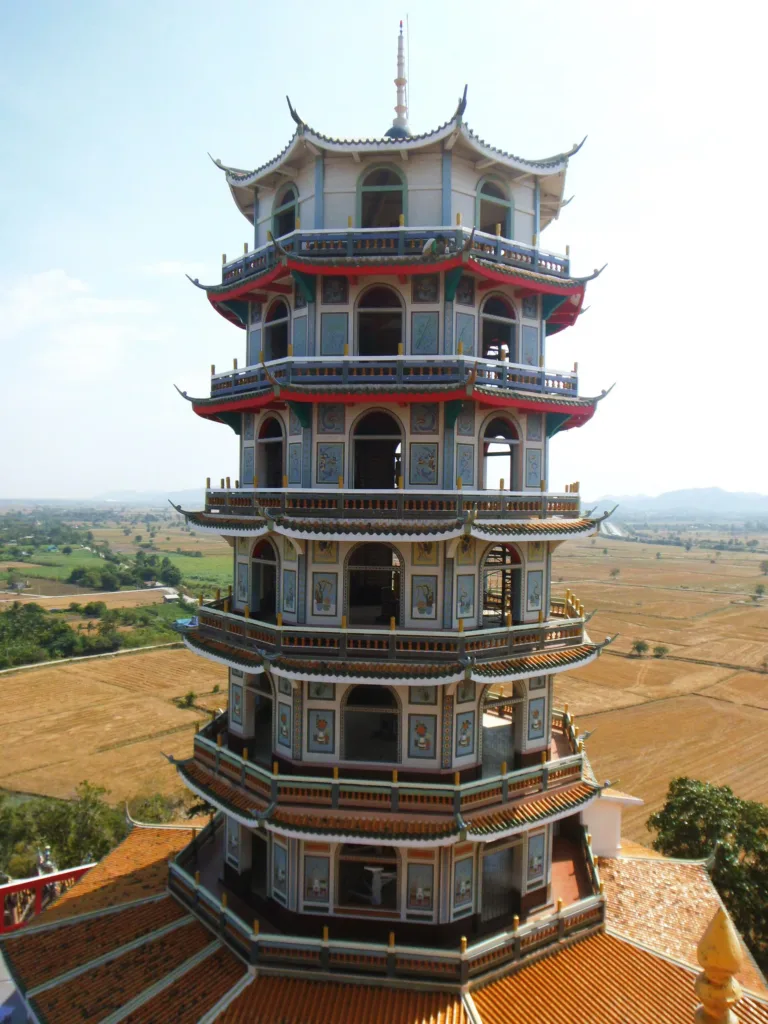
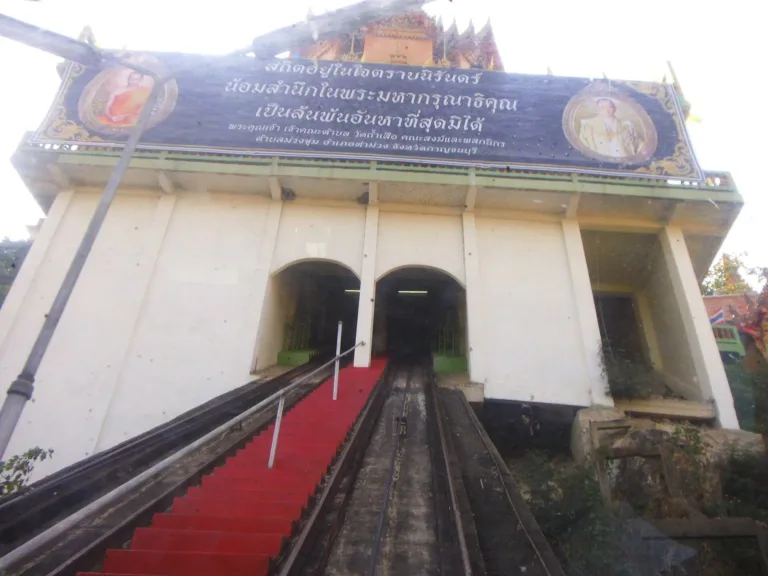
Wat Tham Suea in Tha Muang, Kanchanaburi, has the 18 m golden Luang Pho Chin Prathan Phon Buddha and the 69 m Ket Kaeo pagoda beside Wat Tham Khao Noi's Chinese pagoda. Climb 157 steps or take the tram. Free.
Holiday / event — crowded
Cover up · Remove shoes indoors · Keep noise down
Mon–Fri 07:30–16:30 · Sat–Sun 07:00–17:30
16:00
01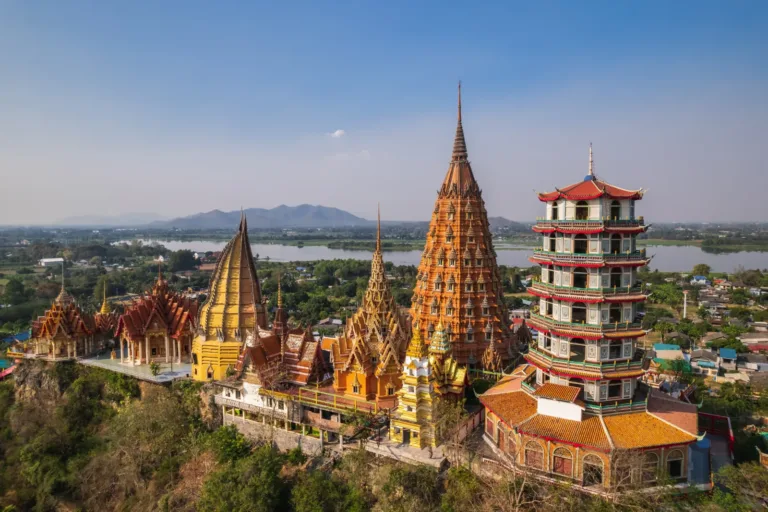 02
 03
 04
Tap a day card to see that day’s weather, rain, haze and hourly forecast
Best time to go Daytime is over · see tomorrow
Holiday — traffic on the way up and parking fills fast; leave early
Green band = hours used for the score
Best time to go Fine all day little rain through the day
Holiday — traffic on the way up and parking fills fast; leave early
Green band = hours used for the score
Best time to go Fine all day little rain through the day
No warnings today — normal road and weather conditions
Green band = hours used for the score
Best time to go Fine all day little rain through the day
No warnings today — normal road and weather conditions
Green band = hours used for the score
Best time to go Fine all day little rain through the day
No warnings today — normal road and weather conditions
Green band = hours used for the score
Best time to go Fine all day little rain through the day
No warnings today — normal road and weather conditions
Green band = hours used for the score
Best time to go Fine all day little rain through the day
No warnings today — normal road and weather conditions
Green band = hours used for the score
Wat Tham Suea, Muang Chum, Tha Muang, Kanchanaburi.
Arrive 16:00
Photos from Wikimedia Commons and contributors · tap a photo to see its credit
Steep and sunny
Narrow
Free · Time needed 1–1.5 hours
Holidays
| Hill tram | About 10–20 baht |
Cash · Prices may change by season — check with the venue
Tap a month on the wheel to see weather, rain, haze and crowds from 10 years of records
Best time · Oct–Feb clear skies, rice fields
Watch out · Mar–May very hot
Nov by the records 23–31°C · avg rain 94 mm (11 rainy days) · clear 6 days · avg PM2.5 14
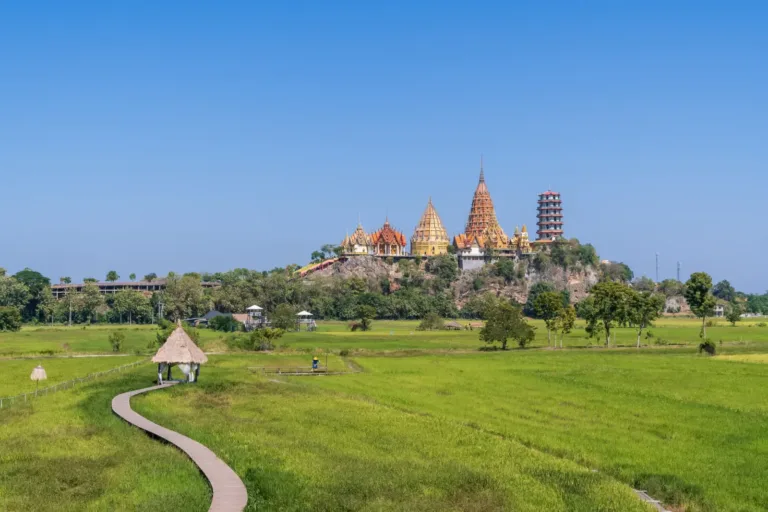
Wat Tham Suea stands on a small limestone hill rising from the Mae Klong river plain in Muang Chum, Tha Muang district, Kanchanaburi. For all its grandeur — a golden Buddha about 18 m tall and an orange octagonal pagoda visible from far away — the temple is only about half a century old. It began as a small hermitage in a cave at the foot of the hill, became a temple in 1971, and over the next twenty years or so villagers' donations built the great Buddha, the ordination hall and the Phra Chedi Ket Kaeo Maha Prasat. On the same hill stands Wat Tham Khao Noi, a Mahayana Chinese temple more than a century old, and the Thai and Chinese pagodas side by side above the rice fields have become the site's signature view. It is not the Wat Tham Suea in Krabi, which was founded in 1975.
The land around the temple is the Mae Klong floodplain, one of Kanchanaburi's main rice-growing areas. Local communities grew with modern administration: the district that became Tha Muang was set up in 1898, later moved south near Wat Si Loha Rat Bamrung and was known for a time as Wang Khanai, and in 1939 it was renamed Tha Muang after the subdistrict where its office stood. Today the whole of Muang Chum subdistrict is a subdistrict municipality.
The landscape seen from the hilltop today owes much to the Mae Klong Dam. Construction of this diversion barrage began around 1965, when Thailand was pushing to strengthen food security, and it was completed in 1970 as part of the Greater Mae Klong Irrigation Project, raising the river to feed canals that irrigate about 2.6 million rai across six provinces. The green paddies around the temple are a product of that system. A small hydropower plant was added at the dam in 2006.
Legend says the caves at the foot of the hill were once home to tigers, giving the temple its name, though this is only a story with no firm evidence, and there are no tigers at the temple today. The temple's beginnings are also told as tradition: Luang Pho Sing, a wandering monk who meditated in the area, is said to have found the cave, and a small hermitage grew up in it below the hill. No source gives a year. The cave is divided into several chambers, including a main hall with the principal Buddha, a room for meditation and a shrine to Guanyin.
Several sources say Wat Tham Suea was founded as a temple in 1971 by Phra Khru Sitthiwimon. The monk locals remember for restoring and steadily developing it is Luang Pho Chuen Pasathiko, a former abbot, who gathered donations from villagers and supporters from elsewhere and added buildings one by one until the cave hermitage became the large hilltop temple seen today.
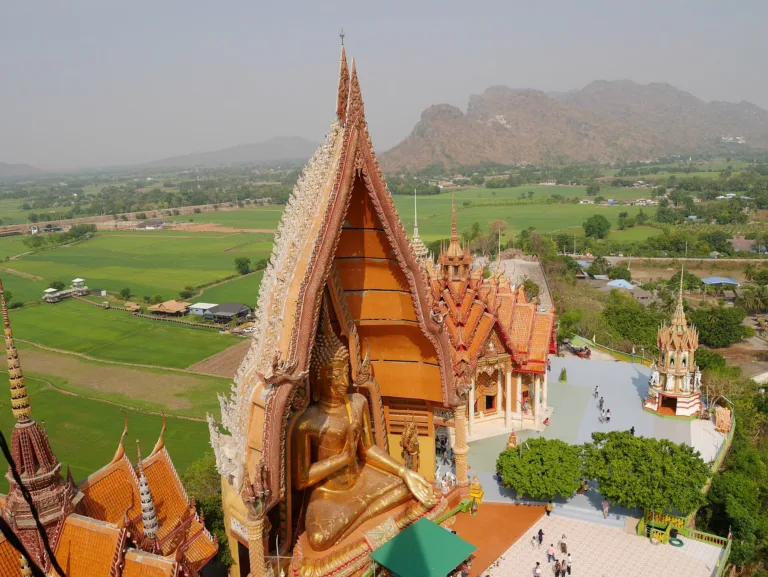
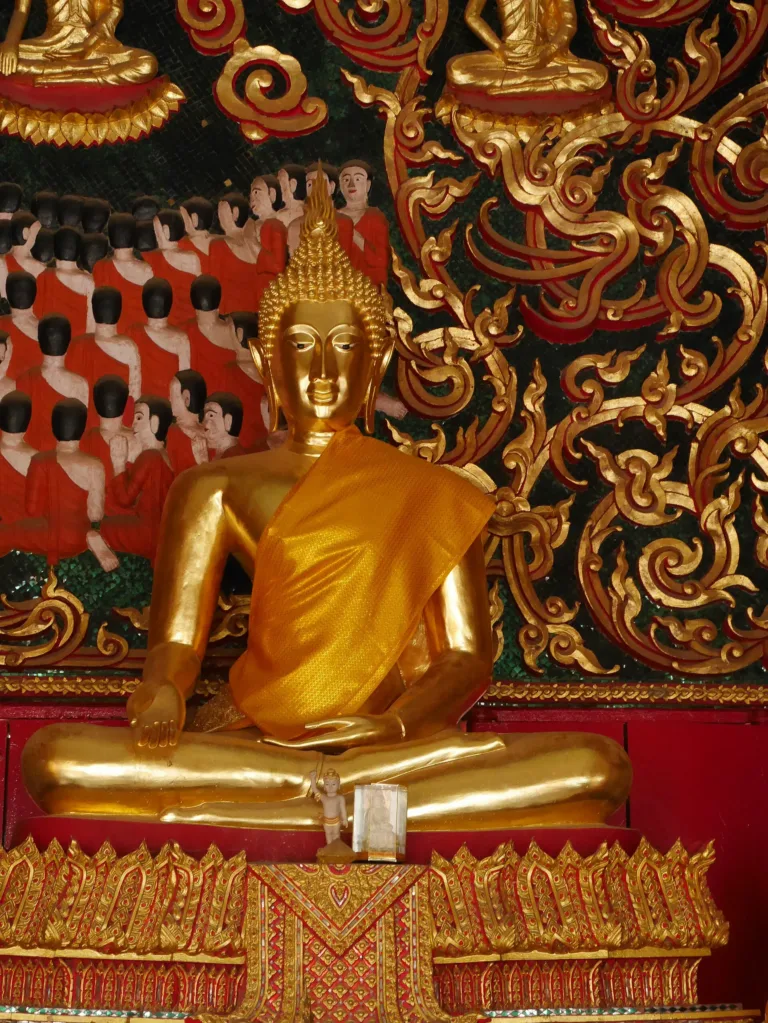
The first major work was Luang Pho Chin Prathan Phon, whose foundation stone was laid in 1973. It is a golden Buddha in the boon-granting posture sitting in the open on the hilltop, 9 wa 9 niu (about 18 m) tall with a lap about 10 m wide (some sources give 5 wa 3 sok 9 niu). It is the largest boon-granting Buddha in Kanchanaburi province and remains the temple's best-known image.
The temple kept growing. In 1975 a mondop was built over a footprint of the Buddha (the left foot), and in 1977 work began on the Ubosot Atthamuk, a Thai-style ordination hall with porches facing eight directions and fine decoration. The temple received a royal grant of land for its ordination boundary (wisungkhamsima) under King Bhumibol (Rama IX), allowing major monastic ceremonies to be held there formally.
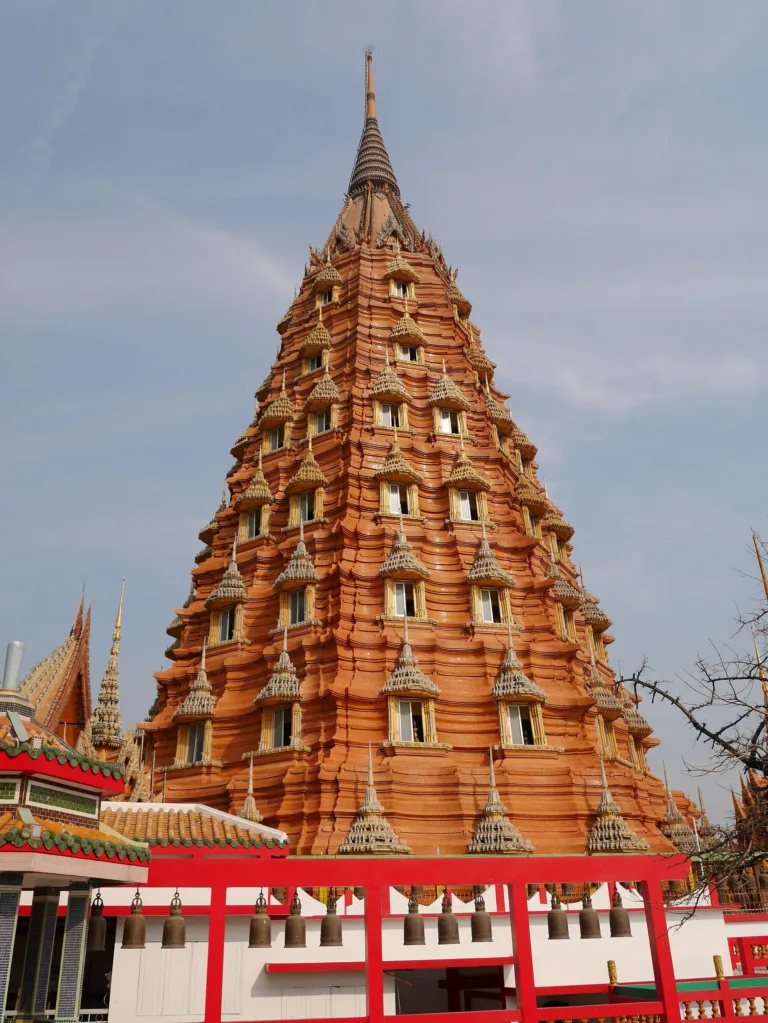
Phra Chedi Ket Kaeo Maha Prasat took the longest. The ceremony to cast its pillars was held in 1984 and construction took about seven years. The octagonal orange-brick pagoda has nine levels; most sources give its height as 69 m and width as 29 m, while some say about 75 m. In January 1990 the Supreme Patriarch came to enshrine relics of the Buddha on the top level; the relics are said to have been brought from India. Stairs inside the pagoda lead up to all-round views of rice fields, the Mae Klong river and the Mae Klong Dam.
Luang Pho Chuen Pasathiko died in 1999. His body lies in a glass coffin in the sermon hall near the car park, where visitors pay their respects, and statues of former abbots stand in another pavilion. Monks have continued to care for the temple since; sources name Phra Khru Wiboon Thammaphirom as the most recent abbot.
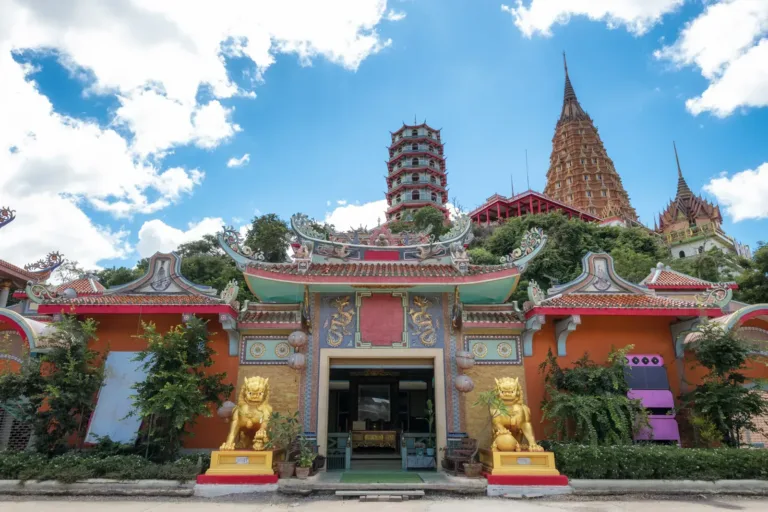
Neighbouring Wat Tham Khao Noi has a much longer history. Some sources date its founding to 1883, others to 1881. Its first resident was Luang Pu Haeng (Kak Ngeng), a Chinese monk, followed by two more Chinese monks; later Phra Achan Tiap Tho, a monk of the Annam Nikaya — the Vietnamese order whose monks first came to Thailand in the Thonburi period — restored it and the temple flourished. Its highlight is the Phra Chedi Khiri Boromathat, or "Buang Huk Tha", known as the Pagoda of Ten Thousand Buddhas: a seven-tiered Chinese-style tower said to hold relics of the Buddha on its top floor. It is regarded as one of only two Chinese temples in Kanchanaburi.
In recent years the twin pagodas have become known abroad. Wat Tham Suea and Wat Tham Khao Noi were the filming locations for the music video of "Love on Me" by the Swedish DJ duo Galantis, released on 4 October 2016, and in 2023 the Thai government's website featured Wat Tham Suea first on a nine-temple merit route through Kanchanaburi. Today people still climb the naga stairway or ride the tram up the hill to pay respect to Luang Pho Chin Prathan Phon and see the twin pagodas above fields that change colour with the seasons.
Arrived? Check in, collect a stamp and tell others what it is like right now
Check your location first, so you do not fill in the form for nothing
Location must be on and within 1 km · One check-in per place per day · come back on other days to check in again
Post photos from anywhere — no need to be here · Up to 20 photos at a time · JPG / PNG / WebP · GPS location data is removed automatically
Paved
Toward Tha Muang · Fuel
Toward Tha Muang and the Mae Klong dam
At the foot of the hill
Tha Muang district
Good
Mon–Fri 07:30–16:30 · Sat–Sun 07:00–17:30
about 12–20 km from Kanchanaburi town
Wat Tham Suea Kanchanaburi
Approx. nightly price for 2 adults (next week) · final price depends on your dates
Answers travellers want before they go — a one-minute read
18 m, with a 10 m lap
157 steps, or a tram for about 10–20 baht
No
Yes, by interior stairs
Wat Tham Khao Noi, a Vietnamese Mahayana temple
No; it is an old name
Best day this week: Monday 30 Nov · Check in when you arrive to collect a stamp
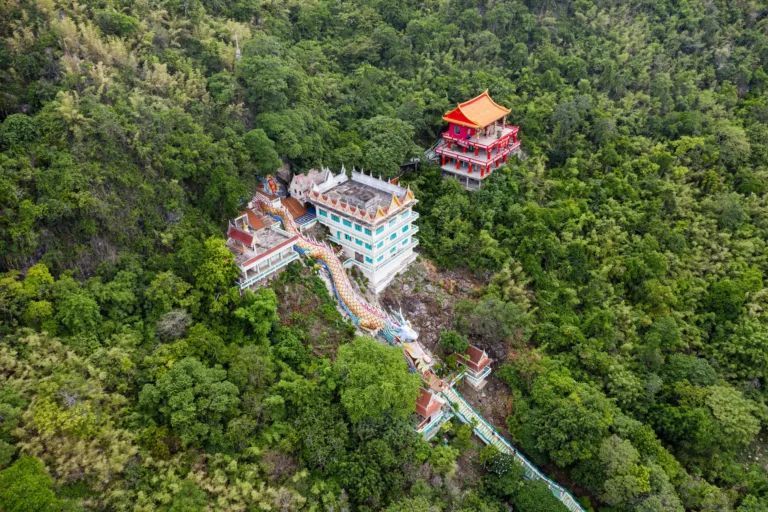 Wat Ban Tham
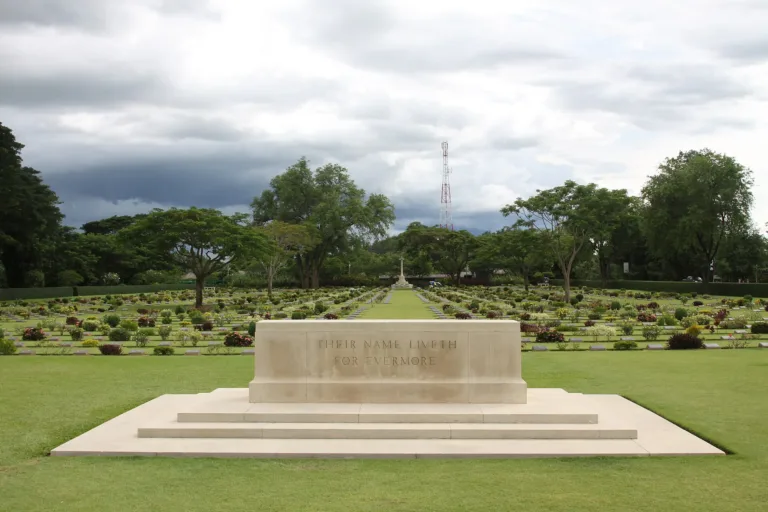 Chungkai War Cemetery
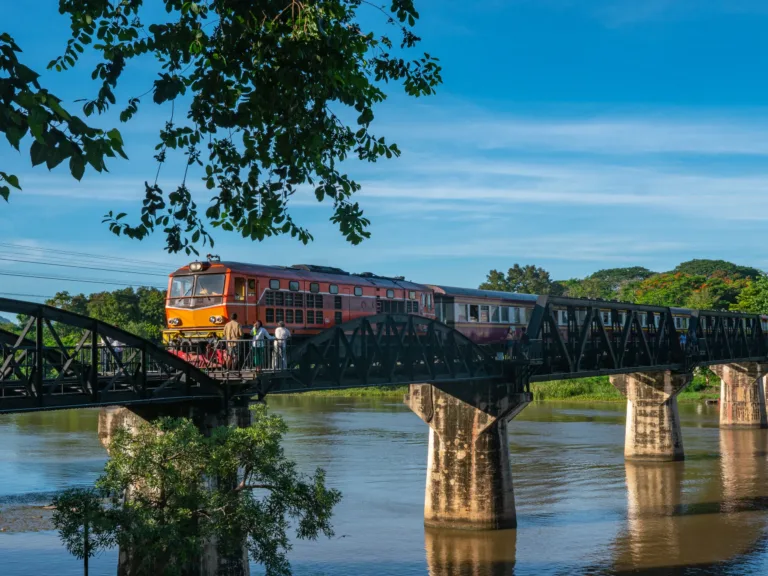 Bridge over the River Kwai