 01
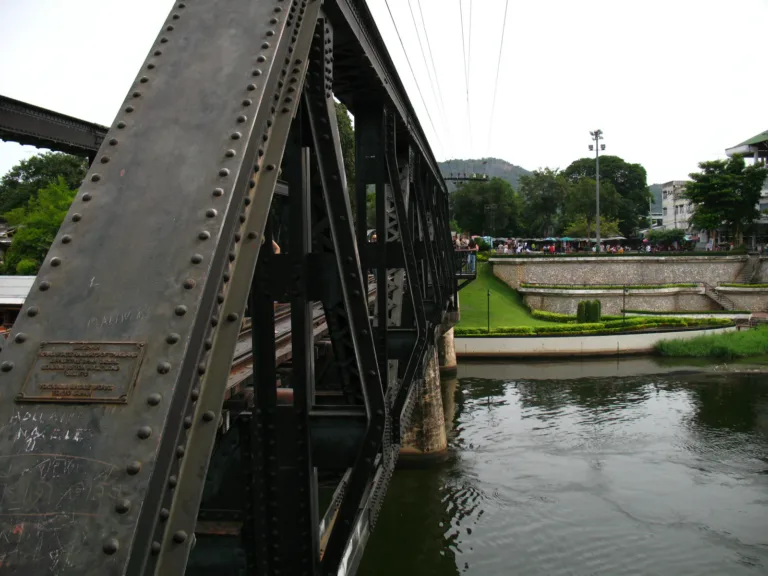
Curved steel trussesOriginal 1943 spans
KANCHANABURI · MUEANG
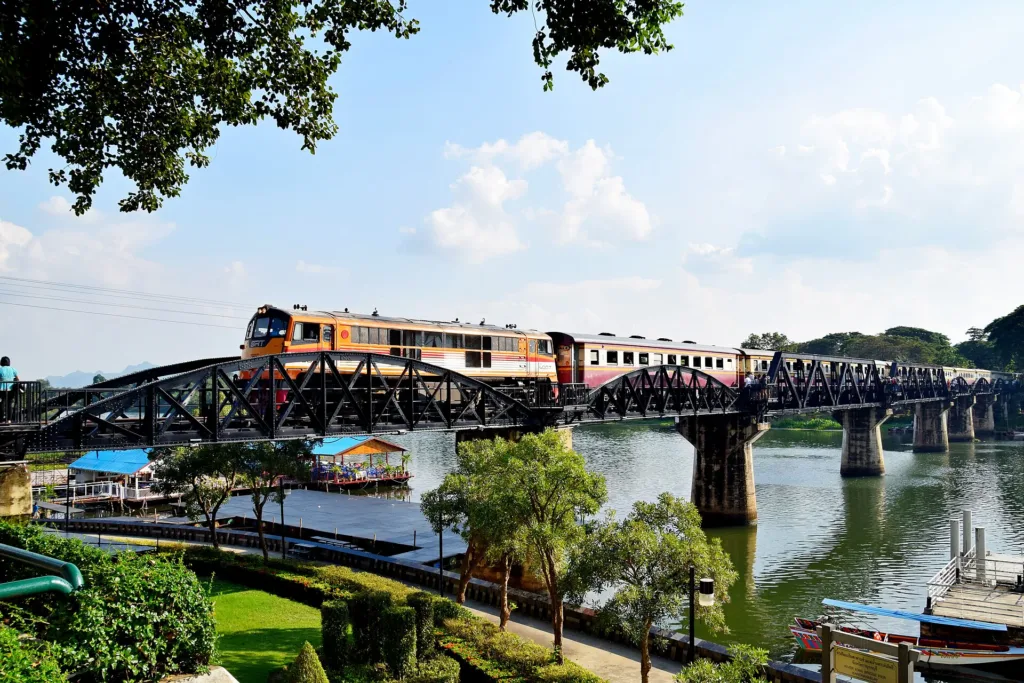
The steel railway bridge on the WWII “Death Railway”, built by Allied POWs and Asian labourers in 1943 — trains still cross it today.
Holiday / event — crowded · Hot (Afternoon) feels like 40°C
The bridge can be walked 24 hours a day
1–2 hours
Town-side riverbank — Full bridge with the river
Free
01 02
 03
 04
Tap a day card to see that day’s weather, rain, haze and hourly forecast
Best time to go Fine all day little rain through the day
Holiday — traffic on the way up and parking fills fast; leave early
Green band = hours used for the score
Best time to go Fine all day little rain through the day
Holiday — traffic on the way up and parking fills fast; leave early
Green band = hours used for the score
Best time to go Fine all day little rain through the day · light drizzle possible at times
Thick morning fog with visibility under 1 km — use headlights and drive slowly
Holiday — traffic on the way up and parking fills fast; leave early
Green band = hours used for the score
Best time to go Best window 06:00–15:00 Little rain · light drizzle possible at times
Thick morning fog with visibility under 1 km — use headlights and drive slowly
Green band = hours used for the score
Best time to go Best window 06:00–11:00 Little rain · light drizzle possible at times
No warnings today — normal road and weather conditions
Green band = hours used for the score
Best time to go Fine all day little rain through the day · light drizzle possible at times
No warnings today — normal road and weather conditions
Green band = hours used for the score
Best time to go Fine all day little rain through the day
No warnings today — normal road and weather conditions
Green band = hours used for the score
The Bridge over the River Kwai is a steel railway bridge across the Khwae Yai River in Kanchanaburi, part of the Thai–Burma “Death Railway” Japan built during the Second World War with Allied prisoners of war and Asian labourers. The steel bridge was completed in 1943, and trains still cross it every day.
Arrive Before 09:00 for fewer people and soft morning light, or late afternoon for sunset
Photos from Wikimedia Commons and contributors · full credits inClassic page
Trains still run; step into a refuge bay when you hear the signal
There is no railing on the river side; watch small children
No shade on the bridge
Very busy just before and after a train passes
Adults 0 THB · Time needed 1–2 hours
Long holidays and River Kwai Bridge Week
| Walking across the bridge | Free |
| 3rd-class Nam Tok train, foreigners (flat fare) optional | 100 ฿/person |
Mostly cash; some shops accept bank transfer · Prices may change by season — check with the venue
River Kwai Bridge Week (late Nov–early Dec)
Tap a month on the wheel to see weather, rain, haze and crowds from 10 years of records
Best time · Nov – Feb is cool and pleasant, and late Nov–early Dec brings River Kwai Bridge Week with its light-and-sound show
Watch out · Mar – May is very hot with no shade on the bridge; late mornings on holidays are very crowded
Oct by the records 24–31°C · avg rain 279 mm (22 rainy days) · clear 2 days · avg PM2.5 14
The Bridge over the River Kwai stands in Tha Makham subdistrict, Mueang Kanchanaburi, about 4 km north of town off Highway 323. It is a steel railway bridge across the Khwae Yai River and part of the 415-km Thai–Burma Railway, known as the “Death Railway”. Trains still cross it every day, and it is now presented as a symbol of peace.
Its story begins in the Second World War. According to Silpa Wattanatham, Japan opened talks with Thailand on 20 December 1941 to build two military railways: Nong Pladuk–Kanchanaburi–Thanbyuzayat and Chumphon–Kra Buri. Japan surveyed the route in June 1942, and on 19 August 1942 the two sides met, with Japan asking to hold and use the railway until the war ended.
Work started from both the Thai and Burmese ends. Silpa Wattanatham gives November 1942 as the start; other sources say June 1942. It was first expected to take about six years, but heavy losses to Japanese shipping led Japan to demand completion by August 1943. The line opened on 17 October 1943, after roughly 16 months of work.
Japan chose Tha Makham for the crossing because the ground was firmer and less flood-prone than the route through Kanchanaburi town. It lay about 56 km from Nong Pladuk station. The first British prisoners arrived on 26 October 1942 and set up the camp they called Tamarkan, at first just five attap huts inside a fence. Around February 1943 about 1,000 Dutch POWs from the Netherlands East Indies under Captain Hendrik Tillema joined them and five more huts were built, bringing the camp to roughly 2,000 men.
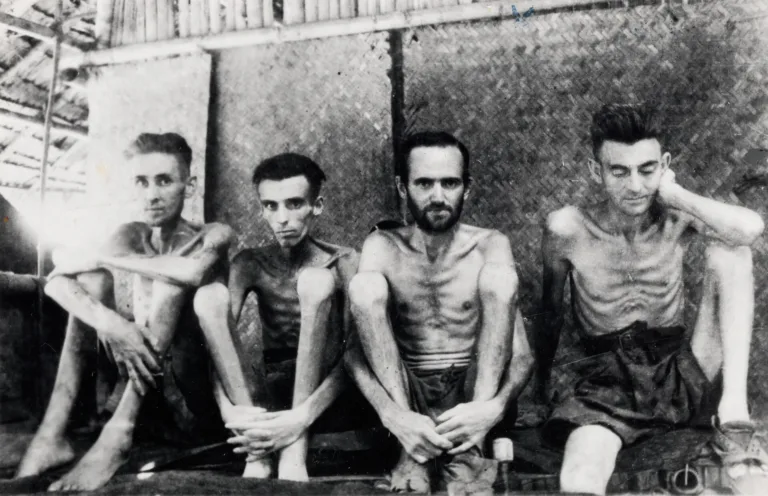
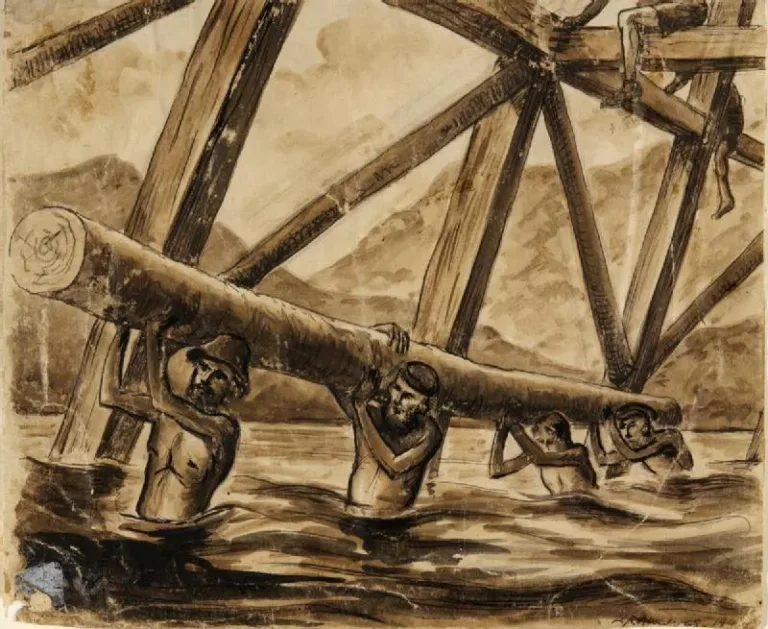
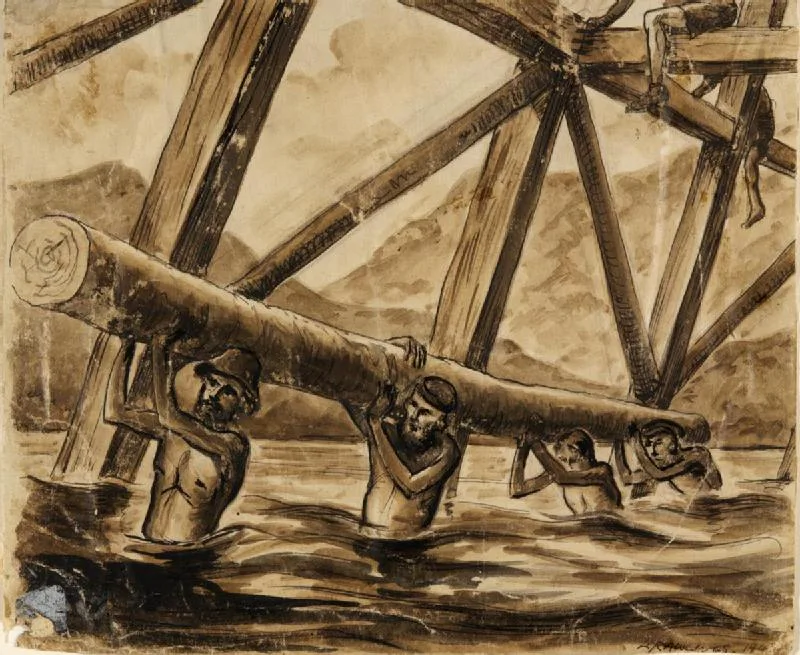
The workforce was about 60,000 Allied prisoners of war plus more than 250,000 Asian labourers, conscripted or hired, including Tamils, Burmese, Javanese, Vietnamese, Malays and Chinese; some sources put the total above 400,000. They worked 16–20 hours a day in heat and monsoon rain, amid cholera and other epidemics and severe shortages of food and medicine.
Death toll estimates vary widely. Japanese estimates put POW deaths at about 10,000 and labourer deaths at about 30,000; Allied estimates give about 12,000 POWs and around 250,000 labourers. Other sources cite more than 150,000 deaths in total, roughly 360 for every kilometre of track. In early 2025, the remains of more than 100 Tamil labourers were still being found in Kanchanaburi.
The Japanese side gave a different account. Silpa Wattanatham published a translation from the memoir of General Nakamura, commander of Japanese forces in Thailand, who claimed that the many POW deaths around Kanchanaburi were caused by a cholera epidemic at Ban Nithe rather than by Japanese treatment, and put the deaths from it at “over five thousand”, mostly POWs and Malay labourers. This is a one-sided claim without independent confirmation, and it contradicts many prisoners’ accounts.
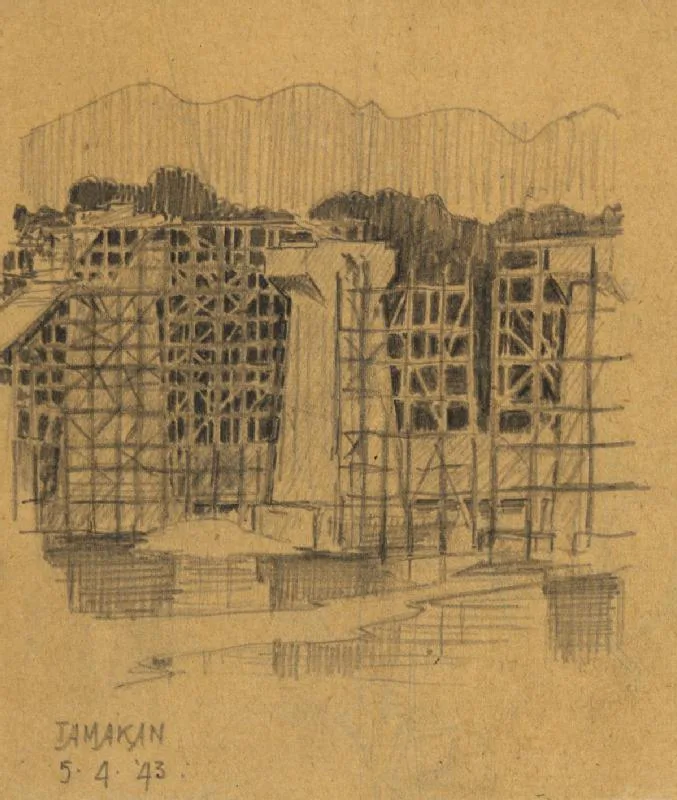
The bridge at Tha Makham, which the prisoners called Tamarkan, was Bridge No. 277 on the line. The Japanese first built a temporary wooden bridge, finished around February 1943; the permanent steel bridge was completed around June 1943. Many Dutch POWs, who arrived in early 1943, cast its piers. The steel spans are said to have come from Java, and it was the only steel bridge Japan built in Thailand.
There were two bridges side by side at Tha Makham. A wooden trestle bridge came first and was in use by around February–March 1943, when the first train crossed. The 11-span steel bridge used girders the Japanese had dismantled from a bridge in Java in 1942; sources date its completion to around May–June 1943. During this period the Japanese drove the work at a pace the prisoners called “Speedo”, but once the steel bridge was finished the guards eased off, and the camp even held weekly concerts.
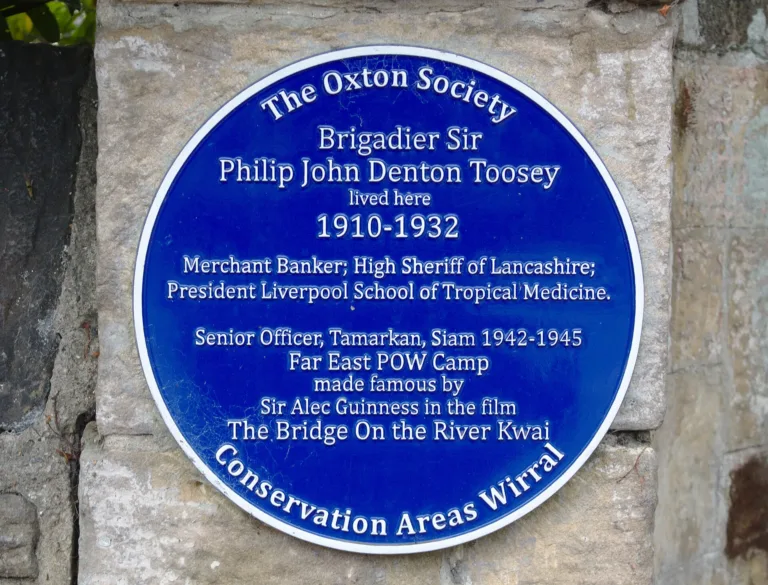
The British prisoners who built it were led by Lt Col Philip Toosey of the 135th Field Regiment, among the first POWs sent from Singapore to Thailand in June 1942. His group had one of the lowest death rates of any work force on the railway, quite unlike the fictional “Colonel Nicholson” of the film. Once the bridge was done, most of the prisoners were moved back to Nong Pladuk.
Toosey complained about the abuse of prisoners and was beaten for it many times. He won concessions by arguing they would get the work done faster, and quietly sabotaged it where his men would not be endangered, having termites collected to eat the wooden structures and the concrete mixed badly. He once concealed an escape for 48 hours and was punished for it; the escapees were recaptured and executed. The Japanese themselves regarded Tamarkan as the best-run POW camp on the railway.
A key Thai figure was Boonpong Sirivejjabhandu (1906–1982), a Kanchanaburi merchant who supplied the camps and, working with Toosey, smuggled in food, medicine and money at the risk of his life. Sir Edward “Weary” Dunlop, the Australian POW surgeon, said he “saved a vast number of lives”. The Weary Dunlop–Boonpong Fellowship later sent Thai surgeons to train in Australia. His home at Pak Phraek market holds a small exhibition, and his story became the Thai PBS drama Boonpong.
After the bridge was finished, Tamarkan became a hospital camp from around May 1943, though it had almost no medicine or food. Late that year it was turned into a convalescent camp for about 1,500 men, and Toosey was moved to Nong Pladuk in December 1943. Australian machine-gun battalion records note that two-thirds of the 1943 deaths at Tamarkan were from dysentery. By early 1944 the camp held nearly 3,000 British, Australian and some American prisoners. Red Cross parcels were first handed out on 23 May 1944, one parcel to six men, and the first mail arrived on 28 May. Around the same time the Japanese began sending fit men to Japan via Saigon.
On 21 March 1944 a memorial to the dead was unveiled near Tamarkan camp. Sources disagree on whether prisoners built it for their comrades or the Japanese army built it. A Thai academic study of the Kanchanaburi Ireito says the Japanese army ordered a memorial built in Kanchanaburi in 1943–44, rooted in religious ideas of pacifying the spirits of the dead and tied to the war ideology of the time.
The camp lay only about 60 yards from the steel bridge, beside a Japanese anti-aircraft position, and POW commanders repeatedly asked to move it, without success. On 29 November 1944, 21 Allied aircraft attacked; four bombs fell on the camp, killing 18 prisoners and wounding 37 (some sources say 68). In December 1944 the wooden bridge was destroyed, and prisoners were made to repair it after each raid. In mid-February 1945 one steel span was brought down, and two more fell in raids between April and June.
In 1944–45 Allied aircraft bombed both the wooden and steel bridges many times. The decisive raid came on 24 June 1945, when Liberators of RAF No. 159 Squadron and two other squadrons attacked. Two aircraft dropped delayed-action bombs from about 500 ft, each bringing down one span, while the others destroyed the nearby wooden bridge, cutting the line completely. Shrapnel marks can still be seen on parts of the bridge.
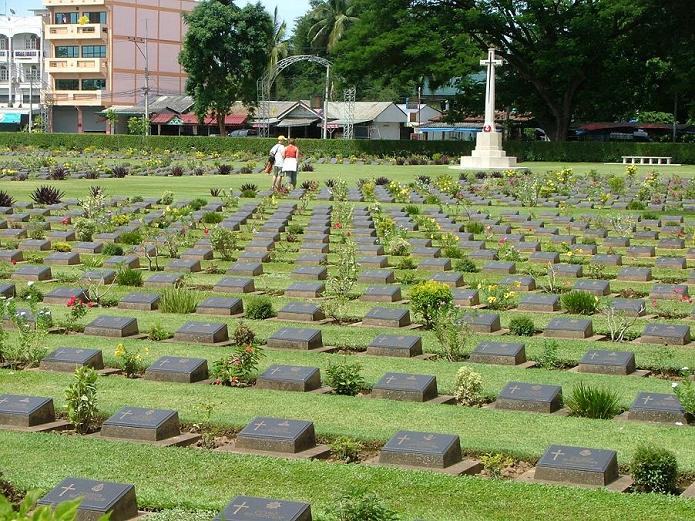
After Japan’s surrender, Tamarkan camp was gone entirely by October 1945. The dead along the railway were reburied at Chungkai and Kanchanaburi (Don Rak) war cemeteries, except American remains, which were returned to the United States.
After the war, on 8 September 1945, Thai representatives signed acknowledgement of Allied terms at Kandy. Britain regarded the railway as its property and by early 1946 had already removed 30 km of track in Burma and 6 km in Thailand. Britain first offered it to Thailand for £3 million, then £1.5 million in September 1946. The Thai cabinet authorised negotiations on 30 September 1946, and the final price was £1,250,000.
Thailand repaired the bridge and reopened it in 1946. The curved steel truss spans are originals from 1943; the two straight, box-shaped middle spans were built after the war, and travel sources say Japan supplied them as war reparations.
The bridge became world famous through Pierre Boulle’s novel and the 1957 Oscar-winning film The Bridge on the River Kwai, although the film shows a tall timber bridge unlike the real one. “Kwai” itself comes from the British prisoners’ pronunciation of khwae, meaning tributary. As film-inspired tourists arrived, the authorities renamed this stretch of river the Khwae Yai in 1960.
Former prisoners sharply criticised the film for its many departures from fact: the wrong river, a deep-jungle setting when the real site was near a town, one bridge instead of two, and a senior British officer shown collaborating with the Japanese. Toosey disliked seeking attention but finally wrote to the Daily Telegraph, which encouraged other veterans to speak out. He had weighed about 47 kg at the war’s end; he later led the National Federation of Far East Prisoners of War, was knighted in 1974 and died on 22 December 1975.
Each year Kanchanaburi holds the River Kwai Bridge Week from late November to early December, traditionally around 25 November–6 December, with history exhibitions, folk performances, a fair, and a light-and-sound show recreating the bombing of the bridge.
The railway was put forward for UNESCO World Heritage nomination in 2018, but the process was held back over concerns about Thai–Japanese relations, especially the term “Death Railway”. The issue was raised again in 2025–26, while some war museums in Kanchanaburi closed for lack of funding.
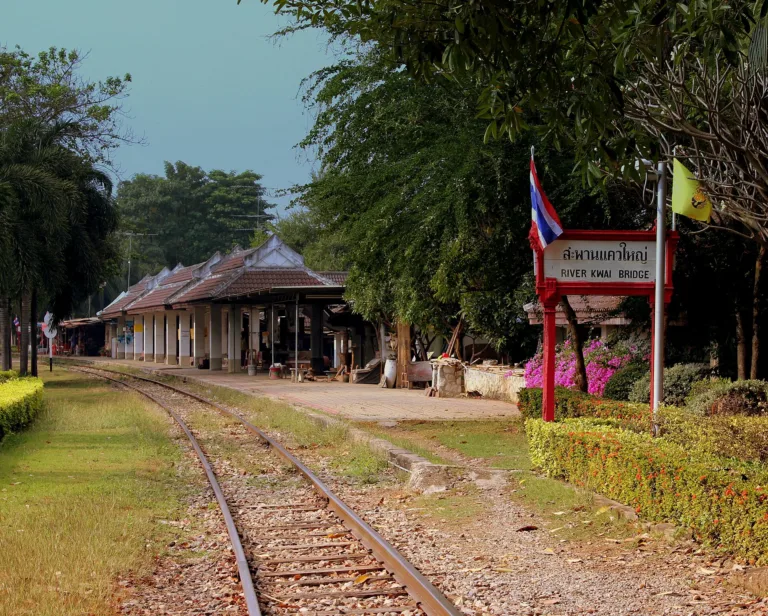
Today you can walk across the bridge free at any time, and Kanchanaburi–Nam Tok trains still cross several times a day; refuge bays let walkers step aside as a train approaches. Travel guides list two daily trains from Thonburi station at 07:45 and 13:55, with a flat 100-baht fare for foreigners, running via the Tham Krasae wooden viaduct to Nam Tok station near Sai Yok Noi waterfall.
Nearby sites help explain the history: Kanchanaburi (Don Rak) War Cemetery about 2.6 km away, the Thailand–Burma Railway Centre about 2.5 km away, the JEATH War Museum, and Hellfire Pass, about 72 km further on. Riverside restaurants and raft houses on the town side are popular for sunset.
The bridge is a memorial to tens of thousands of people who died. Visitors should be respectful, stay alert when a train is due because there is no railing between the walkway and the river, keep small children close, and not linger mid-bridge when a train is near.
Arrived? Check in, collect a stamp and tell others what it is like right now
Check your location first, so you do not fill in the form for nothing
Location must be on and within 1.5 km · One check-in per place per day · come back on other days to check in again
Post photos from anywhere — no need to be here · Up to 20 photos at a time · JPG / PNG / WebP · GPS location data is removed automatically
From Kanchanaburi town take Highway 323 north about 4 km. Tu…
Highway 323 · Fuel
Nam Tok line to River Kwai Bridge station · 100 baht for foreigners
From Kanchanaburi town take Highway 323 north about 4 km, then turn left for about 400 m to the bridge
Private car parks and shops around the bridge (some charge a fee)
Petrol stations in Kanchanaburi town and along Highway 323
Good mobile signal
The bridge can be walked 24 hours a day
around 4 km fromKanchanaburi town
Bridge over the River Kwai
0 THB
Approx. nightly price for 2 adults (next week) · final price depends on your dates
Answers travellers want before they go — a one-minute read
The temporary wooden bridge was finished around Feb 1943 and the steel bridge around June 1943
Yes, at any time, but watch out for trains
Tens of thousands to over 150,000 POWs and Asian labourers died building it
The curved steel spans are original; the two straight middle spans were rebuilt after the bombing
Late November to early December each year
Best day this week: Thursday 29 Oct · Check in when you arrive to collect a stamp