 01
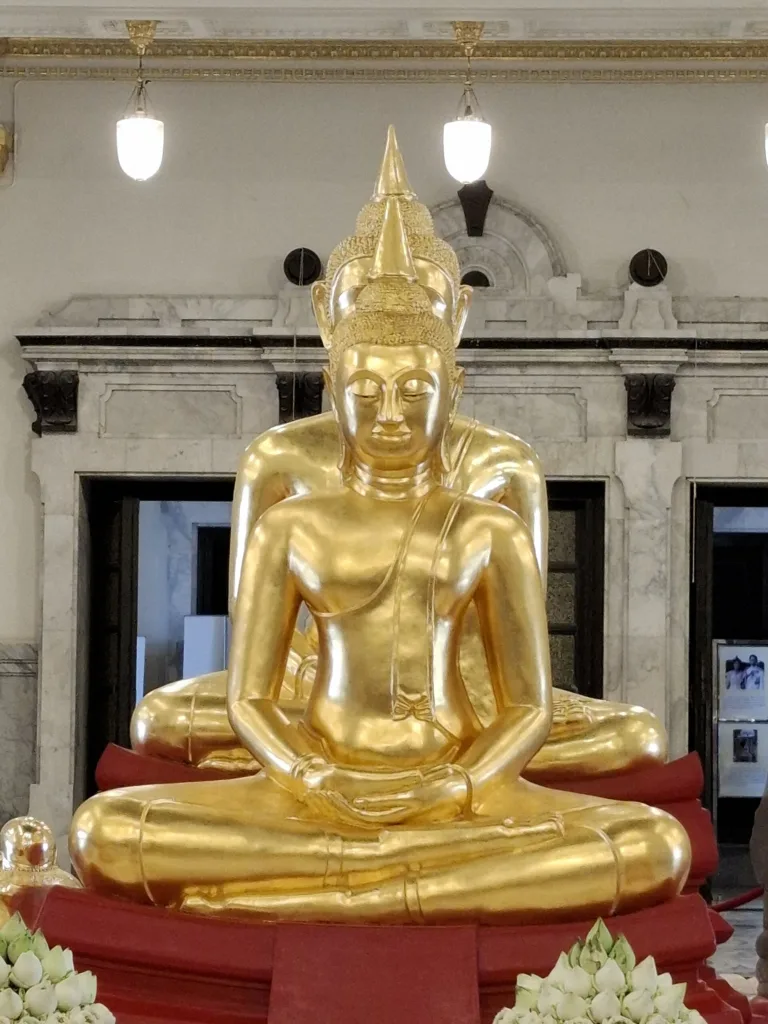
Luang Pho Phuttha SothonThe revered meditating Buddha of Chachoengsao, regilded after the 2022 restoration
Chachoengsao · Royal temple on the Bang Pakong
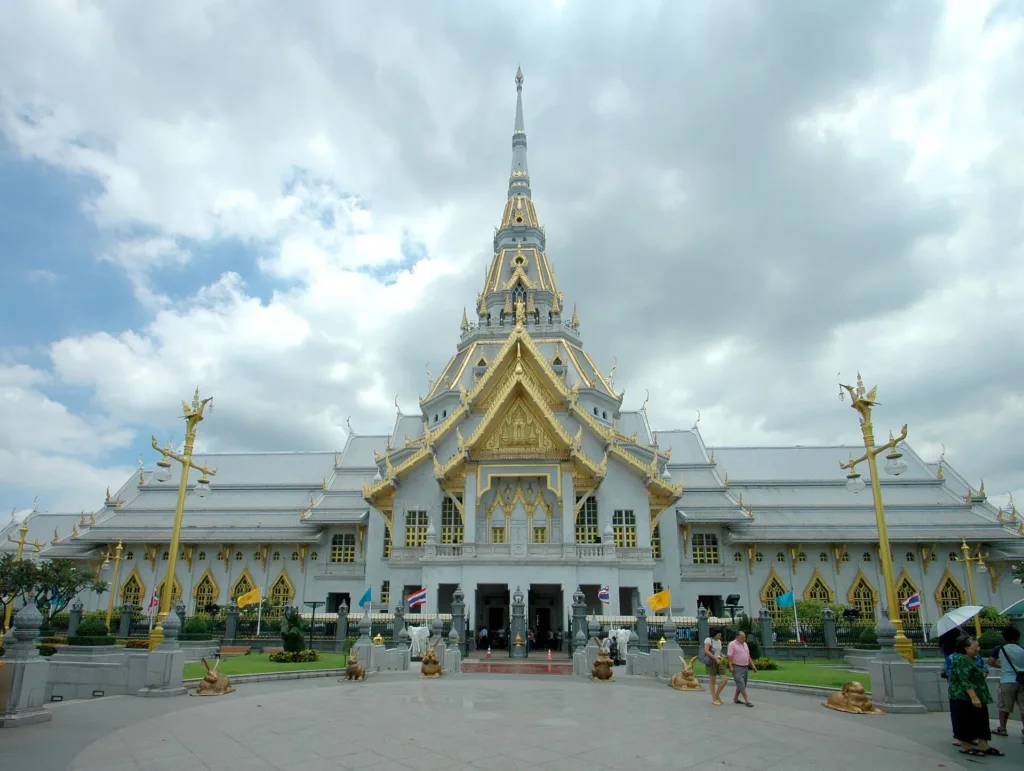
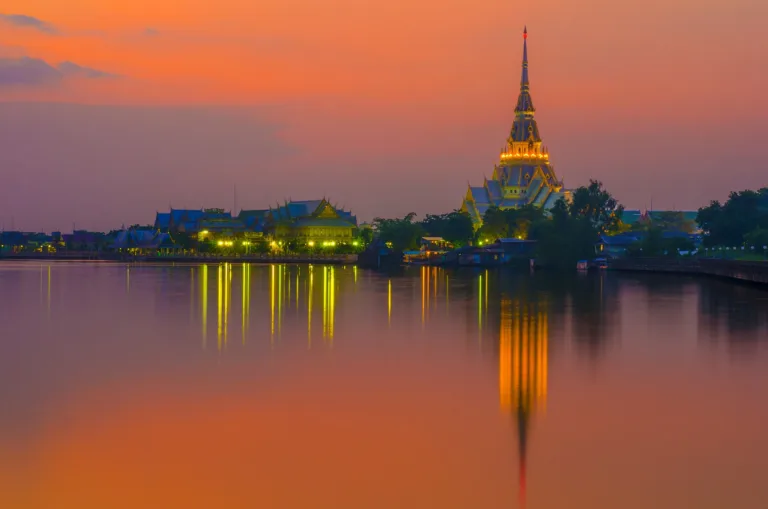
Royal temple on the Bang Pakong River in Chachoengsao, home of the revered Luang Pho Sothon Buddha image, with an 85-metre cruciform marble ordination hall.
Holiday / event — crowded · Possible thunder 17:00–18:00 · Hot (Afternoon) feels like 40°C
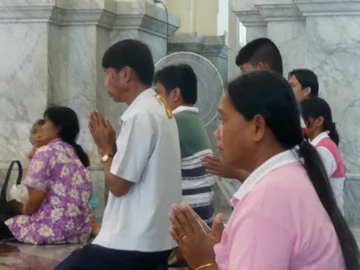
Dress modestly; no shorts or sleeveless tops · Remove shoes before entering the hall · Make egg or flower offerings at the designated area · No incense or gold leaf in the new hall
Daily 7 am–4:30 pm (to about 5 pm at weekends); until 9 pm during the festival
3:30 pm
Luang Pho Sothon festival in late Oct–early Nov (31 Oct–9 Nov in 2025), plus a celebration in the 5th lunar month, around early April
01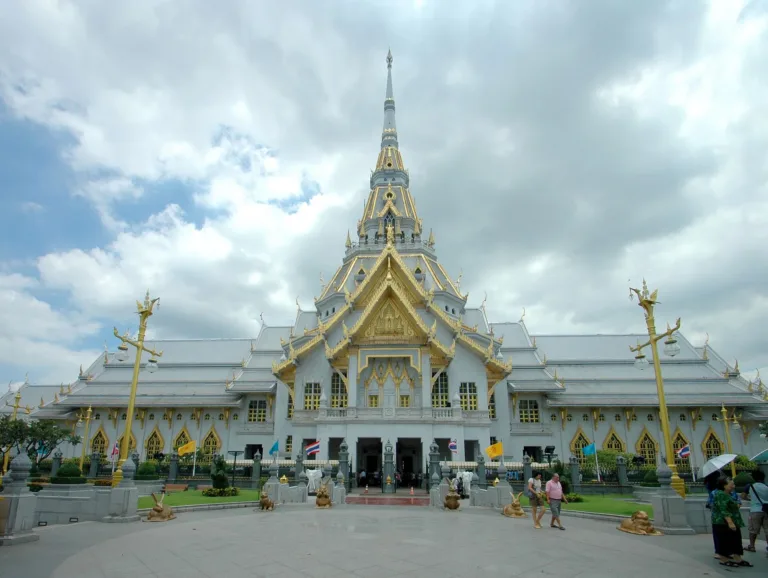 02
 03
 04
Tap a day card to see that day’s weather, rain, haze and hourly forecast
Best time to go Fine all day little rain through the day · light drizzle possible at times
Holiday — traffic on the way up and parking fills fast; leave early
Green band = hours used for the score
Best time to go Best window 06:00–15:00 Little rain
Holiday — traffic on the way up and parking fills fast; leave early
Green band = hours used for the score
Best time to go Best window 06:00–15:00 Little rain
Holiday — traffic on the way up and parking fills fast; leave early
Green band = hours used for the score
Best time to go Best window 06:00–14:00 Little rain
No warnings today — normal road and weather conditions
Green band = hours used for the score
Best time to go Best window 06:00–15:00 Little rain · light drizzle possible at times
No warnings today — normal road and weather conditions
Green band = hours used for the score
Best time to go Fine all day little rain through the day
No warnings today — normal road and weather conditions
Green band = hours used for the score
Best time to go Fine all day little rain through the day
No warnings today — normal road and weather conditions
Green band = hours used for the score
Wat Sothon Wararam Worawihan is a royal temple on the Bang Pakong River in Chachoengsao, about 80 km from Bangkok. It houses Luang Pho Phuttha Sothon, one of Thailand's most revered Buddha images, inside a cruciform marble ordination hall with an 85-metre spire that took about 20 years to build.
Arrive 3:30 pm
Photos from Wikimedia Commons and contributors · full credits inClassic page
Adults 0 THB · Time needed 1–2 hours
Weekends 9 am–2 pm, long weekends and festival days
| Temple entry | Free |
| Boiled-egg vow set (estimate) optional | 50 ฿/baht |
| Flowers, incense, candles (estimate) optional | 20 ฿/baht |
Mostly cash; some stalls accept transfers · Prices may change by season — check with the venue
Luang Pho Sothon festival in late Oct–early Nov (31 Oct–9 Nov in 2025), plus a celebration in the 5th lunar month, around early April
Buddhasothorn Hospital (Chachoengsao town) · Emergency 1669 · Tourist Police 1155
Tap a month on the wheel to see weather, rain, haze and crowds from 10 years of records
Best time · November to February is cooler and drier. Weekday mornings are quietest. Come during the Luang Pho Sothon festival (late Oct–early Nov) to see the river processions.
Watch out · Long weekends, Songkran and festival days bring heavy crowds and traffic. April afternoons are very hot.
Oct by the records 24–31°C · avg rain 248 mm (22 rainy days) · clear 1 days · avg PM2.5 17
Wat Sothon Wararam Worawihan is a third-class royal temple of the Worawihan type on the Bang Pakong River in Mueang Chachoengsao. It houses Luang Pho Phuttha Sothon, the guardian Buddha image of Chachoengsao (Paet Riu). Khaosod reports that the temple now has 84 monks and 450 novices.
The temple stands in Chachoengsao, or "Paet Riu", an old town on the Bang Pakong River. Wikipedia says the town was founded in 1549 under King Maha Chakkraphat of Ayutthaya and became a province in 1916. People settled along the river and canals, and the bond between town and temple shows in the provincial seal, which depicts Wat Sothon's ordination hall.
Silpa Wattanatham dates the temple to the late Ayutthaya period, around 1757 (B.E. 2300). Khaosod gives about 1764 and links it to King Narai's reign, which does not match that year, so the exact founding date is uncertain. All sources agree it was first called "Wat Hong".
The name changed through local stories. A swan (hong) once topped a tall pole; when a storm blew it down, villagers hung a flag instead and called it "Wat Sao Thong" (flag pole temple). When the pole broke again it became "Wat Sao Thong Thon", which softened to "Sothon". Thai Rath offers another reading: "sothon" means siblings from the same womb, after the legend of the brother images, later spelled "Sothon".
Legend says sibling Buddha images floated down from the north. The common version names three: Luang Pho Ban Laem (Samut Songkhram), Luang Pho To of Bang Phli (Samut Prakan) and Luang Pho Sothon; some versions say five. When one image kept circling in front of Wat Hong, villagers could not lift it until a master performed a rite and looped sacred thread around its hand. This is dated to around 1770, early in the Thonburi period.
The oldest written evidence collected by Silpa Wattanatham is a 1908 letter from King Rama V to the Crown Prince during his tour of Monthon Prachinburi. The king noted that most images in the temple were laterite, that the central one resembled Phra Phuttha Thewa Patimakon but with different workmanship in its upper part, and that the floating story was likely true because a stone image was unlikely to have been made locally.
Later experts disagreed. Luang Ronnasit Phichai, Fine Arts Department director (1950–1955), saw a meditating image restored in the late Ayutthaya or early Rattanakosin period, perhaps by Isan craftsmen. Tri Amatayakul of the Literature Division saw Lan Chang ("Lao") workmanship. Chao Khun Phra Thep Kawi, former Sangha head of Monthon Prachinburi, said it was carved from bodhi wood, perhaps by Vientiane Lao, and believed it truly floated down from the upper Bang Pakong. All of these views rest on examining the image itself, with no document confirming its origin.
Luang Pho Sothon sits in meditation on a four-tier throne. Sources disagree on its material: Thai Rath and Love Thailand say it was a bronze image covered in stucco by monks to deter theft, while Silpa Wattanatham, citing a 2001 Fine Arts Department book, describes an early Ayutthaya sandstone image made of 11 pieces. The lap is about 1.65 m wide; its height is given as 1.48 m by some sources and 1.98 m by others.
Thai Rath says King Rama V visited in 1908, and in 1915 (under Rama VI) the temple received the royal name "Wat Sothon Wararam Worawihan", although that article attributes it to Rama IX, which does not fit the year.
The annual Luang Pho Sothon festival began in 1890. Bangkok Biz News recounts that drought and epidemic struck Chachoengsao that year, so residents made vows to the image. When things improved, Nai Sap, owner of the Khlong Sothon theatre troupe, joined villagers in a great celebration to fulfil the vow, and it became the province's annual festival.
In 1916 the Supreme Patriarch, Prince Vajirananavarorasa, inspected the Sangha of Monthon Prachinburi and remarked that the temple's principal image was greatly revered by the townspeople. Silpa Wattanatham records that the old annual festival fell around the full moon of the 12th lunar month, with many boats gathering, market stalls and boat races. Today it still follows the 12th waxing day of the 12th month, so it usually coincides with Loy Krathong.
Devotion spread through amulets. Khaosod notes that the 1917 Luang Pho Sothon coin was made under the then abbot, Phra Achan Lin. Popular vow offerings are boiled eggs, garlands and performances of lakhon chatri or likay.
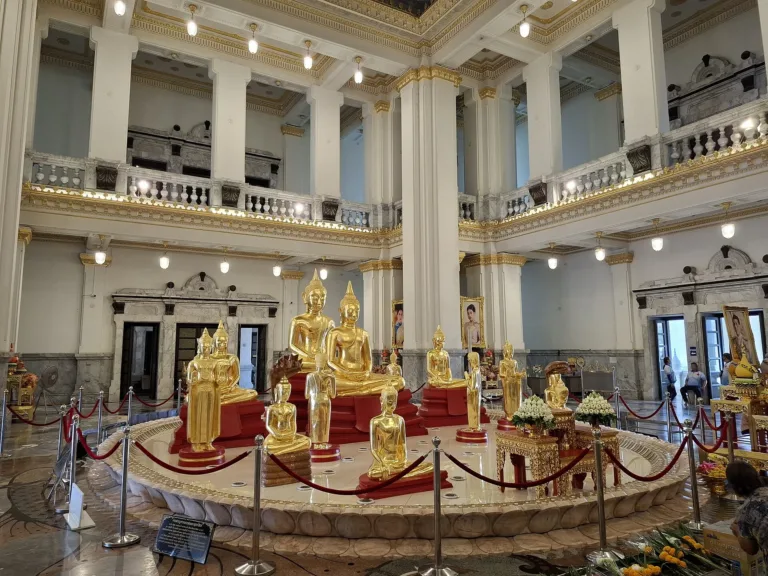
The old ordination hall was small, housing Luang Pho Sothon and 17 attendant images, 18 in all. Khaosod says that when King Bhumibol visited in 1966 he remarked that the hall was cramped. Phra Phrom Khunaphon (Chiam Chirapunyo), former provincial Sangha head and abbot, then raised funds to buy land for a new hall.
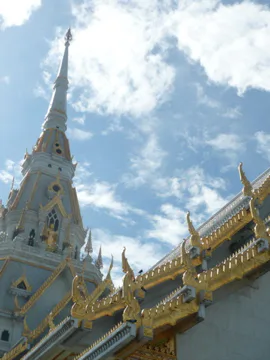
Construction of the new hall began around 1987 over the old site, without moving the image, under the provincial public works office. It is a cruciform mondop building 44.5 m wide and 123.5 m long, with an 85 m spire topped by a 4.90 m five-tier umbrella and a 77 kg gold finial. The exterior is Carrara marble from Italy, the interior has cosmology murals by a National Artist, and the ceiling stars are set to 5 September 1996, the day the gold umbrella was raised.
Construction took about 20 years. The image stayed covered in place, so the temple built a temporary vihara with a replica for worshippers. Matichon Weekly says the new hall officially opened around 2006.
During conservation, the Fine Arts Department removed the gold leaf layered on the face to restore its original state; Matichon Weekly dates this to 2006 and Silpa Wattanatham to 2009. The changed face drew criticism, though the work was later accepted as sound. Silpa notes the replica became hugely popular because incense, gold leaf, egg offerings and vow dances are banned in the new hall.
During COVID-19 the provincial communicable disease committee closed Wat Sothon's ordination hall and vihara from 30 April to 13 May 2021. MGR Online reported that people unaware of the closure kept arriving all day and laid flowers, incense and candles at the vihara doors instead.
In 2022 the acrylic paint from the earlier restoration began cracking. Matichon reported a new restoration from 16 May 2022, scheduled for 180 days with a 1.3 million baht budget: the image was lacquered black, then regilded along with its 18 attendant images. Wikimedia Commons photos from 2024 show the newly gilded image.
The 132nd festival in November 2022 offered 119,999 boiled eggs, and the governor opened it with the "3 D" slogan: a good father (Luang Pho Sothon), a good mother (the Bang Pakong River) and a good teacher (Phraya Srisunthonwohan). On 2–6 April 2023 the temple celebrated the image's 253rd year, with free khon by the Fine Arts Department.
The 133rd festival in 2023 ran 12 days and nights, from 24 November to 5 December, with 22 land floats. River processions on 26 November went via Ban Pho to Bang Pakong with 11 stops, and on 27 November to Bang Khla and Khlong Khuean with 14 stops. The hall opened 6 am–10 pm, until midnight on Loy Krathong nights, and there were royal-trophy jet-ski and traditional longboat races.
The 2025 festival ran from 31 October to 9 November, with river processions on 4 November towards Bang Pakong (12 piers) and on 5 November towards Bang Khla (14 piers), coinciding with Loy Krathong. Some 111,999 boiled eggs were offered, the hall stayed open until 9 pm, and until 1 am on Loy Krathong night.
For 2025, Governor Santi Rangsiruji announced the festival at the pavilion commemorating the raising of Luang Pho Sothon from the Bang Pakong River, inside the temple. The main events were carrying the replica image by boat along the river, a land procession, and OTOP stalls from all 11 districts on the field in front of the provincial hall.
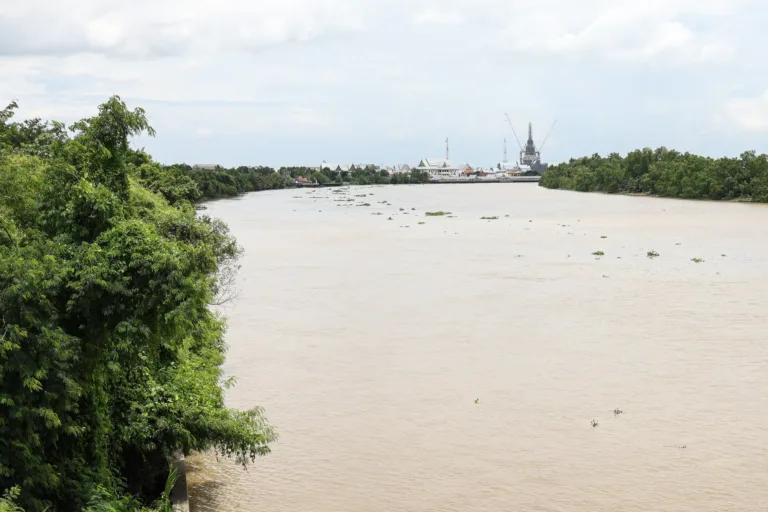
On 6 August 2025 the Baramee Sothon Bridge opened across the Bang Pakong on Highway 365, the southern town bypass (the Bangkok-bound side). It cost about 978.7 million baht under contract and serves roughly 80,000 vehicles a day. The name was chosen by the abbot, Phra Thep Phawana Wachirakhun, meaning the virtue and merit of Luang Pho Phuttha Sothon, and the bridge now offers an elevated view of the river and temple.
Arrived? Check in, collect a stamp and tell others what it is like right now
Check your location first, so you do not fill in the form for nothing
Location must be on and within 1 km · One check-in per place per day · come back on other days to check in again
Post photos from anywhere — no need to be here · Up to 20 photos at a time · JPG / PNG / WebP · GPS location data is removed automatically
From Bangkok take the Motorway (Hwy 7) to the Chachoengsao e…
Motorway → Hwy 314 → Chachoengsao town · Fuel + tolls
Eastern Line from Hua Lamphong/Krung Thep Aphiwat to Chachoengsao station, then local transport · Cheap
Bangkok → Chachoengsao, then songthaew or motorbike taxi · Estimate 80–150 baht
Motorway 7 or Bang Na–Trat Road, then Hwy 314 into Chachoengsao town
Large temple car park (fills up during festivals)
Stations in Chachoengsao town
Good signal on all networks
Daily 7 am–4:30 pm (to about 5 pm at weekends); until 9 pm during the festival
around 80 km fromBangkok
Wat Sothon Wararam Worawihan
0 THB
Approx. nightly price for 2 adults (next week) · final price depends on your dates
Answers travellers want before they go — a one-minute read
Daily about 7 am–4:30 pm, to about 5 pm at weekends; until 9 pm during the festival
No
It is a long-standing vow tradition; devotees offer boiled eggs, garlands or lakhon chatri performances, now at the designated area rather than in the new hall
In the new cruciform mondop hall; the replica is where gold leaf and incense are allowed
Late October to early November, around Loy Krathong, with land and river processions
Best day this week: Wednesday 28 Oct · Check in when you arrive to collect a stamp