 01
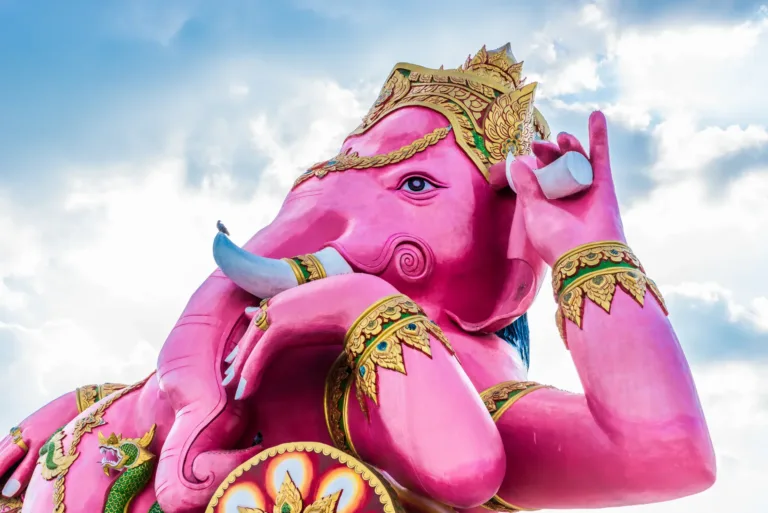
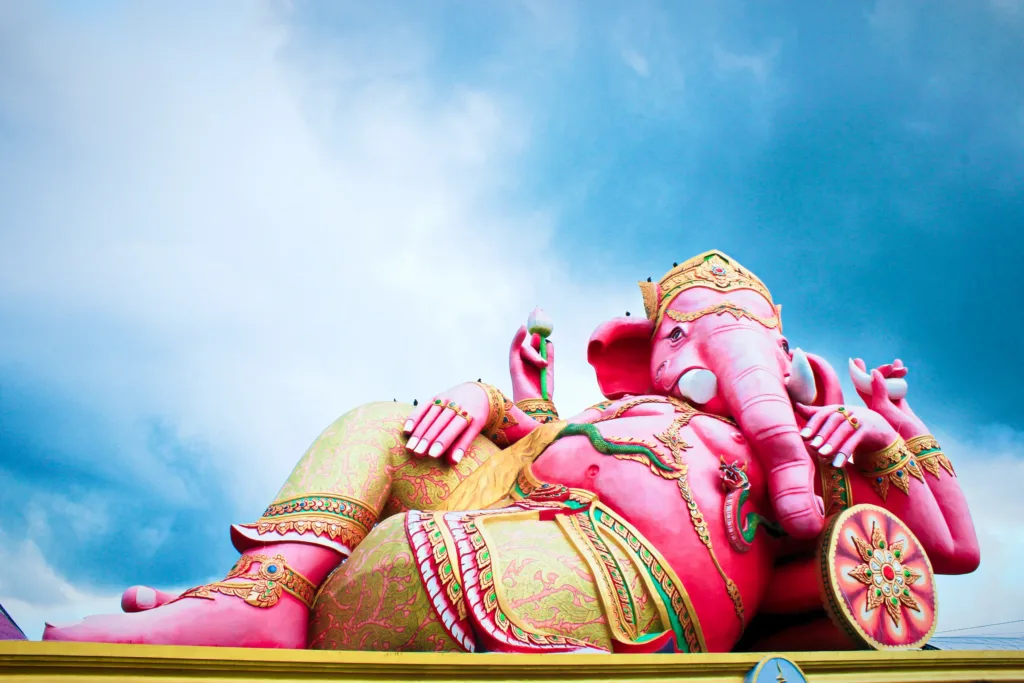
Reclining GaneshaThailand's largest, pink, about 16 m tall and 22 m long
Riverside temple · Bang Pakong River
A riverside temple on the Bang Pakong with Thailand's largest reclining Ganesha, a pink figure about 16 m tall and 22 m long. Open daily 08:00–17:00, free entry.
Holiday / event — crowded
Dress modestly, covering shoulders and knees · Take off your shoes before entering halls · Don't climb or sit on the statue's base
Daily 08:00–17:00
Before 10:00, when it's quieter and cooler
01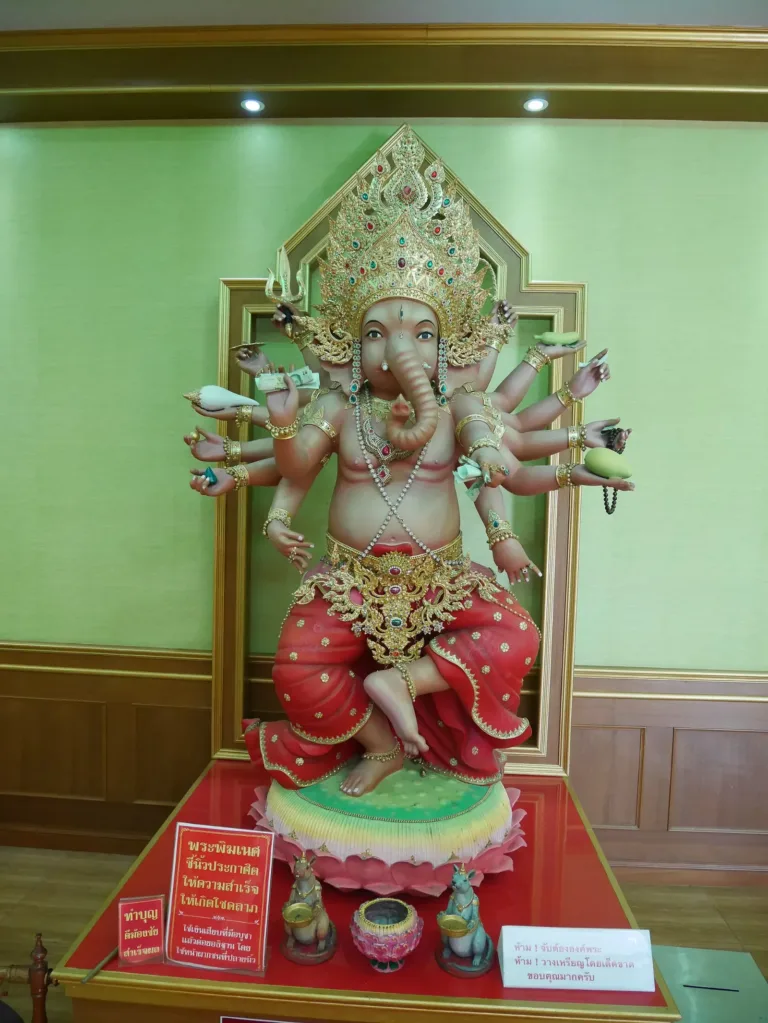 02
 03
Tap a day card to see that day’s weather, rain, haze and hourly forecast
Best time to go Daytime is over · see tomorrow
Holiday — traffic on the way up and parking fills fast; leave early
Green band = hours used for the score
Best time to go Fine all day little rain through the day
Holiday — traffic on the way up and parking fills fast; leave early
Green band = hours used for the score
Best time to go Fine all day little rain through the day
No warnings today — normal road and weather conditions
Green band = hours used for the score
Best time to go Fine all day little rain through the day
No warnings today — normal road and weather conditions
Green band = hours used for the score
Best time to go Fine all day little rain through the day
No official warnings, but watch for: Hot (Afternoon) feels like 38°C
Green band = hours used for the score
Best time to go Fine all day little rain through the day
Strong gusts, about 56 km/h
No official warnings, but watch for: Warning: Strong gusts, about 56 km/h · Hot (Afternoon) feels like 38°C
Green band = hours used for the score
Best time to go Fine all day little rain through the day
No official warnings, but watch for: Hot (Afternoon) feels like 38°C
Green band = hours used for the score
Wat Saman Rattanaram sits on the Bang Pakong River in Bang Kaeo, Mueang Chachoengsao, near the Bang Pakong barrage and about 80 km from Bangkok. It's famous for its giant pink Ganesha in the reclining 'Sewaisuk' pose, the largest of its kind in Thailand.The figure is roughly 16 m tall and 22 m long, lying half-propped on its side. Around the base are Ganesha images in 32 forms, and there's a mouse statue where people whisper their wishes. The temple also has Luang Pho To in the ordination hall and a walking Buddha by the river.It's open daily 08:00–17:00, with free entry and on-site parking.
Arrive Before 10:00, when it's quieter and cooler
The area around the Ganesha is open-air; bring an umbrella or hat
The car park fills up quickly by late morning
Free · Time needed 1–1.5 hours
Saturdays and Sundays, late morning to afternoon
| Flowers, incense and candles (by donation) optional | Free |
Cash for offerings and donations · Prices may change by season — check with the venue
Wat Saman Rattanaram is a community temple on the Bang Pakong River in Bang Kaeo, Mueang Chachoengsao. It was built around 1879, in the reign of King Chulalongkorn (Rama V), by the family of Khun Saman Chinpracha, a wealthy local merchant, to make merit in his memory. In almost 150 years the temple has had three names. It began as a small riverside community temple, underwent major restoration from around 1999, and became a place of pilgrimage for people from all over Thailand once a giant pink reclining Ganesha was raised beside the river.
Khun Saman Chinpracha was originally named Jai (some sources write Chai) and was a respected merchant. After his death his two wives, Thim Suebsaman and Phong Suebsaman (Phoem Nakhon), together with Yi Sun Wiriyaphanit, whom most sources describe as his younger sister, built the temple to dedicate merit to him. They named it "Wat Mai Khun Saman Phoem Nakhon" after its founders, and locals still call it "Wat Mai Khun Saman" today. Yi Sun later built the prang in front of the ordination hall, which still stands.
The temple first belonged to the Mahanikaya order. Shortly after it was finished, the founders offered it to monks of the Thammayut order, with Phra Khru Siripanyamuni (On Thewanipho) presiding over the handover. Temple history also records that King Chulalongkorn once stopped at the temple while travelling by boat, and that a villager named Nai Wao Phonsuwan offered a white "nok kwak" bird to the temple. The sources found do not give a year for the royal visit.
The name changed along with local boundaries. On one inspection of the monasteries by boat along the Bang Pakong, the Supreme Patriarch Prince Vajirananavarorasa saw that the temple's sign did not match its subdistrict, Phai Sawaek, and renamed it "Wat Phai Sawaek". When Phai Sawaek subdistrict was later merged into Bang Kaeo, the monks and villagers chose the present name, "Wat Saman Rattanaram". "Saman" keeps the founding family's name, while "Rattana", meaning gem or "kaeo", comes from Bang Kaeo.
The temple has long had ties to the senior monks of Wat Thepsirin in Bangkok. Somdet Phra Phutthakhosachan (Charoen Yanawaro) often came as preceptor to ordain local men, including Phra Khru Sutthaphimuk (Phin), ordained on 12 June 1939, who later became abbot. According to the temple's own list, it has had six abbots in total up to the present.
The surroundings changed sharply from around 1996, when the Royal Irrigation Department began building the Bang Pakong diversion dam at Ban Phai Sawaek, not far from the temple, to keep seawater out of the river in the dry season. It cost about five billion baht. Some sources say it was completed in 1999, others in 2000. Some academic work treats it as a case of failed resource management, since after trial operation it could not be used as planned.
The temple itself had become run down by then. Research from Chulalongkorn University says that around 2000 the monk Phairat Panyadharo, ordained in 1998, saw its condition and began reviving it. Temple records show work starting in 1999 with the restoration of the prang and the riverside pavilion and a new riverbank wall, followed by a canteen and kindergarten building in 2001, restoration of the Luang Pho Ong Dam vihara in 2002, and three monks' residences with 15 rooms and a refectory in 2005.
A landmark of this revival is the walking Buddha facing the river. It was cast on 8 April 2000 and its base was completed on 5 December the same year, when nine relics of the Buddha were enshrined in its crown at a ceremony led by Somdet Phra Yanawarodom of Wat Thepsirin. The Supreme Patriarch Somdet Phra Nyanasamvara named it "Phra Phuttha Mahakarunakhun Prasit". Luang Pho To, the Mara-vijaya Buddha in the old ordination hall, is believed to be more than 120 years old.
2008 brought the biggest change. Temple records list a new ordination hall costing about 15 million baht, with a principal Buddha image and a gate; about 14 rai of extra land bought to expand the temple and add a meditation centre; a further 200 m of riverbank wall; and the reclining Ganesha, budgeted at about 11 million baht. The pink stucco figure has four arms, holding a broken tusk and a lotus, and sits half-reclining in the pose known as "Pang Non Sawoei Suk". Thirty-two forms of Ganesha surround the base for visitors to pay respect to clockwise, and there is a museum beneath it. It is most often given as about 16 m high and 22 m long, though some sources say 14 m wide, or up to 24 m long.
On 11 November 2010 Phairat Panyadharo was appointed abbot. The temple held a gold-leaf and festival fair from 29 January to 6 February 2011, and images from several faiths were gradually added, such as Brahma, Guanyin granting children, Rahu, a 108-armed Ganesha and Indra on the elephant Erawan, several of which the temple describes as the largest in Thailand. On 21 August 2013 Princess Bajrakitiyabha made a private merit-making visit and offered a set of robes to the abbot.
In recent years, on 11 October 2020, the temple received the royal Kathin robes of Princess Maha Chakri Sirindhorn, with the abbot now holding the title Phra Pracha Thammanat. A 2023 study of 400 visitors found that 94% of the Thai Buddhists who came worshipped Ganesha, and that this faith-based tourism had created livelihoods for the community, from flower, incense and candle stalls to sweets offered to Ganesha and many other shops. The temple remains a working monastery with resident monks.
Arrived? Check in, collect a stamp and tell others what it is like right now
Check your location first, so you do not fill in the form for nothing
Location must be on and within 1 km · One check-in per place per day · come back on other days to check in again
Post photos from anywhere — no need to be here · Up to 20 photos at a time · JPG / PNG / WebP · GPS location data is removed automatically
The temple is on the Bang Pakong River near the Bang Pakong barrage, not far from Chachoengsao town.
Motorway or Min Buri–Chachoengsao road, towards Bang Khla · Fuel
Get off at Chachoengsao station, then a taxi or tuk-tuk · Metered/agreed fare
Good paved roads, with the last stretch along the Bang Pakong River
Parking inside the temple grounds
Good
Daily 08:00–17:00
about 80 km from Bangkok
Wat Saman Rattanaram
Answers travellers want before they go — a one-minute read
About 16 m tall and 22 m long, the largest reclining Ganesha in Thailand
No, entry is free; donations are welcome
Daily 08:00–17:00
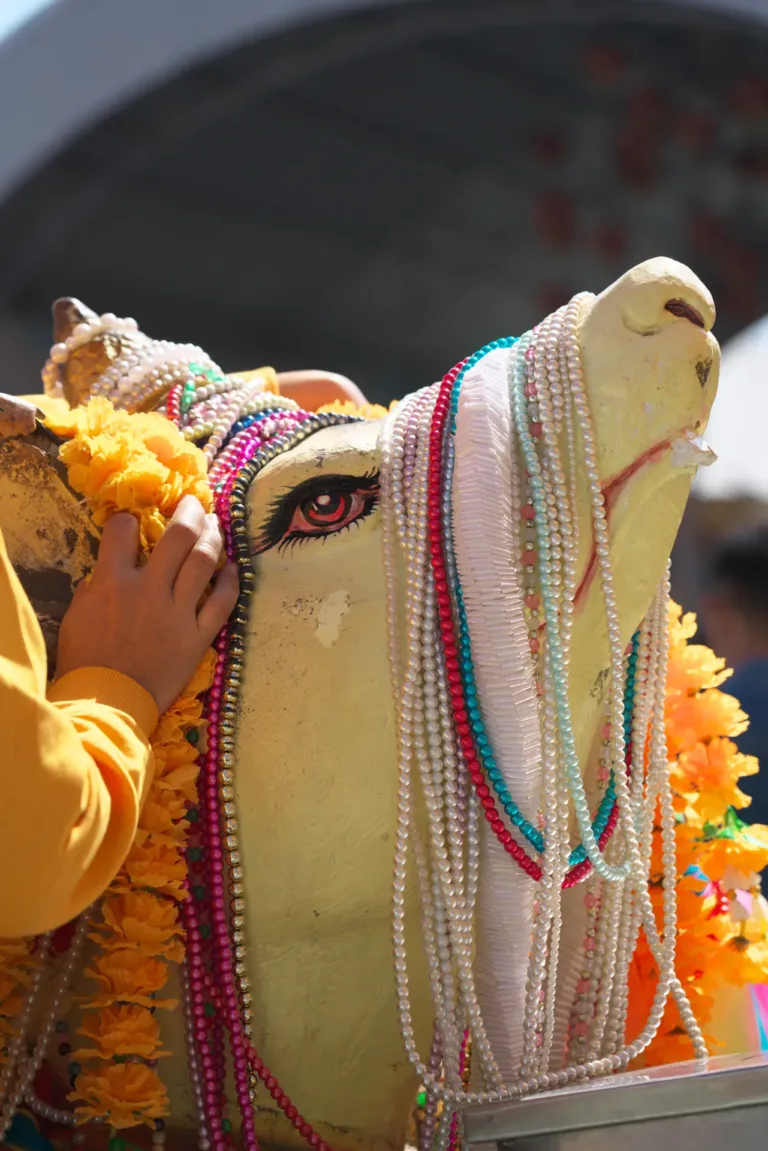
Whisper your wish into the mouse's ear; it's believed to carry it to Ganesha
Yes, take a train or van to Chachoengsao town, then a taxi or tuk-tuk for 15–20 minutes
Best day this week: Monday 30 Nov · Check in when you arrive to collect a stamp
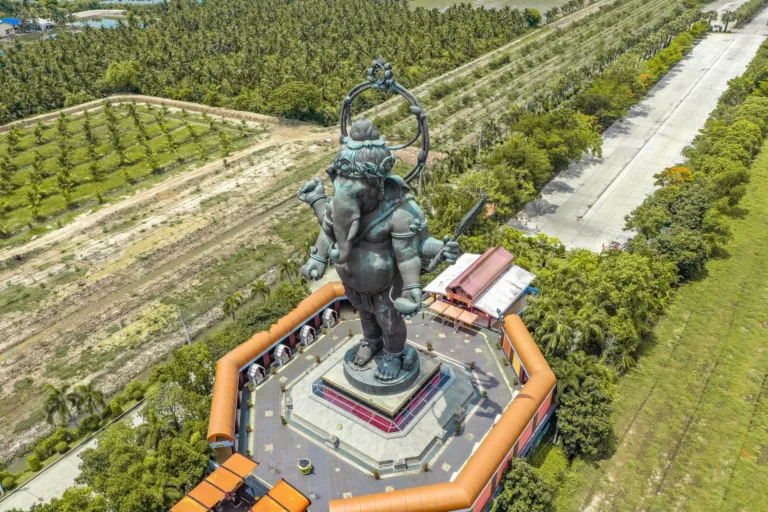 Khlong Khuean Ganesha Park
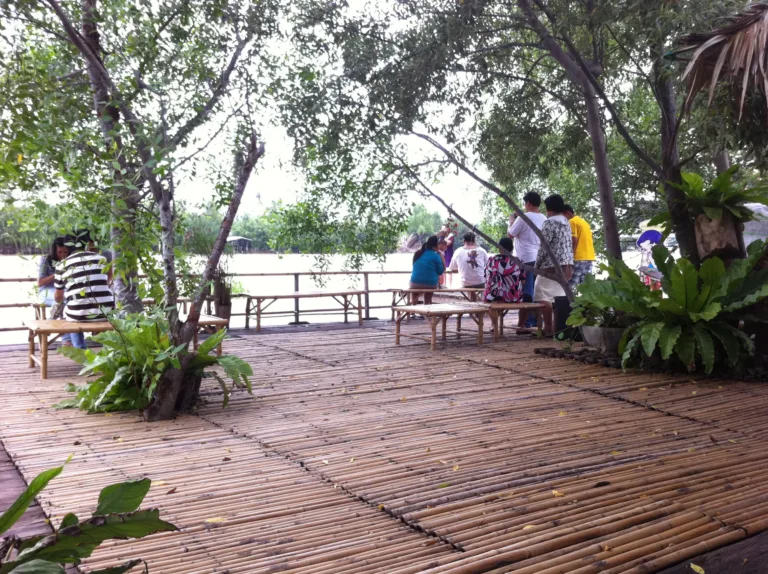 Ban Mai 100-Year Market
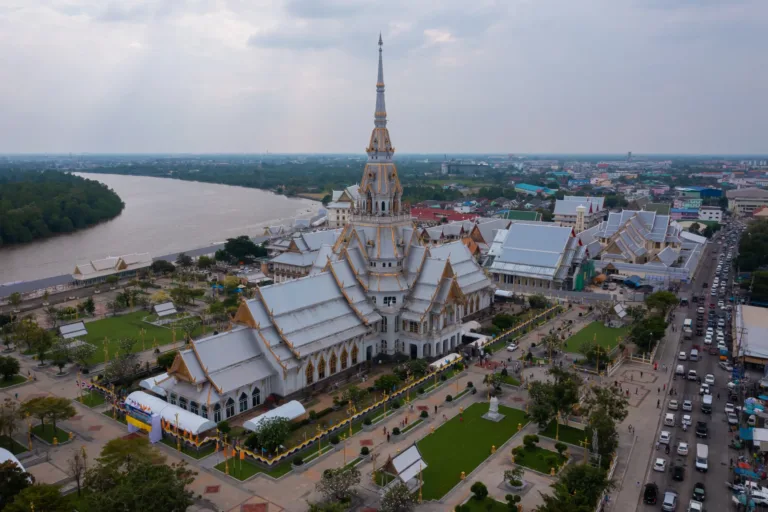 Wat Sothon Wararam Worawihan