What to know before visiting the temple
Dress modestly · Remove shoes in the ubosot · Do not climb ruins · Keep noise down
Daytime
Buddhist holy days
6 days ahead
When to go
this week
Tap a day card to see that day’s weather, rain, haze and hourly forecast
Best time to go Fine all day little rain through the day
No warnings today — normal road and weather conditions
Hour by hour
Green band = hours used for the score
Best time to go Fine all day little rain through the day
No warnings today — normal road and weather conditions
Hour by hour
Green band = hours used for the score
Best time to go Fine all day little rain through the day
No warnings today — normal road and weather conditions
Hour by hour
Green band = hours used for the score
Best time to go Best window 06:00–16:00 Little rain · light drizzle possible at times
No warnings today — normal road and weather conditions
Hour by hour
Green band = hours used for the score
Best time to go Fine all day little rain through the day · light drizzle possible at times
No warnings today — normal road and weather conditions
Hour by hour
Green band = hours used for the score
Best time to go Fine all day little rain through the day · light drizzle possible at times
No warnings today — normal road and weather conditions
Hour by hour
Green band = hours used for the score
Wat Ratchathani
Wat Ratchathani, Thani, Mueang Sukhothai.
- Cool
- Strong sun
- Riverside evening light
- Old ubosotFrom the rim aboveMorning
- Yom riversideIn front of the templeEvening
Gallery
Photos from Wikimedia Commons and contributors · full credits inClassic page
Good to know here
Cover shoulders and knees
Sunken base with steps
- Combine with the town night market
- Old Sukhothai is about 12 km away
Adults 0 THB · Time needed 30–45 min
Buddhist holy days
- Kids Yes
- Seniors Yes; flat, mind the steps to the old ubosot
- Wheelchair Flat grounds; steps at the old ubosot
- Pets Not appropriate in the temple
- Sukhothai town marketSukhothai noodles
- Night marketLocal food
- Dress modestly
- Remove shoes in the ubosot
- Do not climb ruins
- Keep noise down
- Steps down to the old ubosot
- The Yom may flood in the rainy season
Best months
Tap a month on the wheel to see weather, rain, haze and crowds from 10 years of records
Best time · Nov–Feb is cool for walking around town
Watch out · April is very hot · the Yom may flood Sep–Oct
20°Jan
21°Feb
24°Mar
26°Apr
26°May
25°Jun
25°Jul
25°Aug
25°Sep
24°Oct
23°Nov
20°Dec
Oct by the records 24–31°C · avg rain 211 mm (20 rainy days) · clear 6 days · avg PM2.5 11
The story of this place
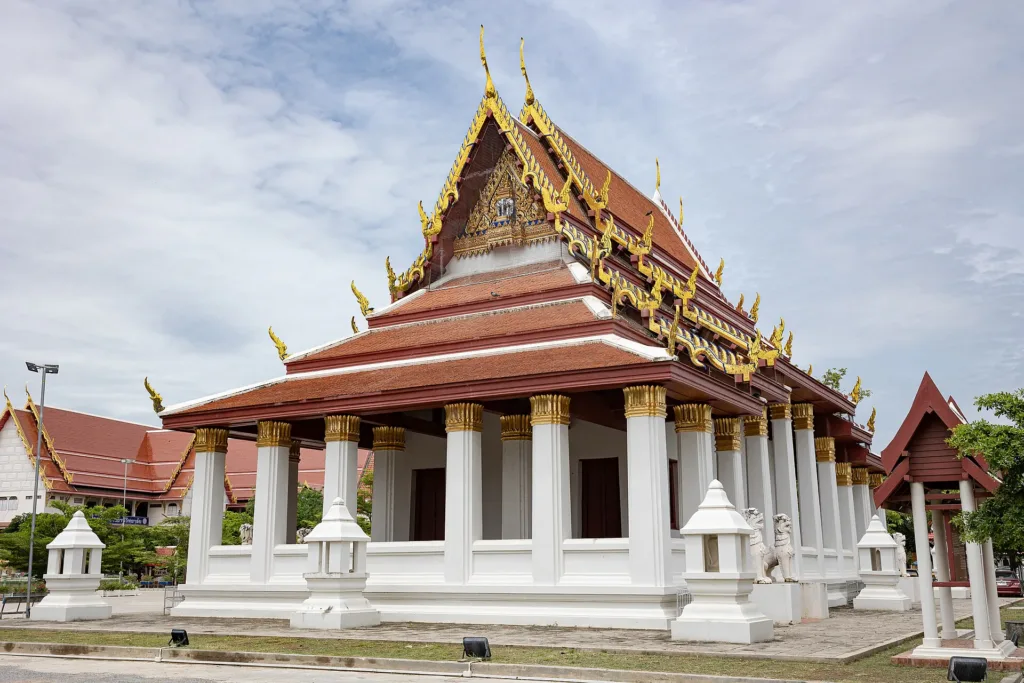
Wat Ratchathani stands on the Yom River in Thani subdistrict, in the centre of Sukhothai new town near the market. Wikipedia gives Thanon Singhawat, though some sources say Thanon Ratchathani. It is an ordinary Mahanikaya temple, not a royal temple, about 12 km east of old Sukhothai.
Read more 8 more paragraphs
The Fine Arts Department says no document records its founding; Wikipedia suggests Sukhothai-period origins from old chedi bricks measuring 6×12×1.5 in. By tradition it was first Wat Pa Lamoh, then Wat Tha Ni, after a trading landing on Khlong Mae Ramphan leading north to Chaliang, then Wat Thani, and became Wat Ratchathani when a governor the sources call Phra Ratchathani restored it, though his rank and date are unconfirmed.
It hosted state rites such as the oath-of-allegiance water ceremony, and folk tradition says Phraya Phichai Dap Hak lived here with his father as a child. On 12 January 1907 the Royal Gazette recorded the Sukhothai Witthayakhom school moving into the temple, and in 1914 it appears in Prince Wachirayan's report on the northern monastic circles, which mentions a Sukhothai-style principal image.
In 1954 a branch of the National Museum was set up here, and on 2 March 1958 King Bhumibol and Queen Sirikit came to pay respect to the principal Buddha in the ubosot, as seen in the King's private films. Important Sukhothai, U Thong and Lopburi images from the viharn were later moved to the Ramkhamhaeng National Museum.
In 1968 the great Sukhothai market fire spread to the old ubosot and monks' quarters, an event remembered in the song "Sukhothai Rathom". The old ubosot was abandoned, the grounds raised and a new ubosot built, so the old base now sits well below today's ground level. An act published on 29 December 1978 transferred the temple's land to the municipality.
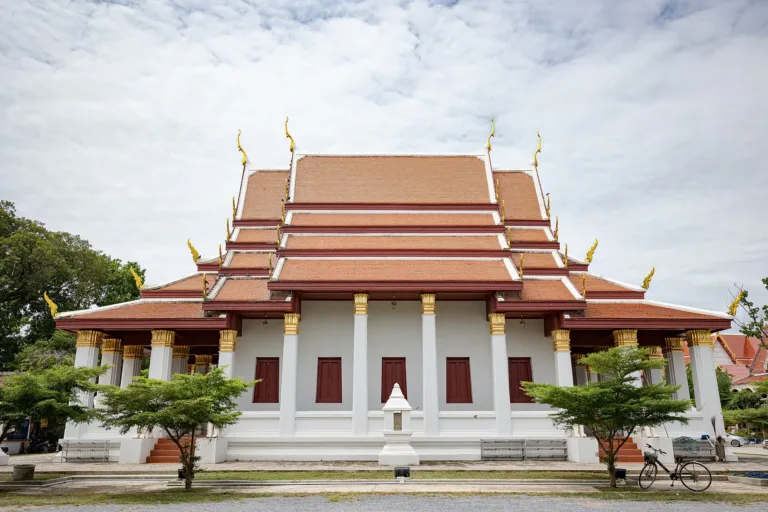
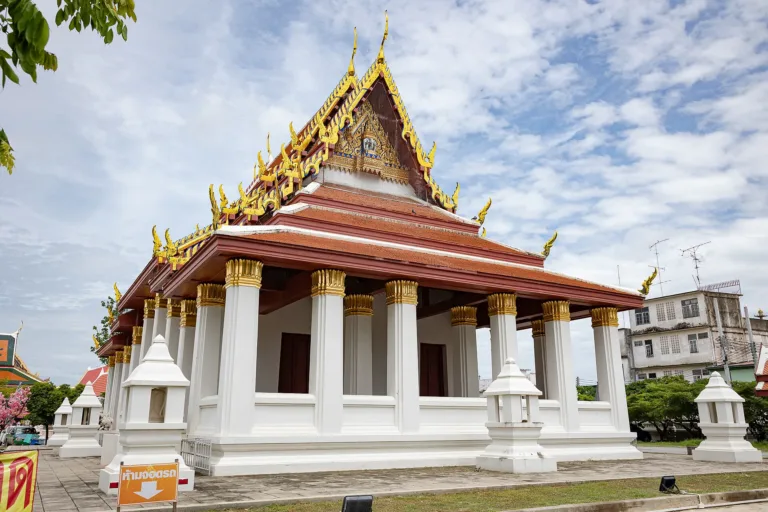
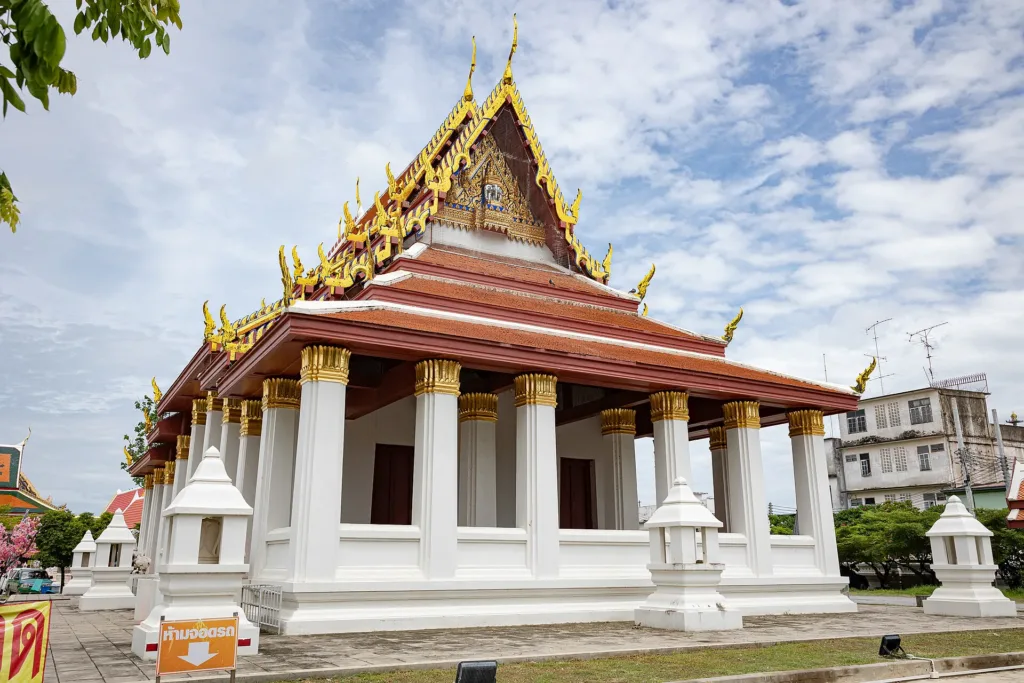
The Fine Arts Department dates the old ubosot to late Ayutthaya to early Rattanakosin, with repairs under Rama V–VI. It is brick and stucco with front and rear porches, two doors each on the east and west, a three-tier timber roof of clay tiles, glazed floor tiles with plant patterns, a surrounding balustrade and stucco lions at the stairs; old photos show kub-style sema shrines in all eight directions.
In 2018 the Fine Arts Department funded restoration of the old ubosot and the grounds, reusing original bricks, roof tiles, stucco lions, floor tiles and column capitals and checking against pre-fire photos and excavation. The rebuilt hall sits no more than 1.50–1.80 m off the original line, the old footings were conserved and the badly damaged timber roof frame was replaced with reinforced concrete styled like wood. On 21 January 2011 the temple received a royal grant of land for its ubosot.
The temple grew with new Sukhothai town: in 1917 Mueang Sukhothai district was renamed Thani; in 1932 the province was merged into Sawankhalok; on 11 March 1937 Sukhothai Thani municipality was created, covering Thani subdistrict; and in 1939 the province took back the name Sukhothai. Recorded abbots are Phra Khru Sinlawat Wichan; Phra Ratchaprasitthikhun (Thim Yasathinno), 1917–1970, under whom old images went to the museum; Phra Khru Uthai Thirakhun (Chaloem Kusalathammo), 1970–2019; and Phra Khru Si Thammanusit (Songchai Thawatchayo) since 2019.
Today the best-known image is Luang Pho Pao, in the Luang Pho Pao viharn. The temple opens daily and is free, a walk or short tuk-tuk ride from the market and night market. The grounds are flat, but the sunken old ubosot has steps. Dress modestly. No verified annual festival was found; the province's Loi Krathong is held at Sukhothai Historical Park.
- Date unknownFounded (perhaps Sukhothai period)
- Late Ayutthaya–early RattanakosinOld ubosot built
- Rama V–VIOld ubosot repaired
- 12 Jan 1907Sukhothai Witthayakhom school moves in
- 1914Named in the northern monastic inspection report
- 1917Mueang Sukhothai district renamed Thani
- 11 Mar 1937Sukhothai Thani municipality created
See 6 events
- 1954National Museum branch set up
- 2 Mar 1958King Bhumibol and Queen Sirikit visit
- 1968Market fire burns the old ubosot
- 29 Dec 1978Act transfers temple land to the municipality
- 21 Jan 2011Royal grant of ubosot land
- 2018Fine Arts Department restores the old ubosot
Check-ins & visitor photos
Arrived? Check in, collect a stamp and tell others what it is like right now
Check your location first, so you do not fill in the form for nothing
Location must be on and within 1 km · One check-in per place per day · come back on other days to check in again
Post photos from anywhere — no need to be here · Up to 20 photos at a time · JPG / PNG / WebP · GPS location data is removed automatically
How to get there
Town streets
From the town market · Free
In town · Negotiate
Sukhothai town streets
In the temple
In town
Good
Daytime
around 1 km fromSukhothai town market
Wat Ratchathani
0 THB
Stays near Wat Ratchathani
Approx. nightly price for 2 adults (next week) · final price depends on your dates
FAQ
Before you goWat Ratchathani
Answers travellers want before they go — a one-minute read
Is it a royal temple?
No; an ordinary temple
Why is the old ubosot below ground?
The grounds were raised after the 1968 fire
Where are its old Buddha images?
Many went to the Ramkhamhaeng National Museum
Did King Bhumibol visit?
Yes, on 2 Mar 1958
Is it free?
Yes
Ready to go to Wat Ratchathani?
Best day this week: Wednesday 28 Oct · Check in when you arrive to collect a stamp