 01
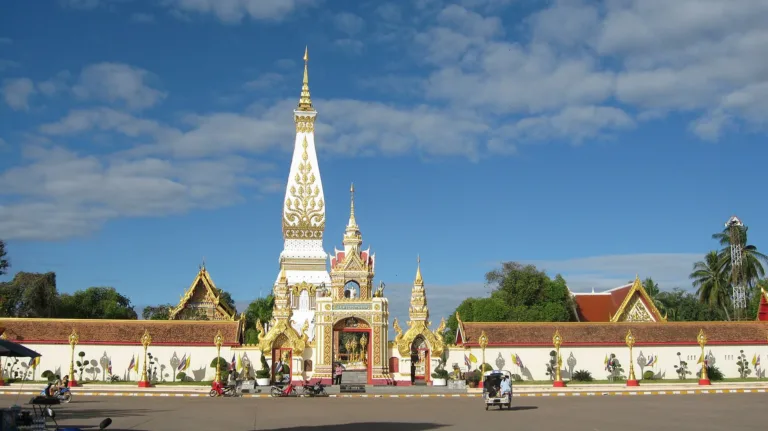
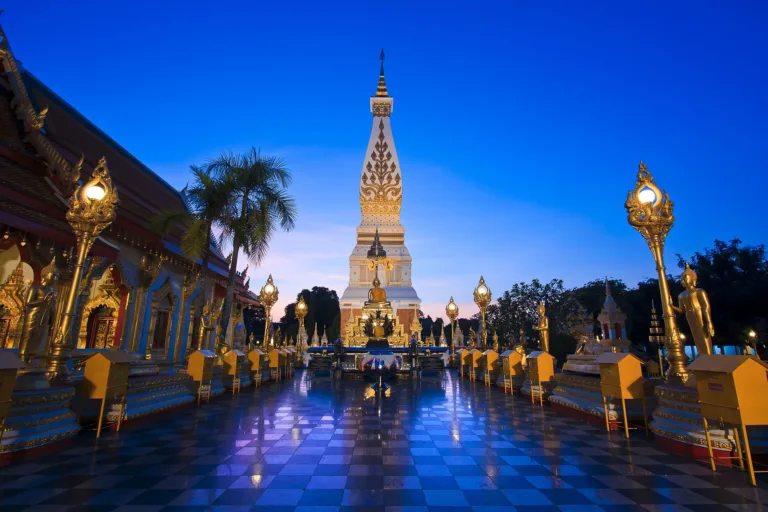
Phra That Phanom53.60 m lotus-bud stupa topped with a gold umbrella
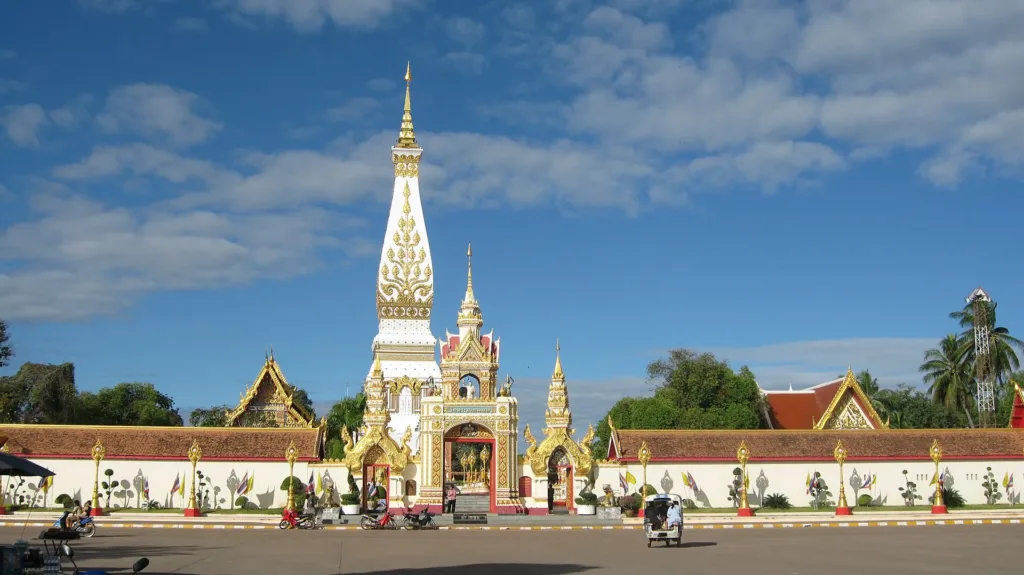
The stupa of both Mekong banks · Nakhon Phanom
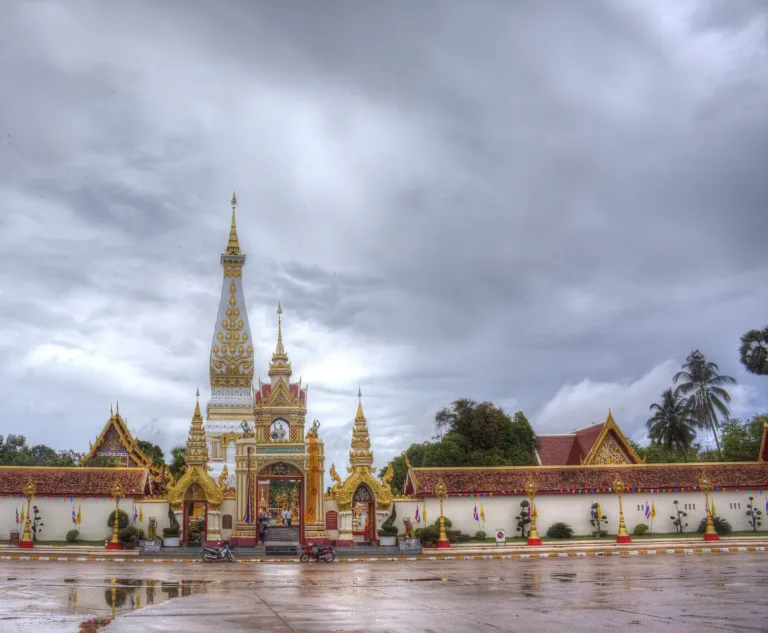
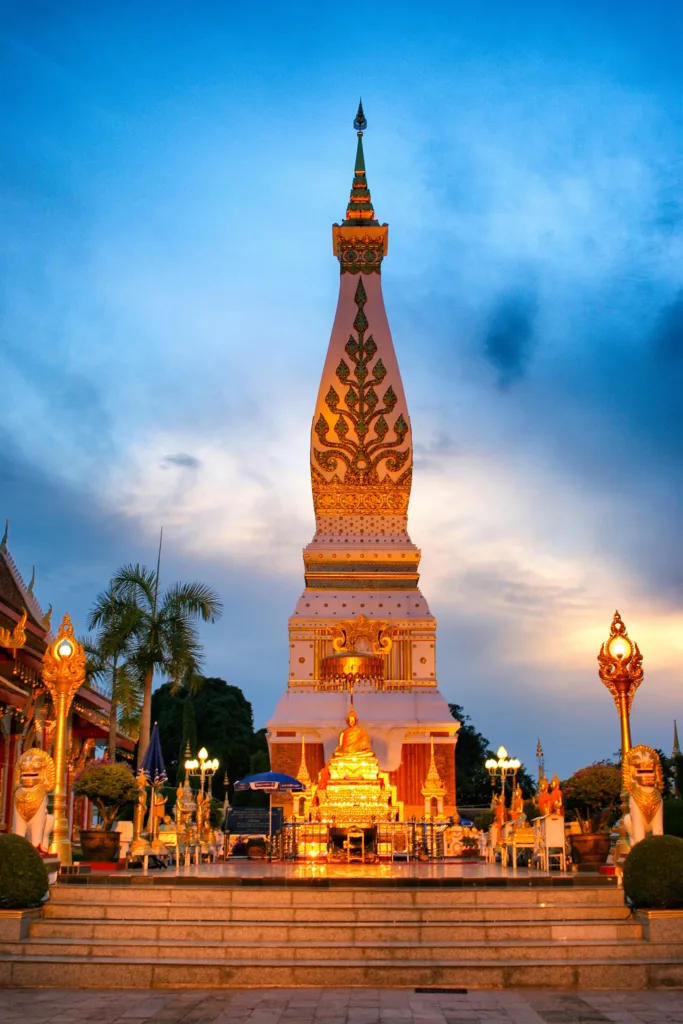
The stupa revered on both banks of the Mekong in That Phanom, Nakhon Phanom, said to enshrine the Buddha's breastbone relic; it collapsed in 1975 and was rebuilt to 53.60 m.
Holiday / event — crowded · Hot (Afternoon) feels like 38°C
Dress modestly, covering shoulders and knees · Remove shoes where the temple indicates · Do not climb or sit on the walls or stupa base · Keep noise down for worshippers
05:00–21:00 · Museum 08:30–16:00
Before 08:00 for a quiet morning, or around 17:00 for evening light and the illuminated stupa
Phra That Phanom Festival, third lunar month (around Jan–Feb), nine days and nights
01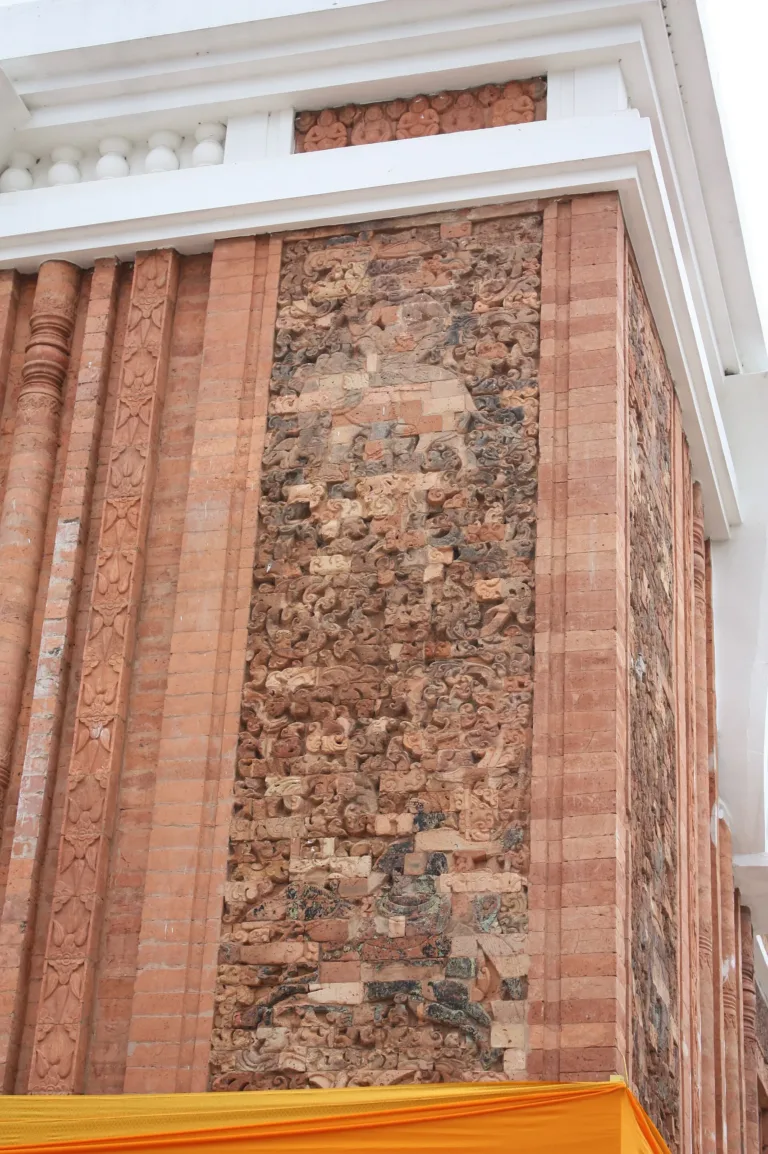 02
 03
 04
Tap a day card to see that day’s weather, rain, haze and hourly forecast
Best time to go Fine all day little rain through the day
Holiday — traffic on the way up and parking fills fast; leave early
Green band = hours used for the score
Best time to go Fine all day little rain through the day
Thick morning fog with visibility under 1 km — use headlights and drive slowly
Holiday — traffic on the way up and parking fills fast; leave early
Green band = hours used for the score
Best time to go Fine all day little rain through the day
Holiday — traffic on the way up and parking fills fast; leave early
Green band = hours used for the score
Best time to go Fine all day little rain through the day · light drizzle possible at times
No warnings today — normal road and weather conditions
Green band = hours used for the score
Best time to go Best window 06:00–14:00 Little rain
No warnings today — normal road and weather conditions
Green band = hours used for the score
Best time to go Fine all day little rain through the day
No warnings today — normal road and weather conditions
Green band = hours used for the score
Best time to go Fine all day little rain through the day
No warnings today — normal road and weather conditions
Green band = hours used for the score
Wat Phra That Phanom Woramahawihan in That Phanom, Nakhon Phanom, houses Phra That Phanom, the stupa revered by Thai and Lao people on both banks of the Mekong. By the Urangkhanithan chronicle it enshrines the Buddha's breastbone relic; the present stupa was rebuilt after the original collapsed in 1975.
Arrive Before 08:00 for a quiet morning, or around 17:00 for evening light and the illuminated stupa
Photos from Wikimedia Commons and contributors · full credits inClassic page
Adults 0 THB · Car 0 THB · Time needed 2–3 hours
The festival in the third lunar month, long weekends and major Buddhist holy days
| Temple and museum entry | Free |
| Flowers, incense and candles (approx.) optional | 20 ฿/set |
Mostly cash; most shops around the temple accept QR transfer · Prices may change by season — check with the venue
Phra That Phanom Festival, third lunar month (around Jan–Feb), nine days and nights
That Phanom Hospital · Tourist Police 1155 · Emergency 1669
Tap a month on the wheel to see weather, rain, haze and crowds from 10 years of records
Best time · Nov–Feb: cool weather, and the Phra That Phanom Festival in the third lunar month
Watch out · Mar–May: very hot at midday. Jul–Sep: heavy rain
Oct by the records 22–30°C · avg rain 136 mm (14 rainy days) · clear 6 days · avg PM2.5 8
Wat Phra That Phanom Woramahawihan stands on Chayangkun Road in That Phanom district, Nakhon Phanom, about 600 m from the Mekong. It is a first-class royal temple of the Woramahawihan grade. The stupa is square, 12.33 m wide at the base and 53.60 m tall, on a mound called Phu Kamphra. By tradition it is the stupa for people born in the Year of the Monkey and on Sunday, and it is revered by Thai and Lao people on both banks of the river.
The Urangkhanithan chronicle says the Buddha travelled east, foretold the cities along the Mekong and spent a night on Phu Kamphra, saying that after his passing Maha Kassapa would enshrine his relics here. At the cremation the breastbone relic (Phra Urangkhathat) came to rest in Maha Kassapa's palm, and he and 500 arahants carried it to Phu Kamphra.
The same chronicle says five kings built the relic chamber: Phaya Nanthasen of Si Khotabun, Phaya Chulani Phromathat, Phaya Inthapatthanakhon, Phaya Kham Daeng of Nong Han Noi and Phaya Suwanna Phingkhara of Nong Han Luang, moulding raw clay into a square kiln-like chamber and firing it for three days and nights. Stone pillars called Inthakhin and stone horses linked to the legend still stand nearby. Thailand's UNESCO submission notes that archaeology does not support the legendary date.
Archaeology tells a different story. UNESCO's Tentative List entry says excavation and scientific tests date the innermost brick chamber to around the 7th–8th century AD, originally a square brick building with carvings resembling Cham or ancient Khmer sanctuaries. Silpa Watthanatham says it is believed to date from the 9th–10th century AD (14th–15th Buddhist century), and after the collapse Prince Subhadradis Diskul suggested around the 10th century. Love Thailand says the earliest monument was a low square brick structure locally said to be about 8 m high.
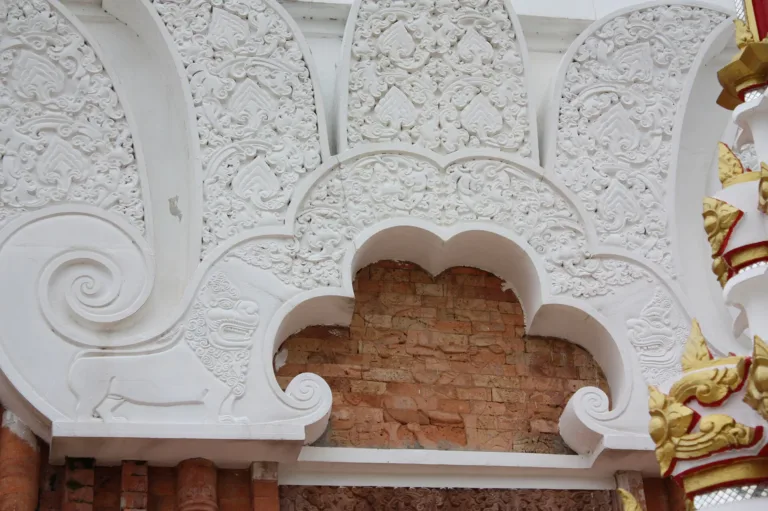
Art historians see Cham traces in the relic chamber. Silpa Watthanatham notes a square two-tier plan with a clearly raised upper tier, found in both Cham and Khmer sanctuaries; pilasters on the first tier with a broad central groove filled with ornament resemble Cham Hoa Lai art of around the 9th–10th century AD, and the brickwork dates to roughly the 8th–10th centuries AD. The Lan Xang lotus-bud form of the top only became popular in the early 16th century, so the writer suggests the original was a Cham-style sanctuary whose top was later remodelled. Professor Sakchai Saising likewise sees Cham influence in the original form.
Inscriptions are key evidence for the Lan Xang era. A study in Khon Kaen University's graduate journal examined 27 inscriptions at the temple, on stone slabs, Buddha bases, metal sheets and bricks, made by Lan Xang kings, local lords, monks and villagers to prolong the religion, make merit and dedicate temple servants (kha okat) to the stupa. They record that King Phothisarat (r. 1520–1547) came to worship, restored the stupa and dedicated servants. Silpa Watthanatham also mentions restorations under King Setthathirath and King Suriyavongsa.
A major Lan Xang–era restoration took place in 1690–1691 under Chao Ratchakhru Luang Phonsamek, known locally as Yakhu Khi Hom, a monk revered along the Mekong. Silpa Watthanatham says he added a new square lotus-bud top in Lan Xang style and filled the inner chamber with broken brick, mortar and earth, turning the hollow room solid. English Wikipedia says this restoration raised the stupa to about 47 m.
Inscriptions from Luang Phonsamek's era bear dates of about 1648–1702, which the same study notes do not fit the usual Lan Xang chronology, and it credits him with a role in founding the Champasak royal line in 1713. Later, Chao Anouvong of Vientiane restored the stupa in 1806–1813. The researchers argue royal patronage of the stupa taught villagers to respect the king and court, a value passed down as tradition.
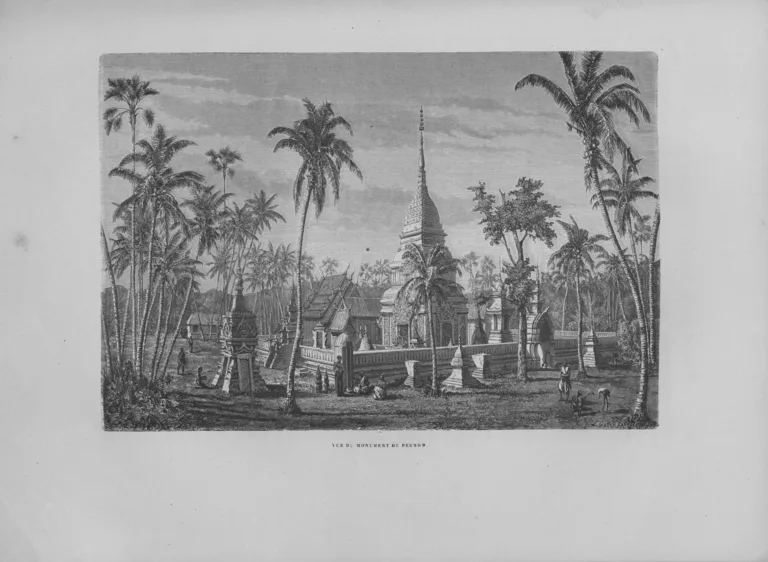
A drawing of the original stupa as restored by Luang Phonsamek appears in the record of the French Mekong Exploration Commission, published by naval officer Francis Garnier in Voyage d'exploration en Indo-Chine in 1873. It is key evidence of the stupa's shape before the 20th-century additions.
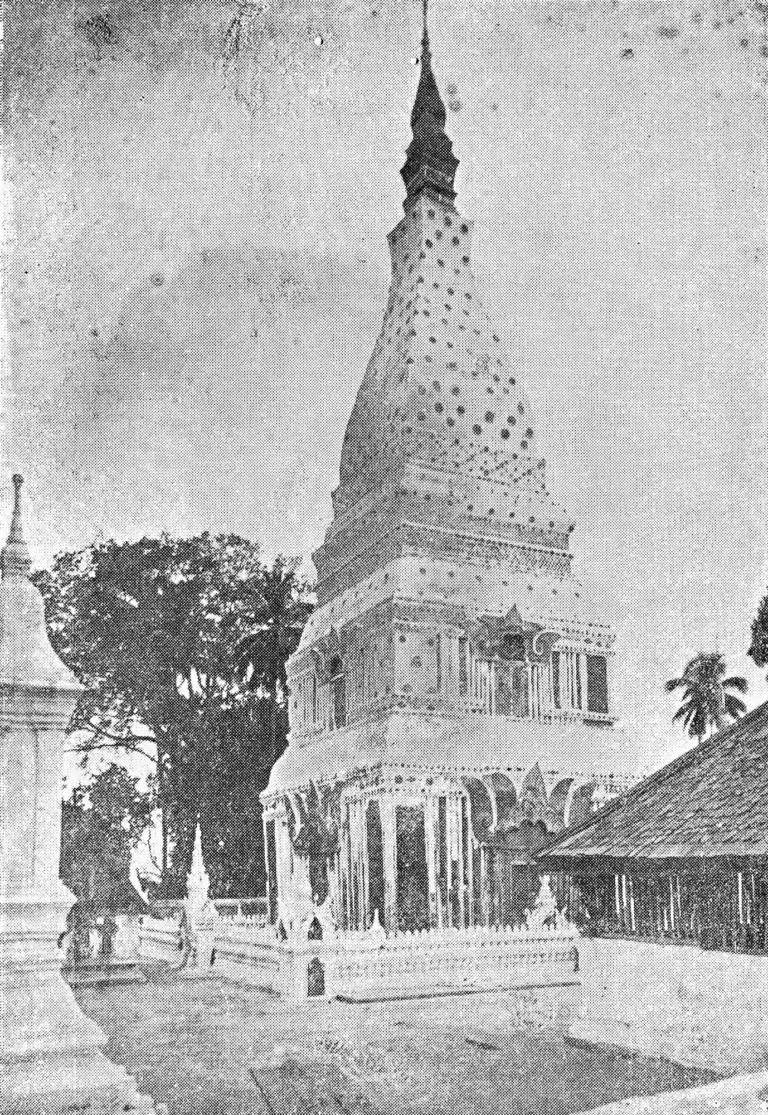
The Fine Arts Department registered Phra That Phanom as an ancient monument in 1935. In 1940–1941, under Field Marshal Plaek Phibunsongkhram's government, Luang Wichitwathakan led a restoration that encased the old top in reinforced concrete from the third tier up and added about 10 m, bringing it to 57 m. Silpa Watthanatham suggests the timing may relate to the Franco-Thai dispute over Indochina, with the aim of being seen from, and resonating with, the Lao bank. In 1942 the temple was raised to a first-class royal temple of the Woramahawihan grade.
The stupa's meaning shifted with politics. A 2023 Ubon Ratchathani University study says that during Chao Anouvong's war the Lao side drew on its sanctity for political standing while Siam used it as a symbol on strategic maps. In the Indochina conflicts the French tried to weaken devotion on the Lao bank, while the Thai state tied the stupa to Thai civic identity. In the Cold War it became the emblem of the Northeast's first university, and the Urangkhathat legend was retold in public discourse.
There were warnings before the collapse. Silpa Watthanatham reports that the Fine Arts Department's director-general had received damage reports from April 1974, and archaeologist Bernard Groslier had also reported cracks. After a magnitude 5.6 earthquake on 17 February 1975, large new cracks were reported. The department wrote to the Asian Institute of Technology on 14 April 1975 asking for a structural inspection, but no follow-up is recorded.
At 7:38 pm on 11 August 1975, after several days of rain and strong wind, Phra That Phanom collapsed entirely. Silpa Watthanatham explains that the old brick relic chamber could not bear the weight of the added top. The temple had expected the fall about three days earlier because of cracks in the base and moved the principal Buddha image out of the vihara in front. People on both sides of the Mekong were deeply grieved.
The cause of the collapse is still debated. An article by Phin Thungkha in Silpa Watthanatham says the 1940 restoration brought in central-Thai craftsmen and motifs in a nationalist spirit. Tik Saenboon argues the additions undermined the structure, while Rome Bunnag points to ventilation holes at the top that let rain in but not out, rotting the inner brick, with the early-1975 earthquake widening the cracks.
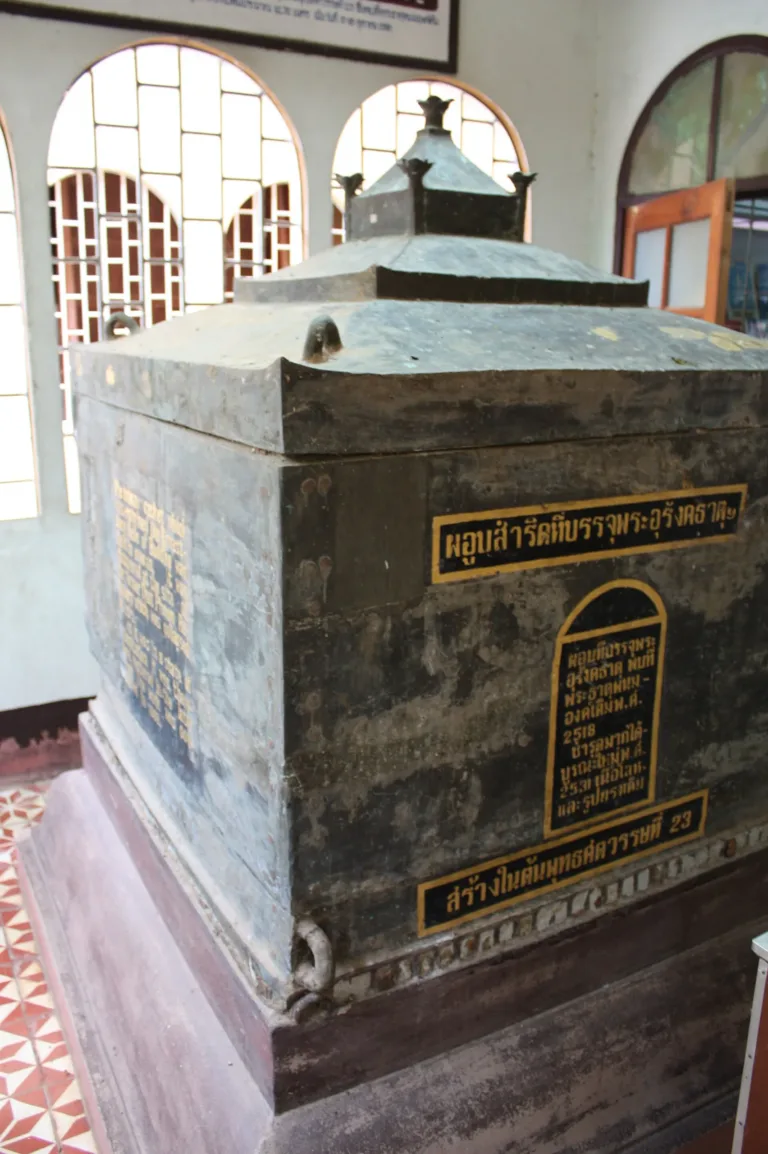
The government and donors nationwide rebuilt the stupa in 1975–1979 to the 1940 design, entirely in reinforced concrete, setting the original carved bricks back in place. UNESCO notes that a large bronze casket holding nested gold reliquaries was recovered from the debris. On 23 March 1979 King Bhumibol Adulyadej the Great and members of the royal family presided over the re-enshrinement of the relic. The new spire carries a gold umbrella that Wikipedia says weighs 110 kg.
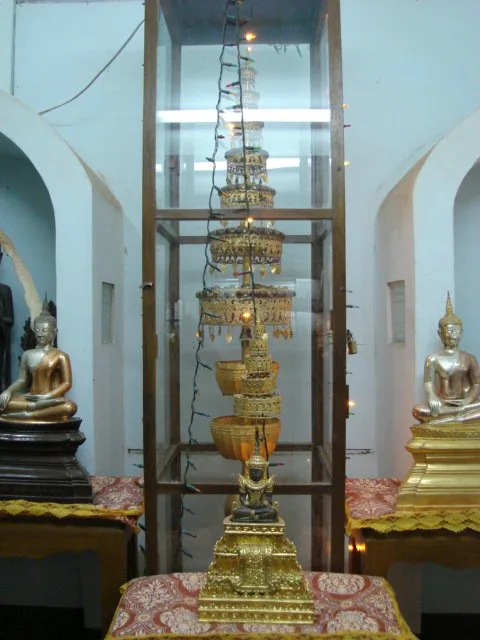
The new stupa was completed under Prime Minister M.R. Kukrit Pramoj's government. Khaosod (2019) reports the Fine Arts Department drove 44 piles. Inside, the stupa has several levels: the lowest shows remains of the pre-1975 base, the next holds hundreds of donated Buddha images, a middle level enshrines the relic in a nine-tiered mondop, and an upper level stores palm-leaf manuscripts, with tens of thousands of items in all. The interior opens only when necessary; men need the abbot's permission, and by custom women may not enter the inner cloister.
After the rebuilding, the protected area was extended by about 4 hectares in 1979, and Love Thailand says the temple opened the Rattanamoli Si Khotrabun Art and Cultural Center as a museum in 1987, displaying carved bricks, Buddha images, pottery and inscriptions found during excavation and rebuilding. On 2 February 2017 Thailand submitted Phra That Phanom to UNESCO's World Heritage Tentative List under criteria (i), (ii) and (vi); it remains on the tentative list and is not yet inscribed.
The World Heritage effort continues. Thailand's environmental policy office reported in May 2025 that the culture minister inspected learning and tourism plans at the temple and that the nomination dossier was still being prepared. The Ubon Ratchathani study also notes replicas of Phra That Phanom built in the United States and India, reflecting its international significance.
The Phra That Phanom Festival is held every year in the third lunar month for nine days and nights. Thai Wikipedia gives the 8th waxing day to the 1st waning day (26 January–3 February in 2026), while Love Thailand gives the 10th waxing day. It opens with the ritual of inviting Phra Upakhut from the Mekong and parading him to the temple. The temple also marks 11 August each year in memory of the collapse, and holds Sattanaga Day for the seven nagas believed to guard the stupa.
Arrived? Check in, collect a stamp and tell others what it is like right now
Check your location first, so you do not fill in the form for nothing
Location must be on and within 1 km · One check-in per place per day · come back on other days to check in again
Post photos from anywhere — no need to be here · Up to 20 photos at a time · JPG / PNG / WebP · GPS location data is removed automatically
In the centre of That Phanom on Chayangkun Road (Highway 212…
Bangkok–Nakhon Phanom Airport, then about 60 km by road · Per airline
Bangkok–Nakhon Phanom/That Phanom · Per operator
Nakhon Phanom town–That Phanom via Highway 212 · Fuel
Highway 212, paved all the way
Car parks around the temple and along Chayangkun Road
Petrol stations in That Phanom town
Good 4G/5G
05:00–21:00 · Museum 08:30–16:00
around 52 km fromNakhon Phanom town
Wat Phra That Phanom
0 THB
Approx. nightly price for 2 adults (next week) · final price depends on your dates
Answers travellers want before they go — a one-minute read
53.60 m (the stupa rebuilt in 1979)
No, donations are welcome
The third lunar month, around Jan–Feb, for nine days and nights
It is the birth stupa for the Year of the Monkey and for Sunday, but everyone is welcome
No, the original collapsed on 11 Aug 1975; the present one was rebuilt to the 1940 design
Best day this week: Wednesday 28 Oct · Check in when you arrive to collect a stamp