 01
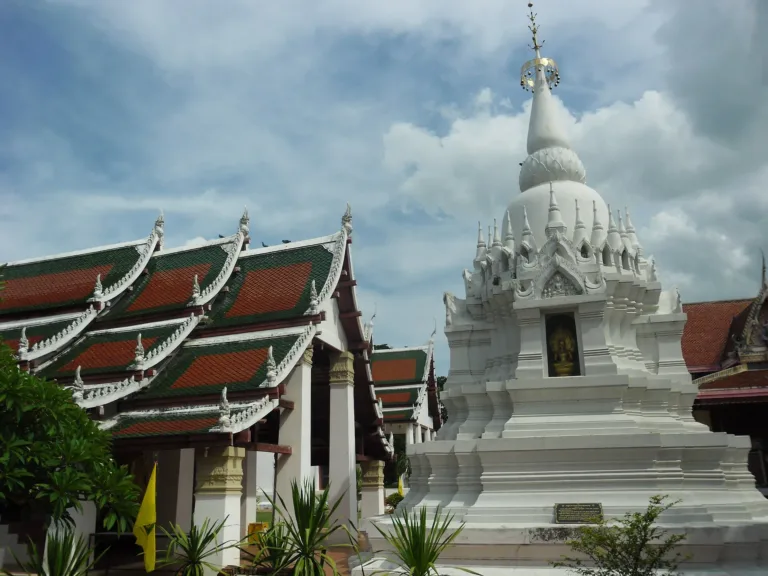
Relic chediEnshrines Buddha relics, U Thong style
CHAI NAT · MUEANG
Chai Nat’s ancient royal temple, with a U Thong-style relic chedi, a holy well in its vihara and the Chai Nat Muni National Museum next door
Holiday / event — crowded · Hot (Afternoon) feels like 41°C
Temple daily (about 06:30–18:00) · Chai Nat Muni Museum Wed–Sun 09:00–16:00
Come before 10:00 when it is cooler and the light is good on the chedi
Chedi wrapping (start of Buddhist Lent) · Relic celebration (full moon of the 6th lunar month)
01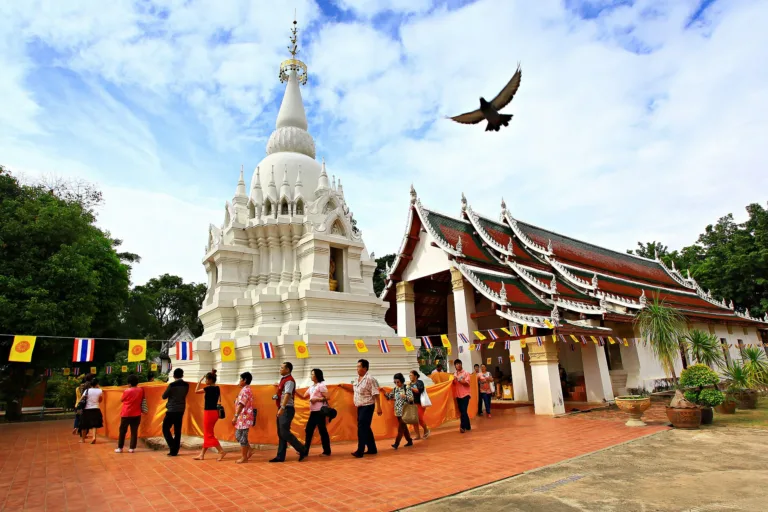 02
 03
Tap a day card to see that day’s weather, rain, haze and hourly forecast
Best time to go Fine all day little rain through the day
Extreme heat — feels like 41°C; avoid midday sun and drink often
Holiday — traffic on the way up and parking fills fast; leave early
Green band = hours used for the score
Best time to go Fine all day little rain through the day
Holiday — traffic on the way up and parking fills fast; leave early
Green band = hours used for the score
Best time to go Fine all day little rain through the day
Holiday — traffic on the way up and parking fills fast; leave early
Green band = hours used for the score
Best time to go Best window 06:00–14:00 Little rain
No warnings today — normal road and weather conditions
Green band = hours used for the score
Best time to go Best window 06:00–16:00 Little rain · light drizzle possible at times
No warnings today — normal road and weather conditions
Green band = hours used for the score
Best time to go Fine all day little rain through the day
No warnings today — normal road and weather conditions
Green band = hours used for the score
Best time to go Fine all day little rain through the day
No warnings today — normal road and weather conditions
Green band = hours used for the score
Wat Phra Borommathat Worawihan is Chai Nat’s oldest royal temple, about 4 km from town, centred on a U Thong-style chedi enshrining relics of the Buddha.
Its vihara holds a naturally fed holy well and an inscription from King Thai Sa’s reign, and the Chai Nat Muni National Museum stands next door.
Photos from Wikimedia Commons and contributors · full credits inClassic page
Wear sleeved tops and clothing covering the knees
Usually closed; pay respects at the vihara and chedi
Closed Mondays, Tuesdays and public holidays
The courtyard is hot at midday
Adults 0 THB · Car 0 THB · Time needed 1–2 hours
Major Buddhist holy days, the start of Lent and long weekends
| Temple entry | Free |
| Chai Nat Muni National Museum, Thai optional | 10 ฿/person |
| Chai Nat Muni National Museum, foreigner optional | 80 ฿/person |
Mainly cash · Prices may change by season — check with the venue
Chedi wrapping (start of Buddhist Lent) · Relic celebration (full moon of the 6th lunar month)
Tap a month on the wheel to see weather, rain, haze and crowds from 10 years of records
Best time · Nov – Feb: cool and pleasant, easy to combine with the Chao Phraya Dam; at the start of Buddhist Lent (around July) the chedi-wrapping boat procession takes place
Watch out · Mar – May: very hot; the courtyard bakes at midday, so come early or late
Oct by the records 24–31°C · avg rain 214 mm (20 rainy days) · clear 3 days · avg PM2.5 0
Wat Phra Borommathat Worawihan, known locally as “Wat Phra That” or “Wat Hua Mueang”, stands at Ban Thai Mueang in Chai Nat subdistrict, about 4 km from Chai Nat town. It is a second-class royal temple of the Worawihan grade and one of the town’s oldest temples, centred on a chedi enshrining relics of the Buddha.
The temple sits where the Chao Phraya River divides. The website ayutthaya-history.com explains that Ban Chai Nat was a strategic outpost of the San Buri area, at the fork where the Noi River branches west from the Chao Phraya, close to where the Tha Chin also splits off. In the Ayutthaya period the Noi was the main channel, known as the Phraek Si Racha River, and Valentyn’s map of 1726 shows temples and houses crowding both banks.
In the wider picture, Matichon Academy describes Chai Nat as a royal princely town and frontier post: “Mueang Chainat Buri” appears in the Ayutthaya chronicles from King Ramathibodi I’s reign (1354), while the Wat Song Khop inscriptions of around 1409–1410 use the name Chai Sathan. M.R. Kukrit Pramoj suggested that Chao Sam Phraya ruled Chai Nat before becoming king, and the provincial ranking laws of Naresuan’s era later reduced it to a fourth-class town. Old Chai Nat lay on the west bank of the Chao Phraya, the same side as the temple, to control the river fork; the present town is on the east bank and may have moved during the second fall of Ayutthaya so the river could serve as a defensive line. King Taksin camped at Chai Nat to drive out the Burmese, and in the Second World War the Japanese used Chai Nat’s port to supply the Takhli airbase for more than four years.
No record names the temple’s founder. The Chai Nat Provincial Office of Buddhism says it is believed to date from the time of Khmer power in the Chao Phraya basin, while local legend credits King Si Thammasok. Some tourism sources cite opinions attributed to Rama V and Rama VI that it predates the Khmer and may be Indian work, and some researchers suggest a Mon–Khmer laterite prang once enshrined relics on the site.
A key piece of evidence is a sandstone Buddha sheltered by a naga found at the chedi: Khmer Bayon style of around the 13th century, flanked by the bodhisattva Avalokiteshvara and the goddess Prajnaparamita in the Mahayana manner. Now in the Chai Nat Muni National Museum, it suggests the area was under Khmer cultural influence between roughly the 10th and 13th centuries.
On the town’s name, Silpa Wattanatham suggests that in the early Ayutthaya period Chai Nat may have been called “Chai Sathan”, citing inscriptions from Wat Song Khop that mention Khun Phet, a governor who enshrined the relics of Krung Chai Sathan, and that the name Chai Nat came into use after 1465 under King Borommatrailokanat, when Song Khwae — formerly called Chai Nat — became Phitsanulok. This remains an unresolved hypothesis.
The temple is also linked to the legend of “Luang Pho Phet”, said to have been made by King Maha Thammaracha Lithai to redeem Chai Nat from King U Thong. The original is held by the Fine Arts Department, and a replica is enshrined at the temple.
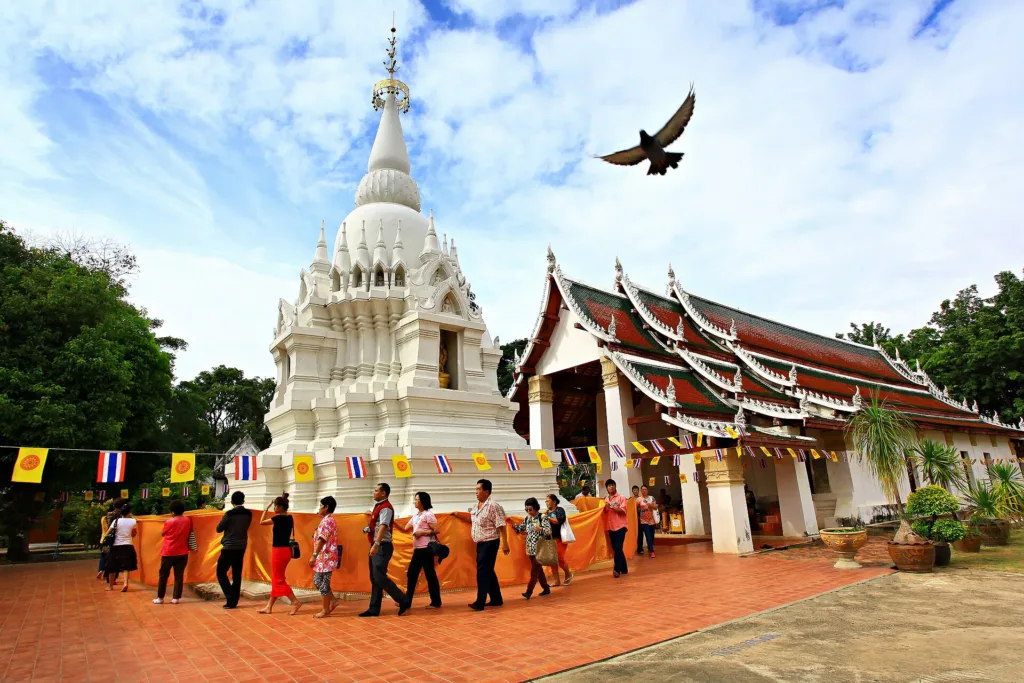
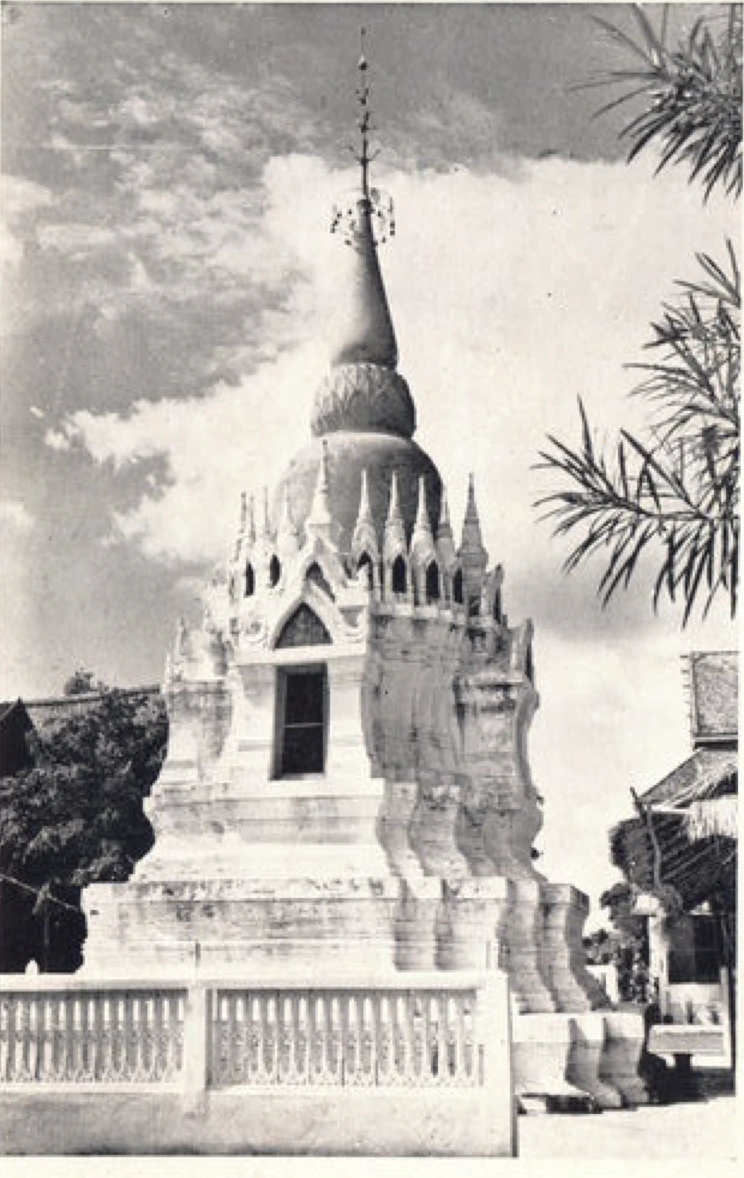
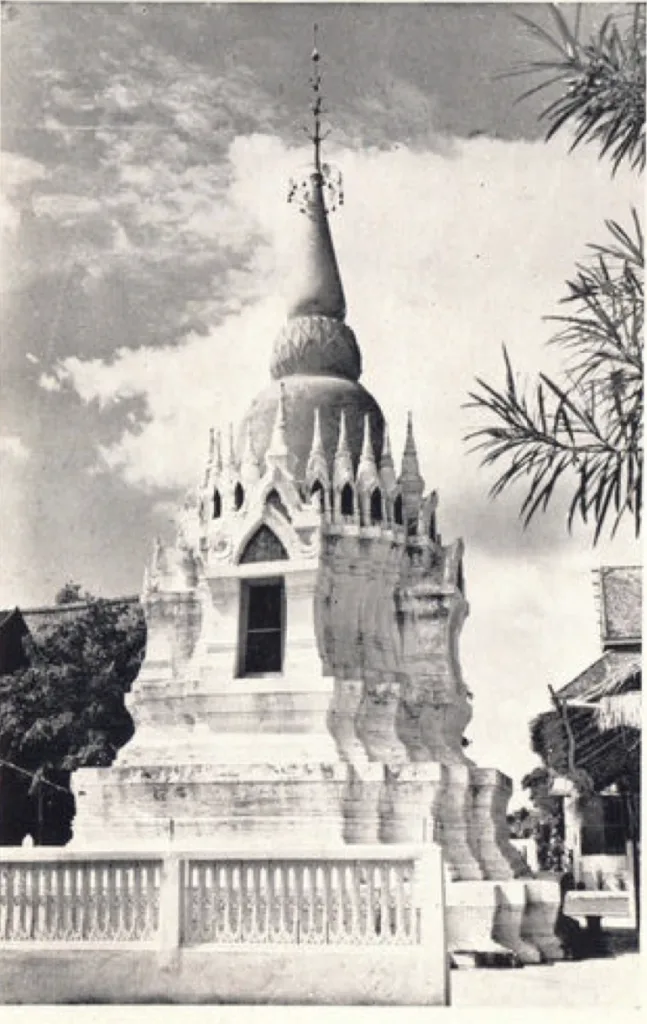
The relic chedi has a round bell on a square, indented base, with niches on all four sides holding small stucco naga-sheltered Buddhas about 23 cm across the lap and 31 cm high. It is classed as U Thong art, combining a Sukhothai-style bell with a stepped Srivijaya-style base with porches. It is said to have been carved entirely from stone, but continual restoration has made it look almost new; photographs of it before restoration are displayed at the Chai Nat Muni National Museum.
Chai Nat appears often in the Ayutthaya chronicles. As summarised by ayutthaya-history.com, King Chakkraphat performed a Brahmanic rite at Chai Nat Buri in 1552, suggesting a ritual centre with the relic chedi and its sacred pond; in 1564 Maha Thammaracha brought some 50,000 men from the northern towns to camp at Chai Nat; in 1584 the ruler of Chiang Mai camped here on Burmese orders; and in the war of 1766–67 Phraya Ammat held Chai Nat with 15,000 troops before the Burmese overran it. The French envoy La Loubère also recorded a river customs post at Chai Nat under King Narai.
Inside the vihara is a stone inscription from the reign of King Thai Sa (1709–1733) recording a celebration of the chedi’s restoration, now set into the vihara wall — evidence of royal patronage in the late Ayutthaya period.
Komchadluek adds that the relics were maintained and celebrated under King Lithai, and that under King Borommakot the chedi’s niches were repaired, as an inscription confirms — whereas other sources attribute the vihara inscription to King Thai Sa, so the recorded reigns do not fully agree. The temple received its royal land grant for an ordination boundary in 1867, and tradition holds that King Mongkut visited as a monk.
The nine-bay vihara east of the chedi is thought to be as old as the chedi but was rebuilt later; the brick-and-stucco hall is about 13 m wide and 24 m long. Inside is a holy well whose water seeps up naturally, enclosed in an octagonal glass frame and said to be over 700 years old; visitors fill bottles to take home. The temple has hosted important consecration rites, and river water in front of it was once used in the royal oath-of-allegiance ceremony.
Because of its sacred water, Wat Phra Borommathat Worawihan is one of 18 sources of the abhiseka water that a king receives before coronation according to Brahmanic texts. Today the temple lets visitors draw holy water from its well every day.
The ordination hall, south of the vihara, is about 9 m wide and 24 m long and shows many repairs. Its principal image is a gilded stucco Buddha in the subduing-Mara posture in Sankhaburi style, from about the 13th–14th centuries, and the hall is ringed by Ayutthaya-style sandstone boundary markers. It is usually closed, so worshippers pay respects at the vihara and the chedi.
The temple also keeps a pulpit from Rama V’s reign, made around 1901–1906, part of an old crematorium spire, and a temple museum of old Buddha images and votive tablets from its crypts.
The temple also has a pavilion from Rama V’s reign and once had a reclining-Buddha vihara, destroyed in 1950. In early 2012 it produced a series of Somdet amulets, consecrated at Wat Rakhang on 16 January 2012, to raise funds for restoring the Rama V pavilion, building a mondop with a statue of Rama V, a library honouring Princess Sirindhorn and a new 19 m reclining Buddha vihara.
Sources differ on its royal status: tourism information says it was raised to a second-class royal temple of the Worawihan grade on 17 May 1956, while ayutthaya-history.com places it within the royal-temple ranking system begun in 1913.
On 27 September 1955 King Bhumibol Adulyadej and Queen Sirikit made their first visit to Chai Nat, and this temple was their first stop, to pay homage to the Buddha relics.
Next to the temple is the Chai Nat Muni National Museum, which grew from the collection of Phra Chainat Muni (Nuam Suttato), a former abbot and provincial head monk who donated it to the nation; the Fine Arts Department then built the museum beside the temple. It shows Dvaravati, Khmer, U Thong and Ayutthaya Buddha images, votive tablets from local temple crypts and prehistoric tools. As of 2026 it opens Wednesday to Sunday, 09:00–16:00, with entry at 10 baht for Thais and 80 baht for foreigners.
The temple’s main tradition is the wrapping of the chedi in cloth at the start of Buddhist Lent each year, with a boat procession carrying the cloth from the stone embankment by the provincial hall to the temple pier, and a relic celebration on the full moon of the sixth lunar month.
The tradition continues as a provincial cultural event. The “Legends of the Relic Chedi and Chedi-Wrapping Tradition” festival on 29–31 July 2026 included an offering ceremony, a light-and-sound show and, on 30 July, the bathing and wrapping of the chedi with cloth presented by Princess Maha Chakri Sirindhorn. Some sources also mention a festival in April with relic bathing and wrapping.
The temple is deeply revered in Chai Nat. Dress modestly, remove shoes before entering the vihara, and do not climb the chedi base or touch the inscription.
Arrived? Check in, collect a stamp and tell others what it is like right now
Check your location first, so you do not fill in the form for nothing
Location must be on and within 1 km · One check-in per place per day · come back on other days to check in again
Post photos from anywhere — no need to be here · Up to 20 photos at a time · JPG / PNG / WebP · GPS location data is removed automatically
From Chai Nat town take Highway 340 At the junction with Hig…
Highway 340 → 3183 · Fuel
Highway 1 → 32 → 340 · Fuel
From Chai Nat town take Highway 340 to the junction with Highway 3183, then turn left for about 1 km
Car park inside the temple and in front of the museum
Petrol stations in Chai Nat town and on Highway 340
Good mobile signal
Temple daily (about 06:30–18:00) · Chai Nat Muni Museum Wed–Sun 09:00–16:00
around 4 km fromChai Nat town
Wat Phra Borommathat Worawihan, Chai Nat
0 THB
Approx. nightly price for 2 adults (next week) · final price depends on your dates
Best day this week: Thursday 29 Oct · Check in when you arrive to collect a stamp