What to know before visiting the temple
Cover shoulders and knees · Remove shoes before entering buildings · Keep noise down · Don't point your feet at Buddha images
Daily, morning to evening
Morning, for good light and fewer people
7 days ahead
When to go
this week
Tap a day card to see that day’s weather, rain, haze and hourly forecast
Best time to go Daytime is over · see tomorrow
Holiday — traffic on the way up and parking fills fast; leave early
Hour by hour
Green band = hours used for the score
Best time to go Fine all day little rain through the day
Holiday — traffic on the way up and parking fills fast; leave early
Hour by hour
Green band = hours used for the score
Best time to go Fine all day little rain through the day
No warnings today — normal road and weather conditions
Hour by hour
Green band = hours used for the score
Best time to go Fine all day little rain through the day
No warnings today — normal road and weather conditions
Hour by hour
Green band = hours used for the score
Best time to go Fine all day little rain through the day
No official warnings, but watch for: Hot (Afternoon) feels like 38°C
Hour by hour
Green band = hours used for the score
Best time to go Best window 06:00–15:00 Little rain
No official warnings, but watch for: Possible thunder 14:00–17:00
Hour by hour
Green band = hours used for the score
Best time to go Fine all day little rain through the day
No warnings today — normal road and weather conditions
Hour by hour
Green band = hours used for the score
Wat Pak Nam Khaem Nu (Blue Temple)
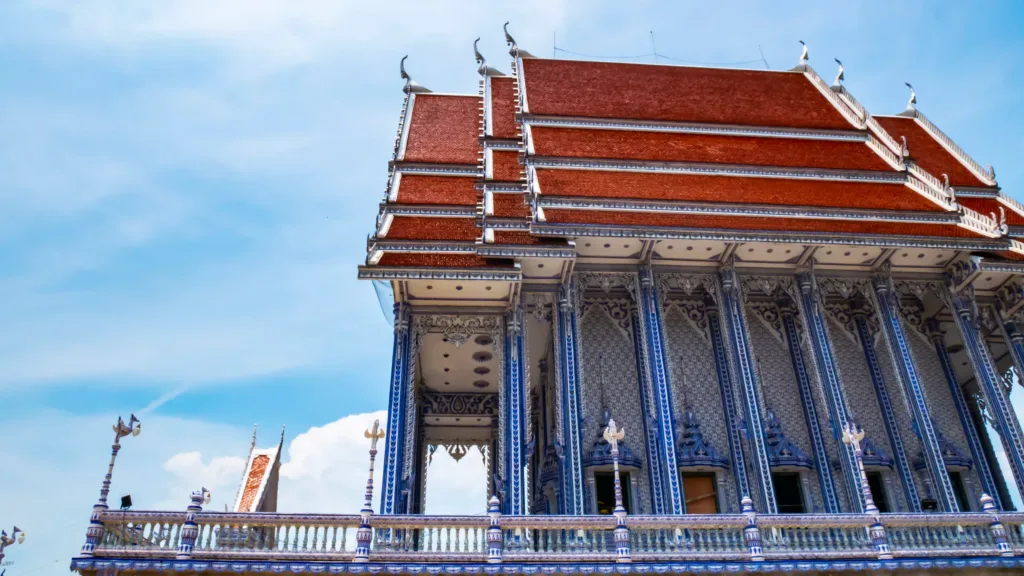
Wat Pak Nam Khaem Nu is in Tambon Takat Ngao, Tha Mai district, Chanthaburi, near a river mouth on the coast. Its ordination hall is covered from floor to roof in white ceramic tiles with blue patterns, in the style of blue-and-white porcelain.Salt air ruined the old hall, so around 1991 the temple and villagers rebuilt it using ceramics that resist sea air and never need repainting. Naga guard the stair rails, the wooden doors are carved with scenes from the Buddha's life, and the inside walls show Jataka tales and the Mahajanaka story.It's open daily with no entry fee. Morning and late-afternoon light makes the blue glow best in photos.
- Great light, few people
- Harsh sun, hot courtyard
- Soft light for photos
Arrive Morning, for good light and fewer people
- Front of the hallThe full building against the skyMorning
- Naga staircaseAn angle that shows the tile patternsLate afternoon
Good to know here
Cover shoulders and knees; remove shoes inside
Drive or hire a car
- Come in the morning or late afternoon for the best blue tones
- Bring a shawl and long trousers
- Combine with the beaches around Laem Sing
Free · Time needed 45 minutes–1 hour
Late morning to afternoon on weekends, and Buddhist Lent
- Kids Short walks, plenty to photograph
- Seniors There are stairs up to the hall
- Cover shoulders and knees
- Remove shoes before entering buildings
- Keep noise down
- Don't point your feet at Buddha images
- The courtyard gets hot at midday
The story of this place
Wat Pak Nam Khaem Nu is a Mahanikaya community temple on the coast of Tambon Takat Ngao, Tha Mai district, Chanthaburi, beside the Pak Nam Khaem Nu bridge. It began as a small monks' shelter built by villagers a little over a century ago and grew on the faith of a seaside community that mostly lives from fishing. Today it is known as the "blue temple" for its new ordination hall, clad from floor to roof in white ceramic with blue patterns in the style of blue-and-white porcelain, built to replace an older hall that salt air had eaten away.
Read more 10 more paragraphs
According to the temple history quoted by several sources, the temple was founded in 1913 on land donated by a woman named Nang Oi, whose surname is not recorded. Some sources say the monks' shelter was started by Nai Pan Ruenjit, a villager from Ban Wang Won, and one gives 1914 as the year building began. At first it was just a small hut thatched with nipa palm, and the temple could mainly be reached by boat, a reminder of how closely this river-mouth community was tied to the canal and the sea.
In 1914 monks began to spend the rains retreat here, led first by Phra Achan Khrueang. There were only about five or six monks at the start, and abbots were often invited from other temples, so none stayed long. Later Phra Athikan Phon was formally appointed abbot, and many sources call him the temple's first abbot. He repaired the buildings and replaced the roof with corrugated zinc, and more monks came to stay.
Devotees later gave the temple more land. Some sources put the extra gift at more than 21 rai, while another says only that the grounds grew to a little over 1 rai. No official record settles the difference, but either way the temple grew through the generosity of local villagers.
From 1936 to 1956, Phra Khru Yom Thanakaro, serving as acting abbot, carried out a major rebuild, turning temporary structures into permanent ones with concrete pillars, cement-tile roofs and timber walls. This was the period that made the temple the real centre of the community.
The first ordination hall received its royal boundary grant (wisungkhamsima) on 1 February 1946. In 1950 the hall was extended in a second phase to make it permanent; some sources say it was finished in 1956 at a total cost of about 200,000 baht, and the first celebration of the hall was held on 8–11 February 1959. Under the abbot Phra Palat Chawiang Panyapasuto, the boundary wall was completed in 1962 at a cost of 39,548 baht.
But the seaside setting that makes the temple special was also the old hall's worst enemy. Salt air and seawater wore down the structure year after year, and by around 1989 the damage had reached the roof; in the rainy season it leaked so badly that monks could no longer hold ceremonies inside. In 1991 the monks and villagers agreed to demolish the old hall and build a new one, using the plans of Wat Sa Bap as a model.
The key question for the new hall was how to make it stand up to salt. After seeing ceramic tiles used at another temple, the temple chose glossy, durable glazed ceramic to clad the cement walls of the whole building. The tiles and decorative pieces were coloured at the contractor's factory, which sped up construction and means the hall doesn't need repainting like ordinary plaster. The white-and-blue scheme was inspired by antique blue-and-white porcelain, which uses just two main colours.
Building the ceramic hall took many years. In July 2018 the press reported that the work was more than 90 percent complete, with only interior painting and exterior finishing left. A few months later, on 23 November 2018, the temple received a new royal boundary grant, officially opening a new chapter for the blue hall.
The hall's craftsmanship is rich in detail. A five-headed naga runs the full length of the front staircase. The four wooden doors are carved in high relief with scenes from the Buddha's life and painted in bright colours, the outer door and window panels show guardian deities, and the interior walls carry ceramic pictures of Jataka tales and the story of Mahajanaka. The principal image is a replica of Phra Phuttha Chinnarat, and the temple also has Luang Pho Dam, an image people visit to pray for success at work and in civil service exams.
Today the abbot is Phra Khru Wikrom Sangkhakit. The blue hall has become a new Chanthaburi landmark and is often described as one of the East's "unseen" sights. Some media and travel pages call it the only saltwater-resistant ceramic hall in the world, a promotional claim that hasn't been verified. What is clear is that it was built by a coastal community determined to keep its place of worship standing against the sea wind for generations to come.
- 1913Temple founded on land donated by Nang Oi, starting as a small monks' shelter
- 1914Monks begin staying for the rains retreat, first led by Phra Achan Khrueang
- 1936–1956Acting abbot Phra Khru Yom Thanakaro rebuilds the temple in permanent materials
- 19461 Feb — the first ordination hall receives its boundary grant
- 1950The ordination hall is extended in a second phase
- 1956The hall is completed at a cost of about 200,000 baht (per some sources)
- 19598–11 Feb — first celebration of the ordination hall
See 5 events
- 1962Boundary wall completed at a cost of 39,548 baht
- 1989Salt air has corroded the old hall; the leaking roof stops ceremonies
- 1991Monks and villagers vote to demolish it and rebuild on the plan of Wat Sa Bap
- 2018July — the blue ceramic hall is reported over 90% complete
- 201823 Nov — the temple receives a new royal boundary grant
Check-ins & visitor photos
Arrived? Check in, collect a stamp and tell others what it is like right now
Check your location first, so you do not fill in the form for nothing
Location must be on and within 1 km · One check-in per place per day · come back on other days to check in again
Post photos from anywhere — no need to be here · Up to 20 photos at a time · JPG / PNG / WebP · GPS location data is removed automatically
How to get there
The temple is at 86 Moo 9, Tambon Takat Ngao, Tha Mai, Chanthaburi, near the coast.
Navigate to Wat Pak Nam Khaem Nu, Tha Mai · Fuel
Paved coastal roads
Daily, morning to evening
Wat Pak Nam Khaem Nu (Blue Temple)
FAQ
Before you go: Wat Pak Nam Khaem Nu (Blue Temple)
Answers travellers want before they go — a one-minute read
Where is Wat Pak Nam Khaem Nu?
86 Moo 9, Tambon Takat Ngao, Tha Mai, Chanthaburi
Is there an entry fee?
No, there's a donation box
Why is it blue?
It's clad in porcelain-style ceramics that withstand salt air
What should I wear?
Cover shoulders and knees; remove shoes inside
Is there public transport?
No; drive or hire a car
When is the light best?
Morning and late afternoon
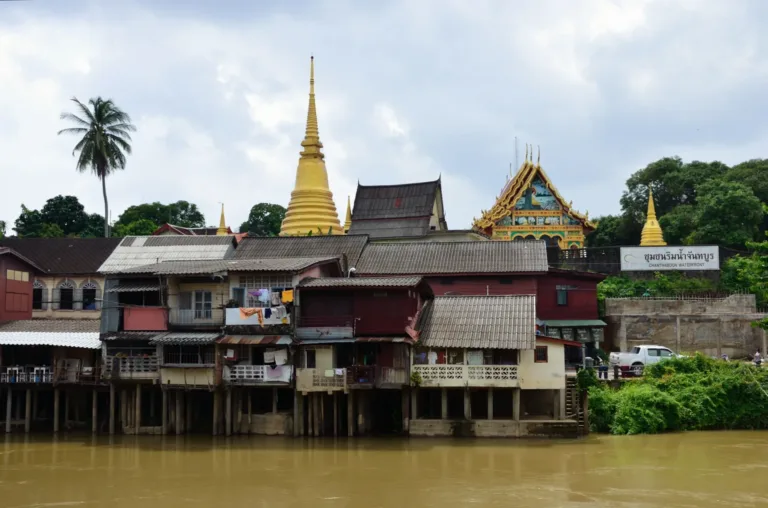 Chanthaboon Waterfront Community
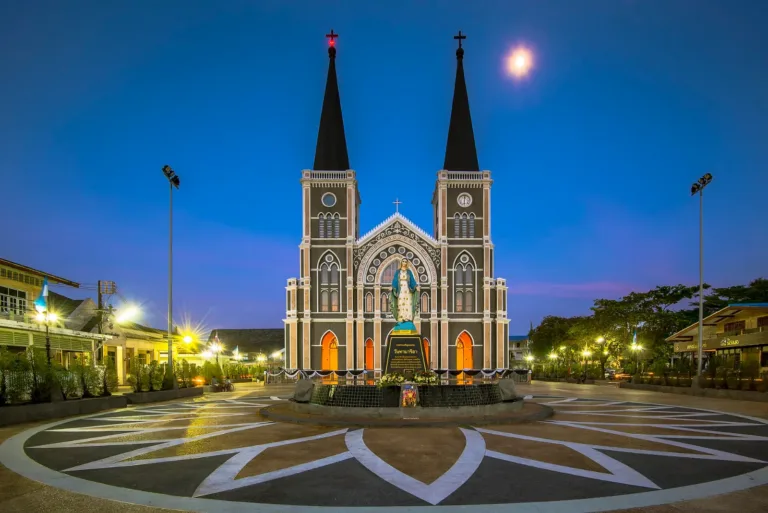 Cathedral of the Immaculate Conception, Chanthaburi
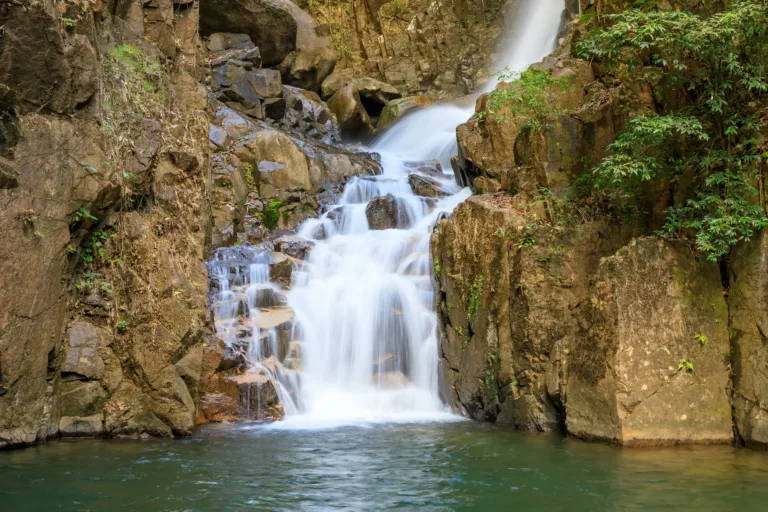 Phlio Waterfall
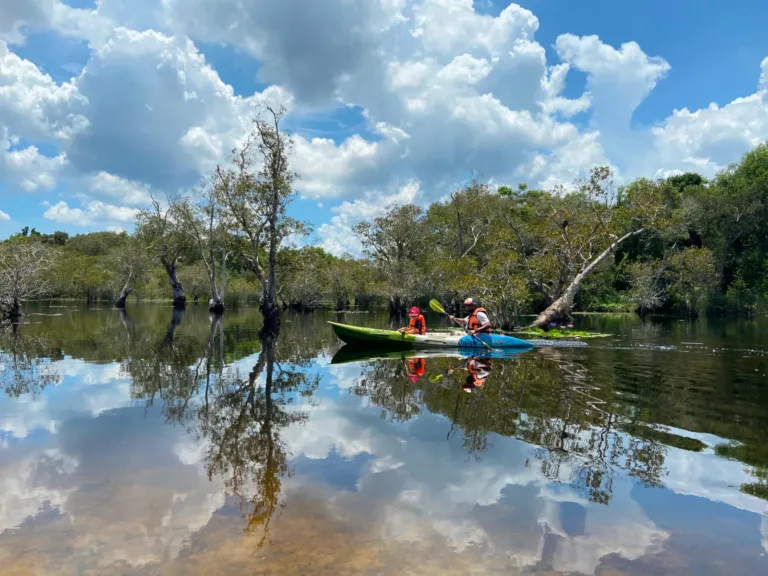 Rayong Botanical Garden
Ready to go to Wat Pak Nam Khaem Nu (Blue Temple)?
Best day this week: Monday 30 Nov · Check in when you arrive to collect a stamp