Quiet times, time needed and photo spots
Weekends 10:00–15:00
1–2 hours
Sukhaphiban Road — Rows of fretwork houses and old buildings
Daily, about 08:00–17:00 (individual shops vary)
Free
7 days ahead
When to go
this week
Tap a day card to see that day’s weather, rain, haze and hourly forecast
Best time to go Daytime is over · see tomorrow
Holiday — traffic on the way up and parking fills fast; leave early
Hour by hour
Green band = hours used for the score
Best time to go Fine all day little rain through the day
Strong gusts, about 51 km/h
Holiday — traffic on the way up and parking fills fast; leave early
Hour by hour
Green band = hours used for the score
Best time to go Fine all day little rain through the day
No warnings today — normal road and weather conditions
Hour by hour
Green band = hours used for the score
Best time to go Fine all day little rain through the day
No warnings today — normal road and weather conditions
Hour by hour
Green band = hours used for the score
Best time to go Fine all day little rain through the day
No warnings today — normal road and weather conditions
Hour by hour
Green band = hours used for the score
Best time to go Fine all day little rain through the day
No warnings today — normal road and weather conditions
Hour by hour
Green band = hours used for the score
Best time to go Fine all day little rain through the day
No warnings today — normal road and weather conditions
Hour by hour
Green band = hours used for the score
Chanthaboon Waterfront Community
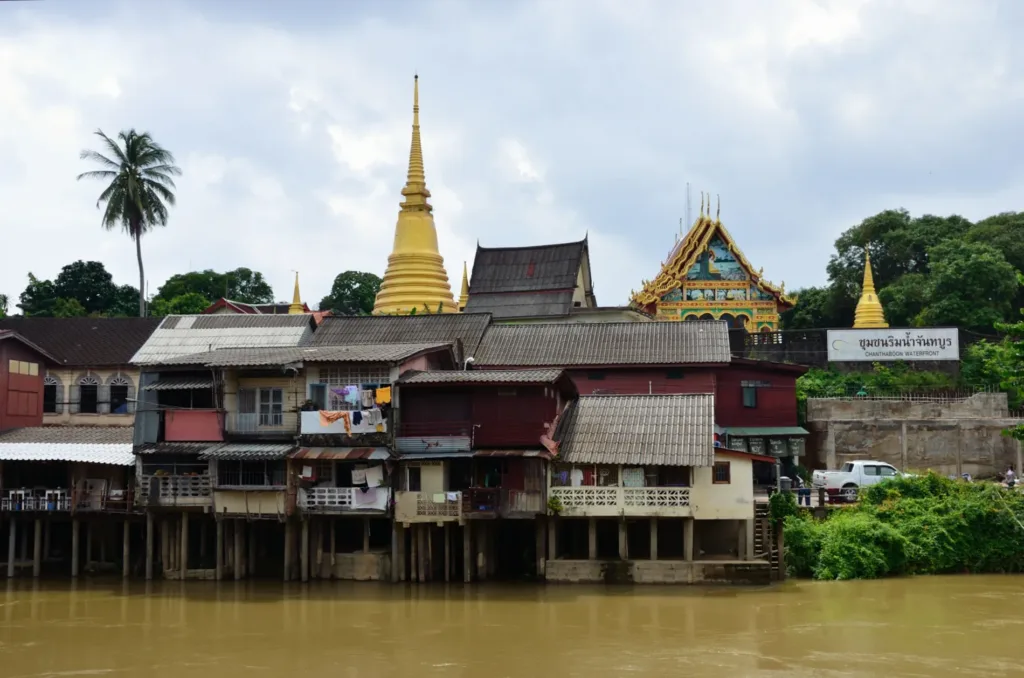
The Chanthaboon Waterfront Community runs along about 1 km of Sukhaphiban Road beside the Chanthaburi River in Wat Mai, Mueang Chanthaburi. It's the town's first community, dating back to King Narai's reign, founded by Thai, Chinese and Vietnamese families.The street is lined with fretwork wooden houses and Sino-Portuguese buildings, local sweet shops, cafés, guesthouses, shrines and murals. The standout is Baan Luang Rajamaitri, an old house the community restored into an inn and museum, which won a UNESCO award in 2015.You can wander any day, with most shops open about 08:00–17:00. Across the river is the Cathedral of the Immaculate Conception, and the gem market is close by.
- Pleasant, shops opening
- Strong sun, weekend crowds
- Evening light, shops closing
- Sukhaphiban RoadRows of fretwork houses and old buildingsmorning
- Mural wallsPainted walls around the communityafternoon
Good to know here
Many are private houses; don't walk in uninvited
Motorbikes pass through; walk carefully
- Park at Wat Khet Na Bunyaram and explore on foot
- Cross the bridge to the cathedral on the other bank
- Drop by the nearby Chanthaburi gem market
- Ask before taking photos in homes or shops
Free · Time needed 1–2 hours
Weekends 10:00–15:00
- Kids An easy stroll with snacks
- Seniors Flat, with plenty of places to sit
- Wheelchair Narrow street and patchy pavements; no ramp information found
- Pets A community street; leashed pets are fine, clean up after them
- Ask before photographing people or homes
- Don't walk into lived-in houses uninvited
- Keep noise down in the community
- Narrow street with motorbikes
- Strong midday sun; carry water
The story of this place
The Chanthaboon Waterfront Community is Chanthaburi's oldest trading quarter, strung along Sukhaphiban Road on the west bank of the Chanthaburi River. Once known as "Ban Lum" and the "Tha Luang" quarter, it is traditionally said to date back more than 300 years to the reign of King Narai of Ayutthaya. Thai, Chinese and Vietnamese families settled here because the river was the main trade route. The quarter reached its peak under King Chulalongkorn (Rama V), declined after a major fire in 1990, and was revived by its own residents, until Baan Luang Rajamaitri won a UNESCO heritage conservation award in 2015.
Read more 10 more paragraphs
The name "Chanthaboon" is thought to come from the fragrant chan (sandalwood-like) trees that once grew in the surrounding hills, combined with "buri", meaning town. Local accounts say the town first stood at Ban Hua Wang and moved to Ban Lum on the river during the Ayutthaya period because the old site flooded every year, which is why Ban Lum is regarded as Chanthaburi's first community. Under King Narai, Chanthaburi was an eastern frontier town that relayed news from Cambodia and Vietnam to Ayutthaya.
Vietnamese Catholics were one of the quarter's key groups. According to the Sirindhorn Anthropology Centre, about 30 Vietnamese Catholics settled in Chanthaburi in the late Ayutthaya period, and in 1711 a priest arrived to serve some 130 Catholics and built a small church by the river. The church moved several times, and the Vietnamese community grew until families spread out to Khlung and Tha Mai. The present Gothic Cathedral of the Immaculate Conception, across the river from the community, was consecrated in 1909.
Chinese traders from several groups, including Hokkien, Teochew, Hakka, Cantonese and Hainanese, came to trade and build junks. The Tourism Authority of Thailand notes that the Vietnamese lived upstream, the Thais downstream and the Chinese in between, so the area was once called Chanthaburi's "Yaowarat" (Chinatown). Each group had its trade: the Vietnamese made fishing nets and woven mats, the Thais sold farm produce and the Chinese dealt in goods. That mix still shows in the Chinese shrine, Vietnamese and Thai temples and the Catholic church that stand close together.
Under King Rama III, after the Siamese–Vietnamese war, the court feared a Vietnamese fleet could easily take a riverside town. Somdet Chao Phraya Borom Maha Prayurawong (Dit Bunnag) chose Noen Wong for a new town, and work on the fort began in 1834, reusing laterite taken from Ban Lum. Most residents refused to follow, as the fort was far from water and inconvenient for trade, and the town later moved back to Ban Lum. Sources differ on whether this return happened under Rama IV or Rama V.
The reign of Rama V was the quarter's golden age. It was both the town's river-trade hub and its administrative centre, with a court, a tax checkpoint and officials' homes such as those of Luang Rajamaitri, Luang Prakob Nitisarn and Phraya Witchayathibodi. Forest goods from Chanthaburi, Rayong and Trat were gathered at its landings. The Sirindhorn Anthropology Centre records that King Chulalongkorn visited Chanthaburi in 1876 and 1907, with the Tha Luang quarter receiving him.
In 1893, after the Paknam crisis, French troops occupied Chanthaburi as a guarantee for about 11 years, leaving after Siam agreed to cede territory in 1904. Trade in the quarter flourished in that period, with liquor, tea and coffee sold alongside forest products. Western influence can still be seen in colonial-style buildings standing among fretwork timber houses made by Chinese and Vietnamese craftsmen and Sino-Portuguese shophouses.
Luang Rajamaitri (Poom Punnasri, 1876–1956) was one of the quarter's most important figures. In 1908 he planted Chanthaburi's first rubber trees at the foot of Khao Sabap in Phlio, Laem Sing district, earning the title "father of rubber in eastern Thailand". One academic study says he brought the Sino-Portuguese shophouse style from Penang and Singapore, where he studied and traded, and the rubber trade with Singapore was one reason the quarter's buildings took on Western touches.
As travel shifted from boats to roads and the town spread outward, the riverside quarter gradually lost its role. A major fire in 1990 damaged many waterfront timber houses, and traders moved to the Nam Phu and Wat Suan Mamuang markets, which became the new commercial centre. Years of flooding followed, and the gem market moved away. The old trading street became a quiet residential area of elderly residents, with many houses left empty.
In 2009 residents formed the Chanthaboon Waterfront Community Development Club, working with the provincial commerce office and the Arsom Silp Institute of the Arts under the idea of "culture leads commerce". The same year a naming contest produced the name "Chanthaboon Waterfront Community" used today. Between 2009 and 2011, 46 buildings of value were selected for conservation, and House No. 69, the home of Khun Anusorn Sombat, became the community learning house.
In 2013 a feasibility study looked at restoring Baan Luang Rajamaitri, a house of about 150 years, as an inn run as a social enterprise, backed by more than 500 shareholders from the community and supporters. The inn opened in October 2014 with 12 rooms and a museum on the ground floor. In 2015 it won a UNESCO Asia-Pacific Award of Merit for Cultural Heritage Conservation, which held up the "Chanthaboon Model" as an example of community-led conservation, and it also received a conservation award from the Association of Siamese Architects.
- 1656–1688King Narai's reign: the Ban Lum riverside community takes shape (traditional dating)
- 1711A priest arrives to serve about 130 Vietnamese Catholics and builds a small riverside church
- 1834Work starts on the Noen Wong fort as a new town, but most residents stay at Ban Lum
- 1876King Chulalongkorn visits Chanthaburi; the Tha Luang quarter receives him
- 1893–1905French troops occupy Chanthaburi; trade in the quarter booms
- 1908Luang Rajamaitri plants Chanthaburi's first rubber trees
- 1909The present Gothic cathedral across the river is consecrated
See 6 events
- 1990A major fire hits the quarter and the old market declines
- 2009Residents form a community development club; the name "Chanthaboon Waterfront Community" is chosen
- 2009–201146 buildings are listed for conservation; House No. 69 becomes a community learning house
- 2013Feasibility study for turning Baan Luang Rajamaitri into an inn
- 2014Baan Luang Rajamaitri opens as a community-owned inn in October
- 2015Baan Luang Rajamaitri wins a UNESCO Asia-Pacific Award of Merit
Check-ins & visitor photos
Arrived? Check in, collect a stamp and tell others what it is like right now
Check your location first, so you do not fill in the form for nothing
Location must be on and within 0.3 km · One check-in per place per day · come back on other days to check in again
Post photos from anywhere — no need to be here · Up to 20 photos at a time · JPG / PNG / WebP · GPS location data is removed automatically
How to get there
The community is on Sukhaphiban Road by the Chanthaburi River, Tha Luang area, Wat Mai, Mueang Chanthaburi.
Highway 3 then 316 into Chanthaburi, Tha Luang Road · Fuel
From the gem market or the cathedral · Free
Narrow Sukhaphiban Road, best on foot
Park at Wat Khet Na Bunyaram and walk in
Good
Daily, about 08:00–17:00 (individual shops vary)
Chanthaboon Waterfront Community
FAQ
Before you go: Chanthaboon Waterfront Community
Answers travellers want before they go — a one-minute read
Where is the Chanthaboon Waterfront Community?
Sukhaphiban Road by the Chanthaburi River, Wat Mai, Mueang Chanthaburi
Is there an entry fee?
No, it's free to wander
What are the hours?
You can walk any day; most shops open about 08:00–17:00
Where do I park?
At Wat Khet Na Bunyaram, then walk in
What is Baan Luang Rajamaitri?
An old house restored by the community as an inn and museum, winner of a 2015 UNESCO award
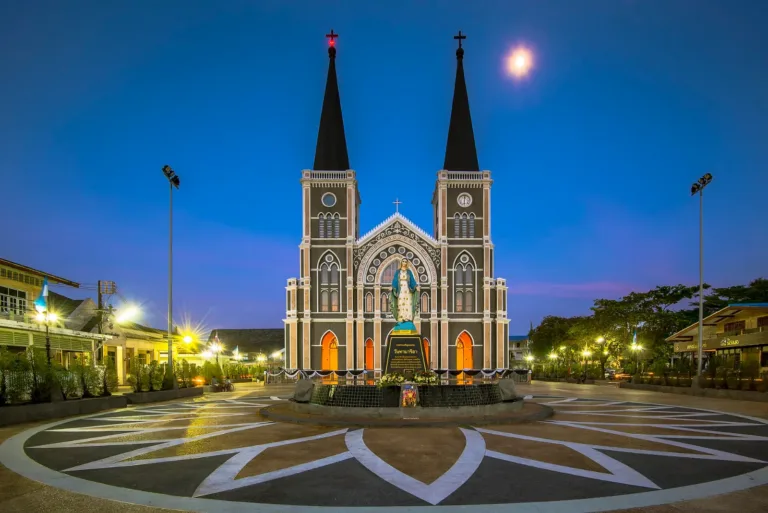 Cathedral of the Immaculate Conception, Chanthaburi
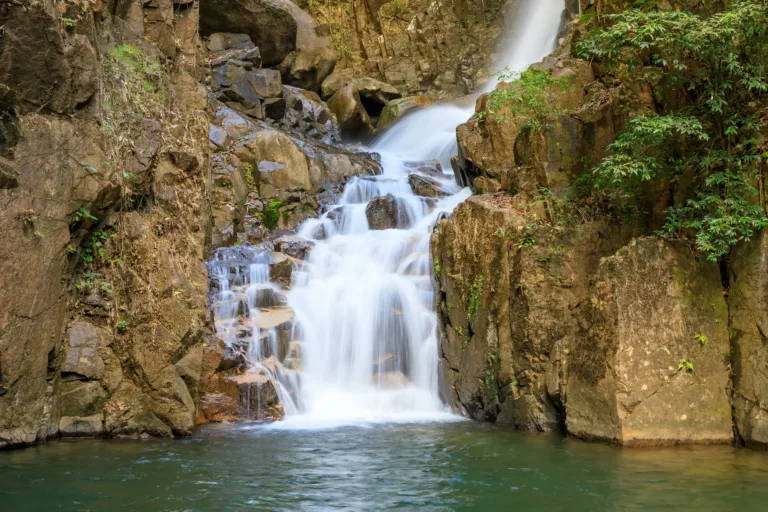 Phlio Waterfall
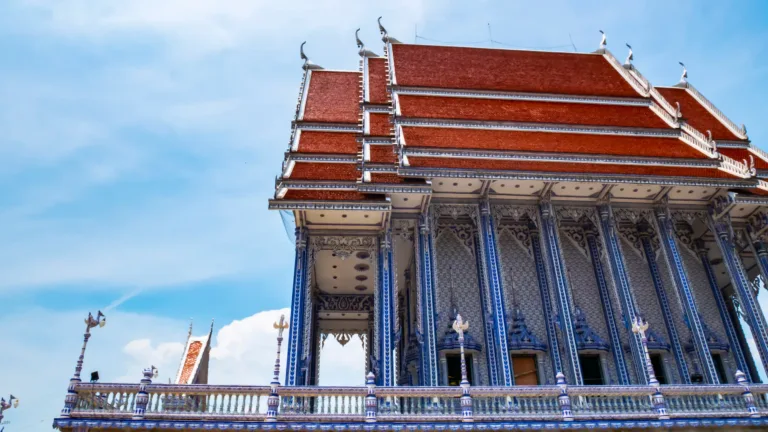 Wat Pak Nam Khaem Nu (Blue Temple)
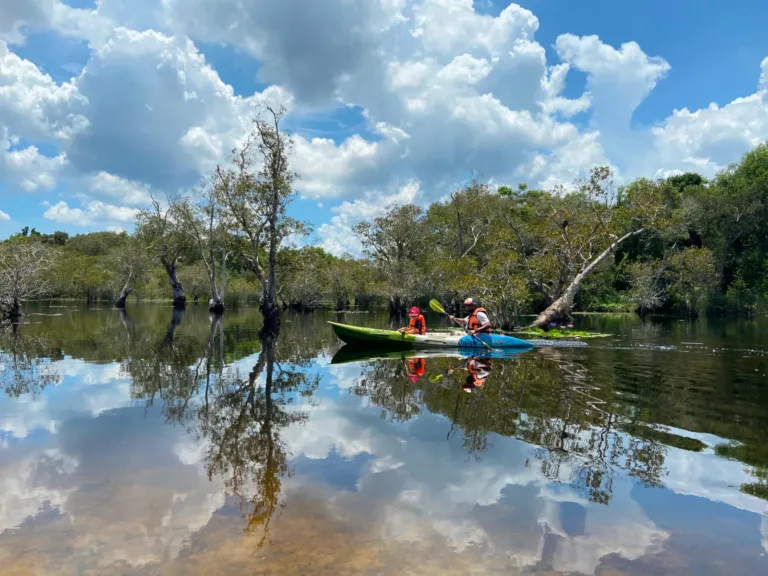 Rayong Botanical Garden
Ready to go to Chanthaboon Waterfront Community?
Best day this week: Monday 30 Nov · Check in when you arrive to collect a stamp