What to know before visiting the temple
Dress modestly · Remove shoes before entering the ordination hall · Keep noise down inside the hall
Daily 08:00–18:00
Buddhist holy days and festivals
7 days ahead
When to go
this week
Tap a day card to see that day’s weather, rain, haze and hourly forecast
Best time to go Daytime is over · see tomorrow
No warnings today — normal road and weather conditions
Hour by hour
Green band = hours used for the score
Best time to go Fine all day little rain through the day
No warnings today — normal road and weather conditions
Hour by hour
Green band = hours used for the score
Best time to go Fine all day little rain through the day
No warnings today — normal road and weather conditions
Hour by hour
Green band = hours used for the score
Best time to go Fine all day little rain through the day
No warnings today — normal road and weather conditions
Hour by hour
Green band = hours used for the score
Best time to go Fine all day little rain through the day
No warnings today — normal road and weather conditions
Hour by hour
Green band = hours used for the score
Best time to go Fine all day little rain through the day
No warnings today — normal road and weather conditions
Hour by hour
Green band = hours used for the score
Best time to go Fine all day little rain through the day
No warnings today — normal road and weather conditions
Hour by hour
Green band = hours used for the score
Wat Klang Ming Mueang
Wat Klang Ming Mueang stands at 24 Khahabodi Uthit Road, Tambon Nai Mueang, in central Roi Et. It's believed to date to around 1541 (BE 2084), was originally called Wat Klang, and was raised to third-class royal temple status in 1965.The highlight is the ordination hall, home to Phra Phuttha Ming Mueang, the principal Buddha image locals come to pay respects to. The walls around the hall are painted with scenes from the Buddha's life in a distinctly Isan style.The temple is open during the day and is a short walk from Bueng Phalanchai, so it slots easily into a day in town.
- Soft light, few visitors
- Strong sun
- Late light, nice photos
- In front of the ordination hallThe full buildingMorning
- MuralsAsk before photographing insideDaytime
Good to know here
It's a royal temple; cover shoulders and knees
- Combine with Bueng Phalanchai and the 101 Tower in one day
- Come in the morning when it's cooler and quieter
- Bring a shawl if you're in a sleeveless top
No data yet check before you go · Time needed 30–45 minutes
Buddhist holy days and festivals
- Kids Fine for a walk; remind kids to keep quiet
- Seniors Flat grounds, easy walking
- Dress modestly
- Remove shoes before entering the ordination hall
- Keep noise down inside the hall
- The courtyard gets very hot at midday in the hot season
The story of this place
Wat Klang Ming Mueang, a third-class royal temple in the heart of Roi Et, is one of the oldest temples in the province. Temple records put its founding at around 1541, more than two centuries before Roi Et town was re-established in the Thonburi period. It was first known simply as "Wat Klang", the middle temple, because it stood at the centre of the old town. Its ordination hall (sim) enshrines Phra Phuttha Ming Mueang, the principal Buddha image that Roi Et people regard as the province's own, and its walls are covered with murals of the Buddha's life and the Ten Jatakas that blend court conventions with the hand of local Isan painters. To this day it remains the place where the town holds its major ceremonies.
Read more 10 more paragraphs
People have lived in the Roi Et area for a very long time. Art-history research by Roi Et Rajabhat University has documented evidence from the prehistoric, Dvaravati, Khmer and Lan Xang–Thai periods. Local tradition holds that the temple itself goes back to the era of Khmer influence, and some sources go further, suggesting the site may once have been a Shaivite Hindu shrine before it became a Buddhist temple. That remains a theory without firm evidence.
The records the temple cites give a founding date of around 1541 and a royal grant of consecrated ground (wisungkhamsima) around 1547. Some published accounts mention a brick inscription recording the building of Wat Klang's ordination hall in that same year. Because these dates are older than the later founding of Roi Et, locals believe the temple was here before the present town.
The town's name is tied to the legend of "Saket Nakhon", said to have been a great city with eleven gates and eleven vassal towns. The story is repeated widely in guidebooks and local material, but some scholars, including Sujit Wongthes, have argued that the eleven gates do not appear in the original legend, so it is best read as legend rather than history. Some accounts also say that in the Ayutthaya period Lao settlers from Champasak moved into the Suwannaphum area before spreading to this region.
The key moment for the town came in 1775, under King Taksin. Thao Thon, son of Thao Chan Kaeo, led people from Mueang Thong to resettle an abandoned old town here and was appointed Phra Khattiyawongsa, the first ruler of Roi Et. Wat Klang, standing in the middle of the town, became its main temple. A study from Khon Kaen University notes that the temple's history is bound up with important patrons such as the town's rulers.
As the town's central temple it hosted the oath-of-allegiance water ceremony, in which officials and rulers drank sacred water to pledge their loyalty. Some sources place this ceremony at the temple during the reign of King Rama V. The words "Ming Mueang" added to the name later reflect its role as the town's guardian and source of good fortune.
The temple has also long been a centre of monastic learning. Published accounts say a school for Dhamma and Pali studies opened here in 1870, and general-curriculum Pariyatti classes began in 1971. The Sunthon Thammapariyat School now operates within the grounds, and the temple serves as a venue for the national Dhamma examinations.
The sim is larger than an ordinary village hall, as befits the town's most important temple. It is a rectangle about 12.5 metres wide and 20 metres long, seven bays deep, with five windows on each side, a three-tiered roof and naga-shaped brackets. A National Archives photograph from 1906 still shows the original roof; the roof form and decoration seen today are the work of Kham Ma Saeng-ngam, a local Isan craftsman who worked on many temples in the region. Sources date the building differently: some say it was rebuilt in the late Ayutthaya period in Lan Xang style, while Khon Kaen University research dates its restored form to around the early Rattanakosin period.
The murals are what draw art lovers. They tell the life of the Buddha and the full set of Ten Jatakas, including the Temiya, Mahajanaka and Vessantara stories, as well as the funeral of the Brahmin Chuchok. Khon Kaen University research states that the present set was repainted in 1941, during the reign of King Rama VIII, with money donated by wealthy townspeople. The style mixes Rattanakosin painting conventions with scenes of village life, and the Vessantara procession in particular is fully folk in character. Sources differ on whether the paintings are on the outer or inner walls of the sim, and parts of them have been restored.
The principal image in the sim is Phra Phuttha Ming Mueang, which some sources call Phra Phuttha Ming Mueang Mongkhon and describe as an Ayutthaya-period image. Roi Et people revere it as the provincial Buddha image and the town's guardian, and at major festivals the temple has given out cast replicas of it to worshippers.
In the modern era, while Winyu Angkhanarak was governor, a request was made to raise the temple from a public temple to royal status, and on 26 May 1965 it became a third-class royal temple of the ordinary grade, in the Mahanikaya order. It is still the stage for the town's big merit-making events: on 24–25 October 2020 it hosted the celebration and presentation of the royal kathin robes, followed by a kathin offering for 77 temples in honour of the King's birthday.
- 1541Temple founded around this year according to temple records, first called Wat Klang
- 1547Around this year it receives royally granted consecrated ground; a brick inscription records the building of the sim
- 1775Thao Thon is appointed Phra Khattiyawongsa, first ruler of Roi Et; Wat Klang becomes the town's main temple
- 1868–1910Reign of King Rama V; the temple hosts the town's oath-of-allegiance water ceremony (per some sources)
- 1870A school for Dhamma and Pali studies opens
- 1906A National Archives photograph records the sim's original roof
- 1941The present murals of the Buddha's life and the Ten Jatakas are repainted
See 3 events
- 196526 May — raised to a third-class royal temple of the ordinary grade
- 1971General-curriculum Pariyatti classes begin
- 202024–25 Oct — royal kathin robe ceremony, with a kathin offering for 77 temples
Check-ins & visitor photos
Arrived? Check in, collect a stamp and tell others what it is like right now
Check your location first, so you do not fill in the form for nothing
Location must be on and within 0.3 km · One check-in per place per day · come back on other days to check in again
Post photos from anywhere — no need to be here · Up to 20 photos at a time · JPG / PNG / WebP · GPS location data is removed automatically
How to get there
The temple is at 24 Khahabodi Uthit Road, Tambon Nai Mueang, in central Roi Et.
Drive to Khahabodi Uthit Rd in the town centre · Fuel
From Bueng Phalanchai
Town streets
Temple car park
Daily 08:00–18:00
In Roi Et town
Wat Klang Ming Mueang
FAQ
Before you go: Wat Klang Ming Mueang
Answers travellers want before they go — a one-minute read
Where is Wat Klang Ming Mueang?
24 Khahabodi Uthit Road, Tambon Nai Mueang, Mueang Roi Et
What are the hours?
Daily 08:00–18:00
How old is it?
Founded around 1541, believed to date back to the Khmer era
What is the principal Buddha image called?
Phra Phuttha Ming Mueang
What is there to see?
Isan-style murals of the Buddha's life around the ordination hall
How can I contact the temple?
043-512-400
Nearby places
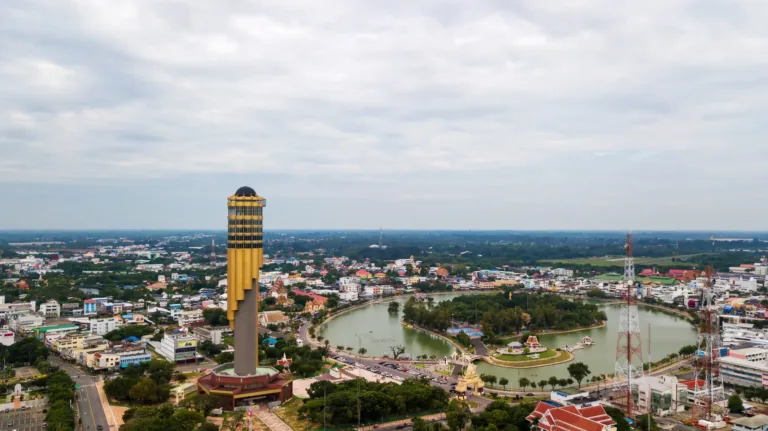 Bueng Phlan Chai
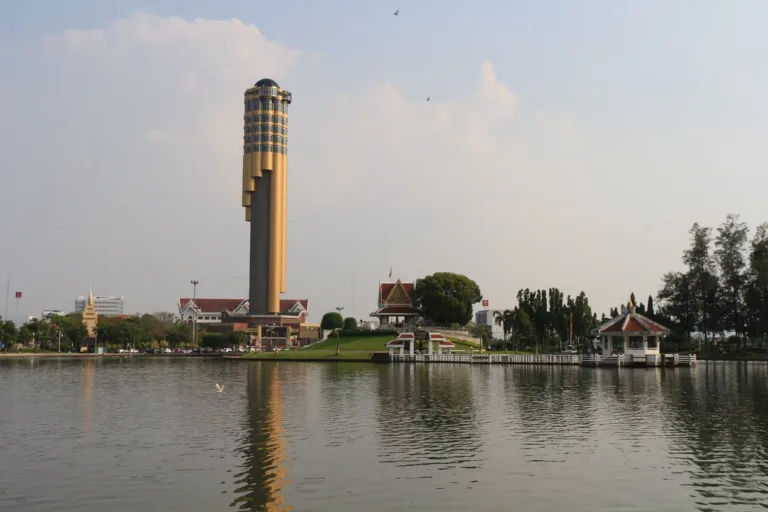 Ho Wot 101 (Roi Et Tower)
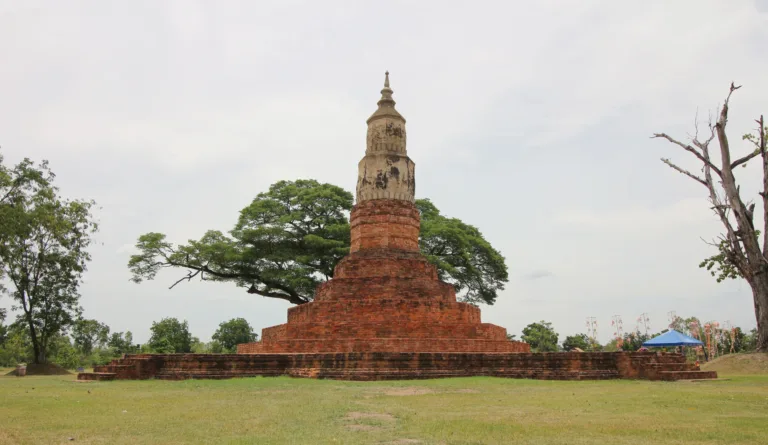 Phra That Ya Khu
Ready to go to Wat Klang Ming Mueang?
Best day this week: Saturday 28 Nov · Check in when you arrive to collect a stamp