 01
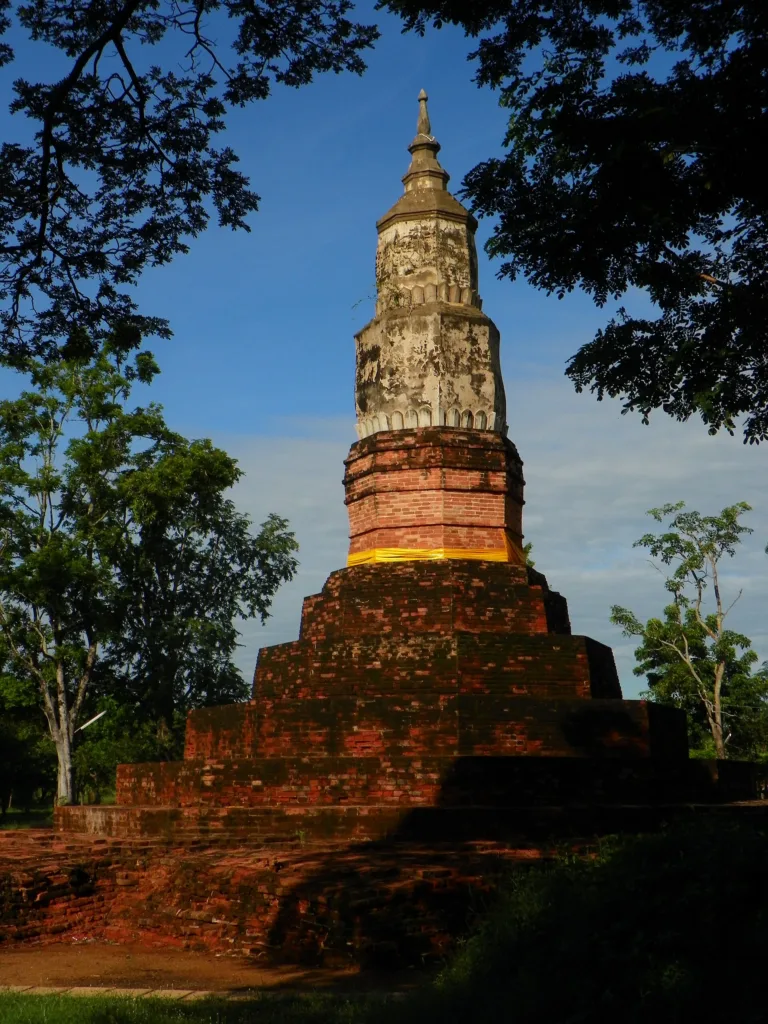
Phra That Ya KhuDvaravati brick base under an octagonal stupa
The Dvaravati stupa of Fa Daet Song Yang · Kalasin
The largest, most complete Dvaravati-based stupa in the ancient city of Fa Daet Song Yang, Kamalasai, Kalasin, ringed by sandstone sema carved with Jataka scenes.
Hot (Afternoon) feels like 39°C
08:00–16:30
1–2 hours
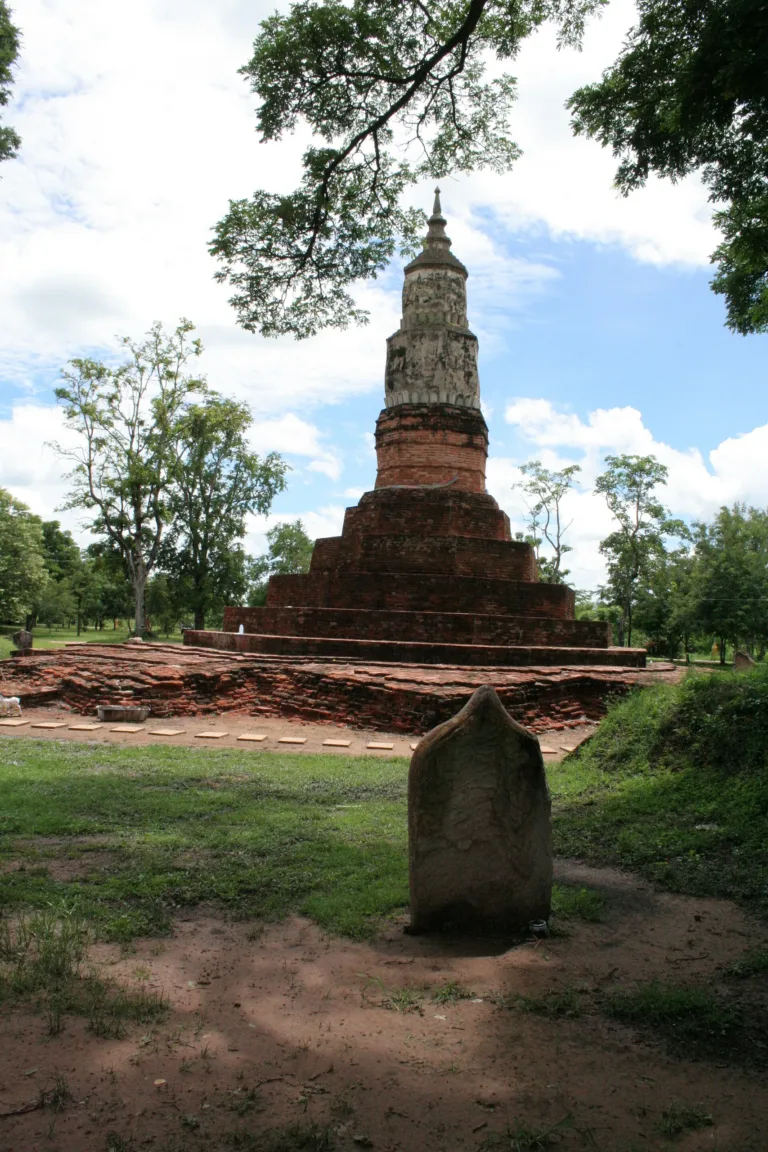
In front of Phra That Ya Khu — The stupa with sema
Free
01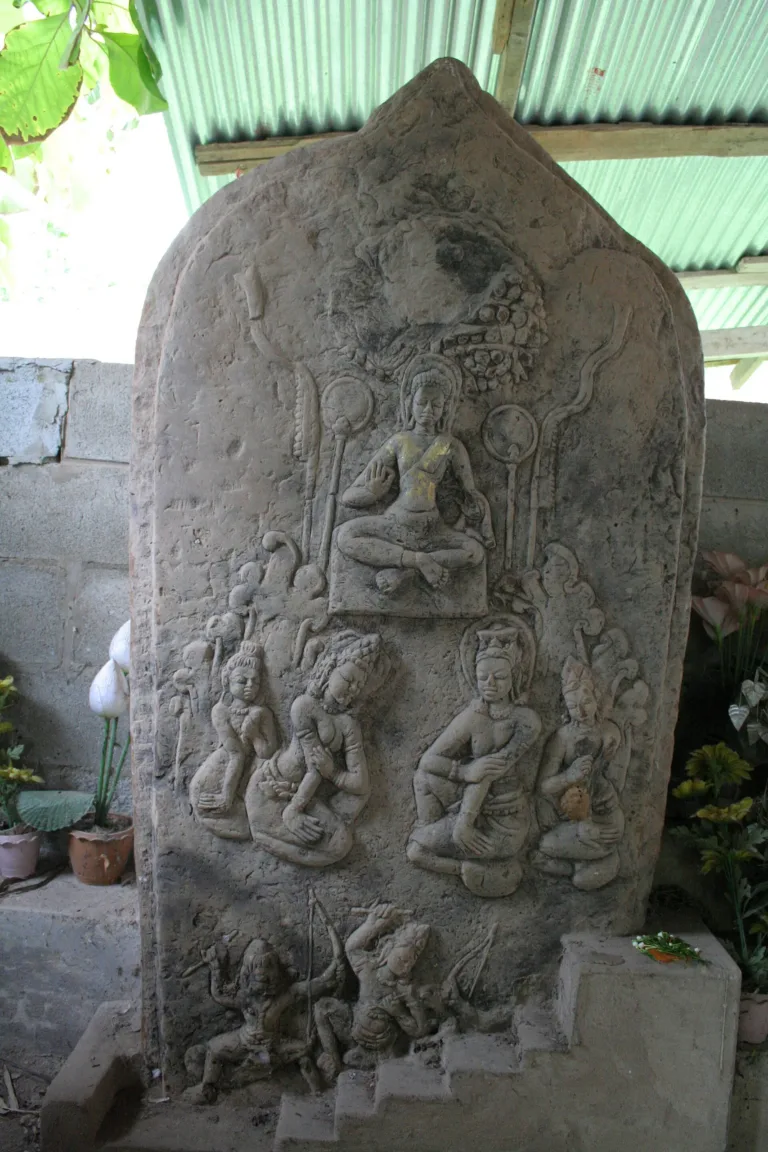 02
 03
Tap a day card to see that day’s weather, rain, haze and hourly forecast
Best time to go Fine all day little rain through the day
No warnings today — normal road and weather conditions
Green band = hours used for the score
Best time to go Fine all day little rain through the day
No warnings today — normal road and weather conditions
Green band = hours used for the score
Best time to go Fine all day little rain through the day
No warnings today — normal road and weather conditions
Green band = hours used for the score
Best time to go Fine all day little rain through the day · light drizzle possible at times
No warnings today — normal road and weather conditions
Green band = hours used for the score
Best time to go Fine all day little rain through the day · light drizzle possible at times
No warnings today — normal road and weather conditions
Green band = hours used for the score
Best time to go Fine all day little rain through the day
No warnings today — normal road and weather conditions
Green band = hours used for the score
Best time to go Fine all day little rain through the day
No warnings today — normal road and weather conditions
Green band = hours used for the score
Phra That Ya Khu is the largest and most complete Dvaravati stupa of Fa Daet Song Yang at Ban Sema, Nong Paen, Kamalasai, Kalasin. A Dvaravati brick base carries a later octagonal stupa, and sandstone sema carved with Jataka scenes stand around it.
Arrive Before 10:00 or after 15:00 to avoid the strongest sun
Photos from Wikimedia Commons and contributors · full credits inClassic page
Adults 0 THB · Car 0 THB · Time needed 1–2 hours
Around Magha Puja and the Isan Tung festival
| Entry | Free |
Cash · Prices may change by season — check with the venue
Magha Puranami merit festival and Isan Tung festival (around Magha Puja)
Kamalasai Hospital · Tourist Police 1155 · Emergency 1669
Tap a month on the wheel to see weather, rain, haze and crowds from 10 years of records
Best time · Nov–Feb: cool weather for the open-air site; around Magha Puja there is the Isan Tung festival
Watch out · Mar–May: very hot with little shade
Oct by the records 23–30°C · avg rain 160 mm (15 rainy days) · clear 5 days · avg PM2.5 9
Phra That Ya Khu, also called That Yai, That Nai Yai or Stupa No. 10, stands in the north of the ancient city of Fa Daet Song Yang at Moo 7, Ban Sema, Nong Paen subdistrict, Kamalasai district, Kalasin. It is the largest and most complete stupa in the city; Thai Wikipedia gives a present height of about 15 m and width of about 16 m. Opposite the entrance is Wat Pho Chai Semaram, which keeps some of the sema stones and artefacts.
Mueang Fa Daet Song Yang, or Mueang Sema, is an ancient city on the Pao River. Love Thailand describes two earthen ramparts with a moat between them, a circuit of about 5 km, and a city about 2,000 m north–south by 1,150 m east–west whose plan resembles a sema stone, hence the name Mueang Sema. English Wikipedia gives an area of about 1.67 km² and cites Stephen Murphy calling it the largest moated settlement on the Khorat Plateau.
The city has several names. The Bangkok Post says that besides Mueang Sema it is called Fa Daet Song Hang after a folk tale, and "Phon Phueng Daet" in documents from the era of King Fa Ngum of Lan Xang. It lies on low plains where the Phan stream meets the Pao, with traces of salt-making, bronze and iron tool-making, square rice fields and ancient ponds such as Nong Trapang. Ancient History Sites also notes an unconfirmed suggestion that Fa Daet may be the outer city "Wen Dan" in Tang-dynasty Chinese texts.
People lived here for a very long time. English Wikipedia summarises Iron Age burials of about 300 BC–AD 200, the city's peak in the Dvaravati period of about the 7th–11th centuries, jar burials continuing to about the 12th–13th centuries, and abandonment after the 17th century. Love Thailand places its height in the 8th–10th centuries AD (13th–15th Buddhist centuries).
A 2020 paper by Umarin Lertsaphan and Phramaha Mit Thitapanyo (Mahachulalongkornrajavidyalaya University, Khon Kaen) describes three mounds: Don Mueang Kao in the north, Non Wat Sung, and the central mound where Ban Sema now stands. The Fine Arts Department's 1967–1968 survey uncovered 14 monuments, ten stupa ruins, the largest being Phra That Ya Khu, and four other shrines, while the 1991 test pits revealed pottery production and several kinds of burial. The Bangkok Post also cites historical evidence that the city was abandoned after an attack by the army of King Anawrahta of Pagan, a claim to treat with caution.
The stupa shows several periods stacked together. Thai Wikipedia explains the lower part is a Dvaravati square brick base with redented corners and stairs on all four sides, built of large Dvaravati-type bricks without mortar; above it sits an Ayutthaya-style stupa on an octagonal base, with signs of Rattanakosin repairs. Love Thailand gives the same sequence: Dvaravati base, Ayutthaya octagonal base and Rattanakosin top. Thai Wikipedia dates the stupa to about the 7th–11th centuries AD (12th–16th Buddhist centuries).
Fine Arts Department excavation found an earlier base a level deeper, a redented cross-shaped brick plan whose arms rise a little over 1 m. Above are three stacked octagonal plinths, a taller fourth tier, and a plump octagonal bell; the parts above the bell were damaged and rebuilt. Thai Wikipedia draws this from Wan Chaengwimon's 1968 Fine Arts Department survey and excavation report.
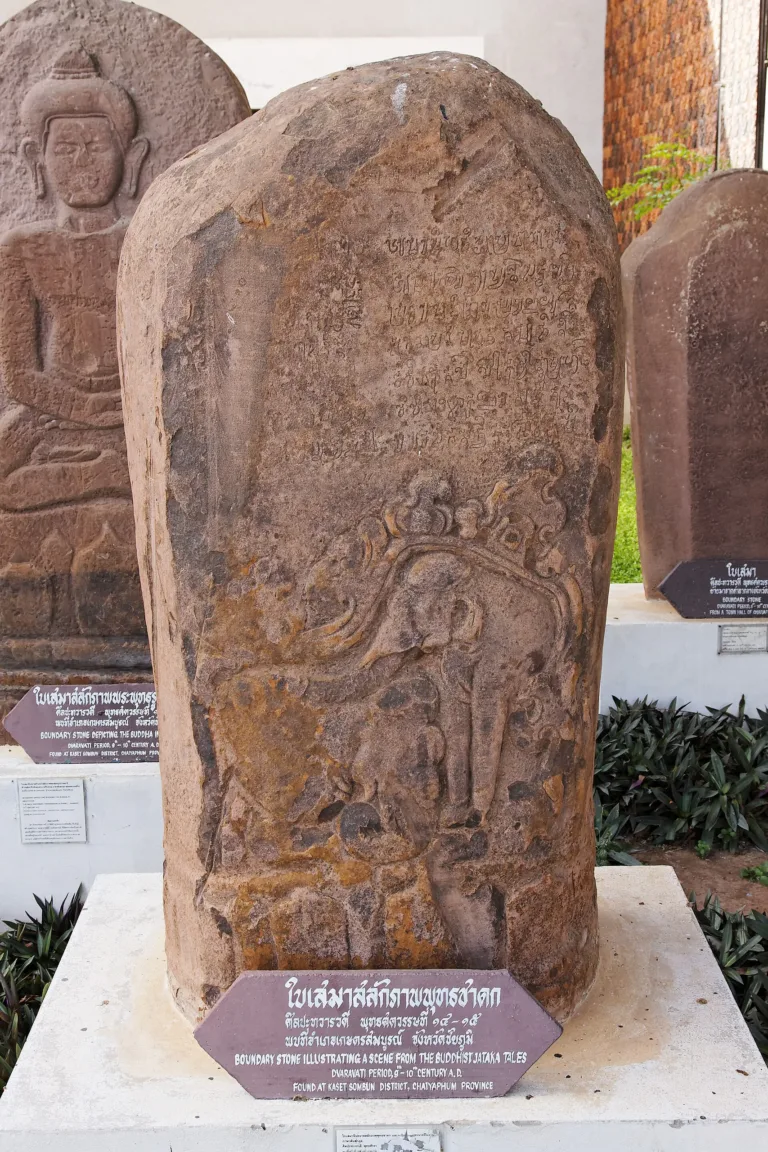
Fa Daet Song Yang is famous for its sema stones. English Wikipedia counts over 170, 15 of them narrative, the most of any site. Sema stand around Phra That Ya Khu, some carved with the Mahosadha and Bhuridatta Jatakas. During excavation one was found 11 m northeast of the stupa, face down with its tip toward the stupa, about 30 cm deep; Arunsak Kingmanee (Silpa Watthanatham, 2005) identified it as the Mahosadha Jataka, about 9th–10th century AD. Hoshino suggests the base may go back to early Dvaravati.
Inscriptions confirm it was a Buddhist city. The Bangkok Post says a sema at Wat Pho Chai Semaram bears post-Pallava script and votive tablets carry Mon inscriptions read by Fine Arts Department expert Toem Meetem. Ancient History Sites says one tablet's Old Mon inscription mentions King Aditya, with the reverse possibly naming a preceptor called Pinya. Sema inscriptions show continuity from Dvaravati into the Ayutthaya and Lan Xang periods, and the Fine Arts Department has registered about 130 sema from the site.
The most famous sema is the "Phimpha Philap". The Bangkok Post says the original is at the Khon Kaen National Museum with a replica at Wat Pho Chai Semaram; it shows the seated Buddha with Princess Yasodhara (Phimpha) wiping his feet with her hair. Another replica shows Rahula asking for his inheritance. Two sema near Phra That Ya Khu depict the Bhuridatta Jataka (a Brahmin pulling the naga Bhuridatta from a termite mound) and the Mahosadha Jataka (Mahosadha feigning an attack on King Culani). The carvings show local faces, dress and motifs such as fern shoots. In 1983, 11 sema were set back where they are believed to have stood around the stupa. The Mahachulalongkorn paper sorts the city's sema into six types, from plain slabs and stupa-carved stones to pillars and narrative reliefs.
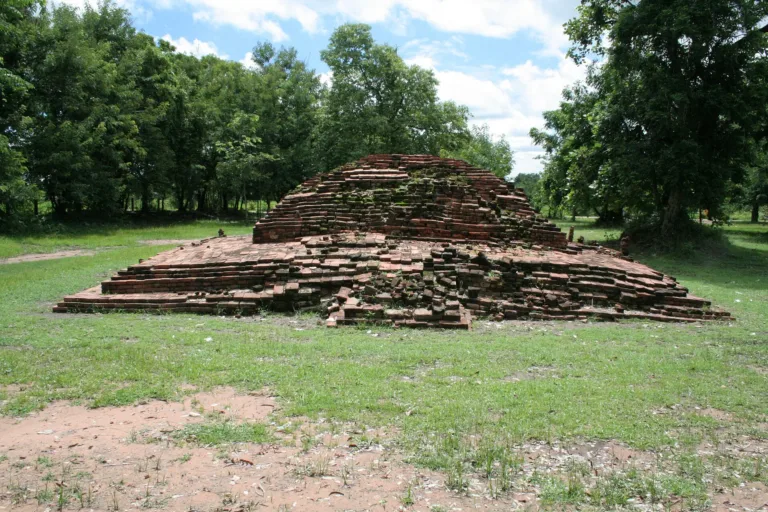
Many more objects were found around the stupa. Thai Wikipedia, citing MGR Online (2007), says villagers dug up pottery, bangles, rings, animal bones, glass beads and hundreds of stacked terracotta votive tablets about 70 cm down, known as the "Fa Daet Song Yang hoard" in several types, from large and medium to lotus-petal, Bodhi-leaf and panel designs. About 25 m south are the ruins of five more Dvaravati stupas.
The name "Ya Khu" comes from an old Isan title for monks: one ordained at least three years and of good conduct received the hot song rite and became "Ya Khu Ya Sa". Thai Wikipedia, citing Chaiyot Wan-utha (Silpa Watthanatham, 1995), says villagers from Kamalasai founded Ban Bak Kom, named after a bob-tailed tiger in the nearby forest, followed by a revered monk called "Ya Khu Ngom". When he died they enshrined his ashes; the village became Ban Sema and the temple Wat Pho Chai Semaram. Later villagers assumed the big stupa held his ashes and called it Phra That Ya Khu, but excavation showing a Dvaravati date contradicts this; the name simply stuck.
The city also has a folk legend. Silpa Watthanatham tells how Phaya Chantharat of Chiang Som chased a golden deer to Fa Daet and secretly met Princess Fa Yat, daughter of Phaya Fa Daet, who became pregnant; refused her hand, he attacked and died in battle, and she died of grief. Phaya Fa Daet placed both in one golden urn and built a stupa, which locals call Phra That Kham Yat. English Wikipedia records the tradition that the city was founded about AD 621 by Chao Fa Ra-ngum.
On conservation, Love Thailand says the Fine Arts Department registered Fa Daet Song Yang as an ancient monument on 27 September 1936, covering about 910 rai, while Thai Wikipedia says Phra That Ya Khu (That Nai Yai) was registered on 3 January 1937, with an extended boundary gazetted on 29 November 2002. The first excavation in 1968 exposed 14 Dvaravati monuments; the department excavated and restored Phra That Ya Khu in 1967–1979; in May 1991 Phasook Indrawooth of Silpakorn University dug nine test pits; and in 2000 the department found sema linked to a stupa outside the moat. The Fine Arts Department's 9th regional office in Ubon Ratchathani oversees the site.
The city's sema are now spread out. Love Thailand says some remain in place, some are kept at Wat Pho Chai Semaram (Wat Ban Kom) and some are displayed at the Khon Kaen National Museum. English Wikipedia notes motifs such as scenes from the Buddha's life, Jatakas and the Buddha flanked by Indra and Brahma. Locally, Love Thailand mentions the Magha Puranami merit festival and Isan Tung festival, with tung flags hung around Phra That Ya Khu.
Khon Kaen National Museum holds much of this heritage. Thai Post (December 2023) reports that the museum displays only sema from Fa Daet Song Yang and plans a room of Isan votive tablets, more than 400 from Fa Daet Song Yang, Kantharawichai and Nakhon Champasri, as part of a 2025–2027 renewal of its permanent exhibits.
Belief in sema lives on in the community. The Bangkok Post says Ban Sema villagers hold a Bun Bang Fai rocket festival every May to pray for rain. The Mahachulalongkorn paper tells how a sema found in the Chi River at Ban Tha Klang was brought up and revered as "Pu Chao Tha", giving Chao Tha subdistrict its name. Kalasin has the densest concentration of sema sites of any province; Thai Post reported that on 14 January 2021 the Fine Arts Department examined two octagonal sandstone pillars found in situ by villagers at Ban Kut Ta Klai, Na Khu district, to study their links with Dvaravati sema culture.
Arrived? Check in, collect a stamp and tell others what it is like right now
Check your location first, so you do not fill in the form for nothing
Location must be on and within 1.5 km · One check-in per place per day · come back on other days to check in again
Post photos from anywhere — no need to be here · Up to 20 photos at a time · JPG / PNG / WebP · GPS location data is removed automatically
From Kalasin take Highway 214 about 13 km to Kamalasai, turn…
Kalasin town–Ban Sema via Highways 214 and 2367 · Fuel
Khon Kaen–Kalasin–Ban Sema · Fuel
Bangkok–Kalasin, then hire car · Per operator
Highways 214 and 2367, paved; a village lane at the end
Parking in front of the site
Petrol stations in Kamalasai
4G works
08:00–16:30
around 19 km fromKalasin town
Phra That Ya Khu
0 THB
Approx. nightly price for 2 adults (next week) · final price depends on your dates
Answers travellers want before they go — a one-minute read
An old Isan title for a senior monk who has received the hot song rite
Villagers believed it held Ya Khu Ngom's ashes, but excavation shows it dates to the Dvaravati period
The base is Dvaravati, about the 7th–11th century AD; the upper part is Ayutthaya, repaired in the Rattanakosin era
No
Some on site and at Wat Pho Chai Semaram, some at Khon Kaen National Museum
Best day this week: Thursday 29 Oct · Check in when you arrive to collect a stamp