 01
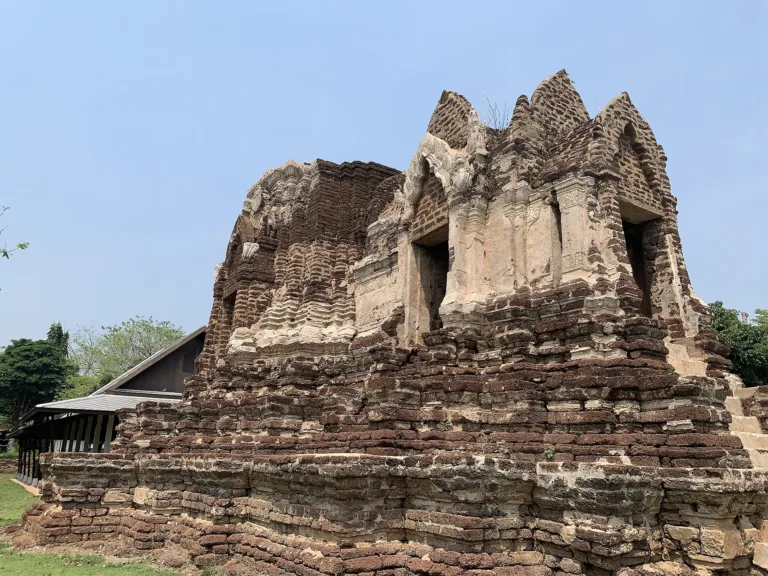
Laterite prangKhmer form, Ayutthaya stucco
Where King Trailokanat was ordained · Phitsanulok
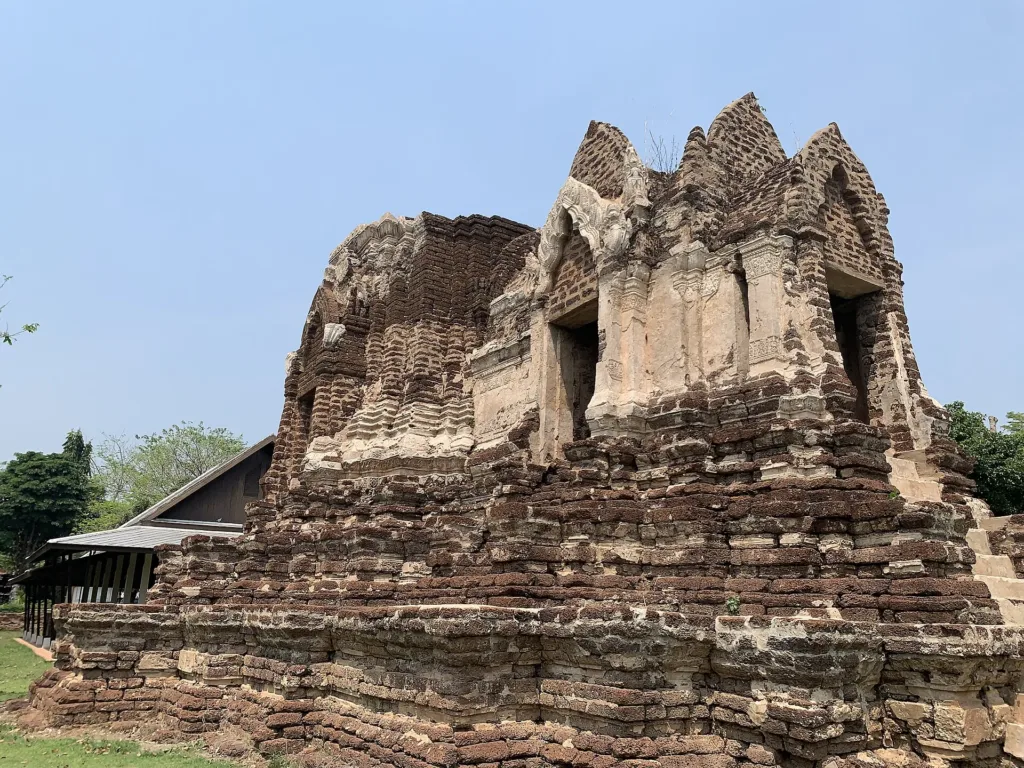
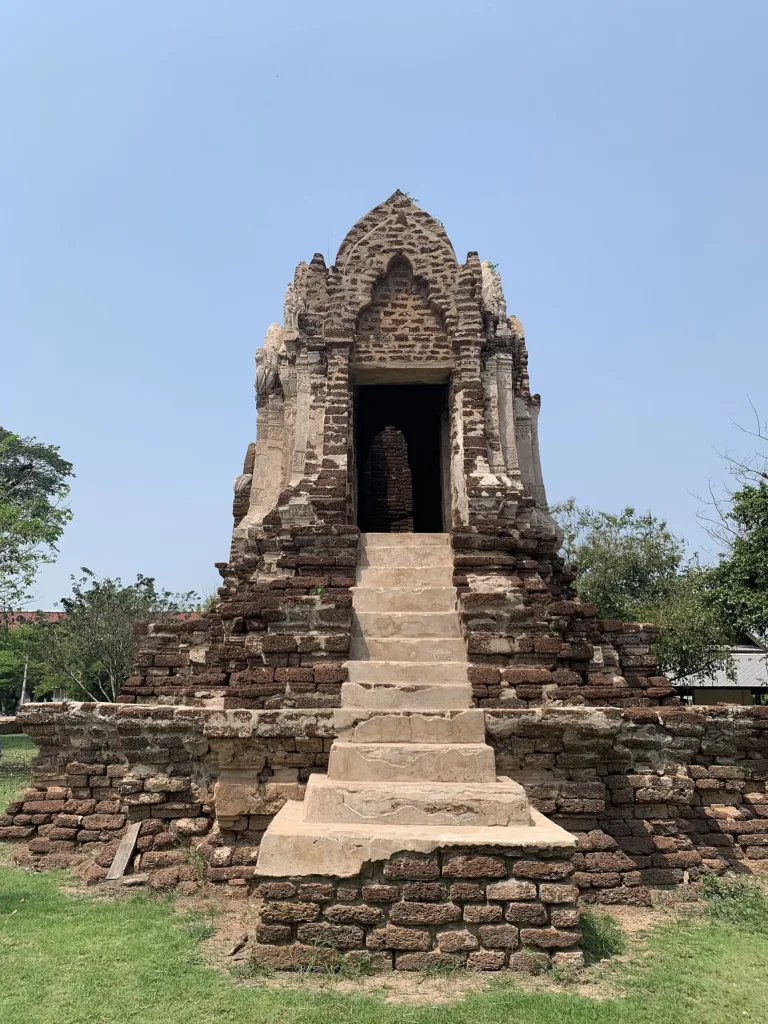
Phitsanulok's oldest temple, on the Nan's east bank at Tha Thong: a laterite Khmer-style prang with stucco swans and Garuda. King Borommatrailokanat had the temple built in 1464 and was ordained here in 1465 with 2,348 others. Free.
Good weather, little rain
Dress modestly · Remove shoes in the viharn · Do not climb the prang · Do not point feet at Buddha images
About 07:00–18:00
01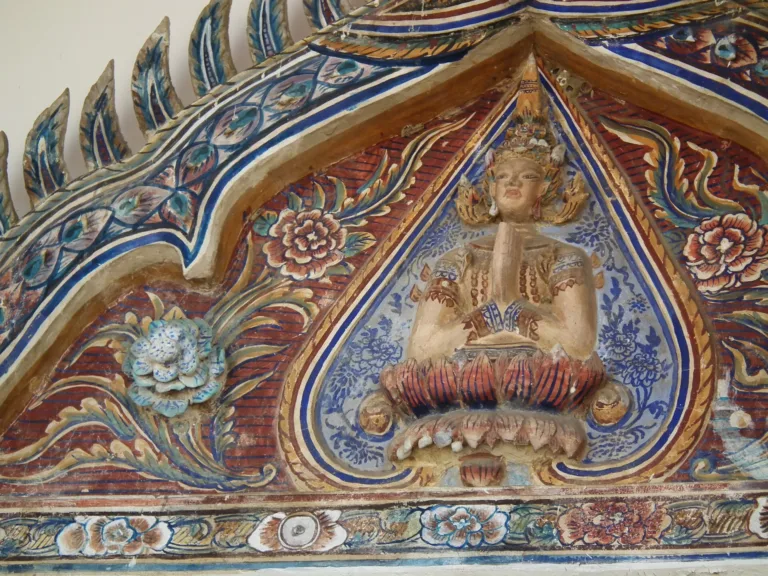 02
 03
Tap a day card to see that day’s weather, rain, haze and hourly forecast
Best time to go Daytime is over · see tomorrow
No warnings today — normal road and weather conditions
Green band = hours used for the score
Best time to go Fine all day little rain through the day
No warnings today — normal road and weather conditions
Green band = hours used for the score
Best time to go Fine all day little rain through the day
No warnings today — normal road and weather conditions
Green band = hours used for the score
Best time to go Fine all day little rain through the day
No warnings today — normal road and weather conditions
Green band = hours used for the score
Best time to go Fine all day little rain through the day
No warnings today — normal road and weather conditions
Green band = hours used for the score
Best time to go Fine all day little rain through the day
No official warnings, but watch for: Hot (Afternoon) feels like 38°C
Green band = hours used for the score
Best time to go Fine all day little rain through the day
No official warnings, but watch for: Hot (Afternoon) feels like 38°C
Green band = hours used for the score
Wat Chulamani, Tha Thong, Mueang Phitsanulok.
Photos from Wikimedia Commons and contributors · tap a photo to see its credit
Cover shoulders and knees
Do not climb the prang
Free · Time needed 45–60 min
Tap a month on the wheel to see weather, rain, haze and crowds from 10 years of records
Best time · Nov–Feb is cool; come in the morning
Watch out · April is very hot with little shade
Nov by the records 22–31°C · avg rain 50 mm (7 rainy days) · clear 13 days · avg PM2.5 12
Wat Chulamani stands on the east bank of the Nan River in Tha Thong subdistrict, about 5 km south of Phitsanulok town, and is regarded as the province's oldest temple. Its heart is a laterite prang of Khmer form decorated with Ayutthaya-period stucco, and it is where King Borommatrailokanat was ordained as a monk in 1465, an event recorded both in the royal chronicles and in the temple's own stone inscription. Its story runs from a Khmer-style shrine through the Ayutthaya era and long abandonment to the active temple it is today.
No record gives the date of the first sanctuary. Many sources estimate the original prang at around the 13th century; some call the temple Sukhothai period, and it has been suggested that the site was the old town of Song Khwae before the city moved to its present location, though none of this is firmly proven.
A legend in the Northern Chronicle tells of a king who gave up his throne to become a monk; his relatives built a temple and prang to enshrine his hair, kept in a golden casket, and so the temple was called Chulamani. The name echoes the Chulamani Chedi in Tavatimsa heaven, which in Buddhist tradition holds the topknot Prince Siddhartha cut off when he renounced the world.
Firmer evidence comes from the Luang Prasoet Chronicle and the Wat Chulamani inscription. Both say that in the Year of the Monkey, CS 826 (1464), King Borommatrailokanat had Wat Chulamani built so that he could be ordained there, and that in the Year of the Rooster, CS 827 (1465), on Thursday, the 14th day of the waxing eighth month, he entered the monkhood with 2,348 others. He stayed in robes for 8 months and 15 days, leaving at the request of his son and officials. The inscription also names several kings who rejoiced in the merit, among them the King of Hongsawadi (Pegu), who sent offerings. Many sources merge both events into 1464, but by the chronicle 1464 is the building and 1465 the ordination.
An article in Silpa Watthanatham magazine notes that five men were ordained just before the king, recalling the Buddha's first five disciples, and that his shaved hair was enshrined in the prang, just as the Buddha's topknot rests in the Chulamani Chedi, so the prang can be read as a great relic stupa. Some scholars see the ordination as modelled on that of King Lithai of Sukhothai, with political aims as well, such as asking King Tilokarat of Lan Na to return Si Satchanalai, a request that failed.
The same chronicle also helped confirm where the temple is. Luang Prasoet Aksonnit found the manuscript in a private house and presented it to the National Library on 19 January 1907. In his preface, Prince Damrong Rajanubhab explained that other versions placed the king's Wat Chulamani and ordination in Ayutthaya, where no temple of that name could be found, whereas this version says he went to reign at Phitsanulok. The existence of a real Wat Chulamani in Phitsanulok supported the new version.
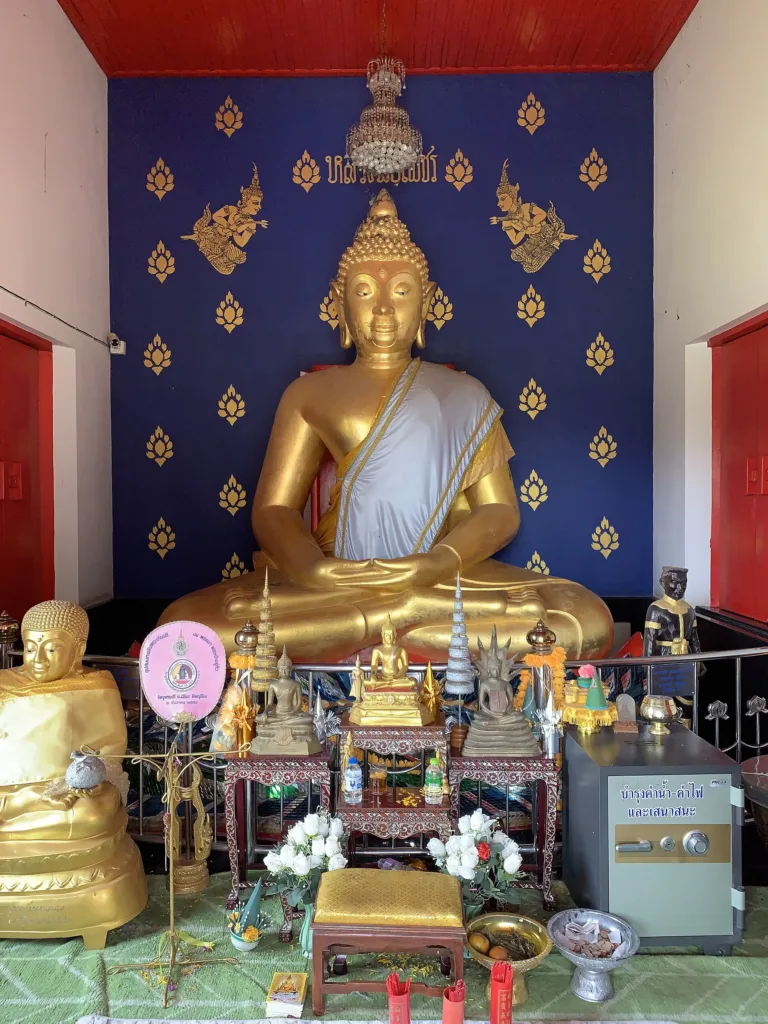
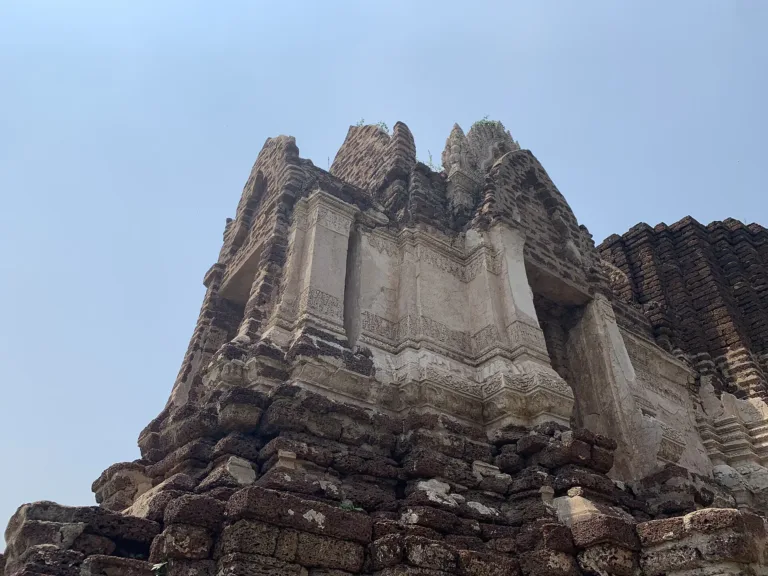
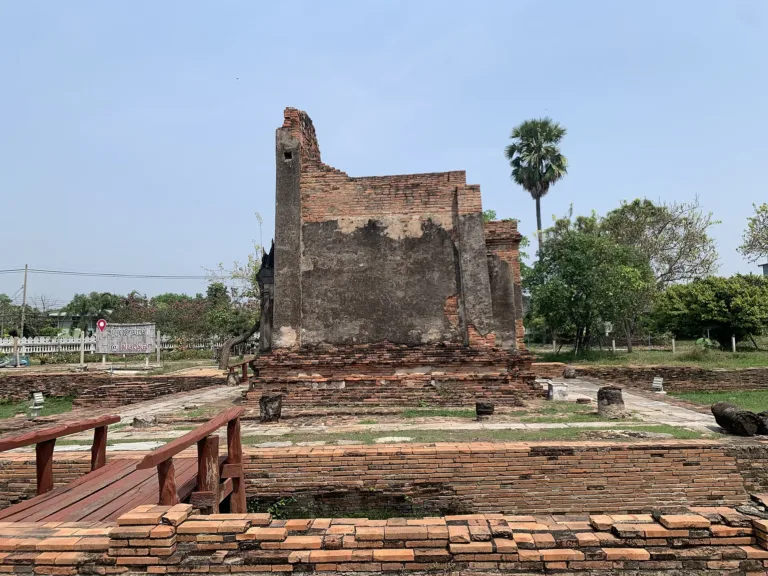
The prang is built of stucco-covered laterite, its top now collapsed, on indented-corner tiers with a projecting front porch. The other three sides of the cella carry false doors instead of Buddha images. The cella now holds a small modern replica of the Phra Phuttha Chinnarat, and stone supports above some doorways were added in later restoration.
Professor Santi Leksukhum studied the prang and its stucco in detail in research published in 1996. He argued that its builders deliberately copied the prang of Wat Phra Si Rattana Mahathat in Lopburi: the false doors on three sides, laterite mouldings cut to project from the wall, certain lotus petals, hamsa swans at the base and the cone-shaped borders. The stucco motifs themselves are of a kind popular under King Borommatrailokanat, and Naresuan University research also dates the stucco to about 1464. Some sources therefore see the prang as an Ayutthaya work in Khmer style rather than a true Khmer building.
About two centuries later, the Wat Chulamani inscription records that when 2,222 years, 10 months and 5 days of the Buddhist Era had passed (CS 1042, 1680), in the reign of King Narai, a royal order told the abbot, Phra Khru Thammatrailokanat Ratchamuni, to make a copy of the Buddha's footprint for worship and to inscribe the temple's history, rules and land, and the names of 18 temple servants assigned to guard the footprint and the hair relics, with a curse on anyone who drafted them for royal service. The stone was set up in the Year of the Rooster, CS 1043 (1681); some sources give 1678 or 1679. The original footprint is lost and a replica now sits in the mondop, while the inscription is still set in the mondop wall.
After Ayutthaya fell in 1767 the temple lay abandoned for a long time. Prince Lopburi Ramesuan, inspecting the northern provinces, found the inscription at the deserted temple and sent a copy to Bangkok. It was printed as an appendix to the Luang Prasoet Chronicle and translated into English in the Journal of the Siam Society around 1909.
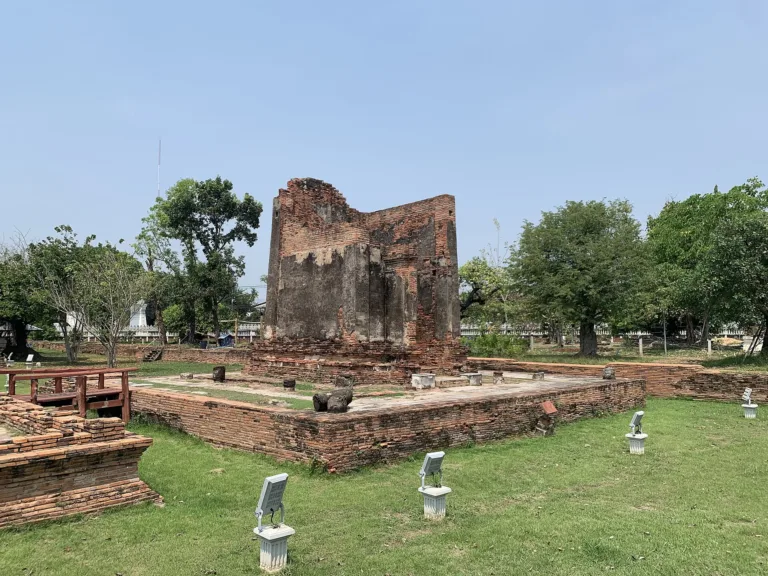
The temple revived in 1930, when donors built a sala and monks returned for the rains retreat. In September 1936 the Fine Arts Department registered it as an ancient monument in the Royal Gazette. In 1952 a small viharn was built on an old Ayutthaya base, in 1967 a new ubosot rose at the front of the temple, and in 1987 the monument was restored and stabilised. The Ancient City (Muang Boran) in Samut Prakan also built a half-scale replica of the prang, and in 2011 Naresuan University researchers used the temple's stucco motifs to design silver jewellery.
Arrived? Check in, collect a stamp and tell others what it is like right now
Check your location first, so you do not fill in the form for nothing
Location must be on and within 1 km · One check-in per place per day · come back on other days to check in again
Post photos from anywhere — no need to be here · Up to 20 photos at a time · JPG / PNG / WebP · GPS location data is removed automatically
Town roads
Borommatrailokanat Road · Fuel
From town · Meter or negotiate
Borommatrailokanat Road, about 5 km south
Temple car park
In town
Good
About 07:00–18:00
about 5 km from Phitsanulok town
Wat Chulamani
Approx. nightly price for 2 adults (next week) · final price depends on your dates
Answers travellers want before they go — a one-minute read
After the heavenly chedi holding the Buddha's hair
A Khmer-style shrine with Ayutthaya stucco and repairs
1465; the temple was built in 1464
Yes
About 5 km, 10 minutes
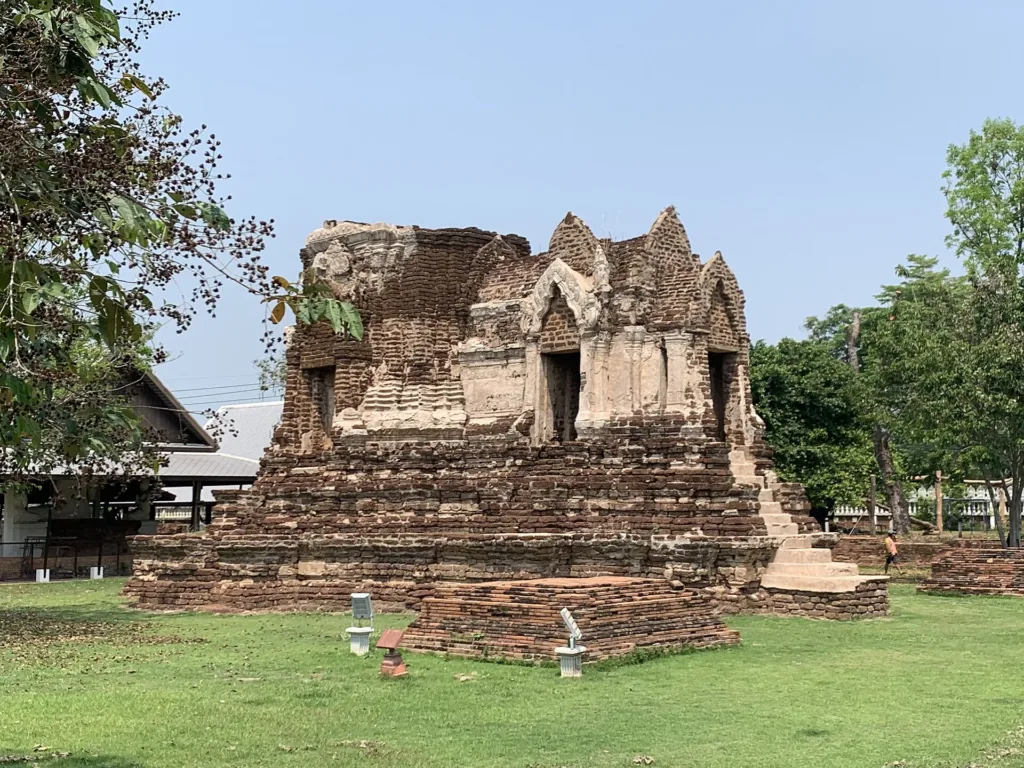
Best day this week: Sunday 29 Nov · Check in when you arrive to collect a stamp
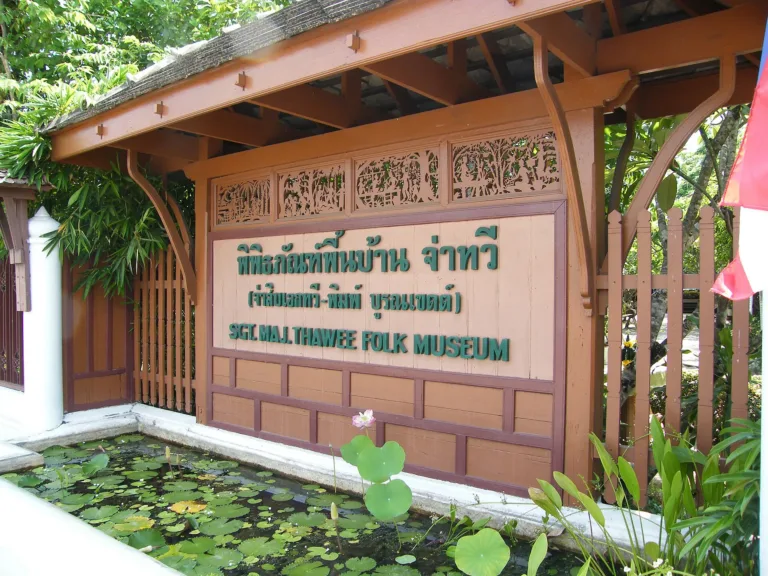 Sergeant Major Thawee Folk Museum
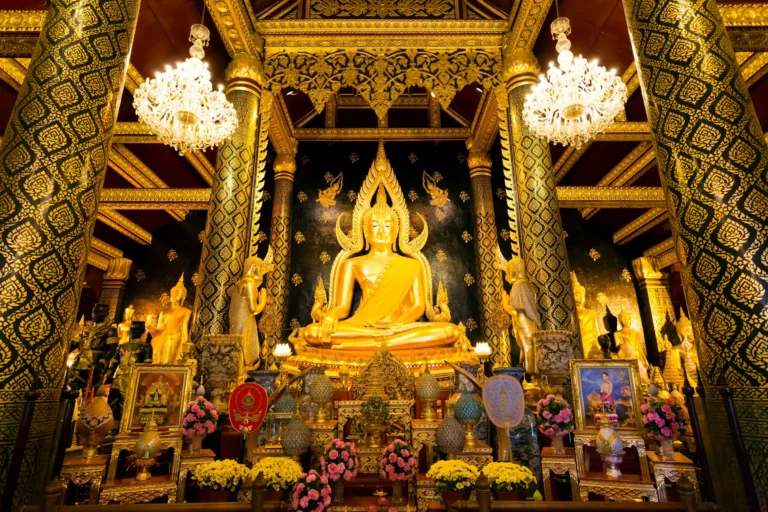 Wat Phra Si Rattana Mahathat (Wat Yai)
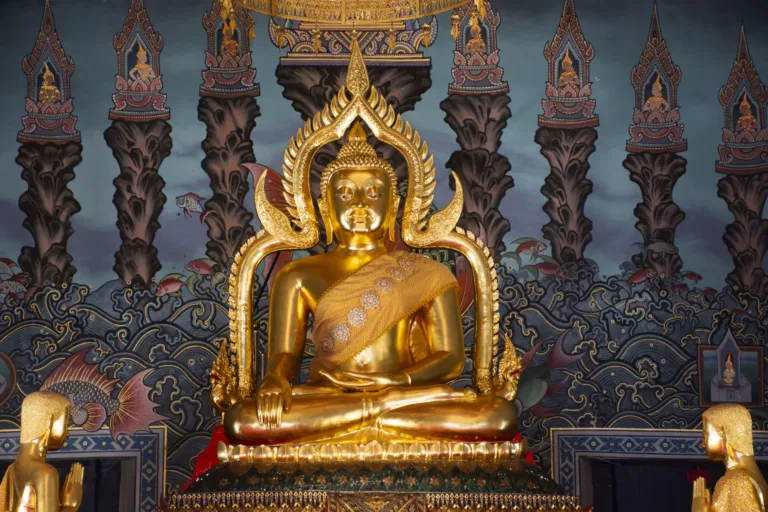 Wat Tha Luang