 01
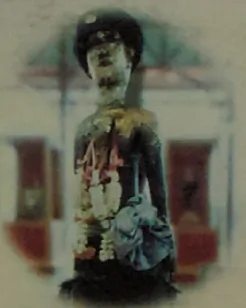
Ai Khai wooden figureA temple boy in camouflage and dark glasses
Nakhon Si Thammarat · Sichon · Ai Khai temple
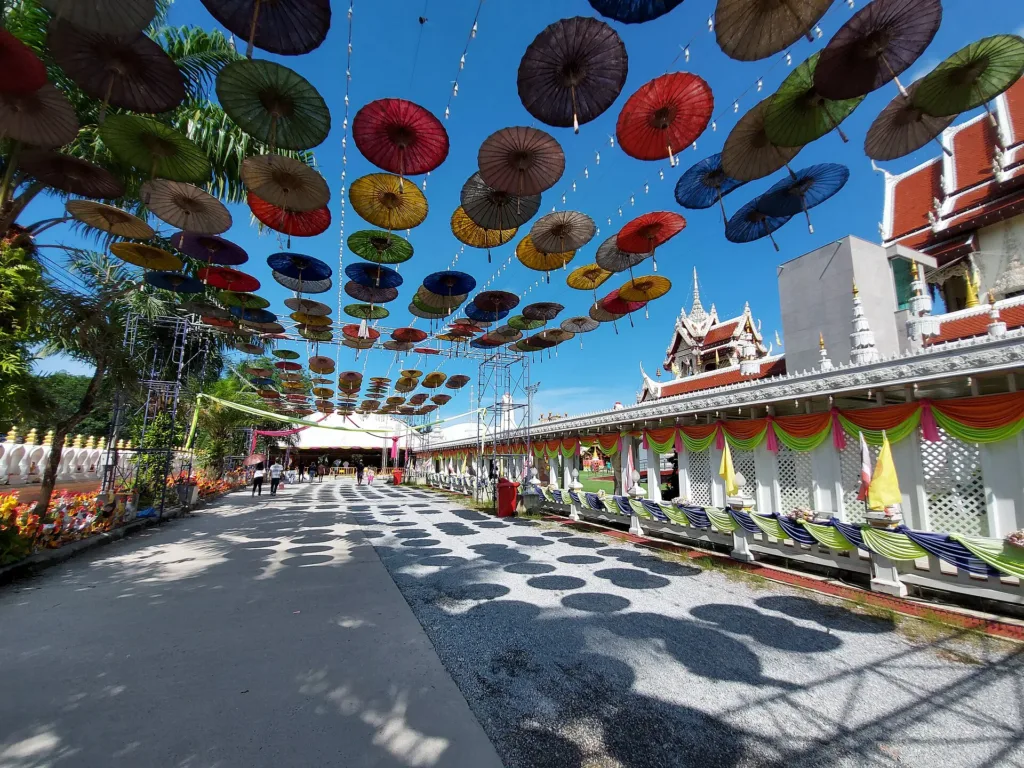
An old temple in Sichon housing the carved figure of Ai Khai, a legendary temple boy; crowds seek luck and give thanks with rooster statues and firecrackers.
Holiday / event — crowded · Possible thunder 13:00–18:00 · Late morning (09:00–12:00): rain ~25%
Dress modestly · Set off firecrackers only in the designated areas and mind others · Do not disturb worshippers with noise · Do not climb on the rooster statues
Daily, about 07:00–19:00
Arrive before 18:00 to visit unhurried
Crowds near the 1st and 16th of each month (lottery days) · long-drum thanksgiving troupes on Tuesdays and Saturdays
01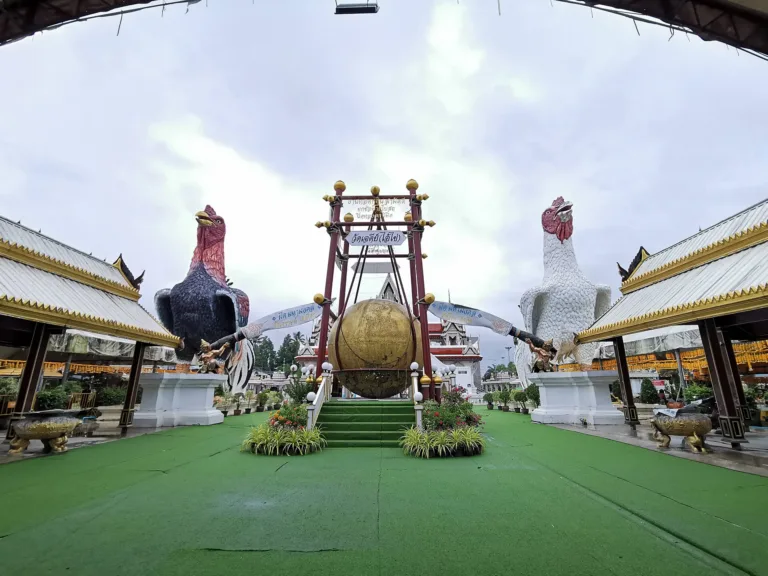 02
 03
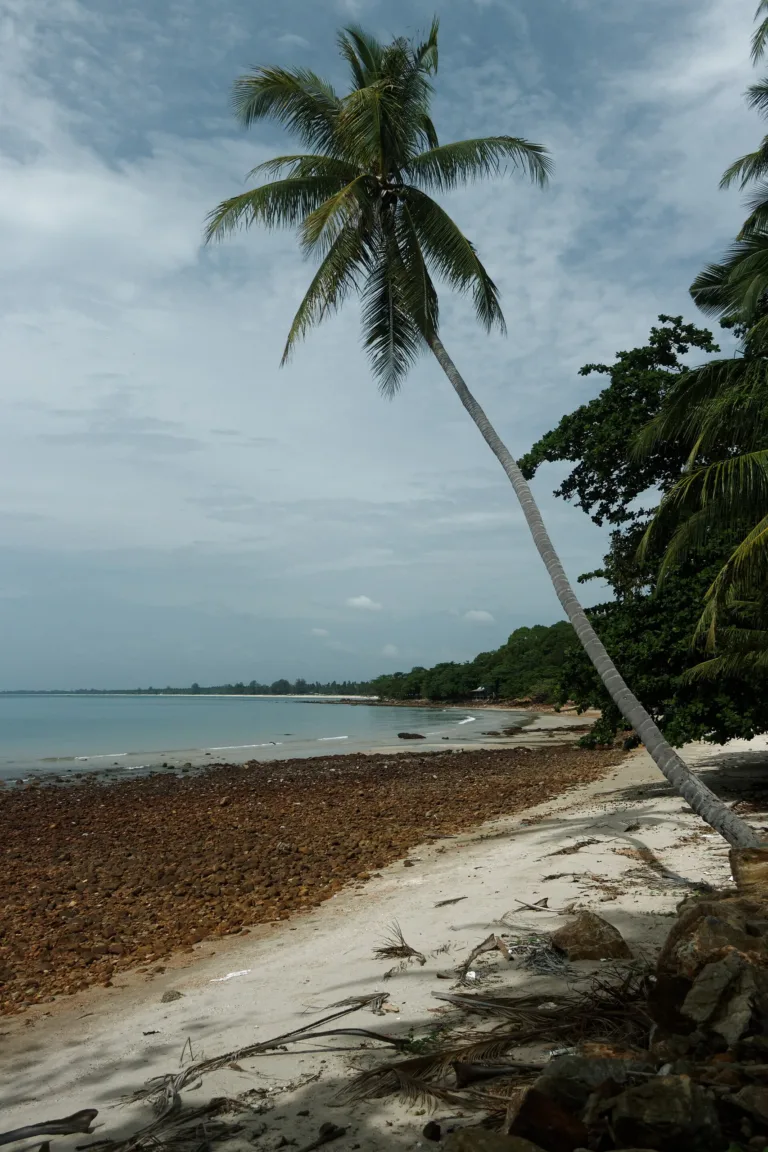 04
Tap a day card to see that day’s weather, rain, haze and hourly forecast
Best time to go Best window 06:00–12:00 Little rain · light drizzle possible at times
Holiday — traffic on the way up and parking fills fast; leave early
Green band = hours used for the score
Best time to go Best window 06:00–13:00 Little rain · light drizzle possible at times
Thick morning fog with visibility under 1 km — use headlights and drive slowly
Holiday — traffic on the way up and parking fills fast; leave early
Green band = hours used for the score
Best time to go Best window 06:00–12:00 Little rain · light drizzle possible at times
Holiday — traffic on the way up and parking fills fast; leave early
Green band = hours used for the score
Best time to go Best window 06:00–11:00 Little rain · light drizzle possible at times
Rain at times — slippery roads, allow extra travel time
Green band = hours used for the score
Best time to go Best window 06:00–12:00 Little rain · light drizzle possible at times
No warnings today — normal road and weather conditions
Green band = hours used for the score
Best time to go Best window 06:00–11:00 Little rain · light drizzle possible at times
No warnings today — normal road and weather conditions
Green band = hours used for the score
Best time to go Best window 06:00–08:00 Little rain · light drizzle possible at times
Rain at times — slippery roads, allow extra travel time
Green band = hours used for the score
Wat Chedi in Sichon, Nakhon Si Thammarat, is famous as the home of Ai Khai, a carved wooden boy believed to be the spirit of a temple child linked in some legends to the monk Luang Pu Thuat. The current figure dates from 1982, and the temple's fame exploded in 2020.
Visitors ask for luck and lottery numbers, then return with rooster statues, firecrackers and toys. Entry is free and the temple is open daily; weekday mornings away from the 1st and 16th of the month are the quietest.
Arrive Arrive before 18:00 to visit unhurried
Photos from Wikimedia Commons and contributors · full credits inClassic page
Adults 0 THB · Time needed 1–2 hours
Long holidays, weekends and the days before the 1st and 16th lottery draws
| Temple entry | Free |
| Thank-offering firecrackers, 1,000 bangs (2020 report) optional | 100 ฿/THB |
Cash for offerings, flowers and temple stalls · Prices may change by season — check with the venue
Crowds near the 1st and 16th of each month (lottery days) · long-drum thanksgiving troupes on Tuesdays and Saturdays
Sichon Hospital · Emergency 1669 · Tourist Police 1155
Tap a month on the wheel to see weather, rain, haze and crowds from 10 years of records
Best time · February–September is drier and pleasant for walking the grounds; come on a weekday morning to avoid crowds.
Watch out · October–December is Nakhon Si Thammarat's rainy season, with heavy rain and possible floods; days near the 1st and 16th (lottery draws) and long holidays are very crowded.
Oct by the records 24–29°C · avg rain 347 mm (29 rainy days) · clear 0 days · avg PM2.5 6
Wat Chedi, at Moo 7, Chalong subdistrict, Sichon district, Nakhon Si Thammarat, is known nationwide as "Wat Ai Khai" for its carved wooden figure of "Ai Khai", believed to be the spirit of a temple boy aged about 9–10. The figure wears camouflage and dark glasses. People come to ask for luck, work and lottery numbers, then return to give thanks with rooster statues, firecrackers, slingshots, toys, military uniforms and red soda.
The temple holds brick ruins and an old chedi believed to be over 1,000 years old, which gave it its name, though no firm founding date is known. Long abandoned, it was seriously restored around 1957, when monks came to live there again.
A 2022 Walailak University study by Sasipim Itsarawatthana and Suchita Manajit, comparing aerial photos from 1975 to 2019, divides the temple's development (Ban Pho Sadet, 103 Moo 7) into three phases: 1957–1974 as a monks' residence and once-abandoned temple; 1974–1999 after being raised from a monks' residence to a temple; and 1999–2020 under abbot Phra Athikan Aphichit Phutthasaro ("Achan Waen"). The grounds grew from about 9 rai at first to about 40 rai in 2015 and about 200 rai today, roughly 22-fold, and about 20 rai were levelled for parking in 2017 (Thai PBS puts the original area at about 6 rai).
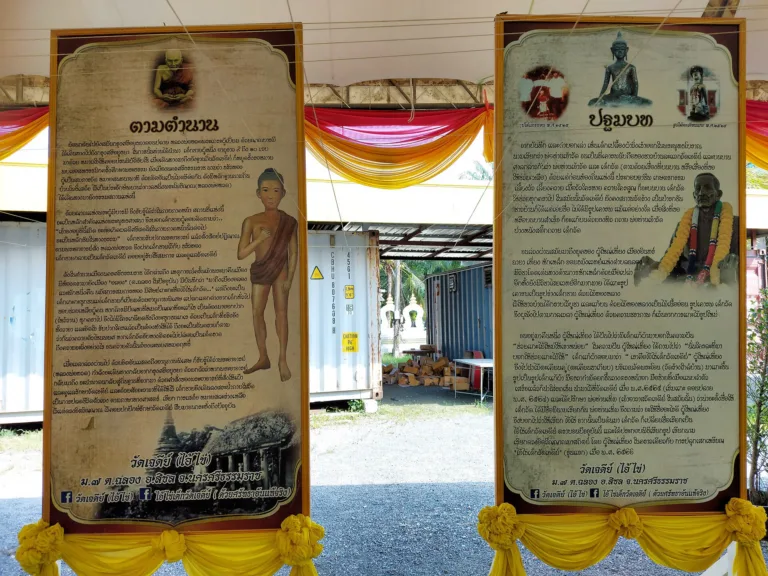
The Ai Khai legend has several versions. The best known says the revered monk Luang Pu Thuat stopped at the deserted temple with a disciple aged about 9–10 and left the boy to guard its treasures. Another says the boy was following Luang Pu Thuat from Songkhla to Ayutthaya, was told to stay behind, drowned in the temple pond, and his spirit still guards the temple. A third says he was a village child who drowned. Media date the legend from about 250 years ago (National Geographic) to about 300 (Bangkokbiznews). Villagers first asked Ai Khai to help find lost cattle, later turning to luck and trade.
The wooden figure comes from Thiang Mueang-in, known as "Thuat Thiang Hak Lek". Thai PBS reports he dreamed of a boy of about 10 asking to be carved, and made the first figure from coral-tree wood around 1937; it has since decayed. The current figure was carved from twin takhian logs in 1982, and the abbot of the time, Pho Than Thoem, gave it the name "Ai Khai". Thiang died aged over 90 with a new carving only roughed out, and Thipwimon Kliangkham (Kawi Lenkhom) took over the work.
In 1983, while communist insurgents were still active in the area, a company of rangers camped at the temple and reported being disturbed all night. Villagers told them to say Ai Khai's name before meals, after which they slept normally. That year Luang Pho Thoem made the first Ai Khai medallions, now worth hundreds of thousands of baht.
Faith in Ai Khai grew in Nakhon Si Thammarat, a centre of the amulet trade. The Jatukham Rammathep craze began around 1997 and peaked in 2007, when the Fiscal Policy Office estimated about 22 billion baht changed hands, lifting national GDP by 0.1–0.2%. On 10 July 2008 the temple registered the copyright of the "Ai Khai Wat Chedi worship figure" with the Department of Intellectual Property, plus 10 more items.
The Ai Khai boom peaked in 2020 after Thailand's COVID-19 lockdown. National Geographic reported 70,000–80,000 visitors over a long holiday in September 2020, about 8,000 on an average weekday, and parking for up to 6,000 cars. Thai PBS reported flights to Nakhon Si Thammarat rising from about 12 to over 50, restaurants tripling, and the temple growing from about 6 rai to over 200 rai of land. A survey of 100 visitors found 60 came for lottery numbers and 20 for work.
Dailynews reported on 29 September 2020 that the first offering shops opened in 2011 and grew to about 200 along the road to the temple. Daily thanksgiving visitors rose from about 500–600 to about 10,000 from late 2019. Record offerings included 8 million firecrackers from Thais working in Hong Kong, 3,000 boiled eggs, twenty 3.5 m rooster statues and 3–5 tonnes of durian from Chumphon at a time, with at least 20 million baht a month changing hands. In June–July 2020 Nakhon Si Thammarat airport handled about 50 flights a day (normally at most 24) and over 170,000 passengers, its highest in 22 years; its roughly 10,300 hotel rooms ran above 70% occupancy, and about 200,000 people visited the province in September 2020, generating about 870 million baht. The effect spilled into Surat Thani's Mueang, Kanchanadit and Don Sak districts.
Thank-offerings define the temple's look. People once brought live chickens, which were inconvenient for the monks, so rooster statues took their place, priced from a few hundred baht to 1.5 million baht; one about 11 m tall stands before the ordination hall. Thousands of small figures are moved to a "chicken graveyard" of about 30 rai. Firecracker offerings range from 1,000 bangs for 100 baht to 100,000 for 1,000 baht and go off all day; on Tuesdays and Saturdays long-drum troupes dance in thanks, and visitors flock near the 1st and 16th of each month, the lottery draw days.
Ai Khai's fame has spread: figures have been installed at temples in Nonthaburi, Pathum Thani, Ratchaburi and Ang Thong without agreement from Wat Chedi, and highway signs point to "Wat Chedi (Ai Khai)". Some call him "Phi Khai" or "Ta Khai", and he has been dubbed a "god of the common people". Anthropologists see the craze as reflecting hard times and a need for spiritual refuge; it may fade, but the need will remain. In 2020 Bangkokbiznews named the abbot as Phra Khru Phutthachetiyaphimon ("Achan Waen"), named in the Walailak study as Phra Athikan Aphichit Phutthasaro, and National Geographic said the temple had about 10 resident monks.
The Ai Khai phenomenon has become an academic subject. Sitthiphong Boonthong's 2018 Prince of Songkla University thesis studied "Wat Chedi Ai Khai: constructing a sacred space amid the crisis of modernity", and the 2022 Walailak University paper examined how belief reshaped the temple's cultural landscape, citing earlier work by Thawanrat Phromwiset (2019) and Phra Ekkalak Achito et al. (2020), and finding that faith-based tourism has benefited the local economy.
The temple is open daily, about 07:00–19:00, with no entry fee. Sichon district also has beaches and Hin Ngam bay nearby. Belief in Ai Khai is personal; visitors should use their own judgement and respect the site.
Arrived? Check in, collect a stamp and tell others what it is like right now
Check your location first, so you do not fill in the form for nothing
Location must be on and within 1 km · One check-in per place per day · come back on other days to check in again
Post photos from anywhere — no need to be here · Up to 20 photos at a time · JPG / PNG / WebP · GPS location data is removed automatically
From Nakhon Si Thammarat town head north on Hwy 401 about 55…
Nakhon Si Thammarat town → Sichon → Chalong · Fuel
Bangkok → Nakhon Si Thammarat Airport → temple · Varies
Bangkok → Nakhon Si Thammarat → Sichon · Varies
Phetkasem Road → Hwy 41 → Hwy 401 via Khanom–Sichon → Chalong subdistrict
Large temple car park for thousands of cars
Petrol stations in Sichon town
Good
Daily, about 07:00–19:00
around 760 km fromBangkok
Wat Chedi (Ai Khai)
0 THB
Approx. nightly price for 2 adults (next week) · final price depends on your dates
Answers travellers want before they go — a one-minute read
Wat Chedi, Moo 7, Chalong subdistrict, Sichon district, Nakhon Si Thammarat
Believed to be the spirit of a temple boy aged about 9–10; legends vary, some linking him to Luang Pu Thuat
Rooster statues, firecrackers, slingshots, toys and military uniforms
Daily, about 07:00–19:00, free entry
Best day this week: Wednesday 28 Oct · Check in when you arrive to collect a stamp