 01
Ao Phante MalaccaPark headquarters, a long beach and the main pier
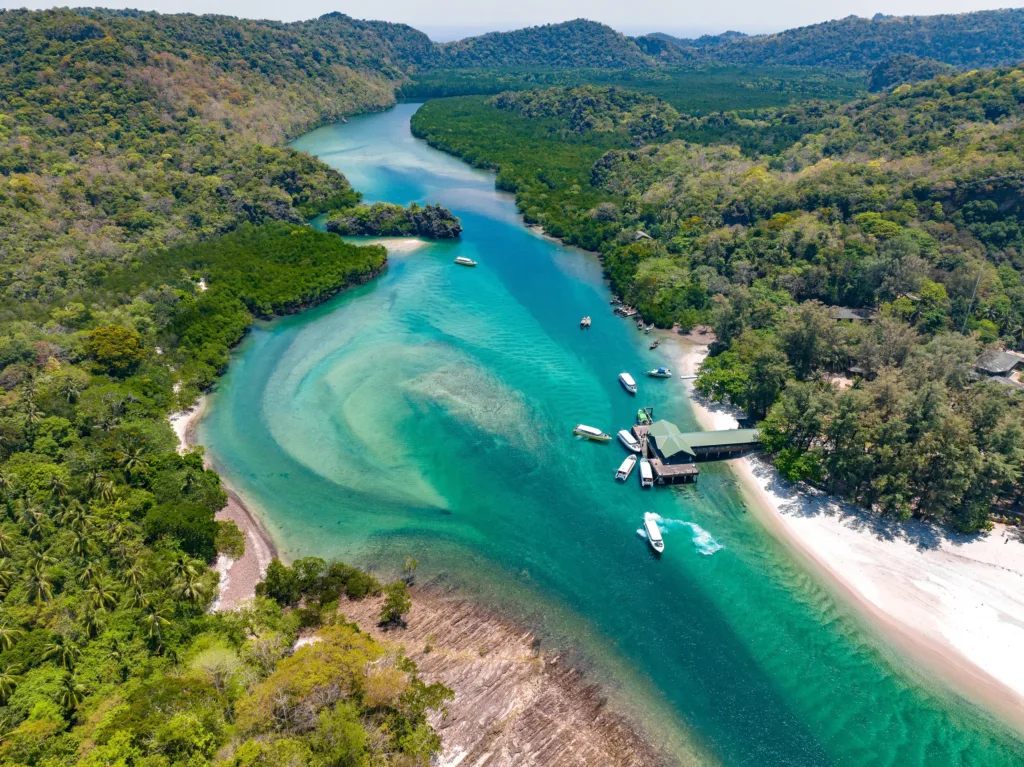
Marine national park · Satun
Satun's marine national park of 51 islands, declared on 19 April 1974. Ko Tarutao, once a prison for political detainees, offers jungle, long empty beaches and a history trail.
Holiday / event — crowded · Evening (16:00–19:00): rain ~16%
01 02
 03
Tap a day card to see that day’s weather, rain, haze and hourly forecast
Best time to go Daytime is over · see tomorrow
Holiday — traffic on the way up and parking fills fast; leave early
Green band = hours used for the score
Best time to go Best window 07:00–14:00 Little rain · light drizzle possible at times
Holiday — traffic on the way up and parking fills fast; leave early
Green band = hours used for the score
Best time to go Best window 06:00–17:00 Little rain · light drizzle possible at times
No official warnings, but watch for: Thunderstorm risk 08:00–18:00
Green band = hours used for the score
Best time to go Fine all day little rain through the day · light drizzle possible at times
No official warnings, but watch for: Late morning (09:00–12:00): rain ~16%
Green band = hours used for the score
Best time to go Best window 06:00–15:00 Little rain · light drizzle possible at times
No official warnings, but watch for: Possible thunder 14:00–17:00
Green band = hours used for the score
Best time to go Best window 06:00–14:00 Little rain · light drizzle possible at times
No official warnings, but watch for: Possible thunder 17:00–20:00
Green band = hours used for the score
Best time to go Fine all day little rain through the day · light drizzle possible at times
No official warnings, but watch for: Late morning (09:00–12:00): rain ~16%
Green band = hours used for the score
Tarutao National Park covers the Andaman Sea off Satun, about 1,490 km² with 51 islands in two groups, Tarutao and Adang-Rawi. It was declared a national park on 19 April 1974 and was among the first ASEAN Heritage Parks.Ko Tarutao itself is a big, jungle-covered island with peaks over 700 m and long, quiet beaches. The park headquarters is at Ao Phante Malacca, and on the east coast Ao Talo Wao was the site of a prison for political detainees in the late 1930s.Boats leave from Pak Bara pier in La-ngu for Ko Tarutao, or carry on to the Adang-Rawi group and Ko Lipe for snorkelling over coral.
No fishing, no taking coral, no night diving
No ATMs and few shops; bring cash and essentials
Thais 40 THB · Foreigners 200 THB · Time needed 2–3 days
Year-end long weekends
| Park entry, Thai adult | 40 ฿/person |
| Park entry, Thai child optional | 20 ฿/person |
| Park entry, foreign adult | 200 ฿/person |
| Park entry, foreign child optional | 100 ฿/person |
No ATMs on Ko Tarutao; bring cash · Prices may change by season — check with the venue
Tarutao National Park covers about 1,490 km² of the Andaman Sea off Satun, with 51 islands split into the Tarutao group and the Adang-Rawi group. Its story comes in layers: sandstone around 500 million years old that holds trilobite fossils, the Urak Lawoi sea people who have long made a living in these waters, a jungle penal colony that held both hardened criminals and political prisoners, the legend of the wartime Tarutao pirates, and finally the declaration of a national park on 19 April 1974. Today the islands are also part of Satun UNESCO Global Geopark.
There are two explanations for the name "Tarutao". One says it comes from the Malay "pulau tertua", meaning an old, mysterious and primitive island. Another says it comes from "talo trao", meaning a place with many bays, which fits the island's heavily indented coastline. Many bays on the island, such as Talo Wao and Talo Udang, still begin with "talo", meaning bay.
Geologically, Ko Tarutao is home to the Tarutao Group, the lowest Palaeozoic rock unit in western Thailand: more than a thousand metres of sandstone and siltstone dating from the late Cambrian to the early Ordovician. The Department of Mineral Resources says the island has Thailand's oldest trilobite fossils, about 500 million years old. The first description of fossils from the island was published in 1957, and Ao Molae, once called Ao Talo Topo, serves as the type section for these rocks.
The people with the longest ties to the islands are the Urak Lawoi. Community history says the first group of sea people settled on Ko Lipe around 1897, while another source says that in the early 1900s the ruler of Satun invited sea people from Ko Lanta to settle the Adang-Rawi islands to show they belonged to Siam. When Siam signed its treaty with Britain in 1909, Satun and the Adang-Rawi islands stayed with Siam, while Langkawi, just to the south, went to Britain.
The chapter that made Tarutao famous began in 1936, when the government asked the Corrections Department to find a site for a penal settlement. Ko Tarutao was chosen because it was far from shore and its rough seas made escape hard. Construction started around 1937, the first group of about 500 prisoners arrived in 1938, and the population later reached about 3,000. Most lived around Ao Talo Wao, where ruins can still be visited today.
In 1939 the government moved about 70 political prisoners from Bang Khwang prison to Ao Talo Udang, most of them convicted over the Boworadet rebellion and the Sergeants' rebellion. Political prisoners were spared construction work and leg irons, and many spent their time on crafts, gardening, law, English and Buddhism. One of them, So Sethaputra, kept working on his English-Thai dictionary while in detention and grew vegetables to feed himself when food ran short.
Late in 1939, five political prisoners escaped to Langkawi with the help of a local fisherman. The authorities tightened control at once: the prisoners' area was cut in half, red flags marked the boundary, guard shifts were increased, headcounts were held every three hours, and about 30 police were posted to the island. Controls eased later, once escape seemed almost impossible.
When World War II reached Thailand at the end of 1941, supplies from the mainland began to fail. Research based on a former settlement official's account says that around 1943 rice rations were cut, and at times prisoners ate nothing but rice porridge for up to half a month. Medicine and doctors were scarce and malaria spread. That same year the political prisoners were moved to Ko Tao in the Gulf of Thailand, and they received a royal pardon in 1944.
The best-known legend is that of the Tarutao pirates. As supplies ran out and naval blockades left guards and prisoners starving, some turned to raiding ships in the Strait of Malacca. Figures for the number of ships attacked and lives lost vary from source to source. After the war, Britain, which ruled Malaya, asked Thailand to help end the raids, and a joint Thai-British operation stormed the island in 1946 and arrested the officials involved. The settlement was closed around 1947, and the forest slowly took the island back.
On 19 April 1974 Tarutao was declared a national park. Some sources call it Thailand's first marine national park, while many count it as the second, after the coastal Khao Sam Roi Yot. Urak Lawoi who had lived on Ko Tarutao moved to join the community on Ko Lipe. In 1984 Tarutao was among the first ASEAN Heritage Parks named in the declaration signed in Bangkok (some sources give 1982). A 1990 nomination for World Heritage status was not inscribed, and UNESCO advised stronger management of the marine area.
In recent decades Ko Tarutao was the setting for Survivor: Thailand in 2002, while Ko Lipe grew quickly as a tourist destination from the early 2000s, leading to land disputes between the sea-people community and businesses that state agencies are still trying to resolve. On 17 April 2018 UNESCO recognised Satun Geopark, which includes the Tarutao islands, as Thailand's first UNESCO Global Geopark. When the park closed for COVID-19 from 25 March 2020, staff surveys found the coral reefs recovering visibly.
Arrived? Check in, collect a stamp and tell others what it is like right now
Check your location first, so you do not fill in the form for nothing
Location must be on and within 1 km · One check-in per place per day · come back on other days to check in again
Post photos from anywhere — no need to be here · Up to 20 photos at a time · JPG / PNG / WebP · GPS location data is removed automatically
Drive or take a minivan to Pak Bara pier in La-ngu, Satun (about 120 km from Hat Yai airport).
From Hat Yai to Pak Bara pier, about 120 km · Varies by operator
From Pak Bara to Ko Tarutao/Ko Lipe · Varies by operator
Drive to Pak Bara pier in La-ngu, then take a boat
Park at Pak Bara pier
La-ngu
Ko Tarutao 08:30–16:30
Tarutao National Park
200 THB
Answers travellers want before they go — a one-minute read
By boat from Pak Bara pier in La-ngu, Satun
Thai adults 40 baht, children 20; foreign adults 200, children 100
Jungle, empty beaches and the ruins of a political prison at Ao Talo Wao
Yes, in park bungalows or campsites; book ahead
Yes, it's part of the Adang-Rawi group
Nov–Apr, when the sea is calm
Best day this week: Friday 4 Dec · Check in when you arrive to collect a stamp
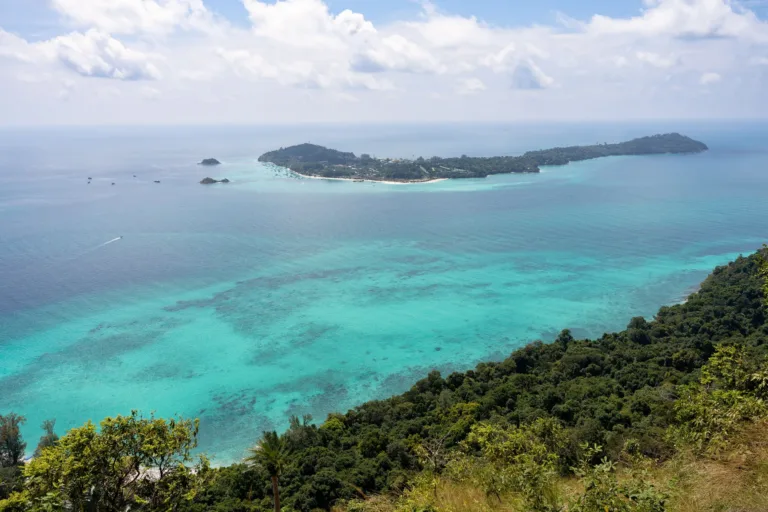 Ko Lipe
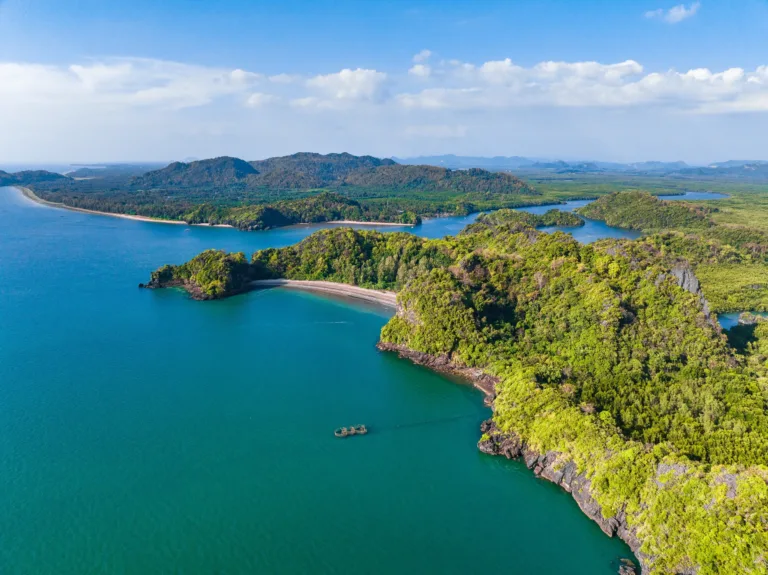 Satun UNESCO Global Geopark
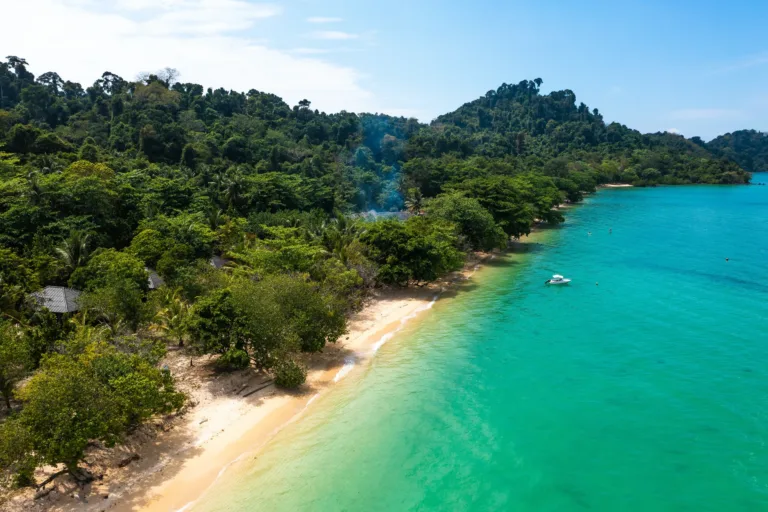 Ko Kradan