 01
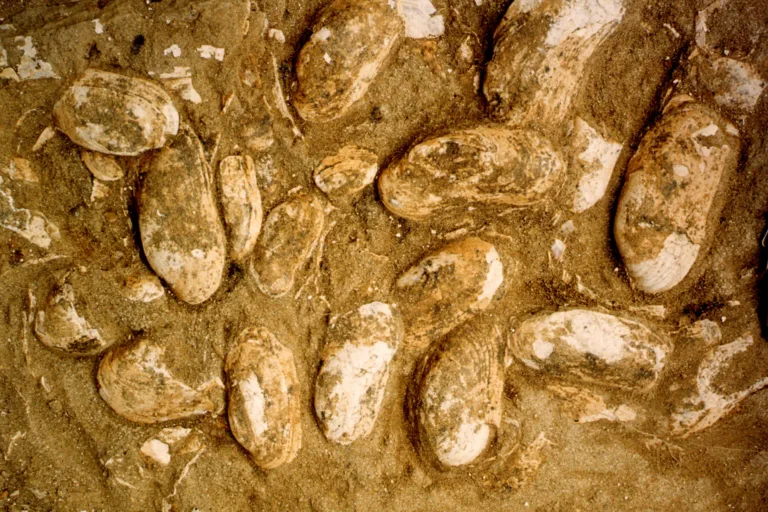
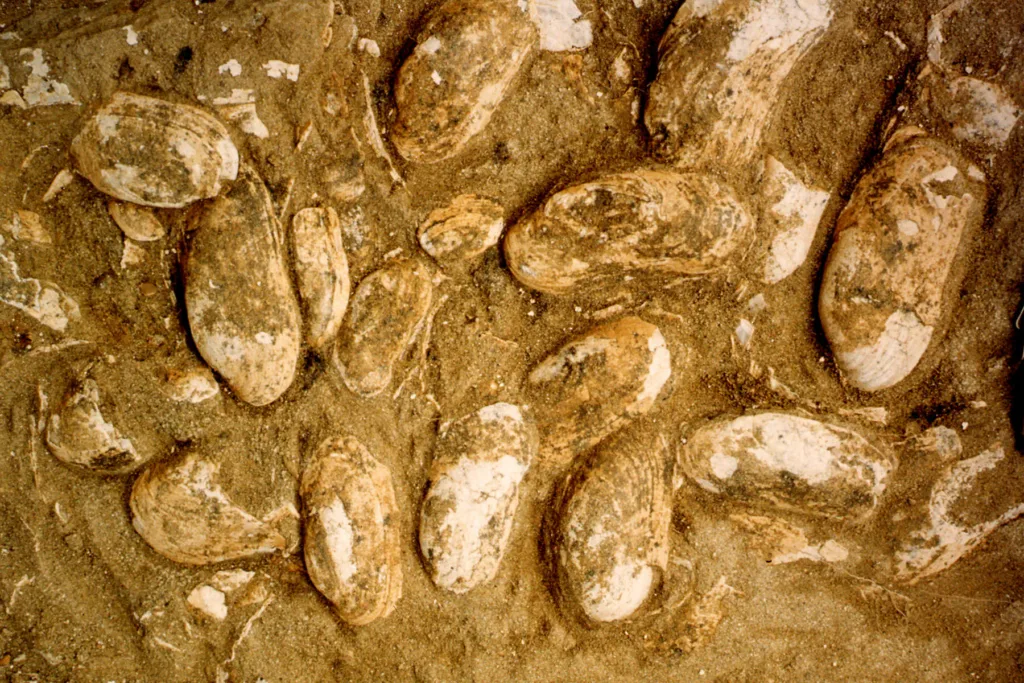
Shell fossil cliffRock packed with ancient freshwater mussels
A cliff of ancient shells · Nong Bua Lam Phu
An old quarry cliff at Ban Huai Duea, Nong Bua Lam Phu, packed with fossil freshwater mussels, with a museum and dinosaur park.
Hot (Afternoon) feels like 38°C
Tue–Sun 08:30–16:30 (closed Mon)
50 THB
1–2 hours
Long weekends and school field-trip periods
01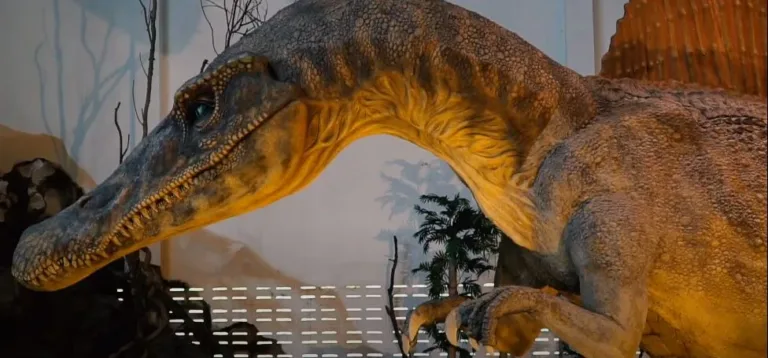 02
 03
Tap a day card to see that day’s weather, rain, haze and hourly forecast
Best time to go Fine all day little rain through the day
No warnings today — normal road and weather conditions
Green band = hours used for the score
Best time to go Fine all day little rain through the day
No warnings today — normal road and weather conditions
Green band = hours used for the score
Best time to go Fine all day little rain through the day
No warnings today — normal road and weather conditions
Green band = hours used for the score
Best time to go Best window 08:00–19:00 Little rain · light drizzle possible at times
No warnings today — normal road and weather conditions
Green band = hours used for the score
Best time to go Best window 06:00–16:00 Little rain · light drizzle possible at times
No warnings today — normal road and weather conditions
Green band = hours used for the score
Best time to go Fine all day little rain through the day
No warnings today — normal road and weather conditions
Green band = hours used for the score
Best time to go Fine all day little rain through the day
No warnings today — normal road and weather conditions
Green band = hours used for the score
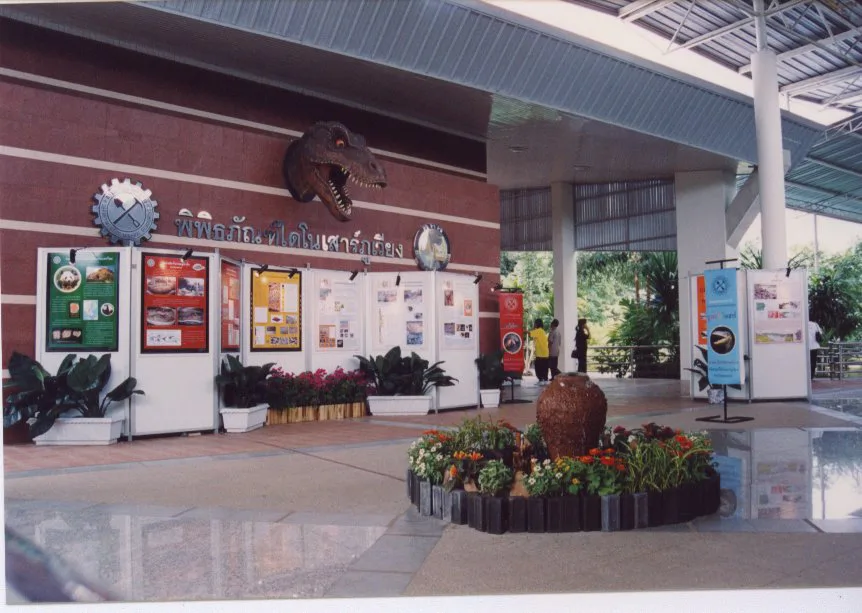
The 150-Million-Year Shell Fossil Cemetery, or the 150-Million-Year Shell Fossil and Non Than Dinosaur Museum, at Ban Huai Duea, Non Than, Mueang Nong Bua Lam Phu, is an old quarry cliff packed with fossil freshwater mussels, with an exhibition building and a dinosaur park.
Arrive Before 15:30 to see everything before the 16:30 close
Photos from Wikimedia Commons and contributors · full credits inClassic page
Adults 50 THB · Car 0 THB · Time needed 1–2 hours
Long weekends and school field-trip periods
| Adult entry (per Love Thailand) | 50 ฿/person |
| Child entry | 20 ฿/person |
| Foreign visitor entry | 100 ฿/person |
Mostly cash · Prices may change by season — check with the venue
Nong Bua Lam Phu Hospital · Tourist Police 1155 · Emergency 1669
Tap a month on the wheel to see weather, rain, haze and crowds from 10 years of records
Best time · Nov–Feb: cool weather for the cliff and outdoor dinosaur park
Watch out · Mar–May: very hot at midday. Closed on Mondays
Oct by the records 22–29°C · avg rain 158 mm (16 rainy days) · clear 6 days · avg PM2.5 11
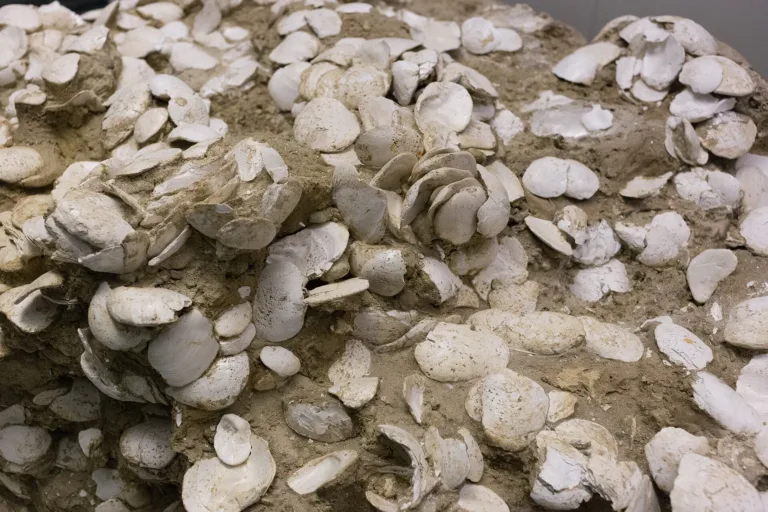
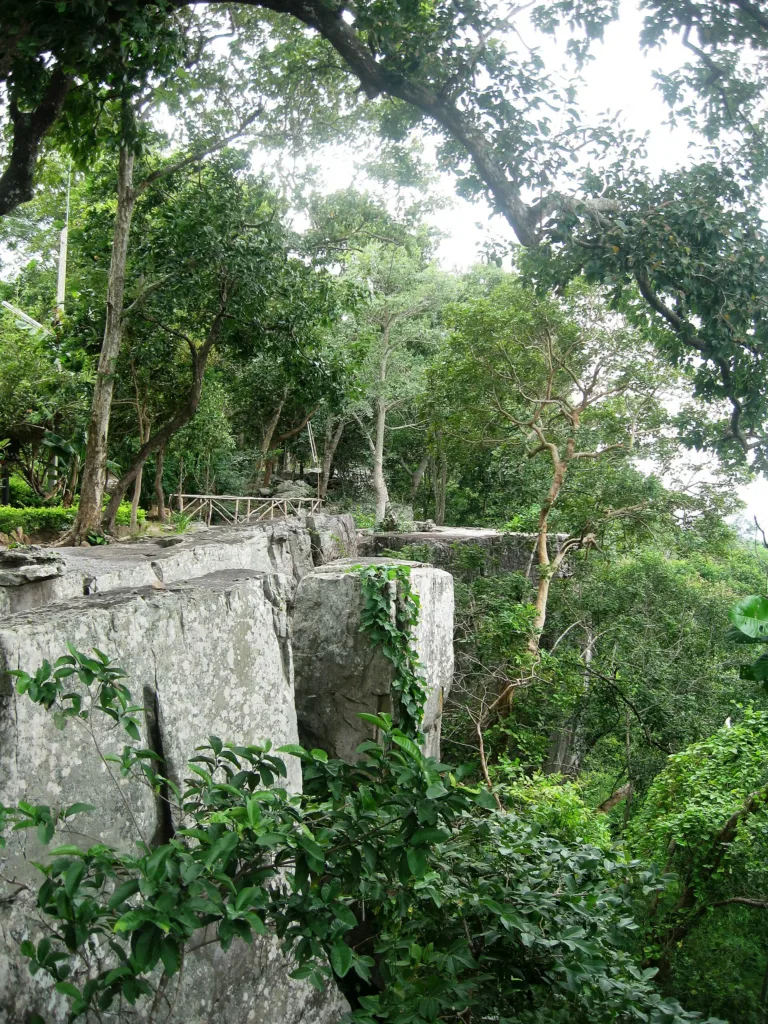
The 150-Million-Year Shell Fossil Cemetery, officially the 150-Million-Year Shell Fossil and Non Than Dinosaur Museum, is at Ban Huai Duea (Moo 10), Non Than subdistrict, Mueang Nong Bua Lam Phu, beside Highway 210 to Udon Thani, within the grounds of the Non Than Subdistrict Administrative Organization, which runs it. Its centrepiece is a rock face in an old quarry, which Love Thailand puts at about 50 m high, packed with fossil bivalve shells.
The search for fossils here began long before the shell find. A Kasetsart University page says that in 1976 Sutham Yaemniyom found Thailand's first dinosaur bone, a sauropod bone, during a uranium survey in Phu Wiang, Khon Kaen. Soon after, the Northeastern geological survey team found dinosaur and crocodile fossils in Nong Bua Lam Phu district, then part of Udon Thani province; the crocodile teeth were later named Sunosuchus thailandicus in 1984.
The site was once a sandstone quarry. The Nong Bua Lam Phu public relations office says blasting exposed a high cliff full of ancient shells; after the quarry was abandoned, villagers found attractive shell-patterned stones and dug out large amounts to sell. Love Thailand says villagers noticed the shell-shaped stones in the abandoned quarry around 1994.
The Department of Mineral Resources later surveyed the site and identified the fossils as bivalves of varying sizes. The provincial public relations office dates them to the Late Jurassic, about 150 million years ago, which gave the place its name; Love Thailand gives about 140–150 million years.
Later research paints a different picture. Sakboworn Tumpeesuwan's 2010 Chulalongkorn University PhD thesis studied 16 freshwater mollusc taxa from 12 localities in Nong Bua Lam Phu, Phu Wiang and Sahat Sakhan in the Sao Khua Formation and placed them in the Early Cretaceous, with the upper Sao Khua in the Late Barremian, about 125–130 million years ago. It named a new species, Pseudohyria (Matsumotoina) somanai, the first record of that subgenus in Thailand. A 2024 paper in Tropical Natural History lists Ban Huai Duea among the conglomeratic-sandstone shell beds of the upper Sao Khua Formation, so the "150 million years" in the name reflects the older dating.
These were freshwater river mussels. The same 2024 study examined a similar shell bed at Phu Kum Khao in Roi Et and interpreted it as sediment washed over a meandering river's banks; that bed also yielded freshwater hybodont shark teeth, fish bone, theropod teeth and sauropod bone fragments, a glimpse of Isan's river plains in the age of dinosaurs.
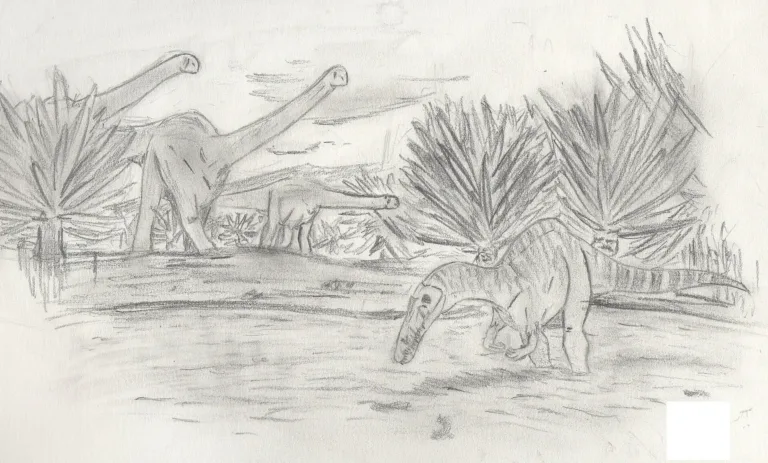
The Sao Khua Formation was named in 1964 by Ward and Bunnag. It is the middle unit of the Khorat Group, lying on the Phra Wihan Formation and under the Phu Phan Formation, about 120 m thick, made of sandstone, conglomerate, siltstone and reddish-brown claystone. English Wikipedia summarises it as a floodplain crossed by large meandering channels. It is one of Thailand's key dinosaur formations, with Phuwiangosaurus, Siamosaurus, Siamotyrannus and Kinnareemimus, plus ancient crocodiles, several freshwater shark genera and the bivalve Pseudohyria (Matsumotoina) somanai.
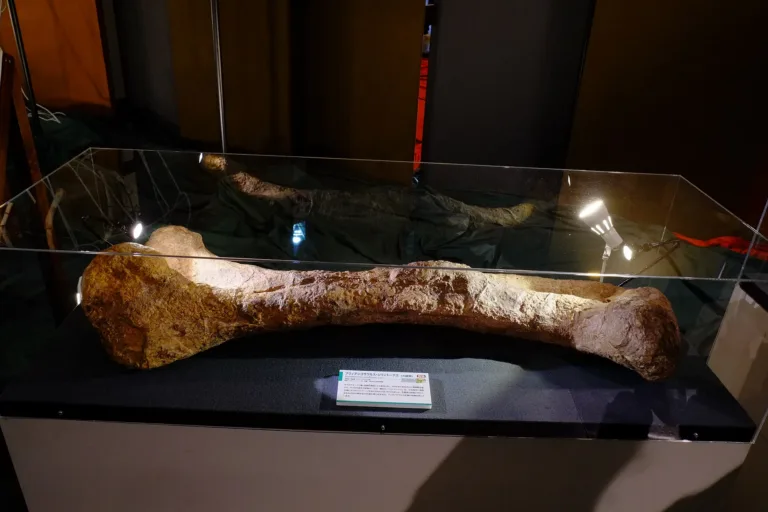
Other animals of the same age have been found here too. Love Thailand reports ancient crocodile remains and dinosaur bones in a layer about 2 m above the shell bed, including upper forelimb and lower hindlimb bones, a shoulder blade, finger bones and ribs. Matichon (2017) also reported a dinosaur skeleton and freshwater shark remains at Ban Huai Duea, and stone slabs in a small cave that ring like a drum when struck.
The single-storey exhibition building has a King Naresuan shrine in front. The provincial public relations office says it covers the universe, the solar system, the origin of life, evolution, dinosaurs and the fossils found at Ban Huai Duea, a replica of the cliff, how palaeontologists work, and tourist information for each district. Love Thailand mentions a model of Siamotyrannus isanensis about 4 m high and 7 m long, a carnivorous dinosaur discovered in the Sao Khua Formation at Phu Wiang, Khon Kaen.
Highway 210 in front of the museum has its own dinosaur story. MGR Online reported on 24 April 2006 that rock cutting for the Nong Bua Lam Phu–Udon Thani road at km 30 in Nong Bua subdistrict uncovered many herbivorous dinosaur fragments scattered over about 1 km². The contractor had to work carefully with Department of Mineral Resources staff on watch, and geologist Pratchaya Bamrungsong from Phu Wiang examined the site. The province asked people to return fossils they had taken, and many villagers did; rumours of dinosaur eggs were dismissed as round stones passed off for sale.
On 8 August 2020 the province opened the "Dino Park" in the museum grounds. Isan Daily Online reports deputy governor Wiangchai Kaewpinit presided; the 5-rai park has 10 moving dinosaur models, 36 dinosaur eggs, an artificial waterfall and a tram, built with 39,460,000 baht from the Upper Northeast provincial cluster budget.
Nong Bua Lam Phu also gave its name to a new dinosaur species. Thai PBS reported on 12 November 2019 that the Department of Mineral Resources announced Vayuraptor nongbualamphuensis, Thailand's 11th dinosaur. Its bones were found in 1988 in Phu Kao–Phu Phan Kham National Park by Phaladet Srisuk; about 130 million years old, it was a medium-sized carnivore about 4–4.5 m long with slender hind legs, named after Vayu, the wind god, plus the Latin raptor. English Wikipedia also records the freshwater sharks Isanodus and Lonchidion from Phu Phan Thong in the province.
Nong Bua Lam Phu has other fossil finds. Matichon reported in August 2017 that staff clearing a cliff at Phu Phan Noi found petrified wood shaped like a stump with roots, about 1 m long; the provincial administration chief estimated it at least 100 million years old, though this was unverified and a Khon Kaen geologist was to examine it. Naewna reports dinosaur fossils about 130 million years old at another site, Ban Huai Sai in Nong Bua subdistrict.
Finds keep coming. Spring News reported on 13 July 2023 that villagers foraging in the hills near Ban Huai Sai, Nong Bua subdistrict, found many bones in limy sandstone. The Department of Mineral Resources' Region 2 office made a preliminary identification of three dinosaur groups, a sauropod-like plant-eater, a fish-eater and a meat-eater. The bones are kept at Wat Pa Huai Sai Thong Nak Chai Phon, and villagers hope for a museum.
Arrived? Check in, collect a stamp and tell others what it is like right now
Check your location first, so you do not fill in the form for nothing
Location must be on and within 1 km · One check-in per place per day · come back on other days to check in again
Post photos from anywhere — no need to be here · Up to 20 photos at a time · JPG / PNG / WebP · GPS location data is removed automatically
On Highway 210 (Nong Bua Lam Phu–Udon Thani) in the Non Than…
Nong Bua Lam Phu town–Ban Huai Duea via Highway 210 · Fuel
Udon Thani–Ban Huai Duea via Highway 210 · Fuel
Bangkok–Nong Bua Lam Phu, then hire car or taxi · Per operator
Highway 210, paved all the way
Car park inside the museum grounds
Petrol stations in Nong Bua Lam Phu town and along Highway 210
Good 4G
Tue–Sun 08:30–16:30 (closed Mon)
around 12 km fromNong Bua Lam Phu town
Shell Fossil Museum Nong Bua Lam Phu
100 THB
Approx. nightly price for 2 adults (next week) · final price depends on your dates
Answers travellers want before they go — a one-minute read
The name follows an older Late Jurassic estimate; research from 2010–2024 places the rocks in the Early Cretaceous Sao Khua Formation, about 125–130 million years ago
Freshwater river mussels
Tue–Sun 08:30–16:30, closed Monday (some sources say daily)
Love Thailand lists adults 50, children 20, foreigners 100 baht; the provincial PR office (2023) listed 20/10/50 baht
No, the fossils must be conserved
Best day this week: Thursday 29 Oct · Check in when you arrive to collect a stamp