 01
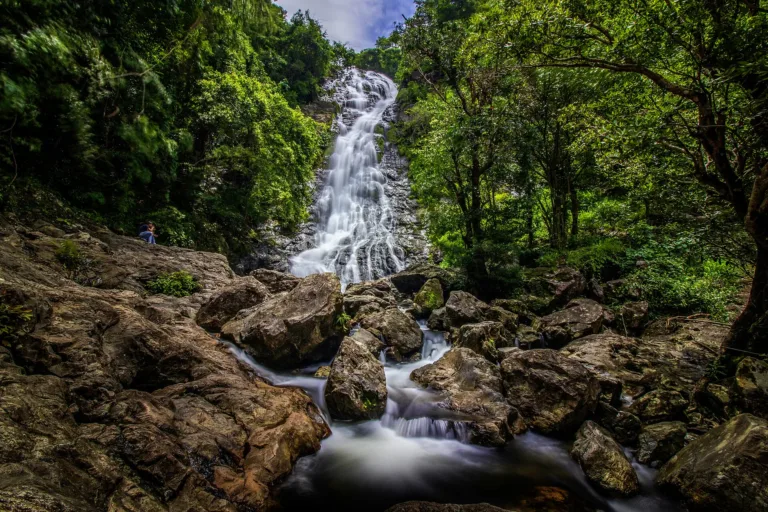
Cliff fallsWater from a high forest cliff
NAKHON NAYOK · MUEANG
A multi-tiered waterfall from the Khao Yai forest on the Nakhon Nayok side, with a cave linked to the revered forest monk Ajahn Mun beside it.
Holiday / event — crowded
This site closes at 17:00 — leave the falls before closing time
Jun – Sep (wettest)
Flash floods — The upper-tier current rises fast after rain
Daily 08:00–17:00
1–2 hours
01 02
 03
 04
Tap a day card to see that day’s weather, rain, haze and hourly forecast
Best time to go Daytime is over · see tomorrow
Holiday — traffic on the way up and parking fills fast; leave early
Green band = hours used for the score
Best time to go Fine all day little rain through the day
Holiday — traffic on the way up and parking fills fast; leave early
Green band = hours used for the score
Best time to go Fine all day little rain through the day · light drizzle possible at times
No official warnings, but watch for: Possible thunder 16:00–17:00 · Waterfall in the rain: slippery rocks, murky water, watch for flash floods
Green band = hours used for the score
Best time to go Fine all day little rain through the day
No warnings today — normal road and weather conditions
Green band = hours used for the score
Best time to go Fine all day little rain through the day · light drizzle possible at times
No official warnings, but watch for: Possible thunder 13:00–14:00 · Waterfall in the rain: slippery rocks, murky water, watch for flash floods
Green band = hours used for the score
Best time to go Fine all day little rain through the day · light drizzle possible at times
No official warnings, but watch for: Hot (Afternoon) feels like 38°C
Green band = hours used for the score
Best time to go Best window 06:00–14:00 Little rain · light drizzle possible at times
No official warnings, but watch for: Late morning (09:00–12:00): rain ~34%
Green band = hours used for the score
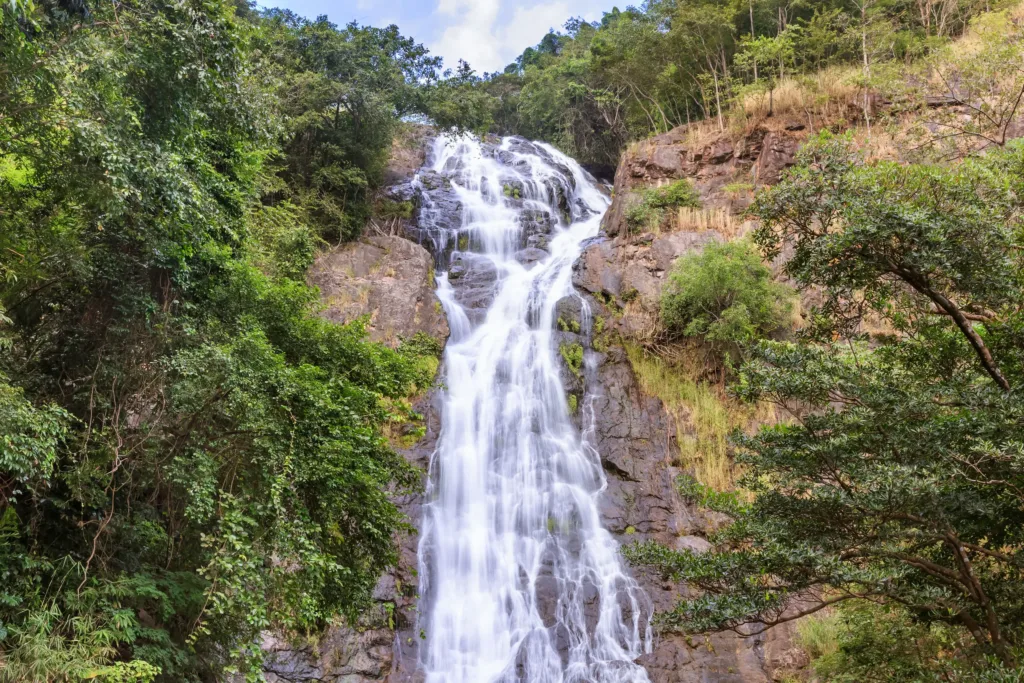
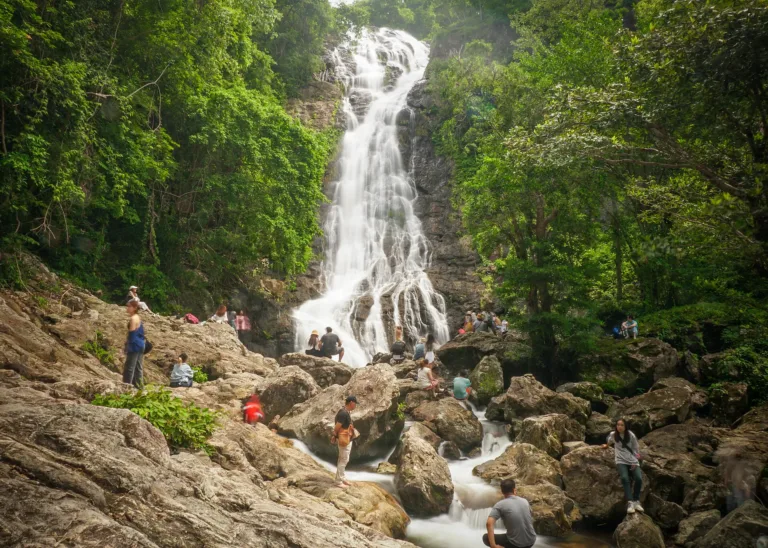
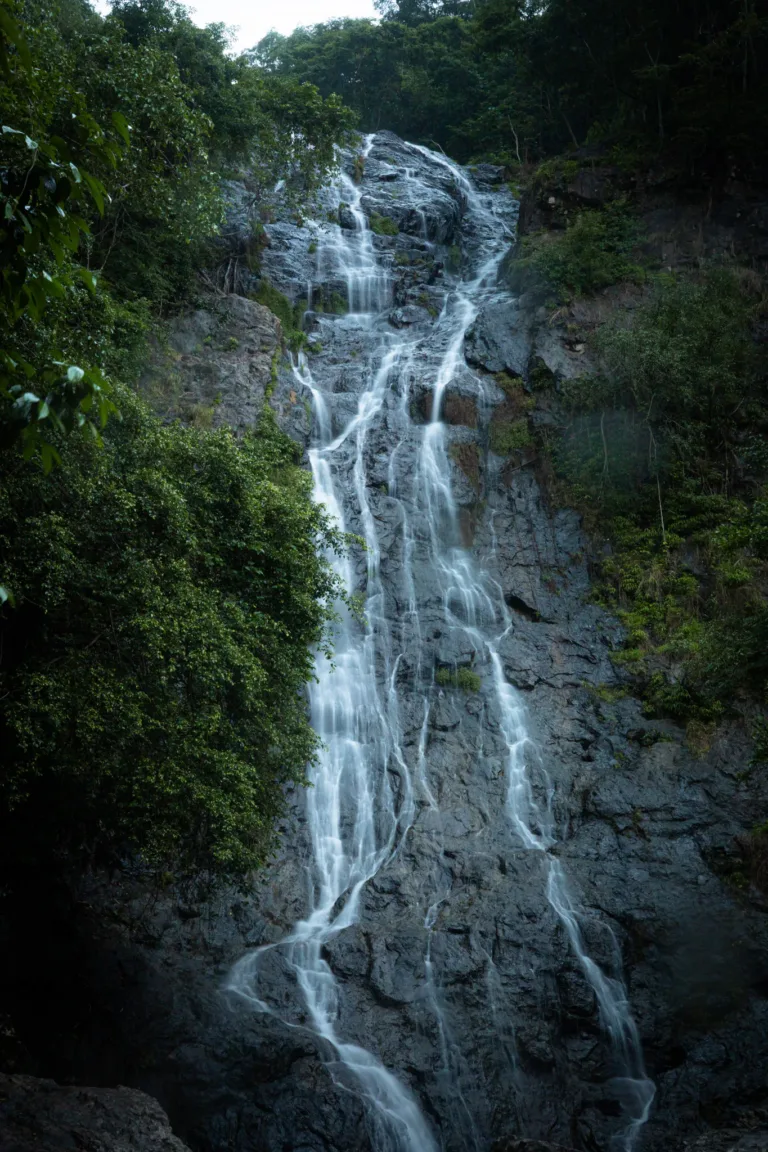
Sarika Waterfall tumbles in tiers from the Khao Yai forest on the Nakhon Nayok side, with its tallest cliff said to be about 200 m. Beside it is a cave where the revered forest monk Phra Ajahn Mun Bhuridatto once meditated, now Wat Tham Sarika.
Arrive Before 10:00 for fewer people and to avoid afternoon rain
Photos from Wikimedia Commons and contributors · tap a photo to see its credit
The upper-tier current rises fast after rain
Rocks round the pools are slippery even when dry
No eating at the falls; use the designated area
Narrow and slick long after rain
Thais 40 THB · Foreigners 200 THB · Car 30 THB · Time needed 1–2 hours
Weekends and long holidays
| Entry, Thai adult | 40 ฿/person |
| Entry, Thai child | 20 ฿/person |
| Entry, foreign adult | 200 ฿/person |
| Entry, foreign child | 100 ฿/person |
| Car | 30 ฿/vehicle |
Mostly cash · Prices may change by season — check with the venue
Tap a month on the wheel to see weather, rain, haze and crowds from 10 years of records
Best time · Oct – Feb still has good water after the rains, cool weather and less flood risk than mid-monsoon
Watch out · Aug – Sep brings flash floods and possible temporary closures; Mar – May has little water
Nov by the records 22–30°C · avg rain 97 mm (13 rainy days) · clear 6 days · avg PM2.5 12
Sarika Waterfall is in Sarika subdistrict, Mueang Nakhon Nayok, about 15 km from Nakhon Nayok town: about 12 km on Highway 3049, then about 3 km on Highway 3050. It lies in the Nakhon Nayok side of the Khao Yai forest, and closures during floods are announced by Khao Yai National Park.
The falls drop down a cliff in stages. Travel sources say there are nine or more tiers and give the tallest as about 200 m, a widely repeated figure with no official measurement found. Pools and big boulders lie at the base, and some sources call it Nakhon Nayok’s tallest and best-known waterfall.
The waterfall shares its name with Sarika subdistrict. “Sarika” is the name of a bird in Thai literature, but no document has been found confirming that the subdistrict or falls were named after it.
The province’s own name has several proposed origins. Silpa Wattanatham lists four: a king exempting farmers in this hard-to-farm area from rice-field tax (“yok na”); the town’s placement under the Samuhanayok (chief minister) in the Ayutthaya era; an old Khmer word, “koroyok”, meaning land that was won; and King Rama IV’s conclusion that it came from the Thai “Ban Na” (village of rice fields), equivalent to the Sanskrit-derived Nakhon Nayok.
Its headwater forest is part of Khao Yai, declared Thailand’s first national park on 18 September 1962 and part of the Dong Phayayen–Khao Yai Forest Complex, inscribed as a natural World Heritage Site in 2005.
Beside the falls is a cave linked to Phra Ajahn Mun Bhuridatto, one of the most revered forest meditation monks. A Matichon column says that around 1912 he wandered alone from Ubon Ratchathani and stayed at Tham Phai Khwang next to Sarika Waterfall, then dense jungle with tigers, elephants and venomous snakes. Farmers warned him that six monks had already died in the cave; he replied, “Then let me be the seventh.”
In the same account, after the first night he fell seriously ill with diarrhoea, so he vowed to sit in meditation for three days and nights without food, until he had a vision and gave up his aspiration to Buddhahood. This is a devotional story from his biography, and other sources give different years for his stay at Tham Sarika. The cave is now Wat Tham Sarika, where monks and nuns still practise and pilgrims stop by.
Phra Ajahn Mun Bhuridatto was born on 20 January 1870 at Ban Khambong, Ubon Ratchathani, and died on 11 November 1949 at Wat Pa Sutthawat, Sakon Nakhon. Wikipedia summarises that at Tham Sarika in 1912 he practised intensely despite chronic abdominal pain, contemplating impermanence and the foulness of the body, and refused medicine during his illness. Accounts of his attainment here vary: some disciples cite the biography compiled by Luang Ta Maha Bua; anthropologist Stanley Tambiah recounts a vision of a club-wielding guardian spirit who became his protector, which disciples see as attaining the non-returner stage; other sources place his final attainment at Tham Dok Kham, Phrao district, Chiang Mai, in 1935.
Manager Online says he came to Tham Sarika after receiving teachings from Phra Ubali Khunupamachan (Chan Sirichantho), and that after recovering he began teaching and taking disciples, the start of what became known as the “Dhamma army” of forest meditation monks. The cave itself is just a small hollow about 3 m deep beneath a big boulder, reached by about 100 m of stairs. Inside is a slightly smaller-than-life statue of Ajahn Mun; nearby are a meditating Buddha, a statue of Somdet Phra Phutthachan (To) and a life-size wax figure of Ajahn Mun. The temple is open about 06:00–17:00 and free.
In late 2019 UNESCO honoured Ajahn Mun as a person of global importance in the field of peace for his 150th birth anniversary (2020–21). The same year a community-tourism route “Following Luang Pu Mun” covering 36 sites in 12 provinces, including Wat Tham Sarika, was launched by ThaiBev and the Sirivadhanabhakdi Foundation with the Community Development Department.
Waterfalls on the Nakhon Nayok side of Khao Yai carry a lot of water and change fast in the rains. On 21 September 2016, for example, more than 151 mm of rain in a day sent strong flows down from Khao Yai, and staff banned swimming at nearby Nang Rong Waterfall.
On 26 August 2022 Khao Yai National Park temporarily closed Sarika Waterfall, along with Nang Rong, Haew Suwat and Takhro waterfalls, to watch for flash floods; Haew Narok was closed from 1 August to 30 September that year, and the Nakhon Nayok disaster office posted no-swimming signs at some falls.
Streams from Khao Yai on the Nakhon Nayok side also feed the Khun Dan Prakan Chon Dam, with a capacity of about 225 million cubic metres. Overnight on 4–5 August 2024, water flowing down from the dam area flooded resorts in Hin Tang subdistrict to about 50 cm within minutes and damaged more than 20 cars; operators believed it came from a release through the lower outlet, though this was unconfirmed. It shows how fast water levels can change here in the rains.
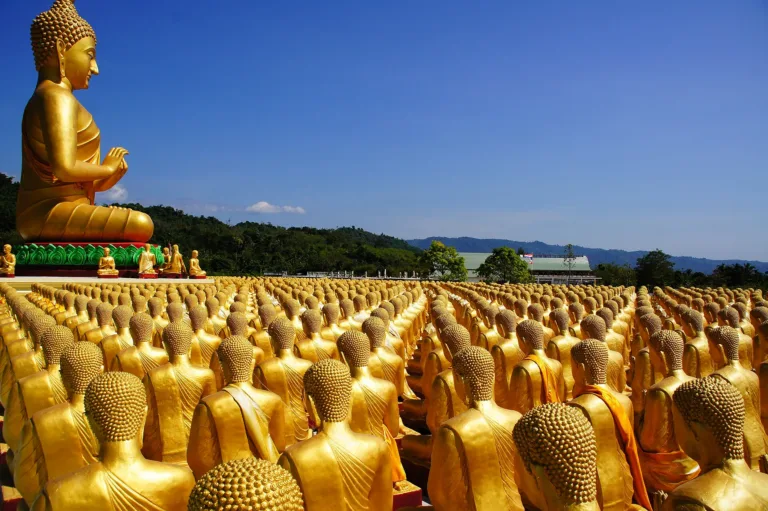
On Highway 3050 on the way to the falls is the Makha Bucha Memorial Buddhist Park, built in 2012 to mark 2,600 years since the Buddha’s enlightenment. Its principal image is 9 m across the lap and 13 m tall, surrounded by 1,250 Buddha images each 90 cm across the lap and 80 statues of great disciples recreating Makha Bucha Day. It is open 06:00–18:00.
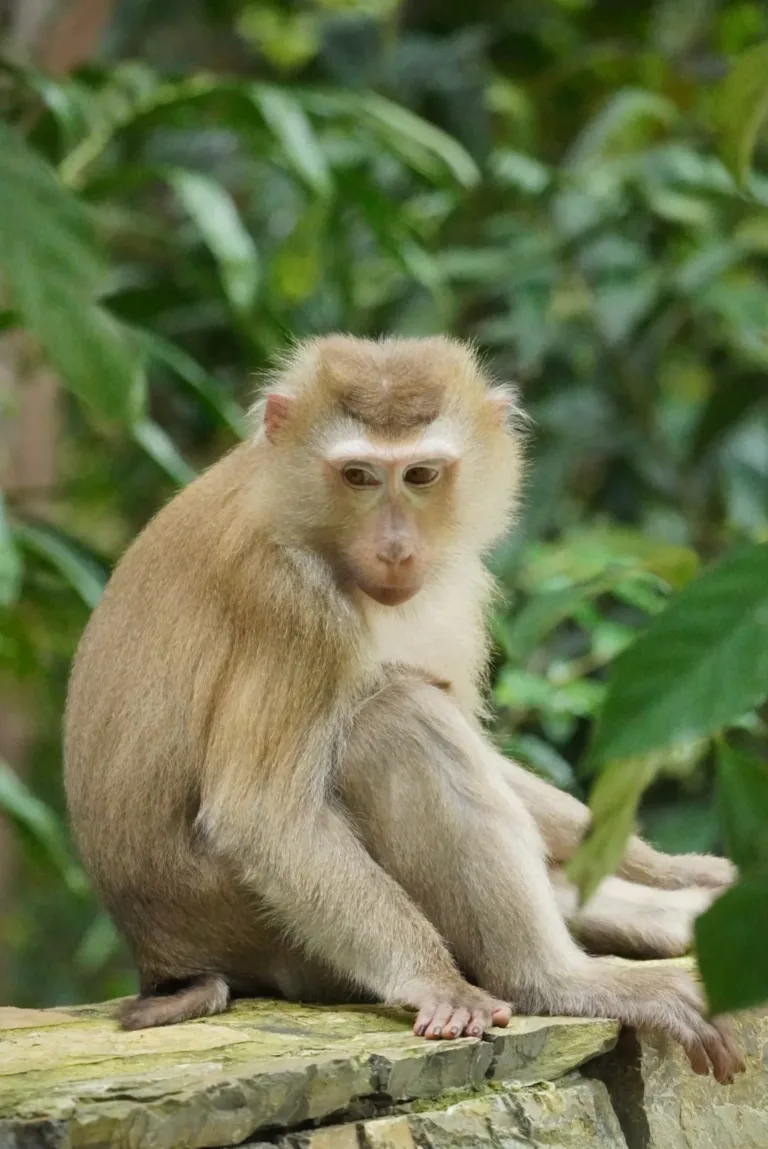
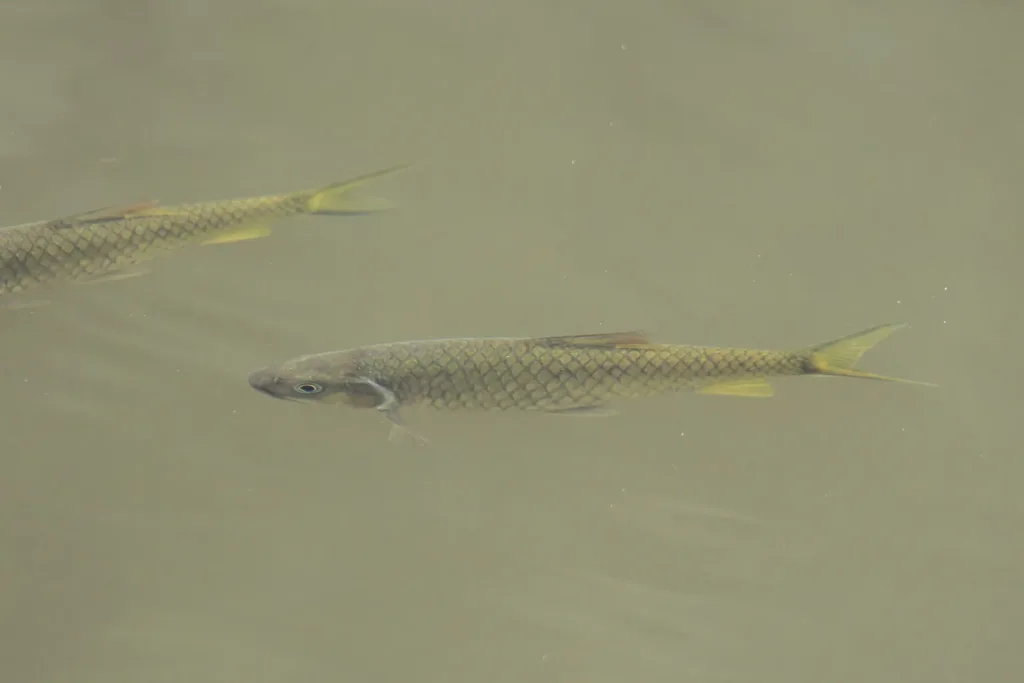
The surrounding forest supports varied wildlife. Wikimedia Commons photos taken near the area include northern pig-tailed macaques and the hill-stream barb Poropuntius deauratus, which lives in clear mountain streams.
Sarika is close to Nakhon Nayok’s other highlights: Wang Takhrai about 8 km away, Lan Rak Waterfall about 8 km, Khun Dan Prakan Chon Dam about 9 km, Nang Rong Waterfall about 10 km and Khao Chong Lom about 12 km, so they combine easily in a day.
Food is not allowed at the waterfall itself, only in the designated area. The upper trail is narrow and stays slippery long after rain, the rocks around the pools are slippery even when dry, and the current on the upper tiers picks up quickly after rain. Swim only where permitted and obey closure signs.
The best time is the late rains to early cool season, roughly October to February, with good water and pleasant weather. At the height of the rains the falls are most impressive but flood-prone and may close; in the dry season the flow drops sharply.
Arrived? Check in, collect a stamp and tell others what it is like right now
Check your location first, so you do not fill in the form for nothing
Location must be on and within 2.1 km · One check-in per place per day · come back on other days to check in again
Post photos from anywhere — no need to be here · Up to 20 photos at a time · JPG / PNG / WebP · GPS location data is removed automatically
From Nakhon Nayok town take Highway 3049 for about 12 km.
Via Rangsit–Nakhon Nayok (Highway 305) · Fuel
Highways 3049 and 3050 · Fuel
From Nakhon Nayok town take Highway 3049 for about 12 km, then turn left onto Highway 3050 (Nakhon Nayok–Sarika Waterfall) for about 3 km.
Car park in front of the falls
Petrol stations in Nakhon Nayok town and on Highway 3049
Usable at the car park; may be weak in the forest
Daily 08:00–17:00
about 15 km from Nakhon Nayok town
Sarika Waterfall
200 THB
Approx. nightly price for 2 adults (next week) · final price depends on your dates
Answers travellers want before they go — a one-minute read
Thai adults 40 baht, children 20; foreigners 200/100; car 30 baht
Daily 08:00–17:00; may close during flash floods
Travel sources say nine or more, with a tallest cliff of about 200 m
He meditated in a cave beside the falls, now Wat Tham Sarika
No, only in the designated area
Best day this week: Tuesday 1 Dec · Check in when you arrive to collect a stamp
 Wang Takrai Park
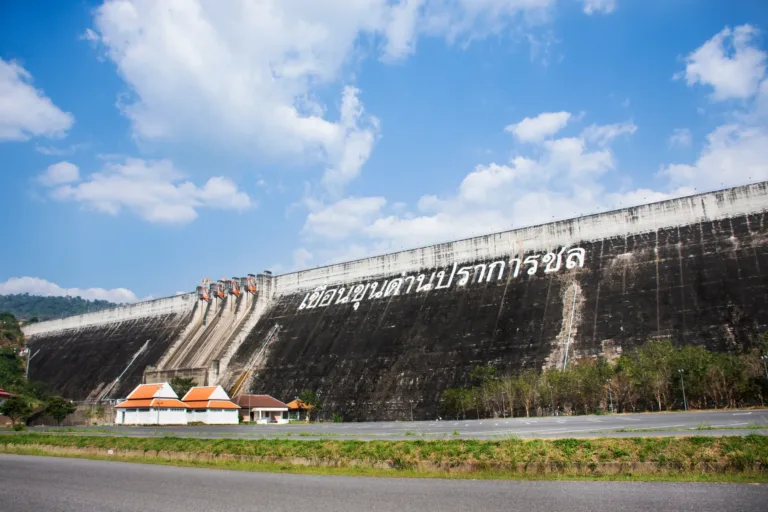 Khun Dan Prakan Chon Dam
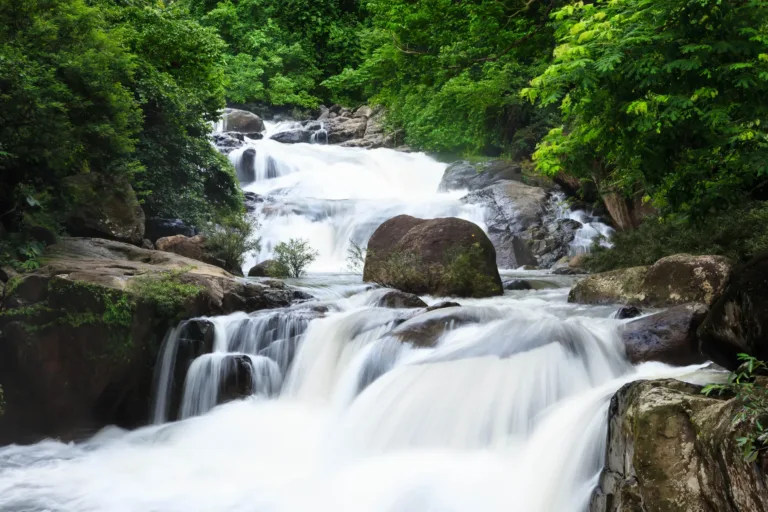 Nang Rong Waterfall