 01
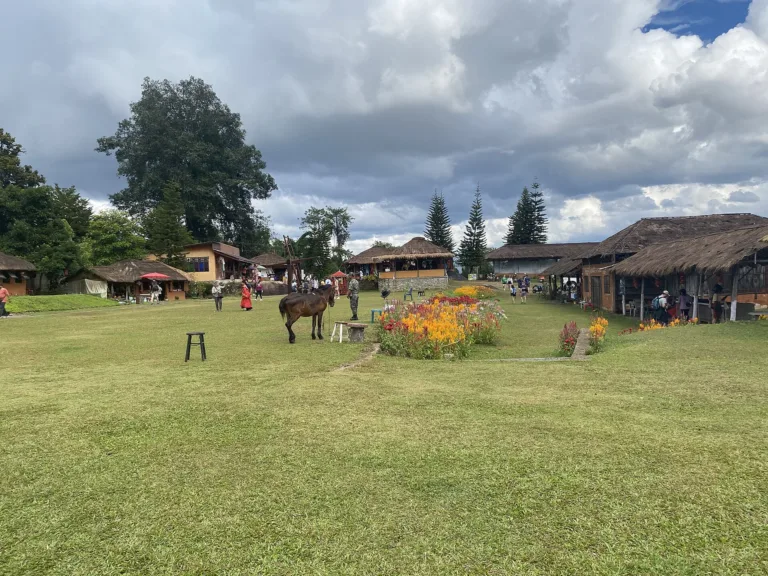
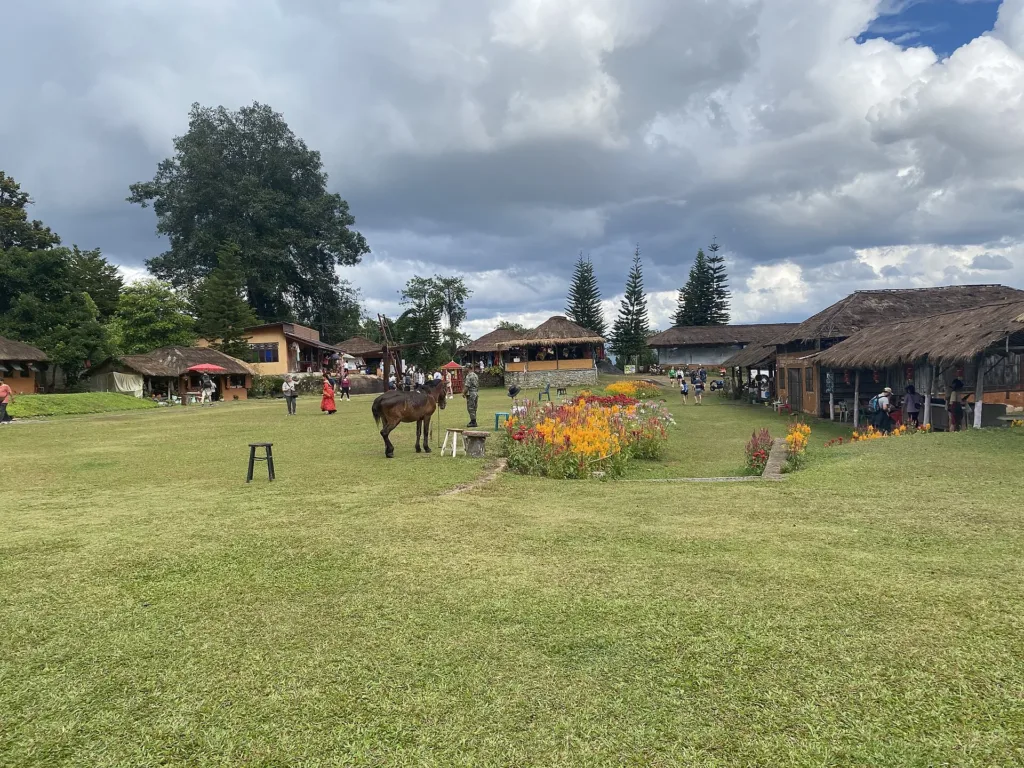
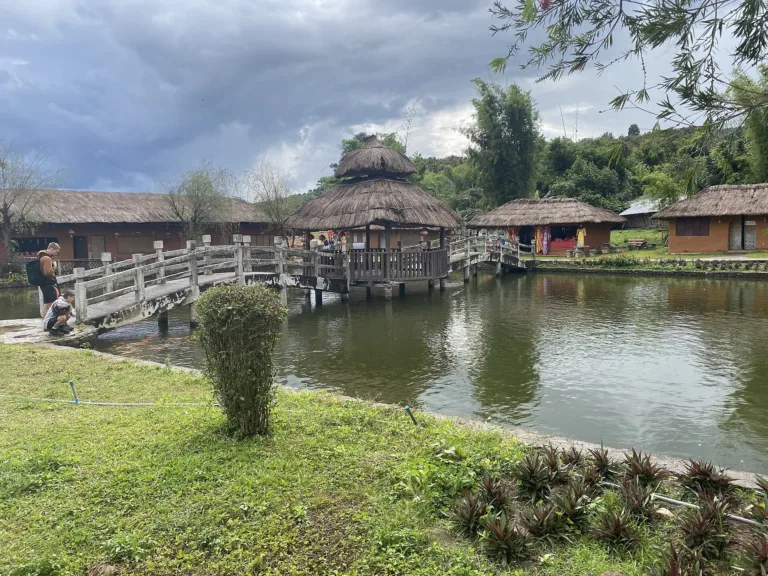
Yunnanese village atmosphereEarth houses, red lanterns, Chinese gate
Yunnanese village · Pai
A Yunnanese Chinese (Chin Haw) village on the western slopes of the Pai valley, 4–5 km from town, founded in 1975 by descendants of KMT 93rd Division soldiers and civilians. Free entry, earth houses, Chinese tea, pork leg with mantou and the Yun Lai viewpoint.
Holiday / event — crowded · Chance of a sea of mist 5/10
sea-of-mist places: morning matters most
About 07:00–18:00 (shops and activities)
Free
1–2 hours
Weekends and holidays, Nov–Feb
01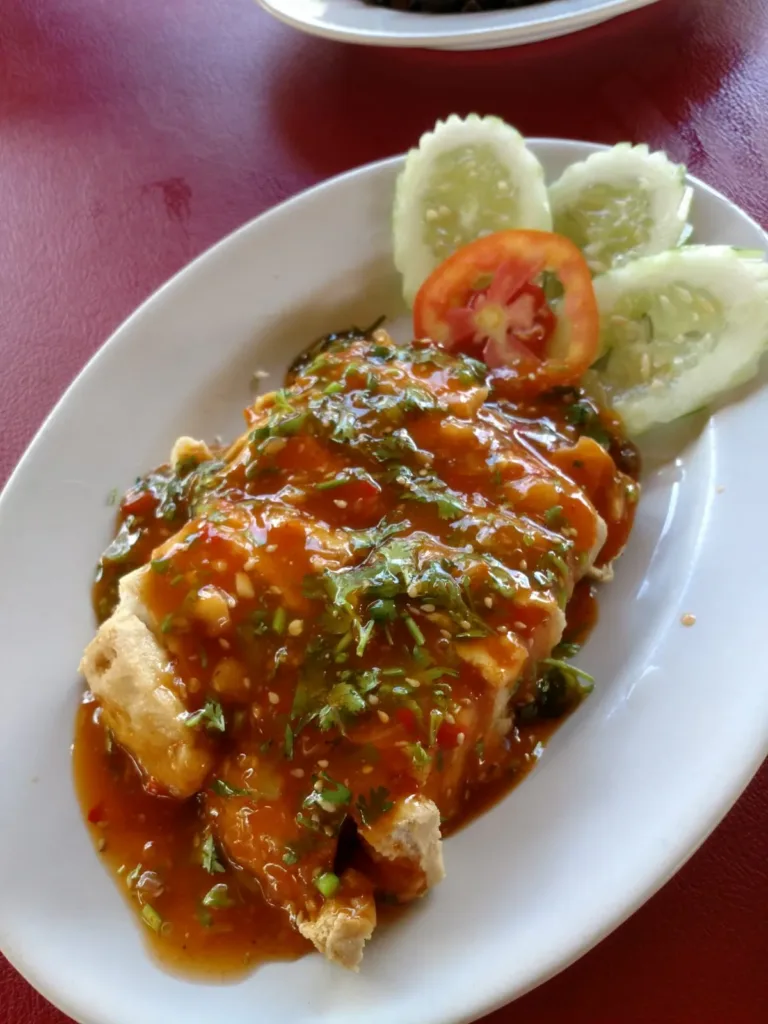 02
 03
 04
Tap a day card to see that day’s weather, rain, haze and hourly forecast
Best time to go Fine all day little rain through the day
Holiday — traffic on the way up and parking fills fast; leave early
Green band = hours used for the score
Best time to go Fine all day little rain through the day
Holiday — traffic on the way up and parking fills fast; leave early
Green band = hours used for the score
Best time to go Fine all day little rain through the day · light drizzle possible at times
Holiday — traffic on the way up and parking fills fast; leave early
Green band = hours used for the score
Best time to go Best window 06:00–14:00 Little rain
No warnings today — normal road and weather conditions
Green band = hours used for the score
Best time to go Best window 06:00–14:00 Little rain · light drizzle possible at times
No warnings today — normal road and weather conditions
Green band = hours used for the score
Best time to go Fine all day little rain through the day
Thick morning fog with visibility under 1 km — use headlights and drive slowly
Green band = hours used for the score
Best time to go Fine all day little rain through the day
Thick morning fog with visibility under 1 km — use headlights and drive slowly
Green band = hours used for the score
Scored from cloud cover at every level and tonight’s moonlight — the darker the sky, the clearer the Milky Way · tap another night below for the next 7 nights
Santichon Village (Yunnan Chinese Cultural Village), Wiang Tai, Pai, Mae Hong Son.
Arrive 06:00 if going up to Yun Lai for the mist
Morning sea of mist at Yun Lai, Nov–Feb
Photos from Wikimedia Commons and contributors · full credits inClassic page
Ask before photographing people or inside homes
The road up to Yun Lai is steep; take care on a motorbike
Adults 0 THB · Time needed 1–2 hours
Weekends and holidays, Nov–Feb
| Yunnanese swing optional | 20 ฿/person |
| Chinese costume rental optional | 100 ฿/person |
| Pony ride optional | 50 ฿/person |
| Yun Lai viewpoint entry optional | 20 ฿/person |
| Yun Lai shuttle optional | 30 ฿/person |
| Chinese tea tasting optional | 20 ฿/person |
Cash; some shops take transfers · Prices may change by season — check with the venue
Chinese New Year (Jan–Feb)
Tap a month on the wheel to see weather, rain, haze and crowds from 10 years of records
Best time · Nov–Feb is cool, with a sea of mist at Yun Lai
Watch out · Mar–Apr is hazy · in the rains the road to Yun Lai gets slippery
Oct by the records 21–29°C · avg rain 114 mm (19 rainy days) · clear 4 days · avg PM2.5 6
Ban Santichon is in Moo 5, Wiang Tai subdistrict, Pai, on a hillside on the western edge of the Pai valley about 4–5 km from Pai town — the same road as Wat Nam Hu, a little further on, 10–15 minutes by motorbike. Most residents are Yunnanese Chinese, known in Thai as Chin Haw. It is also called the Yunnan Chinese Cultural Village; travellers write Santichon or Chinese Yunnan Cultural Village.
Santichon's story starts with the Chinese civil war. When the Communists won in 1949, some of Chiang Kai-shek's Kuomintang (Nationalist) troops withdrew to Taiwan, but the armies in Yunnan were cut off. Silpakorn University research says the refugees formed two groups: armed soldiers, and Chin Haw civilians who fled with them.
Around late 1949 to early 1950 the 13th Army retreated into Burma's Shan State. About 1,700 remaining men under General Li Mi became known as the "93rd Division", based first around Kengtung and Tachilek and later at Mong Hsat. In 1951–52 the force tried several times to invade Yunnan and failed.
Burma complained to the United Nations in 1953, and a four-nation commission of Burma, the US, Taiwan and Thailand met in Bangkok. A first group was flown to Taiwan via Chiang Rai in 1953–54, but about 6,000 irregulars stayed. A second evacuation in 1961 took about 4,400 more; the rest crossed into Thailand and Laos.
In Thailand the Nationalist soldiers set up border communities such as Santikhiri (Doi Mae Salong), and the Thai government later used the 3rd and 5th Armies against the Communist Party of Thailand in exchange for legal status. Wikipedia says KMT soldiers reached the Pai area in the early 1960s, and a community post on gotoknow says most Chin Haw in Mae Hong Son descend from the 93rd Division and long lived along the border without ID cards. Matichon and Thansettakij add firmer dates: the first airlift to Taiwan left on 7 November 1953, Taiwan ended support for the 93rd Division in 1961, the Thai cabinet allowed the 3rd and 5th Armies to stay on 6 October 1970, and their return to Thai society is tied to Order 66/1980. No source names the unit that settled at Santichon.
"Haw" is an old Lanna and Lan Xang word for Chinese from Yunnan; some think it goes back to the Nanzhao kingdom around Lake Erhai and Dali. Siam fought "Haw wars" in 1875–1887, but the Chin Haw of the Pai valley today are a later wave who fled war.
Research by Tepita Suehan and Ornsiri Panint (Veridian E-Journal, Silpakorn University, 2015) says Ban Santichon was founded in 1975, citing a 2009 record by Pisamai Lorariyawat, a villager and community researcher, so the date comes from the village itself. Sources that say "more than 70 years" count from when the community left China. No source explains the name directly; a Chinese travel page calls the village 南湖山地村, and Santichon may come from the Chinese "San Ti Chuen" (山地村, "mountain village") while also meaning "peace" and "water" in Thai — still a guess.
The original houses stepped up the hillside along lanes off the main road, with raw-earth or woven-bamboo walls and thatched roofs: single-storey, three bays with a central hall flanked by bedrooms, a separate kitchen and toilet, a courtyard and a front veranda. Later, when the Taiwanese government helped rebuild, many earth houses were replaced by plastered brick on the same plan.
Villagers told gotoknow in August 2006 that drugs reached the village around 1989; the problem grew until a crackdown in about 1994–95, followed by six or seven years of fear and hardship. Bangkok Biz News says the village was almost shut off because of drugs before turning to tourism after the 2003 drug suppression campaign. One source insists villagers never grew opium, so it was probably a transit route rather than a growing area.
A village assembly declared Santichon drug-free around 2003–04 and set up the Yunnan Chinese Cultural Center to create jobs and change the village's image. It was officially opened on 9 February 2005 by Mae Hong Son deputy governor Prasit Prasertsri.
Around 2006 village head Boonlor Lorariyawat, then in his second year, ran a village of 190 households and about 1,070 people with four deputies and 13 committee members, each looking after about ten households. The village worked with the military, the Thailand Research Fund and the Mae Hong Son research office. Its gateway took about 3,000 workdays over 72 days but was damaged by the 2005 Pai floods. The gate was built after villagers made a study visit to Ban Rak Thai, and a 2006 account says the driving goal behind the changes was to become Thai citizens and live in peace.
Livelihood groups raised chickens, grew organic vegetables, sewed, made Chinese cloth shoes and turned soybeans into tofu and snacks. In mid-2006 community-tourism networks from Kalasin, Nakhon Phanom, Mukdahan and Sakon Nakhon came on a study visit and were served a Chinese banquet, mantou buns and oolong tea, with kung fu and Yunnanese performances.
Chinese New Year is the village's liveliest time: an account of 17 February 2007 describes red lanterns, families reuniting and Yunnanese hotpot shared together, and calls Santichon the only Yunnanese Chinese village in Pai.
Fieldwork in 2012 found houses still single-storey but extended, especially along the main road where fronts became shops. New additions included the cultural center, a viewpoint, a village Buddhist temple and a church. Most building is now cement, block, zinc and plywood, with few true earth houses left. The village temple later fell into disuse, as residents prefer shrines and ancestor worship.
Villagers speak Yunnanese Chinese and Thai and keep ancestor and shrine worship alongside Buddhism and Christianity, and the village has its own Chinese-language school. Signature foods are braised pork leg with mantou, black-chicken soup, steamed buns, tofu, and oolong and pu-erh tea. About 100 m away is Ban Mai Sahasamphan, a Lisu village, and Lisu and Lahu communities who arrived in the early 20th century live around the Pai valley.
One to two kilometres above the village is the Yun Lai viewpoint (雲來, "the clouds come"), known for a sea of mist until late morning, with tea and buns for sale and entry of about 20 baht. In 2020 villagers ran a shuttle at 30 baht a head once about ten people gathered, or 300 baht private. Next door, the Fong Yun orange farm rents Chinese costumes for photos. Today the viewpoint is run by the community: 20 baht entry includes free tea, and camping costs about 100–300 baht. A Chinese blog's claim that Taiwan gave the village tea seeds is unconfirmed and may be confused with Doi Mae Salong.
Some foreign visitors say Santichon feels more like a commercial theme park than a village, but the Silpakorn research concluded that tourism changed shops and extensions, not the core house form. It is both a lived-in community and a cultural plaza built for visitors. In 2019 it was registered as a community museum on the Museum Thailand database, and in 2026 it is still free and one of Pai's most popular stops.
Arrived? Check in, collect a stamp and tell others what it is like right now
Check your location first, so you do not fill in the form for nothing
Location must be on and within 0.8 km · One check-in per place per day · come back on other days to check in again
Post photos from anywhere — no need to be here · Up to 20 photos at a time · JPG / PNG / WebP · GPS location data is removed automatically
Paved; steep on the way up to Yun Lai
From Pai town via Wat Nam Hu · Fuel
Combine with Wat Nam Hu and other sights · By arrangement
To Pai, then local transport · About 150–250 baht
From Pai town pass Pai Hospital to the ring road, turn left then first right, and continue past Wat Nam Hu for 4–5 km
Free parking in the village
Good
About 07:00–18:00 (shops and activities)
around 5 km fromPai town
Santichon Village
0 THB
Approx. nightly price for 2 adults (next week) · final price depends on your dates
Answers travellers want before they go — a one-minute read
Yunnanese Chinese (Chin Haw), descendants of KMT soldiers and civilians who fled through Burma
In 1975, per Silpakorn University research; the cultural center opened on 9 Feb 2005
The village is free; activities cost extra, e.g. swing 20 baht, costumes 100 baht
About 4–5 km, 10–15 minutes
Pork leg with mantou and Yunnanese tea
Both: people live there, and there is a cultural plaza for visitors
Yes, in earth-house lodgings; check current prices
Best day this week: Thursday 29 Oct · Check in when you arrive to collect a stamp