 01
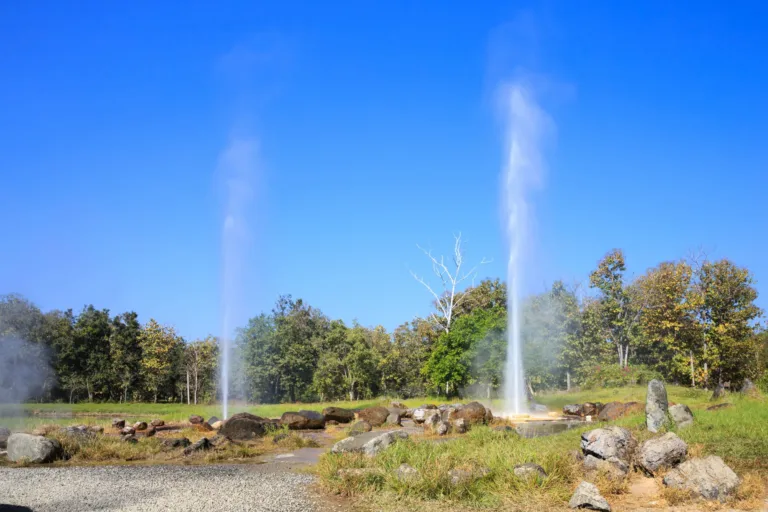
Spouting springMineral water shoots up some 15–20 m; on sunny days you often see a rainbow in the spray
Natural hot springs · Mae On, Chiang Mai
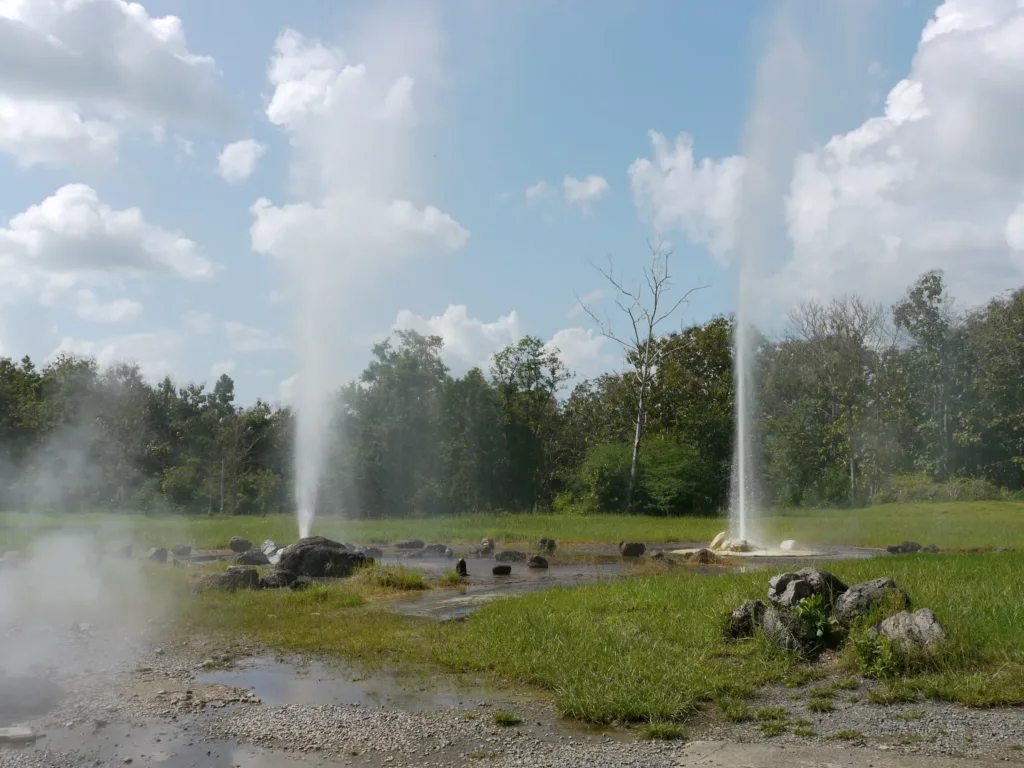
Natural hot springs in the royally initiated San Kamphaeng Cooperative Village, Mae On, about 36 km from Chiang Mai: spouting geysers, egg boiling, free foot soaks and mineral baths.
Holiday / event — crowded
May – Oct
Scalding source — Water at the spring is about 100–105°C; never put hands or feet in and keep children away from the railings
2–3 hours
01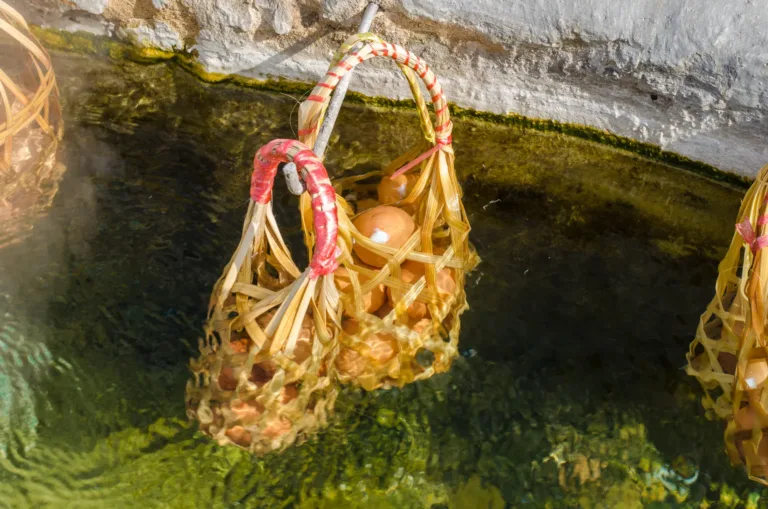 02
 03
Tap a day card to see that day’s weather, rain, haze and hourly forecast
Best time to go Daytime is over · see tomorrow
Holiday — traffic on the way up and parking fills fast; leave early
Green band = hours used for the score
Best time to go Fine all day little rain through the day
Holiday — traffic on the way up and parking fills fast; leave early
Green band = hours used for the score
Best time to go Fine all day little rain through the day
No warnings today — normal road and weather conditions
Green band = hours used for the score
Best time to go Fine all day little rain through the day
No warnings today — normal road and weather conditions
Green band = hours used for the score
Best time to go Fine all day little rain through the day
No warnings today — normal road and weather conditions
Green band = hours used for the score
Best time to go Fine all day little rain through the day
No warnings today — normal road and weather conditions
Green band = hours used for the score
Best time to go Fine all day little rain through the day
No warnings today — normal road and weather conditions
Green band = hours used for the score
Scored from cloud cover at every level and tonight’s moonlight — the darker the sky, the clearer the Milky Way · tap another night below for the next 7 nights
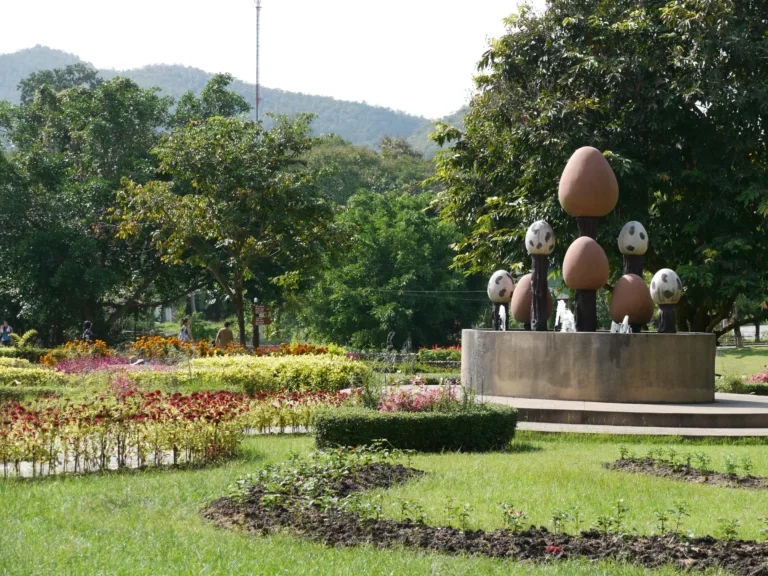
San Kamphaeng Hot Springs sit inside the royally initiated San Kamphaeng Cooperative Village in Ban Sahakon Subdistrict, Mae On District. The name comes from San Kamphaeng District, which ran the area before Mae On became a district of its own. It is about 36 km east of Chiang Mai, roughly an hour by car.The main draw is the spring itself: water at around 100–105°C shoots some 15–20 m into the air, hot enough to boil eggs in a few minutes. Downstream it cools to about 40°C in an open channel where you can soak your feet for free. Paid extras include communal mineral baths, a mineral swimming pool, private soaking rooms, Thai massage, rooms and a campground, all set in a garden of about 75 rai.Part of the income goes back to the cooperative villages. A major upgrade into a national thermal wellness model has been under way since 2025, so some areas may be fenced off for construction; check the latest notices before you go.
Arrive 09:00 to beat the crowds
Water at the spring is about 100–105°C; never put hands or feet in and keep children away from the railings
Paths around the springs and the foot channel are always wet; wear shoes with good grip
A redevelopment runs through 2026–2029; some areas may close or paths may move
Over New Year and long weekends the car park fills early, so arrive in the morning
Thais 40 THB · Foreigners 100 THB · Car 40 THB · Time needed 2–3 hours
10:00–15:00 on holidays
| Entry, Thai child optional | 20 ฿/person |
| Entry, Thai senior (with ID) optional | 20 ฿/person |
| Entry, foreign child optional | 50 ฿/person |
| Mineral swimming pool (price may change) optional | 50 ฿/person |
| Private soaking room (price may change) optional | 65 ฿/person |
| Basket of eggs to boil optional | 20 ฿/person |
Prices may change by season — check with the venue
San Kamphaeng Hot Springs are natural hot springs inside the royally initiated San Kamphaeng Cooperative Village project in Ban Sahakon Subdistrict, Mae On District, Chiang Mai. The name comes from San Kamphaeng District, which ran the area before Mae On was split off. The site has no ancient past; its story is where three threads meet: a land-allocation project for poor farmers, Thailand's first geothermal exploration, and the decision to turn the springs into a visitor attraction whose income goes back to the villages, followed by the large redevelopment now under way.
The starting point was the cooperative village. Thansettakij reports that King Bhumibol Adulyadej (Rama IX), concerned about rural poverty in the North, initiated the Cooperative Village project in 1977 as a joint effort of the Ministry of Interior and the Ministry of Agriculture and Cooperatives. More than 22,000 rai of degraded forest were allocated to about 385 families, each receiving around 200 square wah for a house and 5–7 rai of farmland; the residential area later grew to over 3,000 rai.
Sources disagree on the start year. A Land Development Department document on royal projects says the San Kamphaeng Cooperative Village project first began operating in 1975, a year also used by Thansettakij in 2024, while 2026 news reports use 1977. The same document puts the project area at 35,863 rai across villages 1–8 of Ban Sahakon, notes that members formed the Ban Sahakon San Kamphaeng agricultural cooperative, and says the project is overseen by a cabinet-appointed committee chaired by a Privy Councillor. In 2003 responsibility moved from the Office of Accelerated Rural Development to the Department of Social Development and Welfare.
The second thread is geothermal energy. A 1986 paper by Tavisakdi Ramingwong and Surachai Praserdvigai in the Bulletin of the Geological Society of Malaysia says systematic study of the San Kamphaeng geothermal field began in late 1977, involving Chiang Mai University, the Electricity Generating Authority of Thailand (EGAT) and the mineral resources authorities. A 1987 paper by S. Chuaviroj and colleagues in the Bulletin of the Geological Survey of Japan cites 1980 reports on geological mapping, hot-spring water chemistry and geophysical surveys here.
At the end of 1981 drilling began on GTE-1, described in the 1986 paper as Thailand's first geothermal exploration well. Six wells were drilled to an average depth of about 500 m; only two found hot water. The best, GTE-6, hit 120°C water at 489 m, while five shallow wells under 50 m in the hot-spring area found water at 100–130°C.
In 1982 the Japan International Cooperation Agency (JICA) and EGAT set up a pre-feasibility study for geothermal development at San Kamphaeng, planned for 1982–1984, with a deep exploration well of at least 1,500 m scheduled to start in July 1984. The 1987 paper cites a 1985 report that exploration wells up to about 1,500 m had been drilled.
According to Thansettakij (2026), EGAT's drilling during the energy-crisis years produced a spring that spouted over 15 m at about 105°C, but generating electricity from it proved too costly, so the site was turned over to tourism instead. The spouting springs visitors see today are a legacy of that exploration era.
The project committee split management into two parts, the cooperative village and the hot-spring area, setting aside about 75 rai for visitors. Thansettakij (2026) dates the start of tourism to 1983, while Thansettakij (2024) and Bangkok Biz News (2026) give 1984. A 2020 study from Chiang Mai University's Faculty of Business Administration says the Tourism Authority of Thailand co-invested with the Ban Sahakon San Kamphaeng agricultural cooperative under the sub-committee that oversees the site.
The administrative map changed too: Mae On was created as a minor district on 30 April 1994 from six subdistricts of San Kamphaeng and became a full district on 24 August 2007, yet the springs kept the old name. Their popularity shows in a December 2008 MGR Online report of 4,000–5,000 visitors a day on cool-season holidays, som tam stalls selling over a thousand mortars a day, and a geyser about 18 m high throwing rainbows in the sun.
During COVID-19, Mae On District closed the springs for 14 days from 7 August 2021 after staff tested positive, using some buildings as a temporary quarantine site. Tourism recovered: Thansettakij reported in May 2026 that the site drew over 300,000 visitors before COVID in 2019 and about 400,000 in the past year, earning over 30 million baht, with 45% of net profit returned to about 1,000 households and more than 100 staff from eight villages.
2024–2026 brought a turning point. In late July 2024 the Department of Tourism announced plans to make San Kamphaeng Thailand's first "onsen", with 197 million baht over fiscal years 2025–2027 and a planned cooperation agreement with Shizuoka, Japan. 2026 reports put the total budget at about 400 million baht, with a first phase of roughly 179 million baht for infrastructure and hot/cold water holding systems, including a proposed new 283 m hot-water well. On 23 April 2026 the management sub-committee, chaired by a Privy Councillor, signed agreements with the Department of Thai Traditional and Alternative Medicine and the Government Pharmaceutical Organization covering a Pho–Lanna Thai massage course, thermal wellness standards and "SANN by GPO" products.
Progress is still being tracked. A Department of Tourism meeting on 12 October 2026 heard that as of 6 October actual work stood at 4.15% against a planned 29.55%, with completion targeted for 2029, while a May 2026 report expected the first phase to finish in 2028. The springs remain open in the meantime, but some areas may close or change as building continues.
Arrived? Check in, collect a stamp and tell others what it is like right now
Check your location first, so you do not fill in the form for nothing
Location must be on and within 3 km · One check-in per place per day · come back on other days to check in again
Post photos from anywhere — no need to be here · Up to 20 photos at a time · JPG / PNG / WebP · GPS location data is removed automatically
From Chiang Mai head to San Kamphaeng, then continue towards Mae On, about 36 km in total.
Drive via San Kamphaeng then Route 1317 to Mae On · Fuel + 40 THB parking
From the Warorot Market area on the San Kamphaeng–Mae On route · about 50 THB (may change)
Round trip from the city · Negotiable
Highway from San Kamphaeng towards Mae On (Route 1317)
Car park near the entrance, about 40 THB per car; overflow parking with shuttles during big events
Daily 07:00–18:00
about 36 km from Chiang Mai city
San Kamphaeng Hot Springs
100 THB
Answers travellers want before they go — a one-minute read
Ban Sahakon Subdistrict, Mae On District, Chiang Mai. The name comes from San Kamphaeng District, which covered the area before Mae On was created
Yes. Buy a basket on site and lower it into the roughly 100°C pool: about 3 minutes for soft-boiled, 5–6 minutes for medium, 10–15 minutes for hard-boiled
The foot-soak channel is free once you have paid entry; mineral baths, private rooms and the mineral pool cost extra
There are rooms and a campground on site, but some buildings are due to be rebuilt during the renovation, so ask before booking
2026 reports still describe visitors using the site while construction goes on, so some areas may be closed temporarily
Yellow songthaews run from the Warorot Market area towards San Kamphaeng and Mae On, or hire a red songthaew for the round trip
Best day this week: Monday 30 Nov · Check in when you arrive to collect a stamp
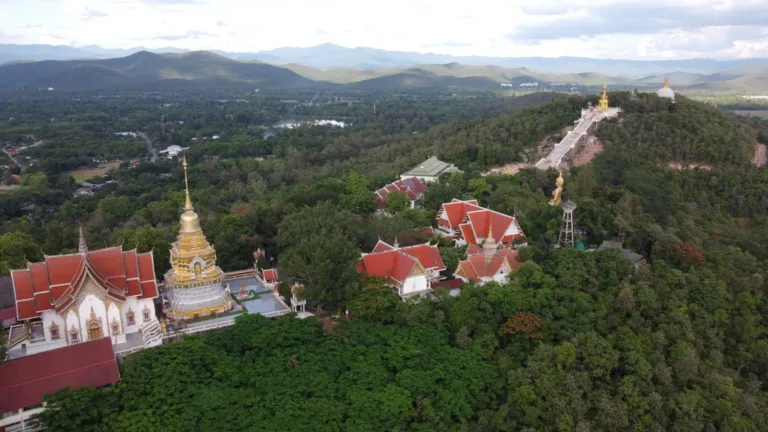 Wat Phra That Doi Saket
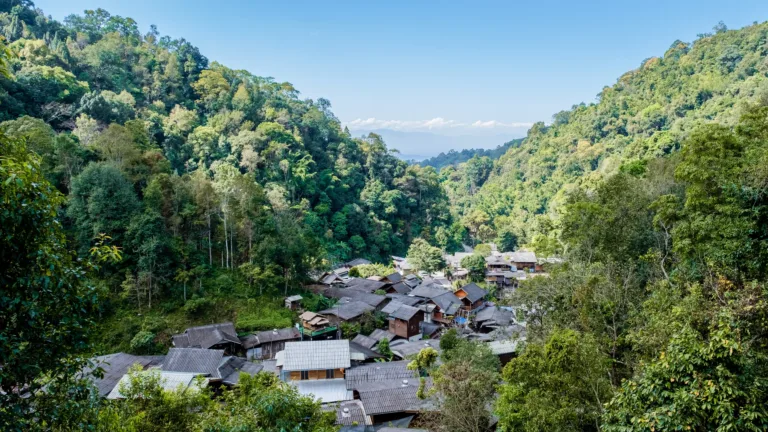 Mae Kampong Village
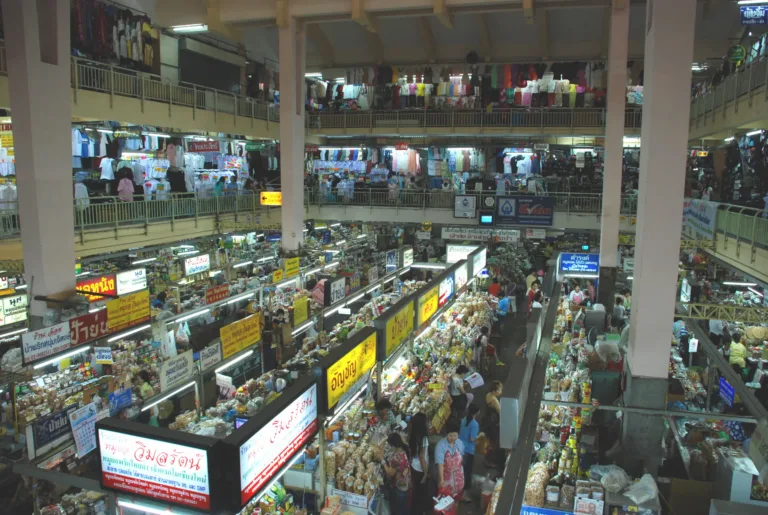 Warorot Market (Kad Luang)