 01
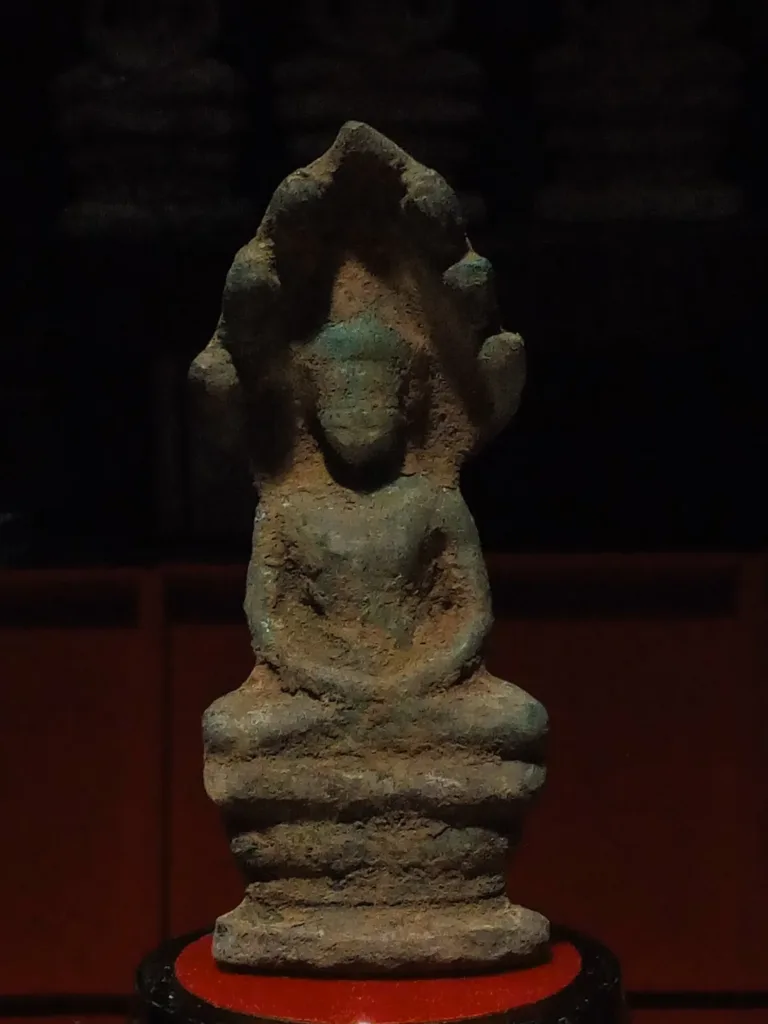
Phra That Na Dun and Phra Kru Na Dun50.50 m stupa and the votive tablets found with the bronze stupa
The Buddhist Park of Isan · Maha Sarakham
The 50.50 m stupa of the Buddhist Park of Isan in Na Dun, Maha Sarakham, built to enshrine Buddha relics found in a Dvaravati bronze stupa dug up in a rice field in 1979.
Holiday / event — crowded · Hot (Afternoon) feels like 39°C
Dress modestly · Remove shoes before climbing the stupa · Do not climb the stupa base · Keep noise down for worshippers
08:00–17:00
Before 09:00 or after 15:30 to avoid the sun
Phra Borommathat Na Dun festival (around Makha Bucha)
01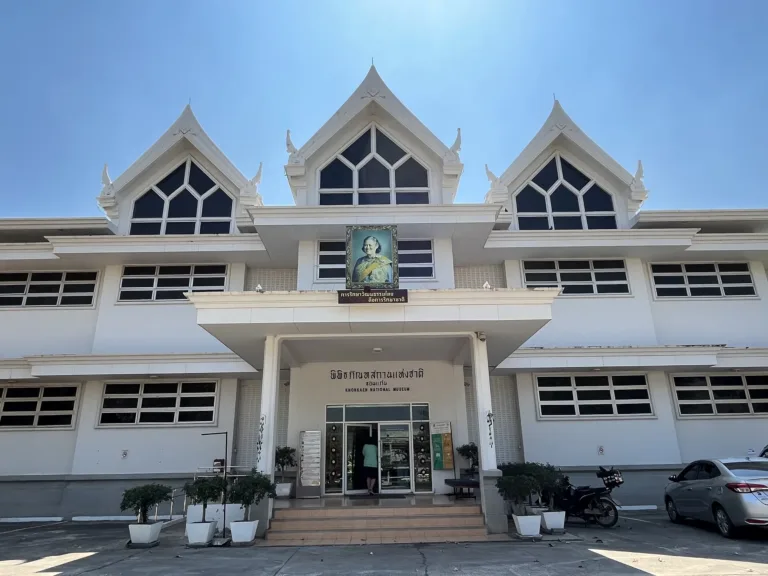 02
 03
Tap a day card to see that day’s weather, rain, haze and hourly forecast
Best time to go Fine all day little rain through the day
Holiday — traffic on the way up and parking fills fast; leave early
Green band = hours used for the score
Best time to go Fine all day little rain through the day
Holiday — traffic on the way up and parking fills fast; leave early
Green band = hours used for the score
Best time to go Fine all day little rain through the day
Holiday — traffic on the way up and parking fills fast; leave early
Green band = hours used for the score
Best time to go Best window 08:00–19:00 Little rain · light drizzle possible at times
No warnings today — normal road and weather conditions
Green band = hours used for the score
Best time to go Fine all day little rain through the day
No warnings today — normal road and weather conditions
Green band = hours used for the score
Best time to go Fine all day little rain through the day
No warnings today — normal road and weather conditions
Green band = hours used for the score
Best time to go Fine all day little rain through the day
No warnings today — normal road and weather conditions
Green band = hours used for the score
Phra Borommathat Na Dun in Na Dun, Maha Sarakham, is a 50.50 m stupa at the heart of the Buddhist Park of Isan, modelled on the Dvaravati bronze stupa found with Buddha relics in the ancient city of Nakhon Champasri in 1979.
Arrive Before 09:00 or after 15:30 to avoid the sun
Photos from Wikimedia Commons and contributors · full credits inClassic page
Adults 0 THB · Car 0 THB · Time needed 1–2 hours
Makha Bucha and long weekends
| Entry | Free |
| Flowers, incense and candles (approx.) optional | 20 ฿/set |
Mostly cash · Prices may change by season — check with the venue
Phra Borommathat Na Dun festival (around Makha Bucha)
Na Dun Hospital · Tourist Police 1155 · Emergency 1669
Tap a month on the wheel to see weather, rain, haze and crowds from 10 years of records
Best time · Nov–Feb: cool weather, plus the Makha Bucha festival
Watch out · Mar–May: fierce sun on the open grounds
Oct by the records 23–30°C · avg rain 169 mm (16 rainy days) · clear 4 days · avg PM2.5 9
Phra Borommathat Na Dun stands at Khok Dong Kheng, about 1 km south of the Na Dun district office in Maha Sarakham, within more than 902 rai known as the Buddhist Park of Isan. Khaosod says the stupa is 50.50 m tall on a 35.70 m square base, its design adapted from the Dvaravati-period bronze stupa found with the Buddha relics.
The site lies near the ancient city of Nakhon Champasri. Wirot Chiwasukthaworn of Mahasarakham University describes a rounded rectangle about 1,500 m wide and 2,700 m long, with two earthen ramparts and a moat about 20 m wide between them. It grew in the Dvaravati culture of roughly the 7th–11th centuries AD; its moats were first dug to store water for farming, Buddhist shrines such as San Nang Khao stood inside, and a relic stupa stood outside the walls.
In roughly the 11th–13th centuries AD the city took on Khmer influence: the moats were extended east and west into a rectangle, and Ku Noi, a Hindu shrine, an eastern baray and the Nong Ei Lai pond were built. Ku Santarat is one of the 102 hospital chapels built under King Jayavarman VII. The city declined after the 13th century and was abandoned. The Nakhon Champasri museum in Na Dun displays Avalokiteshvara sculptures from Ku Santarat, pottery and bronze tools.
Ku Santarat is a key example of a hospital chapel. Wirot Chiwasukthaworn's 2013 study explains that its main sanctuary held three images, Bhaisajyaguru flanked by Surya-Vairocana and Candra-Vairocana, in Mahayana belief. A platform in front likely carried a wooden ritual pavilion, a library housed lesser deities, and the single eastern gopura held a standing four-armed Avalokiteshvara. He concludes the chapel served healing of the mind through prayer, while physical treatment took place in wooden buildings outside the enclosure wall.
The stupa's story began on 22 May 1979. Silpa Watthanatham says the find was in the rice field of Thongdi Pawaphuta, about 2 km from Ku Santarat and Nakhon Champasri. Eleven villagers began digging; then Fine Arts Unit 7 of Khon Kaen found the bronze spire, Bunchan Ketsaensi, a caretaker at the Na Dun land office, found the stupa body, and Thirayut Phlising of Ban Hua Sok found the gold lotus-petal base. Many terracotta votive tablets, known as "Phra Kru Na Dun", were found too. Naewna reports the brick floor and stupa lay about 6 m down.
Khaosod says the relics look like milky-white flakes, kept in three nested caskets of gold, silver and bronze inside a 24.4 cm miniature stupa. Jeerawan Sangpetch (Damrong Journal, 2010) notes the Na Dun relic chamber sits near the stupa's core, following Indian and Sri Lankan practice, with reliquary forms probably arriving via the Pyu of Myanmar. Some Na Dun votive tablets bear Mon and Khmer script on the back.
The find led to a dispute. Silpa Watthanatham says governor Wutthinan Phong-araya wanted to assemble the stupa and hold a celebration in front of the provincial hall, but Na Dun people distrusted officials, since ancient Buddha images taken from Ku Santarat had never been returned. On 15 July 1979 villagers set the stupa in front of the district office in protest; deputy governor Santi Manikan failed to negotiate, and the plan to take it to town was dropped that afternoon. Eight teachers were later investigated and four reprimanded, and on 26–27 August 50 villagers petitioned Prime Minister General Kriangsak Chomanan to build a chedi in Na Dun.
General Prem Tinsulanonda's government approved 7,580,000 baht; the Fine Arts Department designed the stupa and Siwakorn Ltd. Part. built it. Work began on 12 September 1985, with Prem laying the foundation stone, and finished in 1987, according to Silpa Watthanatham; Love Thailand gives the construction period as 1982–1986.
On 12 November 1987 His Majesty the King, then Crown Prince, presided on behalf of King Bhumibol over the enshrinement of the relics in the stupa, and the cabinet designated the site the Buddhist Park of Isan.
Today the grounds include an arboretum, herb garden, pavilions and ceremonial grounds. The Bangkok Post says the annual festival is held around Makha Bucha, when worshippers walk three times around the stupa with candles, alongside Isan singers and community stalls. Naewna mentions a local belief in directional offerings, such as the north for career and the east for health.
Local Buddhists still centre their rituals on the stupa. Khaosod (2017) reports meditation retreats four times a year, on Makha Bucha, Visakha Bucha, Asalha Bucha and the start of Lent; in January 2017 a retreat and amulet consecration ran from 20 to 22 January with about 800 people, ahead of the stupa festival on 4–12 February.
Na Dun's antiquities once made headlines. MGR Online reported that on the night of 4–5 December 2009, 91 objects were stolen from Khon Kaen National Museum, including 55 terracotta votive tablets and 2 gold sheets from the Phra That Na Dun hoard, along with tablets from Fa Daet Song Yang and Dvaravati bronze Buddhas. Police arrested suspects and by 28 December 89 items had been recovered, with two Na Dun tablets still missing. Over 1,000 monks and Na Dun residents issued a statement demanding their return, and the temple committee made five demands, including moving all the objects to the Nakhon Champasri museum, while the Fine Arts Department's director-general insisted the displayed pieces were genuine.
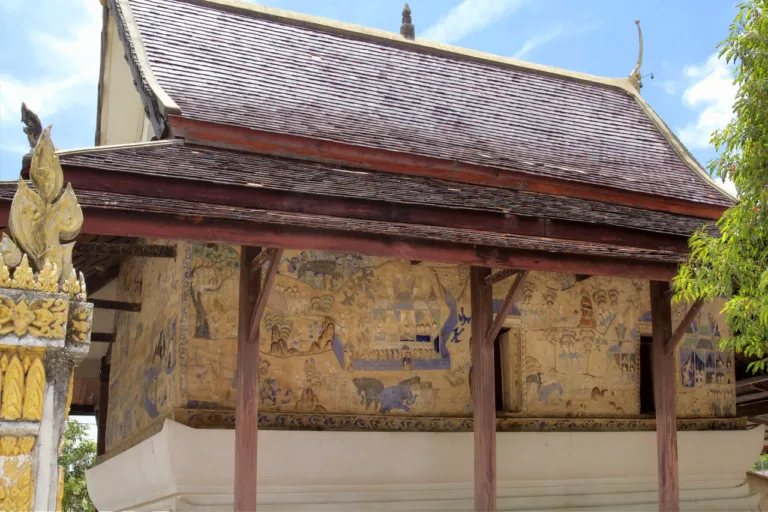
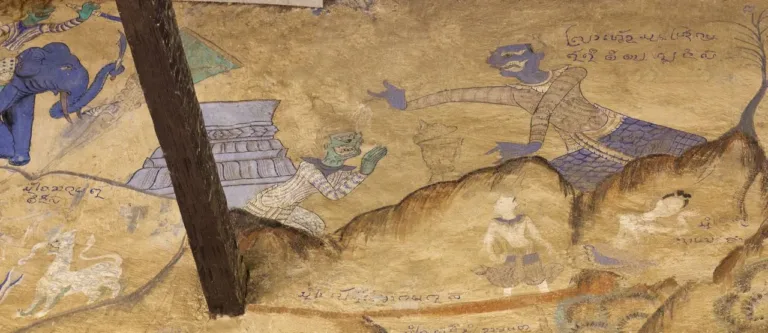
Na Dun district also has Wat Photharam at Ban Dong Bang, an Isan sim whose outer walls are painted with the Sinxay epic; the Wikimedia Commons photographer notes the temple is about 100 years old, adding another chapter to Na Dun's art history after the Dvaravati and Khmer eras.
Khaosod (2021) adds detail on Wat Photharam at Ban Dong Bang, about 10 km from Na Dun town. The abbot says the temple dates from 1800, the sim was built in 1908, and its murals were painted by Nai Sing and Achan Sala in cool tones of blue, indigo, green and white. Inside are the Buddha's life, the Vessantara Jataka and Ramasura–Mekhala; outside are Sinxay, Vessantara and Phra Malai, with Tham-script captions and scenes of rice farming and net fishing. An east-wall figure of a tall man in a high hat and boots is thought to depict a Westerner. The ho chaek preaching hall, built in 1917 by Vietnamese craftsmen, has stucco Himmapan creatures, and the Fine Arts Department's 10th regional office has surveyed it for restoration.
Arrived? Check in, collect a stamp and tell others what it is like right now
Check your location first, so you do not fill in the form for nothing
Location must be on and within 1 km · One check-in per place per day · come back on other days to check in again
Post photos from anywhere — no need to be here · Up to 20 photos at a time · JPG / PNG / WebP · GPS location data is removed automatically
About 1 km south of the Na Dun district office, about 63 km …
Maha Sarakham–Na Dun · Fuel
Bangkok–Khon Kaen, then about 2 hrs by road · Per airline
Bangkok–Maha Sarakham, then onward · Per operator
Paved highways
Large car park in the Buddhist park
Petrol stations in Na Dun
4G works
08:00–17:00
around 63 km fromMaha Sarakham town
Phra That Na Dun
0 THB
Approx. nightly price for 2 adults (next week) · final price depends on your dates
Answers travellers want before they go — a one-minute read
50.50 m on a 35.70 m base
A Dvaravati bronze stupa dug up in a Na Dun rice field on 22 May 1979
No
Around Makha Bucha
Terracotta votive tablets found with the stupa and in Nakhon Champasri
Best day this week: Thursday 29 Oct · Check in when you arrive to collect a stamp