 01
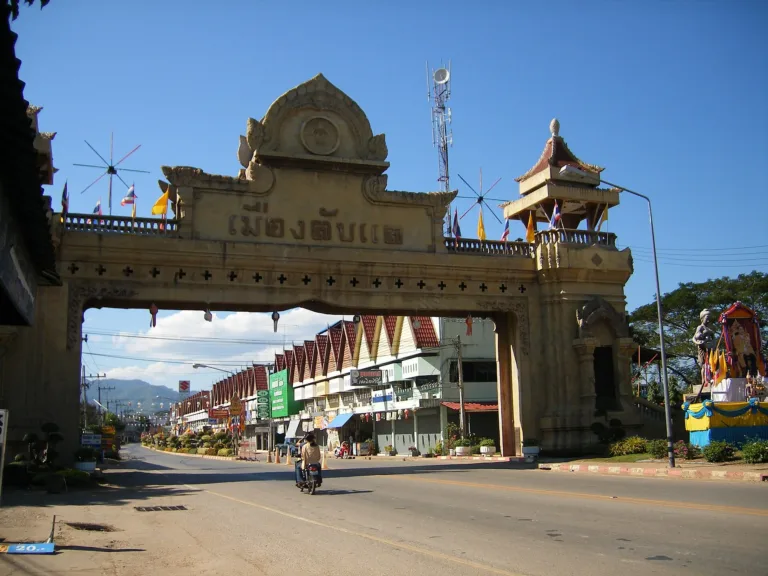
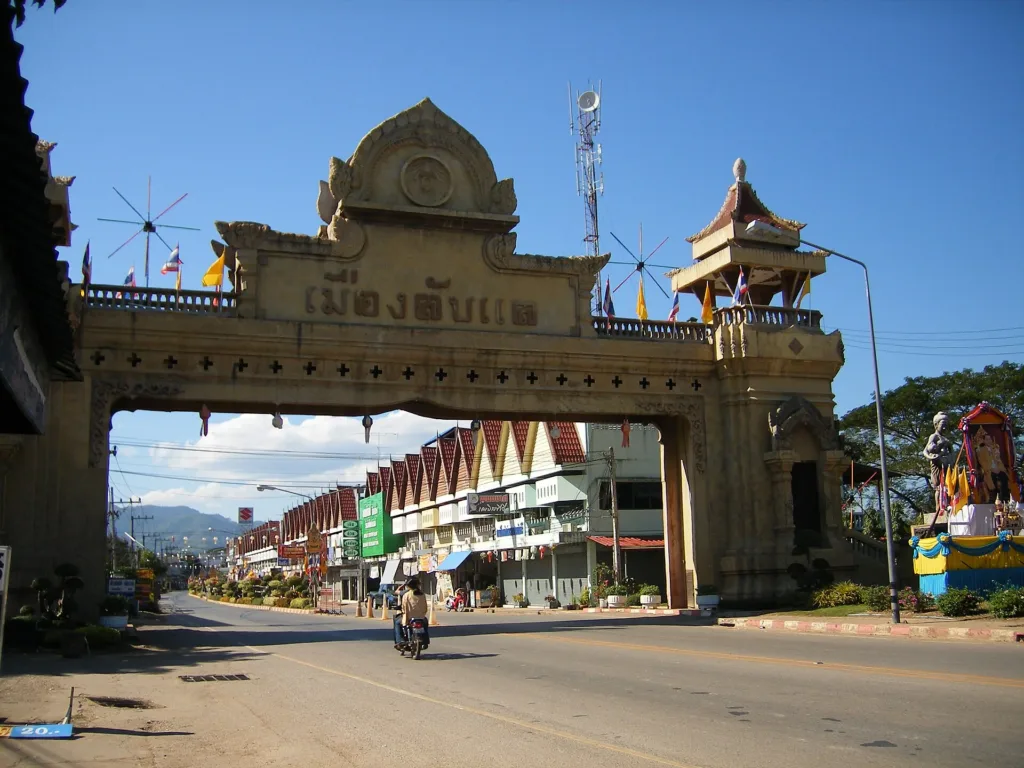
Laplae city gateSymbol of the town in applied Sukhothai style
UTTARADIT · LAPLAE
The legendary "hidden city" of Uttaradit: a Tai Yuan town of the no-lies widow legend, tin chok textiles, mee phan and Long Laplae durian
Holiday / event — crowded · Hot (Afternoon) feels like 39°C
City gate always viewable · museums and visitor centre open daytime
Free
Half a day to a full day
Durian season May–July and Saturday evenings at the walking street
01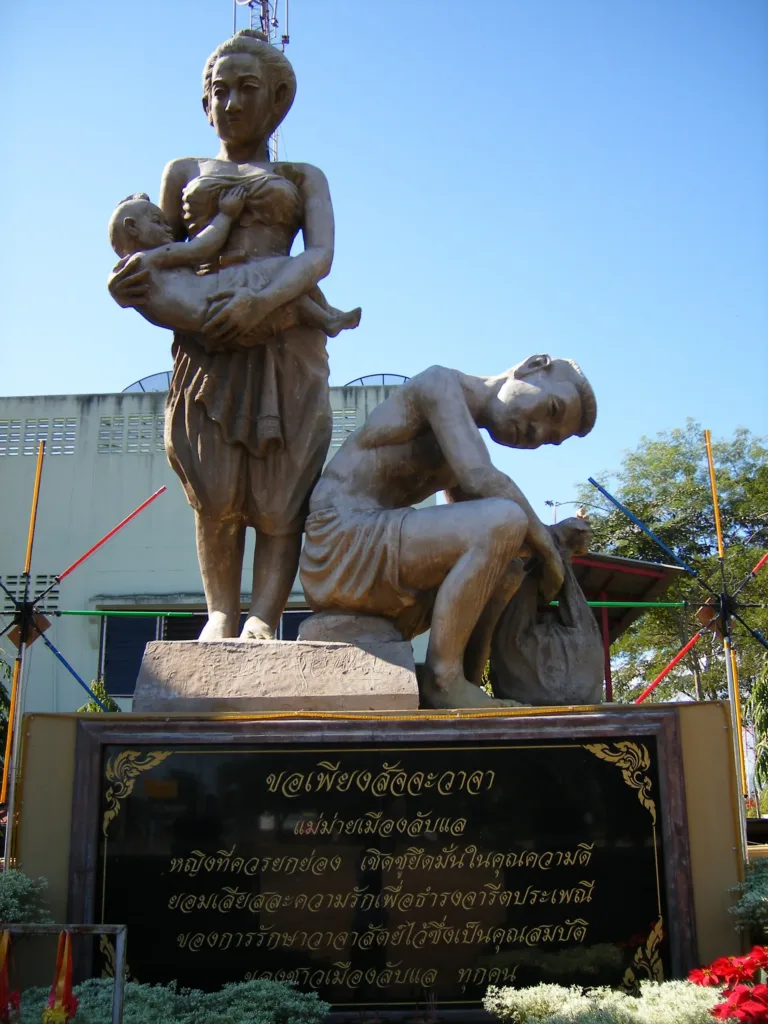 02
 03
 04
 05
Tap a day card to see that day’s weather, rain, haze and hourly forecast
Best time to go Fine all day little rain through the day
Holiday — traffic on the way up and parking fills fast; leave early
Green band = hours used for the score
Best time to go Fine all day little rain through the day
Holiday — traffic on the way up and parking fills fast; leave early
Green band = hours used for the score
Best time to go Fine all day little rain through the day
Holiday — traffic on the way up and parking fills fast; leave early
Green band = hours used for the score
Best time to go Best window 06:00–15:00 Little rain · light drizzle possible at times
No warnings today — normal road and weather conditions
Green band = hours used for the score
Best time to go Best window 06:00–15:00 Little rain · light drizzle possible at times
No warnings today — normal road and weather conditions
Green band = hours used for the score
Best time to go Fine all day little rain through the day
No warnings today — normal road and weather conditions
Green band = hours used for the score
Mueang Laplae is the small district town of Laplae in Uttaradit, famous for the folk legend of a hidden "city of widows" where lying was forbidden. It is an old Tai Yuan community known for tin chok skirts, tong kong brooms, mee phan rolls and the Long Laplae and Lin Laplae durians.
Visitors start at the Laplae city gate, cycle around town, visit Wat Phra Thaen Sila At and Wat Phra Borommathat Thung Yang, and come back in May–July for durian season.
Photos from Wikimedia Commons and contributors · full credits inClassic page
Hill villages in Mae Phun suffered a major landslide in 2006; follow warnings during heavy rain
Genuine Long and Lin durians are limited; buy from trusted orchards or shops
Some century-old houses are still lived in; ask before entering
Adults 0 THB · Time needed Half a day to a full day
Durian season May–July and Saturday evenings at the walking street
| Mee phan / khao khaep / baked noodles optional | 20 ฿/dish |
| Long Laplae–Lin Laplae durian (seasonal, by grade) optional | Pay as you like |
| Tong kong broom / tin chok skirt (souvenirs) optional | Pay as you like |
Mostly cash · Prices may change by season — check with the venue
Atthami Bucha at Wat Phra Borommathat Thung Yang (6th lunar month) · Phra Thaen Sila At festival (Makha Bucha) · Laplae durian season May–July · Khang Bu Ya (Buddhist Lent)
Tap a month on the wheel to see weather, rain, haze and crowds from 10 years of records
Best time · November to February is cool, ideal for cycling around town and the Saturday walking street; durian lovers should come in May–July for Long Laplae and Lin Laplae season.
Watch out · March–April is hot and hazy; heavy rain on the Mae Phun hills brings flash-flood and landslide risk, so follow warnings.
Oct by the records 24–31°C · avg rain 172 mm (18 rainy days) · clear 7 days · avg PM2.5 10
Mueang Laplae is the district town of Laplae in Uttaradit province, about 8 km west of the provincial town, centred on Si Phanom Mat municipality. The district covers about 450–506 km² in eight subdistricts, bordering Den Chai (Phrae) to the north and Si Satchanalai (Sukhothai) to the west. Its western and northern hills grow durian and langsat, while the lowlands grow sticky rice.
The name "Laplae" has several explanations. One is "hidden from sight", because the winding way in made strangers easily lost. Another says Doi Mon Ruesi hid the evening sun so the forest darkened early, and people called it "pa lap laeng" (laeng meaning evening), later shortened to Laplae. Prince Damrong suggested the area was a refuge where people of Phrae and Nan hid from enemies in wartime.
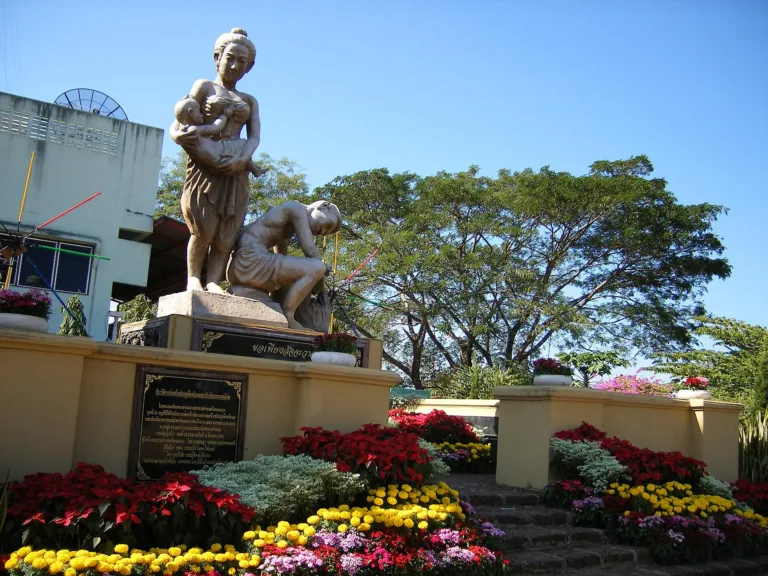
Laplae's fame comes from the legend of the "city of widows". A young man followed a Laplae woman into a hidden city inhabited only by women, ruled by one law: no lying. He married her and they had a child, but one day he lied to the crying baby to quiet it and was sent away. His wife gave him a bag of turmeric; he threw some away on the road, and at home the rest had turned to gold, but he could never find Laplae again. A sculpture of a widow holding her child tells the story in town, and Muang Boran Journal notes that one widely known version was compiled by Monthian Dithae in 1976.
A local version says the young man came from Thung Yang and lost his way in the forest. Today the "Widow of Laplae" sculpture stands near the city gate, and the slogan "Laplae, a zone where lying is forbidden" has become an identity the municipality and community use with visitors.
The origin of the Laplae people is told in both legend and records. "The History of Mueang Laplae" by Phra Khru Simphali Khananuyut (1979), the most cited version, traces them to Chiang Saen through the Singhanawat Kuman chronicle, with the migration of Nan Kham Lue and Nan Kham Saen. In 2018 a pencil-written "Chronicle of Phra Chao Yot Kham Thip of Wat Lap Laeng Luang" was found at Wat Thong Laplae, describing the founding of "Wiang Sak" and "Wiang Lap Laeng Chai". Muang Boran Journal (2019) points out contradictions in both, such as kings' names and dates that do not match the source chronicles, and doubts about the later manuscript's provenance.
The earliest Ayutthaya-side record is the "Nangsue Thut Top" from King Narai's reign in 1686, listing Mueang Laplae as a town under Phichai, followed by an old royal decree of 1756 mentioning the Laplae district in a lawsuit. The Lanna title "Nan", used for men who had been ordained, leads scholars to suggest the Laplae people were Yonok-Lanna settlers who arrived before the fall of Ayutthaya.
In the east of the district lies the ancient town of Thung Yang, where a bronze drum and bronze knives have been found, suggesting it was once home to the Lawa before Tai settlers arrived before the Sukhothai period; under Sukhothai it was a frontier town of Chaliang. The Northern Chronicle says Ba Thammarat of Sawankhalok built it for a son, while Phiset Jiajanphong proposed it was Mueang Rat of Pho Khun Pha Mueang, one of several theories. In its north-western corner, "Wiang Chao Ngo" was thought by early 20th-century scholars to predate Sukhothai but was heavily looted in the reign of Rama VII.
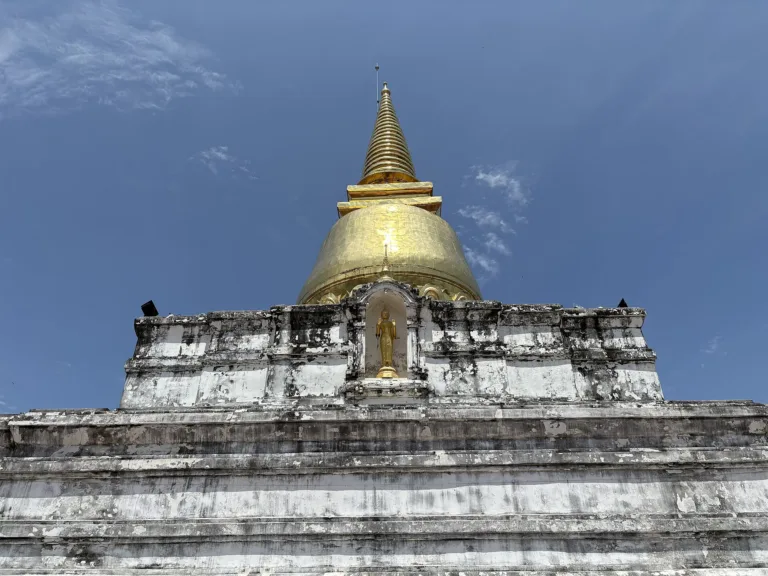
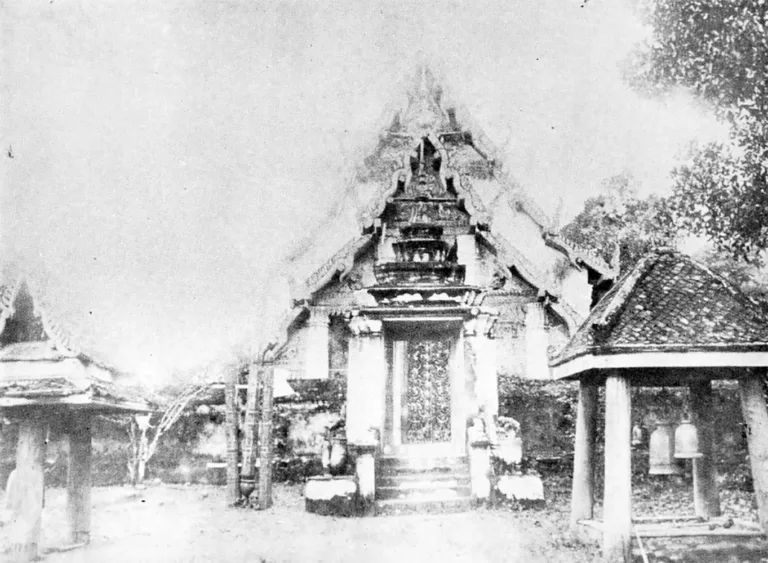
Wat Phra Borommathat Thung Yang is the main temple of the old town; its chedi was rebuilt before 1901, but its three-tiered base survives, and each sixth lunar month it hosts the nine-day Atthami Bucha festival with a cloth-wrapping of the relic chedi. Wat Phra Thaen Sila At, on Khao Thong hill west of Thung Yang, has a square laterite slab in a mondop where the Buddha is said to have sat and eaten. Its viharn burned in 1908 and was rebuilt with funds raised by Phraya Warodom Phakdi, governor of Uttaradit. The mondop appears on the Uttaradit provincial seal, the temple became a royal monastery in 2006, and a festival is held every Makha Bucha.
Wat Phra Borommathat Thung Yang dates from around the late Sukhothai period; its Sri Lankan-style main chedi is about 40 m tall, and in the Ayutthaya period it was a site of the royal oath-of-allegiance water ceremony. Research on the Atthami Bucha festival at Thung Yang found that it has developed through five phases over more than 80 years, driven mainly by the community. The site's sanctity comes from linking the Buddhist accounts of the Makutabandhana chedi and Kusinara, where the Buddha was cremated, to the Thung Yang landscape, and the researchers suggest its layout matches archaeo-astronomical evidence from the early Ayutthaya period.
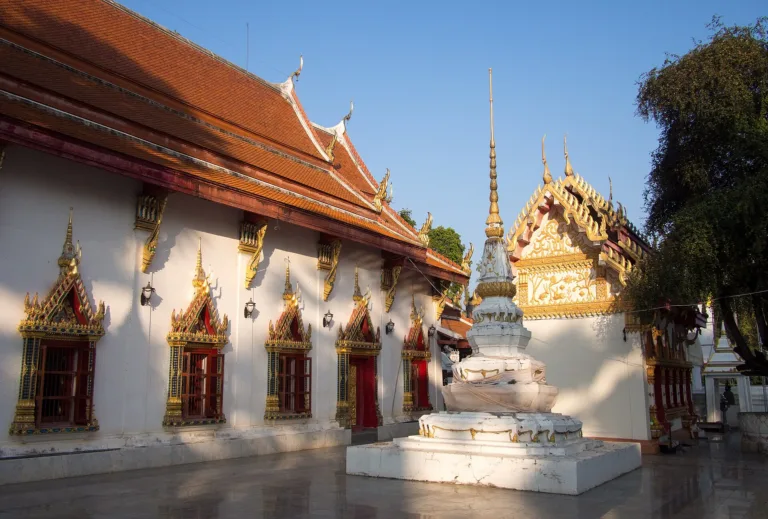
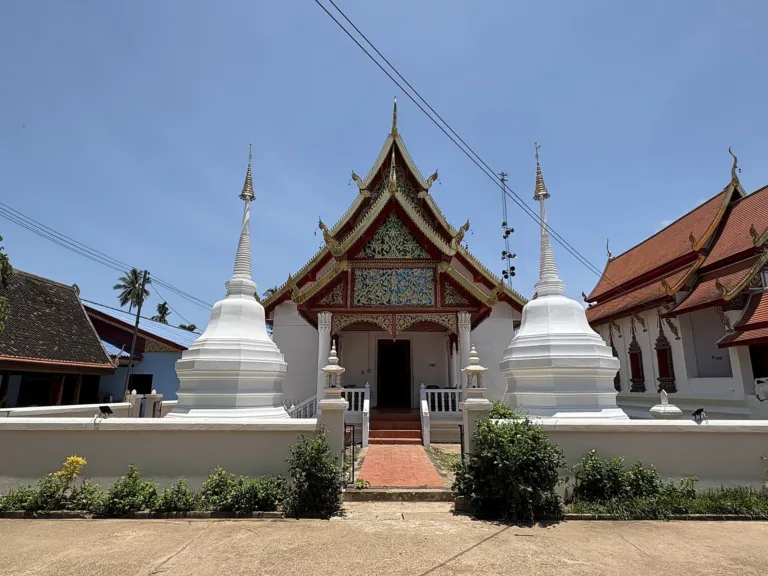
Laplae has many other old temples. Wat Dong Sa Kaeo has a golden teak ordination hall that people crawl under for good luck; it once housed "Luang Pho U Thong", a gold Buddha weighing over 200 kg that was stolen in 1977. Wat Kudi Phra Ruesi Song Tham has a legend of five hermits who could revive the dead, and still brews herbal drinks for visitors. Wat Mon Prang has an old ordination hall conserved by the Fine Arts Department and a beautiful tunnel of inthanin (Lagerstroemia) trees. There are also the old ordination hall of Wat Pa Yang, Wat Phra Yuen Phutthabat Yukhon, Wat Phra Non Phutthasaiyat, Wat Don Sak and Wat Sao Hin.
Laplae has several ethnic groups. The main one is the Tai Yuan, who came from Chiang Saen and founded a first village also called Chiang Saen. Tai Phuan were brought in during the reign of Rama III and settled around Ban Pa Yang, Ban Nam Sai and Ban Na Thale, some moving on to Si Satchanalai to become the Hat Siao community, and Chinese families settled in the Laplae market. Thung Yang is one of the few places in Uttaradit that still speaks with a Sukhothai accent, and the Laplae dialect keeps old vocabulary.
The town's most revered figure is Phra Si Phanom Mat (Thong In), born Huen Yok Sae Tan in 1861 to a Chinese father and a Thai mother. His father had him adopted by Luang Pho Noi of Wat Pa Yang Nok and renamed Thong In so that he could study. As a young man he peddled goods across Laplae as far as Hat Siao, and in 1888 he became the liquor-tax farmer at Hat Siao. When King Chulalongkorn toured the north and reached Laplae (1901, some sources say 1902), Thong In organised the reception and was made Khun Phisan Chinakit, later Luang and then Phra Si Phanom Mat. When provincial administration was reformed, Laplae became a district under Monthon Phitsanulok, with him as its first district chief.
Phra Si Phanom Mat built roads, channels and weirs without state funds; the Uttaradit–Laplae road was royally named "In Chai Mi Road". He promoted vegetable growing, candied palm seeds, livestock and crafts, above all the tong kong broom: inspired by a Chinese broom given by Prince Damrong, he saw that local tong kong grass flowers could be used, trained villagers from Fai Luang and Mae Phun to teach others, and tied a small red cloth to each handle, a Chinese auspicious custom, to counter the idea that brooms were lowly; the red cloth remains today. He died in 1921, and a monument to him is revered by the townspeople.
The district office was first in Thung Yang, then moved to Mon Cham Sin about 1 km north, before Luang Si Phanom Mat moved it to Mon Sayammin, which was easier to reach. During his visit King Chulalongkorn chose Mon Cham Sin for "Phra Luea", a Buddha image cast from gold left over from casting Phra Phuttha Chinnarat.
Tai Yuan culture lives on in tin chok skirts with dok khia, kafak daeng and kafak khiao patterns, a tradition passed on to Hat Siao, and naturally dyed handwoven cotton has earned a five-star OTOP rating. The Tai Yuan Laplae Tin Chok Textile Museum, founded by Jongjaroon Manokham, shows cloth about a century old. Local food centres on khao khaep, sesame rice sheets steamed over a pot and dried, used to wrap mee phan (mee khuk) noodles and baked noodle rolls.
A distinctive local tradition is "Khang Bu Ya" or "Kang Bu Ya". During Buddhist Lent, Laplae temples take turns hosting it: villagers build a "kang", like a wish-granting kalpapruek tree, and decorate it with tobacco as an offering dedicated to their ancestors. The tobacco decoration is what makes the tradition unique to Laplae.
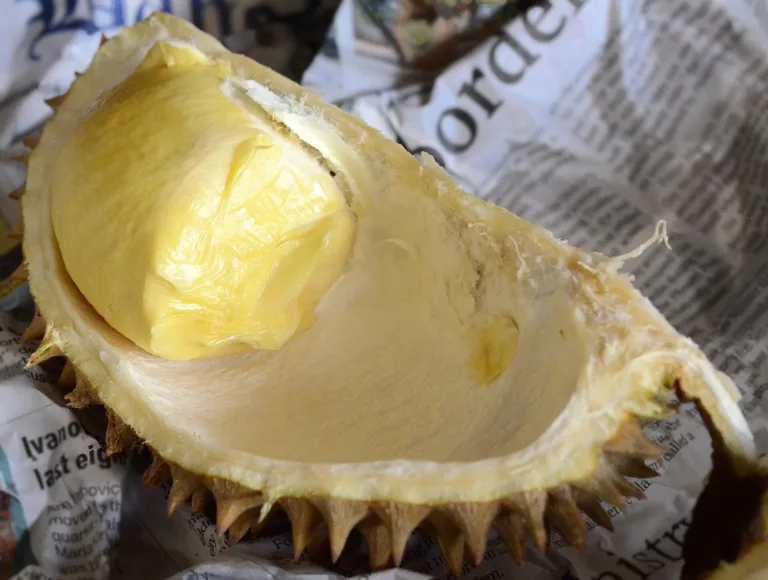
Laplae is northern Thailand's largest durian-growing area, with about 27,000 rai. Its famous "Long Laplae" began with a tree grown from seed by Mi Homtan around 1936 on Mon Nam Cham, Ban Pha Mup, Mae Phun; entered in a contest under the name of Long Uppala, it won top prize and the variety was certified on 20 September 1978. "Lin Laplae" comes from a tree planted by Lin Panlat at Ban Pha Mup in 1950 and entered in a 1977 contest. The harvest runs from about May to July.
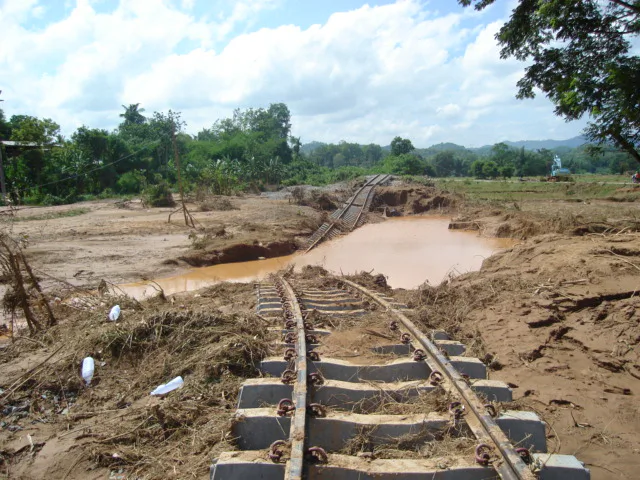
On the night of 22–23 May 2006, Laplae recorded 330 mm of rain, a 38-year record, triggering flash floods and mudslides across Uttaradit, especially in hill villages of Mae Phun, where mud buried more than 90 houses and the railway at Ban Dan Na Kham was cut. Early official figures for the province reported dozens dead and many more missing. Princess Maha Chakri Sirindhorn asked the Chaipattana Foundation to help, and a new village was set up at Ban Nari (Huai Pu Chao), Mae Phun, to move families out of danger.
The hill orchards have faced other disasters. On 20 April 2016 a forest fire spread into more than 1,000 rai of orchards in Mae Phun, perhaps as much as 2,500 rai, including almost 400 rai of Long and Lin durian. Nearly 30 native durian trees aged about 100–120 years, parent stock of Long and Lin that had survived the 2006 landslides, were destroyed.
Today the Laplae city gate, in applied Sukhothai style, is the town's symbol and the starting point for visitors. Around it are a lawn, two old-house museums, a visitor centre lending bicycles and the Wan Wan walking street every Saturday evening. The town also has wooden houses over a century old and Ratsadon Uthit Road, known as the "eating street".
The Laplae community was chosen by the Ministry of Culture as a model "Yon Withi" community-tourism village. Its Tai Yuan people keep key traditions alive, including tin chok dress, the Laplae shoulder bag, khao khaep, khao phan phak rolls, mee phan and the Khang Bu Ya festival. The Mueang Laplae Museum, built as a replica "Laplae house", displays objects, ways of life and local history, and visitors can try weaving and broom-making. Khao Nam Tok Road, known as "Khao Khaep Road", still has old houses and shops making rice sheets. In 2015 TAT's Phrae office ran a cycling programme lending free bicycles with maps and stamp points, a way of touring the town that remains popular.
Visitors should ask before entering old houses that are still lived in, dress modestly at temples and buy textiles, brooms and fruit directly from villagers, to keep the way of life of this legendary town alive.
Arrived? Check in, collect a stamp and tell others what it is like right now
Check your location first, so you do not fill in the form for nothing
Location must be on and within 5 km · One check-in per place per day · come back on other days to check in again
Post photos from anywhere — no need to be here · Up to 20 photos at a time · JPG / PNG / WebP · GPS location data is removed automatically
From Uttaradit town take In Chai Mi Road, built by Phra Si P…
In Chai Mi Road, about 8 km · Fuel
Uttaradit–Laplae · Standard fare
Around Laplae town · Borrow at the visitor centre
From Uttaradit town take In Chai Mi Road west about 8 km to the Laplae city gate
Roadside parking and the grounds around the city gate
Petrol stations in Laplae town and on In Chai Mi Road
Good mobile signal in town
City gate always viewable · museums and visitor centre open daytime
around 8 km fromUttaradit town
Laplae city gate, Laplae, Uttaradit
0 THB
Approx. nightly price for 2 adults (next week) · final price depends on your dates
Best day this week: Wednesday 28 Oct · Check in when you arrive to collect a stamp