 01
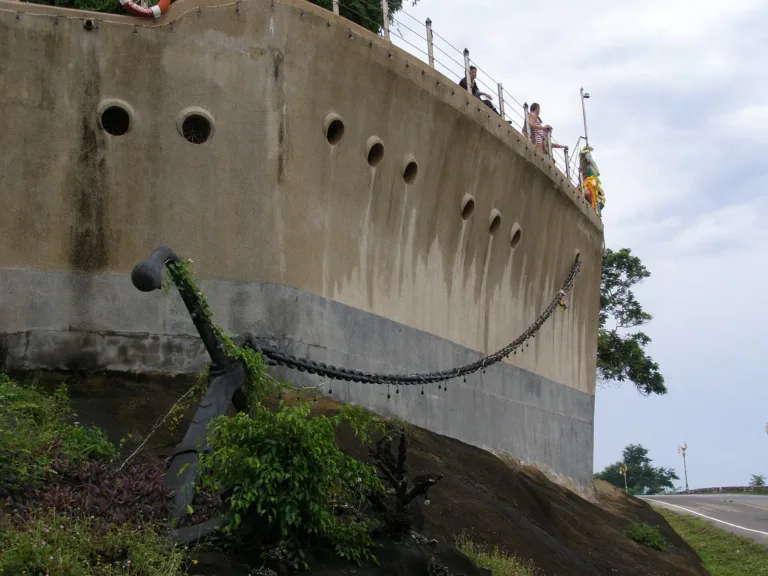
Ship-shaped upper shrineA spired shrine on a replica of HTMS Phra Ruang facing the sea
Chumphon · Hat Sai Ri · Sadet Tia shrine
The beach shrine to "Sadet Tia", where the Prince of Chumphon died in 1923, with a ship-shaped upper shrine and the warship HTMS Chumphon as a memorial.
Holiday / event — crowded · Hot (Afternoon) feels like 38°C
Daily, about 08:00–17:00
1–2 hours
Upper shrine terrace — Ship-shaped shrine with the sea
Free
01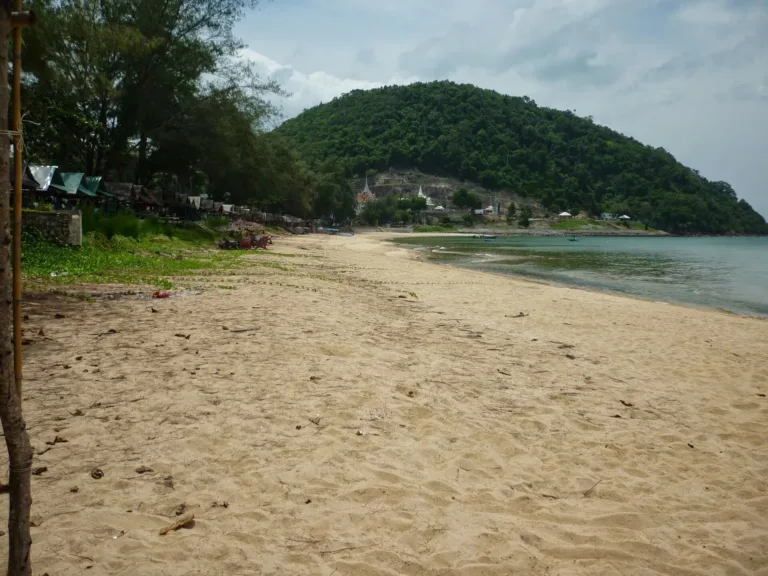 02
 03
 04
Tap a day card to see that day’s weather, rain, haze and hourly forecast
Best time to go Best window 06:00–17:00 Little rain · light drizzle possible at times
Holiday — traffic on the way up and parking fills fast; leave early
Green band = hours used for the score
Best time to go Best window 06:00–16:00 Little rain · light drizzle possible at times
Holiday — traffic on the way up and parking fills fast; leave early
Green band = hours used for the score
Best time to go Fine all day little rain through the day · light drizzle possible at times
Holiday — traffic on the way up and parking fills fast; leave early
Green band = hours used for the score
Best time to go Best window 11:00–19:00 Little rain · light drizzle possible at times
No warnings today — normal road and weather conditions
Green band = hours used for the score
Best time to go Fine all day little rain through the day · light drizzle possible at times
No warnings today — normal road and weather conditions
Green band = hours used for the score
Best time to go Best window 06:00–14:00 Little rain · light drizzle possible at times
No warnings today — normal road and weather conditions
Green band = hours used for the score
Best time to go Best window 06:00–08:00 Little rain · light drizzle possible at times
Thick morning fog with visibility under 1 km — use headlights and drive slowly
Green band = hours used for the score
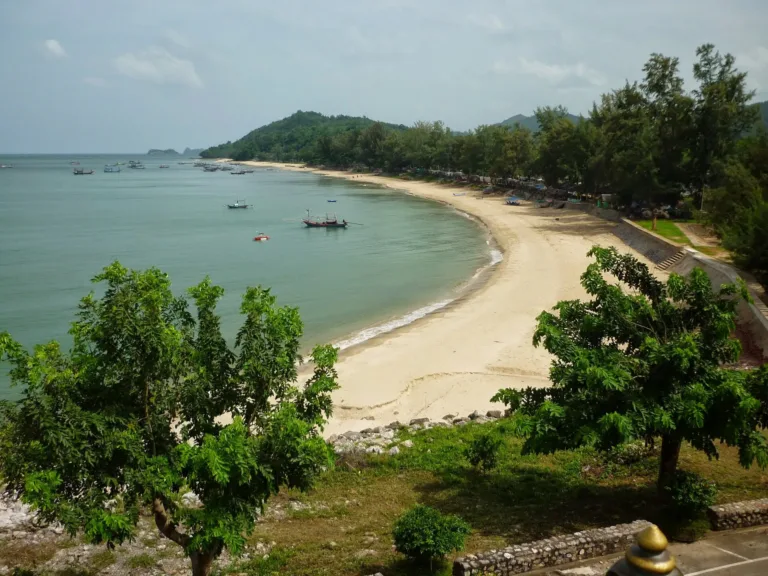
The Krom Luang Chumphon Khet Udomsak Shrine stands on Hat Sai Ri, about 20 km from Chumphon town, where Admiral Prince Abhakara Kiartivongse, revered as the father of the Thai navy, died on 19 May 1923. A lower shrine marks the spot by the beach, while an upper shrine on the headland sits on a ship-shaped base facing the sea.
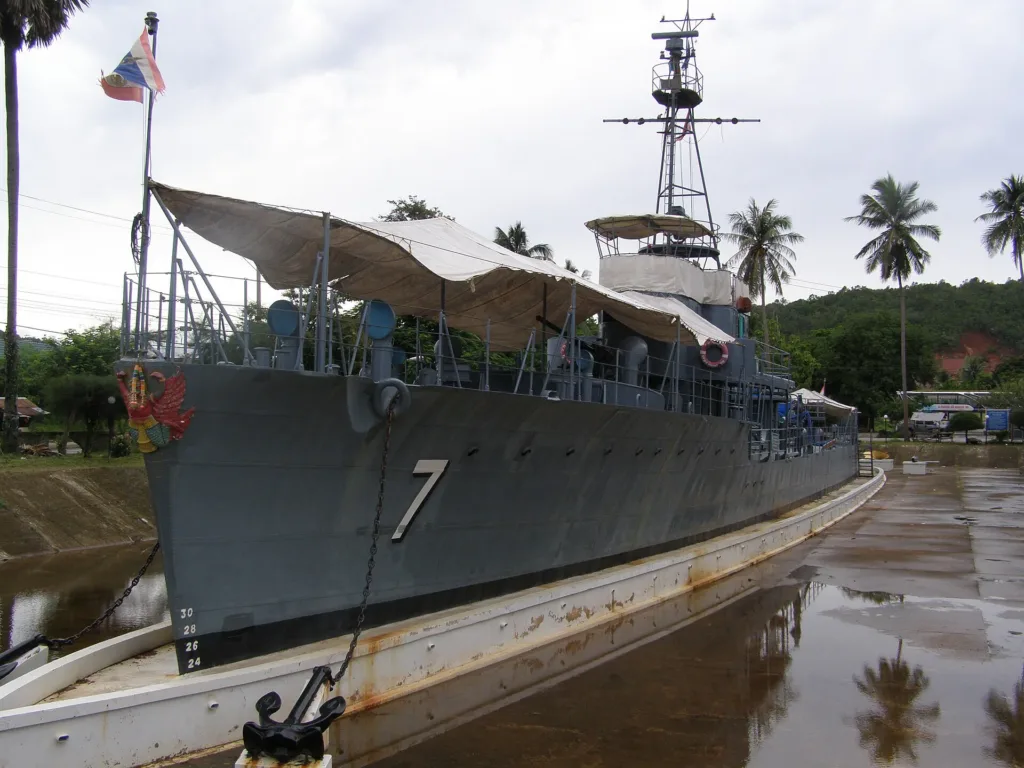
Next to the beach lies HTMS Chumphon, an Italian-built torpedo boat kept as a memorial, and a herb garden recalls the years the prince treated people as "Mo Phon". Entry is free; mornings from January to April are the most comfortable.
Arrive Arrive before 16:00 to see both shrines and the ship
Photos from Wikimedia Commons and contributors · full credits inClassic page
Adults 0 THB · Time needed 1–2 hours
Weekends, long holidays, 19 May and 19 December
| Shrine and beach entry, Thai visitors | Free |
| Shrine and beach entry, foreign visitors | Free |
Cash for flowers, offerings and beach stalls · Prices may change by season — check with the venue
19 May: death anniversary · 19 Dec: Abhakara Day (birthday), with rites at the upper shrine
Chumphon Khet Udomsak Hospital (town) · Emergency 1669 · Tourist Police 1155
Tap a month on the wheel to see weather, rain, haze and crowds from 10 years of records
Best time · January–April brings little rain, clear skies and a calm sea, good for walking the hill shrine and the beach. Come in the morning before the sun gets strong.
Watch out · October–December is Chumphon's wettest season, with the northeast monsoon and rough seas. The shrine stays open but outdoor walking is harder.
Oct by the records 25–29°C · avg rain 244 mm (27 rainy days) · clear 1 days · avg PM2.5 5
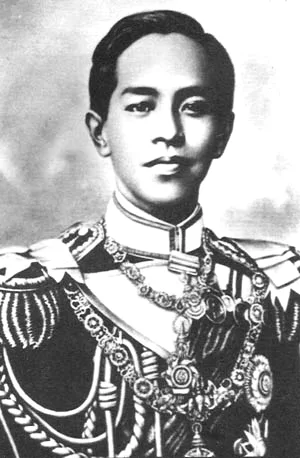
The Krom Luang Chumphon Khet Udomsak Shrine at Hat Sai Ri, Mueang Chumphon, stands where Admiral Prince Abhakara Kiartivongse, Prince of Chumphon, died on 19 May 1923. Sailors and locals call him "Sadet Tia" (Lord Father). There are two shrines: the lower one on the beach where he stayed, and the upper one on the hill at the end of the beach, set on a ship-shaped base facing the sea. The decommissioned warship HTMS Chumphon sits nearby as a memorial, and a "Mo Phon" herb garden lines the hillside.
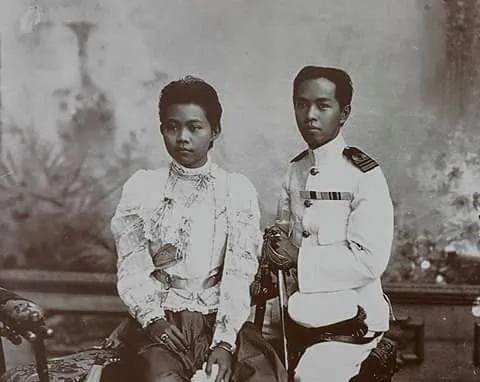
He was born on 19 December 1880, the 28th child of King Chulalongkorn (Rama V). His mother, Chao Chom Manda Mot, was a daughter of Chao Phraya Surawong Waiyawat of the Bunnag family; as she was not royal, he was not in line for the throne.
In late 1893, soon after Siam lost its Lao territories to France, Rama V sent him and Crown Prince Vajiravudh to study military science in Britain. He attended The Limes, a naval preparatory school; in April 1897 he trained at sea aboard the Siamese ship Maha Chakri, and that November he became a midshipman in the Royal Navy on HMS Revenge and later other ships. The Admiralty barred him from tactics, gunnery and torpedo courses, which it deemed confidential.
One story says that at about 18, while with the Royal Navy, he led a landing party to put down unrest on Crete, then under Ottoman rule, for about three months. He told this to Phraya Han Klang Samut (Bunmi Phanthumanawin) and Silpa Wattanatham repeats it, but English Wikipedia calls it unverified and possibly legendary. In 1897 Rama V judged that his character had much improved and suited military rather than civil work.
He returned to Siam in 1900 to help build the Royal Siamese Navy, heading the Naval Education Department, and from 1903 to 1910 served as deputy commander-in-chief, pushing the navy toward Western standards.
As deputy commander he built up naval education. In 1905 he headed the naval education department and chaired a committee to reform the Naval Academy's curriculum, teaching cadets himself, so that Thai officers could become instructors and commanders without relying on foreigners. In 1907 he commanded HTMS Makut Rajakumarn on an overseas training cruise for cadets and engineers, having her repainted from white to grey in Singapore. The navy was then split between older officers promoted through experience, including men of Mon, Muslim and Cham descent, and younger, academy-trained officers who looked down on them. He had the young officers navigate under the old hands; when a ship struck an uncharted rock and the veterans got her off, the lesson was that knowledge and seamanship are not the same. At Bang Phra in Chonburi he insisted every sailor eat the same food and refused special dishes prepared for him.
Early in Rama VI's reign he left active service for the reserves. Historian Sarun Thongpan links this to a brawl between drunken naval officers and royal pages, amid rumours of a plot against the throne that led police to watch him. In these years he studied Thai herbal medicine and treated people as "Mo Phon" (Doctor Phon) for about six years; stories say he tamed the toughs of Nang Loeng and took them on as followers.
He was also a disciple of Luang Pu Suk of Wat Pak Khlong Makham Thao in Chai Nat (1847–1923), probably from around 1904–1909. Legend says his boat stopped at the temple, where he saw the monk turn a banana flower into a rabbit, and the two talked for hours. When Luang Pu Suk came to Bangkok he stayed at the prince's Nang Loeng palace in a house built for him; the prince visited the temple almost every year, painted murals in its ordination hall, and his son was ordained a novice under the monk. Grief-stricken by the prince's death in mid-1923, Luang Pu Suk fell ill and died late that year.
When Siam declared war on Germany in World War I, he returned to service as Inspector-General of the Navy in 1917, becoming Chief of Naval Staff the following year.
The name "Sadet Tia" is said to date from 1919, when, during sea training aboard HTMS Phali Rang Thawip, he saw cadets clumsily scrubbing the deck and showed them how himself. The story comes from Vice Admiral Sri Daowrai.
Silpa Wattanatham adds detail: the cadet class of Sri Daowrai entered the Naval Academy at the Old Palace in Thonburi on 6 October 1919, and around 8–11 October sailed aboard HTMS Phali Rang Thawip and HTMS Maruthawasit Sawat for training at Sattahip, with the prince, then Chief of Naval Staff, directing the exercise. His children and close sailors were asked to call him "Tit Tia", and Bunmi Phanthumanawin said Chinese residents called him "Tia" because he treated them for free. In 1963 Capt. Sawat Chantani told a navy TV programme that sailors loved him because he was fair, unpretentious, refused bribes and kept duty separate from personal matters.
In 1920 he went to England to buy the destroyer HMS Radiant, renamed HTMS Phra Ruang, and commanded her on the voyage home. From 1 October 1922 he was acting Minister of Marine, proposed royal land at Sattahip as a naval base, and on 1 April 1923 became Minister of Marine, the navy's highest post.
Within days he resigned because of a long-standing internal illness and went to recover in Monthon Surat (formerly Monthon Chumphon), building a temporary thatched hut at Hat Sai Ri, then far from town and reached on horseback.
At Hat Sai Ri, villagers staged a shadow-puppet show for him on a cold night. Already suffering a cold, he sat wrapped in a blanket to the end so as not to disappoint them. After being caught in the rain he developed influenza and worsened within about three days; doctors who came from Bangkok later diagnosed pneumonia, and the medicines needed could not be found locally.
He died at Hat Sai Ri on 19 May 1923, aged 42 by the Western calendar (many Thai sources give 44). Accounts of the time differ: English Wikipedia gives 11:40 am, while his last flag lieutenant, Lt. Charoen Thummanon, said he sent the telegram from Chumphon at about 4 am, and Princess Suriyanantana, then about 7–8, recalled crying late at night and a meteor falling into the sea around 5 am.
Lt. Charoen rode to the Chumphon post office with the telegram. The ship Chen Thale carried the family and the body out, and the navy sent HTMS Phra Ruang, the very ship he had brought from England, to receive it off Bang Na, a difficult transfer in rough seas, before landing at Tha Wasukri and moving to the Nang Loeng palace.
In 2019 Assoc. Prof. Dr. Ekachai Kovavisarach, writing from a modern medical view, judged the main cause to be influenza, as Prince Damrong recorded, possibly complicated by pneumonia or encephalitis, with his weakened health and exposure to cold night air and heavy dew as factors. He compared it with the 1920 death of Prince Chakrabongse after a similar soaking. The analysis relies on later documents, not medical records.
The miracle-filled biographies popular today can be traced. Sarun Thongpan found they stem from a 1953 letter by Lt. Cdr. Luang Raksa Ratchasap (Rak Ekawiphat), a close aide, to the navy journal Nawikkasat. It was probably first printed in book form in his 1956 cremation volume, then reprinted by the navy's history division in the 1960 book commemorating the Chumphon Khet Udomsak lighthouse, which became the model for later miracle biographies. Its details differ noticeably from the account of his daughter Princess Chitchaeng Aphakorn.
Two accounts describe the lower shrine. Thailand's ONEP heritage database says Thiam Thipphanom built the first shrine in 1929, later rebuilt in concrete, and Huat Sukhontha built a twin shrine in 1946 that still stands behind it by the Indian almond tree where the prince sat in the shade. Sarakadee magazine says the first wooden shrine was built by Col. Saeng Chullacharit and railway staff, before Khunying Phankhrua Yongchaiyut led the building of a concrete Thai-roofed shrine with blue tiles, its stone laid on 18 February and opened on 14 May 1989. Inside is a life-size bronze statue.
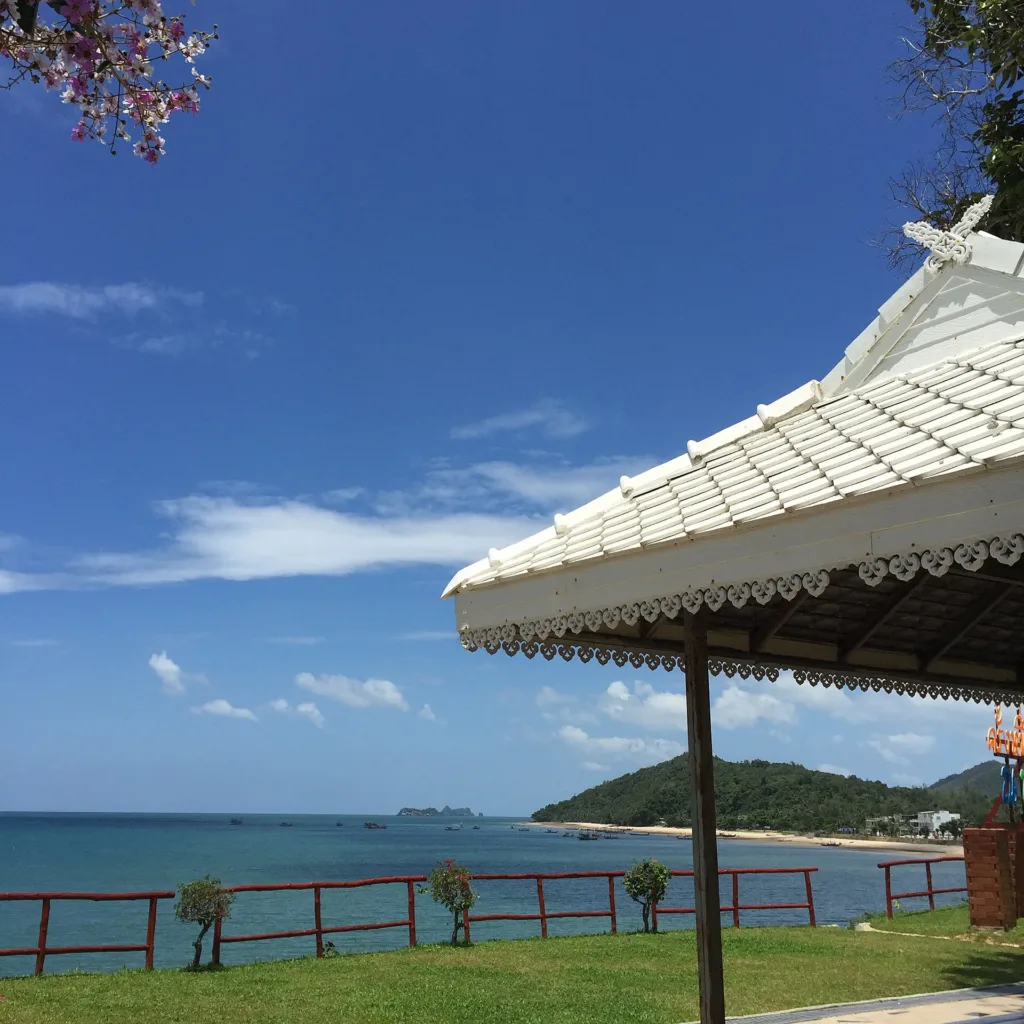
The upper shrine was the idea of then-governor Chuan Pornpong, who felt the flat-ground shrine lacked dignity. Princess Vibhavadi Rangsit laid its foundation stone on 23 September 1972 and it was finished in July 1973 as a cruciform Thai-style building (ONEP says the Hat Sai Ri municipality built it in 1974). Caretaker Laiat Phunsuwan raised funds for a road and terraces from 1986, and in the mid-1990s it was rebuilt as a spired pavilion clad in marble, its terrace shaped like a replica of HTMS Phra Ruang facing the sea. The 19 December birthday ceremony is held here. The white multi-spired pavilion on the hill was built in 1970–1973.
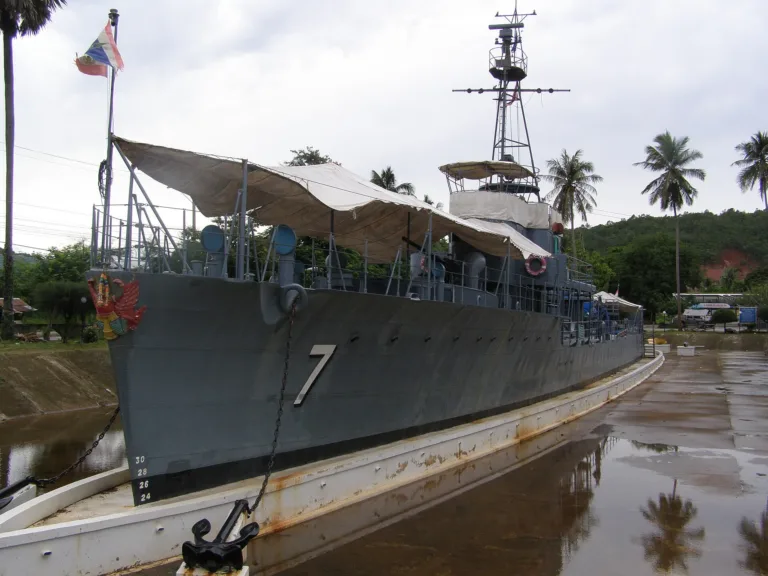
HTMS Chumphon is an Italian-built torpedo boat, 68 m long and 6.88 m wide, commissioned on 5 October 1938 to escort marine transports, patrol the coast and sweep mines. ONEP says she was decommissioned on 26 November 1979 and given by the navy to Chumphon province as a memorial at Hat Sai Ri; Thai Holiday Guide instead gives decommissioning in 1975 and installation in 1980, so the dates are unsettled.
HTMS Chumphon is one of nine Trad-class torpedo boats Thailand ordered in 1934 from Cantieri Riuniti dell'Adriatico at Monfalcone, Italy, pennant number 31 per English Wikipedia. She was laid down on 7 July 1936, launched on 18 January 1937 and commissioned in March 1937 (ONEP gives 5 October 1938). The class displaced 318 tons standard, carried three 76 mm guns and six 450 mm torpedo tubes, and had a crew of about 70. At the Battle of Ko Chang on 17 January 1941 her sisters Chonburi and Songkhla were sunk and Trad badly damaged, but Chumphon was not in that battle. She is the class member preserved for visitors today.
On the hill below the upper shrine, the Mo Phon herb garden has a trail past labelled local medicinal plants, recalling the years he treated people with Thai traditional medicine.
The navy proclaimed him "Father of the Royal Thai Navy" on 11 February 1993, amended on 19 April 2001 to "Father of Thai Sailors". The navy marks 19 December, his birthday, as Abhakara Day (English Wikipedia gives 19 May). Some 217 shrines and memorials to him exist across Thailand, but Hat Sai Ri, where he died, is the best known.
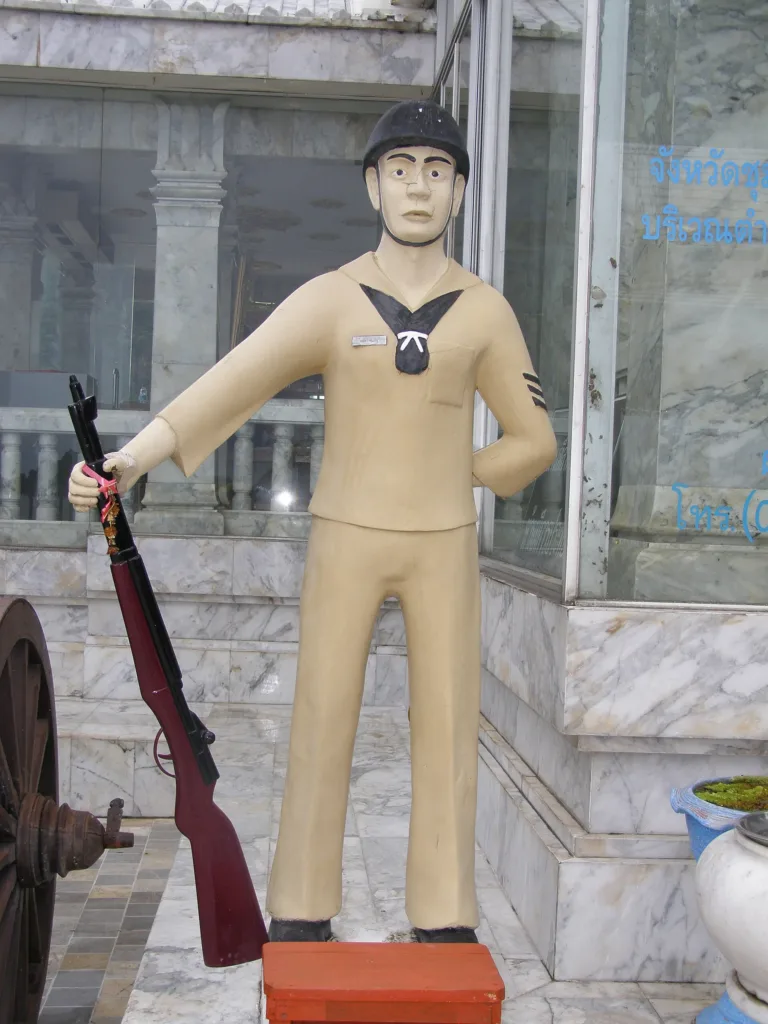
Today worshippers come throughout the day; the grounds hold sailor figures offered by devotees and a display cannon. Hat Sai Ri is a beach of about 2 km with shallow, fairly calm water, and offshore islands are visible from the upper shrine.
Arrived? Check in, collect a stamp and tell others what it is like right now
Check your location first, so you do not fill in the form for nothing
Location must be on and within 1.5 km · One check-in per place per day · come back on other days to check in again
Post photos from anywhere — no need to be here · Up to 20 photos at a time · JPG / PNG / WebP · GPS location data is removed automatically
From Bangkok take Phetkasem Road south via Phetchaburi and P…
Bangkok → Phetkasem Road → Chumphon → Hat Sai Ri · Fuel
Bangkok → Chumphon town · Varies by operator
Chumphon town → Hat Sai Ri · About 30 THB (older info, ask locally)
Phetkasem Road (Hwy 4) → Chumphon town → road to Hat Sai Ri, about 20 km
Parking by the beach near the lower shrine and HTMS Chumphon; a road leads up to the upper shrine
Petrol stations in Chumphon town
Good around the beach and shrines
Daily, about 08:00–17:00
around 480 km fromBangkok
Prince of Chumphon Shrine, Hat Sai Ri
0 THB
Approx. nightly price for 2 adults (next week) · final price depends on your dates
Answers travellers want before they go — a one-minute read
Hat Sai Ri subdistrict, Mueang Chumphon, about 20 km from town
No, the shrines and beach are free
The prince stayed here to recover and died here on 19 May 1923
The lower shrine marks his lodging by the beach; the upper one was built on the hill to be seen from afar, on a ship-shaped base
Best day this week: Tuesday 27 Oct · Check in when you arrive to collect a stamp