 01
Haew Suwat WaterfallThe famous fall at the end of Thanarat Road
Thailand's first national park · Nakhon Ratchasima
Thailand's first national park, declared on 18 September 1962 and part of the Dong Phayayen–Khao Yai World Heritage forest, with Haew Suwat and Haew Narok falls, the Nong Phak Chi grassland and wildlife such as elephants, gibbons and hornbills.
Warning: Strong gusts, about 55 km/h · Holiday / event — crowded
May, Jul – Oct
Never feed wildlife; keep away from elephants on the road and stay in your car; keep to the speed limit
1–2 days
Signal in some spots; many dead zones
01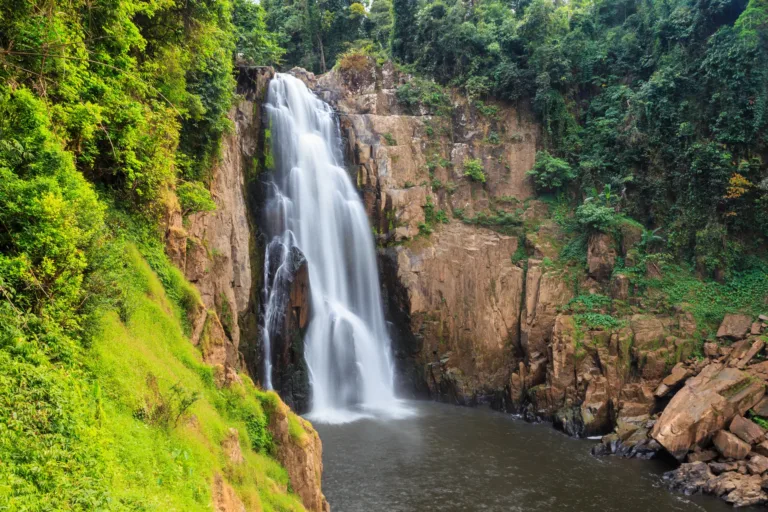 02
 03
 04
Tap a day card to see that day’s weather, rain, haze and hourly forecast
Best time to go Daytime is over · see tomorrow
Strong gusts, about 55 km/h
Holiday — traffic on the way up and parking fills fast; leave early
Green band = hours used for the score
Best time to go Fine all day little rain through the day
Holiday — traffic on the way up and parking fills fast; leave early
Green band = hours used for the score
Best time to go Fine all day little rain through the day
No warnings today — normal road and weather conditions
Green band = hours used for the score
Best time to go Fine all day little rain through the day · light drizzle possible at times
No warnings today — normal road and weather conditions
Green band = hours used for the score
Best time to go Best window 06:00–15:00 Little rain · light drizzle possible at times
No warnings today — normal road and weather conditions
Green band = hours used for the score
Best time to go Fine all day little rain through the day
No warnings today — normal road and weather conditions
Green band = hours used for the score
Best time to go Fine all day little rain through the day · light drizzle possible at times
No warnings today — normal road and weather conditions
Green band = hours used for the score
Scored from cloud cover at every level and tonight’s moonlight — the darker the sky, the clearer the Milky Way · tap another night below for the next 7 nights
Khao Yai is Thailand's first national park, spanning four provinces and forming part of the Dong Phayayen–Khao Yai Forest Complex World Heritage Site.
Arrive Early morning for wildlife and to beat the traffic
Some cool-season mornings are misty at viewpoints
Photos from Wikimedia Commons and contributors · tap a photo to see its credit
Thais 40 THB · Foreigners 400 THB · Car 30 THB · Time needed 1–2 days
Long holidays, New Year and the cool season
| Park entry, Thai adult | 40 ฿/person |
| Park entry, Thai child | 20 ฿/person |
| Park entry, foreign adult | 400 ฿/person |
| Park entry, foreign child | 200 ฿/person |
| Car | 30 ฿/vehicle |
Cash / transfer · Prices may change by season — check with the venue
Tap a month on the wheel to see weather, rain, haze and crowds from 10 years of records
Best time · Nov–Feb: cool, clear weather for hiking; the rainy season (Jul–Oct) has the best waterfalls
Watch out · Heavy traffic on park roads over long holidays; many leeches in the rainy season
Nov by the records 19–25°C · avg rain 59 mm (12 rainy days) · clear 5 days · avg PM2.5 12
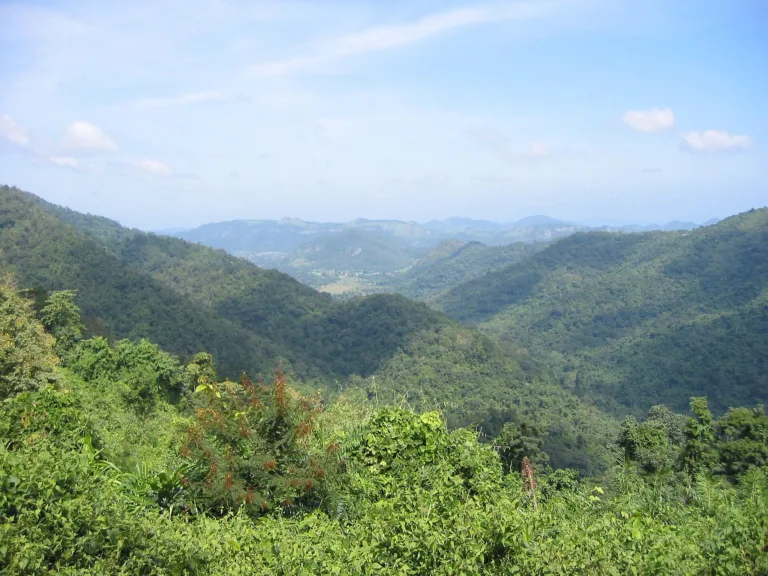
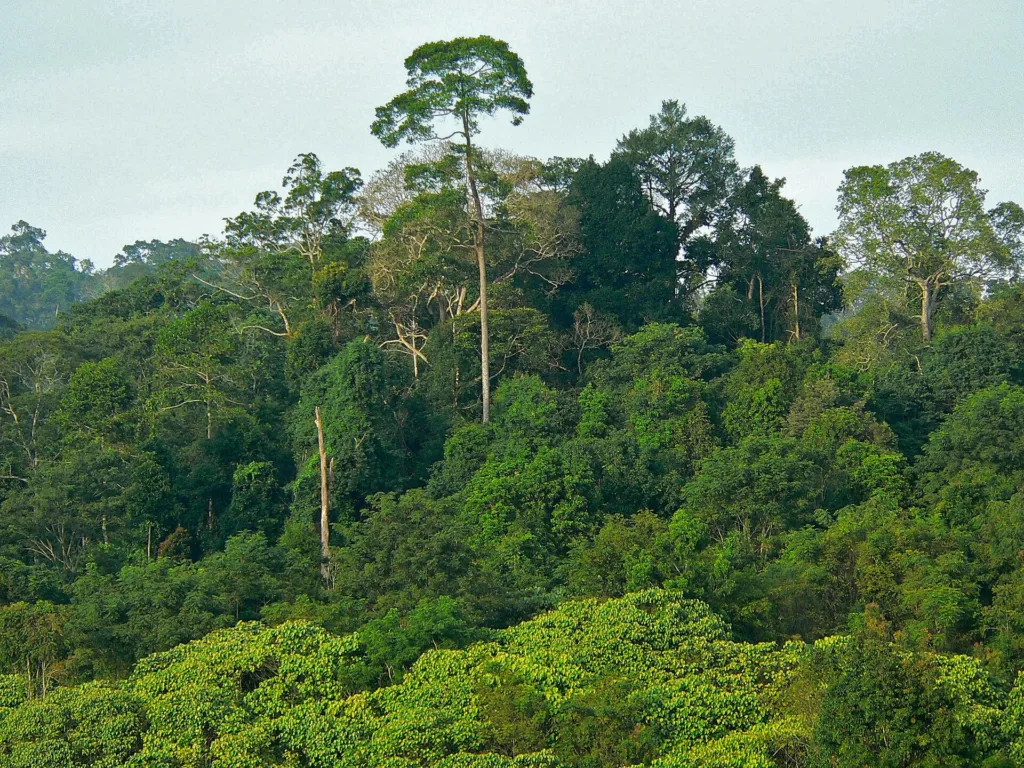
Khao Yai is Thailand's first national park, spanning 11 districts in four provinces: Nakhon Ratchasima (Pak Chong, Wang Nam Khiao), Prachinburi (Na Di, Kabin Buri, Prachantakham, Mueang Prachinburi), Nakhon Nayok (Pak Phli, Ban Na, Mueang Nakhon Nayok) and Saraburi (Kaeng Khoi, Muak Lek). Thai Wikipedia gives 2,215.42 km², English Wikipedia about 2,166 km², the country's third-largest park. Its forests range from mixed deciduous, dry and moist evergreen to hill evergreen, grassland and secondary forest; the highest peak is Khao Rom at 1,351 m.
Before it was a park, this forest stood between central Thailand and the northeast, full of wild animals and malaria; so many travellers died that it was called "Dong Phaya Fai", the "forest of the fire lord". Thai Wikipedia says King Chulalongkorn, passing through when the Bangkok–Nakhon Ratchasima railway opened, found the name frightening and renamed it "Dong Phaya Yen", the "forest of the cool lord". International Parks notes that from the 19th to early 20th century Dong Phaya Yen was known as a haven for bandits and smugglers along trade routes.
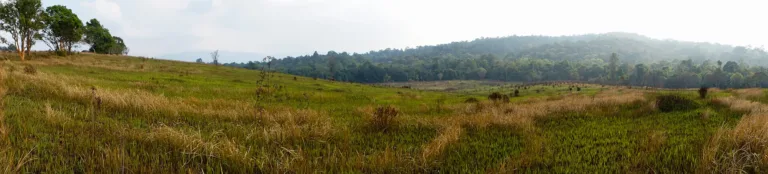
With the railway, settlers moved in, especially onto the summit, clearing forest for fields, and in 1922 they asked for it to become "Tambon Khao Yai". Being so remote from authority, the subdistrict became a bandit hideout. In 1932 the government sent an official known as "Palat Chang" to clear out the bandits, but he died of malaria. Deeming the subdistrict ungovernable and likely to revert to banditry, the government then abolished it and moved all its residents down the mountain. Their old clearings are the open grasslands of Khao Yai today, and the park takes its name from the abolished subdistrict.
Palat Chang is still remembered. At km 23 of Thanarat Road stands the "Chao Pho Khao Yai" shrine, which Thai Wikipedia says Field Marshal Sarit Thanarat ordered built in his memory. Visitors stop to pay respects, and every 26 January there is a ceremony honouring Palat Chang as the area's former guardian.
Palat Chang's story has a more legendary version. Daily News (2024) says his real name was Chang Nisaisat, a man of Nakhon Nayok who had served in the army and fought in several wars. Learning that his former subordinates had turned bandit on Khao Yai and cleared the forest, he went up to persuade them to come down; some refused, a parley in the cogon grass near Nong Khing failed, a fight broke out and one bandit chief was shot dead. He later died of malaria aged 75, and villagers built a spirit shrine under a great krabok tree at Wat Nong Khiam in Nakhon Nayok. After the park and Thanarat Road were created, the legend goes, Sarit dreamed of the forest's guardian and ordered a shrine at km 23, about 50 m from the toll gate, inviting the spirit there on 26 January, now the annual ceremony day. The article presents this as local legend and belief, without historical evidence.
In 1959 Field Marshal Sarit Thanarat saw that Khao Yai's rich, beautiful nature suited recreation but was being logged, and ordered a survey of the old subdistrict and surroundings. A key figure behind the scenes was Dr Boonsong Lekagul, pioneering conservationist; Jeffrey McNeely, who worked with him, recalls that in the late 1950s he led the drafting of the National Parks Act and persuaded Sarit to back it. The Act was passed in 1961, and Khao Yai was declared the first national park on 18 September 1962, covering about 1.33 million rai according to Prachachat.
Dr Boonsong Lekagul, the man behind the first park, was born in Songkhla on 15 December 1907, qualified in medicine at Chulalongkorn University in 1933 and opened Thailand's first polyclinic in 1935. English Wikipedia says he began as a keen hunter but, seeing forests and wildlife destroyed, became a committed conservationist: he founded the Association for the Conservation of Wildlife in 1952 and the Bangkok Bird Club (later the Bird Conservation Society of Thailand) in 1962, the same year Khao Yai became a park. He died on 9 February 1992.
Two months before the decree took effect, disaster struck: Thai Wikipedia records that on 19 July 1962 United Arab Airlines Flight 869, from Hong Kong to Don Mueang, crashed in the Khao Yai area, killing 26 people.
English Wikipedia details the crash: a de Havilland Comet 4C, registration SU-AMW, flying Hong Kong–Bangkok–Cairo with 18 passengers and 8 crew, all killed. It came down in the Khao Yai range about 96 km northeast of Bangkok, and investigators blamed the captain's navigation mistakes, which caused grave errors of time and distance in his computations.
Access changed with roads. Sarit had "Thanarat Road" cut from Mittraphap Highway up the mountain, splitting into two branches ending at Haew Suwat Waterfall and at Khao Khiao. Until 1982 it was the only road up; the Prachinburi–Khao Yai road, begun in 1980, opened in 1982. It is shorter from Bangkok, less steep and with fewer hairpins, and brought Haew Narok Waterfall within reach: instead of a hike of at least six hours along cliffs from Pak Phli, it is now about 1 km from the car park.
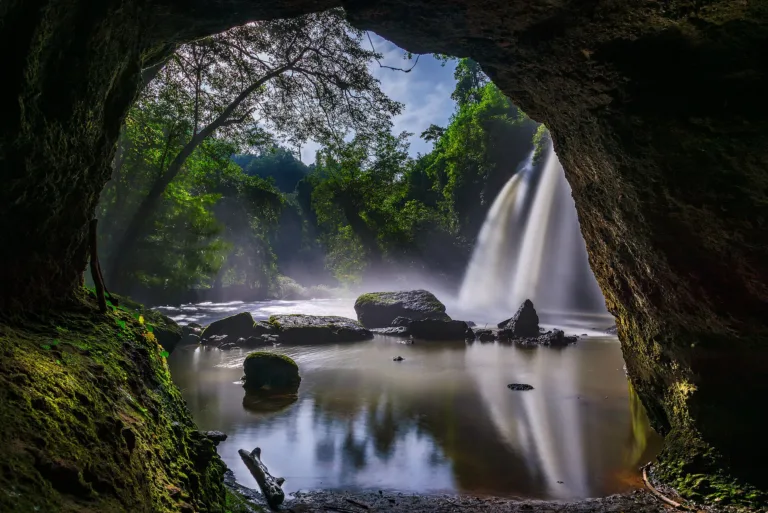
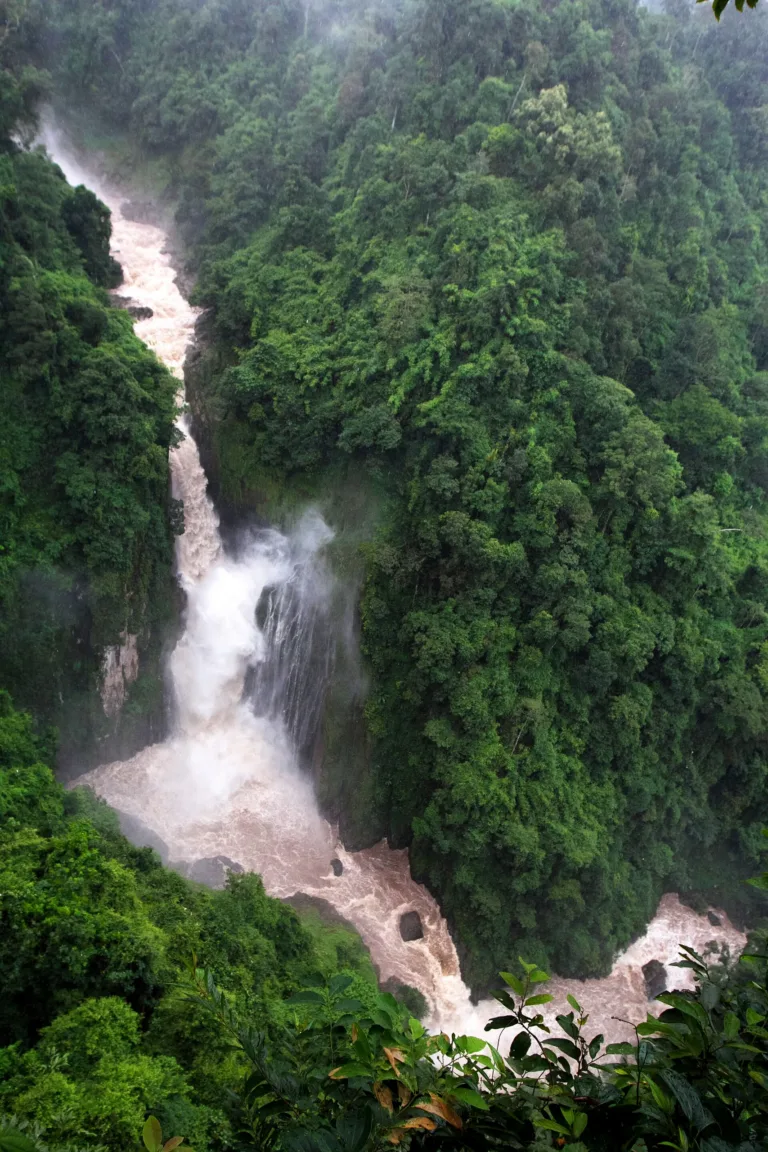
Haew Suwat Waterfall, at the end of Thanarat Road, is world-famous: in The Beach (2000), Leonardo DiCaprio's character and his companions leap from it, though the film is set on a southern island. Travelfish says the water drops about 20 m from a ledge into a round pool and that this scene made Haew Suwat Khao Yai's best-known waterfall; cliff jumping is prohibited and people have been injured.
Khao Yai also has an interesting wildlife-management history. Thai Wikipedia notes that the "Chomrom Phuean" salt lick is artificial, with minerals added to the soil since 1974, and natural licks are topped up too. But people crowding the licks scare animals away; some are nearly abandoned, such as the Nong Phak Chi lick, where gaur once came regularly but are no longer seen. Dr Boonsong also championed park chief Phairote Suwannakorn's selection for the Second World Conference on National Parks in 1972.
In 1984 Khao Yai became an ASEAN Heritage Park, and on 14 July 2005 UNESCO inscribed the "Dong Phayayen–Khao Yai Forest Complex" as a natural World Heritage Site, covering Khao Yai, Thap Lan, Pang Sida and Ta Phraya national parks and Dong Yai Wildlife Sanctuary. In 2020 the park won a gold Green National Parks award.
UNESCO inscribed the Dong Phayayen–Khao Yai complex under criterion (x) for biodiversity, but listing brings scrutiny. The 2010 state-of-conservation report worried about widening Highway 304, which cuts through the complex, from two to four lanes, risking roadkill and fragmentation, as well as farm encroachment north of Thap Lan and visitors doubling from 700,000 (2001) to 1.4 million (2006). Thailand proposed a mixed model of elevated roads and wildlife overpasses linking Khao Yai and Thap Lan, while IUCN thought large underpass tunnels would work better. The Bangkok Post later reported wildlife tunnels on Highway 304 around km 26–29, where deer and serow tracks had begun to appear.
Haew Narok Waterfall, on Khlong Tha Dan, has a dark side. Thai Wikipedia says that from around 1987 one or two elephants fell over it every year, and in the worst case, in 1992, a herd of eight strayed in and was swept over to their deaths. The park then built concrete barriers ("phaniat") along the paths to keep elephants back. The first tier is about 50 m high; the second and third tiers lie deeper in and are not open to the public.
The greatest tragedy came on 5 October 2019: Thai PBS reported that 11 wild elephants died falling at Haew Narok. Rangers first found six carcasses, then five more, while a mother and calf crossed safely back into the forest. It was the biggest loss in the 27 years since 1992. Recovering the bodies took almost a month; afterwards the barriers were repaired and the waterfall's shops removed. Yet in July 2022 two more elephants fell from a spot about 50 m outside the barrier line and both died.
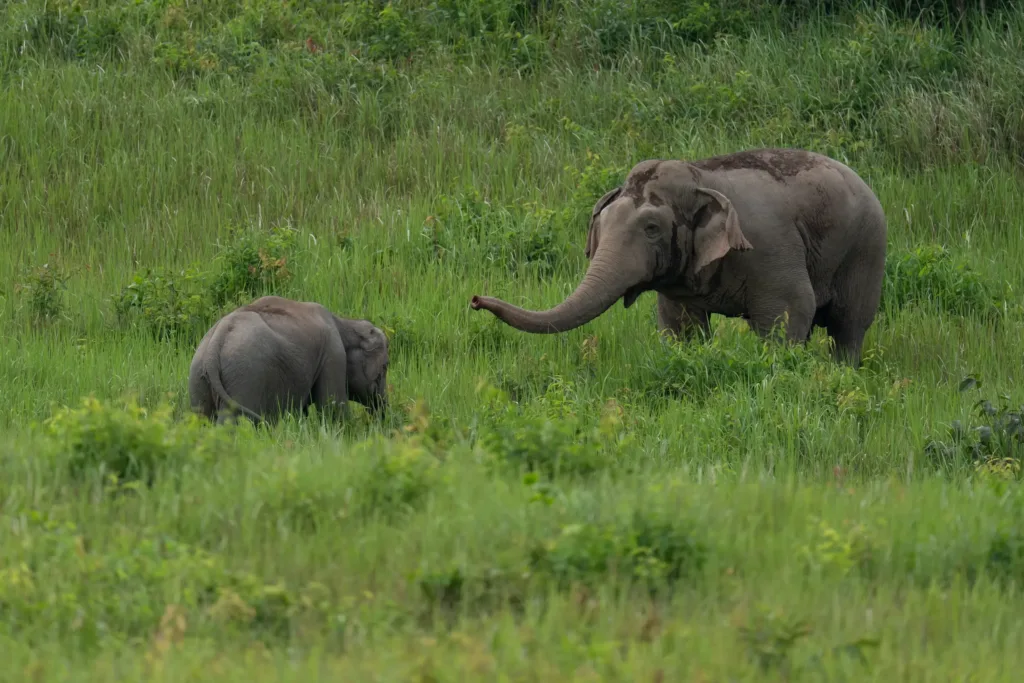
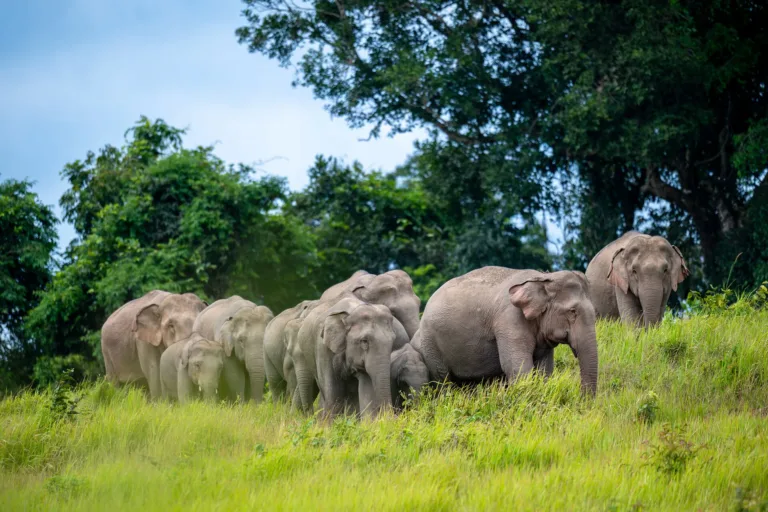
The forest holds about 3,000 plant species, more than 350 bird species, over 189 butterfly species and 71 mammal species, including Asian elephants, gibbons, pig-tailed macaques, muntjacs and sambar deer. Big news came in 2017: English Wikipedia says camera traps in the Dong Phayayen–Khao Yai complex recorded 18 tigers (five males, seven females and six cubs) between June 2016 and February 2017, while Khao Yai's cameras had last caught a tiger in 2002.
Popularity has its costs. National park figures cited by English Wikipedia show visitors rising from 671,569 in 2008 to over 1.2 million in FY2016; from October 2015 to September 2016, 471,514 vehicles entered, prompting calls to close the park for rest. In one period of 2016 the park received 156,574 visitors who left more than 23 tonnes of waste, and in 2020 the park began mailing litter back to the homes of the visitors who left it.
The park's boundaries remain contested. Land around it is being developed into luxury hotels and golf courses, and English Wikipedia notes homes and villas built illegally inside the protected area. Thansettakij reported that on 28 February 2023 the cabinet approved the integrated state-land boundary map (One Map) for group 3 but excluded Khao Yai over complaints of overlapping boundaries, and on 1 March 2024 the national parks department affirmed its boundary follows the map attached to the royal decree; Prachachat traces a land-reform (Sor Por Kor) dispute of about 34,000 rai back to land classification in 1959–63.
Arrived? Check in, collect a stamp and tell others what it is like right now
Check your location first, so you do not fill in the form for nothing
Location must be on and within 3 km · One check-in per place per day · come back on other days to check in again
Post photos from anywhere — no need to be here · Up to 20 photos at a time · JPG / PNG / WebP · GPS location data is removed automatically
From Pak Chong use Thanarat Road; from Prachinburi use Highway 3077. Park roads are winding and steep
Bangkok–Pak Chong via Mittraphap Highway, then Thanarat Road · Fuel + park fees
Bangkok–Pak Chong, then songthaew or rental car · Per operator
Bangkok–Pak Chong, then onward transport · Per class
Thanarat Road (northern gate, Pak Chong) or the Prachinburi–Khao Yai road (southern gate, Noen Hom)
Car parks at the visitor centre and main sights
Petrol stations on Thanarat Road before the gate (none inside the park)
Signal in some spots; many dead zones
06:00–18:00
about 40 km from Pak Chong town
Khao Yai National Park
400 THB
Approx. nightly price for 2 adults (next week) · final price depends on your dates
Answers travellers want before they go — a one-minute read
Yes, declared on 18 September 1962
From Tambon Khao Yai, a subdistrict set up on the summit in 1922 and later abolished
Thai adults 40 / children 20 baht; foreigners 400 / 200 baht; car 30, motorcycle 20 baht
06:00–18:00
Stop well back, stay in the car, do not honk, and wait for them to pass
The cool season for weather; the rainy season for waterfalls
Best day this week: Monday 30 Nov · Check in when you arrive to collect a stamp
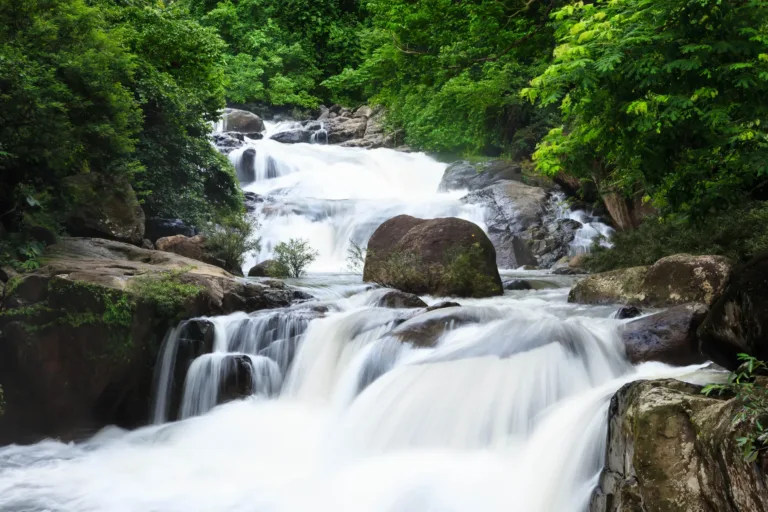 Nang Rong Waterfall
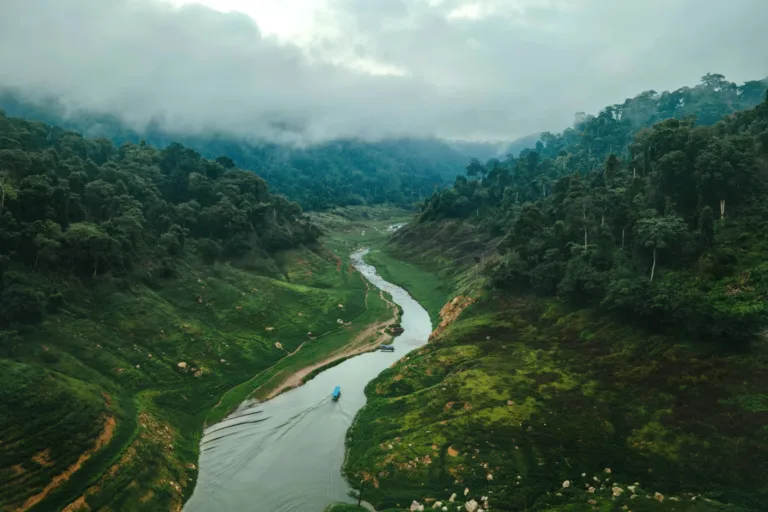 Khao Chong Lom
 Wang Takrai Park
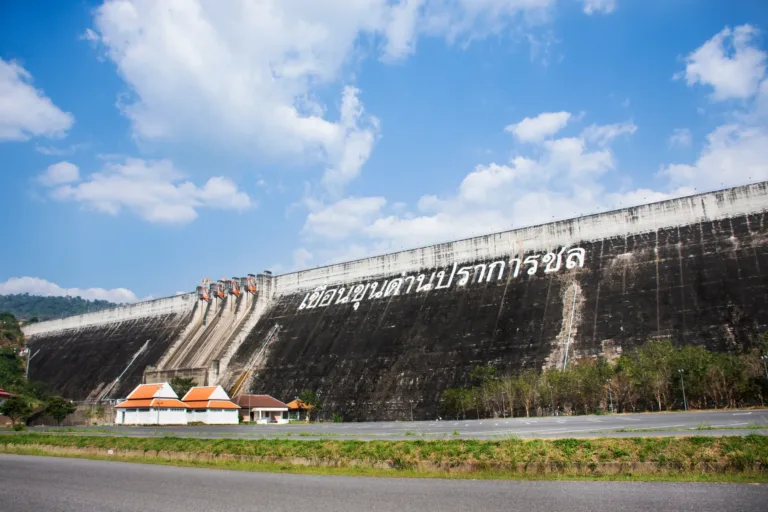 Khun Dan Prakan Chon Dam