 01
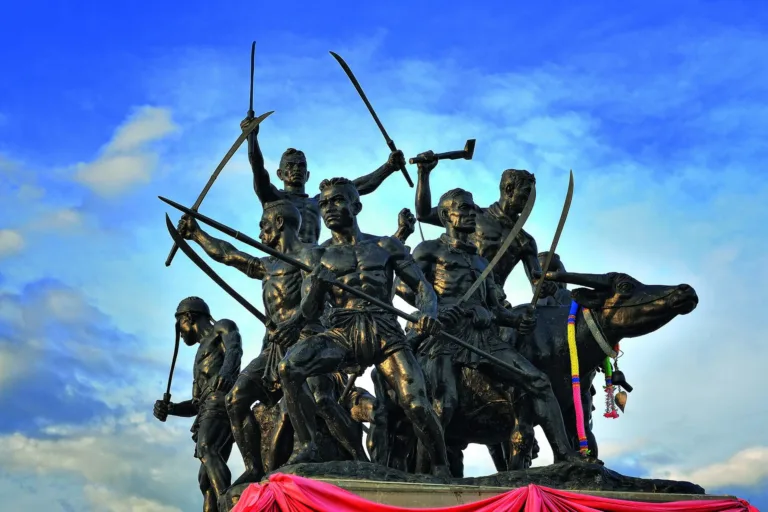
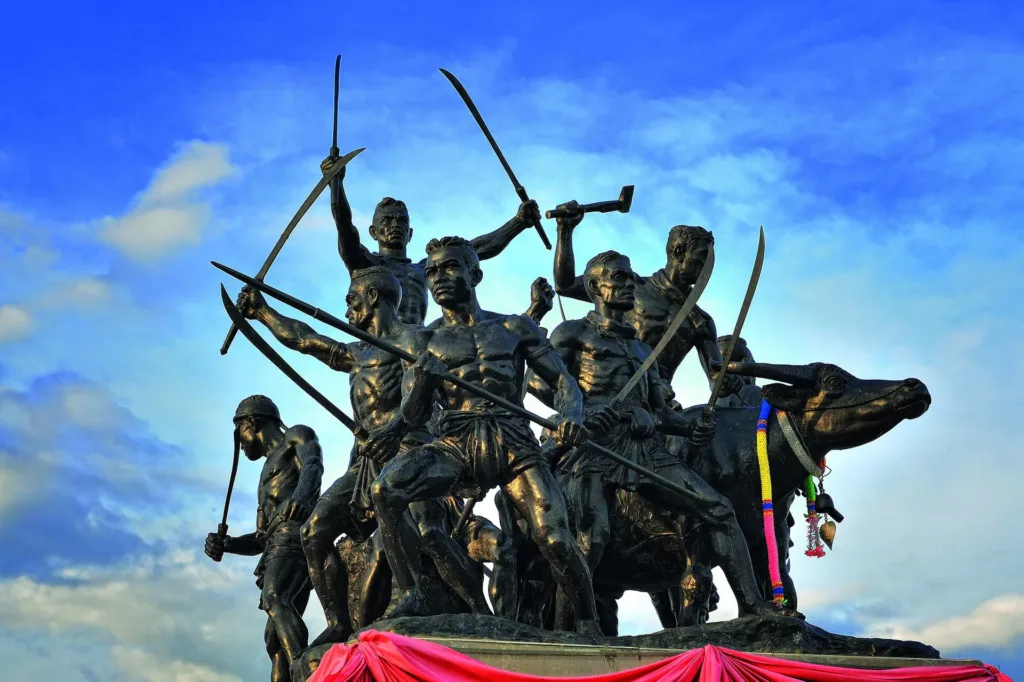
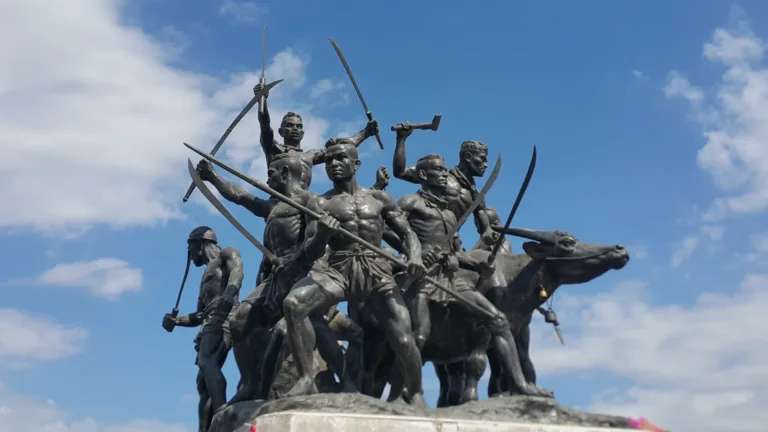
Heroes monumentEleven bronze leaders, unveiled 1976
SING BURI · KHAI BANG RACHAN
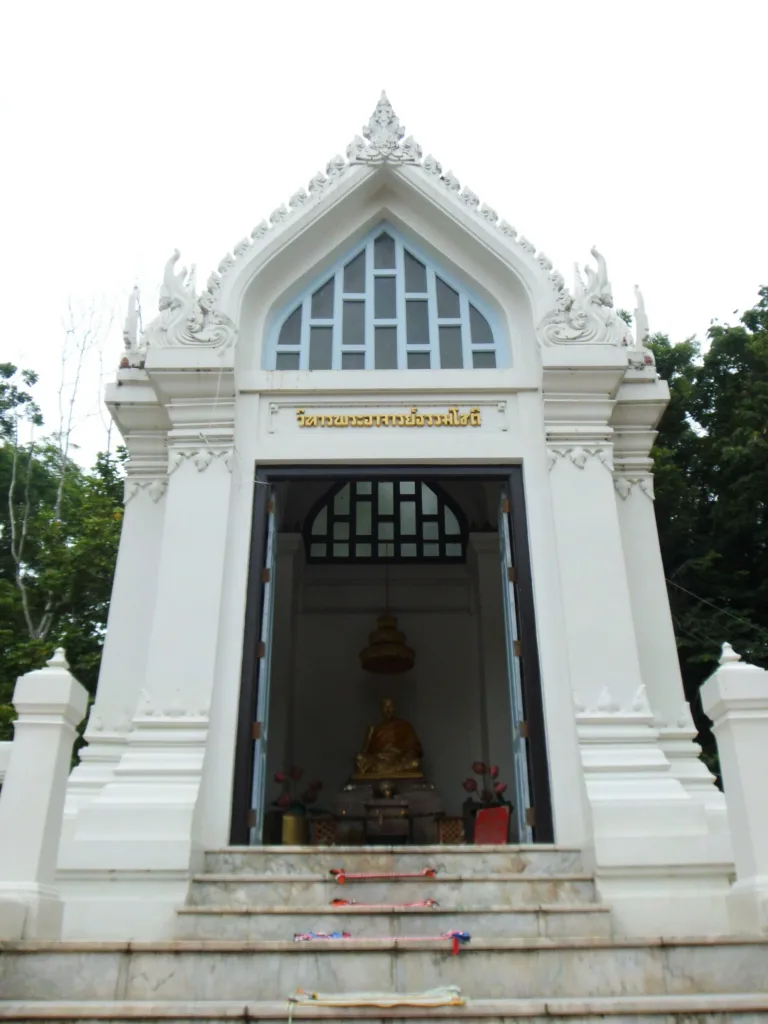
Memorial to the 1765–66 villagers’ stand against the Burmese at Bang Rachan, with the eleven-hero monument, a replica stockade and Wat Pho Kao Ton
Hot (Afternoon) feels like 42°C · Holiday / event — crowded
Park and history centre about 08:00–17:00 · Retro market Sat–Sun 08:30–17:00
1–2 hours
Free
01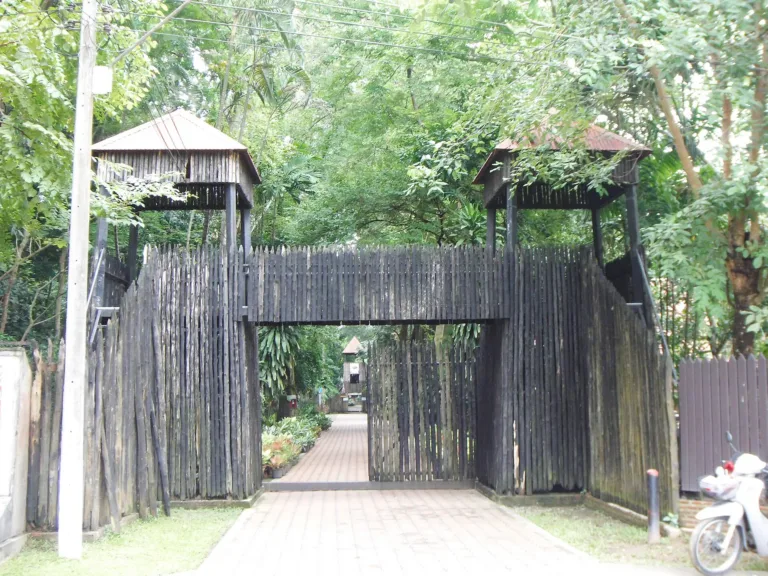 02
 03
 04
Tap a day card to see that day’s weather, rain, haze and hourly forecast
Best time to go Fine all day little rain through the day
Extreme heat — feels like 42°C; avoid midday sun and drink often
Holiday — traffic on the way up and parking fills fast; leave early
Green band = hours used for the score
Best time to go Fine all day little rain through the day
Holiday — traffic on the way up and parking fills fast; leave early
Green band = hours used for the score
Best time to go Fine all day little rain through the day · light drizzle possible at times
Holiday — traffic on the way up and parking fills fast; leave early
Green band = hours used for the score
Best time to go Best window 06:00–15:00 Little rain · light drizzle possible at times
No warnings today — normal road and weather conditions
Green band = hours used for the score
Best time to go Best window 06:00–15:00 Little rain · light drizzle possible at times
No warnings today — normal road and weather conditions
Green band = hours used for the score
Best time to go Fine all day little rain through the day
No warnings today — normal road and weather conditions
Green band = hours used for the score
Best time to go Fine all day little rain through the day
No warnings today — normal road and weather conditions
Green band = hours used for the score
Khai Bang Rachan Park in Sing Buri commemorates the villagers who held out against Burmese armies in 1765–66, shortly before Ayutthaya fell.
It has the bronze monument to eleven camp leaders unveiled in 1976, a replica stockade, a free history centre and Wat Pho Kao Ton across the road.
Photos from Wikimedia Commons and contributors · full credits inClassic page
The monument grounds are open; bring a hat and water
Dress modestly at Wat Pho Kao Ton
Do not climb the statues or replica stockade
The retro market opens only at weekends and linked holidays
Adults 0 THB · Car 0 THB · Time needed 1–2 hours
Weekends (retro market) and long holidays
| Park and history centre | Free |
| Offerings at Wat Pho Kao Ton optional | Pay as you like |
Mainly cash · Prices may change by season — check with the venue
Tap a month on the wheel to see weather, rain, haze and crowds from 10 years of records
Best time · Nov – Feb: cool and comfortable for walking the park and temple; come at a weekend to catch the Ban Rachan retro market
Watch out · Mar – May: very hot; the open monument grounds bake at midday, so come early or late afternoon
Oct by the records 24–31°C · avg rain 218 mm (20 rainy days) · clear 3 days · avg PM2.5 15
Khai Bang Rachan Park lies in Bang Rachan subdistrict, Khai Bang Rachan district, Sing Buri, about 15 km from Sing Buri town on Highway 3032. Covering some 115 rai, it holds the Heroes of Bang Rachan Monument, a replica stockade and a history centre, and faces Wat Pho Kao Ton (Wat Mai Daeng), believed to be the site of the villagers’ original camp.
The siege took place under King Ekkathat, as Burmese armies advanced on Ayutthaya before its second fall. Villagers from Sing Buri, Wiset Chai Chan, Sankhaburi and nearby areas gathered at “Ban Rachan” — the original name of Bang Rachan, according to Khanchai Bunpan and Sujit Wongthes — to defend themselves against Burmese forces foraging in this fertile area.
Writing in Silpa Wattanatham, Professor Sunait Chutintaranond explains that in the war of 1766–67 the Burmese came by two routes: the Tavoy army under Maha Nawrahta entered via Mergui and Tenasserim and camped south of Ayutthaya at Bang Sai and Si Kuk, while the Chiang Mai army under Ne Myo Thihapate — a full army, not raiders — mustered at Phitsanulok and struck northern towns such as Phichit, Nakhon Sawan and Ang Thong. He estimates more than 70,000 Burmese infantry, so the villagers could hardly have delayed the main army, and suggests Bang Rachan was a large camp that did not lie on the main line of march.
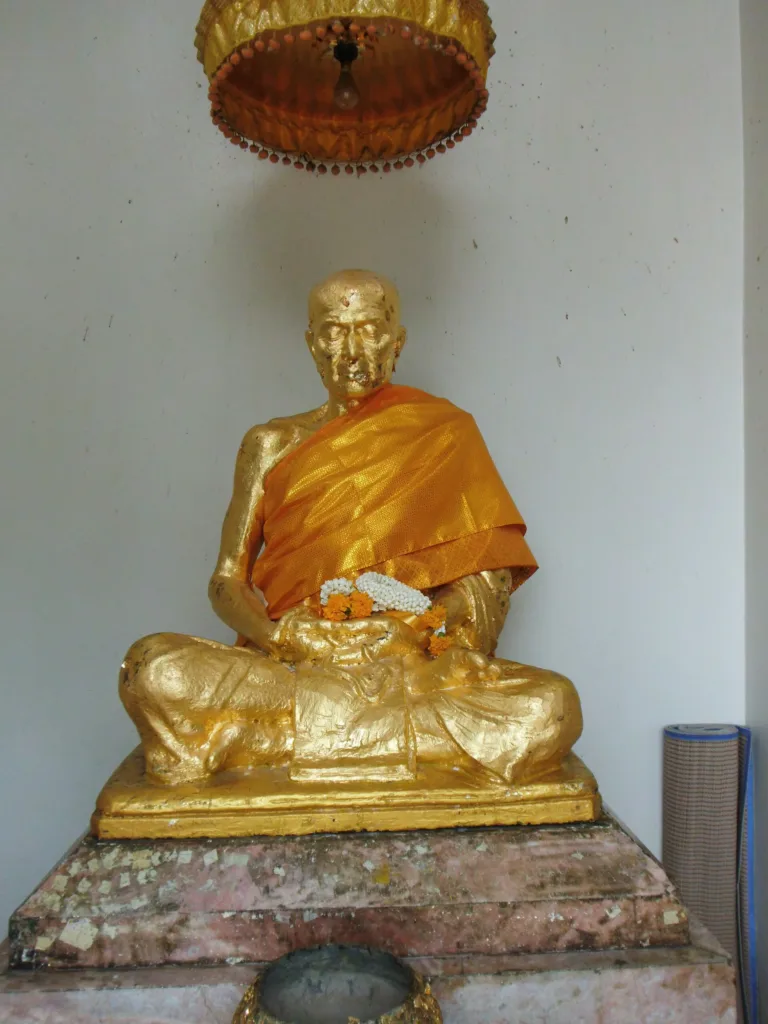
The camp’s spiritual leader was Phra Achan Thammachot. Prince Damrong’s Thai Rop Phama (Our Wars with the Burmese) says he was a monk from Wat Khao Nang Buat in Suphan Buri, invited to raise the villagers’ morale, handing out takrut amulets and performing protective rites. Tourism sources add that he chose raised ground with streams running past, giving water and a natural line of defence.
The Royal Autograph Chronicle (Phraratchahatthalekha), the most detailed account, names eleven leaders: Phra Achan Thammachot, Nai Thaen, Nai Chot, Nai In, Nai Mueang, Nai Dok, Nai Thong Kaeo, Phan Rueang, Nai Thong Men, Nai Chan Nuat Khiao and Khun San. The names on the monument and in some tourism sources differ slightly, adding Nai Thong Saeng Yai or rendering Nai Chan Nuat Khiao as Nai Chan Khiao.
The Royal Autograph Chronicle records eight Burmese assaults led by eight commanders, among them Nga Chun Wun, Yekhi Wun, Ting Cha Bo, Surin Chokhong, Yae Cho Aka, Chi Kae, Aka Panyi and Phra Nai Kong. The fourth battle was decisive: Nai Thaen led the Thai force with Nai Thong Men on the right wing and Phan Rueang on the left, and the Burmese commander Surin Chokhong was killed with a blow to the head. The chronicle says the Burmese were “greatly afraid of the skill of the Thais at Ban Rachan camp”.
One of the most retold episodes concerns Nai Thong Men. The Royal Autograph Chronicle describes him as a brave fighter fond of drink who, one day, rode a white buffalo alone into the Burmese camp while drunk and was captured and beaten to death — an image that later became a symbol of courage in literature and film.
As the siege dragged on, the villagers asked Ayutthaya for cannon and gunpowder, but the court refused for fear the guns would fall to the Burmese and be turned on the capital. The chronicle says Phraya Rattanathibet cast two cannon that proved useless against the Burmese, while the Lilit Dan poem says the villagers’ own cannon cracked. In the final assault, the Burmese commander — called “Suki” in Thai Rop Phama and “Phra Nai Kong” in the Royal Autograph Chronicle — lured the villagers out to fight in the open, killing many, and the camp fell.
Thailand’s Office of Natural Resources and Environmental Policy and Planning dates the start of the stand to 1765; the villagers held out for about five months before the camp fell in 1766, and Ayutthaya fell to the Burmese less than a year later, in 1767. Thai Rop Phama says only that Phra Achan Thammachot disappeared after the camp’s fall.
The evidence remains debated. The Phan Chanthanumat (Choem) chronicle, written in 1774 and closest to the events, names only two people: Nai Chan Khiao and the abbot of Wat Khao Nang Buat. The other names appear in documents from Rama IV’s reign; other chronicles such as the British Museum and Dr Bradley editions give only a few lines, and historians note that no Burmese source mentions Bang Rachan at all.
On the other hand, Professor Sunait notes that Bang Rachan appears in almost every Thai source — the chronicles, testimonies including that of Krom Luang Narinthewi, and astrologers’ records — and that the Testimony of Khun Luang Ha Wat lists “Ban Rachan camp” among 18 camps the Burmese set up around Ayutthaya, implying they did not burn it but used it as a base against the capital. He sees the gathering of people from Wiset Chai Chan, Suphan Buri, Sing Buri and Sankhaburi — key sources of rice and manpower — as defence against plunder by both Burmese troops and Thai bandits in a time of famine; such bands were illegal in peacetime but common in war. When Phraya Rattanathibet went out to collect gold to cast two cannon at Ban Rachan, it shows that the Ayutthaya state was reinforcing the camp as part of the capital’s defences.
Interpretations vary too. Somrit Luechai argues that the villagers banded together to protect their own lives and property, since the idea of the “nation” arose only under Rama IV and V and was emphasised under Field Marshal Plaek Phibunsongkhram, when the Bang Rachan story was used to foster nationalism. Khanchai and Sujit see them as fighting for their homeland, probably using an old town moat for cover because there was no time to build a new stockade.
Later scholarship treats Bang Rachan as narrative. Athree Wanichtrakul (Burapha University, 2015) analysed both the chronicles and Mai Mueang Doem’s novel, finding power relations embedded in how the villagers’ deeds were recorded and a patriotic ideology reproduced through textbooks and modern media. Supakan Nanram (Phranakhon Si Ayutthaya Rajabhat University, 2017) argues that the episode showed defending the realm was not only the ruling class’s duty, and notes how the story keeps being retold in literature, film, television and music.
The story became a literary landmark through the Lilit Dan Sadudi Ban Bang Rachan by Phraya Upakit Silapasan, completed in 1922 under Rama VI and printed in 1929. It was the first Thai eulogy of commoners rather than kings, recasting the villagers’ fight as one for nation, religion and monarchy, and the Ministry of Education once used it as a final-year secondary textbook.
Later came Mai Mueang Doem’s novel Bang Rachan and the 2000 film Bang Rajan, in which the role of Ai Thong Men won Bin Banluerit the award for best leading actor, bringing the story to a wide new audience.
Phra Achan Thammachot’s fate after the fall is the subject of several tales. In 1976 the Suphan Buri monument conservation committee heard from a lay elder of Wat Khao Nang Buat that he returned to his temple and vanished into a tunnel beneath the vihara; another story points to an inscription in a cave in Dong Phaya Fai. All are local tales without firm evidence.
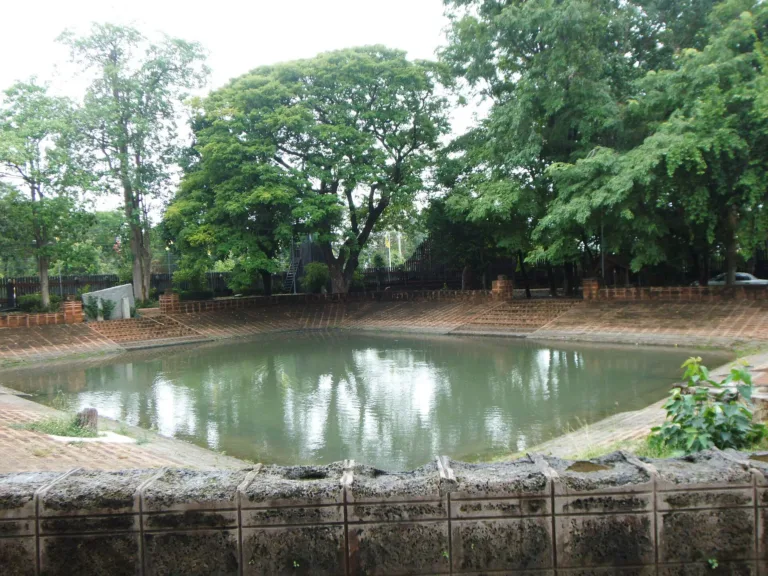
Work to turn the site into a memorial began in 1950, when an official committee was set up and the Fine Arts Department excavated the camp and its pond. In 1970 the committee decided to build a replica stockade in place of the original wooden one, with two large forts, three small forts and a ranaet palisade.
The memory of Bang Rachan also gave a district its name. English Wikipedia says that in 1966 the government restored the camp and agreed to create a new district to commemorate the battle; on 1 February 1972 the area was split from Bang Rachan district as Khai Bang Rachan minor district with five subdistricts, upgraded to a full district in 1976, with Nong Krathum added as a sixth subdistrict in 1980. The district covers about 88.4 km² and had about 28,000 residents in 2014.
The Heroes of Bang Rachan Monument was designed and built by the Fine Arts Department: a bronze group of the eleven camp leaders in dynamic poses, wielding weapons adapted from farm tools. King Bhumibol Adulyadej unveiled it on 29 July 1976.
Wat Pho Kao Ton, across from the park, is known locally as Wat Mai Daeng after the mai daeng hardwood trees in its grounds, and was registered as a monument by the Fine Arts Department in 1955. Its mondop houses an image of Luang Pu Thammachot, deeply revered in Sing Buri. The abbot, Phra Khru Wichit Wutthikhun, started the Ban Rachan retro Thai market, open weekends and linked holidays 08:30–17:00, with traders in period dress and sword-forging demonstrations.
The Bang Rachan history centre has three exhibition rooms covering the camp and its artefacts, the heritage of Sing Buri, and local ways of life. Entry to the park and museum is free.
Khai Bang Rachan Park is a memorial to those who died in war. Dress modestly, especially at Wat Pho Kao Ton, behave respectfully at the monument and do not climb the statues or the replica stockade.
Arrived? Check in, collect a stamp and tell others what it is like right now
Check your location first, so you do not fill in the form for nothing
Location must be on and within 0.2 km · One check-in per place per day · come back on other days to check in again
Post photos from anywhere — no need to be here · Up to 20 photos at a time · JPG / PNG / WebP · GPS location data is removed automatically
From Sing Buri town take Highway 3032 Drive about 15 km to K…
Highway 3032 · Fuel
Highway 1 / 32 → 3032 · Fuel
From Sing Buri town take Highway 3032 for about 15 km to Khai Bang Rachan Park
Car parks in the park and at Wat Pho Kao Ton
Petrol stations in Sing Buri town and along the highway
Good mobile signal
Park and history centre about 08:00–17:00 · Retro market Sat–Sun 08:30–17:00
around 15 km fromSing Buri town
Khai Bang Rachan Park
0 THB
Approx. nightly price for 2 adults (next week) · final price depends on your dates
Best day this week: Wednesday 28 Oct · Check in when you arrive to collect a stamp