 01
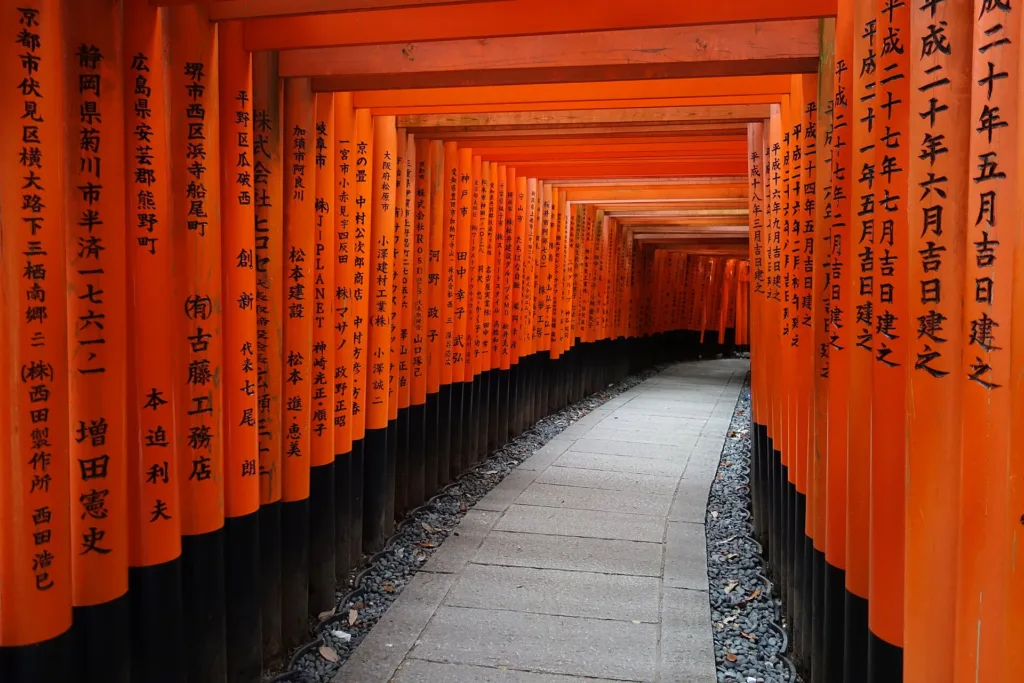
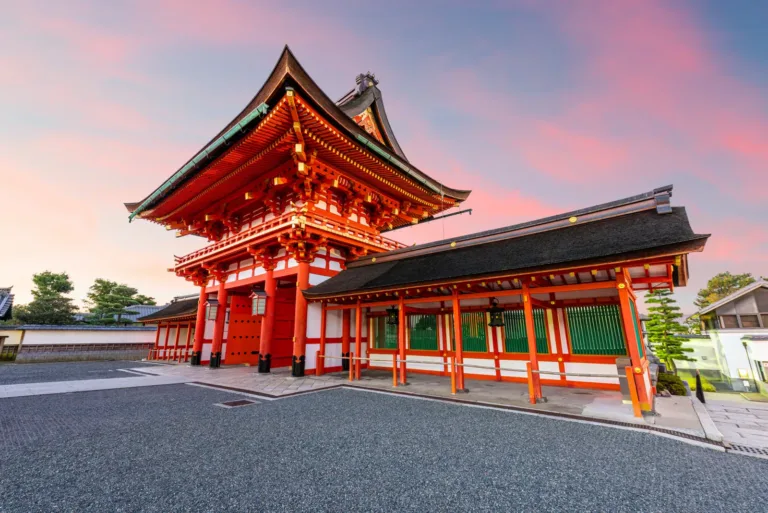
Senbon ToriiThe double torii tunnels everyone photographs
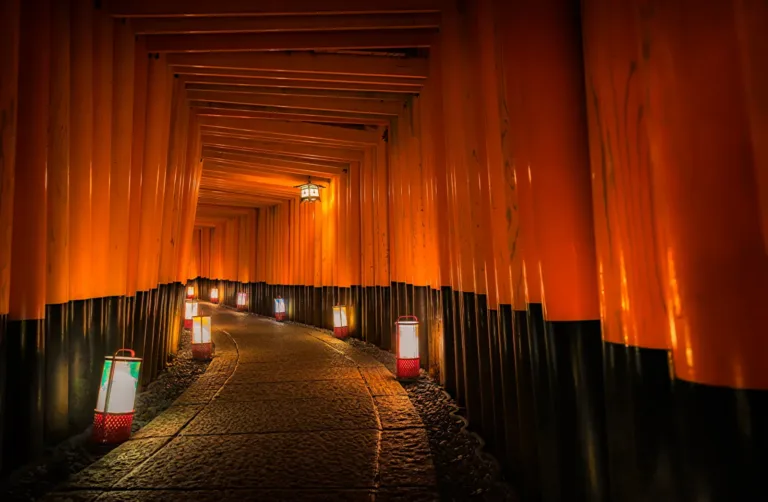
Kyoto's tunnels of ten thousand vermilion torii
Fushimi Inari Taisha in Kyoto is the head shrine of Inari, with about 10,000 vermilion torii gates forming tunnels up Mt. Inari. Open 24 hours, free entry, under 10 minutes by JR train from Kyoto Station.
Holiday / event — crowded · Late morning (09:00–12:00): rain ~10%
Bow before passing under the large torii and walk to the side · Rinse your hands at the purification basin before praying · Do not climb, write on or put stickers on the torii · Do not block the tunnels for long photos when it is busy
Open 24 hours · prayer and amulet office 08:30–16:30
08:00
Jan Hatsumode New Year visits · Feb Hatsuuma Taisai · Nov Hitakisai
01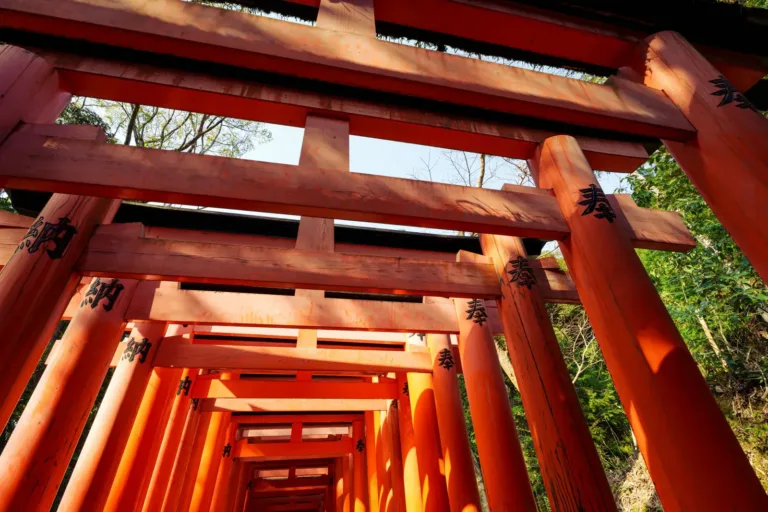 02
 03
 04
Tap a day card to see that day’s weather, rain, haze and hourly forecast
Best time to go Daytime is over · see tomorrow
Holiday — traffic on the way up and parking fills fast; leave early
Green band = hours used for the score
Best time to go Fine all day little rain through the day · light drizzle possible at times
Holiday — traffic on the way up and parking fills fast; leave early
Green band = hours used for the score
Best time to go Fine all day little rain through the day
No warnings today — normal road and weather conditions
Green band = hours used for the score
Best time to go Fine all day little rain through the day
No official warnings, but watch for: PM2.5 dust 28
Green band = hours used for the score
Best time to go Fine all day little rain through the day
Thick morning fog with visibility under 1 km — use headlights and drive slowly
Green band = hours used for the score
Best time to go Fine all day little rain through the day
High haze — keep windows closed and use recirculated air
Green band = hours used for the score
Best time to go Fine all day little rain through the day
No warnings today — normal road and weather conditions
Green band = hours used for the score
Fushimi Inari Taisha, 68 Fukakusa Yabunouchi-cho, Fushimi-ku, Kyoto
Arrive 08:00
Long stone stairs, slippery after rain
The mountain gets dark quickly
Free · Time needed 1–3 hours
10:00–15:00 daily · Jan 1–3 · cherry blossom and autumn leaf seasons
Jan Hatsumode New Year visits · Feb Hatsuuma Taisai · Nov Hitakisai
Tap a month on the wheel to see weather, rain, haze and crowds from 10 years of records
Best time · Late Mar–early Apr cherry blossoms · mid Nov–early Dec autumn leaves · arrive before 08:00 for fewer people
Watch out · Jul–Aug very hot and humid for the hike · Jan 1–3 New Year crowds
Nov by the records 7–16°C · avg rain 69 mm (7 rainy days) · clear 15 days · avg PM2.5 17
Fushimi Inari Taisha is the head shrine of more than 30,000 Inari shrines across Japan, set at the foot of Mt. Inari in southern Kyoto. By shrine tradition, the deity Inari was enshrined on the mountain in 711, more than 80 years before Kyoto became the capital. Over some 1,300 years it grew from the shrine of a local pioneering clan into one honoured by the imperial court, survived war and fire, and became the patron of merchants and ordinary people. Its tunnels of around ten thousand vermilion torii, donated by worshippers over centuries, are both a record of that faith and one of the best-known images of Japan.
The shrine's founders were the Hata, a clan descended from immigrants from the Korean Peninsula who settled and farmed the Fukakusa area of Yamashiro Province, by scholars' estimates from around the late 5th century. Mt. Inari itself shows earlier use: a Kofun-period clay coffin was excavated in one of its valleys in 1980.
A legend in the surviving fragments of the Yamashiro Fudoki tells how Hata no Irogu, a wealthy clansman, used a rice cake as an archery target. The cake turned into a white bird, flew to the peak and became sprouting rice; "ine nari", rice growing, is said to be the origin of the name Inari. The shrine holds that the deity descended on the three peaks on the first Day of the Horse of the second month of 711, the origin of the Hatsuuma festival. That year, however, comes from later records: a court document of 949 says only "in the Wado era", sources give different days in the second month, and some scholars suggest the original shrine is older still.
When the capital moved to Heian-kyo (Kyoto), the shrine became tied to the temple To-ji. Legend says the monk Kukai met an old man carrying sheaves of rice, Inari himself, who promised to protect To-ji. The first official record dates from 827, when Emperor Junna fell ill and diviners blamed trees cut on Mt. Inari for To-ji's pagoda; the court granted the deity a rank in apology. The bond still shows in the Inari Festival, whose portable shrines have stopped at To-ji since early times.
The shrine's standing rose through the Heian period. The Engishiki listed it among the great myojin shrines, Fujiwara no Tokihira repaired its three sanctuaries in 908, and in 942 Inari received the highest divine rank, Shoichii. When the court's system of 22 shrines for imperial offerings was fixed in 1081, Inari was among the upper seven, alongside Ise and Kasuga.
Visiting Inari on the first Day of the Horse became one of the capital's great festivals. Pilgrims walked the circuit of shrines on the mountain and took home sprigs of the sacred cedar for luck, and the court writer Sei Shonagon described climbing Mt. Inari in The Pillow Book. By the 12th–13th centuries the worship of five deities that continues today had taken shape.
The medieval era brought repeated disaster. The shrine burned in 1245, and in 1438 the shogun Ashikaga Yoshinori had its buildings moved from the mountain down to their present site at its foot. Only thirty years later, on the 20th day of the third month of 1468, during the Onin War, an armed band used the shrine as a base and it was burned to the ground. Rebuilding took decades; the main hall was completed and the deities re-enshrined in 1499. That Inari-zukuri hall still stands and is an Important Cultural Property.
In 1589 Toyotomi Hideyoshi confirmed the shrine's 106 koku of land, ordered repairs and built the two-storey Romon Gate, about 14 m tall, said to be in thanks for his mother's recovery. In the Edo period Tokugawa Ieyasu confirmed the estate in 1615, and the shogunate funded a major restoration in 1694. Around this time Kada no Azumamaro (1669–1736), son of a shrine priest, became a leading scholar of Japanese classical learning; his residence still stands beside the Romon, and the Azumamaro Shrine draws students praying for exam success.
The Edo period was also when Inari became a deity of ordinary people, fondly called "Oinari-san" and asked for thriving business and family safety. The custom of donating a torii when a wish came true spread from this time, and the gates gradually formed the tunnels known as Senbon Torii. Today there are about ten thousand large and small torii on the mountain, most donated by companies; wooden gates last about four to five years before being replaced, so the rows are always changing.
In the Meiji era the shrine was ranked a Kanpei Taisha, the highest grade of state shrine, in 1871. In 1879 Inari Station opened in front of the shrine, then the first stop from Kyoto on the Tokaido line; it became a Nara Line station in 1921. After the Second World War the state shrine system ended, and in 1953 Kyoto Prefecture approved the name "Fushimi Inari Taisha" for the religious corporation. In 1961 the main hall was restored to its appearance as built in 1499.
In 2011 the shrine celebrated 1,300 years since the deity's enshrinement. In 2014 it became the top attraction in Japan among foreign visitors in TripAdvisor reviews, and held that place for several years running. Worshippers and companies still come to pray and donate new torii every year, so this remains a living shrine, not just a historic site.
Arrived? Check in, collect a stamp and tell others what it is like right now
Check your location first, so you do not fill in the form for nothing
Location must be on and within 1 km · One check-in per place per day · come back on other days to check in again
Post photos from anywhere — no need to be here · Up to 20 photos at a time · JPG / PNG / WebP · GPS location data is removed automatically
The Mt. Inari trail is footpaths and stone stairs only; no vehicles
Kyoto Station → Inari Station (local train), 1 min walk · Ticket or IC card
Fushimi-Inari Station, about 5 min walk · Ticket or IC card
From Kyoto Station take a local JR Nara Line train to Inari Station, about 1 minute on foot to the shrine. Or take the Keihan Line to Fushimi-Inari Station.
Parking is very limited; take the train
Good
Open 24 hours · prayer and amulet office 08:30–16:30
about 4 km from Kyoto Station
Fushimi Inari Taisha
Approx. nightly price for 2 adults (next week) · final price depends on your dates
Answers travellers want before they go — a one-minute read
No, it is free and open 24 hours
About 2–3 hours up and back; Senbon Torii alone takes under an hour
Early morning before 08:00; busiest 10:00–15:00
Local JR Nara Line train to Inari Station; rapid trains do not stop
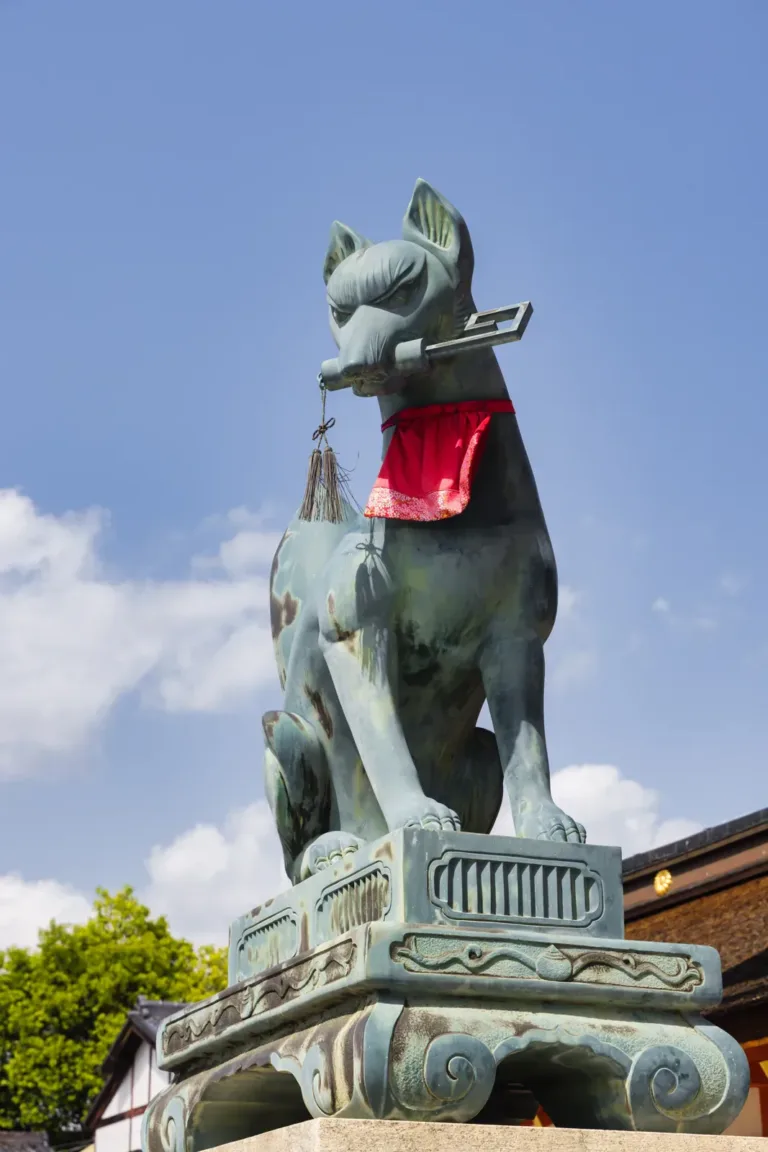
Foxes are considered messengers of the deity Inari
Best day this week: Monday 30 Nov · Check in when you arrive to collect a stamp
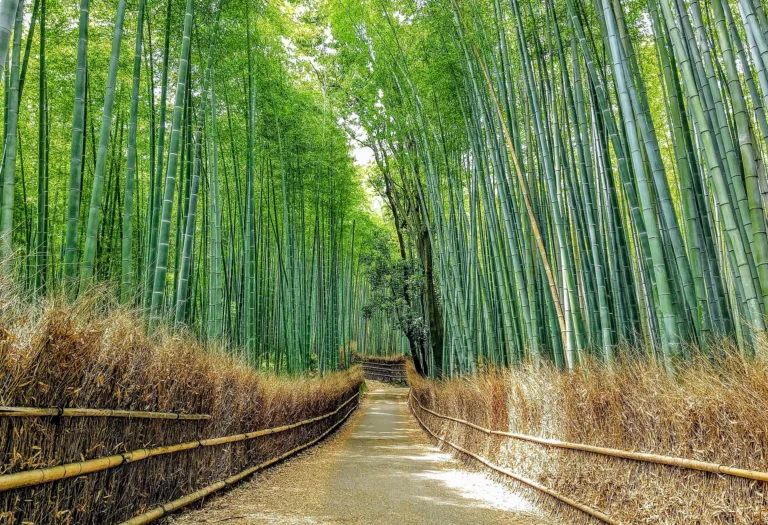 Arashiyama Bamboo Grove