 01
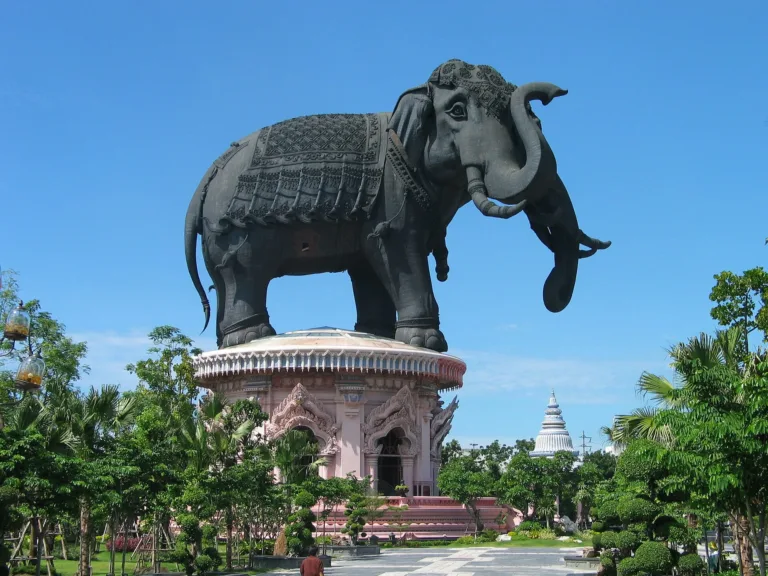
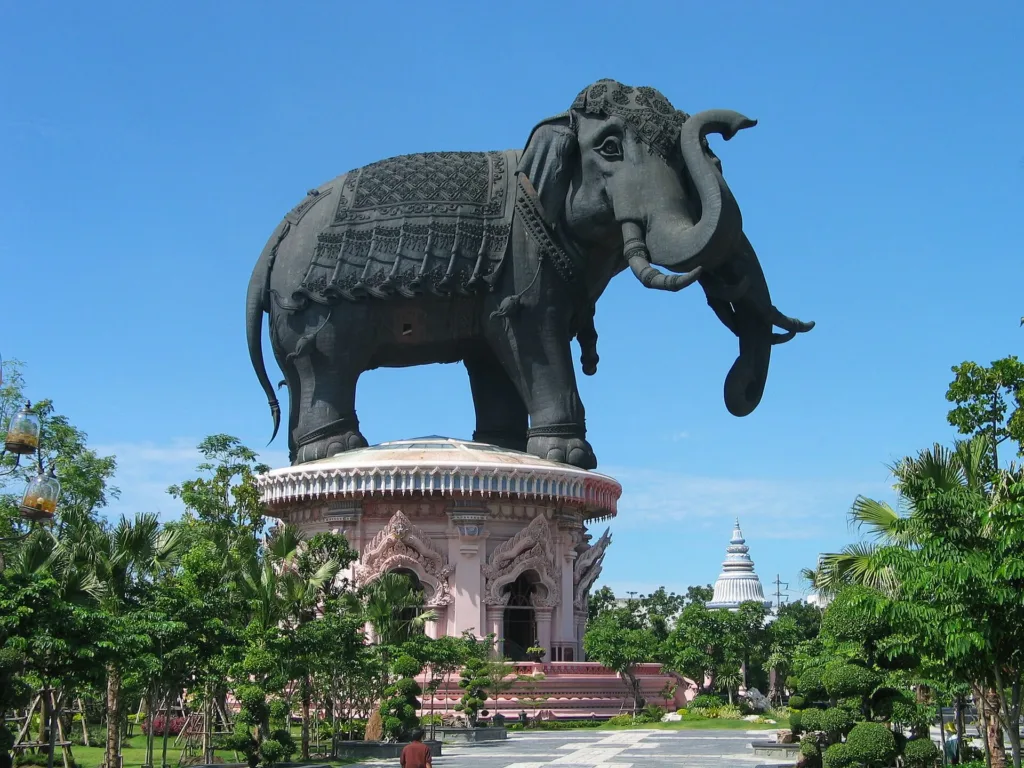
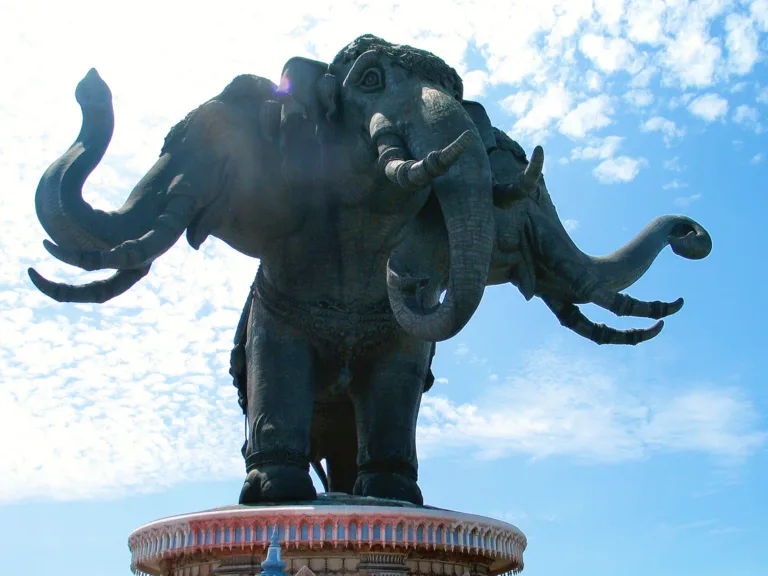
Three-headed Erawan elephantHand-hammered copper sculpture, 29 m tall, about 250 tonnes in total
Samut Prakan · Three-headed copper elephant
A museum beneath a giant three-headed copper elephant in Samut Prakan, 43.6 m tall, with three floors based on Thai cosmology and a Himmaphan garden, near BTS Chang Erawan.
PM2.5 dust 42 · Holiday / event — crowded · Hot (Afternoon) feels like 39°C
Daily 9 am–6 pm; ticket counter closes at 5 pm (per the museum's price page)
500 THB
1.5–2 hours
Weekends 11 am–3 pm and tour-group times
01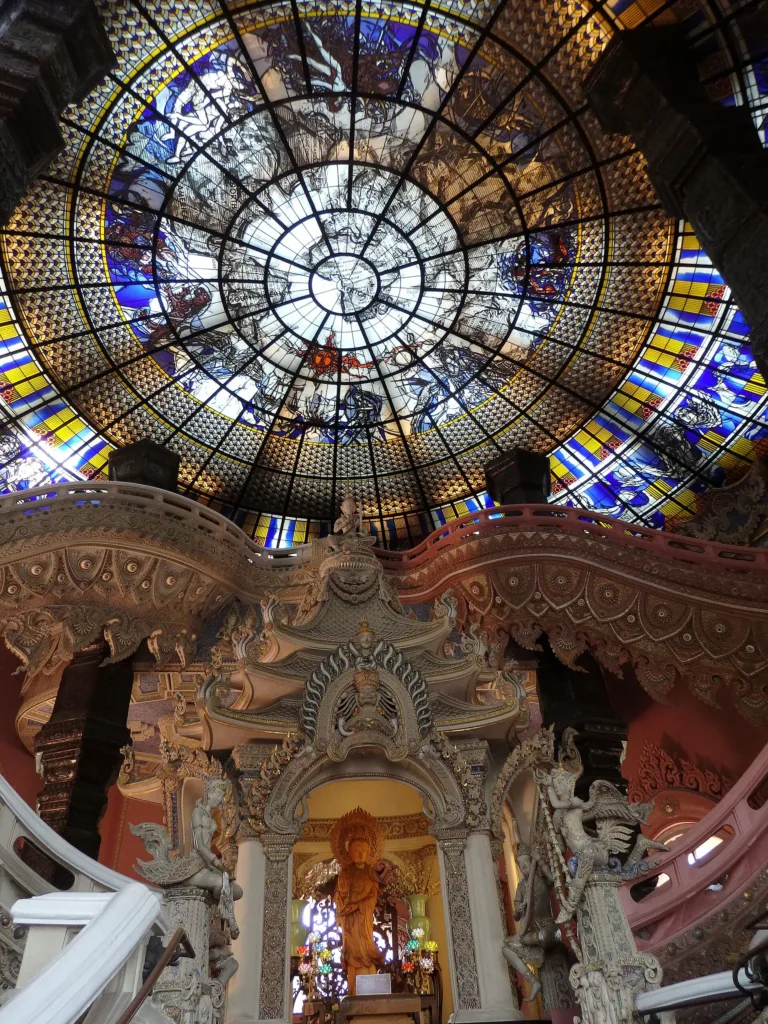 02
 03
 04
Tap a day card to see that day’s weather, rain, haze and hourly forecast
Best time to go Fine all day little rain through the day · light drizzle possible at times
Holiday — traffic on the way up and parking fills fast; leave early
Green band = hours used for the score
Best time to go Fine all day little rain through the day · light drizzle possible at times
Holiday — traffic on the way up and parking fills fast; leave early
Green band = hours used for the score
Best time to go Fine all day little rain through the day · light drizzle possible at times
Holiday — traffic on the way up and parking fills fast; leave early
Green band = hours used for the score
Best time to go Best window 06:00–14:00 Little rain · light drizzle possible at times
No warnings today — normal road and weather conditions
Green band = hours used for the score
Best time to go Best window 06:00–14:00 Little rain · light drizzle possible at times
No warnings today — normal road and weather conditions
Green band = hours used for the score
Best time to go Fine all day little rain through the day
No warnings today — normal road and weather conditions
Green band = hours used for the score
Best time to go Fine all day little rain through the day
No warnings today — normal road and weather conditions
Green band = hours used for the score
The Erawan Museum in Samut Prakan, about 25 km from central Bangkok, is crowned by a hand-hammered copper three-headed elephant 43.6 m high including its base. Built by Lek Viriyaphant, founder of the Ancient City and the Sanctuary of Truth, it opened in 2003 and is laid out as underworld, human world and heaven.
Arrive 5 pm (ticket counter closes)
Photos from Wikimedia Commons and contributors · full credits inClassic page
Adults 500 THB · Time needed 1.5–2 hours
Weekends 11 am–3 pm and tour-group times
| Adult (normal visitor) | 500 ฿/baht |
| Child | 250 ฿/baht |
| Audio guide (ask at counter) optional | Pay as you like |
Cash and card/transfer (check at the counter) · Prices may change by season — check with the venue
Hospitals in Samut Prakan town · Emergency 1669 · Tourist Police 1155
Tap a month on the wheel to see weather, rain, haze and crowds from 10 years of records
Best time · November to February is cooler for the garden; the indoor floors work year-round. Come right after the 9 am opening for fewer people, or late afternoon for the elephant against the sky.
Watch out · March–May afternoons are very hot in the garden; long weekends bring many tour groups.
Oct by the records 25–31°C · avg rain 250 mm (23 rainy days) · clear 1 days · avg PM2.5 38
The Erawan Museum stands at the junction of Sukhumvit and Kanchanaphisek roads in Bang Mueang Mai, Mueang Samut Prakan, on about 12 rai of land. Its centrepiece is a colossal three-headed Erawan elephant perched on top of the building, with an art and antiques museum inside and a Himmaphan forest garden around it.
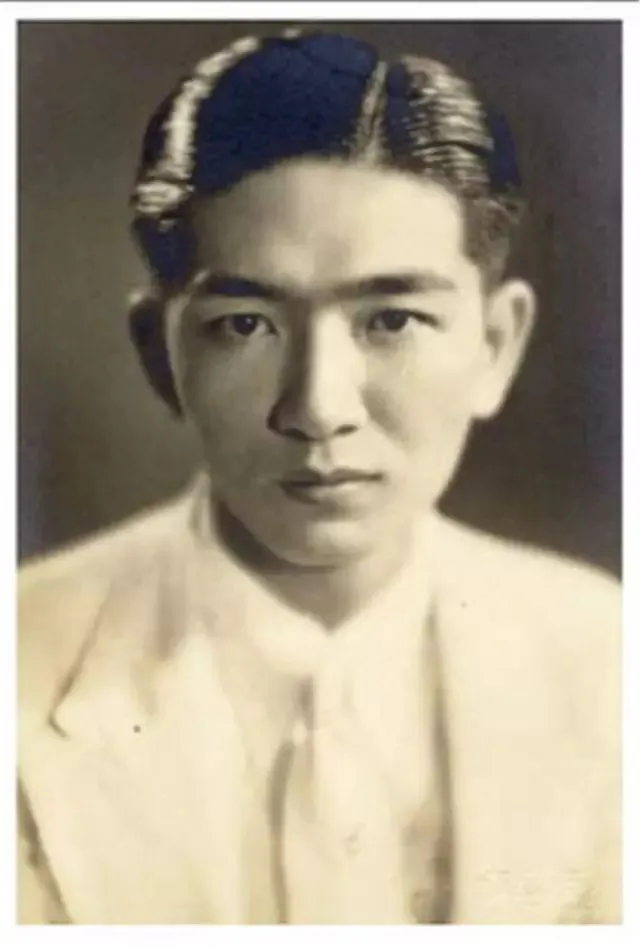
The founder was Lek Viriyaphant. The museum's website says he was born in 1914 into a Chinese merchant family in Sampheng, studied at university in Shanghai, and came home to help run the family business when his father fell ill.
Lek was also the founder of Viriyah Insurance. The company's annual report says it was first registered in 1947 as Asia Phanitchayakan Co., Ltd., with 5 million baht in capital, starting with fire and marine insurance before moving into motor insurance and taking the Viriyah name. That business funded Lek's large-scale art projects.
His interest in art grew from reading and collecting antiques, leading him to build the Ancient City in Samut Prakan with his wife and partner Praphai (Naewna dates its founding to 1963; the museum's website says 1981). He later built the Sanctuary of Truth in Chonburi.
According to the museum, Lek felt that modern Thais no longer recognised the essence of their culture, and set four aims: to teach history, to use art heritage as evidence of the spiritual development of Eastern societies, to share Asian wisdom as a counterweight to materialism, and to make the museum a lasting heritage of humankind.
The three-headed elephant began as part of a cultural site planned at Bang Pakong, which was shelved for its sheer scale. Later a Western friend suggested an apple-shaped building, which rekindled the elephant idea, and the project moved to Samrong in Samut Prakan.
A 2009 visitor's account on GotoKnow, citing Ancient City adviser Srisakra Vallibhotama, says the original project was planned for about 1,000 rai on the Bang Pakong River in Chachoengsao, with a 70-storey (210 m) building and a 90 m three-headed elephant, but was cancelled over land encroachment problems. The Samrong elephant was instead built on about 12 rai owned by Thonburi Prakob Yont Co., with Lek handing the project to his eldest son, Phakphian.
In Thai cosmology Erawan is the mount of the god Indra. Legend says the deity Erawan transformed into a white elephant with 33 heads, but art usually shows three, as this museum does.
The work began with paper sketches, then a clay model and structural models in fibre, foam and beeswax. The elephant is clad in copper sheets about 1.2 mm thick, hand-hammered into tens of thousands of pieces from 4x8 ft sheets down to palm-sized bits. Each section was numbered, test-assembled, then taken apart and lifted into place by crane. The museum calls it the first outdoor sculpture made entirely of hand-hammered copper sheet.
The same account describes the engineering. The lower hall and the four legs were built first, the legs bearing on reinforced-concrete ring beams with 4 and 8 columns; a steel frame was then woven into the body, while the heads were built on the ground and lifted into place. Copper was chosen over tin or silver, which were too soft; at least 3,000 square metres of copper sheet were imported from Japan, briefly causing a shortage, and hooks fix the copper to the steel frame because the two metals expand differently in heat.
Construction began in 1994, with the foundation stone laid on 17 July 1995. Praphai had died on 29 April 1992, and Lek died on 17 November 2000, before the museum was finished. Both received a royal cremation at Wat Thep Sirin on 4 September 2001. The museum opened to the public in 2003 (the website also says building took 10 years from the foundation stone, which does not match the opening year).
Official figures give a total height of 43.6 m, about 14 storeys. The elephant is 29 m tall, about 39 m long and 12 m wide; the body weighs 150 tonnes and the head, cantilevered without supports, 100 tonnes. Wikipedia gives a total of 250 tonnes and a 15 m base.
Inside, three levels follow the Traiphum cosmology. The lowest, in the base, is "Suvarnabhumi", the underworld, displaying Ming and Qing ceramics from Lek's personal collection along with Sangkhalok, Lopburi and benjarong wares. Photography is not allowed on this level.
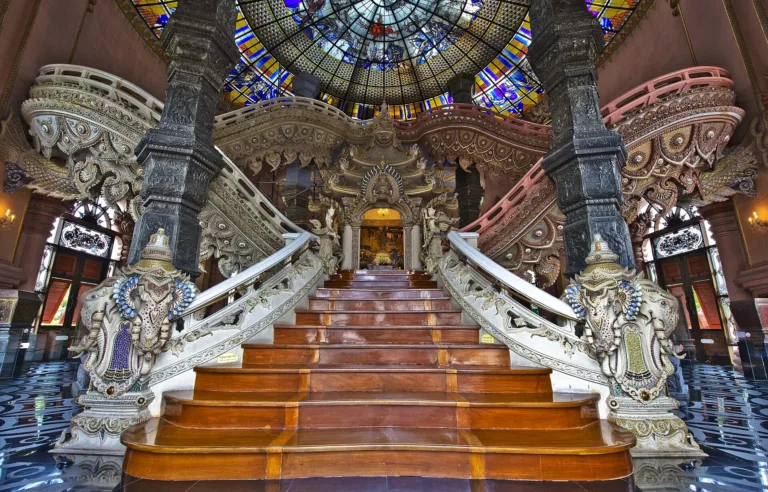
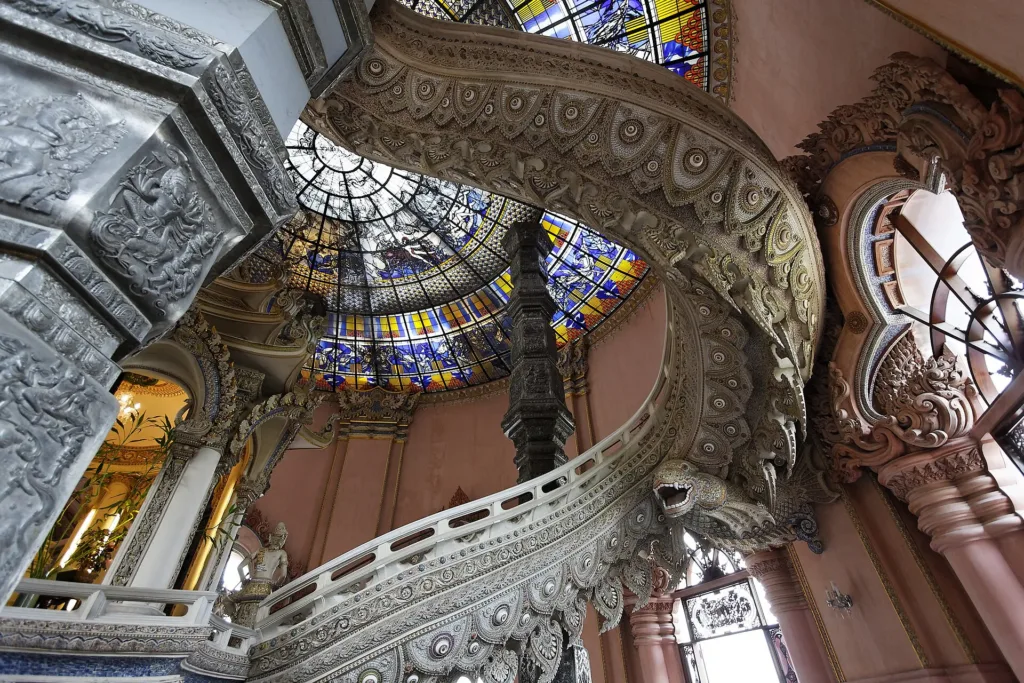
The middle level, the "human world", is a hall supporting the elephant. Four tin-clad pillars tell stories from four faiths: Theravada Buddhism (Mahajanaka), Mahayana Buddhism (Guanyin), Hinduism (Vishnu reclining and his ten avatars) and Christianity (Creation, Noah's Ark and Jesus). The stained-glass ceiling by a German artist uses four colours for the four elements, with a world map and zodiac signs.
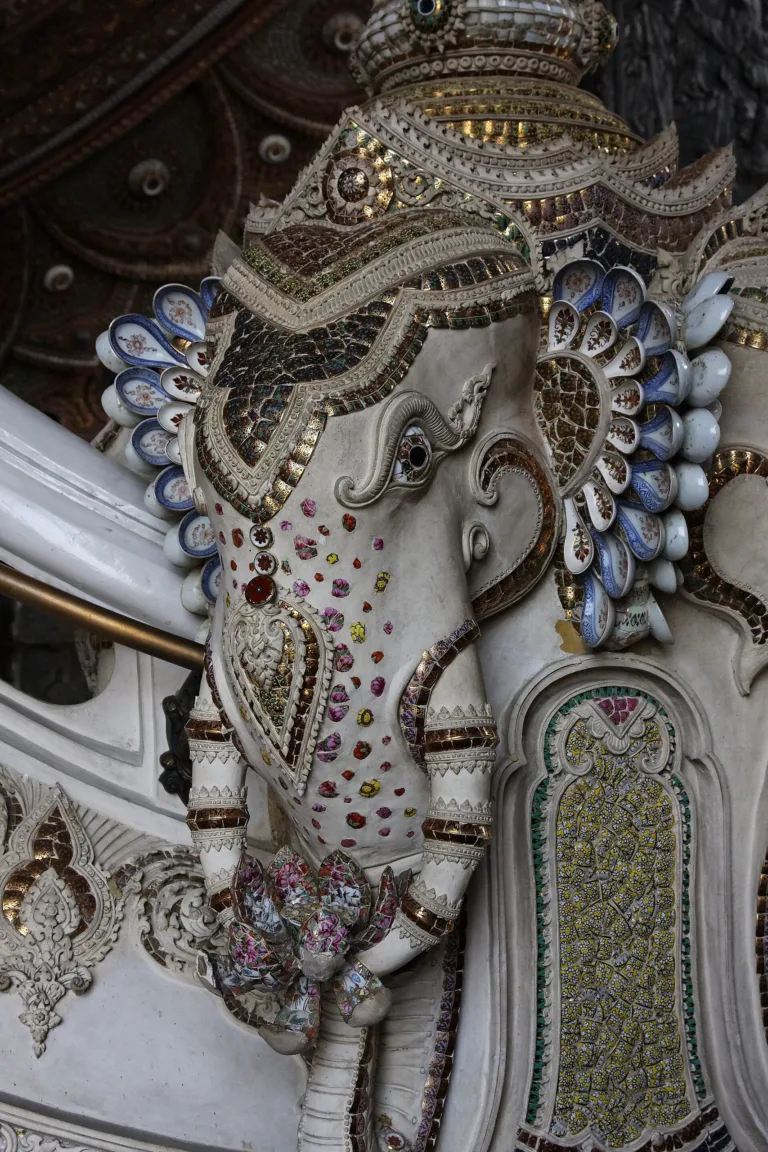
The museum's floor guide credits the stained-glass ceiling of the human-world level to German artist Jacob Schwarzkopf, with yellow for earth, white for wind, red for fire and blue for water, ringed by the 12 signs of the zodiac. The walls carry Phetchaburi-style stucco and over 100,000 benjarong pieces made in Amphawa and China. A Chinese-style Phra Ket gate guards the stairs to heaven, with a stone Guanyin inside, and the ceiling is decorated with lamps and recycled materials such as glass bottles.
The four tin-clad octagonal pillars under the legs, the museum says, represent the four Brahmaviharas: loving-kindness, compassion, sympathetic joy and equanimity. The Theravada pillar tells the Ten Jataka tales (some sources say the Mahajanaka story). On the way to heaven, the stair walls show floating, dancing deities, and the top ceiling is painted in powder colours with the Sun, planets, the Milky Way and asteroids, above a Buddha footprint encircled by Mount Meru.
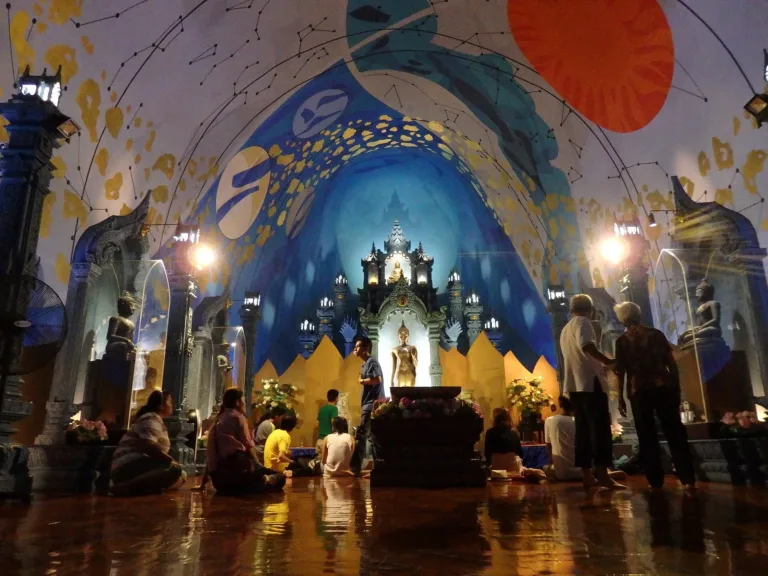
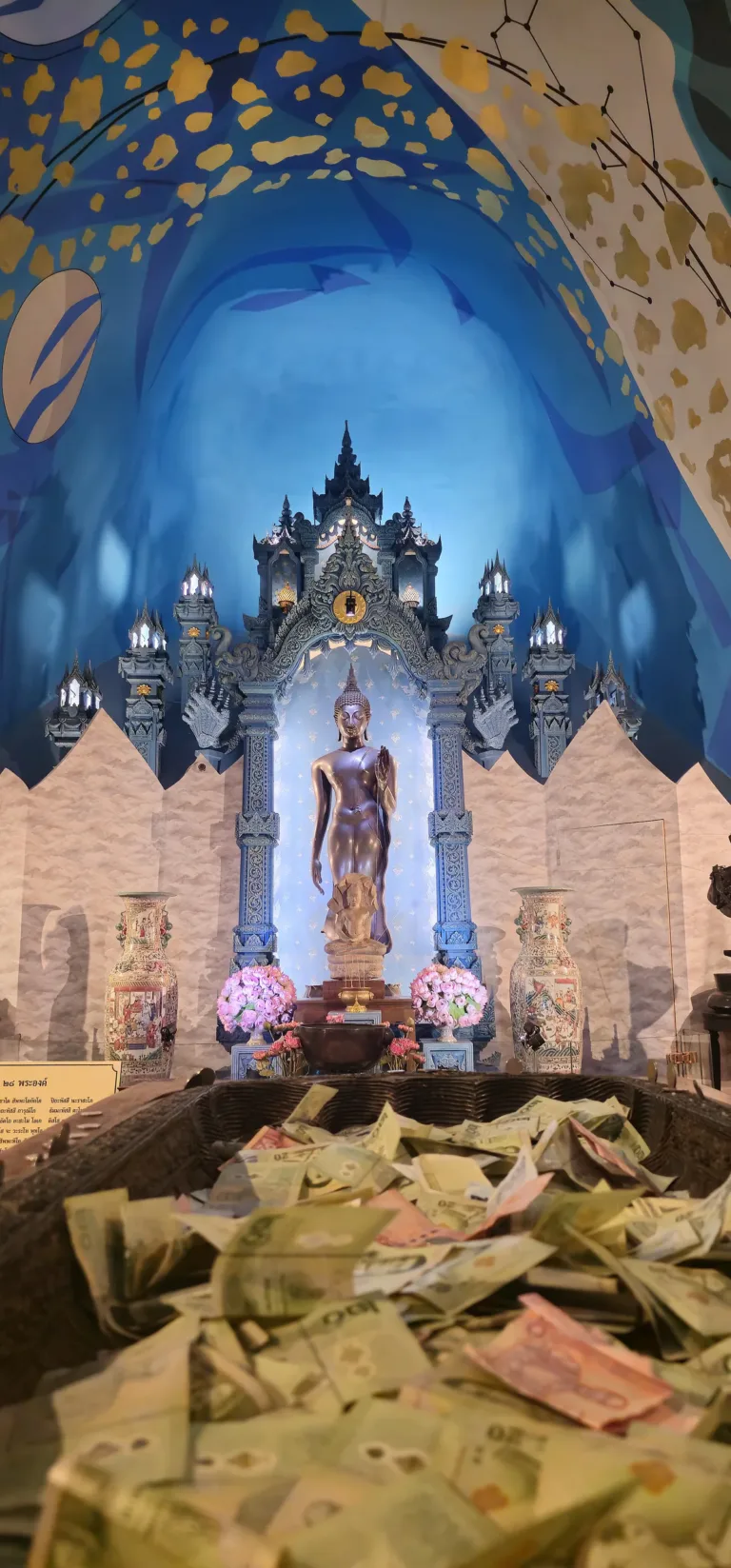
A lift in the left hind leg and a spiral staircase in the right hind leg lead up into the elephant. The top level inside its belly is the "cosmos", Tavatimsa heaven, with Buddha images from the Lopburi, Ayutthaya, Lanna and Rattanakosin periods, relics of the Buddha, a replica footprint, a Sukhothai-style walking Buddha and a painting of the solar system on the ceiling.
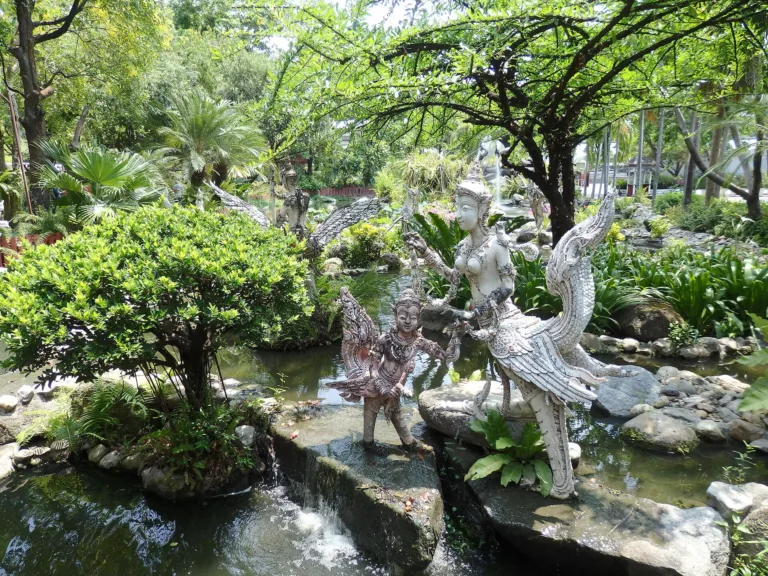
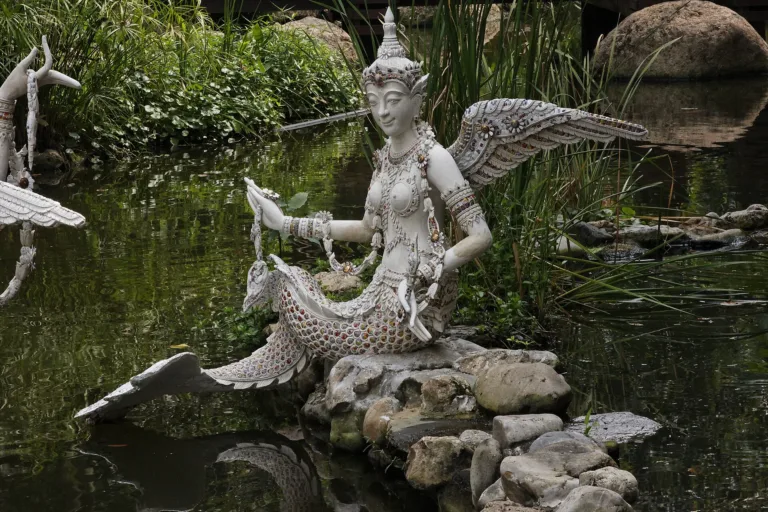
The grounds form a Himmaphan forest garden with plants from Thai literature and sculptures of mythical creatures such as the sinthop-kunchon, kunchon-wari and khotchasi. Elephants of three Brahmanical lineages (Vishnu, Shiva and Brahma) can be walked beneath, and there are shrines to Brahma, the Trimurti, Ganesha and Avalokiteshvara.
Today the museum is easy to reach on the BTS Sukhumvit Line at Chang Erawan station, named after it. Ticket prices have changed over time: in 2020 Thai adults paid 250 baht and foreigners 400 baht, while the museum's current price page lists 500 baht for adults and 250 baht for children (normal visitors). On 17 December 2022 a ceremony honouring Indra and the Erawan elephant was held at the museum to mark the Ancient City's 60th anniversary.
In late 2025 an Amarin TV press release (25 November 2025) promoted a "Siam Erawan" ticket covering both the Erawan Museum and the 800-plus-rai Ancient City for 499 baht instead of 650, showing the two are still run together.
Arrived? Check in, collect a stamp and tell others what it is like right now
Check your location first, so you do not fill in the form for nothing
Location must be on and within 1 km · One check-in per place per day · come back on other days to check in again
Post photos from anywhere — no need to be here · Up to 20 photos at a time · JPG / PNG / WebP · GPS location data is removed automatically
From Bangkok take Sukhumvit Road or the Burapha Withi Expres…
Sukhumvit Line to Chang Erawan, then walk · Distance-based fare
Sukhumvit Rd → Kanchanaphisek junction · Fuel/tolls
From central Bangkok · Estimate 250–400 baht
Sukhumvit Road (Hwy 3) at the Kanchanaphisek junction
Museum car park
Stations along Sukhumvit
Good signal on all networks
Daily 9 am–6 pm; ticket counter closes at 5 pm (per the museum's price page)
around 25 km fromBangkok
Erawan Museum
500 THB
Approx. nightly price for 2 adults (next week) · final price depends on your dates
Answers travellers want before they go — a one-minute read
The museum's price page lists 500 baht for adults and 250 for children (normal visitors); check for promotions or Thai rates before going
Daily 9 am–6 pm; ticket counter closes at 5 pm
Yes, Chang Erawan station on the Sukhumvit Line
43.6 m in total with the building; the elephant is 29 m tall and about 39 m long
Lek Viriyaphant, creator of the Ancient City and Sanctuary of Truth; it opened in 2003
Best day this week: Wednesday 28 Oct · Check in when you arrive to collect a stamp