 01
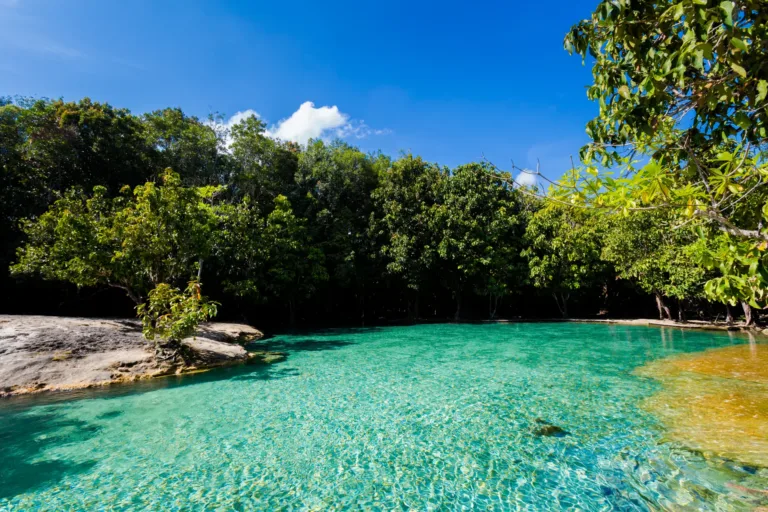
Emerald PoolA green pool about 20 m across and 1–2 m deep, fine for swimming
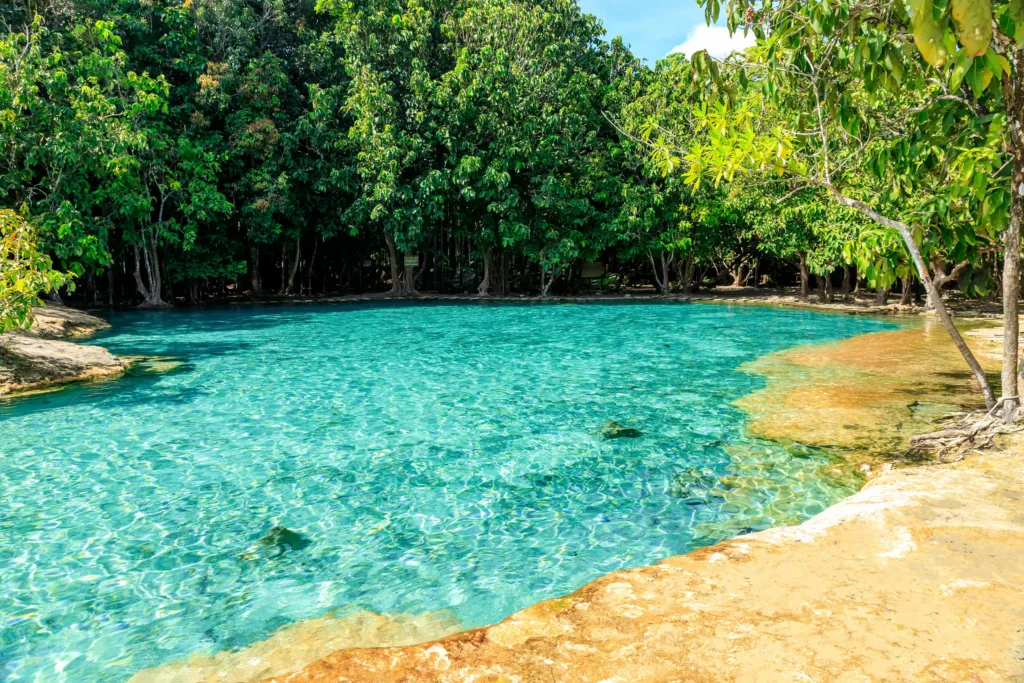
Jungle pool · Khlong Thom
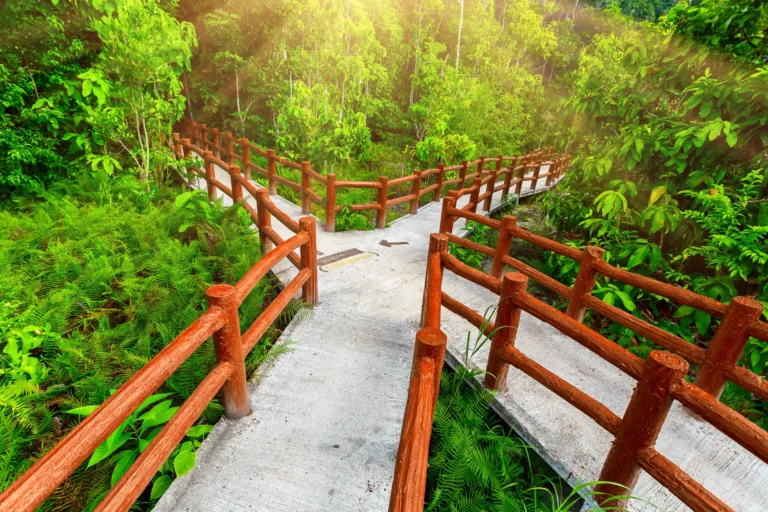
An emerald-green pool in lowland forest within Khao Pra–Bang Khram Wildlife Sanctuary, Khlong Thom, Krabi. Walk a jungle boardwalk to swim, then on to the Blue Pool. About 60 km from Krabi town.
Evening (16:00–19:00): rain ~88% · Holiday / event — crowded
May, Jul – Nov
Very slippery rocks — Wear strapped sandals or water shoes with good grip
2–3 hours
01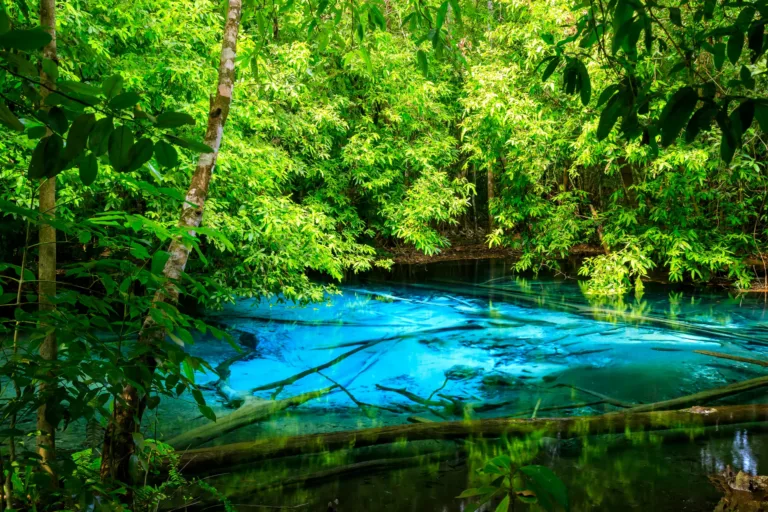 02
 03
Tap a day card to see that day’s weather, rain, haze and hourly forecast
Best time to go Daytime is over · see tomorrow
Thick morning fog with visibility under 1 km — use headlights and drive slowly
Holiday — traffic on the way up and parking fills fast; leave early
Green band = hours used for the score
Best time to go Best window 06:00–14:00 Little rain · light drizzle possible at times
Rain at times — slippery roads, allow extra travel time
Holiday — traffic on the way up and parking fills fast; leave early
Green band = hours used for the score
Best time to go Best window 07:00–12:00 Little rain · light drizzle possible at times
Rain at times — slippery roads, allow extra travel time
Green band = hours used for the score
Best time to go Best window 06:00–14:00 Little rain · light drizzle possible at times
No official warnings, but watch for: Possible thunder 15:00–16:00
Green band = hours used for the score
Best time to go Best window 06:00–12:00 Little rain
Rain at times — slippery roads, allow extra travel time
Green band = hours used for the score
Best time to go Best window 06:00–14:00 Little rain · light drizzle possible at times
No warnings today — normal road and weather conditions
Green band = hours used for the score
Best time to go Best window 06:00–15:00 Little rain · light drizzle possible at times
No official warnings, but watch for: Late morning (09:00–12:00): rain ~16%
Green band = hours used for the score
Scored from cloud cover at every level and tonight’s moonlight — the darker the sky, the clearer the Milky Way · tap another night below for the next 7 nights
The Emerald Pool lies in Khao Pra–Bang Khram Wildlife Sanctuary, Khlong Thom Nuea, Khlong Thom District, about 60 km from Krabi town. It is a clear, emerald-green pool around 20 m across and 1–2 m deep, and you can swim in it.Two paths lead from the entrance: a short 800 m route straight to the pool, and a 1.4 km raised boardwalk past streams and forest. About 400 m beyond is the Blue Pool, where swimming is banned; it closes from May to October while Gurney's pittas nest.Entry is 40 baht for Thais and 400 baht for foreigners, open 08:30–16:30. Wear grippy shoes, as the rocks in the pool are very slippery.
Arrive 08:30 opening, before the tour buses
Wear strapped sandals or water shoes with good grip
Quicksand and changeable water temperatures
Thais 40 THB · Foreigners 400 THB · Time needed 2–3 hours
10:00–14:00
| Entry, Thai | 40 ฿/person |
| Entry, foreigner | 400 ฿/person |
Prices may change by season — check with the venue
The Emerald Pool is a natural pool in the lowland forest of Khao Nor Chuchi, inside Khao Pra–Bang Khram Wildlife Sanctuary in Khlong Thom District, Krabi. Its fame comes not only from the colour of its water but from the story of Gurney's pitta, a bird once feared extinct that was rediscovered in this very forest in 1986 and led to the area being protected. Today the pool is both one of Krabi's most popular swimming spots and a gateway to one of the last lowland forests in Thailand.
The forest sits on limestone terrain, and the pool is fed by springs rising from underground. Its source is the Blue Pool, a deep turquoise spring further into the forest; the water flows down a stream into the Emerald Pool and then on to Sa Kaeo, a lower pool. The water is warmer than an ordinary stream and rich in dissolved minerals, and some sources say it also contains sulphur, which forestry experts describe as unusual for the region.
The emerald colour is not constant: it shifts with the light, the time of day and the season. Explanations differ slightly. Some sources attribute it to calcium carbonate dissolved from the limestone, which settles as a soft, slippery coating along the edges, while others stress the role of algae and micro-organisms together with water temperature, warmer water looking bluish-green and cooler water paler green. This is why visitors are asked not to use soap or shampoo in the pool.
Khao Nor Chuchi is the name birdwatchers around the world know, and it was used for the area before the sanctuary name took over. The forest straddles the border of Khlong Thom District in Krabi and Wang Wiset District in Trang, and the walk to the pool passes the community of Ban Bang Tiao. The name of the Thung Tiao nature trail comes from the sa-tiao trees that dominate this moist forest.
The story of Gurney's pitta began with specimens collected in southern Burma and scientifically described in 1875. For decades afterwards there were almost no reliable records, and scientists feared the bird was gone. Philip D. Round and Uthai Treesucon searched for about four years, using satellite forest maps and old museum specimen labels, until on 14 June 1986 they found a pair with a nest at Khao Nor Chuchi. The news put this small forest in Khlong Thom on the global conservation map.
By then, however, only about 30 square kilometres of lowland forest remained, scattered among grassland and rubber plantations. The area had previously been logged under concessions, some land had been cleared for plantations from the early 1970s, and after the communist insurgency ended in 1983 more settlers arrived to claim land for rubber and oil palm. Local community leaders had already been looking after the pool before any formal protection existed.
Formal protection began in 1987, when Khao Pra–Bang Khram was declared a non-hunting area. In 1992 Gurney's pitta was listed as a reserved wildlife species, and the area was upgraded to a wildlife sanctuary in 1993 (some sources give 1992–1993). Figures for its size vary between sources, from about 150 to 183 square kilometres. A key weakness was that the boundary covered mostly steep hills, leaving much of the true lowland pitta habitat outside it.
From 1990 to 1999 the Khao Nor Chuchi Lowland Forest Project was run by Mahidol University with BirdLife International. From 2000 the UK's Royal Society for the Protection of Birds (RSPB) continued the work with the national parks department and the Bird Conservation Society of Thailand, and the department ran its own pitta recovery project from 2003 to 2008. The Tina Jolliffe nature trail is named in memory of a British conservationist who first championed protecting this forest. At first most visitors to the pool were local people; foreign tourists and birdwatchers followed once news of the pitta spread.
Despite these efforts the population kept falling, from around 40 pairs in 1986 to about 21 pairs in 1992 and 10–15 pairs in 2000, mainly because the surrounding forest was converted to plantations. Two daughters from a 2008 nest became the last known females, a colour-banded male was reported until around February 2014, and a 2016 survey found only a single female. That year a researcher proposed using the pool's income to buy back land and restore the forest. A survey from April to June 2019 recorded responses from birds at two points, a sign the species had not yet vanished from Thailand. This is why the Blue Pool closes during the nesting season.
On the tourism side, growing popularity brought tighter management. In 2018 people were found scratching marks into the pool's edge, and the sanctuary stepped up enforcement, asking visitors to keep their memories in photos instead. After the Covid period swimming reopened on 1 November 2021 with a limit of 50 people per round, and in November 2025 the department's director-general ordered upgrades to the toilets and showers, along with plans for a cycling route of about 1.2 km on site.
A swim at the Emerald Pool is therefore more than a dip in clear water in the jungle: it is a walk into the last home of one of Thailand's rarest birds. Staying on the marked paths and keeping chemicals out of the water are part of protecting this forest.
Arrived? Check in, collect a stamp and tell others what it is like right now
Check your location first, so you do not fill in the form for nothing
Location must be on and within 3 km · One check-in per place per day · come back on other days to check in again
Post photos from anywhere — no need to be here · Up to 20 photos at a time · JPG / PNG / WebP · GPS location data is removed automatically
The Emerald Pool is in Khlong Thom Nuea, Khlong Thom, inside Khao Pra–Bang Khram Wildlife Sanctuary.
Krabi town to Khlong Thom · Fuel
Day tours from Ao Nang or Krabi town · Varies by operator
Paved road to the car park
Car park at the entrance
Daily 08:30–16:30
about 60 km from Krabi town
Emerald Pool
400 THB
Answers travellers want before they go — a one-minute read
Khlong Thom Nuea, Khlong Thom, Krabi, about 60 km from town
Thai 40 baht, foreigners 400 baht
Daily 08:30–16:30
Yes in the Emerald Pool, about 1–2 m deep; not in the Blue Pool
800 m on the short path or 1.4 km on the long one
It closes May–Oct for Gurney's pitta nesting
Best day this week: Tuesday 1 Dec · Check in when you arrive to collect a stamp
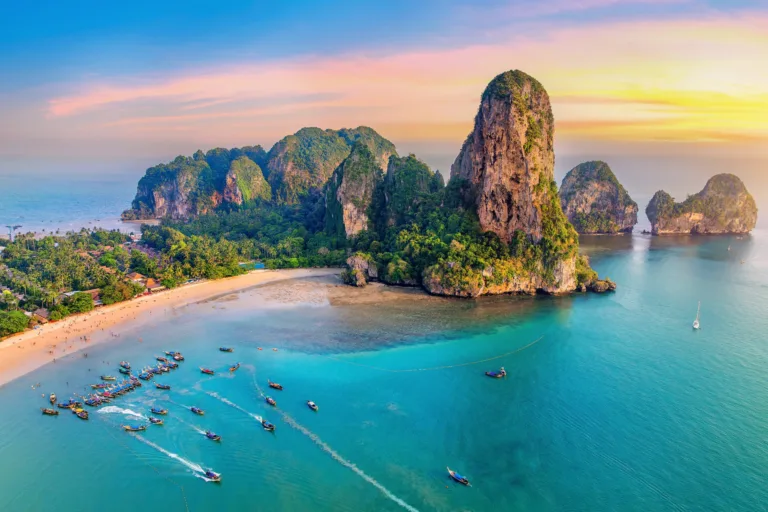 Railay Beach
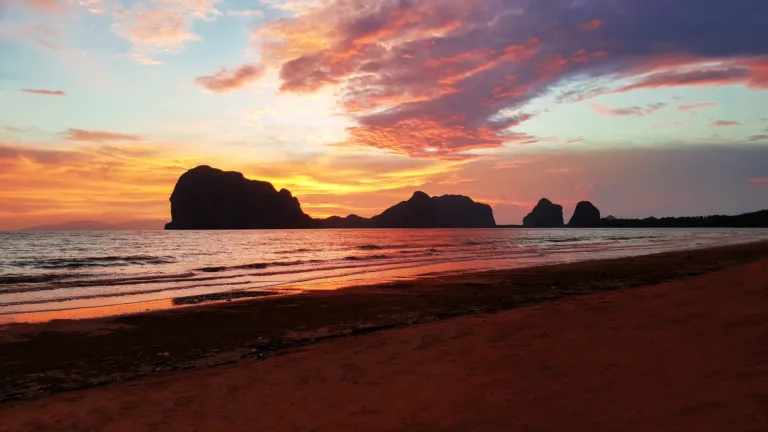 Pak Meng Beach
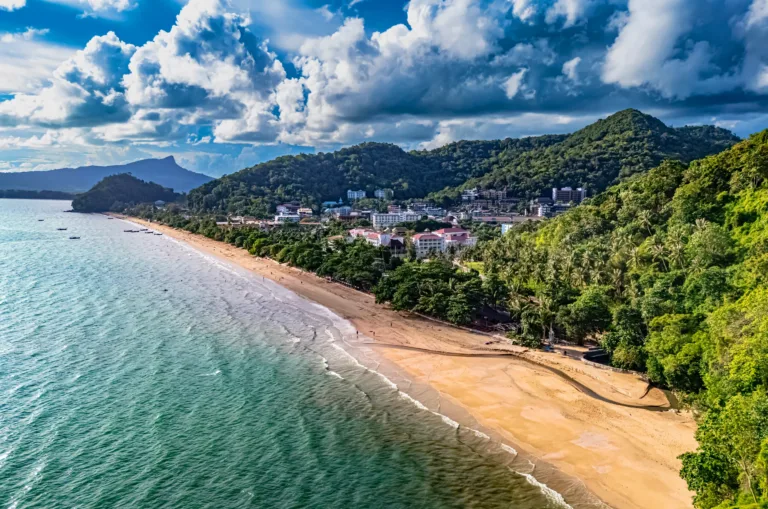 Ao Nang Beach
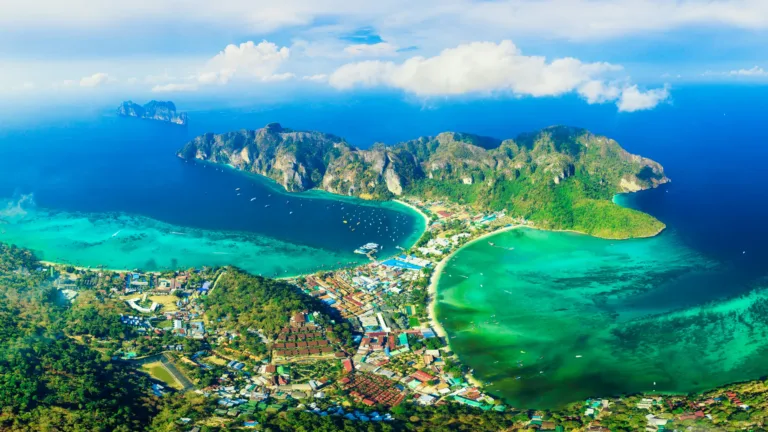 Phi Phi Islands