 01
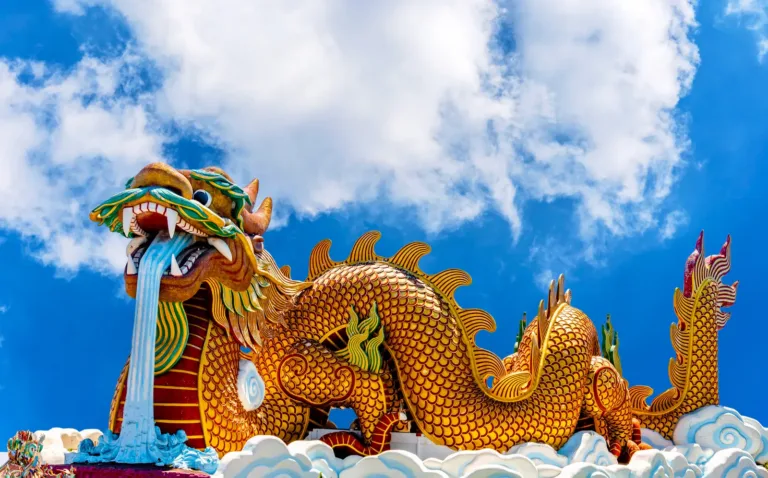
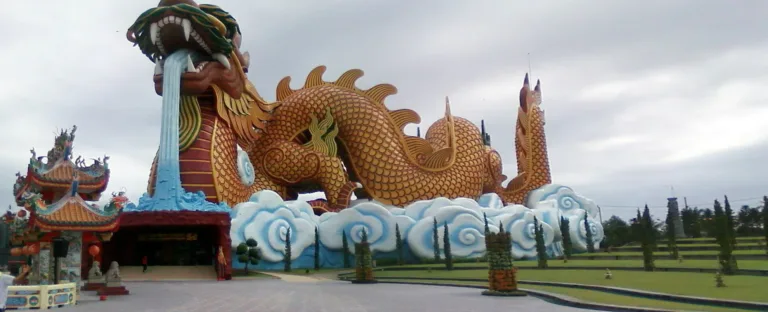
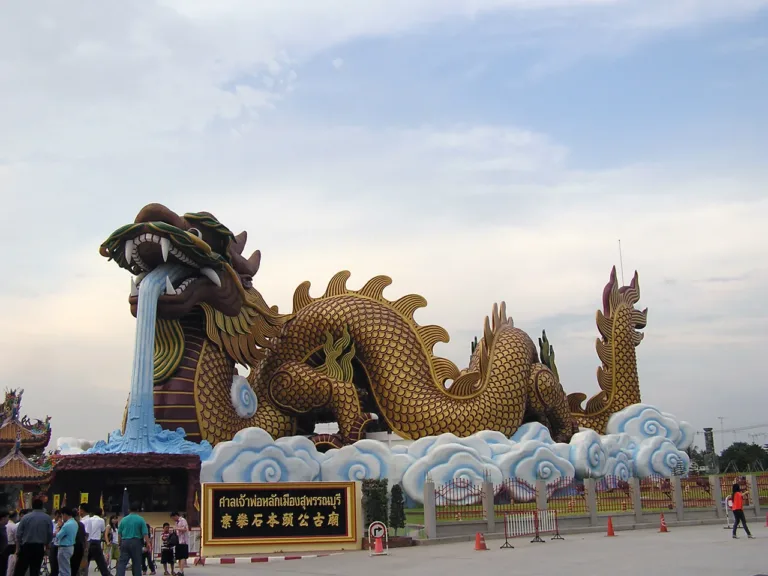
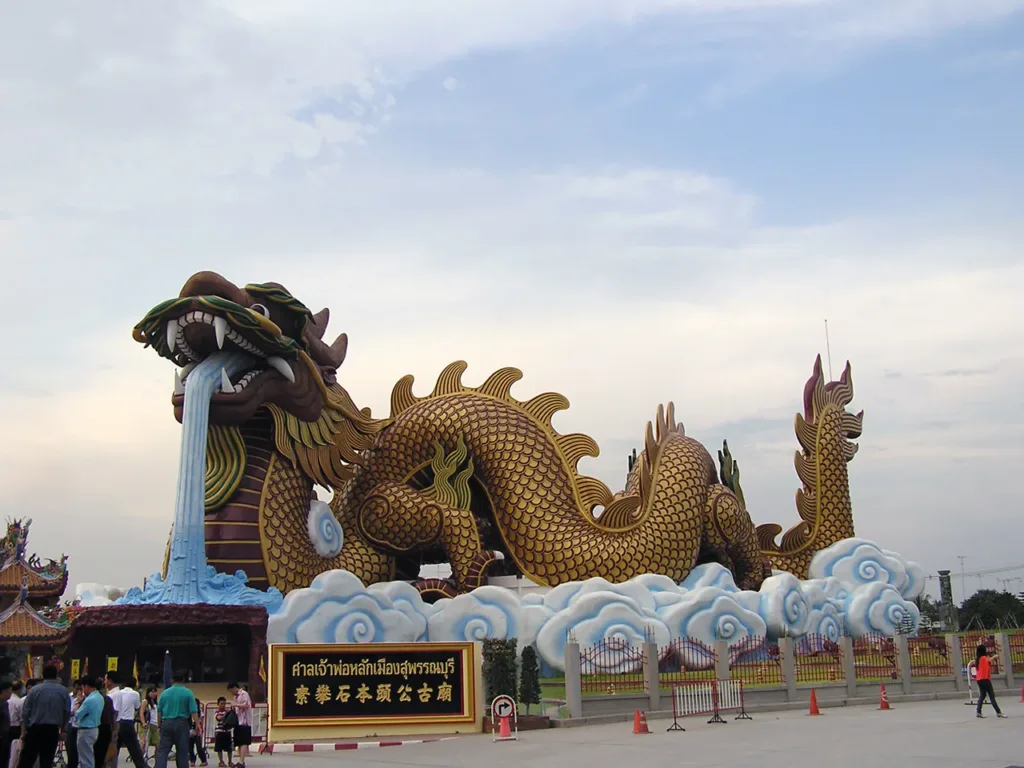
Golden dragon135 m long, 35 m high
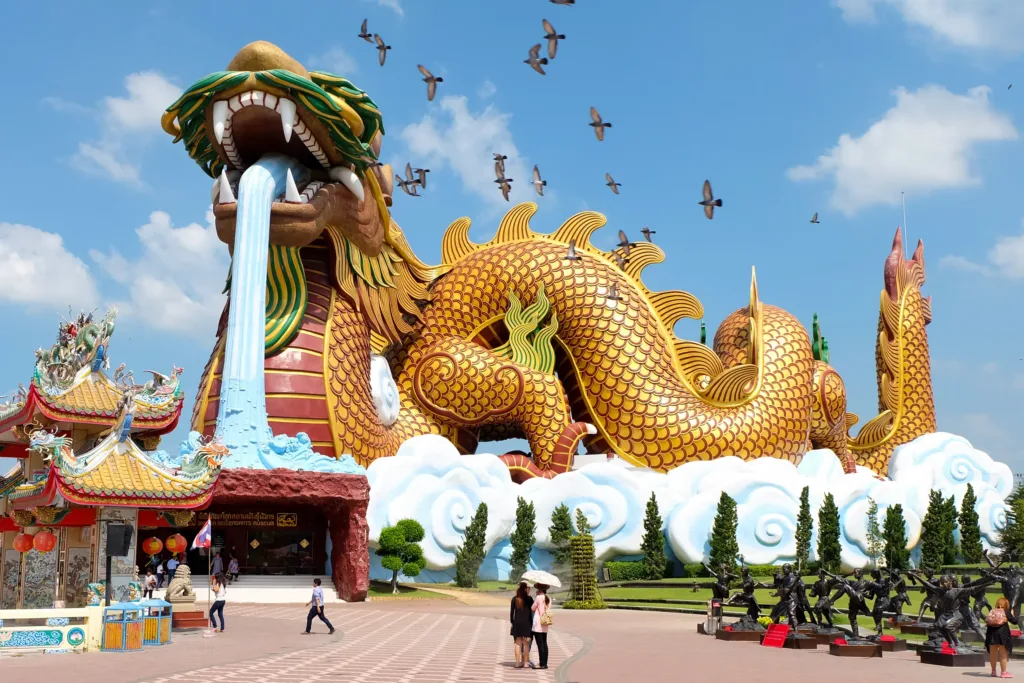
A giant golden dragon · Chinese history
Uthayan Mangkon Sawan in Suphan Buri is a golden dragon building about 135 m long and 35 m high housing the Dragon Descendants Museum, telling 5,000 years of Chinese history and the story of the Chinese in Siam, with a city pillar shrine. Open Wed–Sun.
Holiday / event — crowded
Wed–Fri 10:00–16:00 · Sat–Sun 09:00–16:00 (closed Mon–Tue)
99 THB
1.5–2 hours
Chinese New Year and holidays
01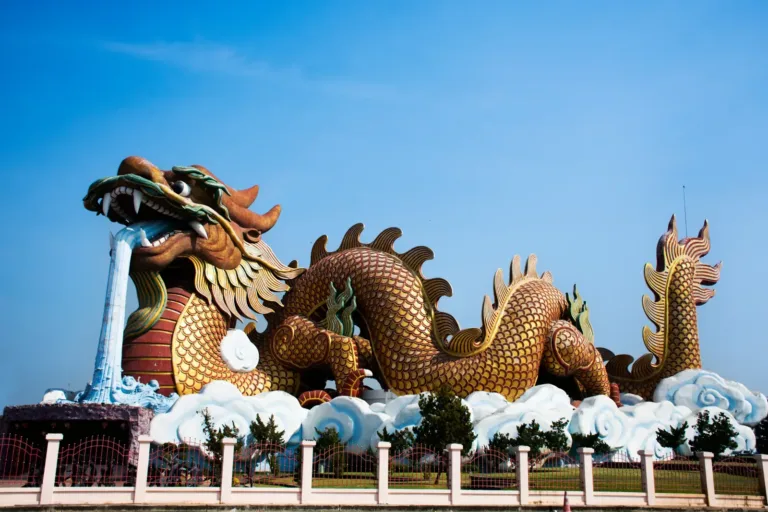 02
 03
Tap a day card to see that day’s weather, rain, haze and hourly forecast
Best time to go Daytime is over · see tomorrow
Holiday — traffic on the way up and parking fills fast; leave early
Green band = hours used for the score
Best time to go Fine all day little rain through the day
Holiday — traffic on the way up and parking fills fast; leave early
Green band = hours used for the score
Best time to go Fine all day little rain through the day
No warnings today — normal road and weather conditions
Green band = hours used for the score
Best time to go Fine all day little rain through the day
No warnings today — normal road and weather conditions
Green band = hours used for the score
Best time to go Fine all day little rain through the day
No warnings today — normal road and weather conditions
Green band = hours used for the score
Best time to go Fine all day little rain through the day
No warnings today — normal road and weather conditions
Green band = hours used for the score
Best time to go Fine all day little rain through the day
No official warnings, but watch for: Hot (Afternoon) feels like 38°C
Green band = hours used for the score
Uthayan Mangkon Sawan, 49/1 Rai Fai Road, Rua Yai, Mueang Suphan Buri.
Arrive 15:30
Photos from Wikimedia Commons and contributors · tap a photo to see its credit
Museum closed
Hot, no shade
Adults 99 THB · Time needed 1.5–2 hours
Chinese New Year and holidays
| Museum | 99 baht per person (same for Thais and foreigners) |
| Park and shrine | Free |
Cash · Prices may change by season — check with the venue
Chinese New Year rites at the city pillar shrine
Tap a month on the wheel to see weather, rain, haze and crowds from 10 years of records
Best time · Nov–Feb cool · lively at Chinese New Year
Watch out · Museum closed Mon–Tue
Nov by the records 24–32°C · avg rain 65 mm (9 rainy days) · clear 7 days · avg PM2.5 14
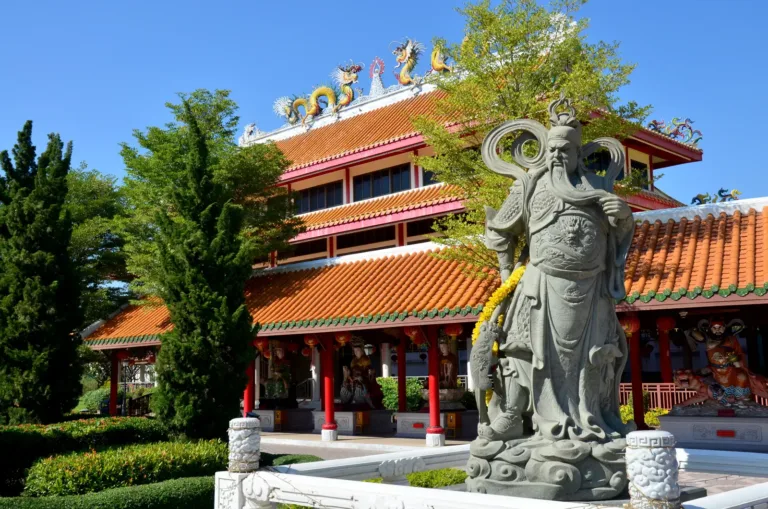
The Dragon Descendants Museum stands in Heaven Dragon Park, on Rai Fai Road in Rua Yai, Mueang Suphan Buri, a place where old and new sit side by side. Its original heart is the Suphan Buri City Pillar Shrine, where Thai and Chinese locals have worshipped since at least around 1840. The golden dragon, about 135 metres long, that coils around the Dragon Descendants Museum is far younger: it opened on 24 December 2008 to celebrate Thai–Chinese friendship. A visit here tells two stories at once, of the Chinese community along the Suphan River and of how the town itself grew over the last half-century.
The shrine's sacred objects are two stone images carved in relief, and several stories explain where they came from. One legend says the images lay sunk in water or in canal-side mud and could not be pulled out until a ceremony was held to appease them. Another says a Chinese farmer watering his vegetables by the canal struck a stone slab, turned it over and found a holy figure. Others say the images floated up and lodged against the bank. Once they were brought out, a small wooden shrine was built to house them.
Scholars and sources still disagree about who the images represent. Some identify them as four-armed Vishnu; others as the Mahayana bodhisattva Avalokiteshvara, whom locals call four-armed Narayana. One academic study dates them to the 11th–13th centuries of the Buddhist Era, while travel sources often say they are about 1,300–1,400 years old. Chinese worshippers call the deity "Chia Pung Thao Kong": chia means stone, and pung thao kong is a local guardian god.
The oldest written record found so far is Nirat Suphan, a travel poem by Nai Mi composed around 1840, which describes paying respects to the City Pillar deity. Suphan's Chinese community still holds the hungry-ghost alms festival at the shrine on the 18th day of the seventh Chinese month, and the museum's director has said the Chinese community has worshipped here for about 170 years.
In 1892 Prince Damrong Rajanubhab came to make offerings, found the wooden shrine in poor repair and gave money to Chinese officials to build a new brick one. On 5 August 1904 King Chulalongkorn visited, made offerings himself and funded a boundary wall and an extra pavilion. Some sources add that an embankment around the shrine mound and a Chinese-style hall were built at that time.
In 1936/37 Prince Naris wrote asking Prince Damrong to contact Chao Phraya Yommarat about repairing the shrine. Back then the shrine still stood among rice fields on the west bank of the Suphan River. An elderly local recalled that around 1932 people crossed by hired boat from Wat Pratu San, and the land around the shrine was level with the river.
The town reached the shrine when Malaiman Road was cut through in 1962, wiping out the old waterway to it. In 1964 the province renovated the shrine and raised its floor above flood level. Accounts of its style differ: one describes a Thai-style shrine with classic gable finials, others a blend of Thai and Chinese design. In 1981 about 12 rai in front of the shrine were raised by a metre and an access road was built.
The figure who shaped the modern site most was Banharn Silpa-archa, a Suphan native whose father was Teochew Chinese. A story goes that before leaving for Bangkok to make his fortune, he vowed at this shrine to develop it and his hometown if he succeeded. He donated to the 1964 renovation, and in 1987, as chairman of the shrine committee, he rebuilt the shrine as a large Chinese-style pavilion at a cost of about 30 million baht.
The idea for a dragon museum came around 1996, while Banharn was prime minister, to mark 20 years of Thai–Chinese diplomatic relations, established on 1 July 1975. Planning took about ten years and construction about 600 days, and the museum officially opened on 24 December 2008. Reported costs vary: one source puts it at about 380 million baht, mostly paid by Banharn with donations from Sino-Thai business people, while another says over 100 million baht was invested.
The building is a golden fibreglass dragon about 135 metres long, 35 metres high and 18 metres wide, often called the world's largest dragon-shaped building. Inside, about 20 rooms tell more than 5,000 years of Chinese history, from creation myths through the dynasties to the Chinese who settled in Siam, using models, light, sound and film.
About three years after the museum opened, Mangkon Sawan Village was added, a shopping street modelled on Lijiang in Yunnan, on about 30 rai around the shrine that Banharn bought and gave to the museum's foundation. The park also became the main stage for Suphan Buri's yearly Chinese New Year festival, run by the province, the shrine committee and the Tourism Authority of Thailand. In 2012 the shrine committee moved both images off their damp old base and stripped away layers of gold leaf to repair the damage beneath.
After Banharn's death, his family and local people built a monument to him in the Satcha–Katanyu park beside the shrine. Unveiled on 23 April 2019, the bronze statue stands about 3 metres tall, twice his real height, with his ashes placed at the left of the chest. Today visitors can pay respects at the shrine, walk around the golden dragon and see traces of the man so closely tied to this place, all in a single visit.
Arrived? Check in, collect a stamp and tell others what it is like right now
Check your location first, so you do not fill in the form for nothing
Location must be on and within 0.6 km · One check-in per place per day · come back on other days to check in again
Post photos from anywhere — no need to be here · Up to 20 photos at a time · JPG / PNG / WebP · GPS location data is removed automatically
In town
Highway 340 · Fuel
Rai Fai Road
Free
Suphan Buri town
Good
Wed–Fri 10:00–16:00 · Sat–Sun 09:00–16:00 (closed Mon–Tue)
about 2 km from Suphan Buri town
Dragon Descendants Museum
Approx. nightly price for 2 adults (next week) · final price depends on your dates
Answers travellers want before they go — a one-minute read
About 135 m long and 35 m high
99 baht per person, same for Thais and foreigners (2024–25 visitor reports)
Monday and Tuesday
Yes, English and Chinese
For 20 years of Thai–Chinese relations, under PM Banharn
Yes
Best day this week: Monday 30 Nov · Check in when you arrive to collect a stamp
 Banharn-Jamsai Tower
 Wat Pa Lelai Worawihan
 Sam Chuk 100-Year Market