Quiet times, time needed and photo spots
Saturday and Sunday mornings, long weekends
30 minutes–1 hour
Chai Khong Road — Shoot from a distance and keep out of the monks' way
Every morning at dawn, when the monks set out
7 days ahead
When to go
this week
Tap a day card to see that day’s weather, rain, haze and hourly forecast
Best time to go Daytime is over · see tomorrow
Holiday — traffic on the way up and parking fills fast; leave early
Hour by hour
Green band = hours used for the score
Best time to go Fine all day little rain through the day
Holiday — traffic on the way up and parking fills fast; leave early
Hour by hour
Green band = hours used for the score
Best time to go Fine all day little rain through the day
No warnings today — normal road and weather conditions
Hour by hour
Green band = hours used for the score
Best time to go Fine all day little rain through the day
Thick morning fog with visibility under 1 km — use headlights and drive slowly
Hour by hour
Green band = hours used for the score
Best time to go Fine all day little rain through the day
No warnings today — normal road and weather conditions
Hour by hour
Green band = hours used for the score
Best time to go Fine all day little rain through the day
No warnings today — normal road and weather conditions
Hour by hour
Green band = hours used for the score
Best time to go Fine all day little rain through the day
Thick morning fog with visibility under 1 km — use headlights and drive slowly
Hour by hour
Green band = hours used for the score
Chiang Khan Sticky Rice Alms Giving
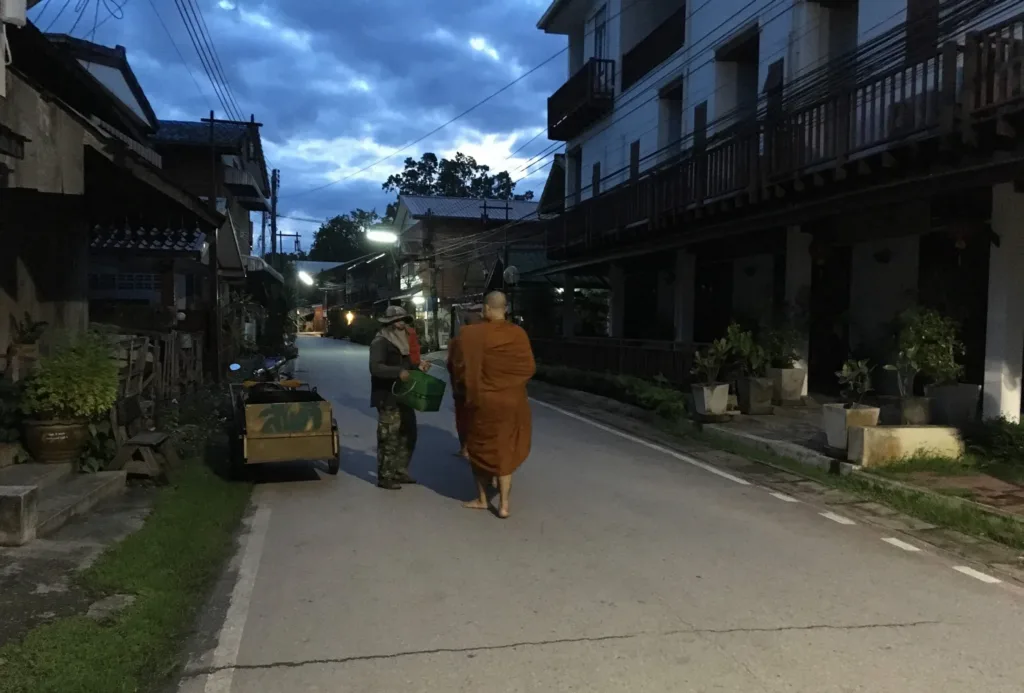
Every morning at first light in Chiang Khan, monks walk their alms round along Chai Khong Road, the street of old wooden houses by the Mekong. Locals and visitors kneel by the roadside with baskets of sticky rice and quietly place a small ball into each bowl.The offering here is sticky rice, not money and not bagged meals. If you'd like to offer other dishes, locals take them to the temple afterwards. The community, together with the district and DASTA, revived the tradition so visitors can learn the old Chiang Khan way.Weekends and the cool season draw the biggest crowds. Get up early, cover up, and follow the community's guidelines.
- The monks' alms round
- The monks have returned
Arrive Before dawn, to find a spot by the road
- Chai Khong RoadShoot from a distance and keep out of the monks' wayDawn
Good to know here
No money in the bowls, and bagged meals aren't customary
Authorities have warned about outside vendors and fake monks selling bagged food
- Bring your own sticky rice or buy it at the morning market
- Take other dishes to the temple afterwards if you wish
- No flash photos of the monks
- Let the monks pass before you stand up
No data yet check before you go · Time needed 30 minutes–1 hour
Saturday and Sunday mornings, long weekends
- Kids Kids can join if they're up early and can sit quietly
- Seniors You can sit by a flat roadside
- Cover shoulders and legs
- Remove shoes and kneel to offer
- Keep quiet and calm
- Don't put money in the bowls
- Don't touch the monks or their bowls
- Don't buy bagged food sets from sellers outside the community
- Cool-season mornings are chilly; bring a jacket
The story of this place
Every morning before dawn, Chiang Khan's Mekong riverside road falls especially quiet. Residents wait outside the old wooden houses with baskets of sticky rice while monks from the town's temples walk past in single file. This alms giving was not created for tourists: it is the Lao, Lan Xang style of Buddhist practice that Chiang Khan people brought with them from the time their town stood on the other bank of the Mekong. As Chiang Khan became a famous tourist town, the custom had to cope with crowds and commerce, and the community worked together to bring back its simple traditional form.
Read more 10 more paragraphs
The custom is rooted in Lan Xang culture. Research from Loei Rajabhat University links Chiang Khan's identity directly to Lan Xang, and around 1827 Chiang Khan was one of the Mekong towns within the sphere of Vientiane. Sticky rice, the staple on both banks of the river, has always been what people put in the monks' bowls. A 2011 Chulalongkorn University thesis records local accounts that the custom has been handed down for about 400 years and came from Luang Prabang, a community memory rather than a figure confirmed by documents.
According to the history told by the Tourism Authority of Thailand and local studies, the original Chiang Khan was a Vientiane outpost on the left bank of the Mekong, in the Sanakham area. During the reign of King Rama V, Haw raiders from Yunnan sacked the town, so its people moved to Pak Huang and then to Ban Tha Na Chan near the present site. When Siam ceded the left bank to France in 1893, the remaining residents crossed over and built the town on the right bank. Chiang Khan people honour Phraya Si Akkhahat (Thongdee Sriprasoet), the last ruler and first district chief, as the ancestor who laid the town's foundations.
The new town grew into a river port. Elders interviewed by MGR Online said it was once a centre for cotton and goods traded between Thailand and Laos, with people rowing back and forth without passing any checkpoint. The two-storey wooden shophouses along the riverside road are traces of that era. When Laos changed regime in 1975, trade across the Mekong stopped, shops moved up to the main road, many riverfront houses were left empty, and the town slipped into decades of quiet.
Even in the quiet years, alms giving remained part of every household's routine. The Chulalongkorn study describes how families soak the rice overnight, rise around 4 a.m. to steam it for about 20 minutes, then stir it so it is not soggy. Monks from Wat Tha Khok, Wat Si Khun Mueang, Wat Mahathat and other temples walk their rounds at about 6 to 7 a.m., the riverside road being the favourite route. Givers raise the rice above their heads with a silent wish before placing a small ball in each bowl.
What outsiders rarely see is what happens next. When the monks return to their temples around 7 a.m. for the morning meal, families from each temple neighbourhood bring savoury dishes and sweets to offer together. A TAT guide explains that locals call this meal "Chang Han" or "Pha Khao", and the merit making is complete once they have listened to a sermon. That is why the sticky rice in the bowl at dawn does not need any side dishes.
Tourism slowly woke the town, although sources differ on when it began. Loei Rajabhat research says lifestyle and nature tourism was being managed from 1986, while the Chulalongkorn thesis says foreign visitors started arriving around 1994 after the town appeared in a guidebook, followed by Thai students around 2007. Several academic studies agree that the real boom came around 2009.
Popularity brought change. In 2009 MGR Online reported that large groups of tourists were giving alms at weekends, so monks had begun carrying shoulder bags for offerings, something they had never done before. The Bangkok Post later noted monks from nine temples walking the walking street, offering sets for sale, and some tour operators not explaining the religious meaning to visitors.
The community answered with its own rules. Around 2007 residents began drafting a Chiang Khan charter, which became a local building ordinance in 2010 to protect the two-storey wooden houses. In December 2009 the municipality held a "100 Years of Chiang Khan, Ancient Town on the Mekong" festival featuring alms giving on the riverside road, and community groups asked operators to explain the proper way to give alms. In 2011 Loei, including Chiang Khan, was declared a special area for sustainable tourism under DASTA.
Today's practice, sticky rice only, perhaps a few sweets or bananas, no money, and other dishes taken to the temple later, is the traditional form the community revived. At one point Matichon reported that a monk from outside the area and vendors from elsewhere were selling bagged food in a loop on the walking street, so the district issued warnings, tightened morning checks, and the municipality broadcast reminders to tourists over public speakers.
Today the Tourism Authority of Thailand presents sticky rice alms giving as a daily ceremony visitors can learn from. In 2020 Chiang Khan was named one of the world's Top 100 sustainable destinations, and the district's annual anniversary festival opens with merit making and alms giving. Khon Kaen University scholars warn that tourism risks turning culture into a product, so kneeling quietly and giving alms the local way is the best way to respect this tradition.
- 1893Siam cedes the Mekong's left bank to France; Chiang Khan people cross and build the town on the right bank
- 1975Regime change in Laos ends cross-river trade; the riverside road declines
- 1986Lifestyle and nature tourism begins to be managed in Chiang Khan District
- 1994Foreign visitors start arriving after the town appears in a guidebook
- 2007Residents begin drafting the Chiang Khan charter; Thai tourists start coming
- 2009Media report weekend crowds at alms giving; monks begin carrying shoulder bags
- 2009The municipality holds the 100 Years of Chiang Khan festival with alms giving on the riverside road
See 4 events
- 2010A local building ordinance protects the two-storey wooden riverside houses
- 2011Loei, including Chiang Khan, is declared a DASTA special area
- 2020Chiang Khan is named one of the world's Top 100 sustainable destinations
- 2025The Chiang Khan district anniversary festival opens with merit making and alms giving
Check-ins & visitor photos
Arrived? Check in, collect a stamp and tell others what it is like right now
Check your location first, so you do not fill in the form for nothing
Location must be on and within 2 km · One check-in per place per day · come back on other days to check in again
Post photos from anywhere — no need to be here · Up to 20 photos at a time · JPG / PNG / WebP · GPS location data is removed automatically
How to get there
The alms round runs along Chai Khong Road, the old wooden-house street beside the Mekong in Chiang Khan town.
From guesthouses around Chai Khong Road
Town streets, walkable
Every morning at dawn, when the monks set out
Chiang Khan Walking Street
FAQ
Before you go: Chiang Khan Sticky Rice Alms Giving
Answers travellers want before they go — a one-minute read
Where does the alms giving take place?
Along Chai Khong Road, the old riverside street in Chiang Khan town
What should I offer?
Mainly sticky rice, perhaps a little sweet or a banana; never money
What if I want to offer other food?
Take it to the temple after the alms round, before the monks' morning meal
What should I wear?
Modest clothes covering shoulders and legs; remove your shoes while offering
Does it happen every day?
Yes, every morning, and it's busiest on weekends
Nearby places
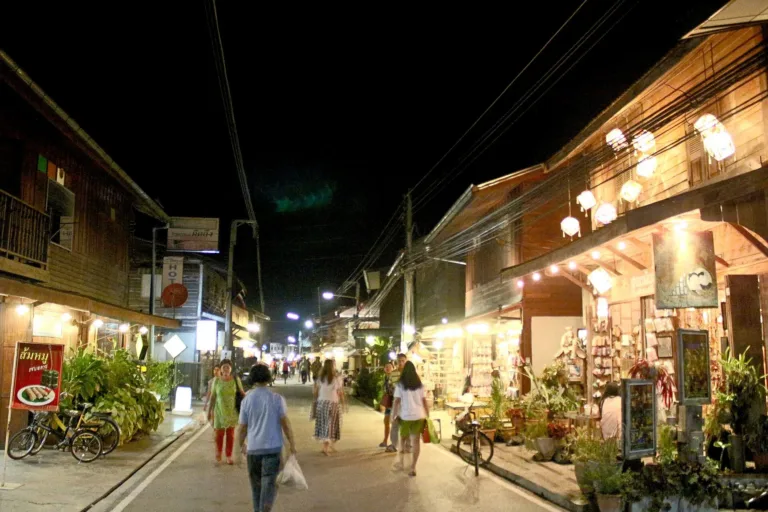 Chiang Khan Walking Street
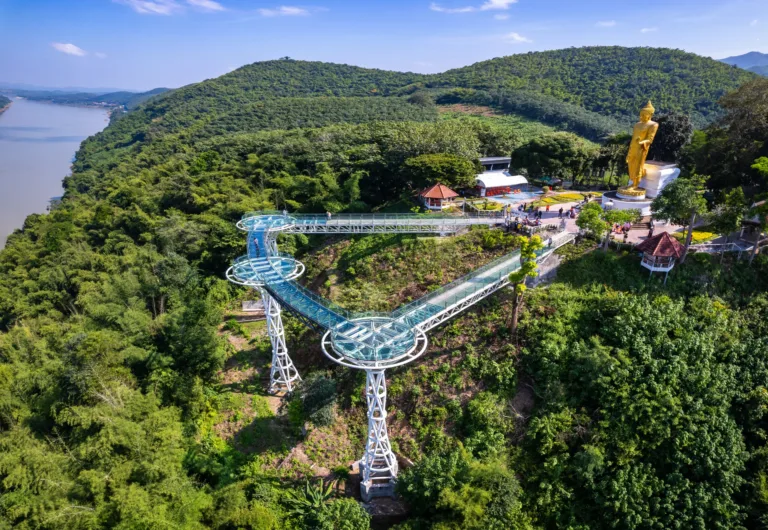 Chiang Khan Skywalk (Phu Khok Ngio)
 Phu Ruea National Park
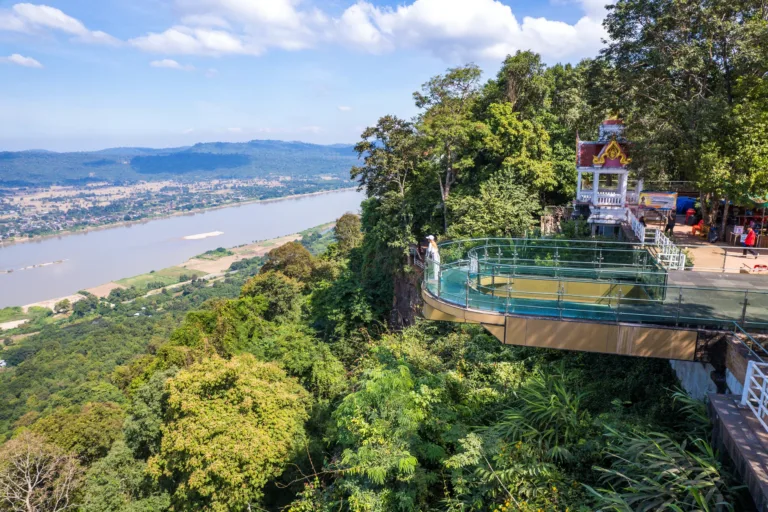 Wat Pha Tak Suea
Ready to go to Chiang Khan Sticky Rice Alms Giving?
Best day this week: Monday 30 Nov · Check in when you arrive to collect a stamp