7 days ahead
When to go
this week
Tap a day card to see that day’s weather, rain, haze and hourly forecast
Best time to go Daytime is over · see tomorrow
Holiday — traffic on the way up and parking fills fast; leave early
Hour by hour
Green band = hours used for the score
Best time to go Fine all day little rain through the day
Holiday — traffic on the way up and parking fills fast; leave early
Hour by hour
Green band = hours used for the score
Best time to go Fine all day little rain through the day
No warnings today — normal road and weather conditions
Hour by hour
Green band = hours used for the score
Best time to go Fine all day little rain through the day
No warnings today — normal road and weather conditions
Hour by hour
Green band = hours used for the score
Best time to go Fine all day little rain through the day
No warnings today — normal road and weather conditions
Hour by hour
Green band = hours used for the score
Best time to go Fine all day little rain through the day
No warnings today — normal road and weather conditions
Hour by hour
Green band = hours used for the score
Best time to go Fine all day little rain through the day
Thick morning fog with visibility under 1 km — use headlights and drive slowly
Hour by hour
Green band = hours used for the score
Starry sky
How likely
Scored from cloud cover at every level and tonight’s moonlight — the darker the sky, the clearer the Milky Way · tap another night below for the next 7 nights
Chiang Khan Skywalk (Phu Khok Ngio)
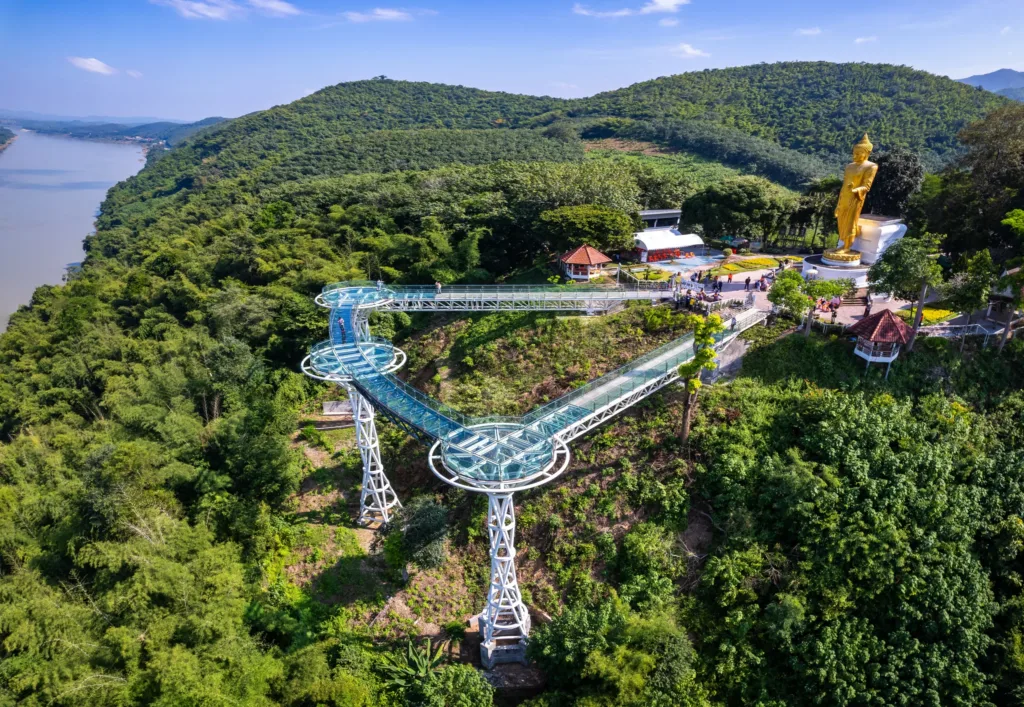
The Chiang Khan Skywalk sits on Phu Khok Ngio hill in Pak Tom subdistrict, Chiang Khan, Loei, near Ban Tha Di Mi. It's a clear-glass walkway more than 100 m long and over 2 m wide, cantilevered off a cliff more than 80 m above the Mekong, about the height of a 30-storey building.From the walkway you can see where the Hueang River flows into the Mekong; the two waters are different colours, and the line between them marks the Thai–Lao border. At the top of the hill is Phra Yai Phu Khok Ngio, a walking Buddha more than 19 m tall.It opens daily 07:00–18:00. You ride a shuttle up from the car park and put on the shoes or covers provided before stepping onto the glass. Late rainy season into early cool season often brings morning mist, while evenings are good for sunset.
- Morning mist over the Mekong, cool
- Fierce sun, hot glass
- Sunset
Arrive 07:00 for mist over the Mekong
In the late rainy and early cool season, mist often hangs over the Mekong and the Lao hills at dawn.
- Middle of the walkwayShoot down at the cliff beneath your feetMorning
- End of the skywalkThe two-coloured river and Lao hillsMorning
- Big Buddha terraceThe statue in evening lightEvening
Good to know here
Some sources say 60 baht covers shuttle and shoes; check on site
You must wear the shoes provided; it can be dizzying if you fear heights
There's no shade on the walkway; midday is very hot
- Come at dawn in the cool season for mist, or in the evening for sunset
- Avoid midday when the glass is hot and the sun fierce
- Carry small cash for the shuttle and shoes
- Pair it with Chiang Khan's walking street in the evening
No data yet check before you go · Time needed 1–1.5 hours
Weekend evenings and the cool-season holidays
| Shuttle up to the skywalk | 20 ฿/person |
| Shoes/shoe covers for the glass walkway | 30 ฿/person |
Prices may change by season — check with the venue
- Kids Fine with supervision; children under 110 cm go free
- Seniors Shuttle up and a flat walkway make it easy for older visitors
- Chiang Khan walking streetLocal food and snacks
- Wear the shoes or covers provided on the glass
- Dress modestly to pay respects at the big Buddha
- Don't jump or run on the glass
- If you fear heights, keep close to the railing
- Bring a hat and water; there's no shade
- Access may be suspended during thunderstorms
The story of this place
The Chiang Khan Skywalk on Phu Khok Ngio, at Ban Tha Di Mi in Pak Tom subdistrict, only opened in late 2020, but the cliff it juts out from looks down on a place with a much longer story. Below is the mouth of the Hueang River where it flows into the Mekong: once the dividing line between the kingdoms of Luang Prabang and Vientiane, the site of the frontier town of Pak Hueang from which today's Chiang Khan grew, and now the Thai–Lao border. On the hilltop stands the Big Buddha of Phu Khok Ngio, completed in 2001, beside which Loei Province later built the glass-floored walkway that has become one of Chiang Khan's most popular sights.
Read more 10 more paragraphs
The Hueang River rises in the hills of Na Haeo district and runs about 110 km, some 90 km of it forming a natural border between Thailand and Laos, before joining the Mekong in Chiang Khan district. The area around Phu Khok Ngio is also described as the first point where the Mekong flows into Thai territory in the Northeast. Where the two rivers meet, their waters differ in colour, which is why locals and visitors call the spot the "two-coloured river".
Chiang Khan's history begins with legend. According to legend, around 857 Khun Khan, a descendant of the rulers of Lan Xang, founded a town at Chanakham, or Sanakham, in what is now Laos. This was the original Chiang Khan, before its people crossed the river several times over the following centuries.
Around 1707 the kingdom of Lan Xang split into Luang Prabang and Vientiane, and the Hueang River became the boundary: the north side belonged to Luang Prabang, the south side to Vientiane. Luang Prabang therefore founded Pak Hueang at the river mouth, on the right bank of the Mekong, as a frontier town, while Vientiane used the old Chiang Khan as its own frontier post. The river mouth seen from the skywalk today was once the edge of two Lao kingdoms.
In 1777 an army from Thonburi took Vientiane and brought the Emerald Buddha back. Lan Xang became a Siamese tributary, and some of its people were resettled at Pak Hueang, which was placed under the town of Phichai. Later, in the reign of King Rama III, after Chao Anouvong's rebellion was put down, more people were moved from the left bank of the Mekong to Pak Hueang, a governor was appointed, and the town was renamed Chiang Khan.
When Chinese Haw raiders attacked towns on the Lao side, many people from the old Chiang Khan fled across to the new Chiang Khan at Pak Hueang. Sources disagree on the reign: provincial records say it was under King Rama V, while a landscape study places it under King Rama IV. The Pak Hueang site was later judged unsuitable, so most people moved downstream to Ban Tha Na Chan, near today's district centre, which became known as the new town of Chiang Khan.
When Siam ceded the right bank of the Mekong to France, Pak Hueang came under French control, and the remaining Thai residents moved to present-day Chiang Khan. The district office stood first at Wat That, then at Wat Phon Chai; Chiang Khan received its first district officer in 1909 and moved its office to its current site in 1941. The mouth of the Hueang, where the old town once stood, became the border now visible from the cliffs of Phu Khok Ngio.
The modern era of Phu Khok Ngio began with the Big Buddha, formally named Phra Phuttha Nawamin Mongkhon Lila Thawin Khraphirak. The Second Army Area and local people built it to honour King Rama IX's sixth-cycle (72nd) birthday in 1999 and the 50th anniversary of his coronation in 2000, and it was completed on 2 February 2001. It is a gold-coloured standing Buddha in the walking, blessing posture, made of fibreglass and resin. Most sources give its height as 19 metres on a 7.2-metre base, though one source puts it at about 15 metres.
In late 2017 Loei Province approved a budget of about 30 million baht to build a glass walkway on the cliff beside the Buddha; another source says about 28.6 million baht came from the Upper Northeast 1 provincial group budget. The published design was a walkway more than 100 m long and 2 m wide, reaching about 20 m out from the cliff, with three 8-metre-wide viewing points, about 80 m above the Mekong, floored with 4 cm laminated tempered glass rated for 500 kg per square metre. Completion was first expected in late 2018, but the work ran behind schedule.
By early 2020 construction was more than 90 percent complete, and on Valentine's Day 14 couples became the first to register their marriages on the skywalk, at an event held by Chiang Khan district and TAT's Loei office before the site opened to the public. Construction took about 480 days, and the site was registered with the Treasury Department before use. It opened on a trial basis over the long holidays around September–October 2020, drawing more than 20,000 visitors, before its official opening on 1 December 2020.
After opening, Loei Province worked with the Designated Areas for Sustainable Tourism Administration (DASTA) on a plan to manage the area around Phu Khok Ngio without overcrowding, using shuttle vehicles to the top and requiring shoe covers or provided footwear on the glass. Chiang Khan itself was named among the world's Sustainable Top 100 Destinations in 2020. From 17 to 30 April 2021 the skywalk closed temporarily during the COVID-19 outbreak. Figures from 2022 put weekday visitors at under 300, rising to more than 5,000 a day on long holidays.
- 857According to legend, Khun Khan of Lan Xang founds the original Chiang Khan at Chanakham (Sanakham) on the Lao side (approximate year)
- 1707Lan Xang splits into Luang Prabang and Vientiane; the Hueang River becomes the boundary (approximate year)
- 1707Luang Prabang founds the frontier town of Pak Hueang at the mouth of the Hueang (approximate year)
- 1777A Thonburi army takes Vientiane; some of its people are resettled at Pak Hueang
- 1909Chiang Khan, home to people from Pak Hueang, gets its first district officer
- 1941The Chiang Khan district office moves to its present site
- 2001The Big Buddha of Phu Khok Ngio, built by the Second Army Area and local people, is completed on 2 February
See 8 events
- 2017Loei Province approves about 30 million baht to build a skywalk on the Phu Khok Ngio cliff
- 202014 February: 14 couples register their marriages on the skywalk, then over 90% complete
- 2020Construction is completed after about 480 days and the site is registered with the Treasury Department
- 2020Trial opening over the long holidays draws more than 20,000 visitors
- 20201 December: the Chiang Khan Skywalk officially opens
- 2020Loei Province and DASTA plan tourism management around Phu Khok Ngio
- 2021Temporarily closed 17–30 April during the COVID-19 outbreak
- 2022Long holidays bring more than 5,000 visitors a day
Check-ins & visitor photos
Arrived? Check in, collect a stamp and tell others what it is like right now
Check your location first, so you do not fill in the form for nothing
Location must be on and within 1 km · One check-in per place per day · come back on other days to check in again
Post photos from anywhere — no need to be here · Up to 20 photos at a time · JPG / PNG / WebP · GPS location data is removed automatically
How to get there
The skywalk is on Phu Khok Ngio, Pak Tom, Chiang Khan, near Ban Tha Di Mi.
Loei city to Chiang Khan, then Phu Khok Ngio in Pak Tom · Fuel
From the car park up to the skywalk · 20 baht/person
Paved road; shuttle up the hill
At the shuttle station
Daily 07:00–18:00
about 50 km from Loei city
Chiang Khan Skywalk (Phu Khok Ngio)
FAQ
Before you go: Chiang Khan Skywalk (Phu Khok Ngio)
Answers travellers want before they go — a one-minute read
Where is the Chiang Khan Skywalk?
On Phu Khok Ngio, Pak Tom, Chiang Khan, Loei, near Ban Tha Di Mi
What are the hours?
Daily 07:00–18:00
What does it cost?
Shuttle 20 baht and shoes 30 baht per person; some sources say 60 baht in total, so check on site
Can I drive up?
Park at the service point and take the shuttle
What is the two-coloured river?
Where the Hueang River joins the Mekong, with clearly different water colours
When is best?
October–January at dawn for mist, or evenings for sunset
Nearby places
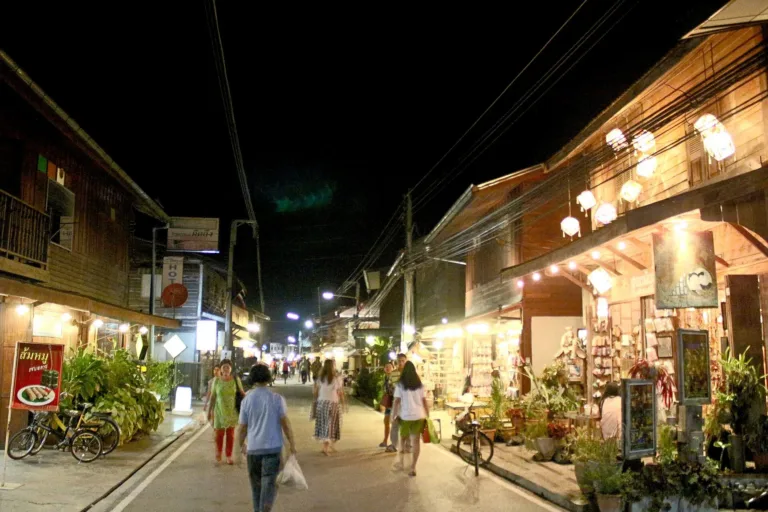 Chiang Khan Walking Street
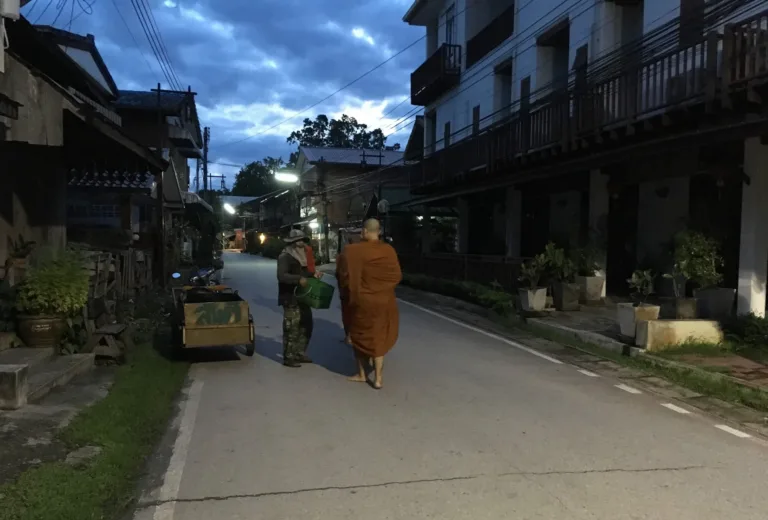 Chiang Khan Sticky Rice Alms Giving
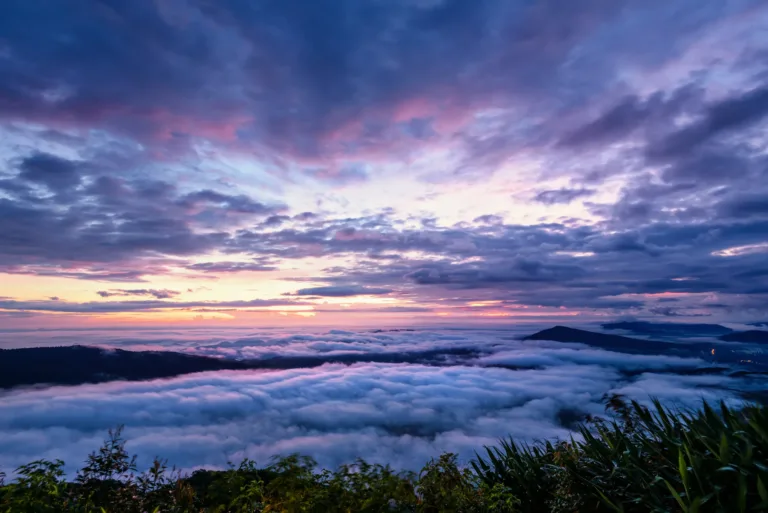 Phu Ruea National Park
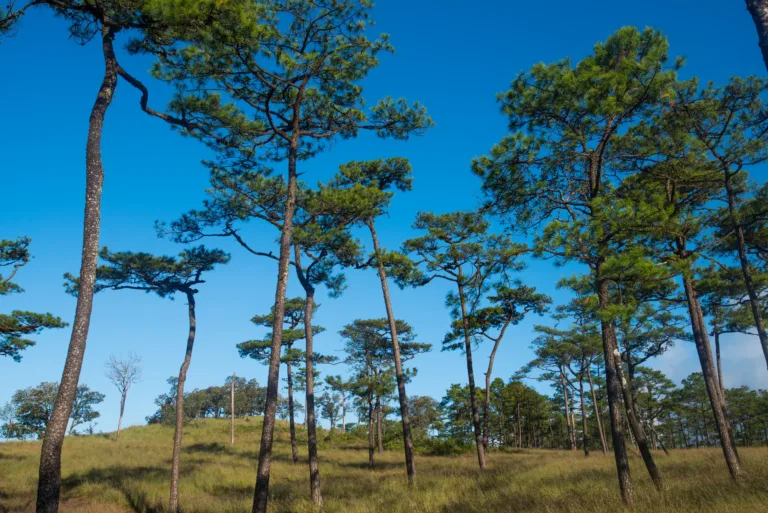 Phu Soi Dao National Park
Ready to go to Chiang Khan Skywalk (Phu Khok Ngio)?
Best day this week: Monday 30 Nov · Check in when you arrive to collect a stamp