Rainy season, safety and preparation
May, Jul – Oct
Spring source — Scalding, about 60°C
1–2 hours
Moderate
7 days ahead
When to go
this week
Tap a day card to see that day’s weather, rain, haze and hourly forecast
Best time to go Daytime is over · see tomorrow
No official warnings, but watch for: Evening (16:00–19:00): rain ~38%
Hour by hour
Green band = hours used for the score
Best time to go Fine all day little rain through the day
No warnings today — normal road and weather conditions
Hour by hour
Green band = hours used for the score
Best time to go Fine all day little rain through the day
No warnings today — normal road and weather conditions
Hour by hour
Green band = hours used for the score
Best time to go Fine all day little rain through the day
No warnings today — normal road and weather conditions
Hour by hour
Green band = hours used for the score
Best time to go Fine all day little rain through the day
No warnings today — normal road and weather conditions
Hour by hour
Green band = hours used for the score
Best time to go Best window 06:00–13:00 Little rain · light drizzle possible at times
No official warnings, but watch for: Late morning (09:00–12:00): rain ~14%
Hour by hour
Green band = hours used for the score
Best time to go Best window 06:00–14:00 Little rain · light drizzle possible at times
No official warnings, but watch for: Late morning (09:00–12:00): rain ~23%
Hour by hour
Green band = hours used for the score
Starry sky
How likely
Scored from cloud cover at every level and tonight’s moonlight — the darker the sky, the clearer the Milky Way · tap another night below for the next 7 nights
Bo Khlueng Hot Spring
Bo Khlueng Hot Spring (Bo Khlueng Hot Stream), 27 Moo 7, Ban Huai Phak, Suan Phueng, Ratchaburi.
- Cool, steam over the stream
- Too hot for soaking
- Soft light before closing
Arrive 16:00
- Hot streamSteam on winter morningsDawn
- Shaded mud poolLight through the leavesMorning
- Fish pond and salaA quiet cornerAfternoon
Gallery
Photos from Wikimedia Commons and contributors · tap a photo to see its credit
Good to know here
Scalding, about 60°C
Partly subsided after the Oct 2026 floods
- Bring a towel and a change of clothes; the tiled pools need swimwear or a robe
- Soak 15–20 minutes at a time, then rest and drink water
- Do not drink the mineral water — arsenic, fluoride and lead exceed drinking limits
- Combine with Kao Chon Waterfall, about 1 km away
Adults 5 THB · Time needed 1–2 hours
Cool-season weekends
| Gate entry | 5 ฿/person |
| Mud pool (Thai adult) | 30 ฿/person |
| Tiled pool (Thai adult) | 50 ฿/person |
| Mud pool (foreigner) | 50 ฿/person |
| Tiled pool (foreigner) | 80 ฿/person |
Cash · Prices may change by season — check with the venue
- Kids Good: foot baths and mud pool, close supervision
- Seniors Good: foot baths; a 200 m walk
- Wheelchair Car park and some paths only; pool edges are difficult
- Pets No rule found; not advised near the pools
- Villagers' food stalls on the groundsMostly weekends
- Honey Scene Steak, The Scenery Vintage FarmAbout 5 km before the spring
- Buntipar German sausagesSuan Phueng, weekends
- Stalls at Kao Chon WaterfallAbout 1 km away
- Rinse off before entering the pools
- Wear modest clothes or swimwear as each pool requires
- No soap or shampoo in the stream
- Do not litter in the water
- Do not drink the water — arsenic, fluoride and lead above drinking limits
- The source is about 60°C and can scald; watch children closely
- People with heart disease, high blood pressure or pregnancy should avoid full soaks, and nobody should soak after alcohol
- Rock and tile edges are slippery
- Check the road after heavy rain; there were flash floods in Oct 2026
Best months
Tap a month on the wheel to see weather, rain, haze and crowds from 10 years of records
Best time · Nov–Feb for cool air and steam over the stream at dawn · come before 09:00 on weekdays for fewer people
Watch out · Mar–May is too hot for soaking · heavy rain brings flash-flood and road risks
21°Jan
22°Feb
23°Mar
25°Apr
25°May
25°Jun
24°Jul
24°Aug
24°Sep
23°Oct
23°Nov
22°Dec
Nov by the records 23–29°C · avg rain 88 mm (13 rainy days) · clear 5 days · avg PM2.5 12
The story of this place
Bo Khlueng Hot Spring, signposted and usually written as "Than Nam Ron Bo Khlueng" (Bo Khlueng Hot Stream), lies in Ban Huai Phak, Suan Phueng, Ratchaburi. Mineral water seeps through the rock of the forested Tenasserim (Tanaosri) Range and runs as a warm stream all year round. The on-site sign and several sources say the hot water was found in 1925 by Prayoon Monyakul, who had come up into these forests to mine, in a pit his workers dug for their own use. Today Bo Khlueng is one of Suan Phueng's best-known places for a hot soak, and it remains private land.
Read more 10 more paragraphs
Suan Phueng sits at the far west of Ratchaburi, on the border with Myanmar's Tanintharyi Region. Beneath its forests lies the Western Belt of granites between Pong Krathing, Suan Phueng and Tako Pit Thong, which geologists describe as small granite bodies carrying tin and tungsten. That is why these hills were once mined. As for the hot water, isotope analysis shows it begins as rainwater that sinks deep underground and mixes with groundwater before geothermal heat pushes it back to the surface.
The district name "Suan Phueng" ("bee garden") comes from the phueng trees that grow widely here and that bees like to nest in. The area was originally part of Chom Bueng District; it became a minor district on 15 November 1974 and a full district on 1 April 1983. Bo Khlueng's story therefore began long before Suan Phueng was a district, in an era when people came up into the hills for ore rather than for leisure.
Legend has it that in 1925 Prayoon brought workers up to mine and built a house in the forest. While looking for water to grow vegetables and keep animals, they found hot water seeping up through the sand, so the workers dug the sand out to make a pool. Later he and his family dug out more sand so the water could flow into the stream, creating the hot stream seen today. The same account says he helped guard the area against illegal mining and logging.
The name "Bo Khlueng" also comes from local tradition. It is believed to be a corruption of "Bo Klueng", after the ore-turning ("klueng") once done in the mines nearby. Sources differ slightly on who owns the land: some say the Monyakul family, while another names Ratchaburi Mining and Agriculture Co., Ltd. A 2008 travel account, citing another source, says the area remained a mining zone until sometime before about 1960.
Long before tourists arrived, villagers used the hot water, and water from a large storage pond fed by the stream is still used in local households, which is why visitors are asked not to soak their feet at the source. The site was later developed for health bathing. A foreign traveller's account from April 2008 describes a booth collecting a 5-baht entry fee, a concrete pool made by damming the stream, and a hot-water bathing area with changing rooms.
Bo Khlueng has also drawn scientists. In 2004 a team of Thai researchers published a survey of microbes in its sediments in the Journal of Basic Microbiology. They reported sulphide-rich water at 50–57°C all year and found that about 80% of the microbial gene sequences detected were unknown, suggesting the spring may be a source of new heat-loving species. The same study recorded the local belief that the water eases aches and pains.
In 2017 a Chulalongkorn University student project measured 52°C and pH 7.82 at the outlet, classing it as alkali-carbonate mineral water with an estimated underground reservoir of about 64–78°C. A 2020 paper in Applied Environmental Research confirmed fluoride, lead and arsenic above drinking-water limits, and the authors advised against drinking it: it is for soaking only.
Bo Khlueng's popularity grew along with Suan Phueng itself. Tourism researchers describe the district's development as a mining era, then small resorts for off-road travellers, then resort expansion and mass tourism. Around 2009 an event at a tourist farm made Suan Phueng widely known; by 2013 it drew about 1.6 million visitors, and Bo Khlueng Hot Stream was written into the district motto.
A 2022 travel article describes a mud pool under shade trees at about 40–50°C, a tiled pool at about 56°C, two foot-soaking spots, a fish pond with a pavilion, bungalows, a campsite and shops selling Suan Phueng products. The source, about 150 metres upstream, is around 60°C. Mahidol University has also prepared a site-specific nature conservation action plan for the hot stream.
On the evening of 15 October 2026, heavy rain caused flash floods at several points in Suan Phueng. The road to Ban Bo Wi–Huai Phak, used to reach the area, was eroded and subsided in one lane. The reports did not mention the hot spring itself, but travellers should check road conditions before setting out.
- 1925Miner Prayoon Monyakul finds hot water seeping from the sand (per the sign and local tradition)
- 2004Microbiology study published: water at 50–57°C, about 80% of microbes detected unknown
- 2008A travel account notes a 5-baht gate, a dammed stream pool and a bathing area with changing rooms
- 2015A travel article says the land belongs to Ratchaburi Mining and Agriculture Co.
- 2016Tourism research notes Bo Khlueng appears in the Suan Phueng district motto
- 2017Chulalongkorn study measures 52°C, pH 7.82, alkali-carbonate water
- 2019A travel article says the land belongs to the Monyakul family; source pool about 60°C
See 4 events
- 2020Study confirms fluoride, lead and arsenic above drinking limits; advises not to drink
- 2021Visitor guidance asks people not to soak feet at the source, as villagers use the water at home
- 2022Mud pool, tiled pool, foot pools, fish pond, bungalows and campsite in place
- 202615 Oct: flash floods in Suan Phueng; Bo Wi–Huai Phak road subsides in one lane
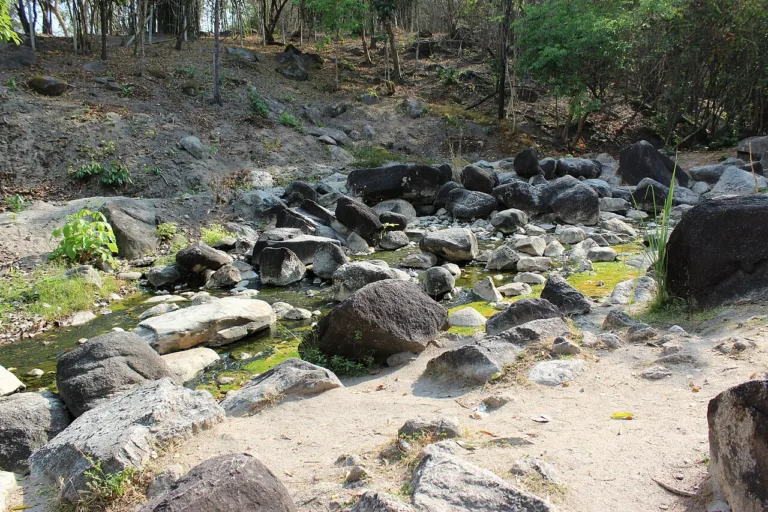
Check-ins & visitor photos
Arrived? Check in, collect a stamp and tell others what it is like right now
Check your location first, so you do not fill in the form for nothing
Location must be on and within 0.5 km · One check-in per place per day · come back on other days to check in again
Post photos from anywhere — no need to be here · Up to 20 photos at a time · JPG / PNG / WebP · GPS location data is removed automatically
How to get there
Paved all the way; ordinary cars are fine
Bangkok–Ratchaburi–Rt 3087 to Suan Phueng, then toward Kao Chon Waterfall · Fuel
To Suan Phueng, then rent · Per operator
From Ratchaburi take Rt 3087 about 53 km to Suan Phueng, then follow the road toward Kao Chon Waterfall for about 10 km; the entrance is on the left, about 1 km before the falls
Free car park, then a shaded 200 m walk
Suan Phueng town
Moderate
Mon–Fri 08:00–17:00 · Sat–Sun 08:00–18:00
about 15 km from Suan Phueng town
Bo Khlueng Hot Spring
Stays near Bo Khlueng Hot Spring
Approx. nightly price for 2 adults (next week) · final price depends on your dates
FAQ
Before you go: Bo Khlueng Hot Spring
Answers travellers want before they go — a one-minute read
How hot is the water?
About 60°C at the source and 52°C measured at the outlet (Chulalongkorn, 2017); around 38–45°C in the stream and pools
How much does it cost?
Gate 5 THB; mud pool 30 THB (foreigners 50), tiled pool 50 THB (foreigners 80); children less; foot baths free
What are the hours?
Daily, Mon–Fri 08:00–17:00 and Sat–Sun 08:00–18:00
Does it smell of sulphur?
No strong smell; the water is clear, alkali-carbonate type
Can I drink the water?
No — tests found arsenic, fluoride and lead above drinking limits
Can I stay overnight?
Rooms, houses and a campsite are on the grounds; book by phone
How far is Kao Chon Waterfall?
About 1 km, easy to combine
Nearby places
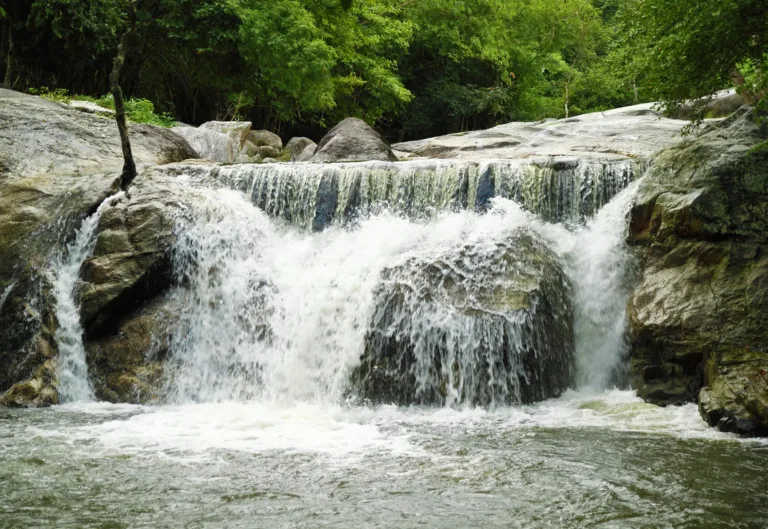 Kao Chon Waterfall
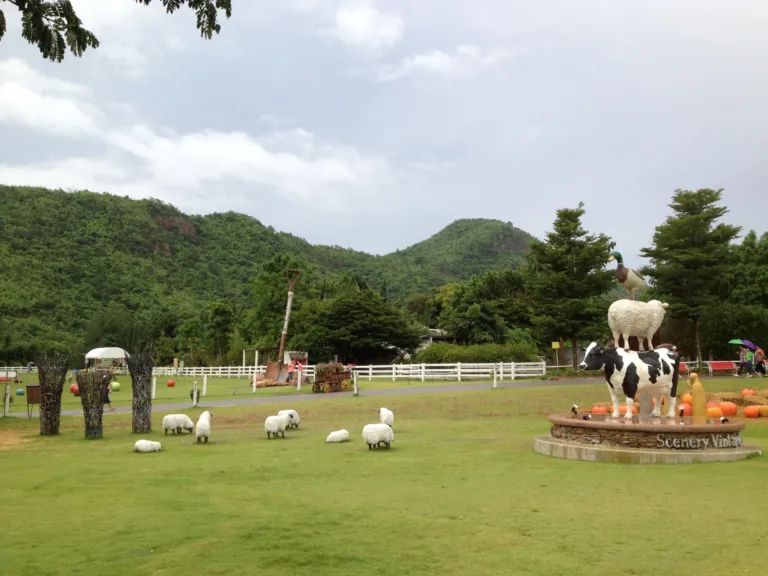 The Scenery Vintage Farm
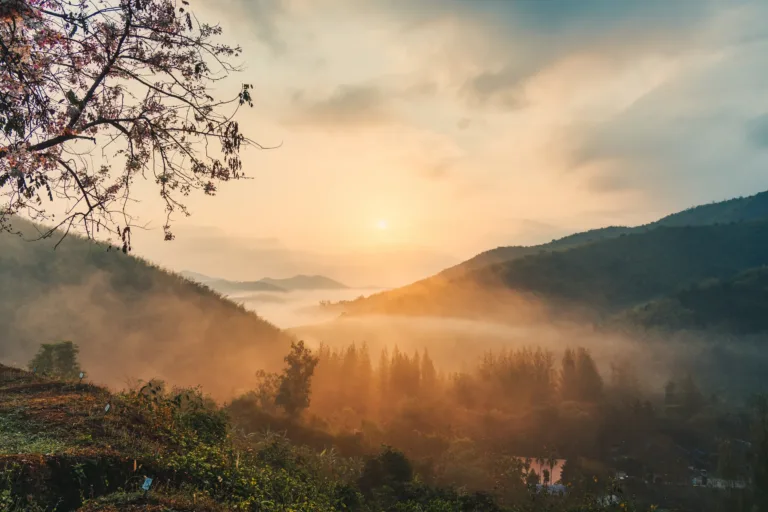 Khao Krachom
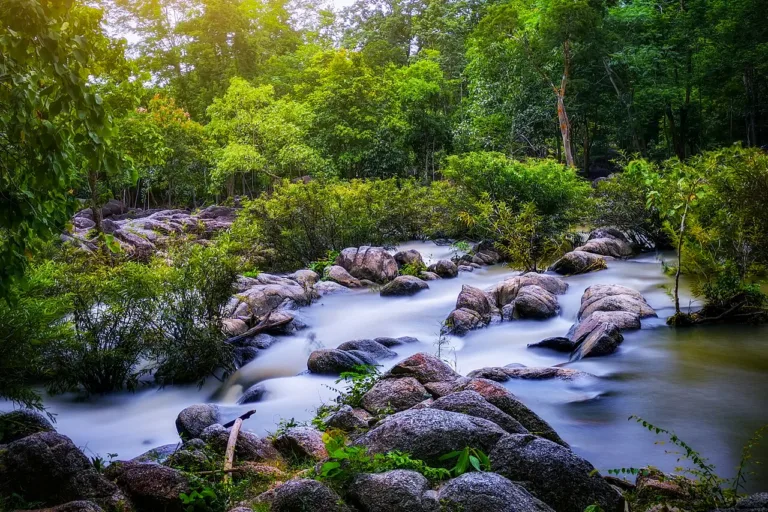 Kaeng Som Maeo
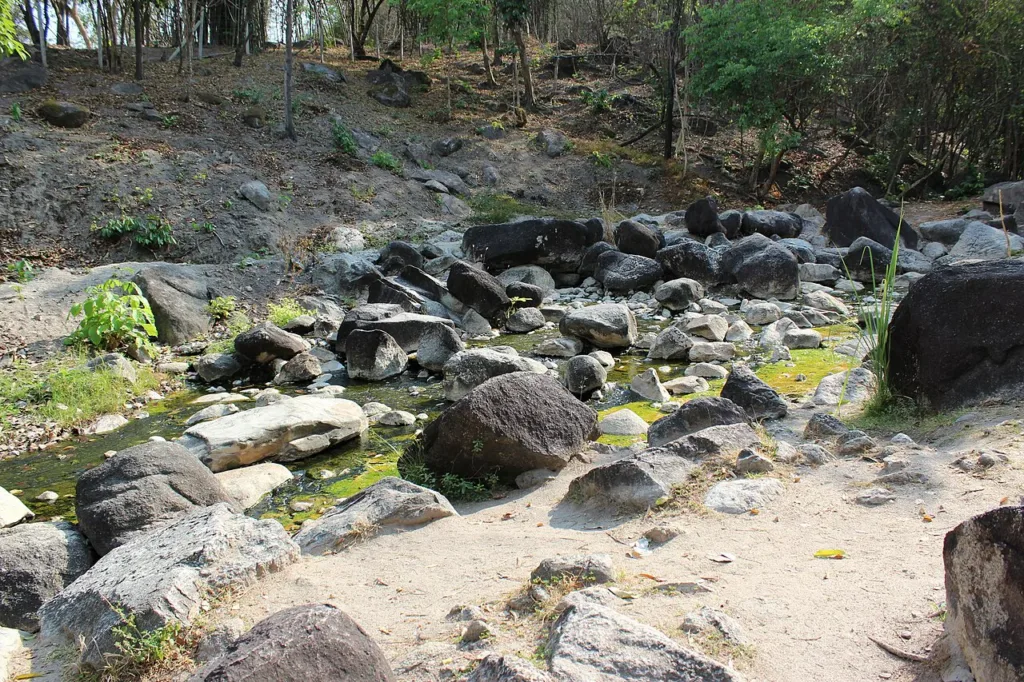
Ready to go to Bo Khlueng Hot Spring?
Best day this week: Sunday 29 Nov · Check in when you arrive to collect a stamp