Wat Rong Khun (White Temple)
Chalermchai Kositpipat's mirror-studded White Temple south of Chiang Rai. Cross a bridge over a sea of reaching hands to the all-white ordination hall, then see the golden building and the art gallery — northern Thailand's most famous contemporary Buddhist art.
Before you goWhich of the next 7 days is best Best dayTuesday 20- Severe weatherNone
- EarthquakesNone in 48 h
- Major disastersNone
- Site noticesNone
About
Overview · highlights · who it suits
Wat Rong Khun stands beside Phahonyothin Road about 13 km south of Chiang Rai town. It is the work of Chalermchai Kositpipat, a Chiang Rai–born National Artist who began rebuilding it in 1997 with his own money. The ordination hall (ubosot) is entirely white and set with mirror glass: white for the Buddha's purity, glass for his wisdom.
You reach the ubosot across a bridge over hundreds of hands reaching up from below. Inside, the murals blend Buddhism with the modern world. There is also a golden building (the toilets), a gallery of the artist's work and more buildings still under construction. Allow about 1–1.5 hours to walk around.
Don't-miss highlights
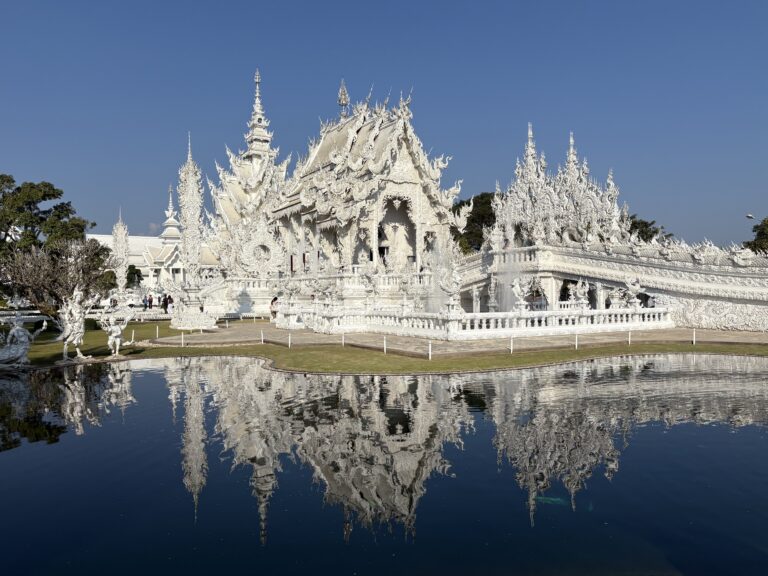
The white ubosot
The all-white ordination hall set with mirror glass — white for purity, glass for wisdom
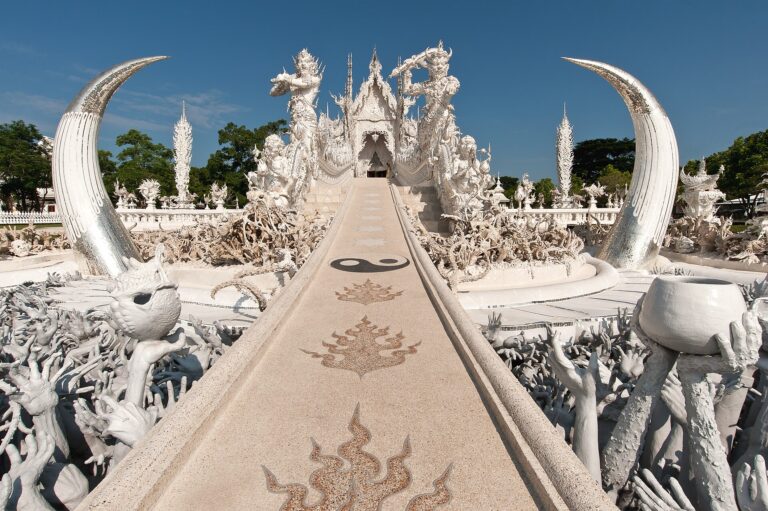
Bridge of rebirth
A one-way bridge to the ubosot, symbolising leaving desire behind on the way to enlightenment
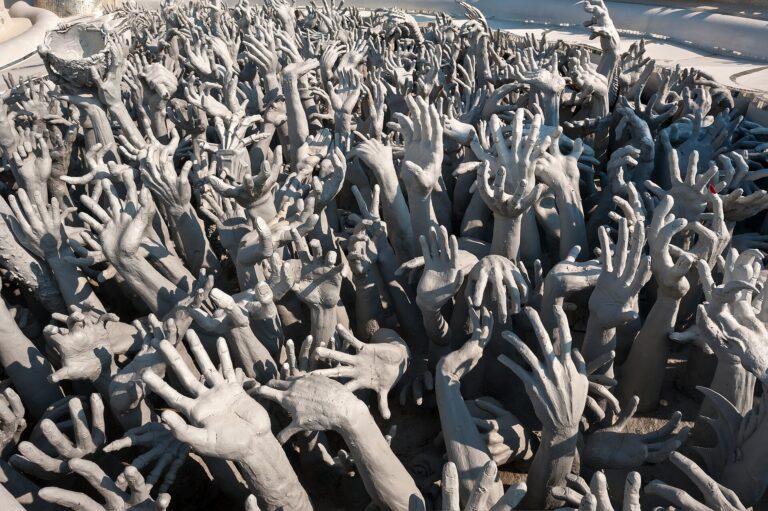
Sea of hands
Hundreds of sculpted hands reaching up from below the bridge — human craving and suffering
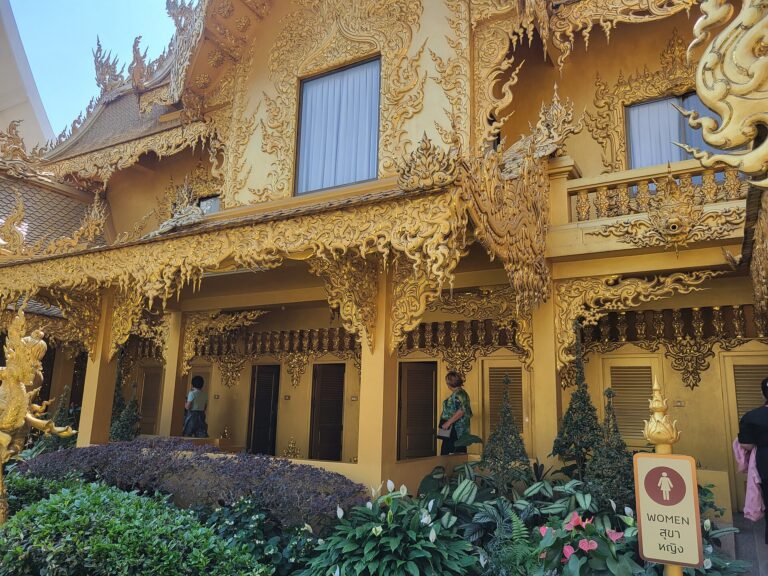
The golden building
The gilded toilet block: gold for the body and material things, white for the mind
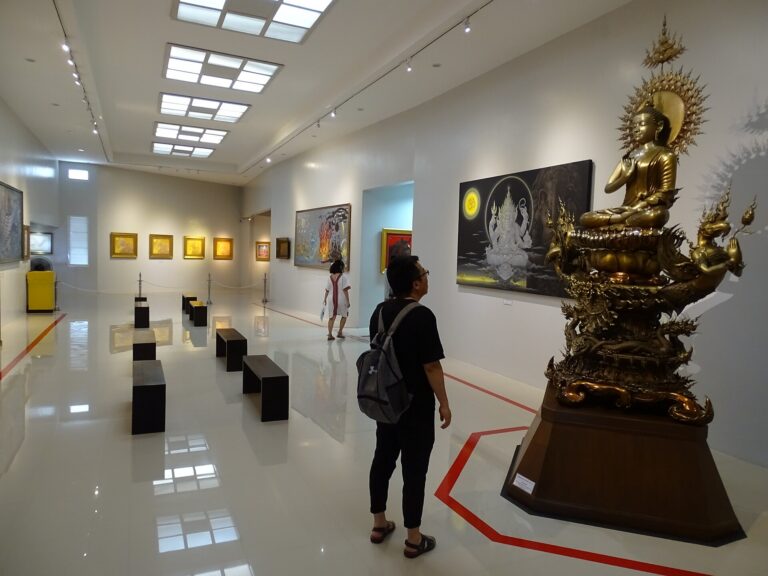
Chalermchai art gallery
Paintings and works by Chalermchai Kositpipat
Before you go
Gallery
Get a feel for the place · tap a photo to enlarge
The ubosot reflected in the pondThe mirror-studded white ubosot · Photo: Ddalbiez (CC BY-SA 3.0)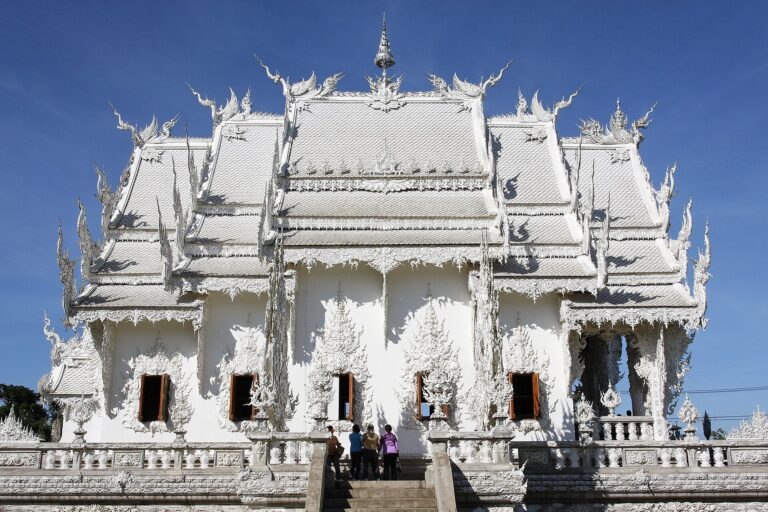 The ubosot from the frontThe bridge of rebirth to the ubosot · Photo: Hans-Jürgen Neubert (CC BY-SA 4.0)Bridge of rebirthHundreds of hands beneath the bridge, symbolising craving · Photo: Hans-Jürgen Neubert (CC BY 4.0)Sea of handsThe golden building (toilets), symbolising the body and material things · Photo: Welcome to Thailand (CC0)The golden buildingMirror-glass stucco naga on the stair rail · Photo: Ddalbiez (CC BY-SA 3.0)
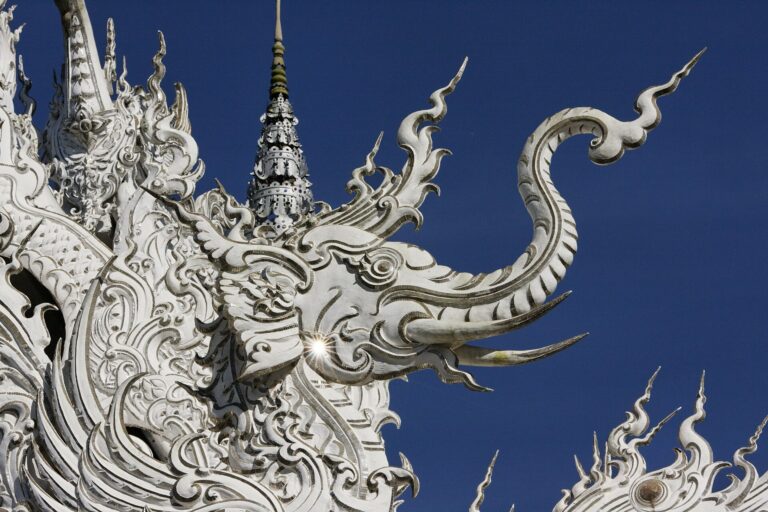 Mirror-glass nagaStucco details set with reflective mirror glass · Photo: Hans-Jürgen Neubert (CC BY 4.0)
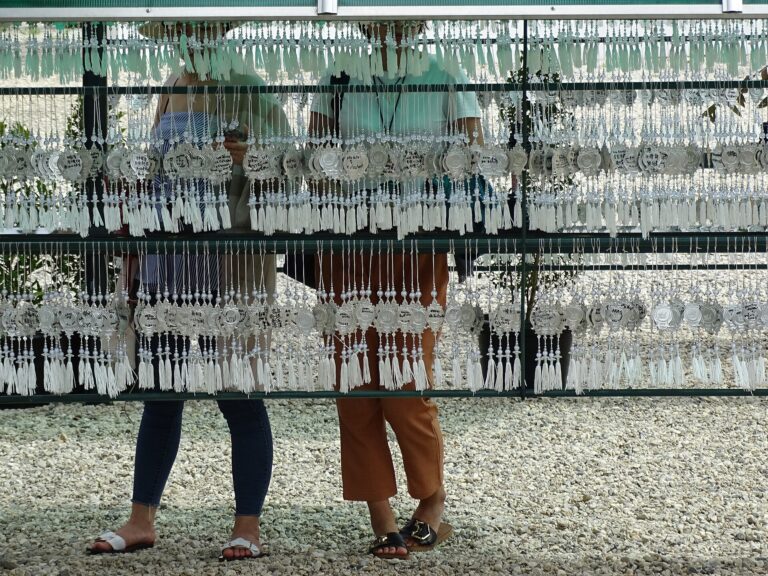
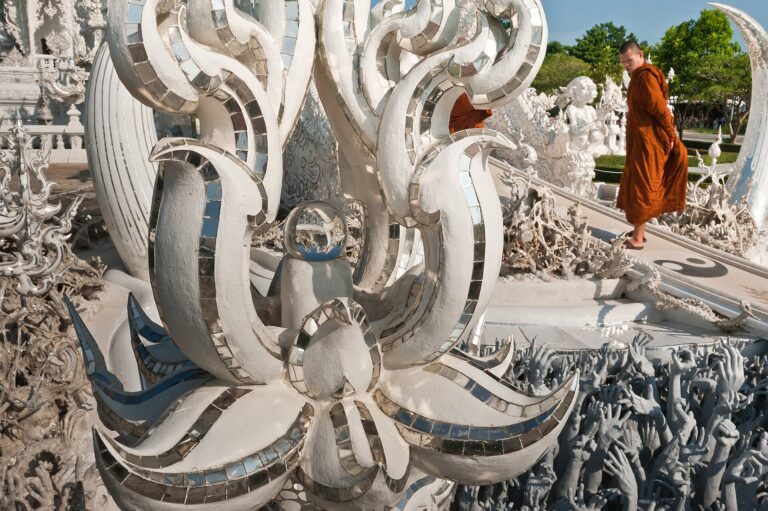 Mirror-glass detailsMetal wish plaques hanging in rows · Photo: Adam Jones from Kelowna, BC, Canada (CC BY-SA 2.0)
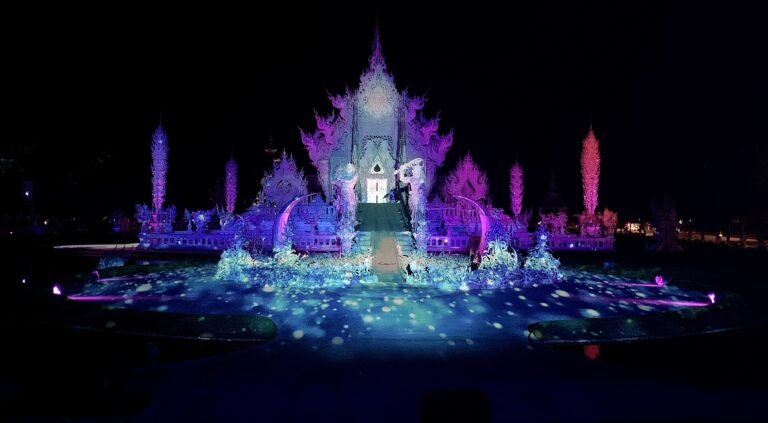
 Wish plaquesLight festival at Wat Rong Khun at night · Photo: SaschaSaengrawee (CC BY-SA 4.0)
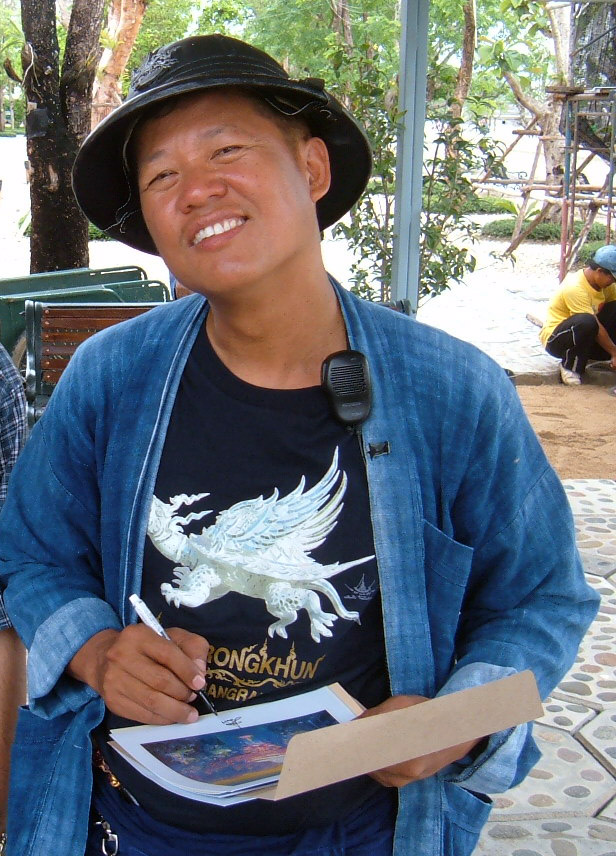
 Light festival at nightChalermchai Kositpipat at Wat Rong Khun, 2007 · Photo: BrokenSphere (CC BY 3.0)
 Chalermchai Kositpipat at Wat Rong Khun, 2007Gallery showing Chalermchai's work · Photo: Adam Jones from Kelowna, BC, Canada (CC BY-SA 2.0)Gallery showing Chalermchai's work
Photo credits11 photos from Wikimedia Commons
 The white ubosot reflected in the pondPhoto: Chainwit. CC BY 4.0
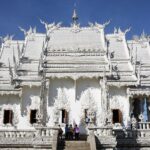 The mirror-studded white ubosotPhoto: Ddalbiez CC BY-SA 3.0
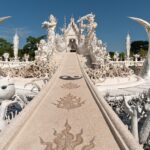 The bridge of rebirth to the ubosotPhoto: Hans-Jürgen Neubert CC BY-SA 4.0
 Hundreds of hands beneath the bridge, symbolising cravingPhoto: Hans-Jürgen Neubert CC BY 4.0
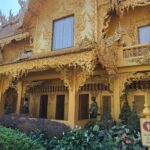 The golden building (toilets), symbolising the body and material thingsPhoto: Welcome to Thailand CC0
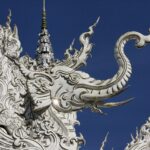 Mirror-glass stucco naga on the stair railPhoto: Ddalbiez CC BY-SA 3.0
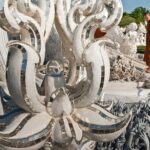 Stucco details set with reflective mirror glassPhoto: Hans-Jürgen Neubert CC BY 4.0
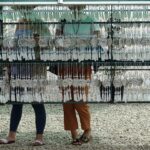 Metal wish plaques hanging in rowsPhoto: Adam Jones from Kelowna, BC, Canada CC BY-SA 2.0
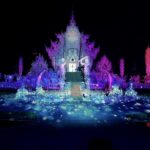 Light festival at Wat Rong Khun at nightPhoto: SaschaSaengrawee CC BY-SA 4.0
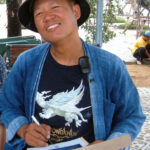 Chalermchai Kositpipat at Wat Rong Khun, 2007Photo: BrokenSphere CC BY 3.0
 Gallery showing Chalermchai's workPhoto: Adam Jones from Kelowna, BC, Canada CC BY-SA 2.0
Before you go
Weather, haze and crowds before you set off
Best time of day — hourly
MoreWhat to bring · costs · crowds · travel warnings · detailed weather
What to bring —
Estimated costs
Crowds — estimate
Travel warnings
Best months
Tap a month to see weather, rain, haze and crowds
Cool-season skies are a deep blue that sets off the white ubosot best, and the cool air makes walking outdoors easy. Arrive at 08:00 opening for soft morning light and no tour buses.
Late Feb – Apr often brings heavy forest-fire haze (PM2.5) to Chiang Rai — milky skies and fierce heat. Jul – Sep brings frequent afternoon rain. Long weekends and New Year are very crowded; tour buses arrive from around 10:00.
- Weather
- Rain
- Haze
- Crowds
See 10 years of real weather dataMonthly temperature, rainy days, clear days and haze
Past weather records
Check-ins & visitor photos
Location must be on and within 2 km · you can check in on every visit
History & stories
Legend · history · architecture
Wat Rong Khun lies in Pa O Don Chai subdistrict, Mueang Chiang Rai, about 13 km south of town. It was once a small village temple in Ban Rong Khun that had fallen into disrepair, and the villagers had no money to restore it.
Chalermchai Kositpipat, a painter born in Chiang Rai (15 February 1955), decided to rebuild it entirely from 1997, designing it himself and funding it largely with his own money as a work of Buddhist art offered to the Buddha. The temple accepts no more than 10,000 baht in donations from any one person, so the work follows its creator's vision rather than that of big donors.
Chalermchai Kositpipat, who designed and built Wat Rong Khun · Photo: BrokenSphereChalermchai graduated in Thai art from Silpakorn University in 1977. He became internationally known for the murals in the ubosot of Wat Buddhapadipa in London, commissioned around 1988 and taking about four years. He has said the idea for Wat Rong Khun came from King Rama IX remarking that his reign did not yet have an art of its own, so he set out to create something original as an offering to the King. In 2004 he became the first visual-arts recipient of the Silpathorn Award.
Read more history 8 more paragraphs
In a 2012 interview Chalermchai said he had already spent more than 440 million baht on the temple over 15 years, and expected the whole work to take about 60 years, including training successors to carry it on after his death. He has also declined the monthly stipend and medical benefits that come with being a National Artist.
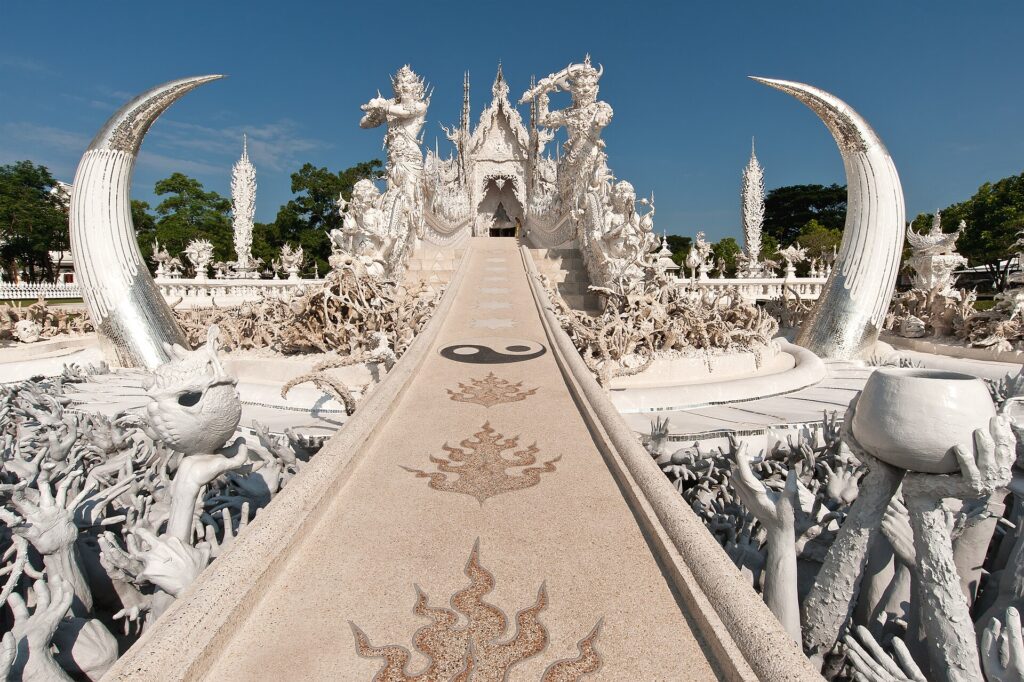 The bridge of rebirth, one way to the ubosot · Photo: Hans-Jürgen Neubert
What sets Wat Rong Khun apart is that it is entirely white. White stands for the Buddha's purity, and the mirror glass set all over the buildings for his wisdom shining across the world and the universe. The stucco blends Lanna art with the artist's contemporary imagination — which is why visitors call it the White Temple.
The way into the ubosot is a bridge over a pond. Beneath it, hundreds of sculpted hands reach up from below, representing human craving and suffering, so crossing the bridge is like crossing the cycle of rebirth towards enlightenment. Past the bridge you walk through a gate guarded by figures of Death and Rahu before entering the ubosot. The bridge is one-way — no turning back.
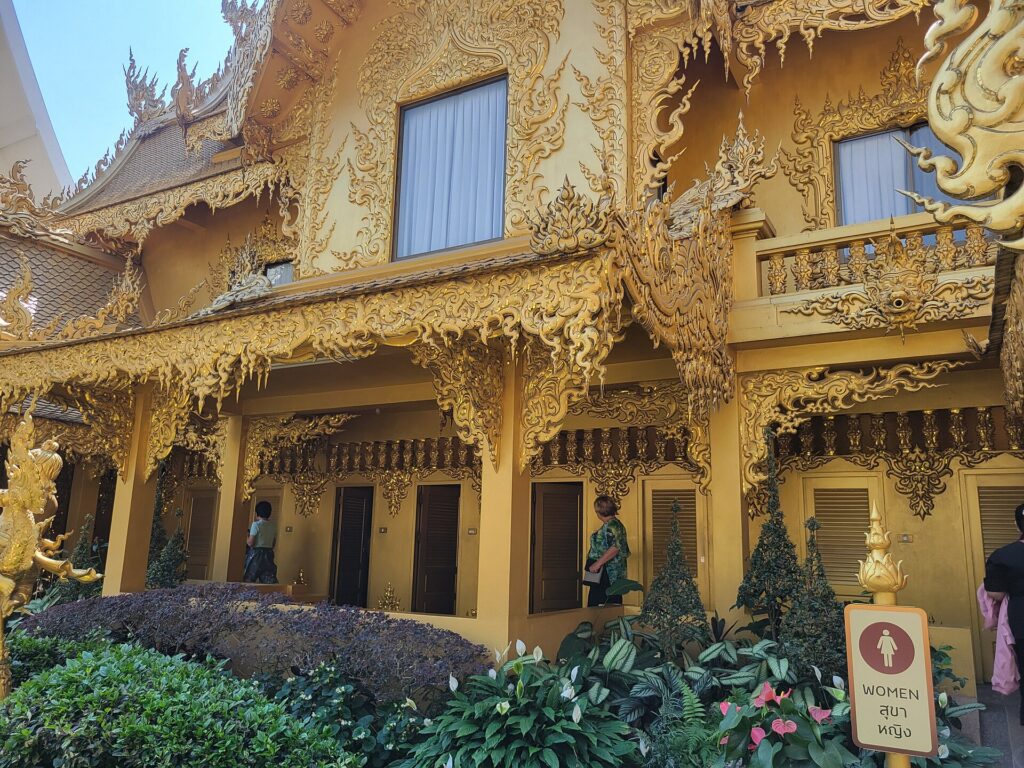 The golden building, representing the body and material things · Photo: Welcome to Thailand
Inside the ubosot, the murals mix Buddhist stories with today's world: flames and demon faces, film and pop-culture characters, war, terrorism and oil pumps, reflecting the desires of modern people. Photography is not allowed inside, so it is for your eyes only.
The gleaming golden building not far from the ubosot is the toilet block. The artist chose gold to represent the body and material things people cling to, the opposite of the white ubosot that stands for the mind. There is also a gallery of paintings by Chalermchai, who was named a National Artist in visual arts (painting) in 2011.
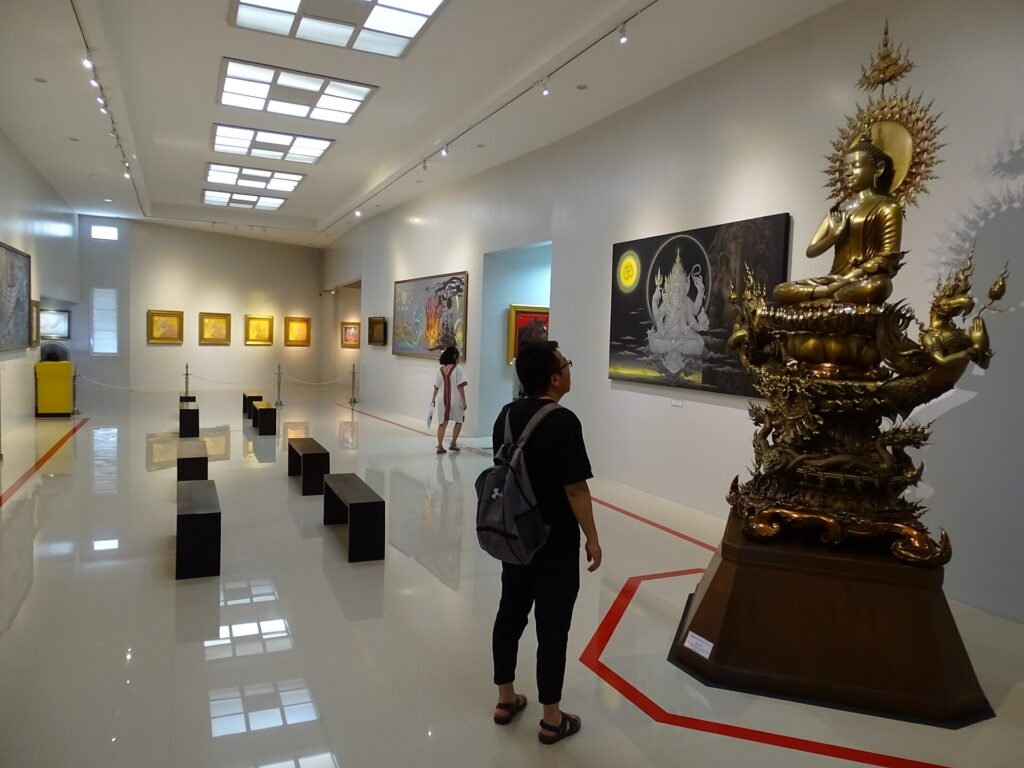 Inside the gallery of Chalermchai's work · Photo: Adam Jones from Kelowna, BC, Canada
On the evening of 5 May 2014, at about 18:08, an earthquake centred in Mae Lao district, Chiang Rai, damaged the temple's buildings. The next day Chalermchai announced he would demolish it and not rebuild, but after engineers found the structures sound, he changed his mind and promised to restore it to its original state. The outdoor areas reopened to visitors on 8 May 2014.
Wat Rong Khun became a world-class attraction that lifted business across Chiang Rai. Before COVID-19 it drew about 3,000–4,000 Chinese visitors a day, around 70% of its foreign visitors; when China began locking down cities in January 2020, that fell to 1,000–1,500 a day within days.
Wat Rong Khun is still unfinished. The plan has nine buildings — among them the ubosot, a relic hall, the art gallery, a meditation hall and monks' quarters — with completion expected around 2070. Chalermchai has said that only death can stop his dream, but not the project. Since 1 January 2026, admission for foreigners is 200 baht, including the Art Cave; Thais still enter free.
Location & getting there
Map · how to get there · costs
Directions use live traffic to estimate travel time
- Travel timeAbout 20 min from town by car
- RoadPhahonyothin Road (Highway 1), flat 4-lane road
- ParkingLarge car park in front of the temple; many tour buses late morning
- FuelPlenty of fuel stations along Phahonyothin Road
Suggested route
From Chiang Rai town take Phahonyothin Road (Highway 1) south towards Phan and Chiang Mai for about 13 km. The temple is around kilometre marker 816; follow the signs and turn in for about 100 m. The road is flat all the way and easy to drive.
Without a car, take a southbound bus from Bus Terminal 1 in the town centre and ask the driver to stop at Wat Rong Khun — or use Grab, the easiest option both ways.
Coming from Chiang Mai, the temple is right on the way before you reach Chiang Rai town, so many people make it their first stop.
5 ways to get there
Take Phahonyothin Rd south from town for about 13 km, turn in at the signs near km 816 and park in front of the temple
Flat and easy, but traffic on Phahonyothin Rd is fast — keep left and wear a helmet
Take a southbound bus from Bus Terminal 1 in town and ask to stop at Wat Rong Khun; flag one down on the main road to return
The easiest option; getting a ride back is easy as the temple is close to town
Many operators combine Wat Rong Khun, the Blue Temple and Baan Dam with hotel pickup
Prices and times are estimates and vary with season and traffic
Food nearby
Popular places within 5–10 km