 01
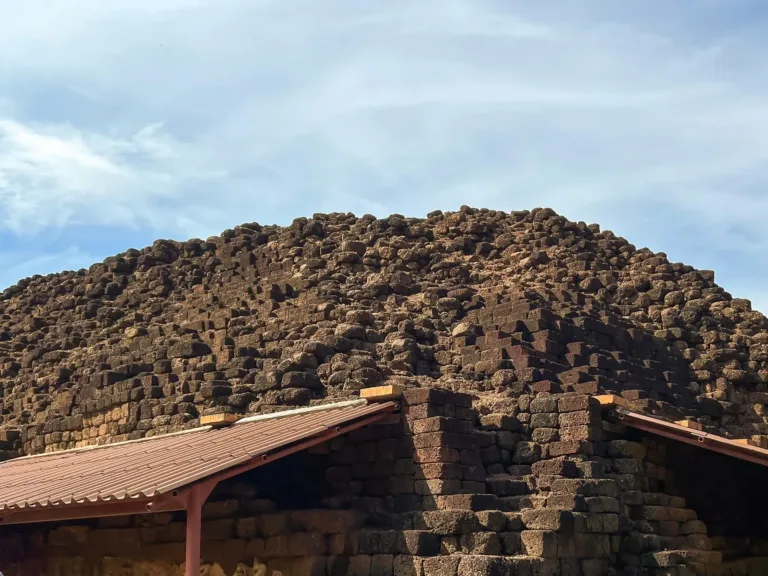
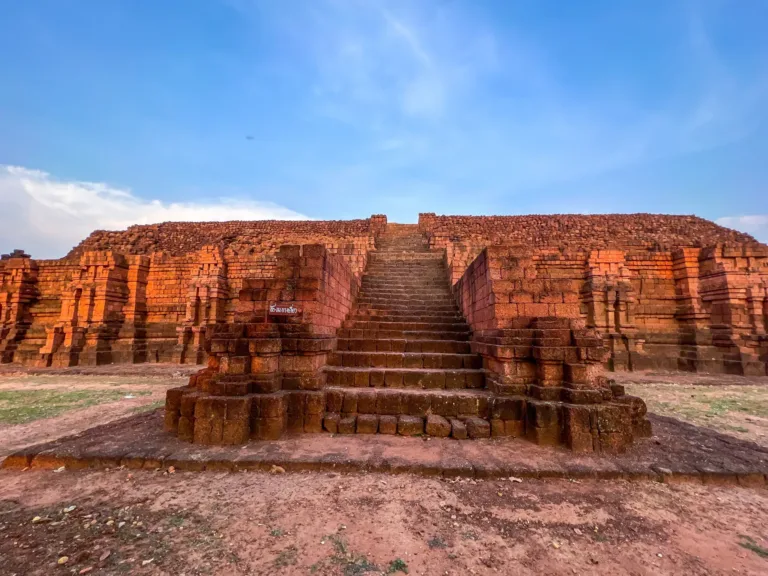
Khao Khlang NaiA Dvaravati monument in the town centre with stucco dwarfs on its base
World Heritage · Dvaravati ancient town, Phetchabun
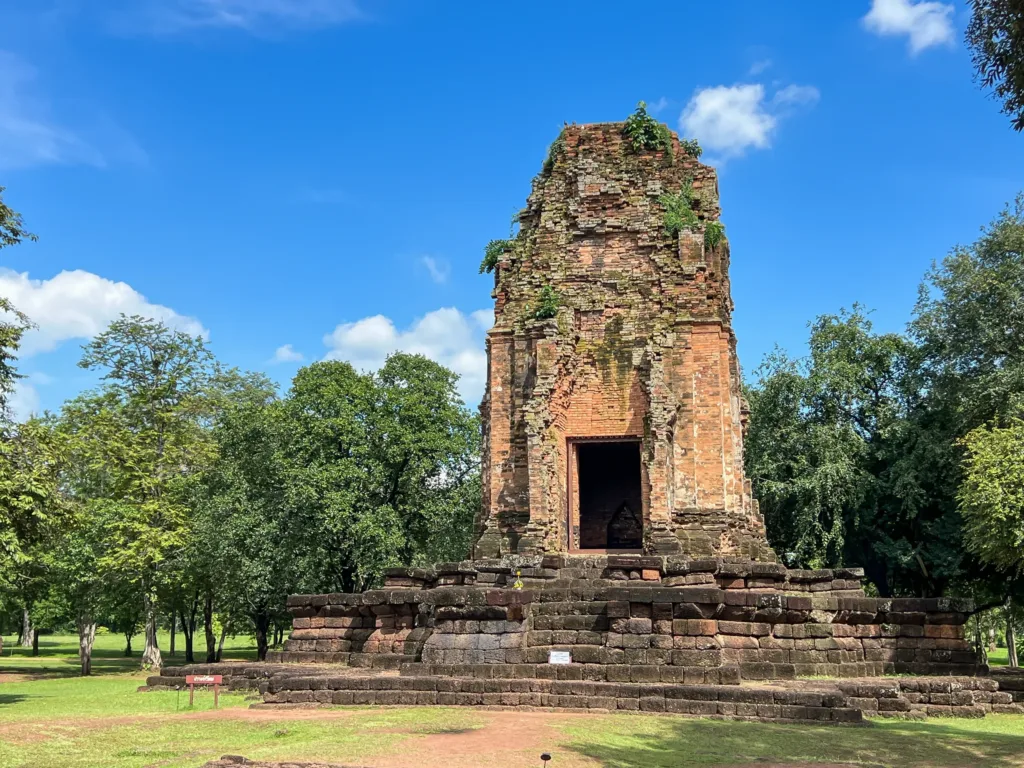
A moated Dvaravati-era city in Si Thep, Phetchabun, and Thailand's newest World Heritage Site (2023). Khao Khlang Nai, Prang Si Thep, Prang Song Phi Nong and Khao Khlang Nok, with an on-site shuttle.
Holiday / event — crowded
Daily 08:30–16:30
2–3 hours
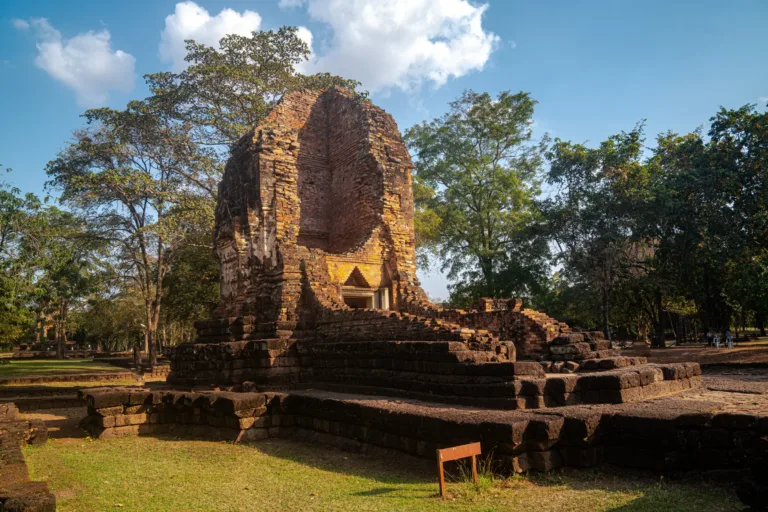
Prang Song Phi Nong — Both prangs together in frame
20 THB
01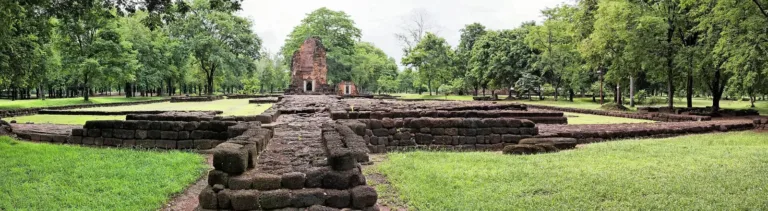 02
 03
 04
Tap a day card to see that day’s weather, rain, haze and hourly forecast
Best time to go Daytime is over · see tomorrow
Holiday — traffic on the way up and parking fills fast; leave early
Green band = hours used for the score
Best time to go Fine all day little rain through the day
Holiday — traffic on the way up and parking fills fast; leave early
Green band = hours used for the score
Best time to go Fine all day little rain through the day
No warnings today — normal road and weather conditions
Green band = hours used for the score
Best time to go Fine all day little rain through the day
No warnings today — normal road and weather conditions
Green band = hours used for the score
Best time to go Fine all day little rain through the day
No warnings today — normal road and weather conditions
Green band = hours used for the score
Best time to go Fine all day little rain through the day
No warnings today — normal road and weather conditions
Green band = hours used for the score
Best time to go Fine all day little rain through the day
No warnings today — normal road and weather conditions
Green band = hours used for the score
Si Thep Historical Park is in Si Thep district, Phetchabun. It's an ancient moated city, inhabited for centuries, where Dvaravati and Khmer cultures meet. UNESCO inscribed it on 19 September 2023 as the Ancient Town of Si Thep and its Associated Dvaravati Monuments.Inside the town are Khao Khlang Nai, a Dvaravati monument with stucco dwarf figures around its base, Prang Si Thep and the Khmer-style Prang Song Phi Nong. Outside the moat is the huge Dvaravati monument of Khao Khlang Nok, plus an excavation pit showing human and elephant skeletons.It's open daily with an electric shuttle between sites. Allow two to three hours, and come early as there's little shade.
Arrive 09:00, before the heat
Strong sun in the old town; bring water and a hat
Take the shuttle or drive; don't miss it
Adults 20 THB · Time needed 2–3 hours
Weekends 10:00–14:00
| Entry, Thai | 20 ฿/person |
Prices may change by season — check with the venue
Si Thep is an ancient town in the Pa Sak River basin of Si Thep District, Phetchabun. Ringed by moats and earthen ramparts, it is a "twin town": a nearly round Inner Town joined to a rectangular Outer Town. People settled here in late prehistoric times, the town flourished in the Dvaravati culture from roughly the 6th to the 11th century, then came under Khmer influence until about the 13th century before it was abandoned for centuries. More than 112 religious sites have been identified, showing Theravada and Mahayana Buddhism and Hinduism side by side, and on 19 September 2023 UNESCO inscribed it as a World Heritage Site.
Excavations show that farming communities lived here from late prehistory. Sources give slightly different ages: some say about 2,500–1,500 years ago, others about 1,800 years ago in the Iron Age. One excavation pit revealed human burials together with elephants and a dog, estimated at more than 1,700 years old, and it can still be visited today.
In the Dvaravati period Si Thep grew into a major town. The Inner Town covers about 1,300 rai (around 1.5 km across) with six gates and some 70 ponds; the Outer Town, about 1,589 rai, was later added to the east, for a total of about 2,889 rai (4.7 km²). Researchers also cite a Sanskrit inscription found in the town that some scholars read as mentioning King Bhavavarman and the installation of a Shiva image, a sign of early contact with the wider world.
At the heart of the Inner Town stands Khao Khlang Nai, a laterite monument about 28 by 44 metres. The name was given by villagers, who saw a hill-like mound and believed treasure was buried inside. Several sources date it to around the 6th–7th century, built when the town was founded and converted to Mahayana use around the 9th century, while others place it in the 9th–11th century on stylistic grounds. Its highlight is the stucco frieze of dwarfs supporting the base on the south and west sides, reported to be unique in Thailand.
Si Thep also gave its name to a sculptural tradition, the "Si Thep School", famous for free-standing deities in the swaying tribhanga pose without a back support, which UNESCO notes is found nowhere else. Six images of the sun god Surya are reported from the town: three in the Bangkok National Museum, one in Lopburi National Museum, one at the park and one at the Norton Simon Museum in the United States. Many other artefacts were looted and scattered beyond counting.
About 1 km north of the moats rises Khao Khlang Nok, roughly 64 by 64 metres and 20 metres high, which UNESCO calls the largest surviving Dvaravati monument; most sources date it to around the 7th–9th century. Some 15–20 km to the west is the Khao Thamorat cave, a Mahayana cave monastery with carvings of Buddhas and bodhisattvas. Some research suggests that the entrance of Khao Khlang Nok was turned to face this mountain.
From around the 11th–12th century Khmer influence arrived. Prang Si Thep is described by some sources as Baphuon style, while the larger tower of Prang Song Phi Nong dates to around the 11th–12th century in the Angkor Wat period and was originally a Shaivite shrine. The Uma-Maheshvara lintel on the smaller tower is the most complete lintel in the town. Under King Jayavarman VII these shrines were adapted for Mahayana Buddhism.
Around the 13th century Si Thep was abandoned. Scholars suggest an epidemic, drought or both, at a time when Sukhothai and Ayutthaya were rising. Legend says gods built the town before returning to heaven, so villagers believed anyone who lived inside would fall ill or lose their mind; they only farmed, hunted and gathered forest produce there, and they still worship at the shrine of Chao Pho Si Thep.
In 1904 Prince Damrong Rajanubhab, then Minister of the Interior, found the name "Mueang Si Thep" in an old register of towns, but no one knew where it was. Using a record of the messengers who carried news of King Rama II's death through Saraburi, Chaiyaphum, Si Thep and Phetchabun, along with information from the governor of Wichian Buri, he travelled by boat and then on foot until he reached the ruins, which he named Si Thep, although the town's original name is still unknown. In 1935–1936 the British archaeologist H.G. Quaritch Wales surveyed and mapped the town.
The Fine Arts Department registered Si Thep as an ancient monument in 1936, by name only, and re-registered it with defined boundaries in 1963, adding Khao Khlang Nok and Prang Ruesi. Excavation of Khao Khlang Nai began in 1978, the historical park project started in 1984, human and elephant skeletons were excavated in 1988, and in 2008 Khao Khlang Nok was excavated and restored for the first time.
In 2019 the Fine Arts Department prepared Si Thep for the World Heritage Tentative List, and on 19 September 2023 the 45th session of the World Heritage Committee in Riyadh, Saudi Arabia, inscribed "The Ancient Town of Si Thep and its Associated Dvaravati Monuments", covering the town, Khao Khlang Nok and the Khao Thamorat cave. It is Thailand's fourth cultural World Heritage Site and the first in 31 years since Ban Chiang. Visitor numbers have since multiplied, passing one million, and 2024 marked 120 years since the town's rediscovery.
Arrived? Check in, collect a stamp and tell others what it is like right now
Check your location first, so you do not fill in the form for nothing
Location must be on and within 1.5 km · One check-in per place per day · come back on other days to check in again
Post photos from anywhere — no need to be here · Up to 20 photos at a time · JPG / PNG / WebP · GPS location data is removed automatically
The park is at 208 Moo 13, Si Thep, Si Thep District, Phetchabun.
Highway 21 from Phetchabun town · Fuel
Electric shuttle between sites · Included with entry
Highway 21, good road
Car park at the visitor centre
Good
Daily 08:30–16:30
Si Thep Historical Park
Answers travellers want before they go — a one-minute read
Daily 08:30–16:30
20 baht for Thais; check the foreign rate at the counter
19 September 2023
Yes, an electric shuttle runs between sites
About 2–3 hours
Outside the moat; take the shuttle or drive
Best day this week: Monday 30 Nov · Check in when you arrive to collect a stamp
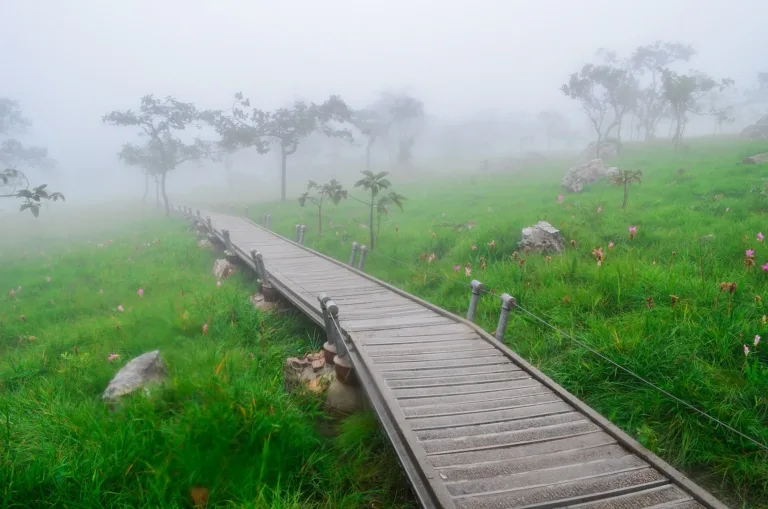 Siam Tulip Fields, Pa Hin Ngam National Park
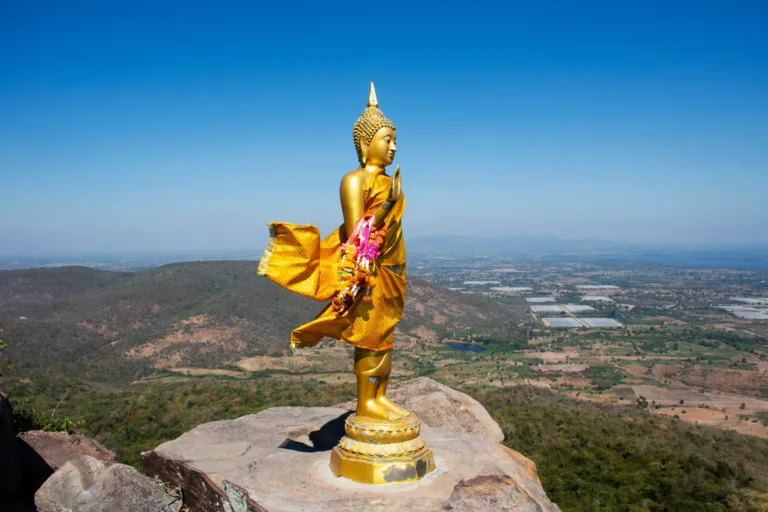 Khao Phraya Doen Thong Viewpoint
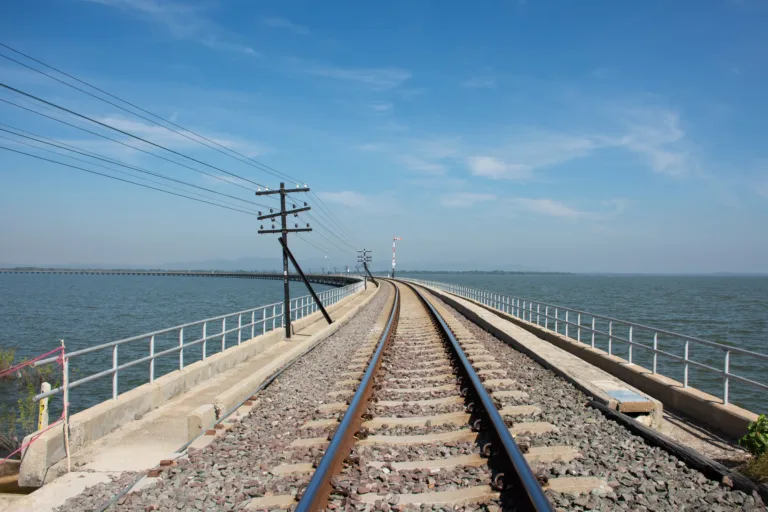 Pa Sak Jolasid Dam