Rainy season, safety and preparation
May – Oct
Scalding source wells — The Father, Mother and Child wells are about 65°C; don't get in or dip your hands
1–2 hours
Good
7 days ahead
When to go
this week
Tap a day card to see that day’s weather, rain, haze and hourly forecast
Best time to go Daytime is over · see tomorrow
Holiday — traffic on the way up and parking fills fast; leave early
Hour by hour
Green band = hours used for the score
Best time to go Best window 06:00–13:00 Little rain · light drizzle possible at times
Holiday — traffic on the way up and parking fills fast; leave early
Hour by hour
Green band = hours used for the score
Best time to go Best window 06:00–11:00 Little rain · light drizzle possible at times
No official warnings, but watch for: Evening (16:00–19:00): rain ~39%
Hour by hour
Green band = hours used for the score
Best time to go Best window 06:00–10:00 Little rain · light drizzle possible at times
No official warnings, but watch for: Evening (16:00–19:00): rain ~22% · Possible thunder 10:00–13:00
Hour by hour
Green band = hours used for the score
Best time to go Best window 06:00–12:00 Little rain · light drizzle possible at times
No official warnings, but watch for: Evening (16:00–19:00): rain ~24% · Possible thunder 11:00–14:00
Hour by hour
Green band = hours used for the score
Best time to go Best window 06:00–12:00 Little rain · light drizzle possible at times
No official warnings, but watch for: Late morning (09:00–12:00): rain ~27%
Hour by hour
Green band = hours used for the score
Best time to go Fine all day little rain through the day · light drizzle possible at times
No official warnings, but watch for: Late morning (09:00–12:00): rain ~34%
Hour by hour
Green band = hours used for the score
Starry sky
How likely
Scored from cloud cover at every level and tonight’s moonlight — the darker the sky, the clearer the Milky Way · tap another night below for the next 7 nights
Raksawarin Hot Springs
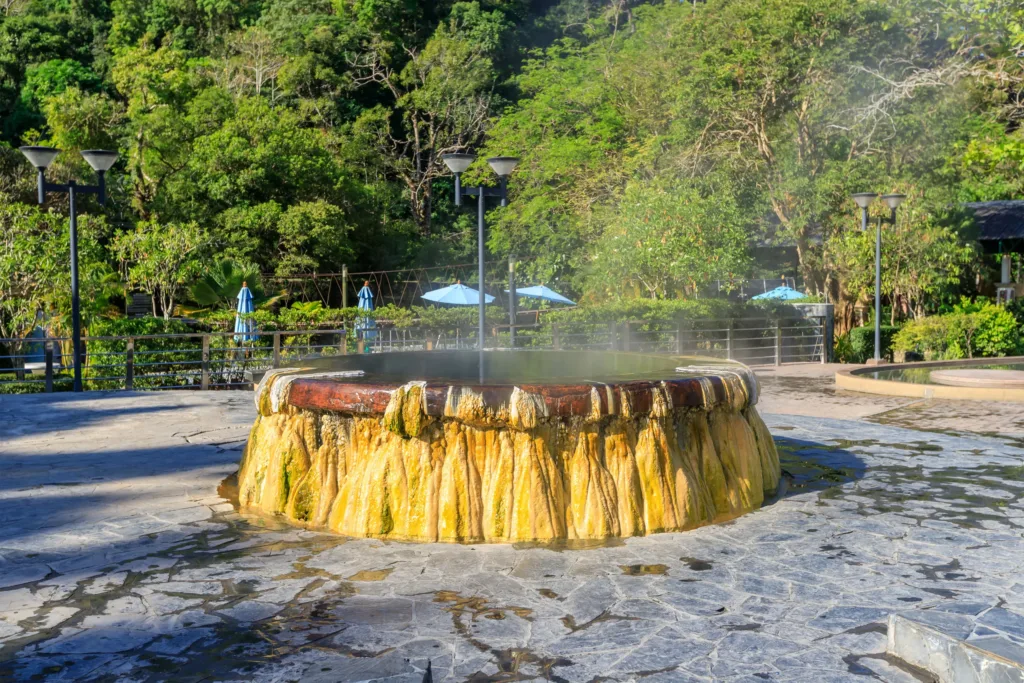
Raksawarin Hot Springs sit in Raksawarin Park, about 2 km from the centre of Ranong town along Route 4005. The spring water averages around 65°C, is crystal clear with gas bubbling up constantly, and has no sulfur smell.The name means 'water that heals'. It was given by Princess Mother Srinagarindra when she visited Ranong in 1967. There are three source wells, the Father, Mother and Child, which are too hot to bathe in, but free foot-soaking pools sit right beside them.Locals come daily to soak their feet, warm up on the steam-heated health plaza and stroll the park. Around it you'll find restaurants, cafés and mineral-water spas for a private soak.
- Cool air, locals soaking
- Hot sun; a hot soak isn't pleasant
- Softer sun, nice for foot soaking
Arrive Morning, or once the sun softens
- Father wellSteam rising over the waterearly morning
Good to know here
The Father, Mother and Child wells are about 65°C; don't get in or dip your hands
Soak 10–15 minutes at a time and drink plenty of water
- Bring a small towel for your feet
- Want to boil eggs in the spring? Bring your own
- For a full-body soak, use the bathing rooms or the mineral spas nearby
- Easy to combine with sightseeing in Ranong town
Free · Time needed 1–2 hours
Early morning and evening
- Kids Fine; keep them away from the source wells
- Seniors Great for foot soaking; keep soaks short
- Wheelchair In town with mostly flat paths, but ramps aren't confirmed
- Pets Public park; keep pets away from the pools
- Shops around Raksawarin ParkFood, coffee and souvenirs
- Rinse your feet before using the pools
- Share space when it's busy
- Don't drop eggshells or rubbish into the pools
- The source wells are scalding; keep children away
- People with heart conditions or high blood pressure should soak briefly
- The ground around the pools is wet and slippery
The story of this place
Raksawarin is the natural hot spring closest to Ranong town, set in a small valley inside Raksawarin Park in Khao Niwet subdistrict, beside the Hat Som Paen canal. Water at around 65°C, which has spent thousands of years underground, rises along the Ranong Fault. The springs became widely known after King Chulalongkorn visited Ranong in 1890, received the royal name "Raksawarin" in 1967, and today sit at the heart of the health tourism that Ranong promotes as its "mineral water metropolis".
Read more 10 more paragraphs
The hot water owes its existence to the Ranong Fault, a major strike-slip fault running roughly north–south through the peninsula. Structural geologists describe it moving right-laterally in the Late Cretaceous before switching to left-lateral movement after the Paleocene–Eocene. The fractures it created give hot water a path to the surface, so several springs line the fault; some studies count six, others seven in Ranong, with temperatures from about 40 to 75°C.
Isotope analysis shows the water is local rain that soaks in from hills about 380–480 m high, flows through a granite mass and is heated in reservoirs several hundred metres down before pushing back up. Researchers estimate it stays underground for roughly 2,700–5,200 years. Estimates of the reservoir temperature differ between studies, from about 125°C to nearly 200°C. The water is a sodium-bicarbonate type with a pH around 8 and fairly low mineral content.
The original spring has three pools close together, named by size: the Father pool, about 2.80 m across, the Mother pool, about 1.50 m, and the Child pool, about 2 m. The water is clear, with gas bubbles constantly rising. The Department of Science Service found important minerals and no sulfur, so several local sources call it the only hot mineral spring in Thailand without a sulfur smell. Locals like to boil eggs in a small pool, and visitors often toss coins into the water for luck.
Before major highways, Ranong was a stop for overland travellers crossing the Kra Isthmus to the Andaman coast, and the hot springs were known to them. In 1890 King Chulalongkorn visited Ranong and stayed at a pavilion built for him by Phraya Ratanasetthi, the governor of Ranong, later named the Rattanarangsan Throne Hall. During his stay the King named the road leading to the springs "Chon Ra-u Road", meaning warm water, a name still in use today.
Besides its official name, locals also call the site the "Wat Tapotharam hot spring" after the adjoining temple, known locally as Wat Bo Nam Ron, the hot spring temple. The temple has an important Buddha image and a replica Buddha footprint, and offers hot and cold showers for a donation. On a hill on the park's eastern side stands an image of Phra Maha Kaccayana, reached by about 80 brick steps. No source found gives a clear founding date for the temple.
In 1967 Princess Mother Srinagarindra visited Ranong and bestowed the name "Raksawarin", meaning water that can heal. Some sources say the name was given to the public park, others to the Raksawarin Arboretum, which still protects part of the dipterocarp forest that once covered this coast.
Because of its clarity, water from Raksawarin was used to make holy and blessed water for important ceremonies, including the celebrations of King Bhumibol Adulyadej's 60th birthday in 1987.
Later the area around the spring was developed into a public park, with a health plaza built over ground warmed by rising steam, and water from the main pools piped into new bathing pools mixed with cool water to about 40–50°C. Hotels and spas nearby also piped in the mineral water, although years of promotion, including efforts to attract Japanese investors, did not bring the hoped-for results.
In fiscal years 2020–2021 the park closed for renovation, combined with COVID-19 measures. The Department of Public Works and Town & Country Planning upgraded the hot spring and its landscape, including the entrance, parking, community shops, an activity plaza, a cycle path and an embankment along the Hat Som Paen canal, plus a riverside plaza used for Loy Krathong. In late 2023 Raksawarin received the Thailand Friendly Design Award as a tourist site accessible to everyone.
Most recently Raksawarin has become the main stage for promoting Ranong's mineral water. In January 2024 the Prime Minister visited during a mobile cabinet meeting, TAT listed it first among the province's 13 hot-spring bathing spots, and it hosted the "Ranong Maha Nakhon Nam Rae" festival for the 2nd time in 2024 and the 3rd in 2025. In 2026 the government named it a flagship attraction, with the aim of developing it into a Japanese-style "onsen town".
- 1890King Chulalongkorn visits Ranong and names the road to the springs "Chon Ra-u Road"
- 1967Princess Mother Srinagarindra bestows the name "Raksawarin"
- 1987Spring water is used to make holy water for King Bhumibol's 60th birthday
- 2018An isotope study finds the Ranong Fault hot water comes from local rainfall
- 2018The Prime Minister visits Raksawarin (20 August)
- 2020–2021Raksawarin Park closes for renovation and COVID-19 measures
- 2021A doctoral thesis estimates Ranong's hot water spends about 2,700–5,200 years underground
See 7 events
- 2022A study estimates the underground reservoir at about 125°C
- 2023The Department of Public Works and Town & Country Planning upgrades the springs, landscape and Hat Som Paen canal bank
- 2023Wins the Thailand Friendly Design Award (7 December)
- 2024The Prime Minister visits during a mobile cabinet meeting; TAT lists it first of Ranong's 13 hot-spring spots
- 2024Hosts the 2nd "Ranong Maha Nakhon Nam Rae" mineral-water festival (10–11 August)
- 2025Hosts the 3rd "Ranong Maha Nakhon Nam Rae" festival (26–27 July)
- 2026The government names Raksawarin a flagship site, aiming for an "onsen town" model
Check-ins & visitor photos
Arrived? Check in, collect a stamp and tell others what it is like right now
Check your location first, so you do not fill in the form for nothing
Location must be on and within 3 km · One check-in per place per day · come back on other days to check in again
Post photos from anywhere — no need to be here · Up to 20 photos at a time · JPG / PNG / WebP · GPS location data is removed automatically
How to get there
The springs are in Raksawarin Park, about 2 km from the centre of Ranong town.
From central Ranong along Route 4005, about 2 km · Fuel
From anywhere in Ranong town · Agree the fare
Paved town roads
Car park in the park
In Ranong town
Good
Daily, around 05:00–21:00
about 2 km from Ranong town
Raksawarin Hot Spring
FAQ
Before you go: Raksawarin Hot Springs
Answers travellers want before they go — a one-minute read
How hot is Raksawarin?
The source water is about 65°C, too hot to bathe in; the foot pools are comfortably warm
Is there an entry fee?
The park and foot soaking are free; private bathing rooms and spas charge
Does the water smell of sulfur?
No. The Department of Science Service certified it sulfur-free
Where does the name come from?
Princess Mother Srinagarindra gave it in 1967; it means 'water that heals'
Is it far from town?
About 2 km from central Ranong
Nearby places
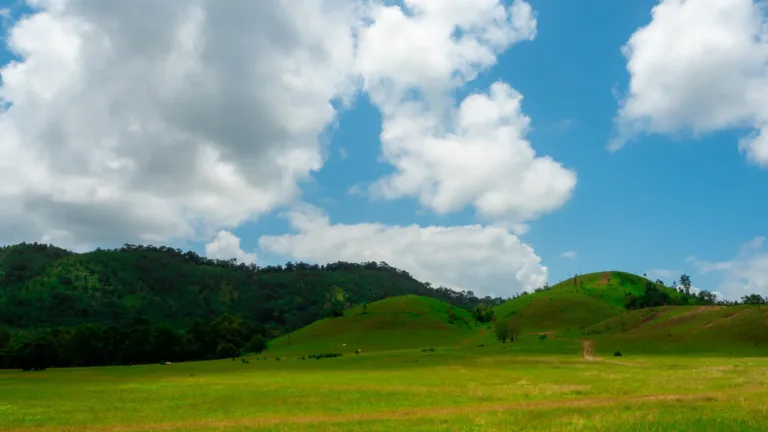 Phu Khao Ya (Grass Hill)
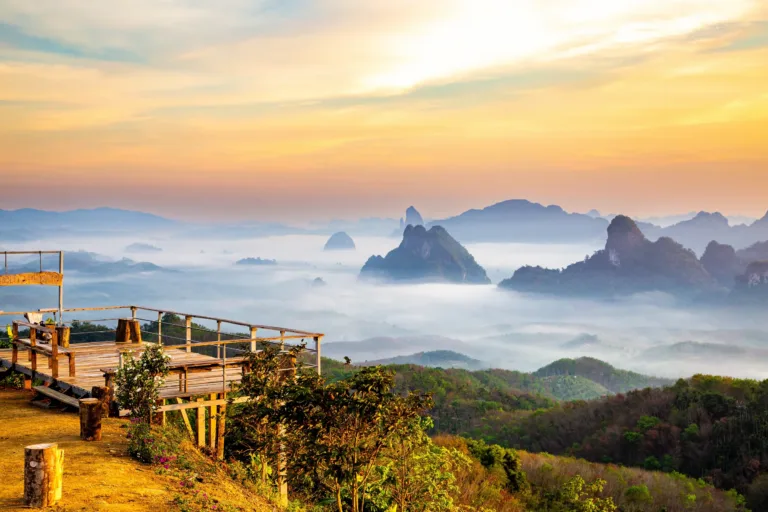 Doi Ta Pang Sea of Mist
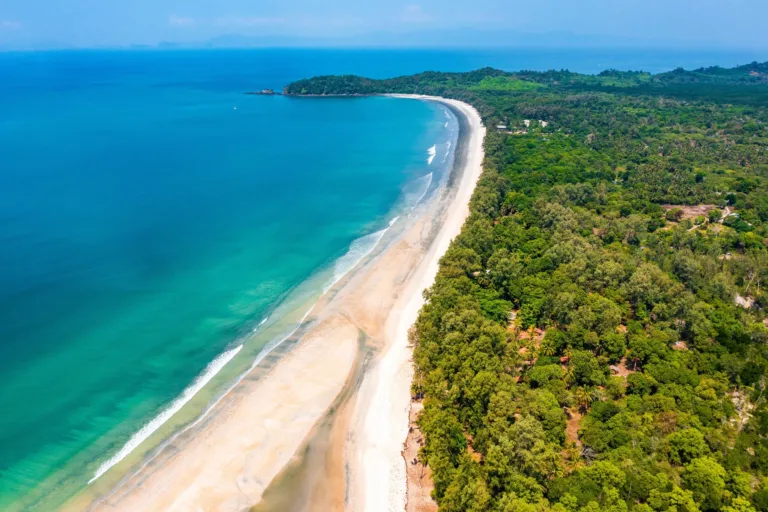 Ko Phayam
Ready to go to Raksawarin Hot Springs?
Best day this week: Saturday 28 Nov · Check in when you arrive to collect a stamp